
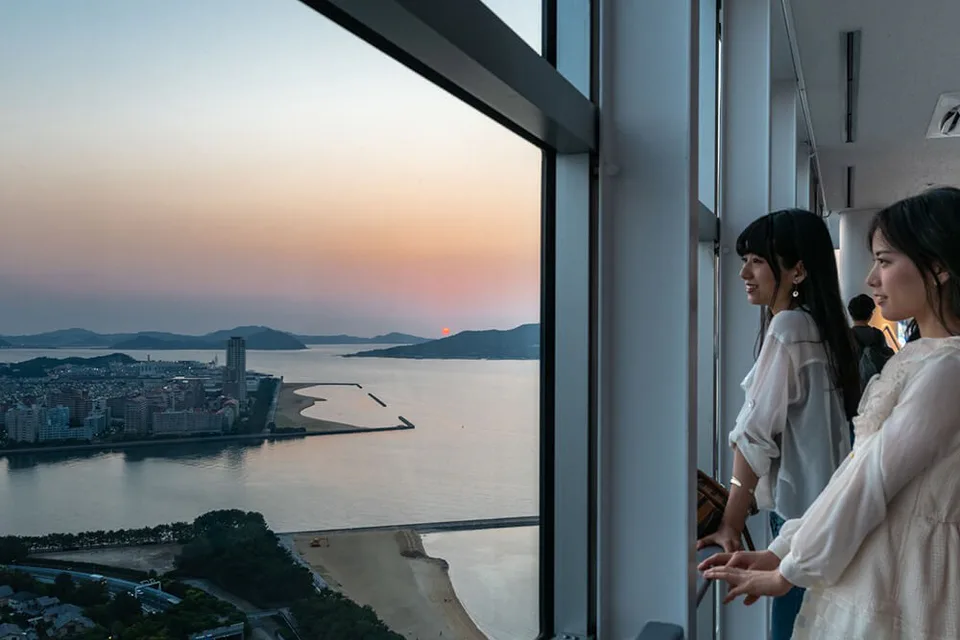
Fukuoka Tower makes the most sense when Momochi is already part of your day. The adult observation ticket is ¥1,000, but a journey from Hakata or Tenjin can take more of your limited sightseeing time than the admission does. If the beach, City Museum or PayPay Dome area is on the route, the tower becomes a natural addition. A separate midday trip just to go up and down is a weaker use of a short stay.
The 234-metre structure rises over the coast; its highest public observation floor is at 123 metres. From there you can read the shape of Hakata Bay, the waterfront and city streets together. If that aerial view is the reason for going, arrive while there is still daylight. When the sky is clear, staying through sunset and the early city lights gives the same ticket more range than arriving after full dark.
The Momochi detour
↔ Scroll table left or right
Your day | How the tower fits | Reason to change course |
Beach, museum or Dome area already planned | Use the shared journey and visit if visibility is good | The schedule is full or the bay is hidden |
Only the tower, from Hakata at midday | Allow a separate return journey for one panorama | Another city activity has higher priority |
Late afternoon with a clear forecast | See the coast by day, then the lights emerge | Cloud or haze removes the distant view |
Two-day Fukuoka visit | Include it only if Momochi is a main interest | Use the limited time nearer the rest of the route |
Birthday in the eligible window | Ask for the free birthday admission before buying | Proof of birth date or other conditions cannot be met |
Visibility changes the decision more than the calendar. A bright day can show the meeting of city and sea, while fog can make the paid deck little different from a high room looking into cloud. You can still enjoy the tower building and waterfront in poor weather, but there is no need to buy an observation ticket solely because the itinerary listed it. If the overall schedule is undecided, the two-, three- and four-day Fukuoka comparison helps show what this detour would replace.
The useful test is whether the trip needs a view from above or simply a coastal break. An observation ticket is a poor substitute for time on the beach if the group wants sea air, a walk and a photograph of the tower itself. Conversely, the waterfront cannot show how Hakata Bay, the built-up city and the beach align. Decide on that distinction before choosing transport: once you have spent the bus journey reaching Momochi, it is tempting to buy a ticket just to justify the travel, even on a hazy day.
Travel time from the centre is the hidden cost
The tower's access directions put the bus from Hakata at roughly 25 minutes and a route from Tenjin at roughly 15 minutes toward the tower. The Tenjin return is shown at about 20 minutes. Those are bus journey estimates, not a promise of door-to-door time. Add the walk to the stop, waiting, the observation visit and the trip back. Subway access via Nishijin still needs a final walk or connecting bus.
↔ Scroll table left or right
Starting point | Published route cue | Planning consequence |
Hakata | Nishitetsu bus from Hakata Bus Terminal; about 25 minutes in the listed direction | Do not reserve only half an hour for the whole outing |
Tenjin | Bus W1 or 302 from Tenjin Bus Center area; about 15 minutes outbound on the published route | Momochi pairs more easily with a Tenjin afternoon |
Nishijin subway station | Continue on foot or by bus | The subway does not deliver you to the tower door |
Dome event day | Shared neighborhood, but crowds can affect the exit | Leave time before a fixed dinner or train |
Allow roughly 1 hour 45 minutes to 2 hours 30 minutes for a tower-only return from Tenjin, or around 2–3 hours from Hakata. These are planning ranges including transport, buffer and viewing, not fixed journey times; queues and how long you stay upstairs vary. A Momochi walk plus the tower can fill a coherent half-day. A Dome event shares the neighbourhood but adds crowd risk when leaving. The reliable decision is geographic: make the journey serve more than one purpose, or choose a closer activity.
Pick the light you actually want
Operating hours are listed as 9:30–22:00, with final admission at 21:30; busy conditions can bring that cutoff forward. An evening visit does not have to mean arriving after sunset. Going up while the bay and beach are still legible lets you watch the scene change, whereas a full-dark arrival mainly gives you illuminated streets and reflections.
↔ Scroll table left or right
Arrival | What you can see | Limitation |
Middle of a clear day | Coastline, urban layout and neighborhood detail | Harsh light can flatten photographs |
Before sunset | Daylight view followed by changing colour and early lights | Weather and window positions matter; it can be busy |
After dark | City lights and a quieter-looking waterfront | The bay's outline is harder to read |
Fog or low cloud | Sometimes little beyond the immediate area | Consider staying at ground level instead |
If sunset is your goal, look up its time for your actual date and aim to reach the tower 45–60 minutes beforehand. A last-minute arrival can spend the best light in a ticket line or elevator. There is also no need to stand through every stage if your priority is only a clear daytime geographic view. In the original five-point light comparison, a clear pre-sunset visit ranked 5/5, midday 2/5, full dark or light rain with visibility 3/5, and a fog-obscured bay 1/5. Those are relative scene choices, not a forecast for your date.
The birthday visit has its own ticket rule
The tower offers one free observation visit for the birthday guest during the three days before through three days after their birthday. That creates a seven-day eligibility window. Bring proof of the birth date and request the benefit before purchasing ordinary admission; a ticket already bought is not refunded simply to add the birthday offer. Companions do not become free through the guest's birthday.
For an eligible traveller, this can settle the admission part of the choice, though it does not remove the journey from the centre. Still decide whether Momochi and the deck fit the day's route. A free ticket can be excellent value on a waterfront afternoon and an unnecessary detour on an already crowded day.
Choose the viewpoint by the scene
↔ Scroll table left or right
Place | What it gives you | What it misses |
Tower observation floor | Elevated view of Hakata Bay, beach and city layout | You pay admission and spend time reaching the deck |
Momochi Seaside Park | Free waterfront walk with the tower in the skyline | No aerial view of the city |
Other central Fukuoka sights | More time near Hakata or Tenjin on a short trip | The coastal panorama remains unseen |
What the 123-metre deck does well
The tower's top observation level is about halfway up the full 234-metre structure. It is high enough for a broad coast-and-city view, while individual roads, the beach and nearby districts remain recognizable. It should be chosen for that perspective, not as a contest for the greatest height in Japan.
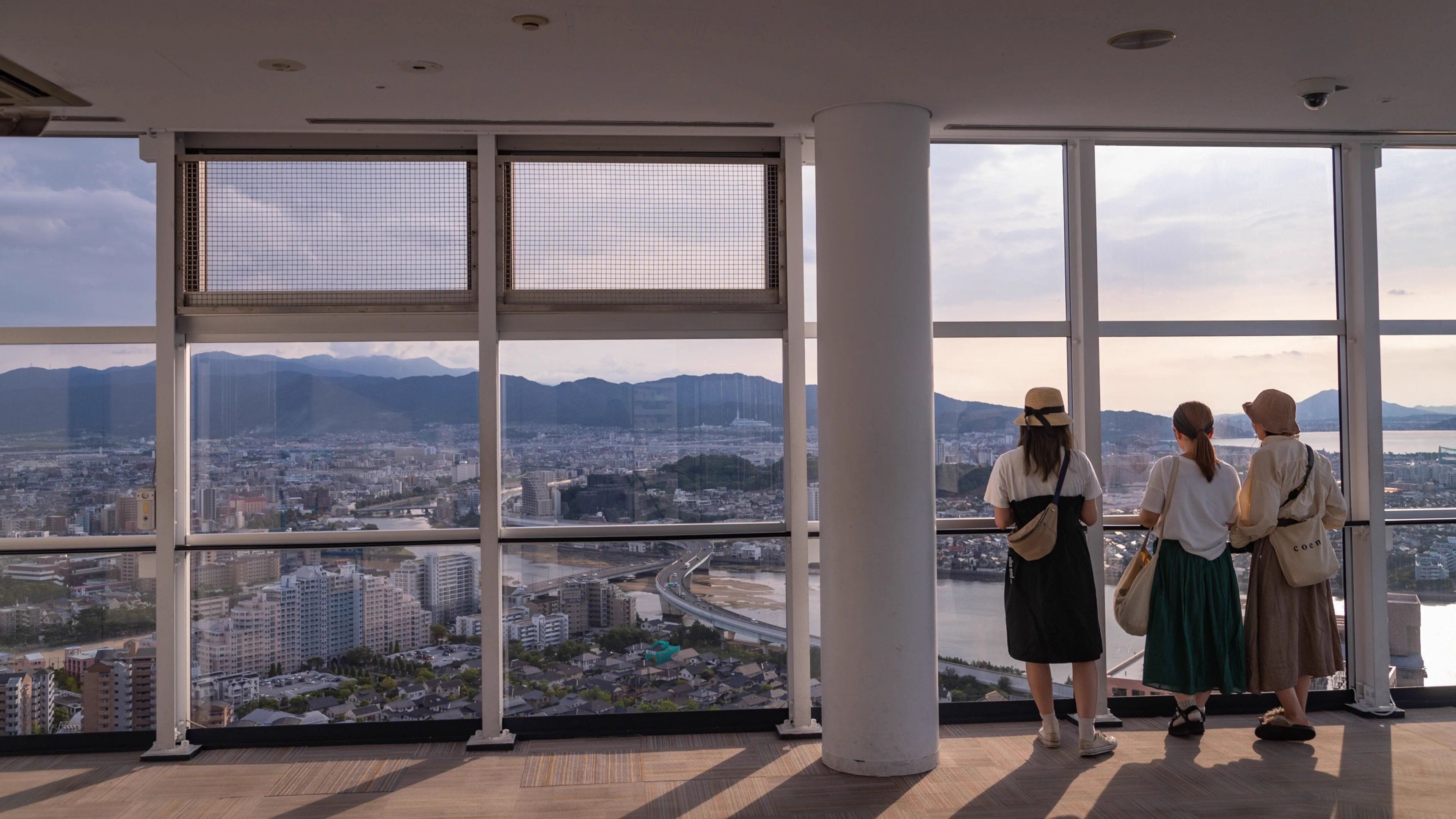
The difference is clearest in good daylight. Hakata Bay explains Fukuoka's setting, and the Momochi waterfront becomes part of a larger urban picture. At night, illuminated streets give another composition, but the water can disappear into darkness. If you especially want to understand the city as a coastal place, do not wait until late evening to go up.
Stay outside when the aerial view is optional
Momochi Seaside Park lets you walk by the water and see the tower itself without paying for the observation floor. For some travellers that is the better version of the outing: sunset, beach and an exterior photo, then dinner elsewhere. Pay for the deck only if looking down on the city and bay adds something you want to the day.
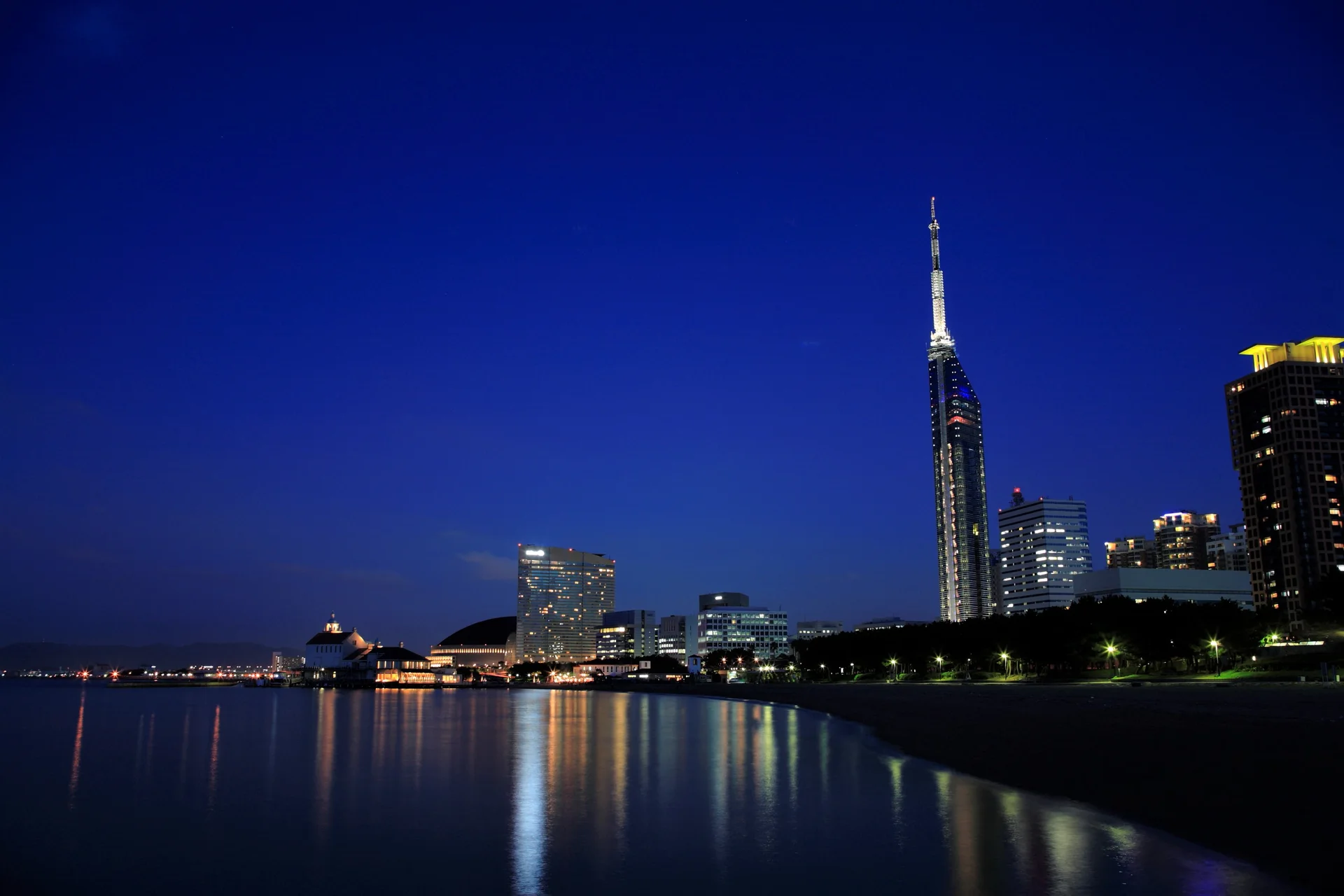
This is particularly relevant on a short visit. The waterfront walk can be a flexible stop that you cut short if the weather changes. Going up involves admission, queues and a commitment to remain in the area. Neither choice is inherently superior; they deliver different views.
On the site's ten-point trip-fit comparison, a Momochi visit already in the plan and an isolated midday detour shared the same money score (9.0), booking score (8.8), weather score (6.2), crowd score (7.2) and uniqueness score (7.7). Time changed from 8.4 to 5.8 and route fit from 9.0 to 5.5. The numbers describe the difference in itinerary effort; they are comparative judgments rather than measured attraction performance.
Five details to have before leaving the hotel
↔ Scroll table left or right
Item | Current published information | Use in your plan |
Adult admission | ¥1,000 | Compare with the time cost of the journey |
Opening | 9:30–22:00; last admission 21:30, possibly earlier in congestion | Leave a margin for the chosen light |
Viewpoint | Highest public observation floor 123 m; tower 234 m | Expect a legible coastal city view |
Hakata bus | About 25 minutes on the published route | Add walking and waiting to the visit |
Birthday benefit | One free visit within the seven-day window, with proof | Ask before buying a normal ticket |
The sensible conclusion is specific to the day: on a clear afternoon already spent around Momochi, the tower is a useful way to see Fukuoka's coast from above. From Hakata on a two-day trip, an isolated midday return can crowd out more distinctive time in the city. In poor visibility, enjoy the waterfront below and keep the admission for something else. If the day ends back in the centre, the Fukuoka yatai area guide can help place dinner after the return bus.
If the waterfront visit closes your Fukuoka day, check rooms that fit the return from Fukuoka Tower instead of judging the tower ticket in isolation.