
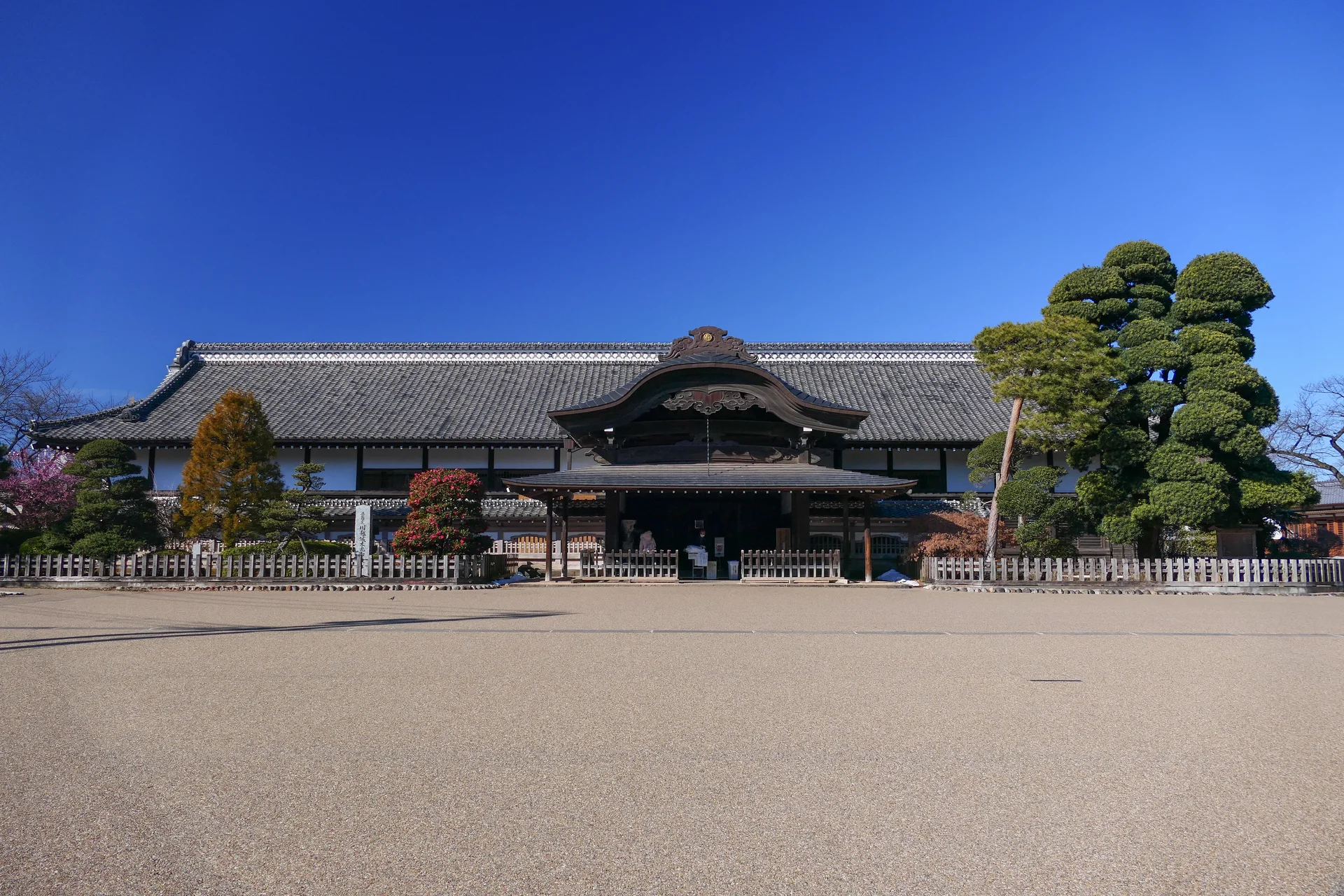
Honmaru Palace is one of the few surviving pieces of Kawagoe Castle that you can enter. Adult admission is ¥100, but the real decision on a Kawagoe day trip is whether to leave the Old Town shop route before the palace closes. If you are already walking toward Hikawa Shrine, I would add the palace and its neighbouring museum area. If you have only a short window for Kurazukuri Street, the Bell Tower, Kashiya Yokocho and lunch, the extra cross-town movement may cost more useful time than the ticket buys.
A castle-stamp collector faces a slightly different decision. Kawagoe Castle is No. 19 in Japan's 100 Famous Castles series, and its stamp does not simply vanish on the palace's normal closure days. Kawagoe City moves it to Hatsukari Park Rest Area during the stated 09:00–17:00 closure-day window. On an open day it is inside Honmaru Palace, where last admission is 16:30. Check which of those situations applies before leaving the station; then position the palace or the stamp within the wider route. Our Tokyo day-trip comparison is the place to decide whether Kawagoe deserves the day at all.
| Your Kawagoe plan | Castle decision | What sets the limit |
|---|---|---|
| Full day, Old Town plus Hikawa Shrine | Add Honmaru Palace while on the eastern side | Palace closes at 17:00; admission ends at 16:30. |
| Half-day focused on food and shopping | Only add it if the route naturally reaches the museum area | Walking and a return bus take more time than the ¥100 admission suggests. |
| Japan 100 Castles stamp collector | Check today's stamp location first | Open day: palace; regular closed day: Hatsukari Park Rest Area. |
| Castle architecture enthusiast | Enter the palace and consider the nearby museum | The valuable remnant is a palace, not a reconstructed keep. |
| Visitor seeking a big tower panorama | Choose a different castle destination | Kawagoe's surviving structures answer another kind of history question. |
The stamp has a closure-day address
On ordinary opening days, Kawagoe City's No. 19 stamp is placed in Honmaru Palace during its 09:00–17:00 operating window. The palace accepts its final visitor at 16:30. On a normal Monday or fourth-Friday closure, the stamp moves to Hatsukari Park Rest Area for 09:00–17:00. Monday closure shifts when that Monday is a public holiday, and the fourth-Friday rule has its own holiday exception. A calendar check therefore matters more than remembering “the stamp is in the palace.” The city's current stamp-location notice is the first page to open on the day you travel.
The closure-day desk is a useful backup for collecting the stamp; it is not an admission route into a closed palace. Separate the two aims. If the building matters, move the visit to a day it opens. If the stamp is the only reason for crossing town, you can use the rest-area arrangement and keep the afternoon for Old Town. Our Hachigata Castle stamp guide covers a different arrangement in Saitama, where the stamp location also changes the plan, while the Mito Castle route shows why collecting a stamp should be fitted to the physical site.
Do not stretch the ordinary closure pattern into a promise for every special date. Kawagoe City published a separate year-end placement for 29 December 2025 through 3 January 2026 when both the palace and the park rest area were closed and the stamp went to a city-hall duty room. That notice describes a past holiday period. Future year-end dates need a fresh city notice; they should not be inferred from the prior year's temporary address. The same caution applies to an unexpected maintenance closure or a festival traffic change.
¥100 buys the surviving palace, while the detour buys the time
Honmaru Palace currently lists ¥100 adult admission, ¥50 for high-school and university students, and free entry for junior-high students and younger. The ordinary hours are 09:00–17:00, with entry ending at 16:30. Regular closures include Mondays, except the holiday shift, the fourth Friday except certain holidays, and the year-end period from 29 December to 3 January. The admission can also be combined with city museum and art-museum tickets, so compare the combined ticket only if you truly plan to enter more than one place. The palace's current visit terms are more useful than an old price screenshot.
Those prices make the palace easy to afford and easy to misjudge. It is east of the main Kurazukuri shopping stretch, near the City Museum and Hikawa Shrine. A visitor who has already walked through the old shops should continue around the district rather than return to Kawagoe Station and start a second outbound trip. One efficient shape is station → Old Town and lunch → palace/museum area → Hikawa Shrine → onward bus or walk. Reversing it can work if you expect a slow museum visit or a crowded afternoon, but the palace's fixed closing time should be visible in either sequence. The Hikawa Shrine timing guide helps place a seasonal shrine stop beside this fixed museum clock.
If the city is only one part of a packed Tokyo week, protect enough time for the original reason you came. The seven-day Tokyo itinerary deliberately treats day trips as full-day choices. Nikko, Kamakura and Kawagoe do not become half-hour additions because a fare or entry fee is low. Once you have committed to Kawagoe, however, the palace gives a substantial historical layer for a small extra fare.
It is a surviving late-Edo building, not a reconstructed tower
The Honmaru Palace was completed in 1848 under Kawagoe lord Matsudaira Naritsune. The original ensemble contained 16 buildings with roughly 1,025 tsubo of building area. Most was dismantled after the Meiji Restoration. What visitors see now includes the entrance and great-hall portion of the palace, while the senior-retainer quarters were moved back and reconstructed on the site after having been relocated elsewhere. The city's building history records the changes to these structures. Kawagoe City designates the palace and retainer building together as a Saitama Prefectural Tangible Cultural Property. The fact that the site is only a surviving portion should shape expectations, but it is also why entering the original palace space is meaningful.
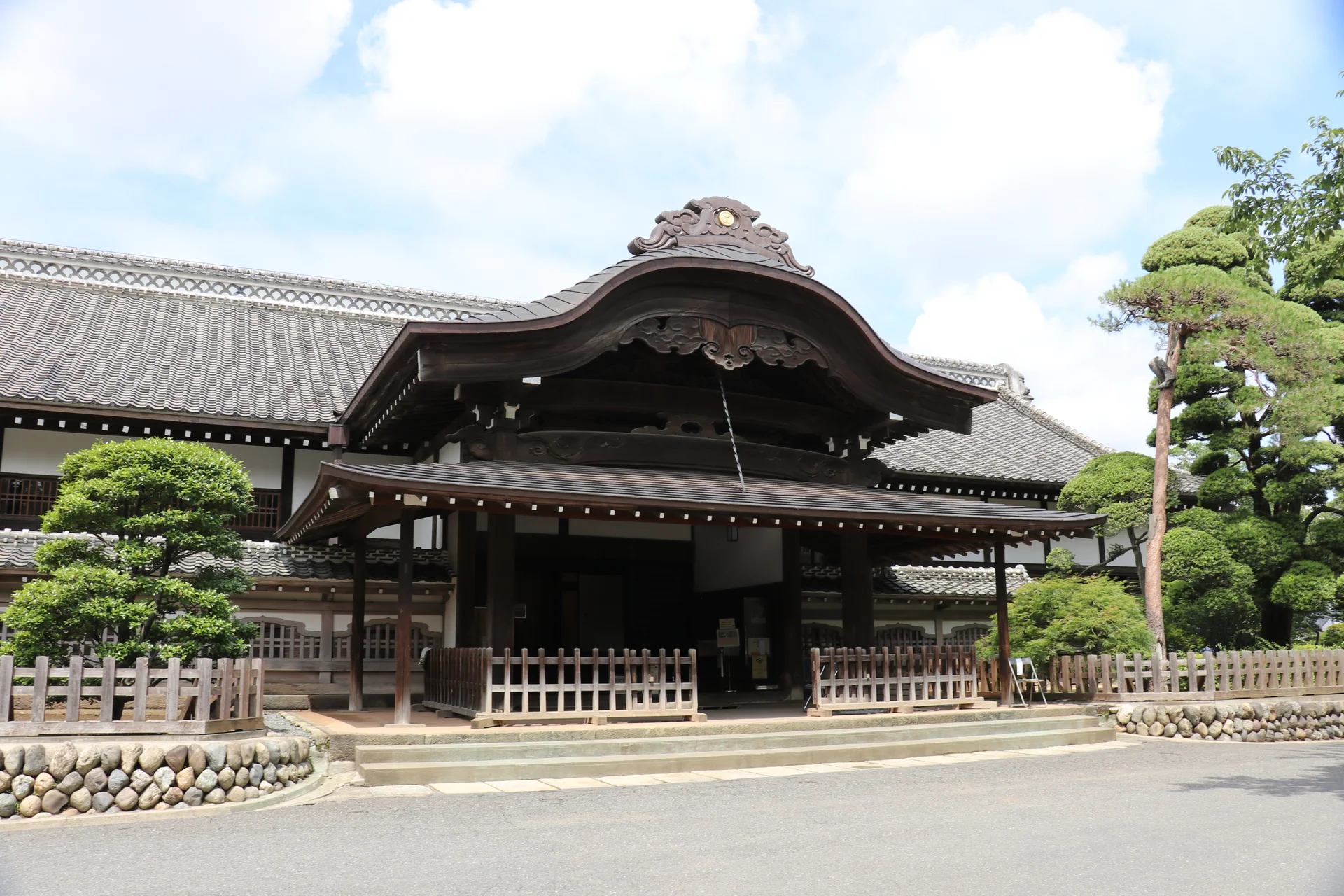
Inside, the scale is carried by the broad entrance, connecting corridors and the great room, rather than by a dramatic climb to a lookout. The city describes a 36-tatami great hall and a large formal roof above the entrance. Look at how movement through rooms expresses rank and hospitality. The retainer quarters are equally useful for understanding the working life of the castle, even though their present position differs from the historical one. They were originally a separate building at the western end of the honmaru; their return to the site placed them closer to the palace. This nuance is more valuable than counting how many buildings survived.
Kawagoe Castle began much earlier, in 1457, with its founding traditionally associated with Ota Dosshin and Ota Dokan under Uesugi Mochitomo. The visible palace is late Edo, so it should not be treated as a fifteenth-century room. It gives you a physical link to the domain's later political and ceremonial life. Castle travellers seeking a different type of survival can compare Sakura's earthwork and moat route or Morioka's surviving stone walls; Kawagoe's major surviving object is the palace itself.
Approach the district once instead of commuting across it twice
From Kawagoe Station, the current city access guide shows several routes to the museum and palace area. Tobu's Koedo sightseeing bus leaves the east-exit stop 3 for Museum-mae, but it runs only about once or twice an hour and has fewer weekday services. The Eagle Bus loop leaves west-exit stop 2 for Museum/Art Museum-mae at a similar broad frequency. A regular Tobu route from the east exit via Kura-no-machi to Fudanotsuji is much more frequent, roughly ten buses an hour, but leaves a walk of about eight minutes. The Kawagoe 06 route to City Hall-mae is another choice, with about a five-minute walk. Use the stop that matches where you want to start the day, not simply the first sightseeing-branded vehicle you see.
From Hon-Kawagoe Station, regular Tobu buses from east-exit stop 5 via Kura-no-machi also reach Fudanotsuji at about ten an hour, with the same eight-minute onward walk. The Kawagoe 06 route from that stop reaches City Hall-mae, around five minutes away. The Eagle loop uses east-exit stop E and serves Museum/Art Museum-mae, but again has lower frequency. These are service patterns in the city guide, not a substitute for checking your travel day's timetable. The city access table also warns that event-related street closures can affect surrounding roads.
| Where you are | Route into the palace area | Why choose it |
|---|---|---|
| Kawagoe Station east exit | Frequent Tobu Kura-no-machi services toward Fudanotsuji; about eight minutes on foot after alighting | Good when Old Town is the first stop and you will walk onward. |
| Kawagoe Station east exit, direct museum start | Koedo sightseeing bus from stop 3 to Museum-mae | Less walking, but check its lower frequency before waiting. |
| Kawagoe Station west exit | Eagle Bus loop from stop 2 to Museum/Art Museum-mae | Direct museum-area approach if its departure fits your arrival. |
| Hon-Kawagoe Station east exit | Frequent Tobu service from stop 5 via Old Town to Fudanotsuji | Works for a walk through the town before the palace. |
| Already in Old Town | Continue on foot toward palace and Hikawa area | Avoid returning to either railway station to begin a second outbound leg. |
The transport choice also changes the end of the day. A visitor who enters at Old Town, walks to the palace and finishes at Hikawa Shrine should plan a return bus from the area rather than assume the station is around the next corner. If you are staying in Tokyo and want to compare the day with Nikko or Yokohama, the Nikko day-trip decision and Yokohama base guide show how the last ride can change a day-trip choice.
Give the palace its own clock within an Old Town and shrine day
The Bell Tower and old warehouse street are best enjoyed with unhurried walking and food stops. Honmaru Palace is the part of this route with a defined last-admission time. If the palace is essential, place it before 16:30 with enough time to enter, rather than beginning a long lunch at 15:30 and trusting the walk. Hikawa Shrine may make sense before or after depending on your purpose there. For the summer wind-chime season, daylight, dusk and evening feel different; our wind-chime route explains that separate choice.
Festival days deserve a different map. Kawagoe Festival's 2026 edition was on 17–18 October and has now passed; its crowds and traffic diversions illustrate why a normal bus plan should be checked against event dates. The festival route is useful for understanding the night parade and access trade-off, not for assuming this year's roads will be closed on a later ordinary weekend. Kawagoe Castle can still be part of a festival visit, but the event itself may consume the hours you would otherwise give to the museum district.
Add the City Museum when you want the castle in context
Kawagoe City Museum is beside the palace area and currently charges ¥200 adult admission, ¥100 for high-school and university students, with junior-high students and younger free. It also opens 09:00–17:00 and stops admission at 16:30. The standard palace-and-museum cost for one adult is ¥300 if bought separately, though the city also offers combined tickets for several facilities. Check the combined product only if you will use the extra admission rather than buying it for a theoretical saving.
When time in this area is just 30–45 minutes, choose Honmaru Palace. The original space cannot be supplied by an explanatory display elsewhere. With 1.5–2 hours and a genuine interest in local history, the museum can explain the castle's place in the wider town; it does not turn the palace into a longer room tour. A Tokyo-area family weighing indoor stops can compare this with the much larger Saitama Railway Museum, where the ticket and time commitment are a different scale. The Tokyo National Museum guide makes the same point in another city: decide whether the visit itself deserves the hours before adding galleries by default.
Fujimi Yagura is for a castle walk, not a required shopping-day detour
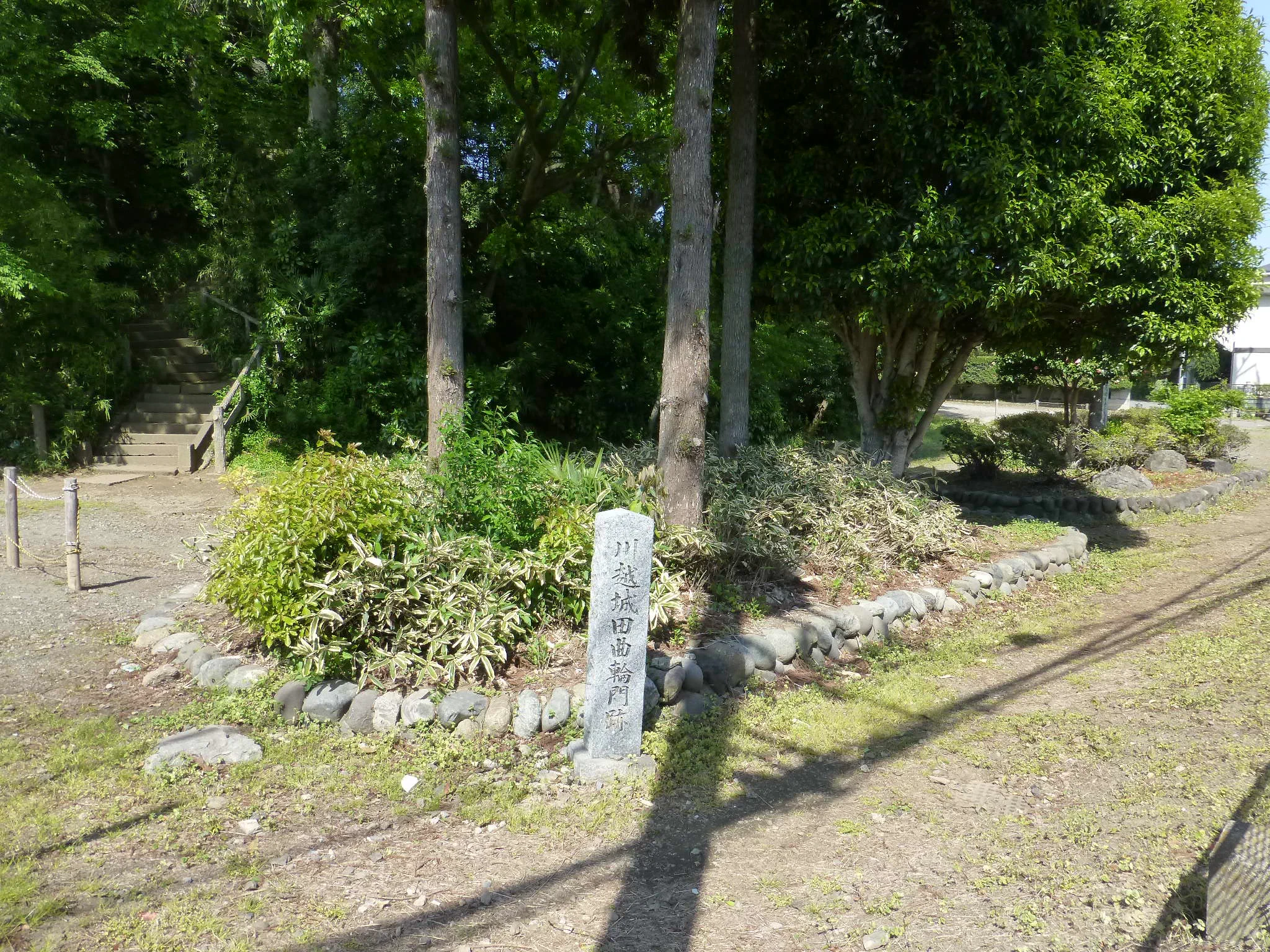
Kawagoe Castle has no surviving keep. The Fujimi Yagura site preserves the former turret platform and traces of the old castle setting. It is a worthwhile extra for somebody who enjoys reading a castle footprint, especially after seeing the palace. It will not provide a standing tower, interior exhibition or panoramic deck. The name can mislead a traveller who expects a contemporary viewpoint attraction.
If you still need to see Hikawa Shrine and catch a train after lunch, the palace alone is the stronger history stop. Castle collectors who want to compare a site whose stamp and visible remains tell very different stories may also enjoy Nejo Castle's reconstructed enclosure, Taga Castle's South Gate route, or Kubota's public park footprint. Those comparisons help set expectations: Kawagoe is about the surviving palace and its setting, rather than a tower silhouette.
When the castle should leave the itinerary
I would skip the palace on a half-day built deliberately around food, craft shops and photos in Old Town. Those activities can fill the available window without a detour. I would also skip it if the traveller's primary desire is a spectacular keep or high stone walls; there are better castle trips for that. A castle devotee, meanwhile, may value the palace enough to make Kawagoe the day's main stop, with the shopping street as a secondary walk.
Transport disruptions can also push the balance. On a major festival or seasonal-event day, road closures and queues can make an apparently short bus segment unreliable. Walk the connected district when feasible and check the live city notice before choosing a route. This is the same reason our Tokyo day-trip comparison treats Kawagoe as a whole-day decision rather than a single-ticket attraction.
For an ordinary full day, my order would be Old Town, lunch, palace/museum area and Hikawa Shrine, adjusted so the palace is entered before 16:30. A stamp-only visit uses the day's designated stamp desk instead. If you are planning a Tokyo overnight around several day trips, the Kawagoe-area hotel map can show nearby rooms; most visitors will still be choosing between a day return and a deliberate local night. Decide that route first, then choose accommodation.