
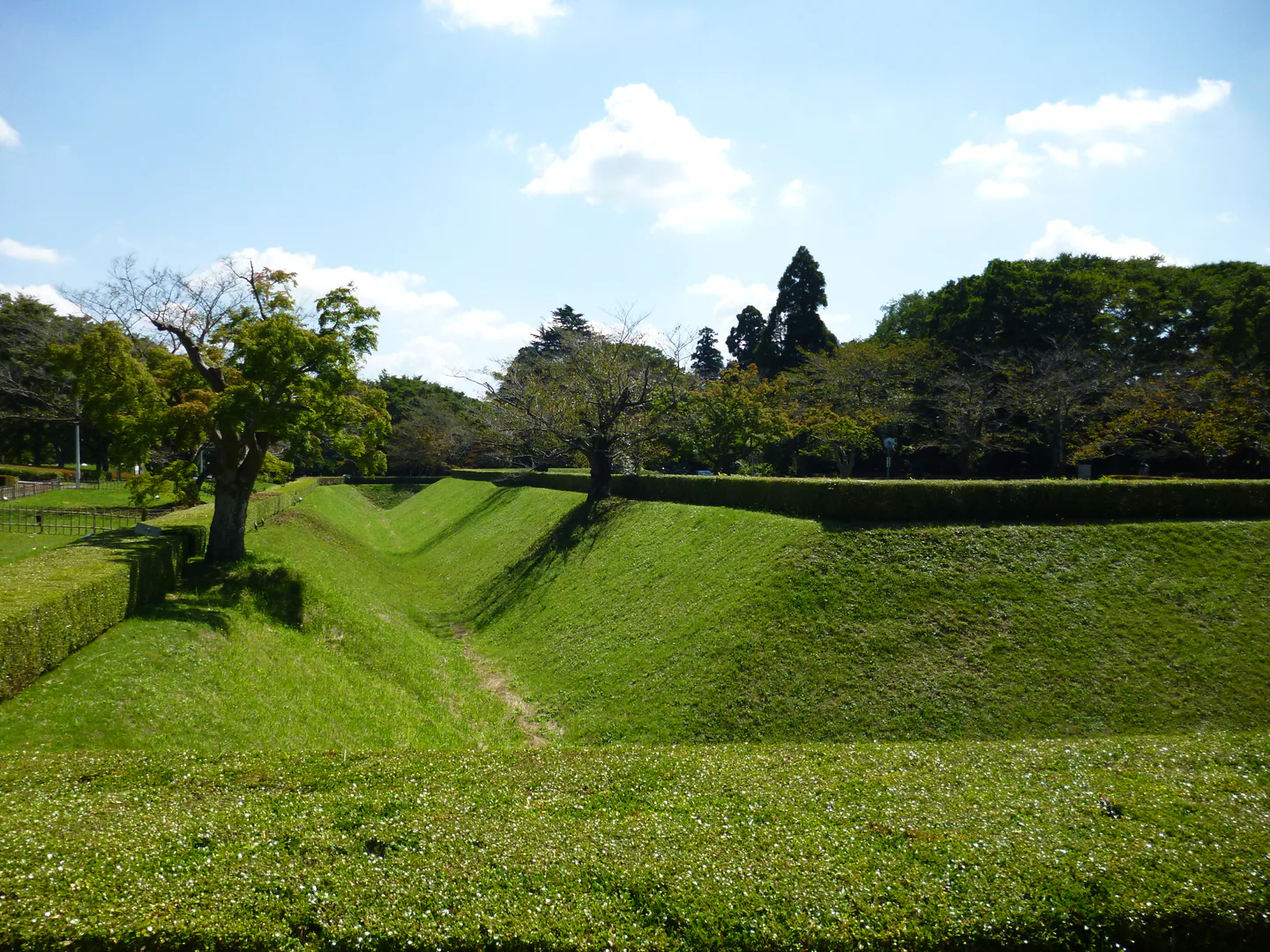
There is no keep to admire at Sakura Castle. What survives is the shape of the fortress: a large umadashi, dry moats cut deep into the plateau, the honmaru and outworks beyond it. The Japan 100 Famous Castles stamp is unusually easy to collect because an outdoor stand is accessible around the clock, but the earthworks are the reason to spend time here. From Tokyo, this is a rewarding trip for someone who enjoys reading a castle in its ground rather than its buildings. Others may prefer a short stamp stop or a visit paired with the National Museum of Japanese History.
If this is your first Tokyo stay and you have one spare excursion, Sakura is a specialist choice. A castle collector or history traveller can give the ruins 60 to 90 minutes in daylight, then decide whether the adjacent museum merits several more hours. A visitor expecting a reconstructed tower or dramatic skyline may find the trip less satisfying. The all-hours stamp makes an awkward travel schedule easier to manage; it does not make the park itself a sensible place to explore after dark.
Sakura Castle is a landscape of moats and earthworks
↔ Scroll table left or right
If you came for | How to spend the stop | Why this works | The compromise |
A castle stamp during a Chiba journey | Use the outdoor stand beside the ruins management centre | Stamp access does not depend on office hours | Leaving straight away means missing the surviving defences |
Your first look at Sakura's earthworks | Walk from the centre through the umadashi and honmaru to an outwork | You see how the entrance, central enclosure and outer lines connect | Sixty to ninety minutes covers selected features rather than the whole park |
A day devoted to Japanese history | Explore the moats before entering the National Museum of Japanese History | The galleries broaden the day beyond the castle itself | Allow several hours for the museum in addition to its ¥900 general ticket |
A short introductory visit to Tokyo | Spend the excursion elsewhere unless the stamp or moats are a goal | A dedicated return trip uses time better spent on your priorities | You pass up a specialist castle site |
A journey already passing through Chiba | Fit Sakura around your existing rail direction | Being east of Tokyo reduces the extra travel involved | Bag storage or a poor interchange can spoil the advantage |
The stamp is easy; the Tokyo detour needs a reason
The practical factors below change with your route. Sakura asks little in admission cost and the stamp is unusually accessible, while travel time from Tokyo and exposure to weather still shape the day. The same site can be a convenient addition to a Chiba itinerary and a poor use of a single free afternoon in Tokyo. Read the table alongside the journey you would actually take rather than expecting one fixed verdict for every visitor.
↔ Scroll table left or right
Practical factor | What you encounter | Effect on the day |
Admission | The ruins park is free; the national museum costs ¥900 for a general ticket | Museum time is usually a bigger commitment than its entrance fee |
Time from Tokyo | The castle walk is manageable after arrival in Sakura | Add the intercity rail leg and station-to-park approach before deciding |
Stamp access | An outdoor stand remains usable around the clock | A late train need not cost a collector the stamp |
Wet weather | The main remains are moats and sloping outdoor ground | Rain makes the park walk less comfortable and harder to read |
Seasonal crowds | The broad park spreads visitors across its paths | Blossom and iris periods can still strain parking and nearby roads |
Place in your route | A Chiba or Narita direction is easier to combine with Sakura | The detour is much larger if you start and finish in central Tokyo |
What is distinctive | Deep earthworks sit beside a substantial national history museum | The pairing rewards visitors interested in both the site and wider history |
A stamp collector already travelling through Chiba may get a satisfying visit with little extra effort. Someone who must make a dedicated round trip from central Tokyo, and has no interest in earthwork design, pays a much higher time cost. Start with the route and the castle features you want to see. The table then helps identify whether access, weather or a museum visit changes your decision.
You can collect the stamp at night, but see the ruins by day
Sakura City places the Japan 100 Famous Castles stamp at the management centre on the eastern edge of Sakura Castle Ruins Park. One stamp is inside the centre; another stands outside its entrance and is available 24 hours a day, every day of the year. The building still has ordinary daytime opening hours. If you arrive after it closes, you can stamp your book outside, but you should not expect the exhibits or staff to be available.
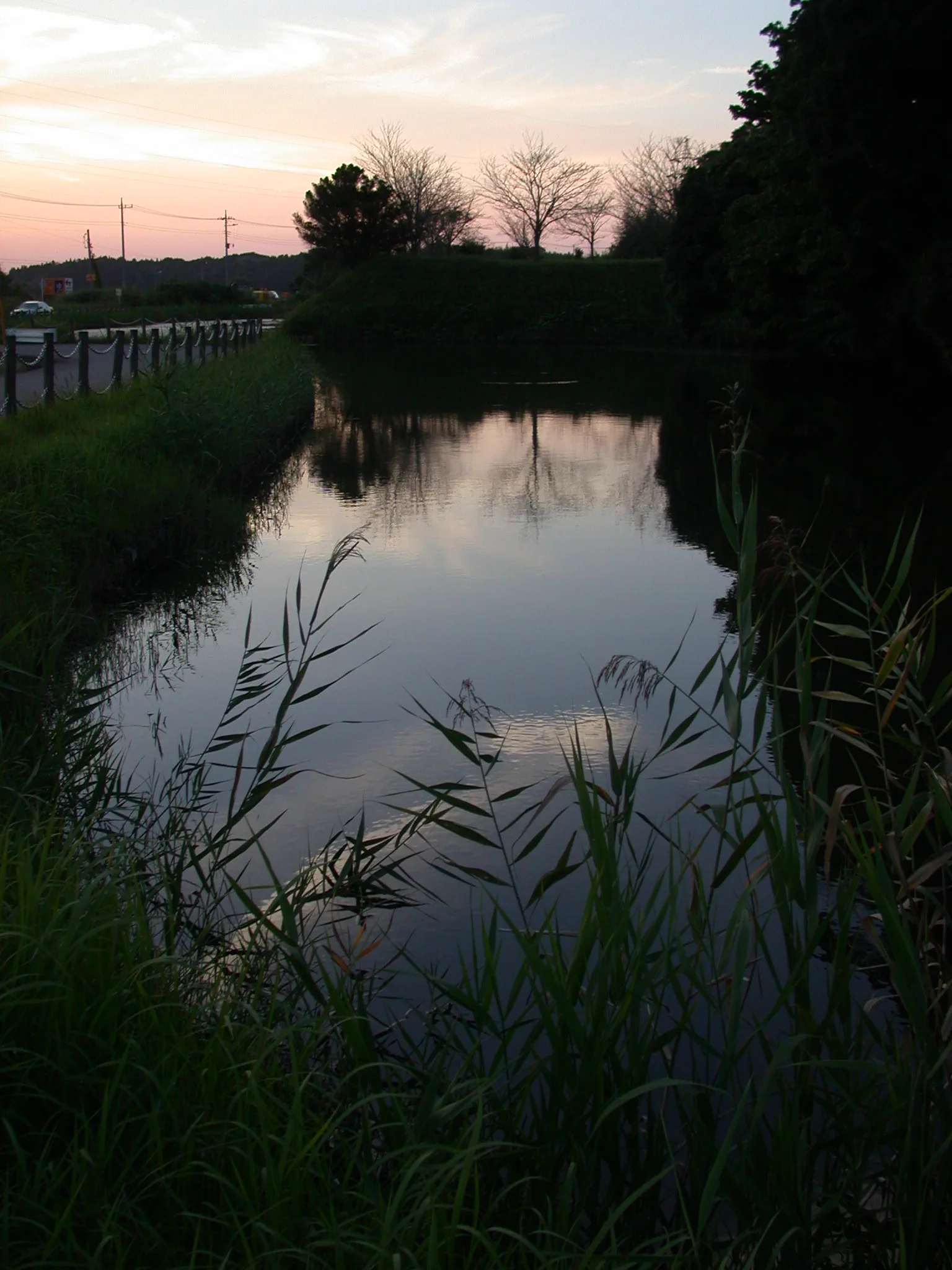
That access is helpful if a train is late or Sakura falls between other Chiba stops. It is less helpful for understanding the castle. The dry moats, tree-covered slopes and height changes of the plateau are easier to follow in natural light. If you can choose your timing, walk the ruins first and treat the outdoor stamp as a useful fallback, not an invitation to cross the park at night.
Look for the defensive shape, not a missing tower
Begin near the Shiinoki Gate area and the large umadashi, an earthwork that protected an approach by controlling how people could enter. Continue to the honmaru, the castle's central enclosure, then follow one of the southern or western outworks. The moat lines and the edge of the plateau reveal how the defence extended beyond the centre. Sakura becomes easier to understand when you compare those spaces with one another instead of hunting for a main building that no longer stands.
With 60 to 90 minutes, a useful walk runs from the management centre to the umadashi, the honmaru and one outwork. Pause at the changes in ground level; rushing between map labels misses what makes the site distinctive. This is a practical short route, not a marked course with a guaranteed walking time. If you have more time, slow down around the moats and add the park's other corners rather than trying to turn the visit into a checklist.
Keisei Sakura or JR Sakura? Follow your wider rail route
Sakura City gives approximate walks of 20 minutes from Keisei Sakura Station and 25 minutes from JR Sakura Station to the castle park. Buses from either side can shorten the walk, with stops near the National Museum of Japanese History and about five more minutes on foot. Check the bus timetable for your travel day, especially if you are relying on it for the return journey.
The difference between those station walks is too small to justify an awkward rail-system change. Keisei Sakura fits naturally when you are already on Keisei lines or continuing toward Narita. JR Sakura is often simpler when your day starts around Tokyo Station and follows the Sobu corridor. Look at the complete door-to-door journey, including any interchange, rather than choosing the station solely by its distance from the park gate.
A luggage stop deserves the same calculation. Sakura can appear to be 'on the way' to Narita, but storing a case, backtracking to collect it or switching to the wrong line can erase the convenience. If you have bags, identify the exact train and storage plan before deciding to insert the castle between a hotel checkout and a flight. The park may be free, yet the detour still uses valuable travel time.
Should you add the National Museum of Japanese History?
General admission to the National Museum of Japanese History is ¥900 from 17 March 2026; university admission is ¥500. The regular galleries open 09:30–17:00 from March through September, with last entry at 16:30. From October through February, closing time moves to 16:30 and last entry to 16:00. Mondays and other published closure dates can rule out a museum visit altogether. Check the calendar before setting aside an afternoon, as special exhibitions may have separate arrangements.
The real investment in the museum is time. Its displays cover Japanese history, archaeology and folk culture on a national scale, so a quick look between trains will leave much unseen. If those subjects brought you to Sakura, combining the galleries with the castle can make a full, coherent history day. If you only want the stamp and a walk through the moats, the museum's proximity is no reason to force it into the schedule.
Choose the museum when you want the collections in their own right. The castle remains a complete earthwork visit without an indoor supplement, while the museum rewards a slower pace than an afterthought allows.
Make sure your map points to Sakura Castle Ruins Park
Sakura Castle and Moto-Sakura Castle are separate Chiba sites. Moto-Sakura belongs to the Continued 100 Famous Castles list, while the stamp described here is for the original 100 Famous Castles Sakura site. Their similar names make search suggestions easy to misread. Save Sakura Castle Ruins Park or its management centre as your destination before leaving; checking the Japanese name and address is wiser than selecting the first result for 'Sakura castle'.
Flowers change the outing, not the castle
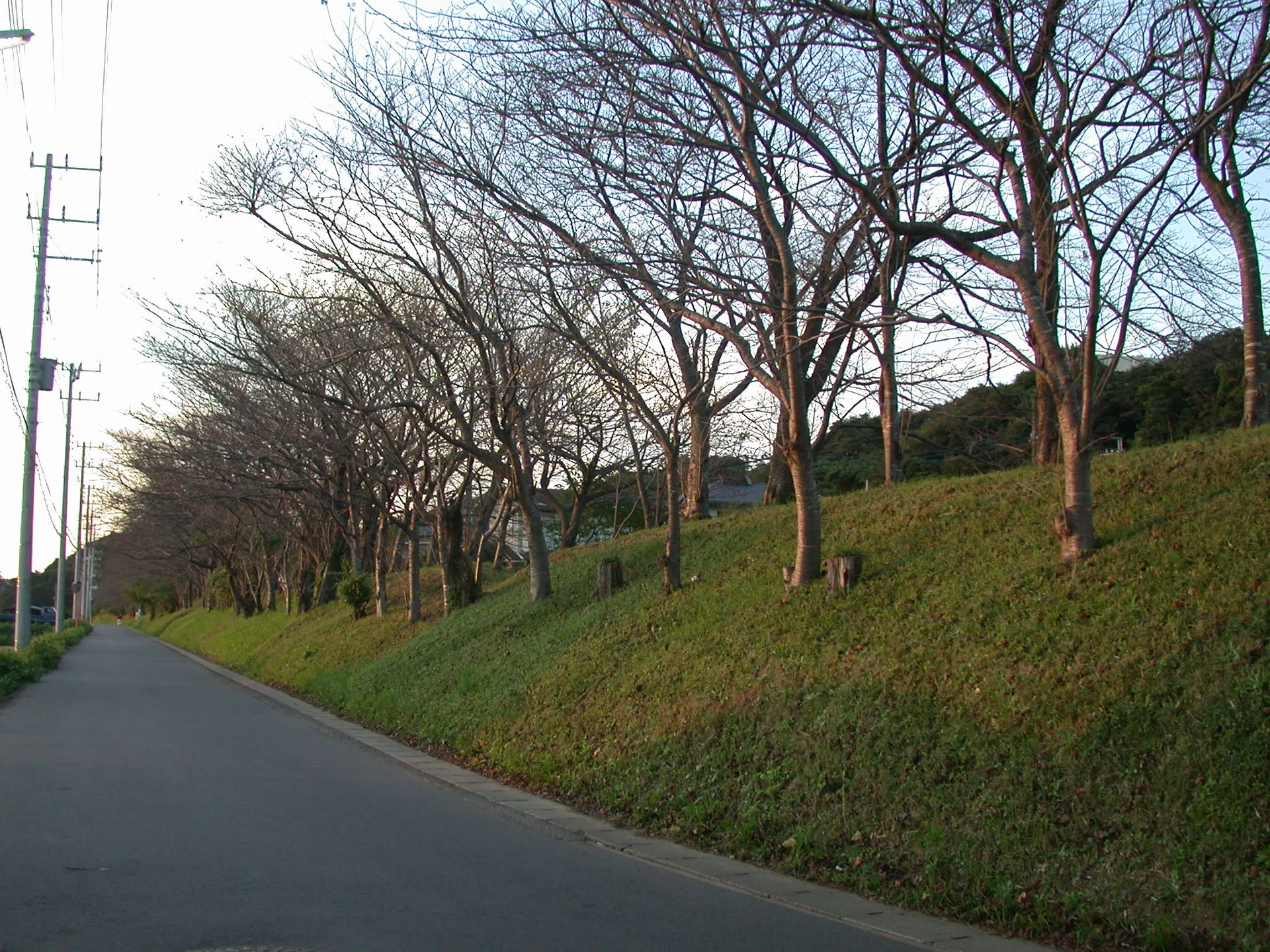
Cherry blossoms, irises, plum, peonies and autumn colour add reasons to wander through Sakura Castle Ruins Park with someone who is less interested in defensive earthworks. They also bring busier approaches. Sakura City warns that parking and surrounding roads can become crowded during blossom and iris seasons, so a train and a walk may be the calmer way to visit then. Seasonal colour can make the park a pleasant shared outing even if one person spends longer examining the moats.
The site still has the same essential character in every season. Spring flowers will not produce a surviving keep, decorated interior or high viewpoint. If those are the features you want from a castle day, choose another site. If the terrain already interests you, the planting is an extra pleasure rather than the reason the journey works.
When Sakura Castle earns the trip from Tokyo
Sakura makes sense when castle earthworks are an interest in themselves, the Japan 100 Famous Castles stamp matters to you, or the stop fits naturally into a Chiba route. The outdoor stamp removes the risk of missing office hours, but the site deserves daylight and an unhurried look at its moats and enclosures. Allow enough time to see the ground that gave the castle its strength.
For a first-time Tokyo visitor with one open half-day and no special interest in castle archaeology, I would use that time elsewhere. Free park entry does not remove the cost of a dedicated round trip. A collector, or someone eager to spend time at the National Museum of Japanese History as well, gets a different answer: the stamp, earthworks and museum sit close enough to form a focused day east of Tokyo.
A castle visit alone need not determine the hotel. If the town is part of a longer Chiba route, compare places to stay around Sakura with your next rail departure in mind.
Other castle guides
Japan’s 100 Famous Castles No.14: Mito Castle — Stamp First, Otemon Last
Japan’s 100 Famous Castles No.2: Goryokaku — Is the ¥1,200 Tower Worth It?
Nezu Museum 2026: The Garden Isn’t Free — and That Changes Whether ¥1,400 Is Worth It
Japan’s 100 Famous Castles No.12: Tsuruga Castle — ¥410, ¥520 or ¥730? Pick the Upgrade That Fits