
HOTEL GROOVE SHINJUKU is housed in Tokyu Kabukicho Tower, a very particular address. The entrance works well after a night in Kabukicho or a direct airport coach that stops at the tower. It is less persuasive when every morning begins on JR and the evenings finish early elsewhere: the hotel quotes about seven minutes from Shinjuku Station by its standard route, while an elevator-equipped approach from the East Gate takes about nine. Those minutes recur across a rail-heavy stay. The booking decision is therefore tied to the number of late local evenings, the actual airport transfer and the room tier being purchased.
The smallest GROOVE rooms are 21–22 m² Superior categories. Deluxe rooms expand to 25–28 m²; Premier rooms run 32–37 m². A couple with two large cases over four nights should not pay for the hotel's name while assuming the entry room has Deluxe circulation. An 18 m² room at nearby Hotel Gracery is another way to keep the Kabukicho location for light packers, but it is a different space product. The Gracery-versus-Blossom comparison helps decide whether the real requirement is Kabukicho or a South Exit morning.
↔ Scroll table left or right
| What repeats on the trip? | How GROOVE fits | What may win instead |
|---|---|---|
| Several Kabukicho evenings or late Shinjuku shows | Tower address shortens the end of those nights | A lower-cost nearby room if the tower itself is unused |
| Airport coach fits both flights | Tower boarding can spare a luggage-heavy station transfer | Rail when the coach times do not fit |
| JR-first mornings and little nightlife | Seven to nine minutes to JR repeat without location payoff | A hotel nearer the relevant JR exit |
| Two large cases and a multi-night stay | Price Deluxe or Premier, not just Superior | A room elsewhere that supplies more practical space for the total rate |
Seven minutes and nine minutes describe different walking routes
The hotel lists about one minute from Seibu-Shinjuku, six from Shinjuku-nishiguchi, seven from JR/Odakyu/Keio/Marunouchi Shinjuku and eight from Shinjuku-sanchome. Its universal-access map gives an approximately nine-minute route from the East Gate lift beside LUMINE EST. That is the more relevant estimate for someone avoiding stairs with a stroller or two heavy cases. Neither figure includes travel from a specific train platform through the station before reaching the named exit.
For a guest who uses Seibu-Shinjuku or returns from a Kabukicho restaurant, the tower location can shorten the final leg. For someone taking JR toward eastern Tokyo on three mornings, the standard seven-minute walk is a repeated cost. The hotel can still win if the airport coach and evenings compensate, but “close to Shinjuku Station” is not precise enough for this decision. A South Exit hotel offers a different morning route; Tokyo Station versus Shinjuku tests the larger base before comparing individual exits.
With a backpack, a two-minute difference between routes is rarely decisive. With luggage after an overnight flight, lift access and a reliable exit can matter more than a shortest-path number. Map the first arrival and the last departure separately. The nine-minute accessible line is not evidence that every guest will take nine minutes; it is a planning route for those who need the lifts. Forwarding luggage could also change how much the arrival approach matters.
The airport coach is a useful conditional benefit
GROOVE's FAQ describes direct coaches from its tower to both Haneda and Narita. A suitable departure can let travellers board near the hotel rather than move cases through another Shinjuku station transfer. That is a concrete benefit for a party with several bags after a long flight. It does not mean the bus will meet every flight, beat rail in traffic or eliminate the need to reserve a seat. Check the current operator schedule for the terminal and date before treating direct coach access as a reason to pay more.
One easy arrival should not set the entire Tokyo base if the remaining days begin near Ueno, Asakusa or Tokyo Station. A four-night booking creates more morning and evening hotel edges than the airport arrival alone. Tokyo base choices for a first visit can reveal that eastern sightseeing time outweighs the transfer saved on day one. Conversely, if both flights line up with the tower bus and two or three nights end in Kabukicho, the airport and local-evening advantages reinforce each other.
Hotel Gracery is a useful nearby price check. It is in the same broad nightlife area and describes about five minutes from JR East Exit and three from Seibu-Shinjuku. GROOVE quotes seven and one respectively. Gracery is also roughly two minutes on foot from the Kabukicho Tower coach stop, so GROOVE does not own the entire airport-bus advantage. What GROOVE combines is the tower address, an especially short Seibu approach, an upper-floor room setting and a ladder of larger bookable room types. A direct GROOVE–Gracery comparison makes this substitution explicit.
Room tier decides whether the premium buys floor space
↔ Scroll table left or right
| Named tier | Published area | Trip fit to test | Main limitation |
|---|---|---|---|
| Superior | 21–22 m² | Solo or short, lightly packed pair | Two open large cases may still consume the usable floor |
| Deluxe | 25–28 m² | Two adults with luggage over several nights | Check exact shower layout and total premium |
| Premier | 32–37 m² | More room time, work or a specific bed setup | Price may reopen a wider hotel comparison |
Superior can be perfectly adequate when the room is primarily for sleeping and luggage is light. For two people opening full-size cases each day, move the comparison to a named Deluxe category before claiming that GROOVE solves a space problem. Premier creates another step up, but the gap in area does not guarantee the same layout in every bed type. Hotel room labels are families of products. Book by the exact room description, occupancy and bath arrangement rather than assuming all floors share the photographed plan.
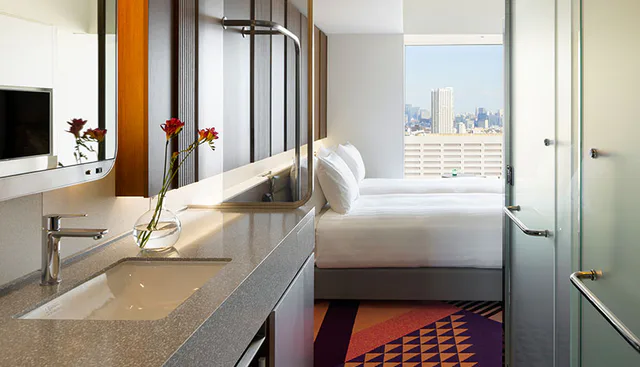
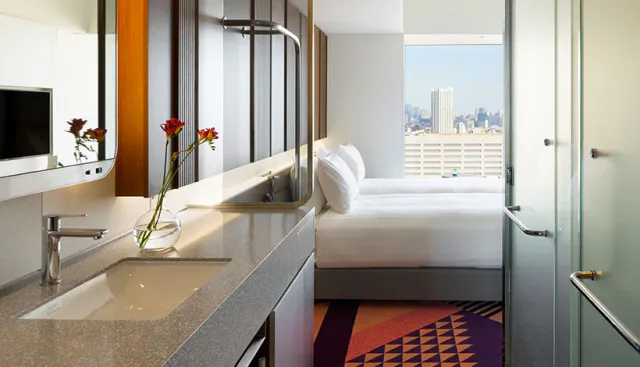
The hotel presents rain showers in its Superior and Deluxe descriptions. Selected Premier King and Twin rooms add bathtubs, so a guest who needs a tub should identify the specific category that includes one. The photograph used as the hero shows a sink beside a bed and a city-facing window; it is an actual room scene, not evidence that every category has that same circulation or view. The hotel publishes no measurement proving two particular 28-inch cases can remain open in any given configuration. Tokyo solo room choices show why practical floor use can matter even for one guest.
When the GROOVE Deluxe or Premier premium becomes substantial, compare a similarly sized room elsewhere rather than defending the initial hotel choice. A four-night stay multiplies a modest nightly difference. If the only desired attribute is a bed near Kabukicho, Gracery's smaller room may be sufficient; if the key requirement is an in-room washer, Tokyu Stay Shinjuku Eastside addresses a different practical need. The best comparison changes when the requirement changes.
The hotel is most useful after dark when those evenings are real
Kabukicho, Golden Gai and the wider Shinjuku night scene can make the final return from dinner, a show or drinks short. That benefit accumulates only on nights actually spent there. A four-night plan with three Kabukicho evenings uses the address repeatedly. A plan with one early dinner and three mornings of JR day trips mostly pays for a nightlife option it does not consume. Count the expected returns as carefully as the morning departures.
The tower itself can be part of an evening, but proximity is not a reason to invent a nightlife programme. Some travellers prefer a quieter neighbourhood after sightseeing; for them the late Kabukicho environment can be a drawback. Others value a short walk back after a performance enough to tolerate a longer JR approach the next day. This is a matter of actual activity and sleep preference, not a universal judgement about the district. Shinjuku versus Shibuya offers another neighbourhood comparison if neither station side settles the choice.
The hotel FAQ says there is no curfew, although guests use their room key to enter between 01:00 and 07:00. That rule fits late returns without implying unlimited access to every tower venue. Restaurant, show and transport hours are separate. A guest using only the room and leaving early should not assign the hotel a large entertainment value merely because the address contains it.
Breakfast opens earlier than the old 07:00 listing
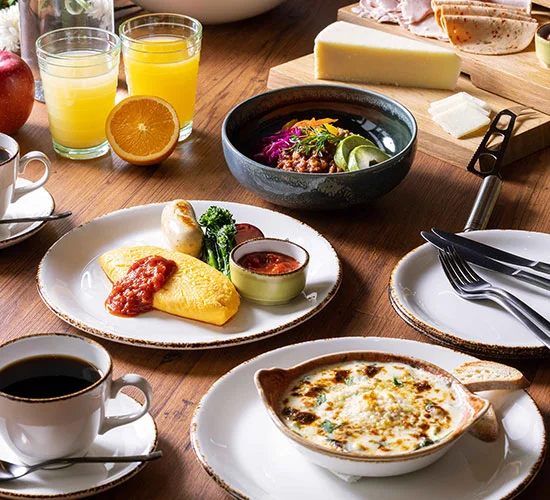
The hotel's current room and dining information lists JAM17 DINING breakfast from 06:30 to 10:00, rather than the 07:00 opening stated in older copy. It currently lists ¥4,351 for adults and ¥2,175 for children aged four to twelve, including service charge and tax. The image here shows plated eggs, a baked dish, bowls and juice at a dining table; the menu and plate selection can vary. Price the breakfast-included package against room-only if the first train or bus leaves too early to use it.
A 06:30 start is helpful for an ordinary sightseeing day and may still be too late before an early airport coach or aggressive rail departure. The correct comparison is the time between sitting down to eat and reaching the actual departure point with bags. If the morning plan requires leaving the tower at 06:15, the buffet contributes nothing that day. The restaurant's pleasant setting cannot change that arithmetic. Early Tokyo scheduling can expose those conflicts before paying for multiple breakfasts.
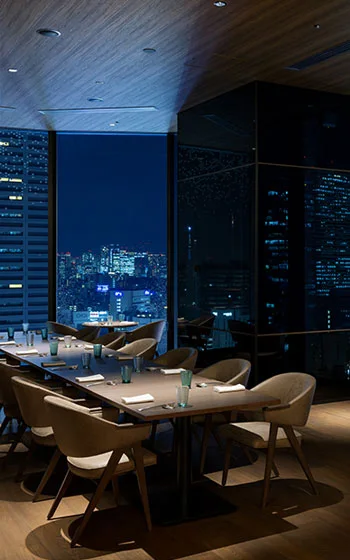
The JAM17 dining room photograph shows set tables against a night skyline. It describes the venue and its outlook, not breakfast crowd levels or the view from a guest room. A traveller interested in the dining experience can allocate a suitable evening; someone using the hotel as a sleep-only base need not add the restaurant to the hotel's value. Sunroute Plaza Shinjuku is another transport-led hotel to compare if dining and tower access are secondary.
Three nights reveal the repeated cost
Take a hypothetical three-night stay and list three departures plus three returns. If four or five of those movements use Kabukicho, Seibu-Shinjuku or the airport coach, GROOVE's location has repeated work to do. If most are early JR starts and quiet evenings, the seven-to-nine-minute approach recurs without enough local value. A single good airport arrival among six edges is useful but should not automatically override five other journeys.
The room choice sits on top of that route test. A lightly packed solo guest may find Superior sufficient. Two adults with large cases who spend time in the room should quote Deluxe or Premier on the same dates before deciding if the hotel's premium buys functional space. Breakfast, bath setup and cancellation terms can move the total. The room's high-floor setting is visible in some images, but a photograph is not a guarantee of a particular skyline view from every category or orientation.
GROOVE is a weak booking when short JR access is the daily priority, when the room rate reaches a tier where another hotel supplies more useful space, or when the party needs an onsen, gym or spa: the hotel's FAQ says those facilities are not offered. Shared laundry and vending machines are listed on the twentieth floor; that can help a longer stay, but it is not an in-room washer. An onsen-focused Shinjuku stay belongs on another shortlist if public bathing is the reason for changing hotels.
Our seven HOTEL GROOVE Shinjuku ratings
This is a tower-hotel assessment for late Shinjuku evenings, with the airport coach used only when its actual departure fits. The small domestic review sample is weighed against broader room and staff feedback.
| Dimension | Our rating | The booking consequence |
|---|---|---|
| Location | Seibu-Shinjuku is close; JR and the lift-access route take longer and should be repeated in the plan. | |
| Room | The 21–22 m² Superior, 25–28 m² Deluxe and 32–37 m² Premier tiers buy distinct amounts of space. | |
| Cleanliness | The larger international stay sample rates room upkeep highly; a small local sample is more mixed. | |
| Service | Broad staff feedback is strong, with a smaller local set showing less even experiences. | |
| Facilities | Tower views and the direct coach stop help, but neither replaces a suitable room category. | |
| Food | Breakfast starts early enough for some plans; food feedback is less consistent than room feedback. | |
| Value | The premium needs repeated Kabukicho nights, an actual airport-coach use or meaningful extra floor area. |
Our overall tower-stay read is 8.1/10. A standard JR-first itinerary can favour a quieter station-side room, particularly when the coach timetable gives no benefit.
Seven dimensions worth comparing at the final rate
↔ Scroll table left or right
| Dimension | GROOVE evidence | Where it can lose value |
|---|---|---|
| Late local returns | Kabukicho Tower address | Evenings end in other Tokyo districts |
| JR approach | About seven minutes standard, nine with East Gate lift route | Daily JR-first plan with cases or a stroller |
| Other stations | Seibu-Shinjuku about one minute | Seibu line never used |
| Airport luggage route | Direct tower coaches to Haneda and Narita | Schedules do not fit the flights |
| Room space | Superior 21–22, Deluxe 25–28, Premier 32–37 m² | The booked rate buys only the smallest tier |
| Food and laundry | 06:30 breakfast; shared 20F laundry | Departure precedes breakfast or private washer required |
| Price and flexibility | Compare exact room, meals and cancellation | Nearby room meets needs for a lower total |
The seven scores above describe a conditional tower-hotel fit; check the rate for the actual room. GROOVE deserves an exact quote when at least two advantages will actually be used: several late Shinjuku nights, a suitable direct airport coach, Seibu access or an upgraded room whose space matters. Otherwise compare Gracery and a JR-oriented hotel before paying the tower premium. Compare GROOVE room categories using the actual stay dates and airport or station route.
Hotel details
Related guides: Hotel Gracery Shinjuku: Is the 5-Minute East Exit Walk Worth Staying in Kabukicho? · Mitsui Garden Hotel Ueno: Is the 6-Minute Walk from the Skyliner Worth It? · Hotel Torifito Otaru Canal: Is a 7-Minute Walk from Otaru Station Worth It? · The Park Front Hotel at Universal Studios Japan: Is the 1-Minute Walk Worth It? · Vessel Hotel Campana Susukino: Is the 25:00 Public Bath Worth a 4-Minute Walk? · OMO7 Asahikawa: Is Sauna Plateau Worth a 15-Minute Walk from JR Asahikawa? · Hotel JAL City Fukuoka Tenjin: Is a 1-Minute Akasaka Walk Worth Choosing Over Tenjin Station? · Hotel Gracery Shinjuku vs HOTEL GROOVE SHINJUKU: JR Walk or Airport Bus? · Hakodate Kokusai Hotel: Is an 8-Minute Station Walk Worth the 2026 Pickup, Hot Spring and 5:30 Breakfast? · Hotel Gracery Sapporo: Is a 1-Minute Station Walk Worth a 15 m² Room?
The Naha Terrace: Are 35m² Rooms and 12:00 Check-Out Worth a 15–20 Minute Station Walk?
Hotel WBF Grande Asahikawa: Is a 2-Minute Station Walk Worth It for a Northern Hokkaido Base?
Hotel Sonia Otaru: Is a Canal-View Room and Rooftop Onsen Worth the 8-Minute Station Walk?
Hotel Sosei Sapporo Review: Is a 39 m² Twin-Queen Room Worth a 15-Minute Walk from Sapporo Station?
Hotel Century Southern Tower · Where to Stay in Tokyo for First-Time Visitors · Tokyu Stay Shinjuku Eastside · ONSEN RYOKAN YUEN SHINJUKU · HOTEL GROOVE SHINJUKU — access and universal-access routes · HOTEL GROOVE — Superior rooms · HOTEL GROOVE — Deluxe rooms · HOTEL GROOVE — Premier rooms · Hotel Gracery Shinjuku — access · Hotel Gracery Shinjuku — room list