
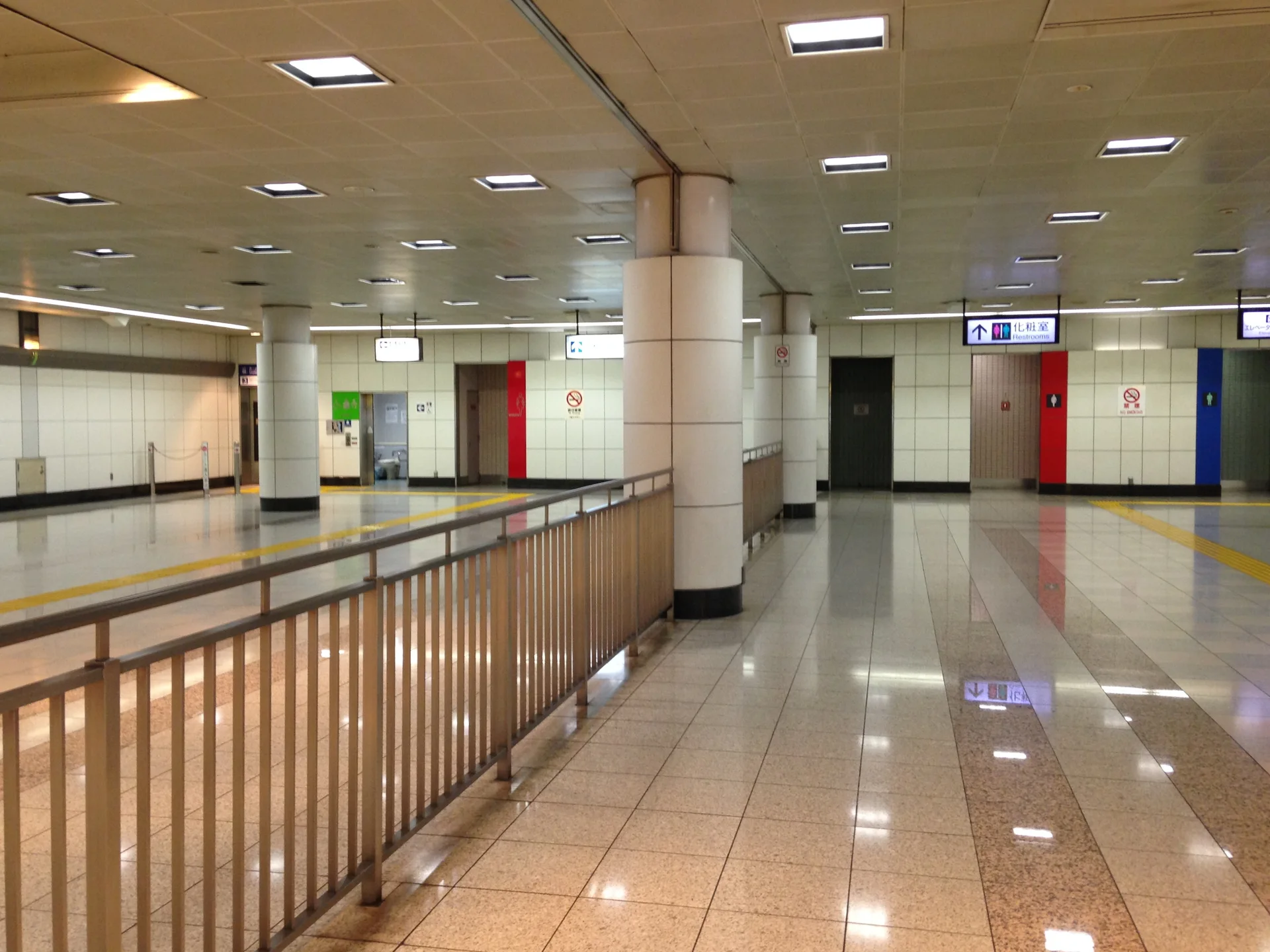
A scheduled 22:00 landing is not a 22:00 arrival at the train. The useful clock starts when you walk into Narita’s public arrivals hall with the bags you need for the night. From there, compare the last service that actually reaches your hotel area with a first night near the airport. A direct ride to a hotel beside Ueno or Tokyo Station can save a hotel change tomorrow. A desperate connection from the final train to a distant Tokyo neighbourhood can make tonight much worse than sleeping near Narita.
This is especially important at Terminal 3. Its arrivals information counter is about a 13-minute walk from the gates at Airport Terminal 2·3 rail station. The listed last Skyliner leaves that station at 23:03. A later TYO-NRT bus goes directly from Terminal 3 toward Tokyo Station at 23:20, but the last bus has different boarding and payment rules. Your flight’s landing time does not tell you which of those options will still be comfortable. Comparing Narita and Haneda transfers is useful if the airport itself has not yet been fixed.
A landing time cannot pay for a missed last train
An international arrival still has taxiing, a walk from the gate, immigration, the baggage carousel and customs ahead of it. Each stage varies. A flight scheduled to touch down at 22:15 can leave you in the public hall too late for a 23:03 train. Even if the plane parks promptly, checked bags or a queue can consume the remaining margin. Build the first-night plan around a reasonable landside time range, and keep a hotel near Narita as the backup when that range crosses the last useful departure.
A rough 22:30 landside marker can help with planning: earlier than that, a simple direct Tokyo ride often remains realistic; later, the number of forgiving options shrinks. It is a conservative trip-planning marker, not an airport curfew or a promise that everyone through customs at 22:29 will catch a train. For Terminal 3, even 22:35 gives only 28 minutes before a 23:03 Skyliner. Subtract the estimated 13-minute station walk and 15 minutes remain for finding the gate, ticketing and boarding. With a child, unfamiliar signs or multiple bags, that is a thin margin.
↔ Scroll table left or right
Position after customs | Likely first-night choice | What decides |
Landside well before about 22:30 | Tokyo can work | Direct service and easy final walk to the hotel |
Terminal 3 around 22:30–23:00 | Compare bus and rail specifically | Rail station adds a roughly 13-minute walk |
After 23:00, already at the correct TYO-NRT stop | Tokyo only if Tokyo Station is useful | Final bus is narrow and has its own payment rule |
Final bus no longer attainable | Narita area | Ordinary city transport has given way to taxi or overnight waiting |
Several bags, stroller or a fixed early start | Lean toward the shorter arrival night | Late hand-offs and lost sleep cost more |
The decision is not simply “can I enter Tokyo?” A train ending at the wrong station may leave another connection after midnight. A bus arriving at Tokyo Station may still require a taxi across town. The useful departure is the one whose arrival point lets you reach a real bed with a tolerable final walk or planned vehicle. Ueno versus Shinjuku for a Tokyo base puts that hotel-side distance into context. Where first-time visitors can stay in Tokyo is the broader area choice.
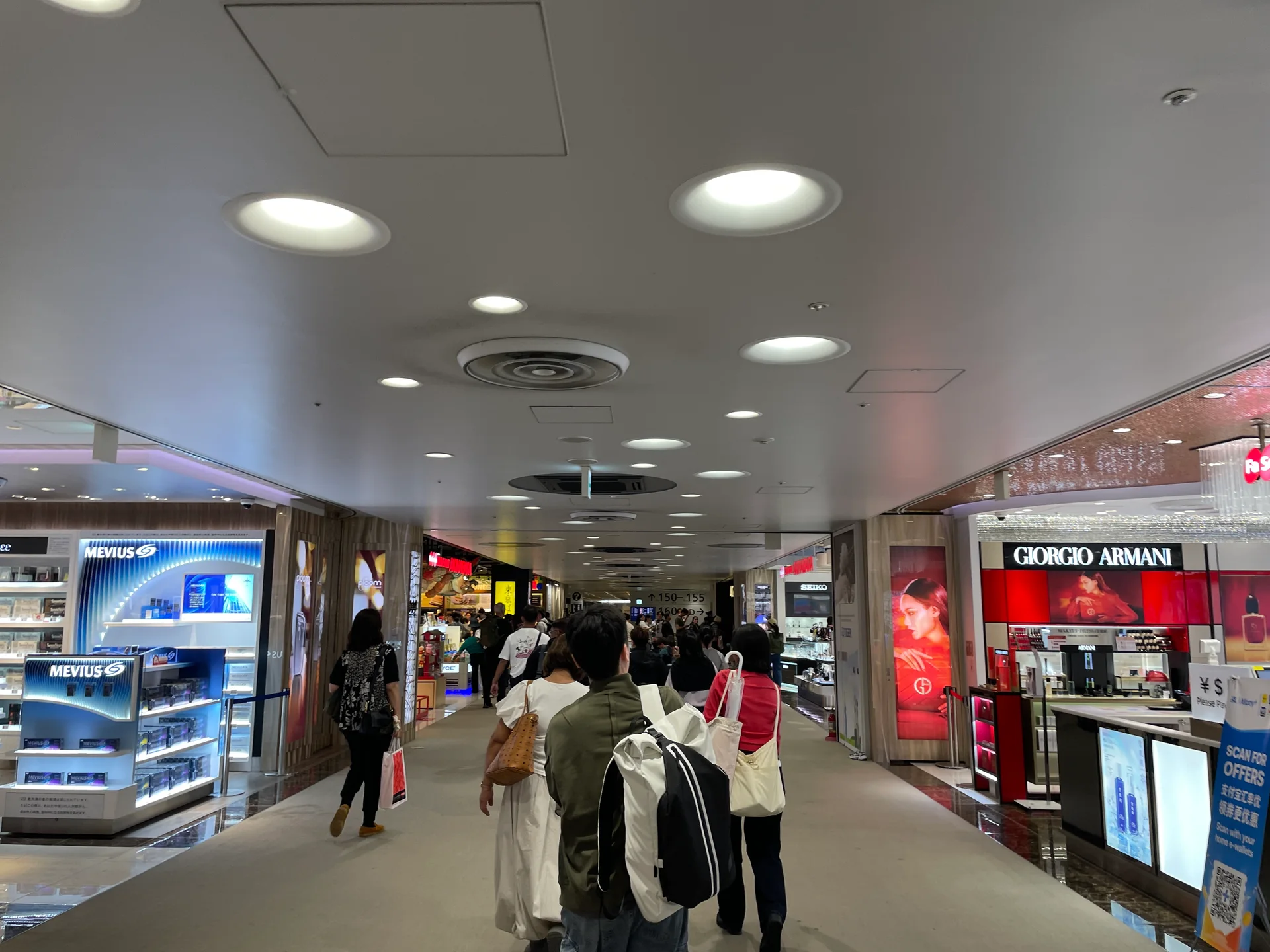
Terminal 3 uses up the margin before you reach the platform
Narita Airport estimates about 13 minutes on foot from the Terminal 3 arrivals information counter to the Airport Terminal 2·3 Station ticket gates. That estimate excludes any distance from your baggage exit to the counter, ticket purchase and the platform. Terminal 2 passengers reach the station with less terminal-to-terminal walking. Treating both terminals as the same starting point is a common late-arrival error. The airport’s Terminal 3 walking route explains where the estimate starts and ends.
Consider a T3 traveller who is landside at 22:50. The 23:03 Skyliner is not an available 13-minute cushion; the published walk alone is about thirteen minutes. Running with luggage to the station is a poor first-night plan. The bus that departs T3 at 23:20 may leave more usable time because the traveller boards at the terminal, but only if the Tokyo Station endpoint actually suits the hotel. A traveller landing in T2 could reach the same rail station with a different amount of walking, so the optimal choice may change by terminal even at the same clock time.
The calculation can be written without inventing a reliability score: departure time minus the moment you are landside, minus access and boarding time, equals useful slack. A 30-minute raw gap is not a 30-minute buffer if thirteen minutes must be spent walking. Apply that simple arithmetic to the actual service and terminal, then add your party’s pace. Late arrival at Haneda has a different airport geography and should not be used to set a Narita cutoff.
The 23:03 Skyliner is different from the 23:11 train
Keisei’s Skyliner schedule lists the final train from Airport Terminal 2·3 Station at 23:03 for Nippori and Keisei-Ueno. The station departure list also shows an Access Express at 23:11, with Keisei-Takasago as its listed destination. Those eight minutes are not a second direct Skyliner to a Ueno hotel. The later train may still be useful to someone who knows the onward connection, but its final-mile plan needs to be checked separately.
For a hotel within an easy walk of Keisei-Ueno or Nippori, the direct Skyliner is a clean city option if you have genuine station-ready slack. Once that is gone, taking any train that happens to leave later can deposit you at an interchange where the next useful service has ended. Shinjuku, Shibuya and other western districts add another layer even when you do catch the Skyliner: a late JR transfer or taxi after reaching Nippori or Ueno. A Ueno hotel near the Skyliner route illustrates why the hotel address matters as much as the airport train.
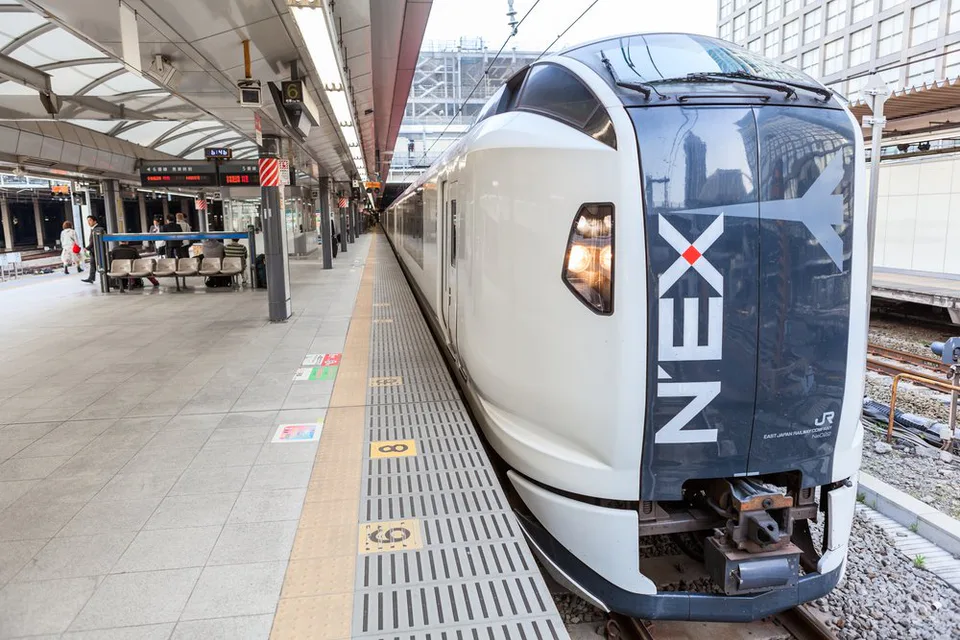
Narita Express serves a different network and can be better for some Tokyo destinations at other hours. Its train is pictured here, but it should not be mistaken for the 23:03 Skyliner in the late-night calculation. Check the live operator timetable for your date and the exact terminal before paying for a city hotel that depends on one departure. A Tokyo hotel-area decision is easier to make once the airport endpoint and final walk are known.
The final TYO-NRT bus reaches Tokyo Station later
The current TYO-NRT airport-to-Tokyo timetable shows the last city-bound run leaving Terminal 3 at 23:20, Terminal 2 at 23:25 and Terminal 1 at 23:30, arriving at Tokyo Station after midnight. A terminal-side boarding point makes the T3 option more plausible than a desperate platform run when the traveller is already landside. But it does not make every Tokyo hotel close. A room near Tokyo Station can benefit; a room needing another late transfer across the city may not.
Most airport departures involve a timed ticket from a terminal counter. The last-bus boarding instructions are different: go directly to the stop and pay on board with cash or a transportation IC card. Credit cards are not accepted on that last departure. You cannot make the final service safe simply by assuming you have reserved a seat. Before treating it as Plan A, know the stop, confirm a usable payment method and give yourself time to queue and board. A bus printed at 23:20 is only a real option once you have cleared customs.
The regular adult one-way TYO-NRT fare is ¥1,500; the operator lists ¥3,000 for designated late-night or early-morning services. Keep the yen price in the comparison rather than an outdated USD conversion, and identify the fare on your chosen departure. The cash saving of a bus over a taxi can be substantial, but a final bus used with no fall-back is a different product from an earlier service. Traffic and arrival time can vary, so the Tokyo hotel needs a realistic late check-in and a straightforward walk from the stop.
If the final bus is gone, the choices are no longer a normal train or bus versus an airport hotel. They are a long taxi into Tokyo, a stay in the Narita area, or waiting inside an open terminal space. Price that altered decision honestly. Narita capsule or shuttle hotel addresses the accommodation options after the city transfer is rejected. A late arrival at Kansai Airport faces a similar last-service problem but has different routes and times.
A Tokyo hotel door can be farther than the final station
Ueno and Nippori pair naturally with the Skyliner. Tokyo Station pairs with TYO-NRT. A hotel in Shinjuku, Shibuya or another district may need a second rail ride or taxi after the airport leg. At midnight, that second movement is often the difference between a reasonable first night and a brittle chain. Map the final station exit to the actual hotel door, with luggage, before calling either transfer direct. The broad comparisons in Ueno versus Shinjuku and Tokyo neighbourhoods for a first visit should be interpreted with the late arrival in mind.
The alternative of staying near Narita trades tonight’s transfer for one tomorrow. A short ride to an airport-area room protects sleep but can impose breakfast, checkout, shuttle or local transfer, city-bound rail, luggage storage and another hotel arrival the next day. The value of avoiding those steps grows when the Tokyo hotel will be your base for four or five nights. For a one-night Tokyo stop, the extra Narita stay can be much less costly than a post-midnight city transfer. Ten days in Japan without excess transfers is a useful reminder to count hotel changes across the whole route.
↔ Scroll table left or right
Arrival-night option | What it protects | What it costs tomorrow or tonight |
Airport-connected or nearby Narita hotel | Shorter arrival night and less last-service risk | Another checkout and city transfer next morning |
Ueno or Nippori hotel by a comfortably reached Skyliner | Wake up at the long-stay base | Longer arrival night; rail margin required |
Tokyo Station hotel by a comfortably reached TYO-NRT bus | Terminal-side boarding and no morning hotel change | Last-bus rules and arrival after midnight |
Western Tokyo hotel after another transfer | Potentially avoids next-day move | Extra late hand-off can outweigh the saving |
The first useful commitment tomorrow changes the answer. A fixed Tokyo Disney morning, early intercity train or appointment makes sleep precious. A completely open first day and a five-night Tokyo base make it easier to finish the transfer tonight if it is still clean. Where to sleep for Tokyo Disney and when to move on a Disney split stay show why a park plan can justify positioning differently. The airport hotel is neither automatically cautious nor automatically wasted: compare both nights together.
Bags and children turn small transfers into a long night
A solo passenger with carry-on can move through a late platform and short hotel walk more easily than two adults steering a stroller, a sleepy child and three suitcases. Count every hand-off after customs: baggage trolley to curb or station, waiting at the right platform or stop, lifting bags onto the service, any Tokyo connection and the last walk. The clock estimate for a train does not capture that handling. At 23:00 after a long flight, one additional interchange can feel much larger than ten scheduled minutes.
A family’s decision should therefore be made with the slowest realistic movement, not the fastest solo itinerary. For an airport hotel, confirm the last shuttle and where it boards; if the shuttle itself has stopped, the hotel’s supposed simplicity disappears. A taxi to a nearby hotel may still be easier than an onward Tokyo transfer, but it belongs in the price comparison. The Narita capsule-versus-shuttle choice separates an on-airport bed from a hotel whose shuttle becomes another deadline.
Luggage forwarding in Japan can simplify later hotel changes, but the checked bags arriving with you must still reach the first bed tonight. An eSIM that becomes active after a specific time can also affect navigation once you land; late-arrival Japan eSIM timing covers that separate constraint. Neither service rescues a last train already missed. Decide the first night on the bags and people actually travelling, then optimise the later luggage movements.
Narita town is a middle option, not a free shortcut
A hotel around Narita Station or on a nearby shuttle route may cost less than the closest airport-connected bed while avoiding a full city transfer tonight. It can work when the terminal options are full, a family wants a conventional room, or tomorrow’s route continues east instead of straight into central Tokyo. It can be inefficient when the only plan tomorrow is to travel to the Tokyo hotel that will host the rest of the trip: you add a local shuttle or taxi and another rail journey without gaining a meaningful stop.
Check how you reach that particular hotel late at night. “Near Narita Airport” can mean walking distance to a terminal, a shuttle with a last departure or a taxi journey to town. If the arrival is later than the hotel shuttle, the cheapest displayed room may not be the lowest-effort one. Compare the actual late-night transfer and the next morning’s departure together. Narita capsule versus shuttle hotel deals with those details once the decision to avoid Tokyo is made. A different late-airport pattern at New Chitose cannot supply Narita’s times but illustrates the same whole-morning question.
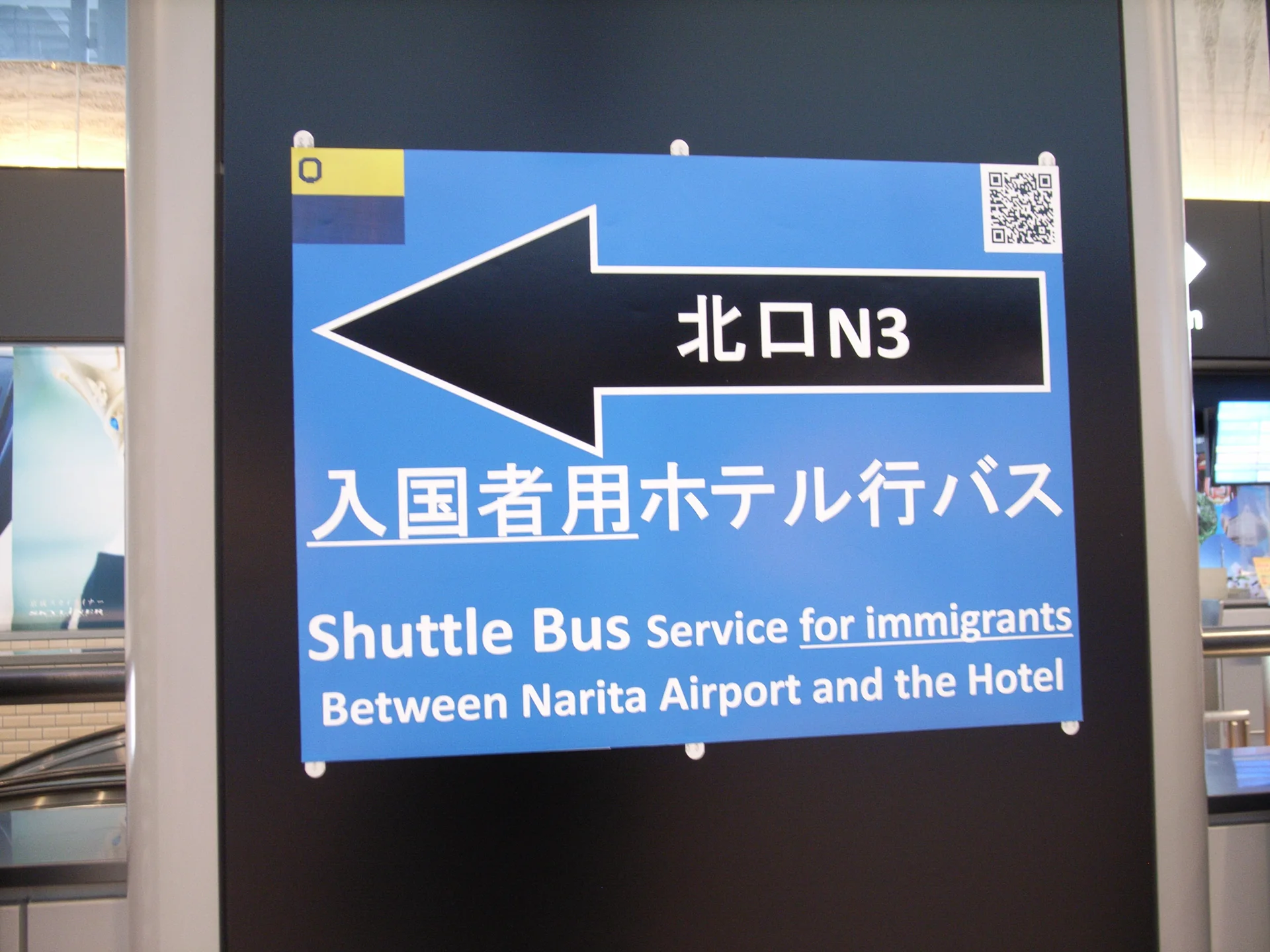
An open terminal is not the same as a booked bed
Narita permits overnight use in specified terminal areas. The first and second floors of Terminal 3 are available around the clock. Terminal 1’s international-arrivals floor and basement, plus several arrival and lower-floor areas in Terminal 2, have 24-hour access. That does not turn every restaurant, lounge or seating zone into overnight accommodation. The airport’s night and early-morning access information identifies the particular floors and facilities. Check it if an overnight wait is a genuine contingency.
Terminal 2 also connects directly to a 24-hour capsule hotel at Parking P-2. The airport warns that it may fill and recommends advance booking. That is a useful recovery choice when the city service is gone, provided it still has a bed. Terminal seating may be rational during a serious disruption or when all rooms are unavailable, but it can compromise the first sightseeing day. Calling it “free accommodation” ignores that time and sleep cost. The airport capsule and shuttle-hotel comparison should be settled before the flight if a very late customs exit is plausible.
Make one city plan and one airport plan before departure
A practical city plan names the terminal, final useful departure, boarding point, fare and payment method, endpoint and hotel-door route. A practical airport plan names a hotel or capsule with confirmed late access, its shuttle or walking route and the morning transfer. Then the public-arrivals clock tells you which plan to use. This is more robust than an arbitrary 0–10 “resilience” score, whose precise-looking numbers cannot measure immigration queues or your family’s pace. The factors behind a good decision are still real: departure slack, door-to-door fit, luggage burden, morning positioning and fallback depth.
As a rule of thumb, a person landside before roughly 22:30 with a direct Ueno or Tokyo Station hotel route can consider completing the journey. A T3 passenger becoming landside after that point should stop assuming rail is superior; the station walk makes the terminal-side bus more relevant if Tokyo Station works. After 23:00, continuing should depend on seeing the specific departure, stop, payment method and final hotel walk clearly. Once the final bus is no longer realistic, a Narita bed usually beats improvising a long city taxi unless that taxi was already budgeted. These are planning judgments derived from the current services, not fixed airport cutoffs.
Choose Narita tonight when two or more frictions stack up: customs may release you around 23:00, Terminal 3 makes the station walk tight, the Tokyo hotel requires another transfer, the group has children or heavy bags, or tomorrow has a fixed early start. Continue into Tokyo when the actual landside time leaves a real margin, the service arrives close to the hotel, and eliminating tomorrow’s move matters because this will be a multi-night base. A prearranged door-to-door taxi changes the calculation by removing the last-service risk, but it is a different cost proposition from normal rail or bus.
The trip plan may make the answer clearer than any timetable. A 10-, 12- or 14-day first Japan itinerary shows how much a first-morning hotel move costs on an already full route. Tokyo honeymoon room choices remind travellers that a premium city room arriving after midnight may be barely used. Haneda late arrival choices and Fukuoka first-night positioning provide comparable questions with different transport geography.
If Narita is the chosen first night, compare airport-area beds for the arrival date against the last shuttle or walking route. If the direct city service still has margin and the hotel is near the bus endpoint, compare Tokyo Station-area stays by the final street-level walk. The decision can be revisited after customs; the essential preparation is knowing both door-to-door routes before the flight.
Other route decisions
Late Arrival or Early Flight in Okinawa: Hotels Near Naha Airport · Where to Stay in Osaka for a Guys Trip: Beds, Two Bathrooms and the Late Ride Home Matter More Than Price Per Head · Where to Stay in Fukui: Keep the Dinosaur Museum and Eiheiji Near the Rails, or Sleep in Awara Onsen · Where to Stay Near Nyuto Onsen: Inside the Onsen Village or Lake Tazawa? · Where to Stay for the Saga Balloon Fiesta 2026: Saga, Tosu or Hakata.