
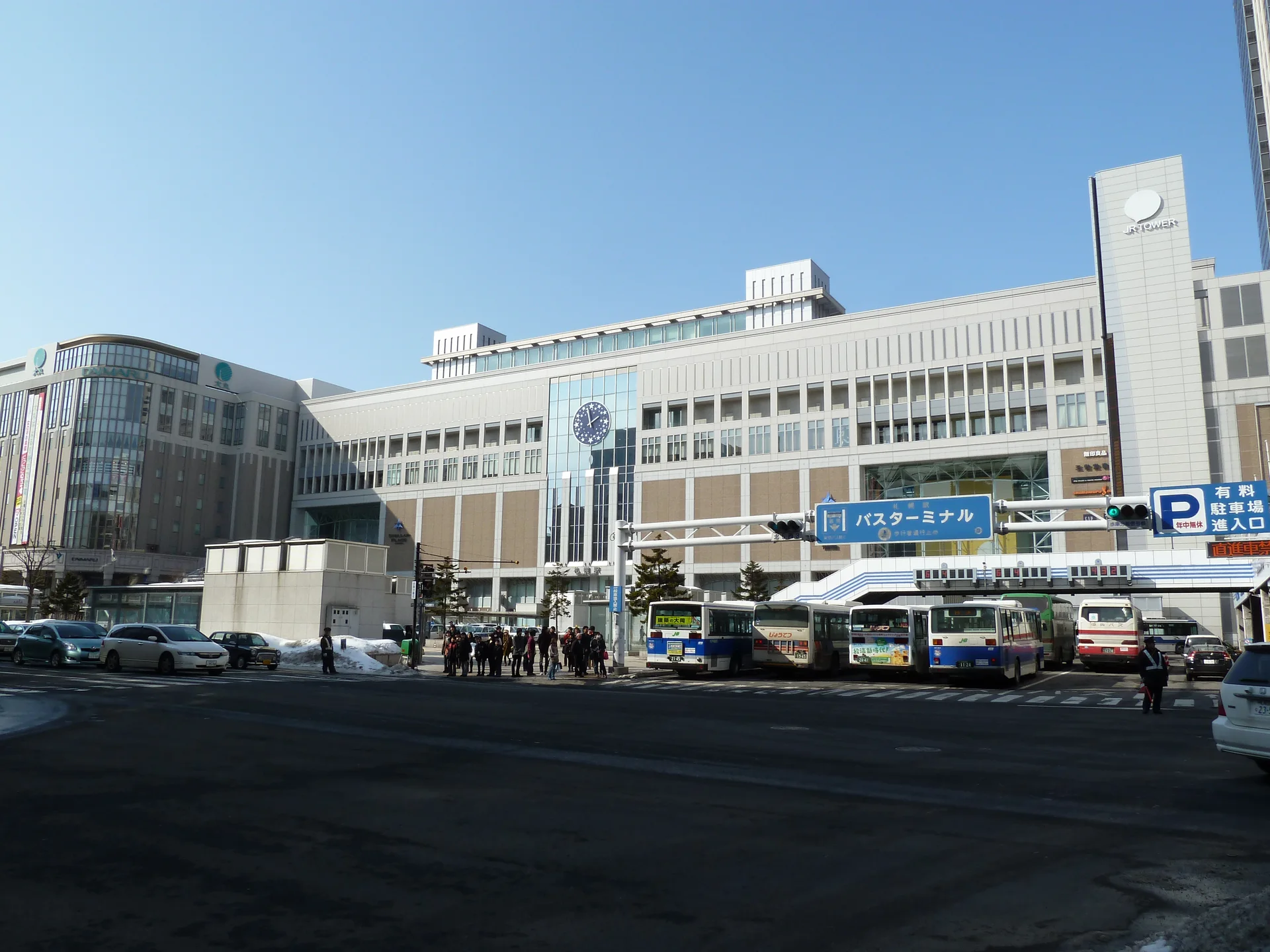
Hotel Gracery Sapporo is almost across the street from JR Sapporo Station's South Exit, but its two approaches solve different problems. The street-level crossing takes about a minute and has no steps. The sheltered path through APIA keeps off much of the weather, yet ends in stairs and is available only around 06:00–23:00. A traveller pulling a heavy case should decide which route to take before choosing the hotel, especially when a winter train reaches Sapporo late.
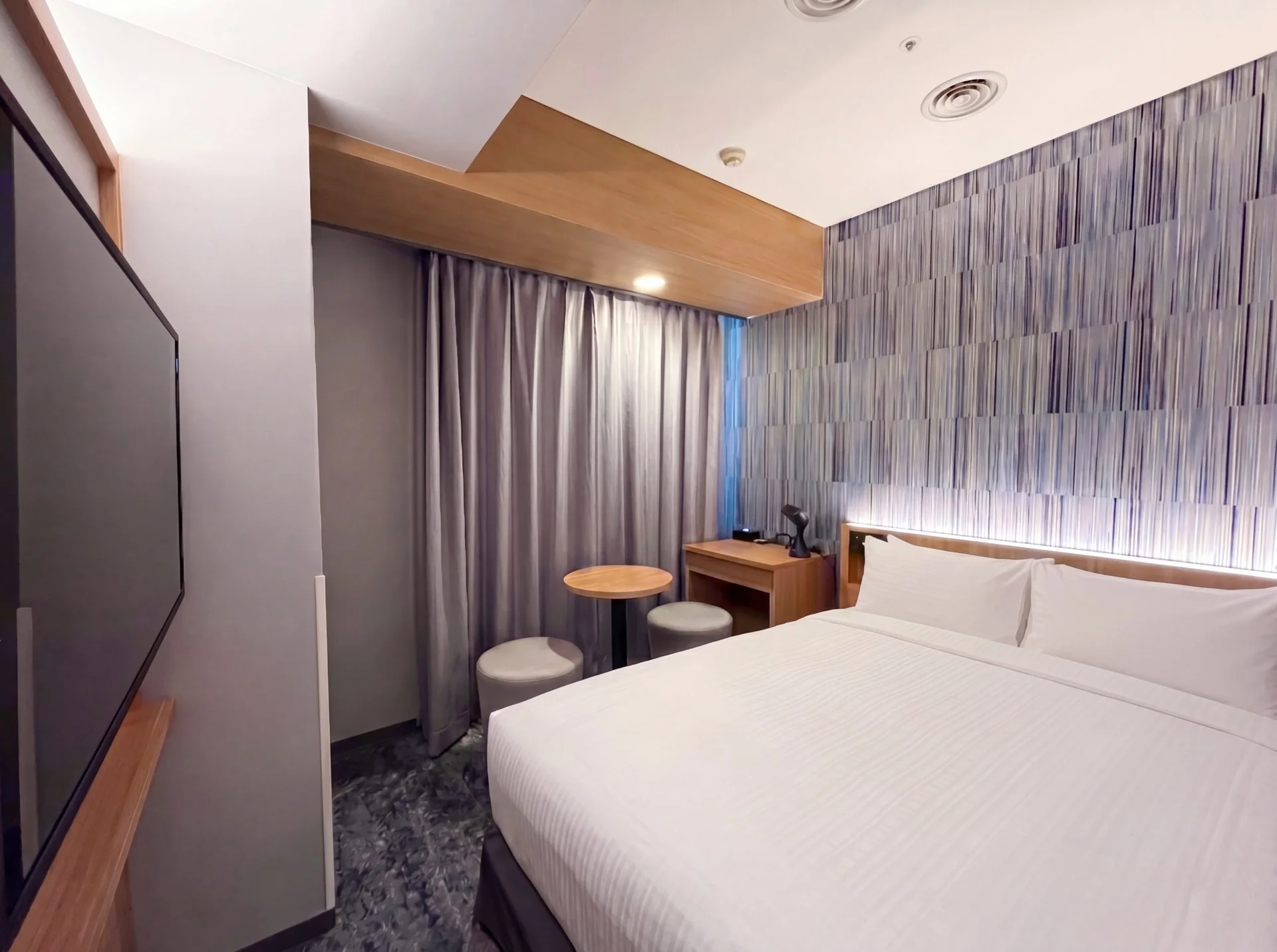
The room choice matters just as much. Gracery sells a 15 m² Standard Double, an 18 m² Compact Twin, 19 and 22 m² Standard Twins, and a 22 m² Standard Triple. One light-packing night can make the Double's size a reasonable price for a short final walk. Four winter nights with two people, coats and large cases are a different purchase. In that case, compare the twin categories before deciding that the location is worth the smallest available room. Published floor area does not show how much open floor remains around the beds.
↔ Scroll table left or right
Itinerary | Gracery decision | Reason to reconsider |
Delayed arrival followed by an early JR departure | Strong first choice if the booked room fits the cases | The sheltered APIA route may already be closed; use the street level |
Two guests for three to five nights with large luggage | Price a 19 or 22 m² Twin before the 15 m² Double | A larger rival room may repay a longer walk each night |
Light bag in snow or rain before 23:00 | APIA may make the arrival more comfortable | The final stairs remain; the route is not step-free |
Heavy case, wheelchair or a late return | Take the short surface crossing | Weather protection does not outweigh an unusable stair route |
Evenings centred on Susukino or repeated bath use | Compare a southern base or a hotel with a guest bath | A one-minute JR approach has less value when JR is rarely used |
This is an editorial choice for a rail-heavy winter stay, not a claim that a published one-minute walk determines everyone's best hotel. The Sapporo Station, Odori or Susukino base guide is the next check when most sightseeing is inside the city. A New Chitose late-arrival plan can also change whether a short Sapporo station walk matters on night one.
The stair-free route is outside, across one crossing
From the JR west ticket gate, follow the South Exit, cross the street and turn right by the station square. Gracery describes the surface segment as about one minute from the exit, step-free, and comparatively manageable in winter because the roadway has heating. That heating does not guarantee a dry, ice-free surface at every moment. It does establish why the street route is the practical default for a wheelchair, a case that cannot be lifted, or an arrival after the underground mall closes.
The underground APIA route starts from the station, runs through the shopping passages and reaches an exit with stairs before the hotel building. Gracery describes access at roughly 06:00–23:00 and acknowledges that the sheltered route takes longer than the street crossing. It may still be pleasant with a cabin bag during rain or drifting snow. The mistake is treating “directly connected” as a promise of no lifting. The hotel's access overview and ground route and APIA route show the distinct approaches if you want to save them before travel.
↔ Scroll table left or right
What you are carrying and when | Through APIA | Across the street |
Small bag during rain or snow, before 23:00 | More cover, although slower and with stairs | Shorter but exposed to the weather |
Two heavy 28-inch cases | Final steps may undo the weather advantage | Step-free, and the hotel directs large-case guests this way |
Wheelchair or inability to lift bags | Do not treat this as the accessible entrance | This is the described step-free approach |
After the mall's approximate 23:00 close | Not a reliable arrival plan | Remains the useful approach |
For a comparison with a much longer but more weather-protected downtown approach, see the Sapporo Grand Hotel underground-walk decision. A minute on the route map is not a full measure of elevator access, stairs, road surface or luggage effort. The Sapporo hotels with parents guide applies the same question to travellers who cannot comfortably lift cases.
The room ladder changes the value of the address
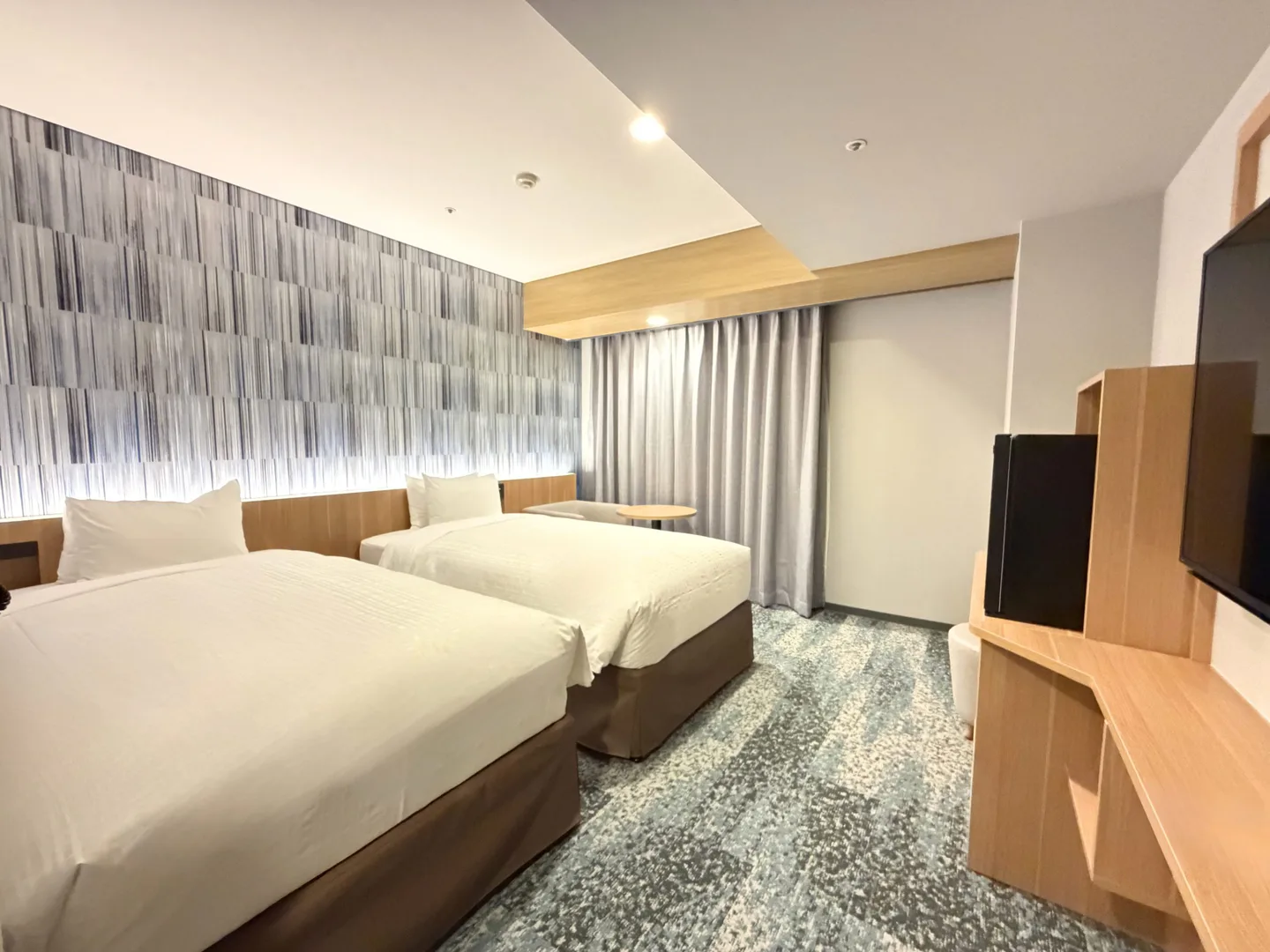
Gracery's current room list gives an unusually clear set of area choices. The 15 m² Standard Double has a 140 cm bed. The 18 m² Compact Twin has two 108 cm beds. The 19 and 22 m² Standard Twins each list two 110 cm beds. The 22 m² Standard Triple has three beds of roughly 108–110 cm. These are published room categories, not a guarantee that a particular bed orientation or two opened suitcases will fit as imagined. Check the exact category on the booking screen.
↔ Scroll table left or right
Published room | Area | Sensible comparison |
Standard Double | 15 m² | Solo use or a short, lightly packed couple stay |
Compact Twin | 18 m² | Two separate beds when floor space is not the main priority |
Standard Twin | 19 m² | A two-person multi-night starting point |
Larger Standard Twin | 22 m² | More tolerance for winter clothing, shopping and two cases |
Standard Triple | 22 m² | Three beds without assuming a third guest creates more space |
The difference between 15 and 22 m² is seven square metres, about 47% more published floor area. That calculation is useful for filtering categories, but it says nothing exact about where the desk, beds and luggage rack sit. For two adults staying four nights, divide the total price difference between Double and Twin by nights and people. A small nightly upgrade can be sensible if it prevents repeated repacking; a very large upgrade may be harder to defend when the room is only for sleeping.
Gracery works especially well as an arrival or departure hotel because the awkward parts of a trip are concentrated at the station. The same one-minute advantage has less value on a relaxed four-night city stay if you leave by subway or foot each morning and spend evenings in Susukino. The Sapporo two, three or four nights guide can show whether this is a transit night or a city base. If two large bags and an early train are the dominant concerns, Keio Prelia versus Gracery is another nearby comparison.
Repeated JR use makes one minute worth more
Count actual touches of JR Sapporo Station. Arrival and departure use the route twice. An Otaru day trip adds an outbound and return walk; an Asahikawa train day adds two more. This does not create a measurable universal “snow penalty,” but it explains why a short approach can become more valuable than a few extra room square metres on a rail-led itinerary. A Sapporo city break without those JR days has different geography.
↔ Scroll table left or right
Use of JR Sapporo during the stay | How the short approach matters | What to compare instead |
Arrival and departure only | Helpful at the two luggage-heavy edges | Room, breakfast and evening district may dominate |
Two or three additional JR movements | Saves repeated exposure and wayfinding | Compare a larger room only after pricing the repeated walk |
Most evenings in Susukino, little JR use | Location advantage fades after the first night | A southern hotel can reduce nightly returns |
An Otaru day trip or overnight decision and a car-free Hokkaido winter week make JR frequency concrete. For an Otaru overnight, Hotel Sonia Otaru changes how often you return to JR Sapporo. If your route is mostly a car rental with occasional city walking, Sapporo self-drive hotels bring parking and return timing into the comparison. Gracery's station address should not decide a trip that seldom uses the station. A Vessel Inn Nakajima Park subway base is a different late-night geography.
A useful laundry room, without a public-bath claim
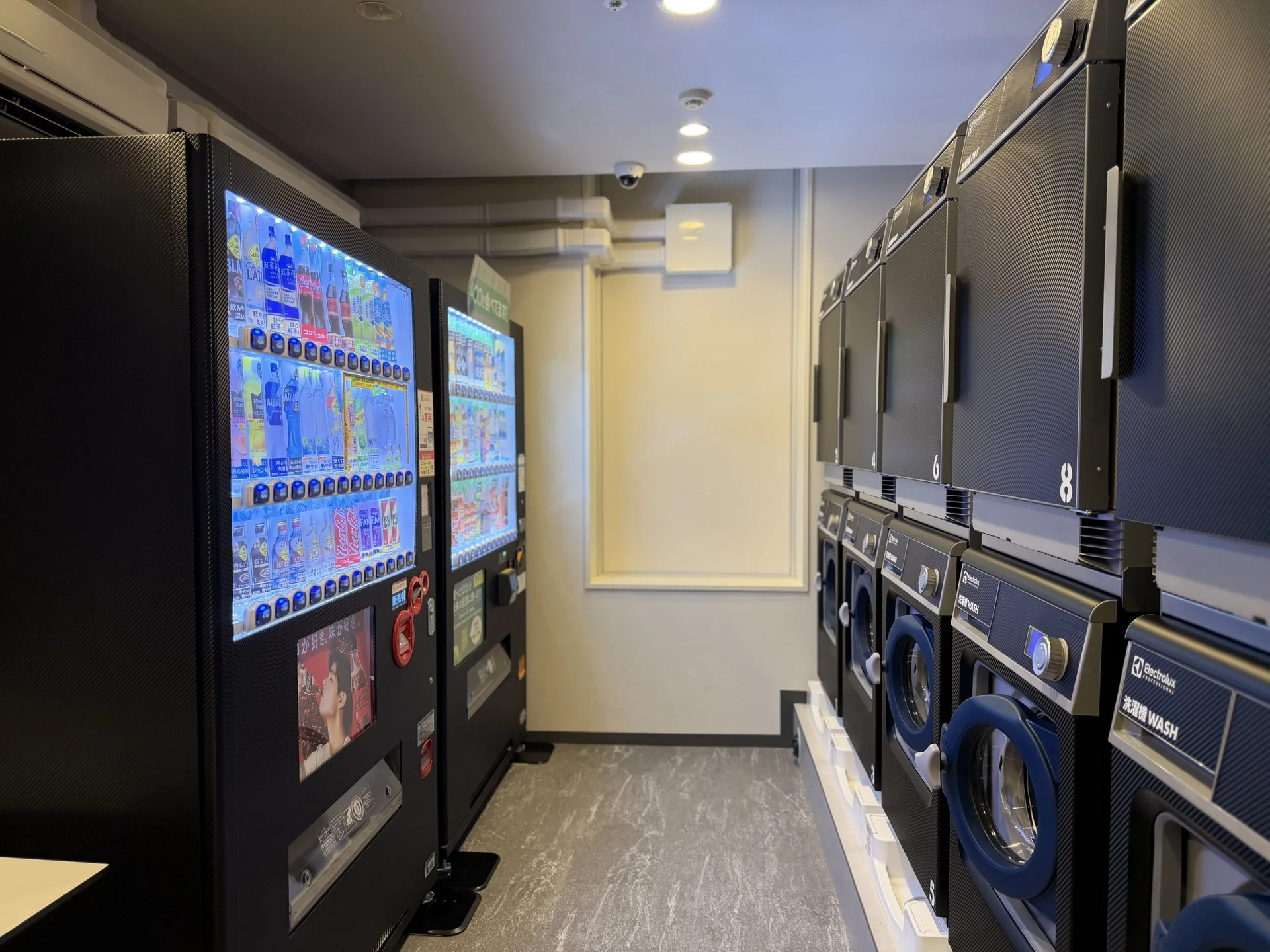
Gracery opened a guest-only seventh-floor laundry room on 1 July 2026. It runs around the clock. The published charges are ¥600 for a 30-minute wash and ¥100 for ten minutes of drying; payment is by credit card or barcode method, with cash excluded. A room key is needed for entry. Those details make laundry genuinely useful on a four- or five-night stay, especially when winter layers would otherwise fill the luggage. They do not guarantee a free machine at a chosen hour.
For one transfer night the machines may have no value at all. On a longer stay, compare a shared 24-hour room with the in-room washer option at Tokyu Stay Sapporo Odori or the five-to-seven-night Sapporo hotel choice. In-room laundry removes queue uncertainty, but it may require a very different address and room rate. Gracery does not add a guest public bath to this comparison; do not infer one from another Sapporo hotel's facilities.
Bonsalute Café offers breakfast from 06:30 to 10:00, with last admission at 09:40. The adult and school-age price is ¥3,000, with preschool children free. Check the live breakfast-inclusive rate as well as the separately charged meal, since package pricing can differ. A 06:30 opening is early for a city sightseeing day but not automatically useful before a very early JR train. Work backward from platform time, checkout and luggage before paying for it. The JR Tower Hotel Nikko Sapporo premium decision is another station-centred hotel comparison with a very different breakfast and facility proposition.
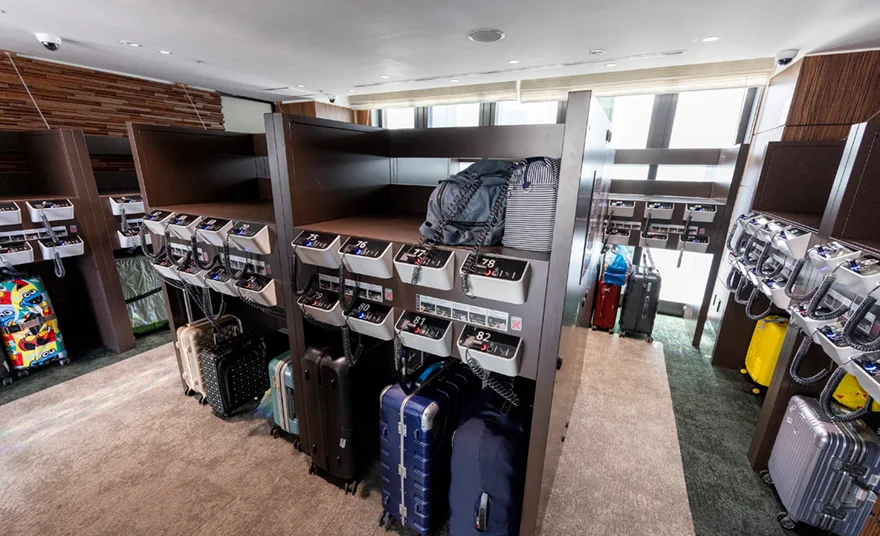
The breakfast spread can change with season and service. Decide whether the meal price and serving window fit your itinerary rather than assuming a particular dish will appear. The seventh-floor Self Cloak luggage area may ease a day between checkout and a train; check storage conditions for your stay.
Solaria trades a longer JR walk for a larger twin and guest bath
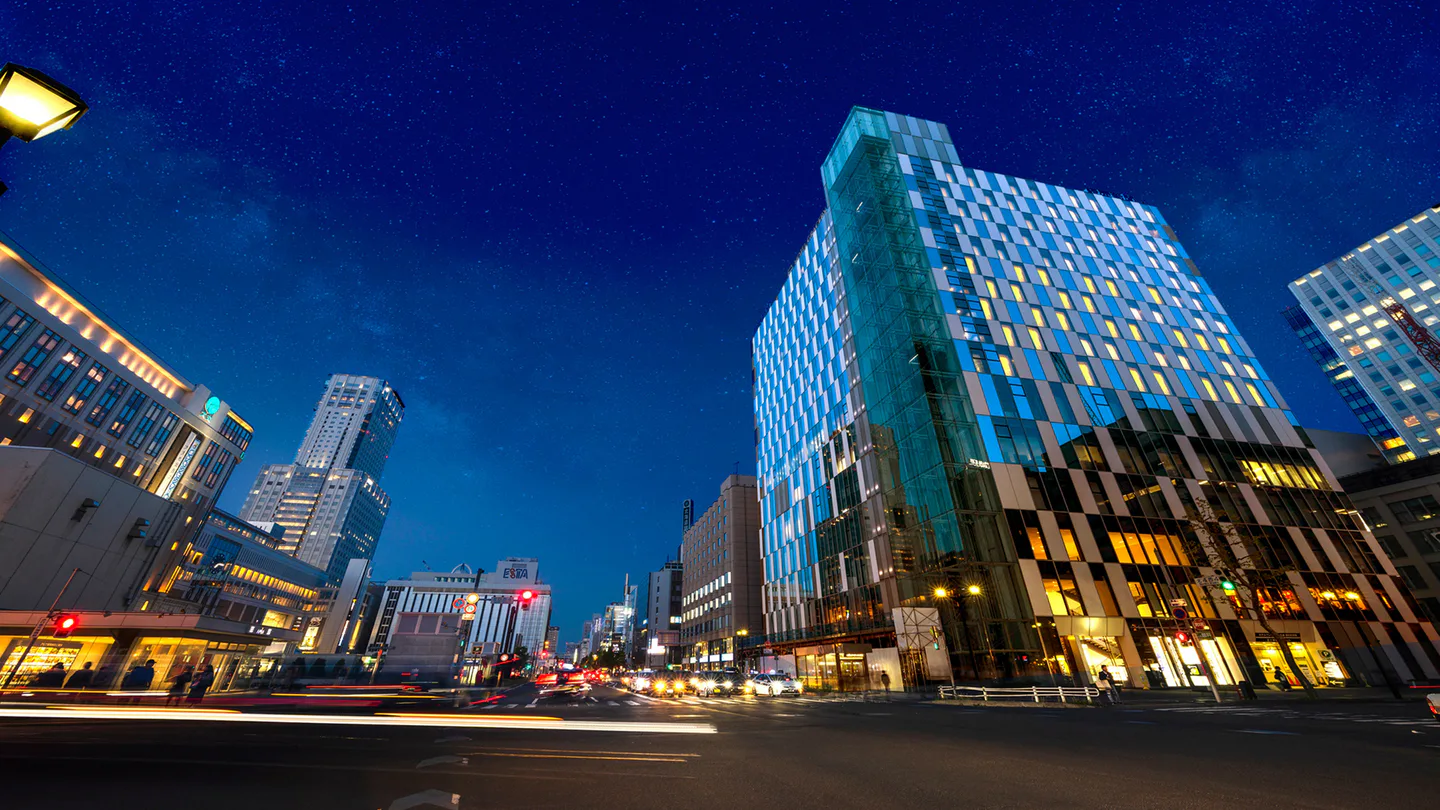
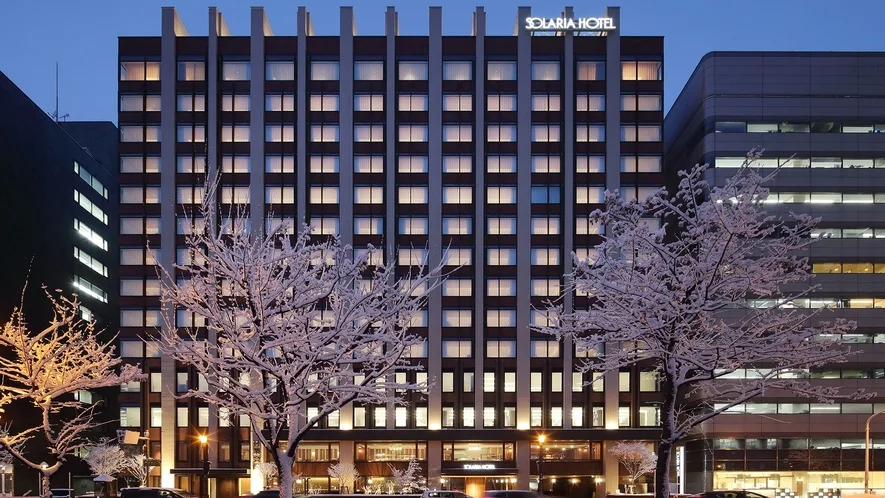
Solaria Nishitetsu Hotel Sapporo states about five minutes from the JR South Exit. Its location changes when the trip uses the Namboku subway: the hotel is about two minutes from the Sapporo subway station exits 8 or 10. A train from New Chitose Airport makes the JR number relevant; an evening returning from Odori or Susukino by subway makes the shorter subway segment relevant. Compare the actual final walk, not a single marketing number.
Solaria's Standard Twin is 26 m² with two 115 × 195 cm beds. For two people with large cases over several nights, the extra published room area relative to Gracery's 19 or 22 m² Twins is a real advantage. It is not proof that two particular cases can remain open without blocking a walkway. The like-for-like comparison is a twin against a twin, not Gracery's 15 m² Double against Solaria's 26 m² Twin. The Solaria hotel room guide also weighs its 21 and 30 m² categories.
↔ Scroll table left or right
The item being bought | Gracery Sapporo | Solaria Nishitetsu Sapporo |
JR South Exit approach | About one minute at street level | About five minutes |
Heavy-case winter arrival | Very short step-free surface route; sheltered APIA path has stairs | Longer outside segment from JR |
Twin options | 18, 19 or 22 m² | Standard Twin 26 m² |
Guest bath | No public bath advantage in this comparison | Public bath, with afternoon/evening opening and a morning window to check |
Practical multi-night benefit | New 24-hour guest laundry | More twin floor area and a bath to use repeatedly |
Strongest trip pattern | Late or early rail movement and frequent JR days | Longer Sapporo base with city time and usable bath evenings |
Solaria's bath is for guests, not a natural onsen claim. Its bath page lists 15:00–25:00 and 05:30–09:00, while a floor guide has listed 06:00–09:00 in the morning. The shared evening span is easier to plan around; anyone relying on a bath between 05:30 and 06:00 should confirm the current morning opening before travel. If mineral spring water, rather than a large bath, is the requirement, compare YUEN Sapporo's hot-spring stay or Granbell's high-floor hot spring.
For one night before an early train, Gracery can win despite the smaller twin if its total price is sensible. Across three or four nights, Solaria's extra space and repeated bath use can repay its longer JR segment. If only a 15 m² Gracery Double remains and Solaria has a 26 m² Twin, the room product is so different that the one-minute advantage should not settle the booking. For another space-versus-walk benchmark, the 33.2 m² Keio Plaza Sapporo Twin adds a larger-room option.
Emion's bath earns its keep on evenings you return in time
Hotel Emion Sapporo has a 21 m² Standard Twin, a 24 m² Standard Triple and a 43 m² Standard Fourth. Gracery has 19 and 22 m² twin choices and a 22 m² Triple. For two people, the honest first comparison is Gracery Twin versus Emion Twin; three or four guests require the exact bed arrangement rather than a generic “sleeps four” label. Emion's larger group room can change the answer, but it should not be compared with Gracery's cheapest Double as though occupancy were identical.
↔ Scroll table left or right
Room or facility | Gracery | Emion |
Two-person baseline | 19 or 22 m² Standard Twin | 21 m² Standard Twin |
Three-person published step | 22 m² Standard Triple | 24 m² Standard Triple |
Four-person comparison | Consider two rooms if group comfort requires it | 43 m² Standard Fourth exists |
Bath | No public bath advantage | Guest public bath without extra entry fee |
Laundry | 24-hour guest laundry with card/barcode payment | Paid coin laundry also listed |
Emion's guest bath is free for hotel guests. Its current FAQ lists 15:00–25:00, last entry 24:30, and 06:00–10:00, last entry 09:30. That can make a noticeable difference after cold winter days if you return by the evening cutoff. If dinner and nightlife routinely keep you in Susukino past 24:30, there is little reason to pay extra for a bath you cannot enter. Emion's bath is described as a public bath; do not treat it as the same product as a natural hot spring. The Gracery versus Emion winter comparison expands the room and return-time question.
Gracery's new laundry also removes an older reason to reject it for a long stay. Emion offers paid coin laundry too, so access to a washing machine is no longer a clean separator. Compare when you expect to wash, whether waiting is tolerable, and whether the room and bath will be used repeatedly. The Emion versus Keio Prelia comparison offers a third station-area benchmark. For a trip that changes Hokkaido hotels often, first settle whether Sapporo is the right luggage base with a five-day Hokkaido route.
↔ Scroll table left or right
Length and rail pattern | Most likely weight |
One night | Gracery's arrival/departure route matters twice; little time to exploit Emion's bath |
Two nights | Exact room category, one usable bath evening and current rates can reverse the choice |
Three to five city nights | Repeated room comfort and bath sessions give Emion more chances to pay back |
Three to five rail-heavy nights | Gracery's short approach regains value on each JR departure and return |
Seven site scores for a winter rail-base stay
These scores are out of ten for a traveller using JR Sapporo repeatedly in winter. The short surface crossing lifts Location, while the compact entry room and absence of a guest bath hold back Room and Facilities. Cleanliness and Service reflect current aggregated guest categories.
Dimension | Site score | What changes the Gracery decision |
|---|---|---|
Location | JR South Exit is roughly a one-minute surface crossing; the sheltered APIA route includes stairs | |
Room | The entry Double is 15 m²; 19 and 22 m² Twins give pairs more luggage space, while a 22 m² Triple still holds three beds | |
Cleanliness | The aggregated cleanliness categories run around 8.0–9.1/10 across current review platforms | |
Service | Current aggregated service categories run around 8.2–9.0/10; the key-based Self Cloak adds practical luggage control | |
Facilities | Guest-only laundry operates around the clock and Self Cloak holds bags, but this hotel has no guest public bath | |
Food | Breakfast begins at 06:30; its breakfast category is strong, but some early JR departures outpace service | |
Value | Repeated winter rail days repay the short approach, provided the booked 15–22 m² category suits the luggage | |
Overall | A convenient rail base for light- to moderate-bag stays; bath-led or room-heavy trips merit another quote |
A one-night guest may never use laundry. Over five nights, its availability can matter more than the crossing saved on arrival. The Sapporo budget-hotel trade-offs help price those differences. If an after-ski bath is central, the JR Tower Nikko versus Solaria comparison is a better next comparison than another minute of station walking.
Price the room and itinerary together
The booking comparison should hold dates, occupancy, room type, breakfast, tax and cancellation deadline constant. A low Double price and a higher Twin price are different purchases. Divide an upgrade by the entire stay and the number of travellers, then ask what the extra area lets you avoid doing every day. A couple with large cases may accept a few more minutes outside for Solaria's 26 m² Twin; a one-night traveller catching an early Asahikawa train may prefer Gracery's closer crossing even in a 19 m² Twin.
Likewise, do not multiply a single minute into a fake performance statistic. Repeated JR touches matter because their conditions may include snow, bags and wayfinding, not because every crossing is equally unpleasant. Gracery's short route is most defensible on a rail-led Hokkaido itinerary. For a Sapporo versus Chitose last-night choice, flight timing may outweigh every room detail here. The Gracery versus Keio Prelia comparison also tests a larger-room and bath alternative in the same general station area.
If the nearest JR address is not worth the compact room, Hotel Sosei Sapporo shows how much more space a longer walk can buy. If Gracery is the right base, compare Sapporo Station-area stays on the same nights and cancellation rules. Begin with the 19 or 22 m² Twin when two people have bulky luggage. The 15 m² Double makes more sense for a short, lightly packed stay or a solo traveller. Before travelling, save the step-free street approach; it is the route that still works after the APIA access hours end.