
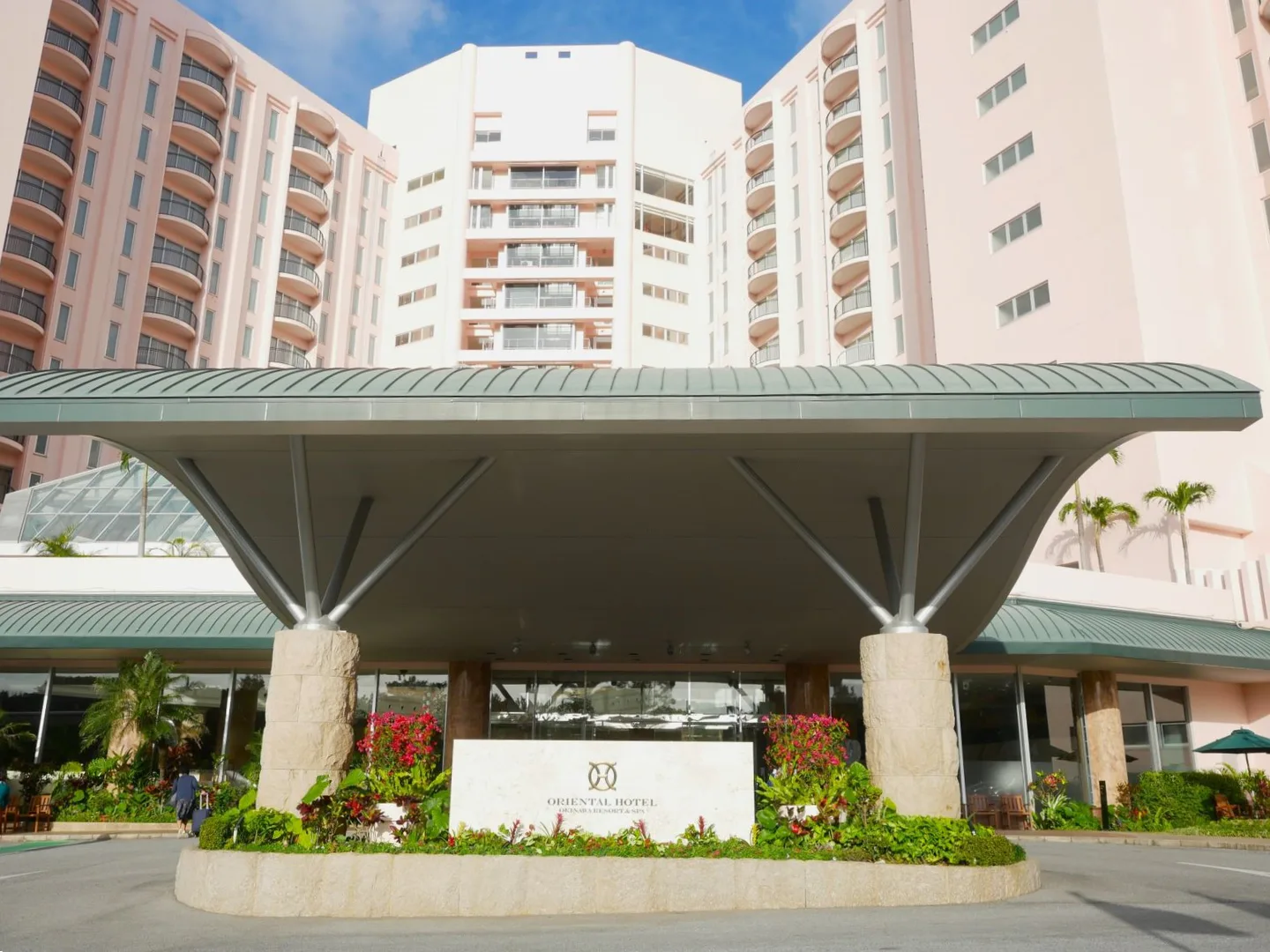
Oriental Hotel Okinawa Resort & Spa makes most sense when the pool and the spacious standard room are the holiday, with Kariyushi Beach as a planned outing. The Garden Pool stretches across a 170-metre complex; the Superior room starts at 44.6 m². The beach is down the road, about seven minutes on foot by the hotel’s shuttle information. That separation matters little for one beach visit and much more if your family expects to go back and forth with wet towels and toys.
The choice is about how the day repeats. A family that wants a slide, a shallow children’s area and one sea session can spend most of its time within the resort. Someone who wants to swim in the sea at dawn, return to the room, then walk back for sunset will notice the uphill return and the need to carry gear. The shuttle helps, but following its departure times changes a spontaneous walk into a small appointment.
Who gets the most from this resort
↔ Scroll table left or right
Stay pattern | Likely fit | Reason |
Pool-centred family, one beach visit daily | Strong | The large pool absorbs much of the water time |
Repeated sea swims with room breaks | Compare beachfront | Each visit repeats the walk or shuttle wait |
Two or three nights with a rental car | Strong if resort hours are used | Large room and per-stay parking support a fixed base |
Mostly off-property sightseeing | Compare rates and bases | Pool and spa may not repay the premium |
Shoulder-season pool stay | Check the exact areas | The 170-metre complex is not fully open all year |
The beach walk matters when it happens more than once
The hotel gives roughly seven minutes as the walk to Kariyushi Beach. On a light-footed beach day, that is a minor transfer. Multiply it across trips back to the room and it becomes part of the activity plan:
One beach stay means roughly 14 minutes of walking for the outward and return legs.
Two separate beach stays mean roughly 28 minutes of walking, before gear and waiting are counted.
Those figures count walking alone. Elevators, changing, heat, a stroller and finding misplaced goggles all add time. They are not a promise that every guest takes precisely seven minutes. The return also feels different with damp clothes or a tired child. If the group can pack once and stay at the beach for a single block, the distance is manageable; if it expects frequent room access, a beachfront hotel has a real advantage.
Two adults with a small bag might regard the extra walk as useful movement. A family carrying beach toys may respond by staying longer at one water area rather than shuttling between both. That can be perfectly fine if the Garden Pool was the main reason for booking. It is frustrating only when the sea was supposed to be the centre of the stay.
Guests can use the hotel’s complimentary beach shuttle. The published ride is about three minutes, with departures changing by season; the April-to-July timetable is not an October timetable. A shuttle removes the uphill walk but adds a wait, particularly at the end of the day. Check the specific dates for your stay, and do not treat the last bus as an open-ended return option.
For repeated unplanned swims, choose the convenience of direct beach access. For one beach block and long pool hours, the hotel’s layout is a reasonable exchange. The difference will be felt in the pattern of a normal day, not in a single map distance.
What the 170-metre pool complex offers
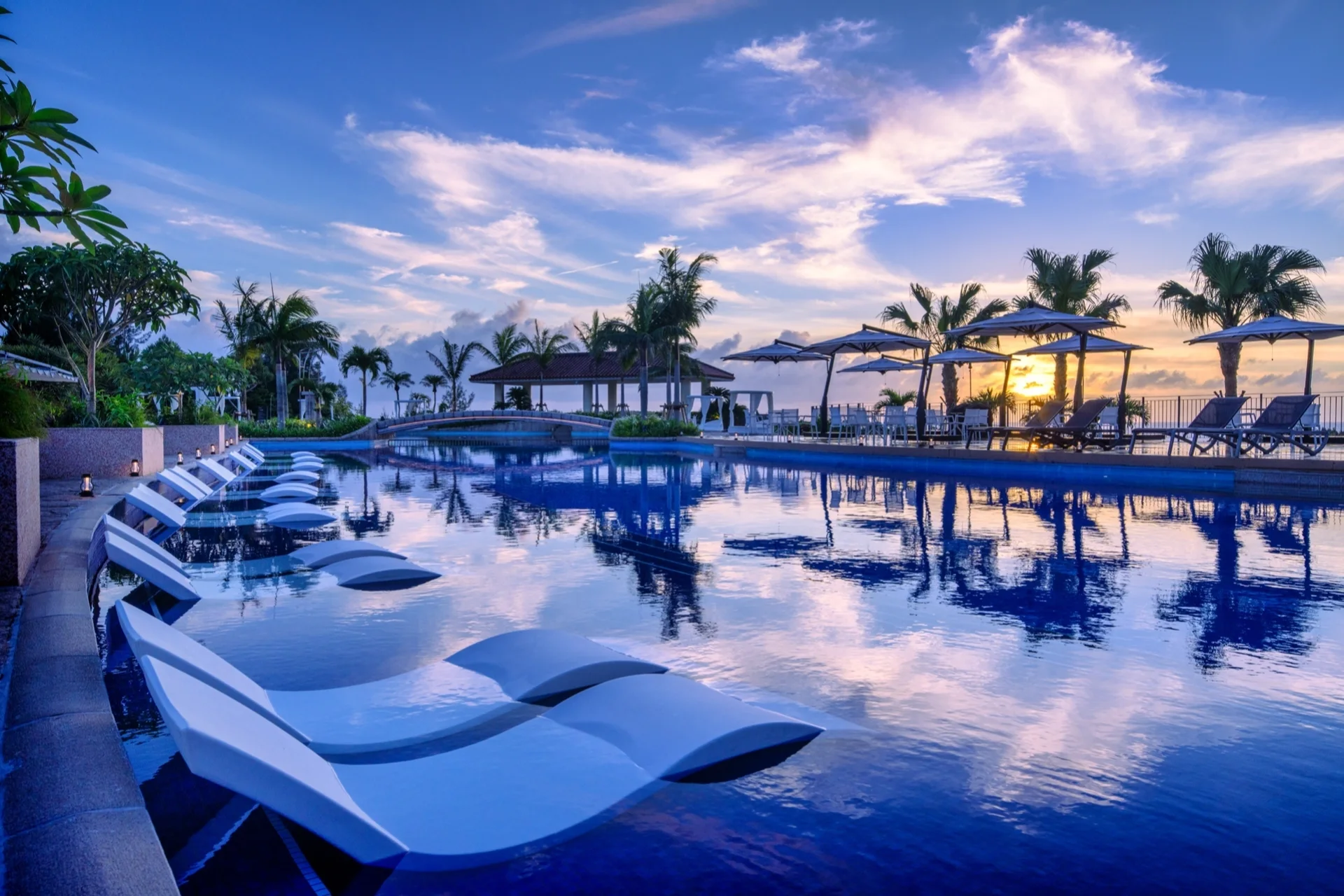
The Garden Pool has a 47.5-metre waterslide, an 80 cm shallow children’s pool, a 2.5-metre deep section and waterfall areas within the larger pool grounds. The deep area is reserved for guests over 13, and the slide has a height rule. A family should check those details before assuming every child can use every feature. Towels are available at the pool reception, so not every pool trip needs a bag carried from the room.
That range of water areas is the reason to accept the beach transfer. A smaller hotel pool would not replace much time at the sea; here the pool can occupy a morning or afternoon on its own. The benefit depends on your travel date: the hotel opens different sections and swimming hours across the year, with reduced areas outside high summer.
If the children will spend hours on the slide and in the pool, paying a large premium for beachfront access may buy less than expected. If the adults came for daily sea swimming, a major pool is a different facility rather than an equivalent substitute. Ask which water time the group will actually choose once it is dressed and ready to leave the room.
For October 2026 the hotel lists swimming from 09:00 to 22:00 in areas B, C and D, rather than every summer section. From November 1 the listed hours narrow to 15:00–21:00 in those areas through early January. The weather or maintenance can change operation. Price a shoulder-season room against the areas available on your own dates, not a photograph from July.
The basic room is already generous for two people
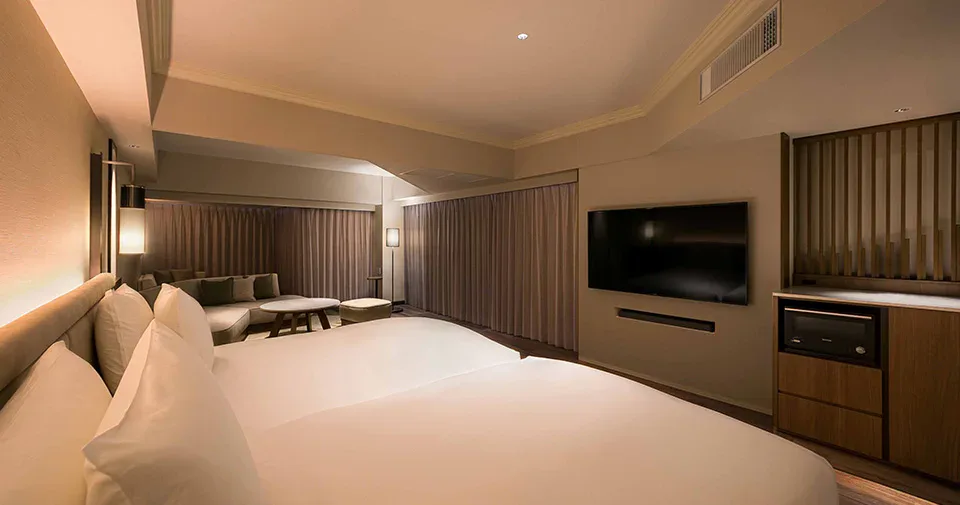
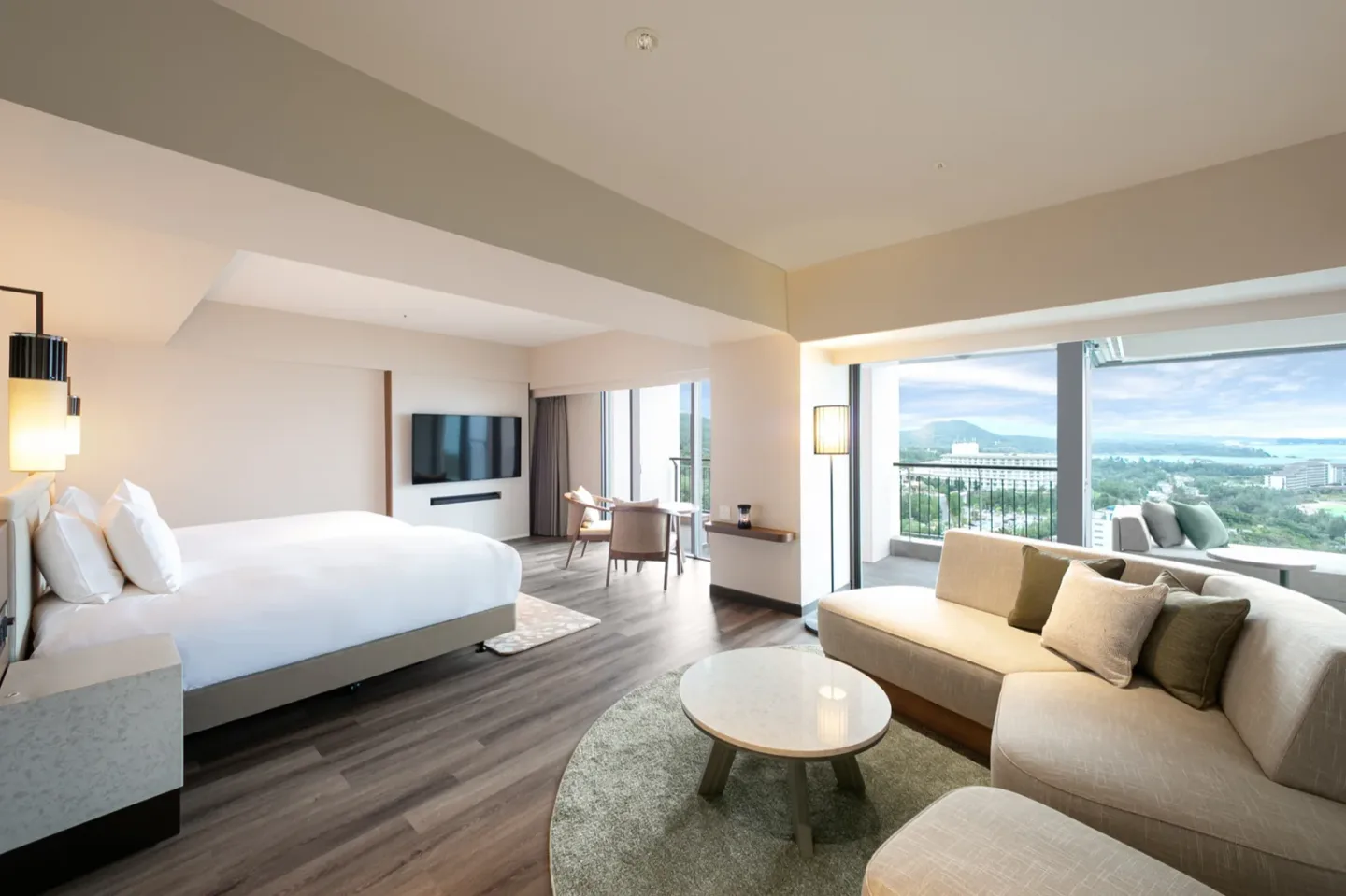
Superior and High Floor Superior both measure 44.6 m². A high-floor booking changes the outlook and floor position, not the floor area. Superior Grande is 64.9–68.4 m² and adds an in-room washer/dryer. Those are distinct reasons to upgrade: view, living space or laundry. Confirm the exact bedding for a third or fourth guest, because maximum occupancy does not mean that everyone receives a permanent bed of the same size.
For two adults with ordinary luggage, the standard room may make an upgrade unnecessary. A family of four could value the larger category, especially over several nights, but should check the extra-bed arrangement and usable floor after all beds are made. A square-metre figure does not show where suitcases, a stroller or wet swimwear will sit.
Use the room categories to decide which extra is worth money:
Superior: 44.6 m² and the sensible space baseline for a short stay.
High Floor Superior: the same 44.6 m² with a different floor and view.
Superior Grande: 64.9–68.4 m² with a washer/dryer for longer or equipment-heavy stays.
undefined
Spa access is a separate price for many rooms
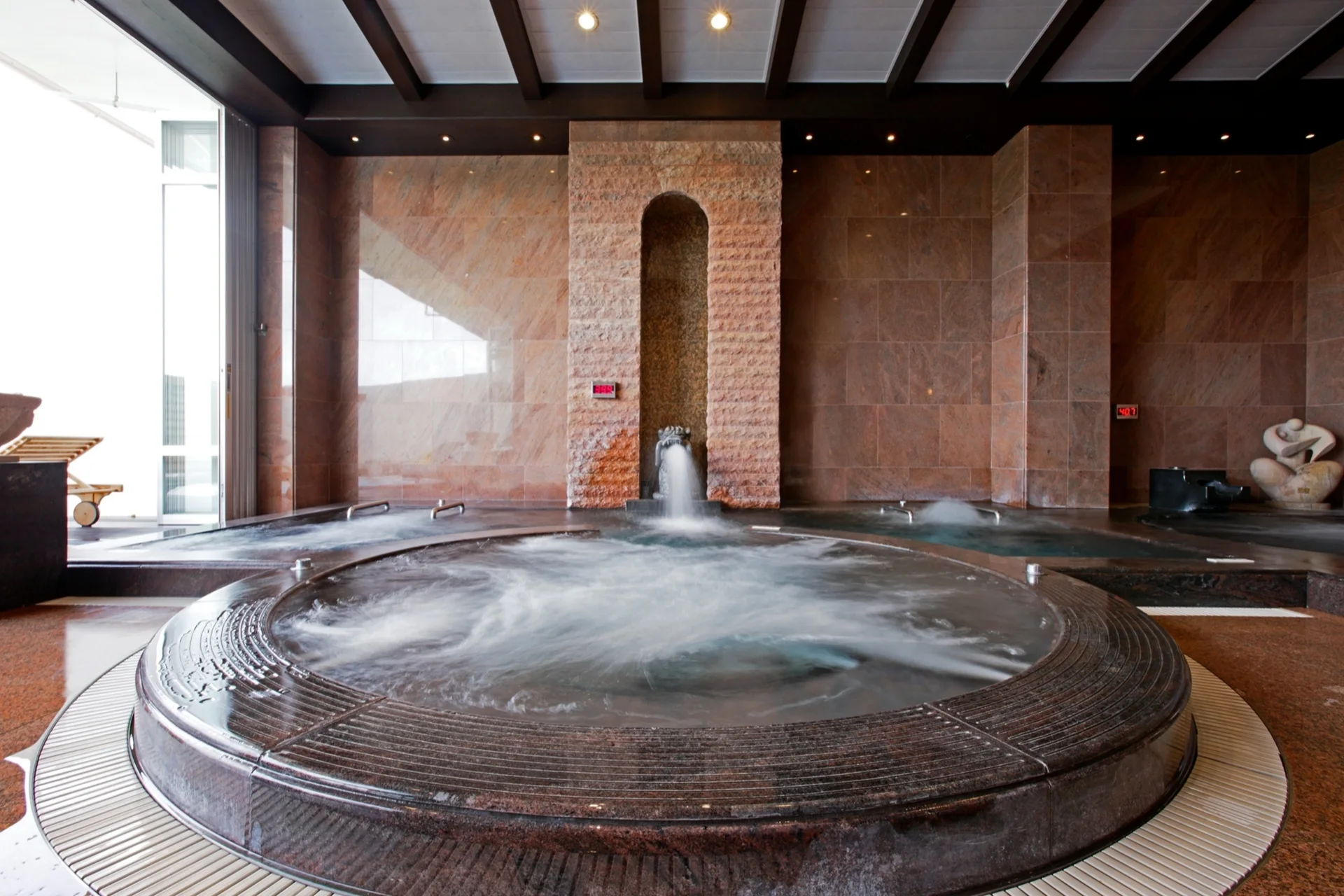
The spa currently lists ¥1,500 per adult and ¥750 for ages 7–12 for one day; two-day entry is ¥2,000 and ¥1,000. Club and Suite guests receive access without that separate charge. The spa is not the pool: it is a bath facility with its own age, entry and clothing rules. Compare the exact room premium with what your group would pay to use the spa, not with a hypothetical value assigned to every included amenity.
If two adults would use the spa on both nights, its fees can offset part of a Club-room upgrade. If no one intends to visit, free entry is worth nothing to this booking decision. The lounge may add value for some guests, but it should be priced as time you will actually spend there rather than as a label on the room type.
The spa lists 15:00–23:00, with last entry at 22:00, and a 06:30–11:00 morning period, last entry at 10:00. Monday and Thursday mornings are closed. A guest who returns late after dinner or leaves before the morning opening will use less of an included pass than the headline suggests. Children under 13 require an accompanying guardian, so check the family plan before counting on split spa visits.
Parking is a modest fixed cost; off-site evenings need a plan
The hotel lists parking at ¥1,000 per vehicle per stay. For two or three nights with a rental car, that is easier to budget than a nightly fee. It does not mean that every evening outside the property becomes easy: driving, parking and perhaps returning in the dark still add to a restaurant or attraction visit.
The hotel is a useful base for northern Okinawa drives towards Nago and Motobu. It also offers a local shuttle for affiliated facilities, with its own service area and hours; the hotel states that it is not a general restaurant shuttle. If off-property dinner is part of every night, keep the car or identify a suitable taxi plan. A resort that works beautifully for a stay-in evening can feel less convenient for a schedule of repeated outside meals.
A stay built around the hotel can make the large room, pool and on-site food worth the room rate. If the group leaves after breakfast and returns late each day, much of that value remains unused. The best booking length depends on the hours spent awake at the property, not only the attractions within driving range.
Use the beach frequency to picture the family day
One beach block after pool time
Have breakfast, use the pool, change once for an afternoon at Kariyushi Beach, then return for dinner. This keeps the hotel-beach transfer to one round trip. The pool remains the main water activity, while the sea gets a deliberate window instead of several hurried visits.
Multiple sea sessions with room breaks
A morning swim followed by a room break and a sunset return means repeated walking or shuttle waits. Before towels, toys and lunch are counted, two foot round trips use about 28 minutes at the hotel’s seven-minute estimate. A beachfront property may be worth a higher room price if that pattern is central to the holiday. The same family might instead choose one long beach stay and keep Oriental.
Days spent away from the resort
If the day runs from breakfast to Churaumi, Yambaru or other northern stops and dinner happens away from the hotel, neither the long pool complex nor the beach transfer shapes it. Compare a room closer to your route or a lower-priced base. A resort premium is easiest to defend when the schedule leaves daylight to use the facilities.
Choose the property for the hours you will spend there
Oriental suits families who want a spacious room, substantial pool time and one planned beach outing per day, especially over two or three nights with a car.
Look again at beachfront alternatives if sea access needs to be immediate several times daily. Compare other bases if most days are long drives and you will arrive after the pool or spa hours that made the hotel attractive.
A single late arrival and early departure can still make sense for a specific large-room need, but it leaves little time for the pool and resort grounds. In that case, judge the price as a room and parking purchase rather than as a full resort stay.
Compare rooms around Nago and Kariyushi Beach
Seven site scores for a pool-first stay
Dimension | Site score | Why this mark applies |
|---|---|---|
Location | Kariyushi Beach is a walk or shuttle ride away; the hotel works better for a pool day than repeated sea-room trips. | |
Room | A Superior room has 44.6 m², while the Grande offers 64.9–68.4 m² and an in-room washer-dryer. | |
Cleanliness | Current aggregated guest cleanliness is around 9.2/10. | |
Service | The aggregated guest staff category is around 9.1/10. | |
Facilities | The 170-metre Garden Pool includes shallow and deeper areas; spa and indoor pool add weather alternatives. | |
Food | Two breakfast venues offer Okinawan and broader buffet choices, but 08:00–09:00 can be crowded and meal inclusion varies by rate. | |
Value | Large standard rooms and substantial pool time help, while an unused resort day or extra spa charge weakens the case. | |
Overall | A strong pool-first family base when one planned beach block is enough. |
The scores are out of ten for a family using the pool and treating the beach as a planned outing. Cleanliness and Service use aggregated guest categories; the room, food, access and facility marks weigh the published offer against that specific pattern.
The strongest stay is pool-first with a deliberate beach visit
Seven minutes to the beach is manageable once and repetitive when everyone keeps returning to the room. The 170-metre Garden Pool, large entry room and per-stay parking give the hotel reasons to win despite that distance. The decision changes with season, children’s access to pool features and how often the group wants the sea. Match the room and date to the water time you will actually use.