
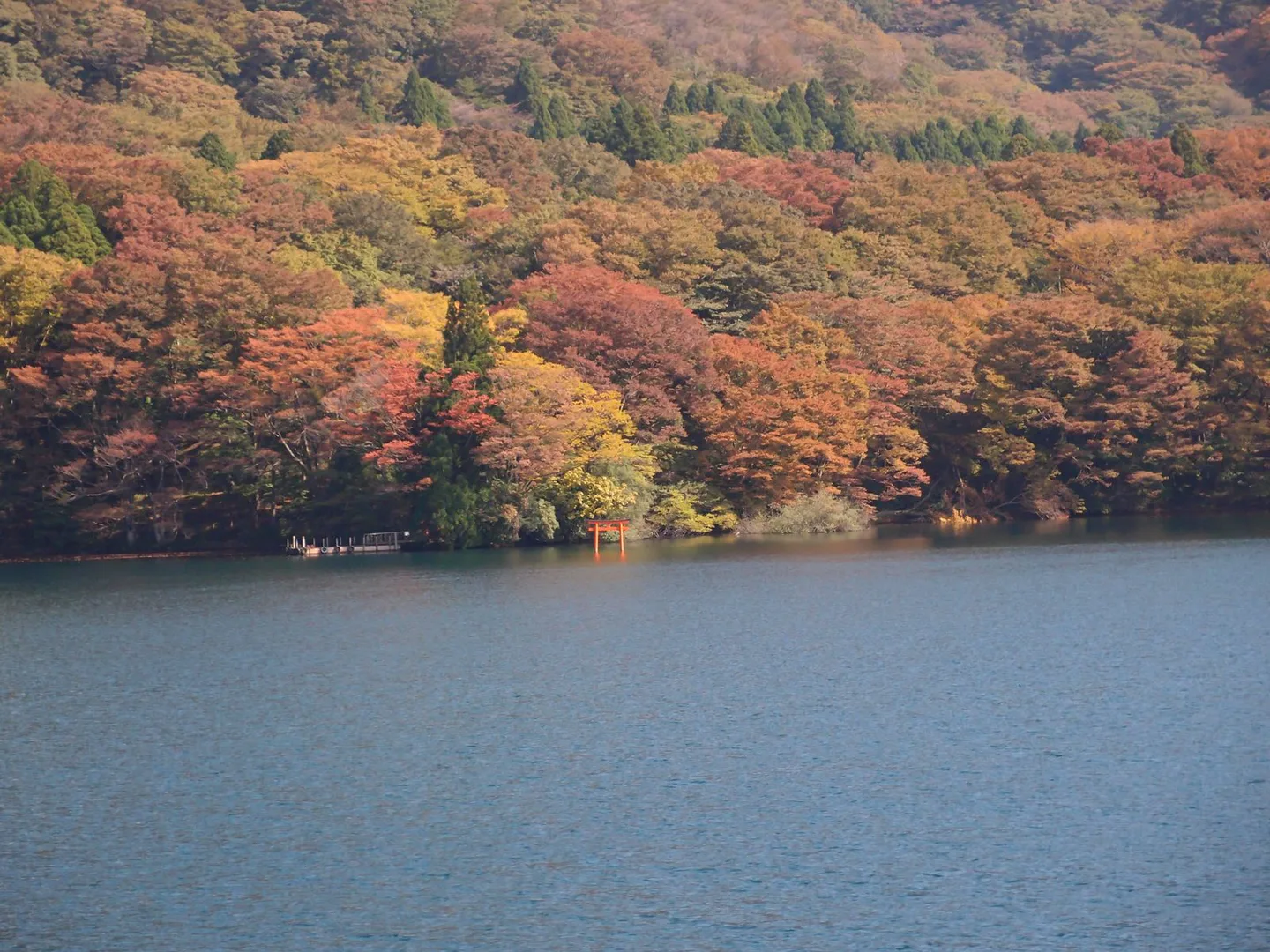
A Hakone hotel night has value on both sides of sleep. Arrive with enough daylight to see one area, spend the evening at a ryokan, then use the next morning before leaving. For many first Japan trips that is the stronger one-night plan. A second Hakone night buys a different thing: a full middle day without arrival, checkout, a long onward train or a suitcase to manage. Pay for it when you know what that day is for—museums, a slower mountain circuit, family rest or another chance at a weather-sensitive view.
The crucial number is usable hours, not nights printed on a booking. A 15:00 arrival with a dinner deadline and an 08:00 departure barely leaves time for the ropeway or Lake Ashi. A morning arrival and an after-lunch departure can create two real sightseeing windows around the same single room night. The best choice changes with the hotel area, meal time and onward route. The Hakone Freepass extension costs relatively little, but that difference does not pay for another ryokan, its meals or the city night displaced elsewhere.
↔ Scroll table left or right
| Trip pattern | Likely choice | What it buys | What can reverse it |
|---|---|---|---|
| Ten to fourteen-day first Japan trip, classic sights and one ryokan dinner | One night | Two partial sightseeing windows without taking another city night | Late arrival or early exit |
| Morning arrival and departure after next day's lunch | One night | Time on both sides of check-in | Meal or bath plans consume the daylight window |
| After-14:00 arrival with loop, museums and ryokan all requested | Two nights or fewer activities | A full middle day restores realistic operating time | A ryokan-first visit is the actual goal |
| Children, older parents or frequent rest breaks | Two nights often help | Connections can be spread across a luggage-free day | A deliberately small Yumoto-based visit may need only one |
| Private bath and kaiseki as the main purpose | One better night first | Spend on the experience actually sought | Rest itself is worth an extra full day |
| Owakudani, ropeway or Fuji views are central | Two nights may help | Another operating and weather window | The whole Japan itinerary has flexible dates |
The clock starts when you can actually explore
Arrival at Hakone-Yumoto is not the same as arrival at Owakudani, a Gora museum or a lake hotel. The mountain network still needs transfers, luggage handling and time to return for dinner. Hakone Ropeway currently advertises 09:00–17:00 service from February through November and 09:00–16:15 in December and January, subject to weather and maintenance. Losing the first afternoon can therefore remove most of a ropeway opportunity, even if a timetable shows several hours between arrival and bedtime.
↔ Scroll table left or right
| Arrival or exit | Effect on a one-night stay | Better adjustment |
|---|---|---|
| Reach the area about 09:30–10:30 | First window can be substantial | Choose one geographic section and keep dinner margin |
| Arrive around noon or 13:00 | Still workable, with less mountain time | Pick either a loop segment or a museum, not everything |
| Arrive after 14:00 | First day becomes room- and dinner-led | Accept a ryokan-first visit or add a defined middle day |
| Leave before 09:00 next day | Second window disappears | Reconsider whether one night justifies the move |
| Leave between 13:00 and 15:00 | Morning can complete a chosen route | Place the hotel to reduce backtracking |
One night works best by splitting the visit. Handle the main bag early, use a manageable first-day section, reach the property in time for the booked meal, then visit the remaining section after breakfast. A Gora base can place the railway, Open-Air Museum and cable car naturally around the stay. A Lake Ashi property gives the waterfront more evening or morning time. Hakone-Yumoto simplifies arrival and departure, but a plan dominated by upper-mountain sights may spend more time returning to it. Hakone's three main bases should be chosen before deciding the itinerary is too short.
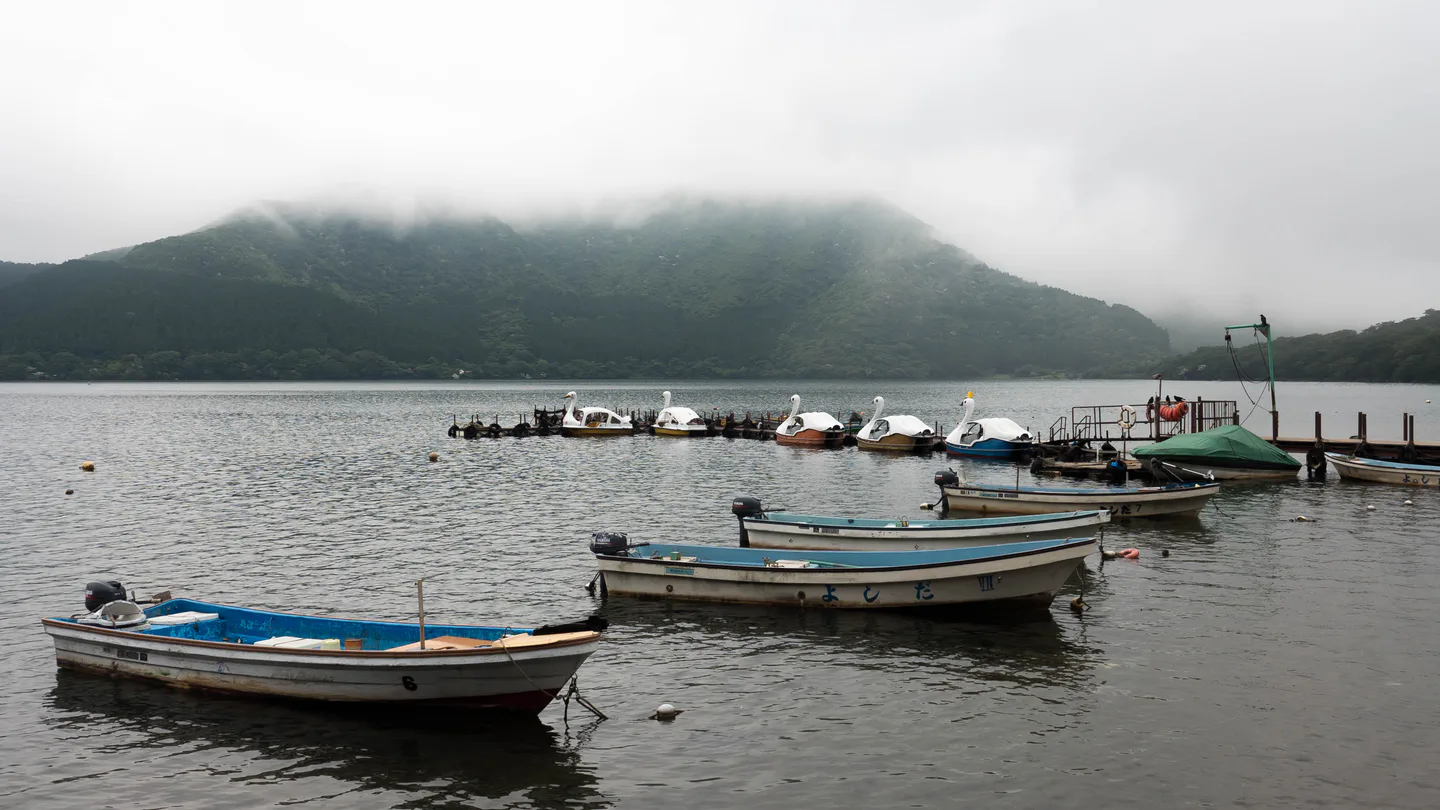
The Lake Ashi photograph shows low cloud and boats rather than guaranteed Fuji views. That distinction matters to stay length: a second morning gives another chance, but it cannot promise a clear mountain. The loop order around a ryokan night is more useful than trying to race every transport mode before check-in.
The full middle day is the purchase
Two nights remove the arrival transfer and departure train from the day between them. A family can start later, visit the Open-Air Museum and a Gora stop, return to the hotel, then decide whether more travel is comfortable. A museum-focused traveller can use a Sengokuhara or Pola Museum day without forcing it between check-in and dinner. Someone interested in Lake Ashi and the mountain circuit can keep a large block for each rather than treating the whole region as a race.
A middle day with no defined use is a weak reason for another hotel bill. “Rest” is a valid purpose if the traveller wants an onsen-based pause; then the hotel itself should support it, and the daily schedule should leave time inside the property. If sightseeing is the objective, name the museum, route or weather-dependent activity the second day unlocks. The Open-Air Museum timing guide shows why a late-afternoon arrival is not interchangeable with a relaxed visit.
For families or older travellers, fewer daily deadlines can be worth more than another attraction. Hakone's transfers may involve train, cable car, ropeway, bus and boat, depending on the route. A middle day lets the group stop when tiring rather than push toward a ryokan meal reservation. Hakone with older parents and Hakone base comparison can change whether two nights help or merely lengthen a difficult base.
Room price is only part of night two's cost
Compare the second Hakone night with the night it replaces elsewhere. Add the incremental room and meal cost, any extra local travel or luggage expense, then subtract what a Tokyo, Kyoto or Osaka room would have cost on the same date. An extra ryokan dinner may be welcome, but it is not free because the transport pass barely changes. The calculation needs your actual rates and meal plan, not a made-up market example or an old currency conversion.
↔ Scroll table left or right
| Accommodation choice | Main benefit | When it fits |
|---|---|---|
| One higher-quality ryokan night | Concentrated onsen and meal experience with less itinerary displacement | First trip and accommodation is the main reason for Hakone |
| Two simpler nights | Full middle day, slower connections and weather margin | Museums, broad route or family pace matters more than room luxury |
| Two premium nights | Room time and a full middle day | Hakone is a deliberate major stop and budget permits it |
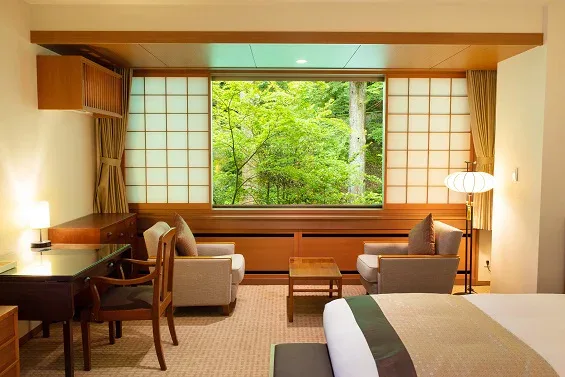
A private bath or a particular meal may be the reason to pay more for one property. Verify that the booked room or plan includes the bath access you expect; the presence of an attractive bathing image does not establish a room amenity. Private onsen room and bath choices help with that specific booking. If the room itself is the destination, a better single stay can serve the trip more directly than two ordinary nights spent mostly outside.
The second Hakone night also takes calendar space. On a seven- to nine-night Japan trip, that cost is high unless Hakone is a main aim. On a ten- to fourteen-night first trip, start with one and add a second only for a named day. On a fifteen-night or repeat trip, the pace or weather buffer is easier to fund. These are planning bands, not rules that override a traveller's priorities. A devoted onsen visitor can sensibly choose two nights on a short trip by taking time from another place knowingly.
↔ Scroll table left or right
| Wider Japan stay | Likely opportunity cost of Hakone night two | Decision test |
|---|---|---|
| Seven to nine nights | High | Is Hakone one of the trip's main two purposes? |
| Ten to fourteen nights on a first visit | Moderate | Can you name the complete middle-day use? |
| Fifteen-plus nights or repeat visit | Lower | Would slower pace or weather flexibility improve the trip? |
The ¥400 pass difference is a small part of the answer
Hakone's current adult Freepass from Shinjuku is ¥7,100 for two days and ¥7,500 for three days. From Odawara it is ¥6,000 versus ¥6,400. Each third-day extension costs ¥400 at these origin points. That is useful if a two-night stay has already been chosen. It is not a reason to buy a second room, meals and another day away from the rest of Japan. Romancecar limited-express charges are separate from the pass itself.
Choose the pass origin and validity after fixing the arrival and departure route. A Tokyo round trip, a Tokyo–Hakone–Kyoto sequence and an arrival from Kansai do not use the same rail legs. Romancecar, JR and Hakone Freepass compares the entry choices. The operator's current fare table gives the latest pass pricing; the rest of the second-night calculation belongs to your actual hotel and wider itinerary.
Noon can decide whether the first day feels easy
The Hakone-Yumoto luggage transport service currently accepts same-day bags for participating hotels between 08:30 and 12:00, with collection at the hotel after 15:00. Return transport is accepted through the hotel desk by 10:00, with Hakone-Yumoto collection from 13:30 to 18:30. The published one-way charges are ¥1,500 for a regular item within 140 cm total dimensions and 15 kg, and ¥2,500 for a large one within 200 cm and 30 kg. These figures are service conditions, not a promise that every property participates.
An 11:15 arrival may allow a quick handover and a relatively free first sightseeing window. A 12:30 arrival cannot assume the same service. The solution may be hotel storage, a different baggage forwarding arrangement, a taxi segment or a base closer to arrival—none automatically requires another Hakone night. The Hakone luggage plan and the wider Japan send-store-carry guide separate these options.
Bag placement also shapes the departure morning. If a case must be collected back at Hakone-Yumoto after 13:30, a traveller planning to leave at 10:00 needs another arrangement. If the hotel can hold it while you visit a nearby museum, a later train may be comfortable. Align the bag with the last sightseeing section; do not assume a service that worked on arrival runs in the same direction at the same hour on departure.
Another night offers a second chance, not a guarantee
Hakone Ropeway can suspend for wind, lightning, typhoons, adverse weather or maintenance. Fuji visibility and Lake Ashi conditions also vary. A two-night stay supplies more chances to use a working network and see a clear view. It does not make those outcomes certain: several poor-weather days can follow one another. The benefit is higher for a visitor whose core aim is Owakudani, ropeway travel or a mountain view than for someone content to use the ryokan and a museum regardless of sky.
A flexible national itinerary may instead move the Hakone date after a forecast check, though hotel cancellation terms and transport bookings constrain that option. If the date is fixed, a second night is a more direct buffer. If views are optional, pay for what can be enjoyed in any weather rather than treating the extra room as a guarantee. Hakone loop sequence belong in the plan for either length.
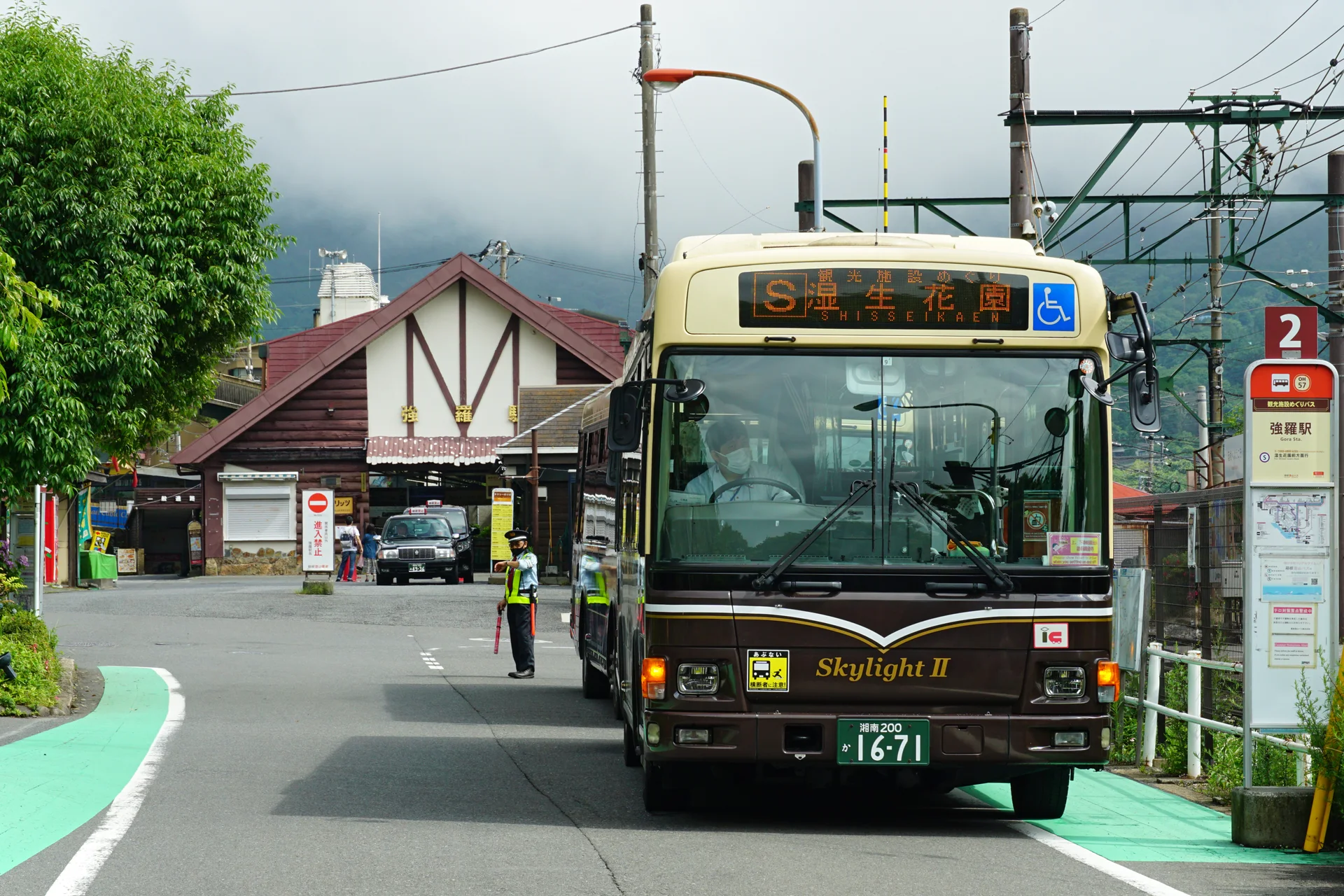
The Gora station scene is a reminder that the regional trip consists of actual connections, not just dots on a map. A late arrival can leave a short transport window even when the hotel is booked for the night. A longer stay gives more room for those connections, especially when the group moves slowly or a service pauses.
Use the departure day as part of the stay
For a one-night Tokyo–Hakone–Kyoto or Osaka journey, arrive early enough to do one meaningful section, make the ryokan dinner, then leave after another Hakone morning. Tokyo to Hakone transport choices shows why this can be an efficient break rather than a Tokyo out-and-back. The important constraints are the room meal time, luggage handoff and onward train, not a rule that the entire loop must fit before check-in.
Choose two nights when the day between them changes what you will actually do or how comfortably you will do it. Museums, family recovery, a deliberate onsen pause or another weather window are defensible purposes. If no middle-day purpose emerges, keep the one-night visit and return the extra night to Tokyo, Kyoto, Osaka or another place you would otherwise shorten. For lodging after the route is fixed, compare Hakone-area stays near the transport and meal schedule you intend to use.