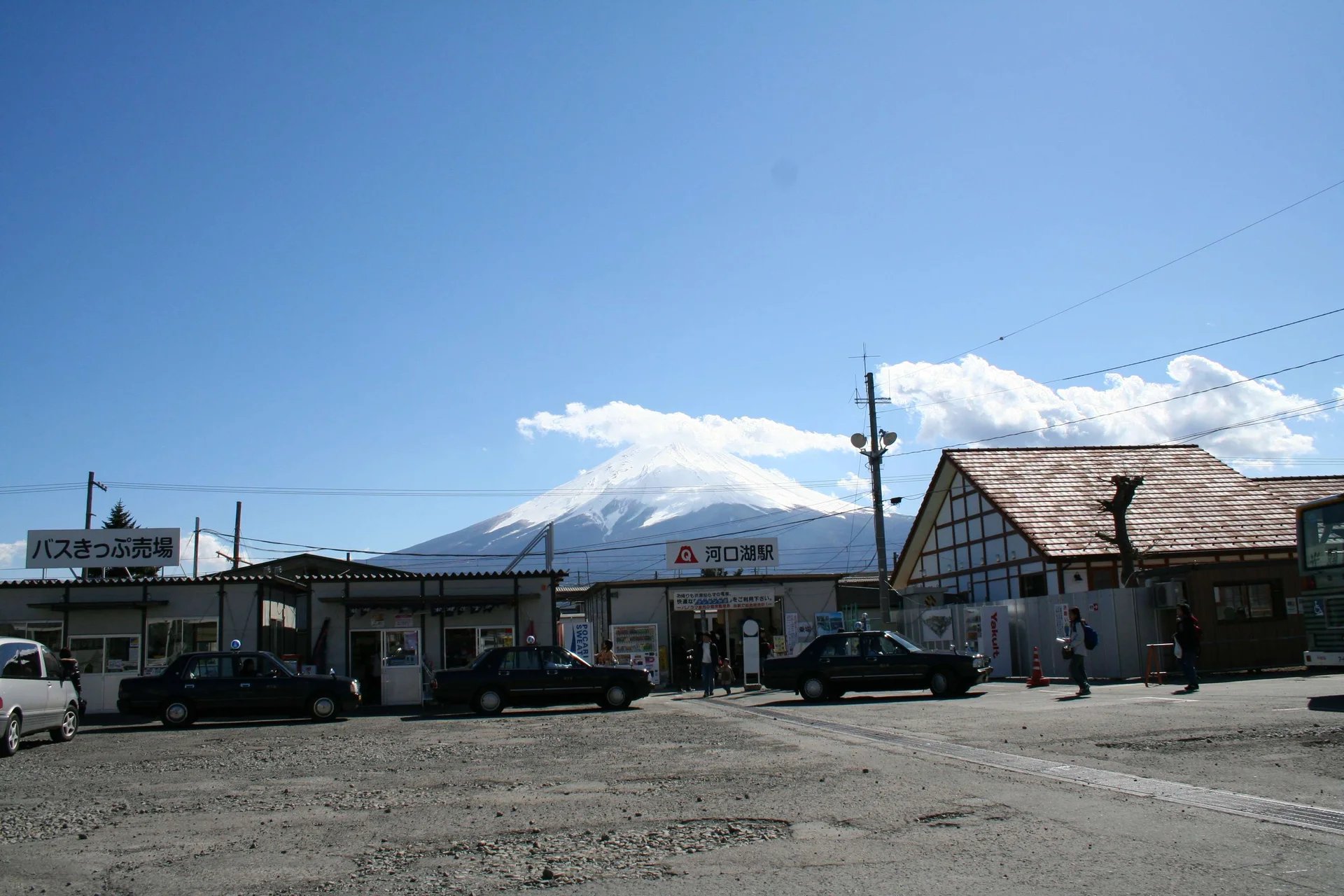
A Tokyo-to-Fuji day tour can turn several awkward bus changes into one booking. It cannot make Mount Fuji emerge from cloud. That distinction decides whether to take a classic Five Lakes coach, add Hakone and a rail return, travel independently, or sleep near the mountain. A first visitor with one spare day and no appetite for local transport may value the coach highly. A photographer whose entire success condition is an unobstructed summit needs more than one weather window. How much time first-time visitors need in Tokyo is the first check before surrendering a whole city day.
The two sample products that framed the older comparison still illustrate different purchases. A Fuji-area loop groups Lake Kawaguchi, Arakurayama Sengen Park, Oshino Hakkai and, when accessible, the fifth station. A combined Fuji–Hakone day places the fifth station before a Hakone ropeway, a Lake Ashi cruise, a transfer to Odawara and a train back to Tokyo. Both are advertised around ten hours on the relevant product listings, but the advertised duration is a planning estimate, not a maximum journey time. The exact stop order, meeting point, substitutions and inclusions belong to the date and option selected.
↔ Scroll table left or right
Trip shape | What you buy | What it cannot give you |
Fuji-area guided coach | One vehicle links several Five Lakes and Fujiyoshida sights | Control over clouds, traffic and time at each viewpoint |
Fuji plus Hakone and train return | Cross-region transport, Hakone modes and Odawara-to-Tokyo rail leg | A slow Hakone loop or a guaranteed fifth-station visit |
Independent Fuji day | Freedom to choose one or two stops and leave when ready | Easy transfers if you attempt every distant viewpoint |
Kawaguchiko or Hakone overnight | A second morning and evening for weather and local time | A guarantee of clear visibility |
The classic coach earns its price on the road between viewpoints
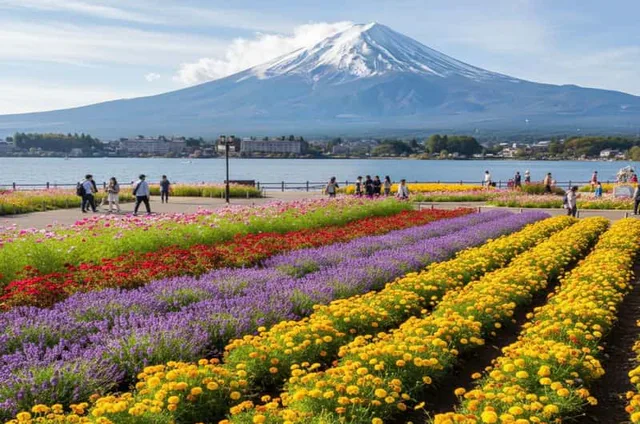
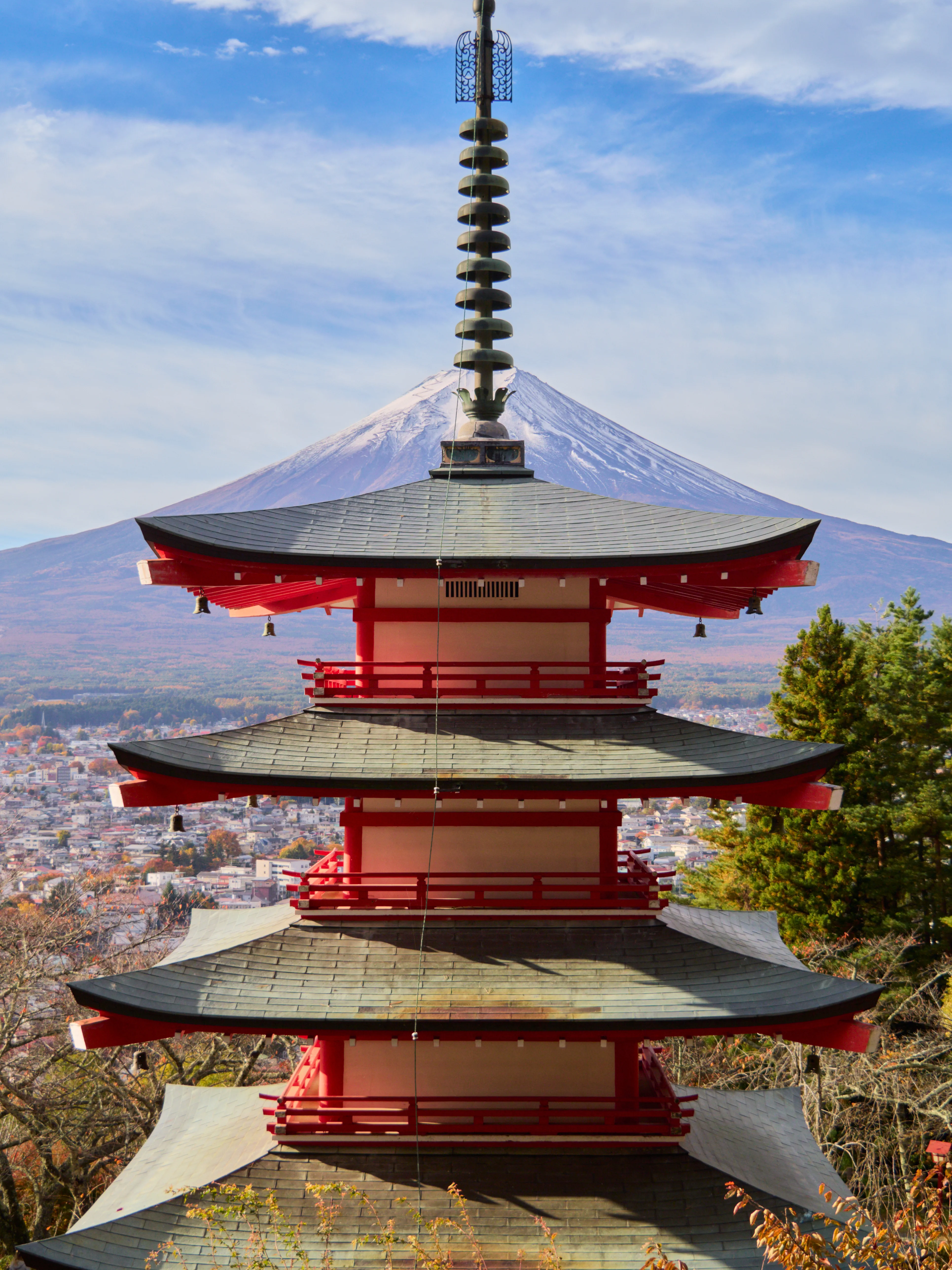
Oishi Park sits beside Lake Kawaguchi and gives a broad lake-and-mountain composition, with flowers changing by season. Arakurayama Sengen Park is a different outing: the pagoda viewpoint requires an uphill approach and stairs, then rewards visibility with a tightly framed town-and-mountain scene. Oshino Hakkai is a spring-fed village stop, not a substitute for the open Kawaguchi lakeshore. The Mount Fuji fifth station is high on the mountain, with road access sensitive to weather and seasonal restrictions. These are geographically dispersed experiences. A coach saves coordination; it does not make them interchangeable or remove walking. The Kawaguchiko stop-by-stop guide can help you decide which of them you actually want.
The classic listing has advertised English and Chinese guidance and a roughly ten-hour day, with the named stops above. It is sensible for a first-time visitor who wants broad coverage and would otherwise spend the day solving separate buses. It is less suitable for someone who wants two hours waiting for light at the pagoda or a leisurely meal by the lake. Every added stop takes time away from the rest. The published Arakurayama stop also has an actual walk to the celebrated viewpoint; a coach-door photograph is not what most travellers imagine from the marketing image. Kawaguchiko to Oishi Park by boat or bus shows why even a single independent stop can involve a connection decision.
A narrower independent day can be more satisfying if you already know your priority. Lake Kawaguchi plus Oishi Park offers a shoreline and seasonal flowers. Arakurayama needs time for the climb and the pagoda composition. Oshino Hakkai asks for a different bus direction and gives village and spring scenery. Trying to combine all three without a vehicle can turn a photogenic map into a day of stops and queues. Tokyo to Kawaguchiko by rail, bus or tour is useful when you want to trade the coach’s fixed itinerary for control over one or two places. Kawaguchi versus Yamanaka matters if the desired lake is itself unsettled.
The weather risk is bigger than a cancelled departure
Tour operators can run a complete day while the summit stays hidden. The classic listing warns that Fuji panoramas depend on conditions; it also allows lower-station or alternative stops when the route to the fifth station is not open. Busy flower periods and weekends can lengthen road travel, with the old product information warning of returns delayed by two to three hours in heavy traffic. Treat that as a risk scenario, not a precise forecast for your date. A ten-hour card cannot support a non-refundable evening show, airport connection or tightly timed dinner immediately afterward. Tokyo Station versus Shinjuku as a hotel base may save an additional early cross-city trip to the meeting point.
If the mountain is concealed, ask whether the lakeshore, springs, shrine or Hakone transport would still make the day worthwhile. If yes, the bus is buying a real sightseeing day with weather uncertainty. If no, buying a more expensive package does not repair the weather risk. Keep Fuji on a flexible day, choose an overnight, or use that Tokyo day for a place whose attraction does not require a clear summit. A Kamakura day trip from Tokyo is one city-based alternative; Tokyo’s four-, five- and seven-day route shows the city time a Fuji excursion would displace.
Fuji plus Hakone is a transport purchase with a different finish
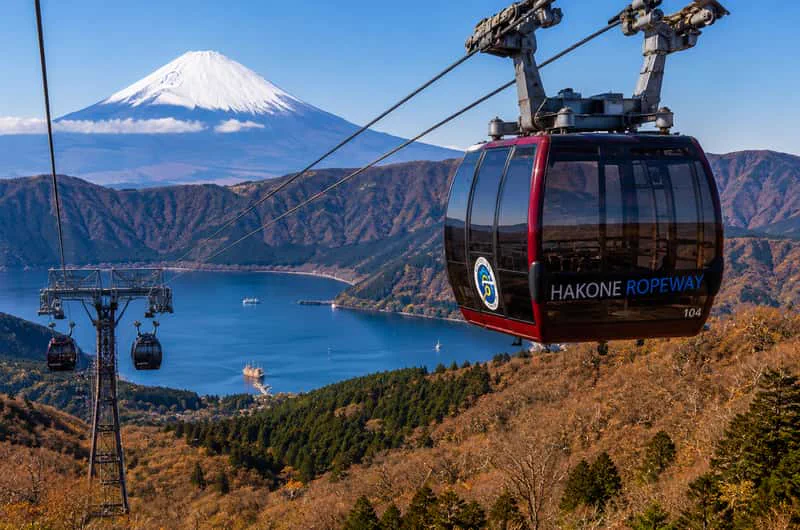
The combined product’s important difference is its sequence: road travel to the Fuji fifth-station area, onward to a Hakone ropeway and Lake Ashi cruise, then bus to Odawara and a rail ride into Tokyo Station. The current product description makes the ropeway and cruise part of the selected experience and says the Shinkansen ticket covers the Odawara-to-Tokyo leg. Lunch varies by chosen option. Some routes use Mount Hakone, others Hakone-Komagatake; the listing also allows substitutions if transport is suspended or the fifth station cannot be reached. Do not confuse “Fuji and Hakone” with two complete days compressed into one. It is a structured sample of both areas.
That sequence can be worth paying for if Hakone was already a must-see and an independent cross-region day would consume too much time. Hakone’s transport system has distinct rail, cable-car, ropeway, cruise and bus segments. Joining a guided chain removes several coordination points and the rail return may avoid another long coach run into Tokyo. It does not give you the freedom to pause for an onsen, add a museum or leave the route after a preferred viewpoint. Tokyo, Kawaguchiko and Hakone in three days gives the slower alternative; the transport passes between Tokyo, Lake Kawaguchi and Hakone sets out the independent moving parts.
Hakone Ropeway and the Lake Ashi cruise are real attractions in their own right. The Hakone transport network links the ropeway to Togendai and the lake boats; both modes can change operations with weather or other conditions. A tour’s substitute stop can keep the day running without reproducing the original promise. Read what the selected product will do if the ropeway, cruise or road is interrupted, and whether a partial change creates any refund right. This matters more than a promotional list of included vehicles. Hakone Open-Air Museum timing explains why adding that museum to a compressed tour is usually unrealistic.
If Hakone is a stay, give it its own night
A ryokan meal, bath or unrushed Hakone loop needs different timing from a day coach. The Fuji–Hakone product uses the afternoon to transit, sightsee and reach Odawara, not to settle into an onsen property. If the accommodation is the reason for visiting Hakone, compare one Hakone night with two and the loop before check-in versus after checkout. That approach spends more time but restores control over dinner and the room. A traveller who wants only the ropeway and lake cruise may reasonably prefer the combined tour; one who wants a genuine hot-spring evening should not choose it simply because the title includes Hakone.
An overnight by Lake Kawaguchi serves a different problem: Fuji visibility. A tour gives one daylight attempt. A stay creates an arrival afternoon and a following morning, possibly also a sunset or dawn look. More windows improve your chances without promising a clear peak. They also let you linger at one viewpoint rather than take the guide’s next departure. How many nights at Lake Kawaguchi considers the weather and foliage trade. Best Kawaguchiko hotels for a Fuji-facing room helps only after you have decided an overnight matters; a view room itself cannot control clouds.
On a 10-, 12- or 14-day first trip, a Fuji-area night becomes easier to fit once the Tokyo and Kansai foundations are secure. The 12-day route may have more slack than a ten-day trip, but adding the night still removes time somewhere. A first-Japan 10-, 12- and 14-day comparison provides that itinerary frame. Photographers, couples wanting lake time, and anyone whose goal depends on a morning view should compare the overnight cost with the price difference between basic and elaborate day tours. The better value is often a second weather chance, not a fourth brief stop.
A cheaper ticket is not necessarily the cheaper successful day
Compare like with like: exact meeting point, start time, guide language, lunch, included ropeway and cruise tickets, the train return, child rules, cancellation and substitutions. The classic Fuji loop and Fuji–Hakone chain can both show about ten hours, but only one spends the afternoon in Hakone and ends by rail from Odawara. The older comparison cites a 24-hour free-cancellation window for both products; the combined listing still displays that window, while product options and dates should be checked at checkout. Neither policy is a weather guarantee. Cancelling because the forecast is poor may require deciding a full day before departure, when the mountain outlook is still uncertain.
The best choice depends on the day you would call successful. If that means several Fuji-area landmarks with minimal transfer work, the simpler coach can beat a costlier combined itinerary. If both Fuji and Hakone would otherwise take separate trip days, the cross-region tour may have real value. If it means one excellent mountain photograph, stop comparing transport bundles and buy flexibility in dates or nights. At checkout, read the actual fifth-station alternative, start location and end location. Some Hakone variants may be unsuitable for people with respiratory or medical constraints listed by the operator, and stairs at Arakurayama matter independently of tour length.
There are travellers who should postpone buying either tour. A flight, prepaid evening event or tightly scheduled dinner after the advertised return has no room for a traffic delay. A person who cannot manage the Arakurayama climb should not buy a photo-stop list without checking walking requirements. A first-time visitor with only three Tokyo days may prefer the city itself. And a Fuji-only photographer who would be disappointed by a full day under cloud needs a flexible plan. Where first-time visitors should base themselves in Tokyo can help reduce the early meeting-point cost if the tour still fits.
If you want a comparison starting point, the Fuji highlights coach listing and Fuji–Hakone rail-return listing illustrate the two shapes; treat date-specific inclusions as the deciding detail. Travellers opting to stay can compare Lake Kawaguchi rooms or compare Hakone-area stays. Use neutral product descriptions rather than assuming an old listing slug proves the current itinerary.