
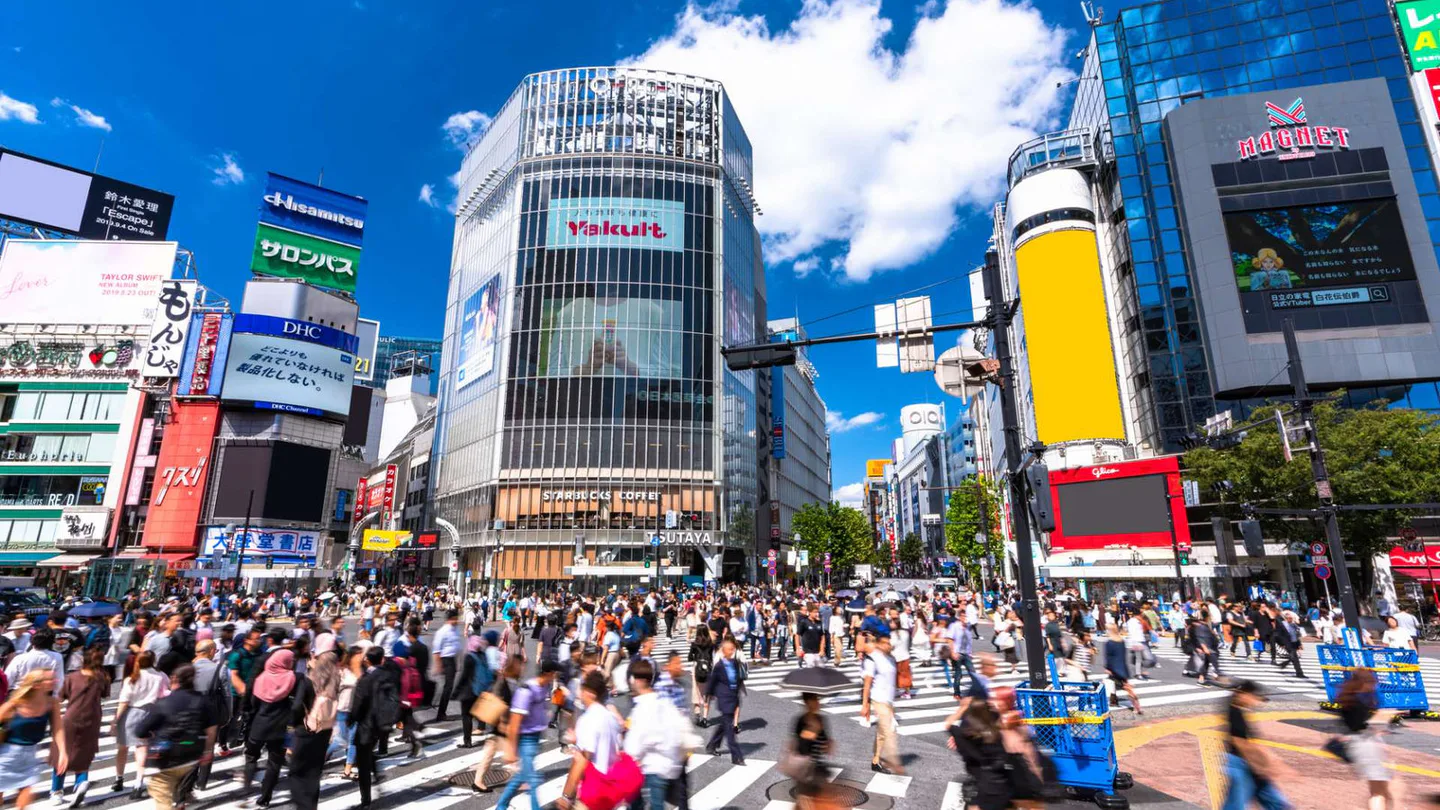
August is easier to pack for than to schedule. Tokyo, Kyoto, Osaka and Fukuoka call for light, quick-drying clothes, sun protection, water and a thin layer for strong air-conditioning. Hokkaido adds a more useful morning or evening layer. Okinawa uses similar warm-weather clothing to the mainland, but a boat day needs weather flexibility. The greater mistake is carrying a spring sightseeing timetable into a month when station-to-attraction walks, temple slopes and arrival-day luggage all add heat exposure.
Climate averages help show the scale of the difference. Japan Meteorological Agency 1991–2020 normals give Tokyo an August mean of 26.9°C and normal high of 31.3°C; Osaka averages 29.0°C and has a 33.7°C normal high. Kyoto's normal high is also 33.7°C. Sapporo's mean is 22.3°C. These figures do not forecast the weather on a booking date. They tell you why a Tokyo–Kansai–Hokkaido trip cannot use one assumed daily pace. July's rain-to-heat transition provides the lead-in if the trip begins earlier.
Read the city numbers as a limit on exposed hours
↔ Scroll table left or right
| Stop | JMA August normal | Clothing adjustment | Itinerary adjustment |
|---|---|---|---|
| Tokyo | 26.9°C mean; 31.3°C high; 23.5°C low | Quick-dry summer wear; thin indoor layer | Cluster districts and avoid repeated noon crossings |
| Kyoto | 28.5°C mean; 33.7°C high; 153.8 mm rain | Breathable wear, shoes suitable for slopes, sun cover | Put the longest temple walk early |
| Osaka | 29.0°C mean; 33.7°C high; 25.8°C low | Light clothes, sun protection and water | Keep the airport arrival day short |
| Fukuoka | 28.4°C mean; 32.5°C high; 25.4°C low; 210.0 mm rain | Quick-dry clothing and compact wet-weather backup | Leave a dry-shoe and shower alternative |
| Sapporo | 22.3°C mean; 26.4°C high; 19.1°C low; 126.8 mm rain | Add one light long-sleeve or wind layer | Plan for cooler edges of day but retain sun protection |
| Naha | 29.0°C mean; 31.8°C high; 26.8°C low; 240.0 mm rain | Quick-dry changes and sun protection | Keep marine plans movable if the sea turns |
One very light extra layer can make air-conditioned trains and shops comfortable in mainland cities; it is not the main answer to outdoor heat. The difference between a 26.9°C monthly mean and an afternoon above 31°C is the reason a numerical average can mislead a first-time visitor. August is also not a uniformly dry month after Baiu: Fukuoka and Naha rainfall normals in the table remain substantial. Put the city and the exposed part of the route beside the forecast rather than treating the whole country as one temperature.
Tokyo: remove a transfer before buying another cooling gadget
Tokyo's normal 31.3°C August high and 23.5°C low mean that even the first and last walk of a long day can feel warm. An itinerary that touches Asakusa, Ueno, Shinjuku and Shibuya in rapid succession accumulates station corridors, road crossings, queues and above-ground transfers. It can be more tiring than two attractions close together, even when each stop is partly indoors. Group Tokyo attractions into geographical days and choose the route length by the actual trip, not by a list of famous names. The ten-day Tokyo–Kyoto–Osaka route makes that same transfer cost visible across cities.
Malls, museums and underground passages are useful, but they only help if the outdoor links between them are limited. A real air-conditioned lunch or gallery interval at midday can preserve energy for the evening. A museum block at Ueno can fit a nearby district day without another cross-city journey. A handheld fan or cooling towel may make an unavoidable walk more comfortable; neither turns a long midday queue into an easy appointment. Choose shade, hydration and a shorter exposed circuit first.
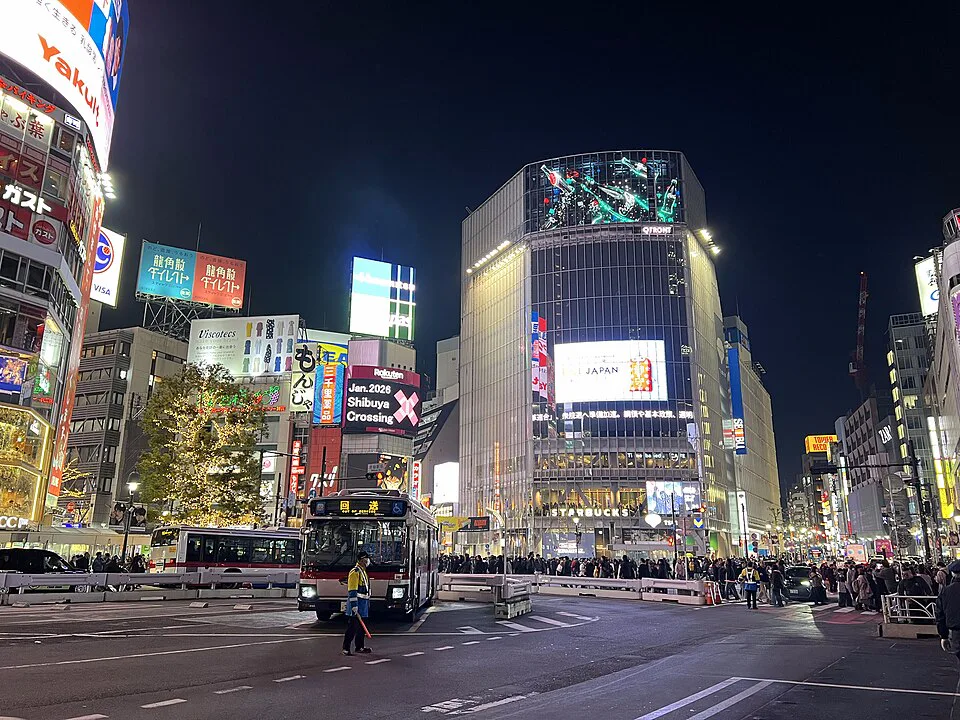
The Shibuya photograph shows buses, traffic and pedestrians after dark. It illustrates a city centre with less direct sunlight than the afternoon crossing, not a cool August evening. Tokyo's monthly low still averages 23.5°C, and the image cannot tell you the temperature on your date. The daytime hero image shows the same district under a blue sky; use the pair to think about when the long street portion of your day belongs.
Kyoto: a late-August trip still needs the early start
Kyoto's August mean is 28.5°C, normal high 33.7°C and rainfall total 153.8 mm. The JMA daily normal high eases from about 34.2°C at the beginning of the month to about 32.1°C by August 31. That decline is real, but a normal 32°C end-of-month afternoon is still too hot to treat as an autumn sightseeing day. The steep or exposed parts of Kiyomizu-dera, Higashiyama, Fushimi Inari and Arashiyama deserve early hours. Put lunch, an indoor visit or a hotel reset between the longest outdoor sections, then return outside later if the forecast and the group permit.
Breathable tops, quick-drying bottoms, sun cover and comfortable shoes suit that plan. A heavy backup layer does little for a walk on temple slopes. Fushimi Inari's timing options and Arashiyama's station and duration choices help keep two large outdoor areas from being forced into one midday window. A one-day Kyoto choice is more important still when there is no overnight to absorb the heat.
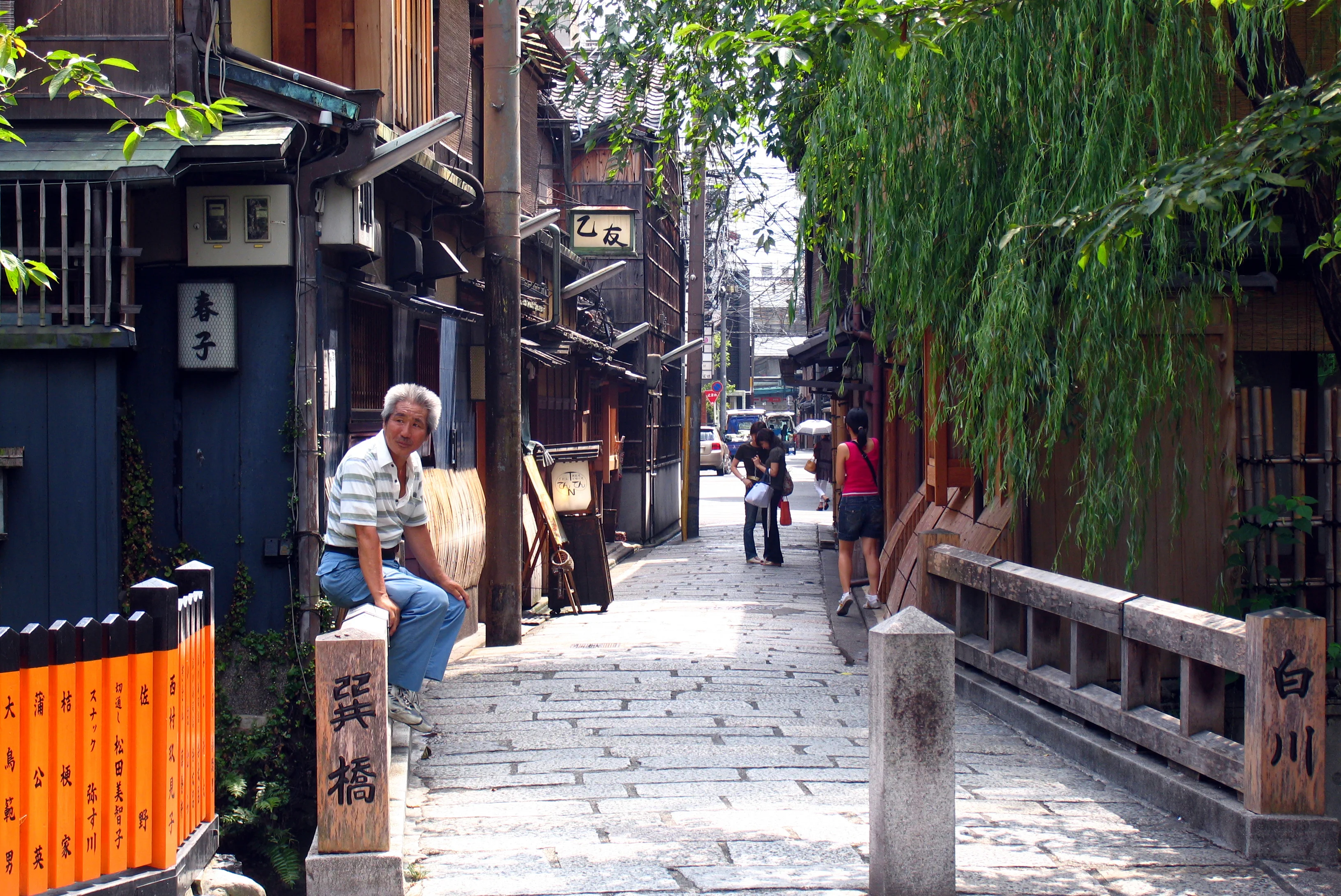
This stone lane and bridge in Gion are a season-neutral Kyoto scene. They replace an earlier inline photo that visibly showed red autumn foliage at Kiyomizu-dera, which would have misrepresented an August page. Even a shaded lane has exposed approaches; the image is a route illustration, not evidence of August temperature or a promised quiet street.
Osaka: protect the first afternoon from luggage and heat
Osaka's 29.0°C August mean, 33.7°C normal high and 25.8°C normal low make it the hottest-feeling city in many standard routes. A visitor arriving through Kansai Airport should settle the airport-to-hotel move before adding sightseeing. Baggage, station stairs and the final walk to a hotel make that afternoon different from a full day that begins rested. Choose a dinner area close to the room rather than treating the period before dinner as an unlimited extra city circuit. Osaka activities by district can then fill the next day's usable hours.
Namba, Umeda, Tennoji and the bay are all manageable on their own. Repeatedly crossing among them exposes the group on streets and platforms more than a tidy single-area day. Arcades, department stores, museums and cafés can make cooling intervals part of the route. Sunset removes direct sun but not necessarily heat; the normal night low remains 25.8°C. If an Osaka room also supports Kyoto or Kobe day trips, station-to-hotel walking time matters twice each day in August.
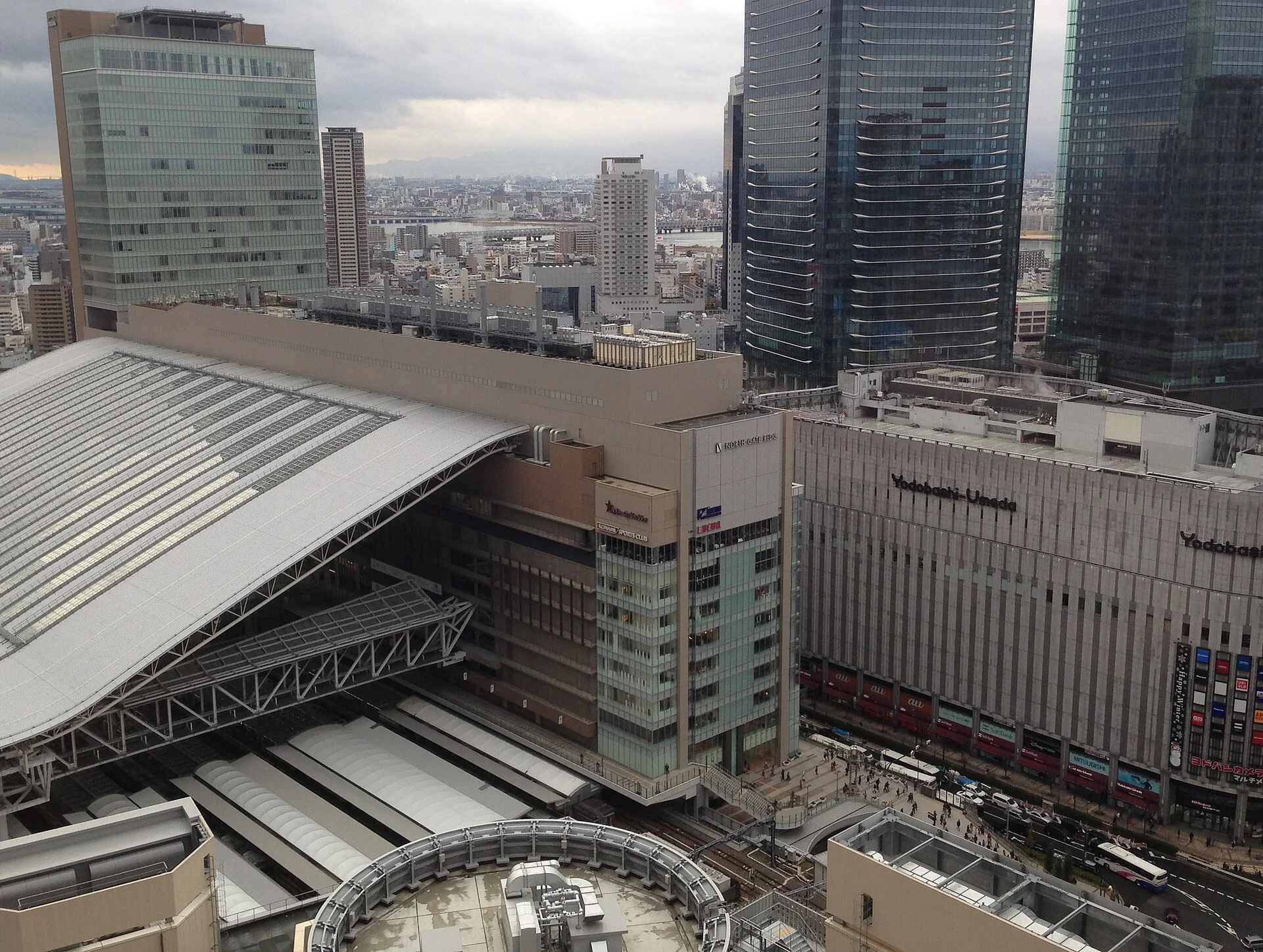
The overhead photograph looks across Osaka Station's roofs and neighbouring Umeda buildings under clouds. It does not depict a measured August temperature. Its transport scale helps explain why a connection with luggage can be more demanding than a map's short line suggests.
Fukuoka: summer heat remains, and rain still needs a backup
Fukuoka's normal August mean is 28.4°C, high 32.5°C, low 25.4°C and rainfall 210.0 mm. The region's Baiu period usually ends before August, but that does not create a dry-season guarantee. Short heavy showers, tropical systems and unsettled afternoons can interrupt a park, food-stall or coastal plan. Carry a compact umbrella, use shoes that recover after a soaking, and consider spare socks; there is little reason to wear heavy rain gear throughout a hot day. The rain-plan decision is which outdoor appointment to keep, shorten or move.
If the forecast is persistently wet, a Tenjin indoor route can replace one exposed block. A hotel that reduces the last wet walk can matter more than its map distance from a station; the Fukuoka hotel access comparison shows how. Do not carry a full monsoon wardrobe as insurance. Plan what happens if shoes and clothes are wet when you need to leave the next morning.
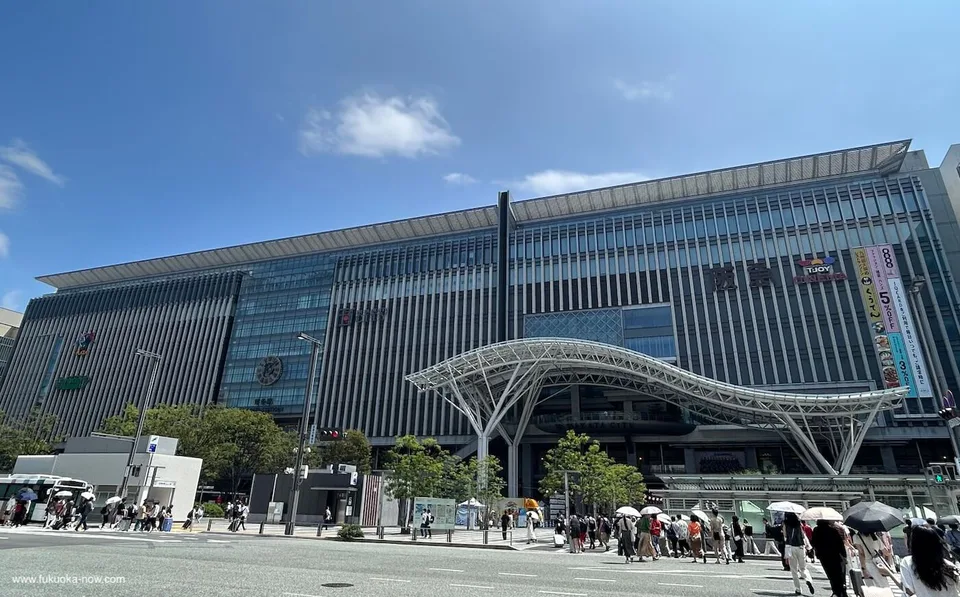
People with umbrellas wait outside Hakata Station in this bright-day photograph. It shows the station forecourt and a possible last exposed walk, not a forecast of rain or proof that every August arrival is hot. Check the actual day's precipitation and choose a nearby indoor pause if a shower intersects arrival.
Hokkaido is a route-level difference, not a free pass on sun
Sapporo's August normal mean is 22.3°C, with a high of 26.4°C, low of 19.1°C and precipitation of 126.8 mm. A thin long-sleeve or wind layer earns its place during early starts, breezy evenings and rural stops. Ordinary summer clothes still handle many afternoons. A Sapporo-and-Otaru route versus adding Furano and Biei changes how much open-country sun, driving and walking the trip contains. Flower fields, open car parks and rural stops can still create a long exposed day; bring water and sun protection even though Sapporo is far cooler on average than Osaka.
A combined Tokyo–Hokkaido suitcase does not need two wardrobes. Use the same light base clothing, then carry one layer for Hokkaido's 19.1°C normal night and variable countryside weather. Do not average the two destinations into a fictional middle climate. A traveller who moves north specifically to escape the worst city heat should also make sure the added transport and outdoor plan leave room to enjoy that advantage.
Okinawa: secure a second sea window, not another warm jacket
Naha's August mean is 29.0°C, high 31.8°C, low 26.8°C and rainfall 240.0 mm. Lightweight clothes, quick-dry changes, a waterproof bag and sun protection are more useful than a second insulating layer. A marine itinerary has another uncertainty beyond temperature: wind, waves, storms and tropical systems can delay or cancel boats, snorkeling and diving even when a weather icon looks tolerable. A tour operator's sea-state decision should take priority over the monthly normal. Okinawa's storm and rain fallback should be a genuine alternate day, not a list consulted after every boat has stopped.
Place the main boat outing on a day that can swap with a land-based plan and avoid making it the final morning before a flight. The first-time Okinawa route helps establish the transport shape; Blue Cave's entry choice and a Kerama sea day show why the point and vessel matter. Tokyo and Okinawa can share summer basics in a bag, but Tokyo needs attention to accumulated city walking while Okinawa needs a workable response to marine cancellation.
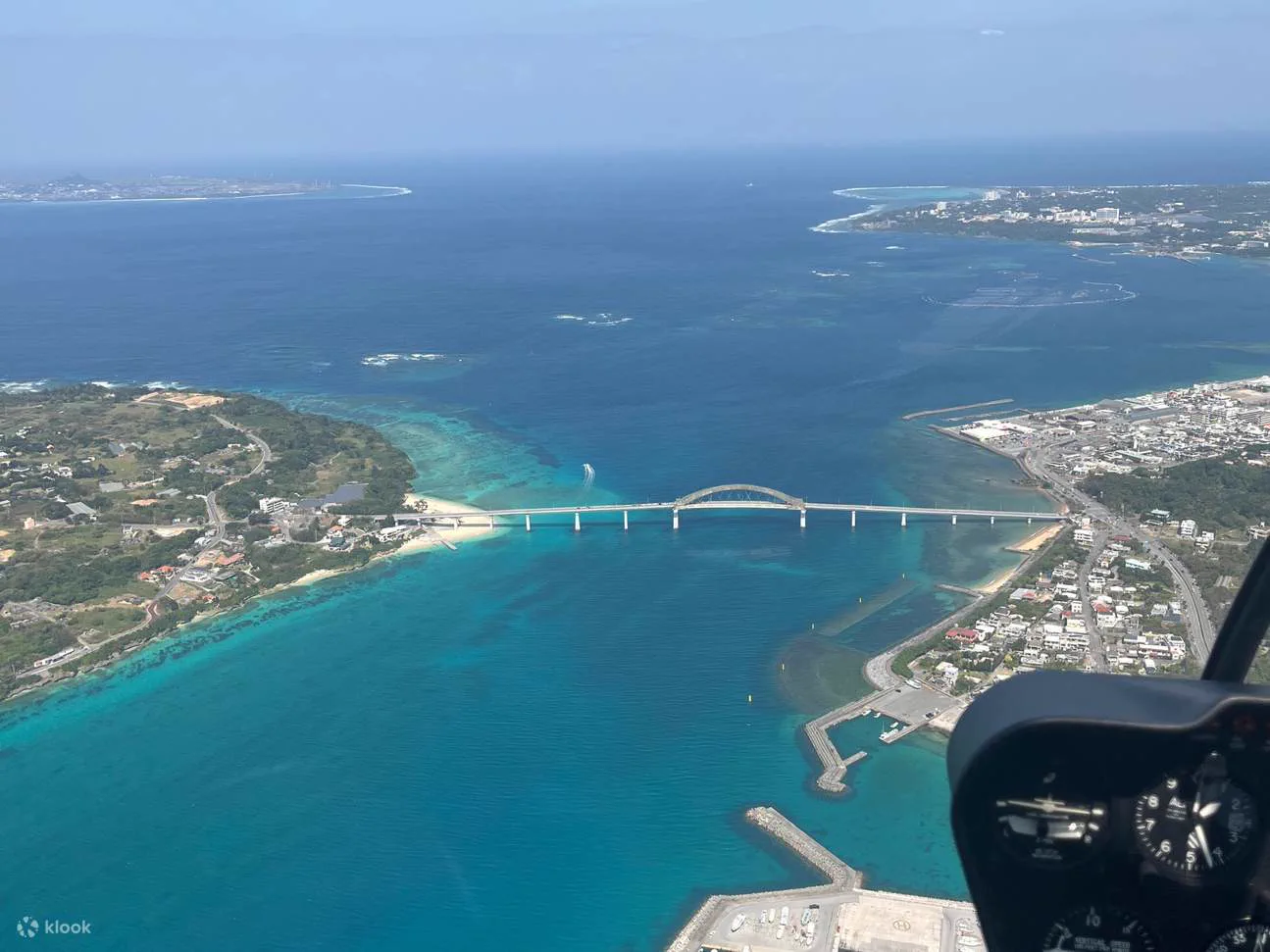
The aerial photograph shows Kouri Bridge crossing vivid Okinawa water, with part of a helicopter cockpit at the edge. It does not show a weather forecast or a snorkel site. The coast makes a useful reminder that an attractive sea view says nothing about the conditions at a boat's actual departure point.
Forecast checks that can change the order of the days
About seven to ten days before leaving, use the regional temperature and rain trend to set the balance of quick-dry clothing, light layers and compact rain protection. Around 48–72 hours before each travel day, look again at hourly rain, thunderstorms, wind and heat-risk information. Then reorder the outdoor appointments, not only the bag. Heat Stroke Alerts use forecast WBGT; when risk is elevated, shorten discretionary midday exposure and add a cooler place to rest, especially for children, older travellers or anyone who struggles with heat. Typhoon warnings, transport disruption and tour-operator notices supersede the climate averages.
Five errors account for many difficult August days: reading a 27–29°C monthly mean as the afternoon maximum; assuming post-Baiu means dry weather everywhere; borrowing a spring walking pace for Kyoto or Tokyo; packing Sapporo identically to Osaka; and preparing for sun while having no answer for drenched shoes or cancelled sea plans. The fixes are operational. Keep one indoor interval, one shorter route and, where a boat is essential, one alternate day. September's regional split shows why a later departure changes the packing balance again.
The question “Do I need a jacket?” has a different answer by stop. In Tokyo, Kyoto, Osaka and Fukuoka, a very light layer is mainly for air-conditioning; in Sapporo a thin long-sleeve or wind layer covers cooler edges of day. Okinawa normally needs no warm jacket. August is not uniformly drier than July: Osaka's normal August rainfall is 113.0 mm, while Fukuoka's is 210.0 mm and Naha's 240.0 mm. Kyoto remains viable for sightseeing, but its early temple walk, midday retreat and later return should replace an all-day exposed circuit. These choices have more effect on the trip than cutting one spare T-shirt.
Other route and weather guides
Tokyo itinerary by · Kansai Airport to · Osaka attractions area · Japan eSIM plan · Miyakojima Diving: One · Nokogiriyama Ropeway: Round · Sapporo Solo Hotels: · Fukuoka Tower: Is · Osaka Shopping Hotels: · Sapporo Hotels With · Where to Stay · Sapporo Budget Hotels: · Okinawa Girls’ Trip · Hotel Intergate Osaka · Fukuoka Shopping Hotels: · Gozan Okuribi Transport · Fukuoka Budget Hotels: · Suzuka Circuit Park
If the August heat sends the route north, check Sapporo rooms for the cooler segment before arranging the next Hokkaido stop.