
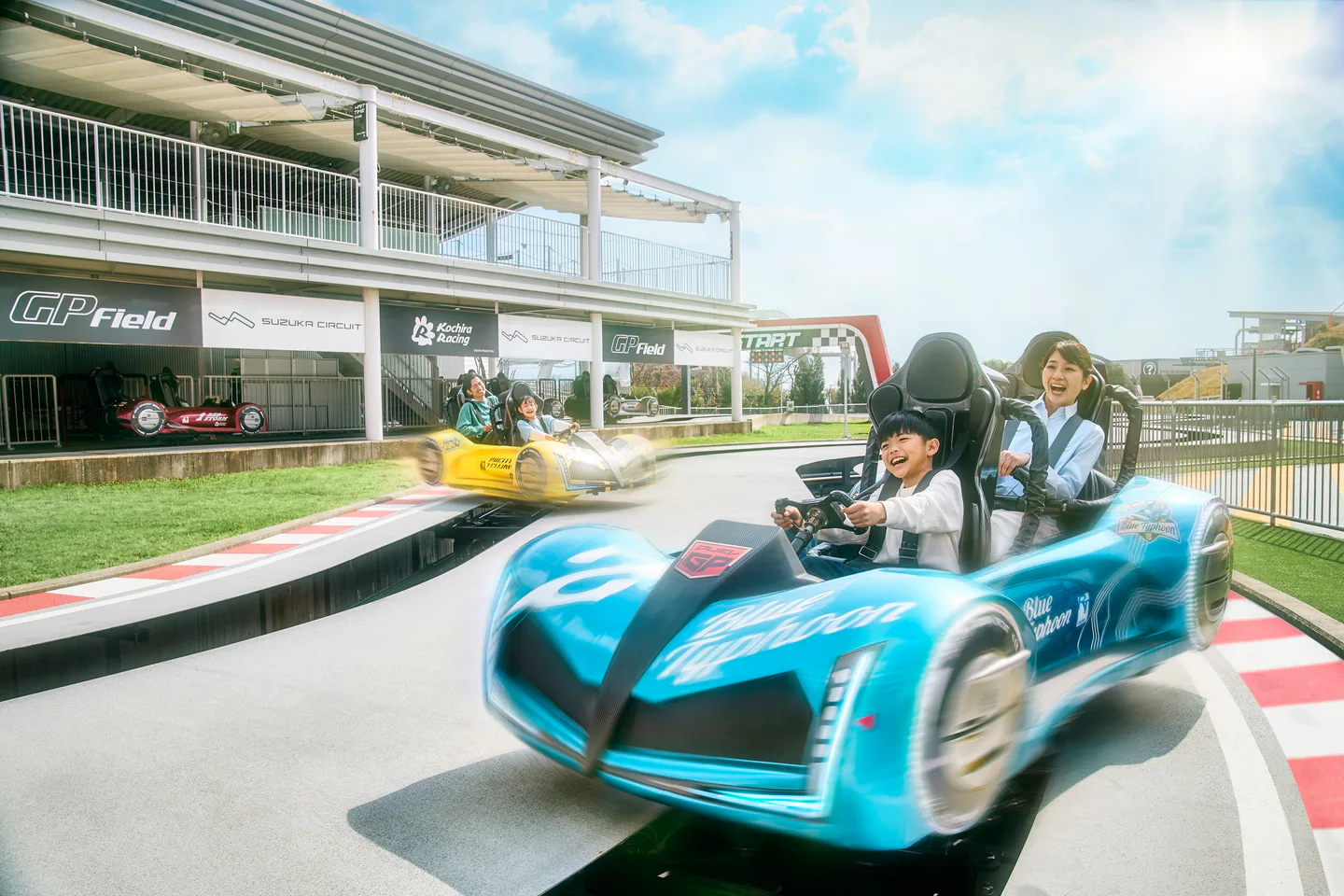
Suzuka Circuit Park is most rewarding when the child wants to take the controls. A five-year-old who enjoys cars and missions can spend a day driving or operating things that would be inaccessible at many thrill-led parks. An adult attracted only by Formula 1 should ask a different question: will the attractions and gallery on a normal park day satisfy a motorsport trip? Neither family should buy by the circuit name alone. Child height, ticket type and the event calendar determine the day you actually get.
The calendar can overturn the ordinary plan. The MFJ Grand Prix runs on 24–25 October 2026, and the next major race weekend is the JAF Suzuka Grand Prix / Super Formula on 21–22 November. Suzuka sells race-day ticket products on these dates, with different traffic and visitor patterns. A family planning a relaxed children's-ride day should identify its date first, then decide whether the atmosphere is an attraction or an obstacle. Suzuka versus Nagashima is a useful comparison when the park day is movable.
All prices here are in yen. The park's calendar sets prices by visit date, and an old screenshot cannot determine a later booking. Web purchase currently saves ¥500 against buying the equivalent normal-day ticket at the on-site counter. The November race passport has its own price and rules, so it should not be mistaken for an ordinary Park Passport at a discount. Foreign-currency conversions have been removed because they change independently of the ticket price.
↔ Scroll table left or right
Your group's priority | Likely decision | What makes the difference |
Preschool or early-primary child keen on vehicles | Strong full-day candidate | Many attractions involve steering, operating or completing a task. |
Child misses several must-ride height or age rules | Rebuild the shortlist | Entry is useful only when enough of the desired rides remain accessible. |
Adult motorsport fan, little interest in family rides | Choose a named event or activity | Normal park entry does not include a paddock visit or race experience. |
Visit on 24–25 October or 21–22 November 2026 | Use event-day ticket rules | Race traffic and a special passport can replace ordinary park assumptions. |
Only three or four Nagoya days and no vehicle enthusiast | Consider a city day | Rail plus local transfer consume most of a day. |
What makes Suzuka distinct for young children
Suzuka's strength is participation rather than a long list of extreme rides. A small child can steer, follow a route, work controls or complete a simple challenge, often with a supervising adult. That is a different payoff from watching a coaster they cannot board. The case weakens if nobody in the group enjoys vehicles or the child is below the requirements for the specific rides they have named. Check that short list before committing a full day from Nagoya.
↔ Scroll table left or right
Planning factor | What the park offers | What could reverse the choice |
Child participation | Driving, steering and mission-style attractions | Child does not enjoy vehicle themes. |
Preschool fit | Several activities permit younger guests with a supervisor | Family favourites require greater height or age. |
Nagoya transport | Frequent Kintetsu trains reach Shiroko | The last bus/taxi leg and late return burden the group. |
Ticket clarity | Calendar gives the exact product and age price | Race weekend or separate Circuit Challenger ticket changes the total. |
Wet-weather options | Rain-compatible, covered and indoor filters exist | The child’s chosen outdoor rides stop operating. |
Motorsport interest | Circuit setting and Honda RACING Gallery | Guest expects a track tour or race from ordinary park entry. |
Regional uniqueness | Child-operated mobility theme is hard to duplicate | A more urgent Nagoya or Chubu day must be displaced. |
A child who wants to drive is the best reason to go
Put the child's interests beside the park map. Cars, motorcycles, trains and other mobility-themed tasks run through the attraction list. Preschool and early-primary visitors may find more chances to do something themselves than at a large-ride park. If the family's ideal day is shopping, an aquarium or big coasters, Suzuka's long approach may be unnecessary. The Nagoya aquarium day is a much simpler city-based alternative for a child who cares more about animals than driving.
Treat this as an excursion, not a filler between trains. The railway to Shiroko, local bus or taxi, entry and a return journey consume much of the day before ride queues are counted. On a short Nagoya stay, the question resembles whether Takayama fits a four-day Nagoya trip: even a good destination can displace a higher-priority full day. Decide which experience the family would give up, not merely whether Suzuka is enjoyable.
Younger guests have more to do than the big-ride signs suggest
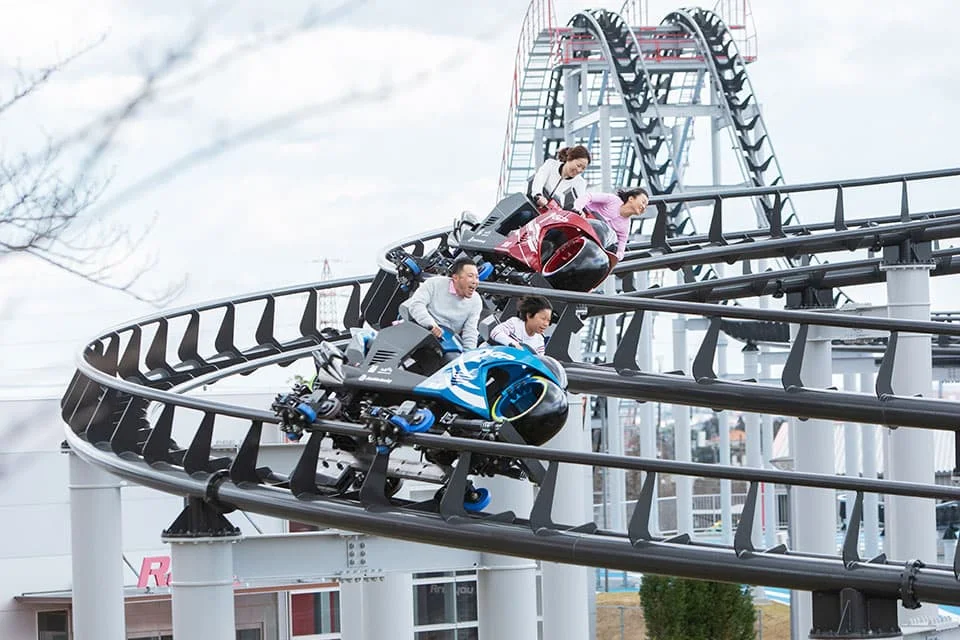
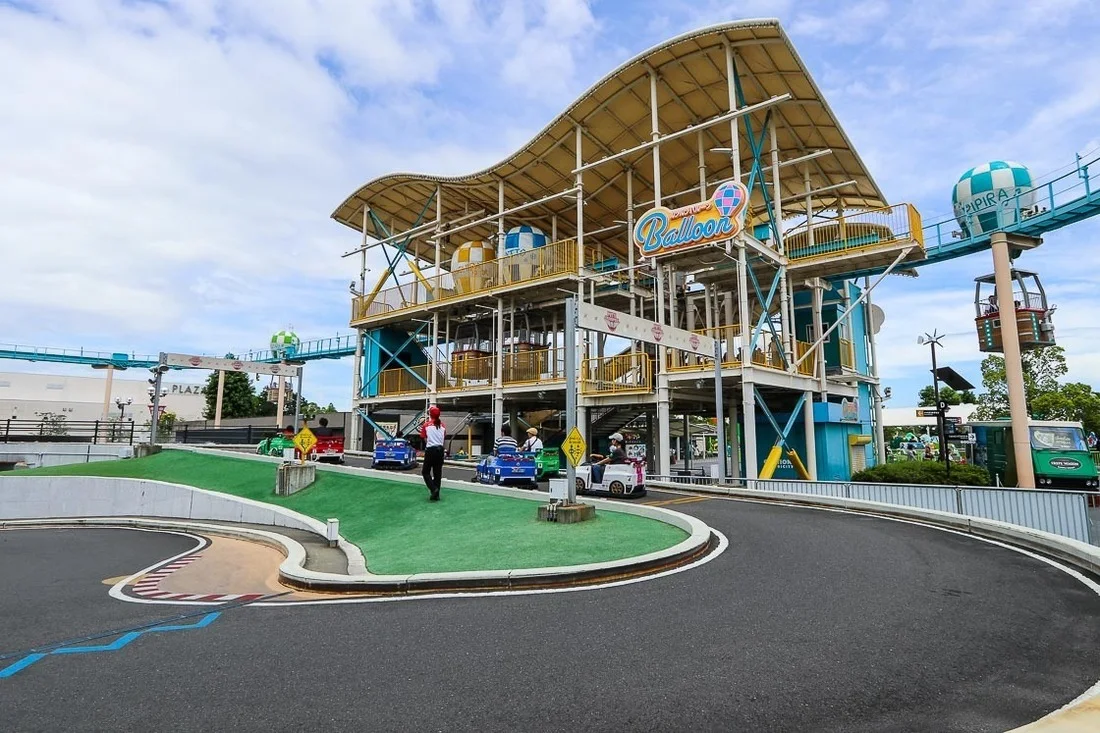
GP Racers and Rocky Coaster each require at least 120 cm, so a preschooler looking only at those signs may seem excluded. Yet the park has many participatory rides intended for younger children. Kochira's Driving School allows a child aged five to ride alone; younger children who can sit independently may ride with a supervisor aged thirteen or older. Putti Grand Prix permits ages three to six with that supervising companion. This is why one 120 cm threshold cannot describe the park.
The sweet spot often lies around preschool and early primary age, provided the child enjoys hands-on tasks. A five-year-old can leave with a genuine sense of operating things even without the high-speed attractions. That does not mean every ride is open to every five-year-old: some require a particular height, school year, independent cycling ability or adult companion. The same age can produce very different ride lists, which is why the family's own shortlist matters more than a generic age recommendation.
Four different rules shape the ride list
Adventure Drive requires 100 cm; children under seven who clear that height still need a supervising companion aged thirteen or older. Rocky Coaster and GP Racers require 120 cm. Kart Attacker requires both age nine or above and 130 cm, with an additional licence/result condition for its Attack Stage. These conditions are separate. A child can be tall enough for one attraction and too young for another. Nagashima's pool and park ticket choices also need age-based checking, but Suzuka's driving progression is its distinctive feature.
Measure each child, then mark the rides that matter to that particular child. A 105 cm five-year-old and a 125 cm eight-year-old are buying substantially different days even when they enter through the same gate. For some rides, an adult aged thirteen or above must accompany younger guests; that can affect how two children in one family take turns. Suzuka's attraction-conditions page also describes who may ride alone, so the height figure is only the beginning of the check.
Admission and Park Passport serve different plans
A park admission ticket opens the gate but does not bundle attraction rides. The Park Passport covers admission and unlimited use of most attractions. For a full day built around a child's repeated rides, the passport will often be easier to use and to budget. For a short visit, a race spectator or a companion who will not ride much, admission plus separate ride tickets can deserve comparison. Use the price shown for the precise date and age bracket before choosing.
Circuit Challenger is the important exception to the ordinary passport rule: it needs a separate ticket even when the visitor holds a Park Passport. Do not count that circuit-driving activity as included because the ticket promises unlimited rides elsewhere. Its age rules also differ: ages two to eight may ride with a supervisor, nine- and ten-year-olds may drive only with one, and a guest must be eleven to ride alone. A family whose entire trip depends on this experience should check both the reservation and age conditions first.
The park currently advertises a ¥500 web saving against the matching normal-day on-site ticket. One calendar entry lists a ¥4,800 adult web Park Passport and ¥5,300 on-site, with web admission at ¥2,000; those numbers illustrate how the two products differ on that listed date, not an all-year tariff. Child categories also change the total. Look at the family total for the chosen date and intended rides instead of extrapolating from one adult ticket example.
KKday | Check your date and compare Suzuka Circuit Park ticket options
A race weekend is a different ticket decision
The Suzuka 1000km held on 12–13 September 2026 is past, but it demonstrates why a park-price example can go stale quickly: the event used a Race Day Special Passport with race viewing and rides. The MFJ weekend on 24–25 October and Super Formula / JAF weekend on 21–22 November are the relevant upcoming or current calendar entries as of 24 October. For the November dates, the park says only a Race Day Special Passport is sold.
For 21–22 November, the current advance web general-admission Race Day Special Passport is ¥6,300 for adults aged twenty-four or more, ¥5,300 for the U23 category, ¥4,600 for elementary and middle school students and ¥2,800 for children aged three through preschool. It includes park entry, rides and general race viewing for the event period. Same-day prices are higher and the advance product has a sales cut-off and restrictions on changes and cancellation. A family looking only for preschool rides should compare a normal date, not simply the ticket headline.
The 24–25 October MFJ event is happening now; 21–22 November is the next named major weekend in this guide. Both can change bus demand, driving times and park rhythms. Other events appear on Suzuka's calendar, so a date outside these examples is not automatically quiet. Inspect the actual calendar and ticket page for the intended visit, especially if a calm first park day is the purpose. A race fan may welcome the extra atmosphere; a family needing predictable ride time may not.
↔ Scroll table left or right
Race-day plan | How to adjust |
You want the race | Select the event viewing area and special passport deliberately. |
You only want preschool rides | Prefer an ordinary park date if the calendar allows. |
You are driving | Follow event parking instructions and allow traffic margin. |
You use rail and bus | Expect greater demand on the Shiroko connection, especially after the race. |
Shiroko is the practical station for most families
From Kintetsu Nagoya, allow about fifty minutes on the railway to Kintetsu Shiroko, then approximately twenty minutes by route bus or taxi to the circuit. The Shiroko transfer adds work in both directions but offers frequent rail service. The park recommends that station for ordinary public-transport visits. This is a genuine full-day outing from a Nagoya station-area hotel, not a single direct train to the entrance.
Ise Railway's Suzuka Circuit Ino Station is about a twenty-minute walk from the park and can look closer on a map. The circuit warns that IC transit cards cannot be used there and trains may be one to two hours apart at certain times. A tired child cannot easily wait that long simply because the walking distance was shorter. Unless the exact outbound and return trains suit your schedule, Shiroko plus the local bus or taxi is the more forgiving plan.
If Suzuka falls between hotel moves on a wider Chubu trip, luggage and late-day departure make an already long day less flexible. Compare it with the five-day Central Japan route before adding a detour. A vehicle-loving child can justify a dedicated park day, but that is a different commitment from squeezing rides into a transfer afternoon.
Driving removes the last transfer, not the full-day cost
Arriving by car lets parents carry a stroller, spare clothes and snacks without changing between rail and bus. The ordinary access guidance puts Suzuka IC around twenty-five minutes from the parking entrance. That is a route estimate under normal conditions, not a guarantee for the full drive from Nagoya. Parking, gate entry, queues and the journey home still make the visit a full-day choice for most families.
On major race days, the 25-minute Suzuka IC estimate is fragile. The circuit publishes event-specific traffic and parking instructions for weekends such as 24–25 October and 21–22 November. The November advance race passport offers a separate reservation process for the Misono parking area at ¥2,000 per day, subject to its terms. Follow the event arrangement attached to the purchased ticket; an ordinary park-day parking assumption may send a driver to the wrong place or understate delays.
Suzuka and Nagashima reward different children
For a Nagoya-based family, Suzuka is the more distinctive pick when a child wants driving missions and the chance to operate attractions. Nagashima Spa Land and its seasonal Jumbo Seawater Pool instead serve a day of larger coasters, water activities and the adjacent outlet complex. Neither is interchangeable merely because both occupy a full day. The Nagashima ticket and bus breakdown helps when a mixed-age group is pricing the second option.
A preschooler and a teenager may split the vote. The youngest child may be delighted by Suzuka's controls and licences while the teenager wants the thrill rides at Nagashima. Decide how the group will share or separate its day before buying. A famous racing circuit does not automatically make the family park satisfying for everyone; equally, a bigger coaster park may leave a five-year-old watching from outside several queues.
The motorsport fan should name the desired experience
An adult can enjoy the circuit setting, GP Field and the Honda RACING Gallery, which displays historic racing machines and power units. That gives the park an identity beyond the children's rides. But a normal Park Passport is not a paddock pass, track tour or race ticket. If the real goal is to watch competition, choose a motorsport date and its ticket product. If the goal is racing history, check the gallery and any separately bookable circuit activity before travelling out from Nagoya.
A visitor without children who does not plan to use many rides should compare the travel time with an in-city day. The Port of Nagoya aquarium and Art Aquarium Nagoya in Sakae are different attractions, but both avoid the Shiroko-to-circuit connection. Suzuka is the stronger choice when its particular machines, gallery or event are the point, rather than when any family entertainment would do.
Rain changes which rides justify the journey
Suzuka's attraction filter identifies rides usable in rain, under a roof or indoors. That provides alternatives when the forecast turns, but does not keep every outdoor favourite running. Build a weather-safe list from the rides your child would actually accept. If all the attractions they care about are exposed, the fact that the park contains some covered options will not rescue the value of a long trip from Nagoya.
For a wet day with uncertain ride operation, the Nagoya aquarium plan is an indoor comparison with simpler transport. The point is not to abandon Suzuka whenever rain appears. It is to see whether enough compatible rides remain for this family's heights and interests. Weather, closures and race operations can each change the list, so confirm the day's attraction status before setting out.
The family that will enjoy the trip
Suzuka makes a strong full day for a child keen on vehicles who can use a satisfying set of hands-on attractions. It also suits a family that specifically wants the circuit atmosphere and has allowed enough time for the Nagoya rail-and-bus approach. Measure the children, identify their first-choice rides, then price admission against a passport for the actual date. If the group has already covered its Nagoya city priorities, the excursion has room to breathe.
The case weakens when the family has only three or four Nagoya days and must remove a more important excursion, when the child dislikes vehicles, when the group mainly wants extreme coasters, or when it has selected a race weekend without wanting the race. A wider Central Japan itinerary may already involve enough movement. Suzuka's quality as a park does not remove the opportunity cost of another transfer-heavy day.
The decision is a ride list, a date and a full day
The distinctive outcome is a young visitor taking part: steering a small car, following a course or earning a result rather than standing below a height-limit sign. That is the reason to choose Suzuka for a five-year-old. An F1 enthusiast may still enjoy the site, but should select a race or named circuit experience if motorsport itself is the goal. The two visitors are buying different benefits from the same destination.
Before paying, make four checks. First, measure the child and include age or school-year conditions, not height alone. Second, reserve a full day with a workable Shiroko or driving return. Third, compare admission, Park Passport and any separately ticketed Circuit Challenger activity for the date. Fourth, see whether a motorsport event changes the ticket and transport plan. When those details match the family, Suzuka earns its place in a Mie itinerary; when they do not, a simpler Nagoya day can be the better use of time.
Ticket examples and event dates were checked against Suzuka's published listings on 24 October 2026. The live visit-date calendar and attraction conditions determine the product and rides available on your day.
Next decision | Suzuka or Nagashima for your full family day?
Compare Nagoya stays for a Suzuka day trip.