
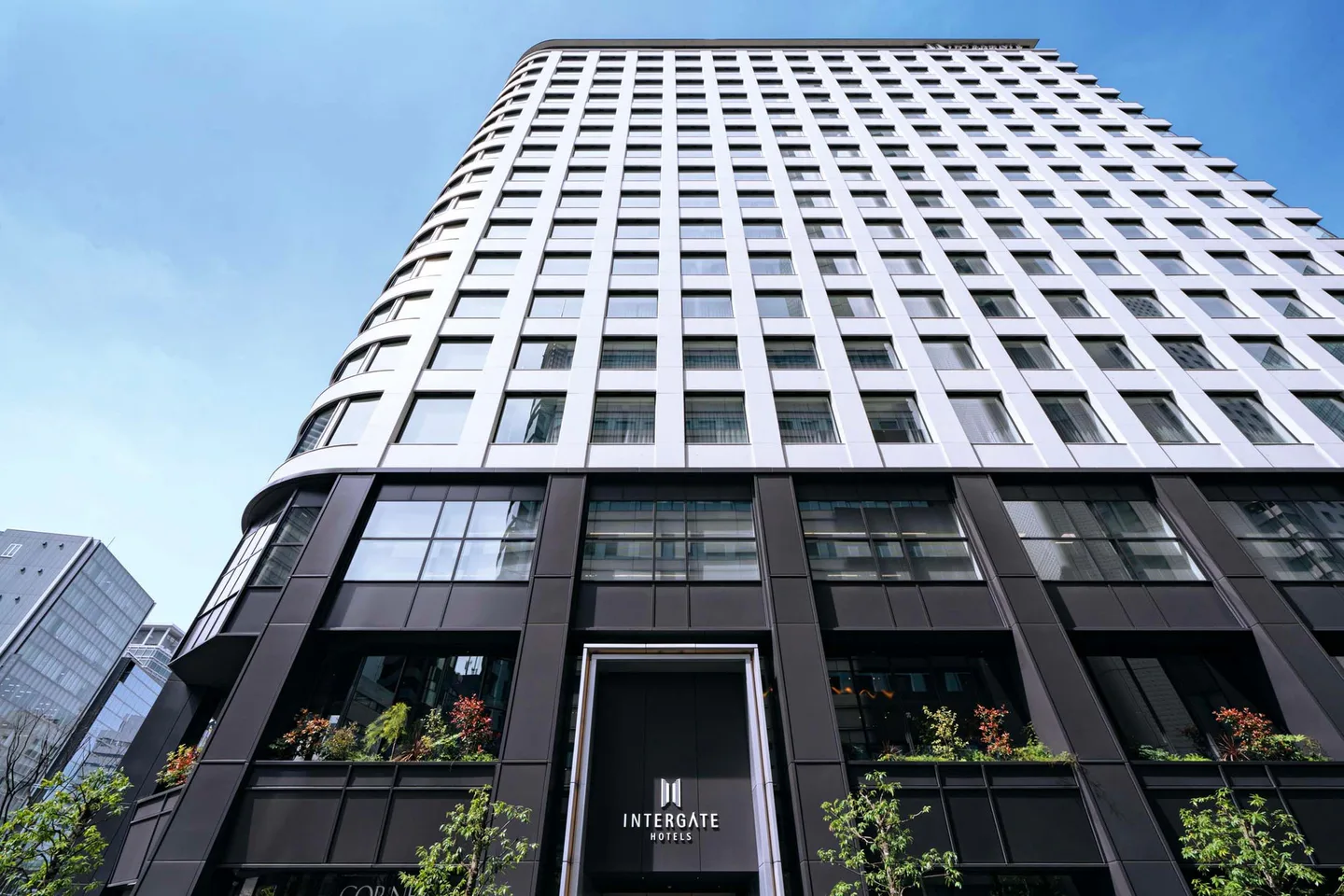
Hotel Intergate Osaka Umeda sells a convenient Umeda base and a sequence of guest-only lounge services. The sequence matters more than the mere presence of a lounge. A traveller back at 18:00 can catch wine or cocktails before 19:00, then the ochazuke rice-and-broth service from 20:00. Someone returning after a late show at Universal Studios Japan will miss both, but may still use the communal bath until 01:00. Before paying more for Intergate than another Osaka Station-area room, place your likely return times alongside those service windows.
The address is also a specific walk, not a door directly above a railway platform. The hotel lists five minutes from JR Osaka Station's Sakurabashi Exit, three from Nishi-Umeda Exit 10 and three from the Herbis Osaka airport-bus stop. That combination can work for JR day trips and an airport-bus arrival. A traveller who wants the shortest possible station-to-room route should still compare a station-integrated property; a traveller whose evenings remain in Namba should consider whether Umeda is the right base at all.
An Osaka return time changes what the room rate includes for you
| Likely return | Intergate services still within reach | Decision implication |
|---|---|---|
| 17:30–18:30 | Happy Hour, later ochazuke and the bath | Several distinct services fit without moving the evening |
| 20:00–21:30 | Ochazuke and the bath | Do not count Happy Hour in the premium |
| 22:30–00:30 | Bath, subject to entry rules | Room and location carry more of the price |
| After 01:00 | No evening lounge or bath window | Compare as a transport-and-room hotel |
| 06:00–07:00 departure | Coffee and smoothie service; morning bath | Paid breakfast begins later at 07:00 |
A three-night stay does not automatically buy three useful Happy Hours. If a Kyoto afternoon ends in Umeda at 18:00 but two other evenings end after 22:00, there is one likely Happy Hour. That is still a benefit, simply less than the room brochure might suggest. Do not cut a preferred dinner or park hour short to collect a complimentary drink. Once a hotel service changes a day you wanted to spend elsewhere, it has a cost of its own.
The hours below are published service windows, not a promise that every item is available at every moment within them. The lounge is for overnight guests during their stay. Breakfast and special menu items cost extra; other listed lounge services are currently included. The hotel asks guests not to enter in nightwear or room slippers, a small but relevant detail for anyone planning a late snack immediately after changing for bed.
The lounge clock, from a 06:00 drink to 22:00 rice
| Service | Published time | How it fits a trip |
|---|---|---|
| Early coffee and smoothies | 06:00–07:00 | Useful before a train; not a substitute for paid breakfast |
| Breakfast, charged | 07:00–10:30; last order 10:00 | Check departure time before adding it to the rate |
| Specialty coffee and soft drinks | 10:30–20:00 | Best on a day that includes a hotel pause |
| Afternoon snacks and drinks | 15:00–20:00 | Available after a shorter outing or early return |
| Happy Hour wine and cocktails | 17:00–19:00 | Requires the early-evening Umeda return |
| Ochazuke with toppings | 20:00–22:00 | Can bridge a later arrival and bedtime |
The ochazuke service offers rice with broth and toppings, including the hotel's current Osaka-themed chanja option. It is a late snack rather than a guaranteed full dinner for someone returning hungry after a day trip. Happy Hour similarly offers drinks, not a reason to budget away the evening meal. A traveller who naturally spends the 17:00–19:00 period elsewhere has paid for the opportunity to use that lounge service, not for a saving that materialised.
A Kyoto day is a good example of how the same hotel can feel different from one evening to the next. A return train that reaches Osaka in early evening puts the drinks window near the station walk home. Staying in Kyoto for dinner or an illumination moves the return beyond it. Both are valid day plans. The Kyoto-versus-Osaka base decision should be settled before Intergate's lounge hours determine the entire itinerary.
The bath survives many returns that the lounge misses
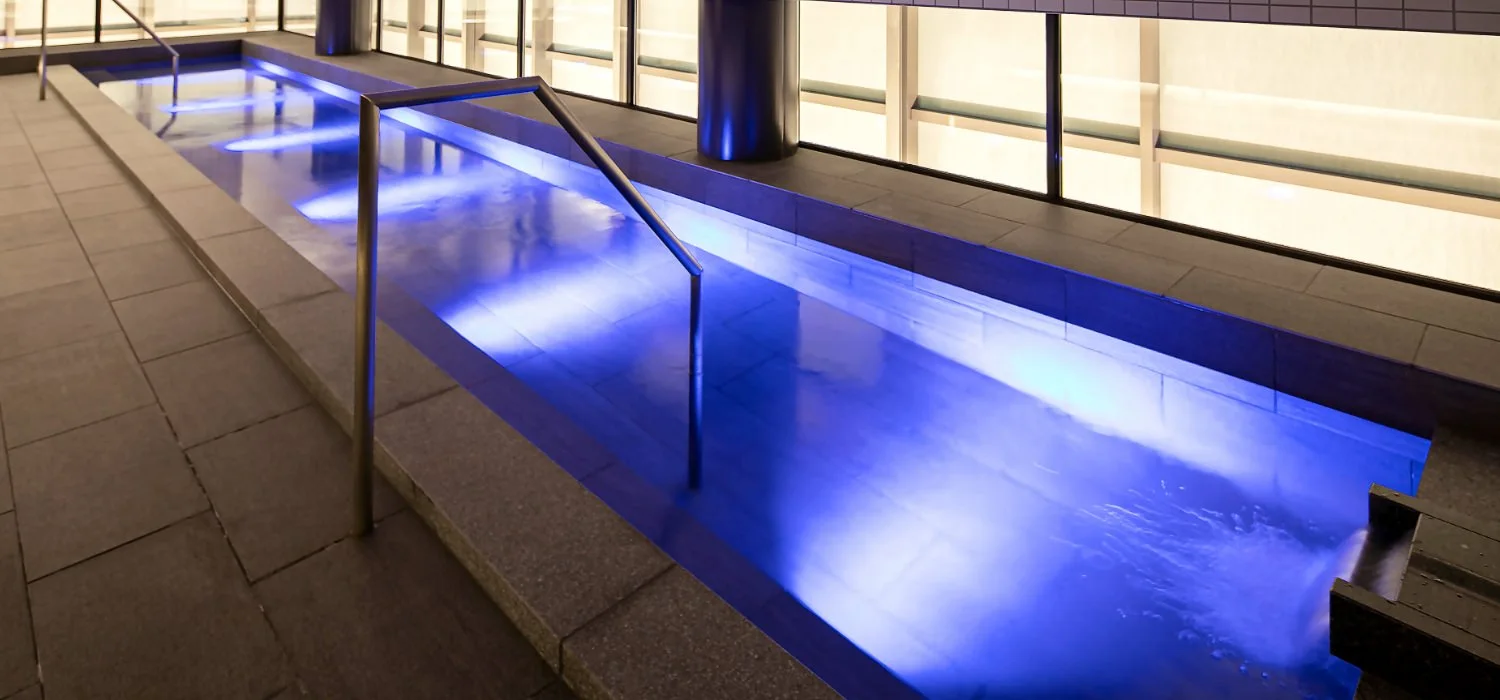
Intergate's communal bath is on the eighteenth floor and currently admits guests from 06:00 to 10:00 and from 15:00 until 01:00 the next morning. It is included for staying guests. The men's area has a dry sauna and cold-water bath; the women's area has a jet bath and a coded entry door. A traveller back around 22:30 may still have time for this facility after both evening food-and-drink windows close. It is the clearest amenity case for a somewhat later return.
Bath access has conditions that can turn the apparent value to zero for a particular party. Tattoos must be fully covered by at most two 10 × 15 cm stickers; the front desk can provide them. Under the bathing rule the hotel publishes for Osaka, mixed-gender bathing is limited to children through age six. A child aged seven or above cannot enter the opposite-sex bath. Bring towels from the room, and do not plan to enter while intoxicated. A family that cannot use the bath as intended should not price it into the room premium.
Someone arriving after 01:00 misses the evening bath as well. The morning 06:00–10:00 session may still fit, but only if the next day's schedule allows it. A guest catching a very early train may have too little time to bathe, dress and reach the station. The station-heavy Osaka hotel comparison is a better starting point when repeated early departures outweigh hotel facilities.
Do not let a communal lounge conceal an undersized bedroom
The hotel's published two-person choices vary considerably. Standard Double is 18 m², Standard Twin 23 m², Superior Twin 25 m² and Deluxe Twin 31 m². Standard Twin is about 28% larger in nominal area than Standard Double; Superior Twin is about 39% larger. Those are calculations from published square metres, not measured floor for two open suitcases. Furniture arrangement, bed configuration and the shape of the room still determine circulation.
Two travellers with full-size luggage should compare the 23 and 25 m² twins against the cheapest 18 m² double before accepting a lounge as compensation for tight personal space. The shared lounge can provide a place to sit or drink during its hours. It cannot hold an open suitcase, make a small bathroom larger or replace a second bed. A solo guest carrying little may find the 18 m² room entirely adequate, while a couple staying five nights may value the extra twin-room area every morning.
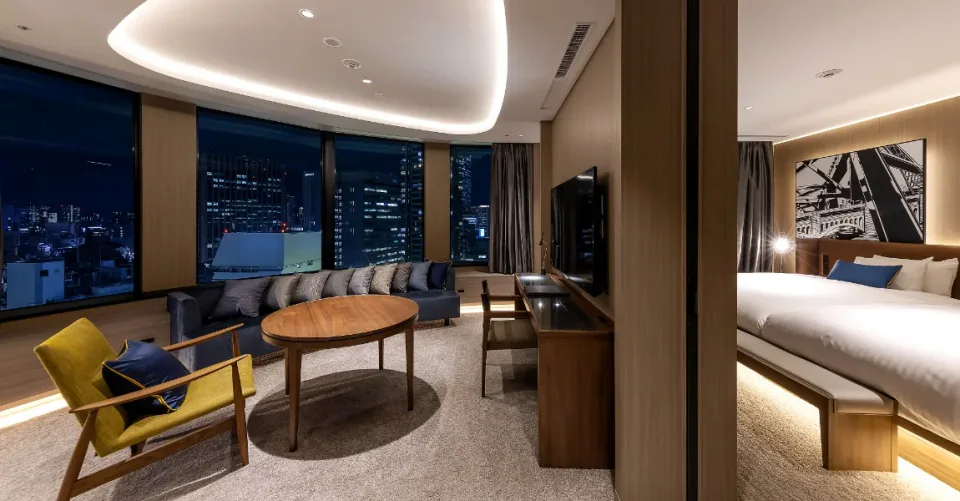
The larger photographed suite is a different product again. It has a separate seating side, city-facing windows and a bedroom; its image should not be read as the layout of the 18 m² entry room. The exact room name is essential when a booking image looks particularly spacious. The full room list also includes a 36 m² Triple, 40 m² Corner Deluxe Twin and connecting-room configuration; a family should search those actual categories rather than extrapolate from a two-person double.
The hotel's baby-cot rule is unusually concrete. A cot costs ¥2,420 per night under the current FAQ, is limited in number and can be placed only in a Deluxe Twin or Corner Deluxe Twin. A family needing one therefore cannot choose the cheapest double and assume a cot will fit later. The cot availability, cost and room category belong in the first rate comparison. The Osaka family-room versus connecting-room decision offers another approach if the party needs more than the standard twin occupancy.
The final walk from rail or airport bus
JR Osaka Station's Sakurabashi Exit is the hotel's five-minute reference. Nishi-Umeda Exit 10 is three minutes; Hanshin Osaka-Umeda and JR Kitashinchi are each about five. The hotel's access page also mentions Garden Avenue underground exit 6-47. Those are last-leg wayfinding cues, not platform-to-check-in stopwatch guarantees. Coming from a JR train may involve corridors and a search for the correct exit before the outdoor five-minute walk begins.
For airport arrivals, the named stop is Herbis Osaka, about three minutes away on foot. The hotel quotes roughly 60 minutes by limousine bus from Kansai International Airport and 25 from Itami before that last walk. Its access note warns that Osaka Station airport buses can end at different stops, so choose the Herbis Osaka service if the short hotel walk matters. Schedules, traffic and fares must be checked for the actual flight, particularly a late arrival. Kansai Airport to Osaka transport makes the train-versus-final-walk trade easier to test.
A guest repeating JR trips to Kyoto, Kobe or Himeji can benefit from an Umeda base even when one evening lounge visit is missed. A guest spending every night around Dotonbori may repeatedly cross the city to return to a hotel whose distinctive evening services finish before they arrive. Namba versus Umeda should settle which side of Osaka matches the evenings before Intergate is compared against nearby Umeda hotels.
Three itineraries reveal the actual fit
A four-night trip with two JR day trips and dinners near Osaka Station makes Intergate coherent. A return around 18:00 on one night can use Happy Hour; a second return at 20:30 can use ochazuke; the bath remains available later on both. The exact mix varies, but the hotel's geography and services reinforce rather than pull against the route. A station-integrated Granvia room remains worth pricing if the loaded walk itself is the largest concern.
A two-day USJ visit is different. Departing early and returning after park closing can remove Happy Hour and perhaps ochazuke from both nights. Intergate may still offer a late bath and access to other Osaka days, but a Universal City room might better serve repeated park journeys. The one-versus-two-day USJ hotel decision should be considered before paying an Umeda lounge premium the party is unlikely to use.
A nightlife-led Osaka visit that ends in Shinsaibashi or Dotonbori at midnight is a third pattern. Returning to Umeda for an early drink window would distort the evening. Buying a drink where the travellers actually want to be may be better than chasing an included one across town. Osaka base areas for couples makes that evening-first decision explicit. If the party still prefers Umeda for a morning train, choose Intergate for that reason and treat the unused lounge as incidental.
Our seven Intergate Osaka Umeda ratings
This assessment assumes two or three evenings return early enough to use the lounge. A bath visit after a late return can still have value when Happy Hour has finished.
| Dimension | Our rating | The booking consequence |
|---|---|---|
| Location | Sakurabashi is a five-minute published JR walk; Herbis bus and Nishi-Umeda are closer approaches. | |
| Room | The 18 m² double and 23–31 m² options solve different case and bed needs. | |
| Cleanliness | Current room and public-bath assessments are consistently high. | |
| Service | Staff response remains strong even as the time-limited lounge grows busy. | |
| Facilities | A late bath and rotating guest lounge add real use when the timetable fits. | |
| Food | Breakfast, drinks and evening ochazuke cover separate moments; none is a substitute for a full dinner. | |
| Value | The lounge earns its cost through actual 17:00–19:00 and 20:00–22:00 returns. |
Our overall Umeda read is 8.7/10 with a room that fits the luggage and multiple usable lounge returns. Late sightseeing every night lowers the value of the included schedule.
Seven itinerary checks after the hotel ratings
| Dimension | Published or itinerary evidence | Question for the booking |
|---|---|---|
| JR station walk | Five minutes from Sakurabashi Exit | How often will cases or early trains make the walk costly? |
| Airport-bus link | Three minutes from Herbis Osaka stop | Does the flight use a suitable bus departure? |
| Evening lounge | Happy Hour 17:00–19:00; ochazuke 20:00–22:00 | Which nights return without changing plans? |
| Late bath | 15:00–01:00; tattoo and child-entry limits | Can the travellers actually use it? |
| Bedroom area | 18, 23, 25 and 31 m² among common room types | Which named room fits luggage and beds? |
| Morning food | Coffee from 06:00; charged breakfast from 07:00 | Does departure leave time for either? |
| Neighbourhood fit | Umeda rail access; Namba and USJ nights can finish elsewhere | Where do the day's final journeys end? |
The original article proposed giving one point to each feature likely to be used during a night. The useful part is recording actual lounge and bath use against the conditional score above. One Happy Hour and two baths are different from three nights of the full lounge schedule. If at least two evening amenities recur naturally and the station area helps repeatedly, an Intergate premium has a concrete explanation. If the lounge misses the trip but the bath and rail access remain valuable, price those instead.
Compare Intergate Osaka Umeda room choices for the same dates, guests and cancellation terms as other Umeda options. A room near the station and an evening drink can both be useful, but only when each fits the route already chosen. Do not swap a 23 m² twin for an 18 m² double merely because a shared lounge is included; do not move a Kyoto dinner to Osaka just to catch a drink. The strongest booking is one in which the hotel clock, room category and journey home agree.
Hotel details: lounge timetable and inclusions · bath entry and hours · room dimensions · access and facilities · cot and child conditions.
Related Osaka routes and rooms
Osaka hotels for Kyoto and Kobe day trips · Kyoto vs Osaka · THE SINGULARI HOTEL decision guide · THE SINGULARI HOTEL decision guide · Namba vs Umeda · Namba vs Umeda · Osaka and Kyoto 4-Day Itinerary With USJ: Does Kyoto Still Fit? · mipig cafe Fukuoka: Check Your Last 48 Hours Before You Book the 55-Minute Session · The ¥800 LEGOLAND Japan Upgrade Is Cheap — Your Family’s Last Two Hours Are Not · Japan August Weather: The Heat Changes Your Itinerary More Than Your Packing List · Osaka for Couples: A 7-Day Itinerary That Saves the Best Nights for Kyoto, Kobe and One Big View · Osaka Amazing Pass 1-Day vs 2-Day Itinerary: The Route That Avoids the Biggest Time Traps · Osaka 5-Day Itinerary: Give USJ a Full Day — Namba, Umeda, Kaiyukan and Tennoji Without Backtracking · OMO7 Osaka: Is Shin-Imamiya the Right Base for Your Trip? · Osaka Observatory Comparison: HARUKAS 300 vs Umeda Sky Building vs Tsutenkaku — Which One Deserves Your Evening? · Osaka Attractions Map: How to Group Namba, Umeda, Tennoji and the Bay Area · National Museum of Nature and Science 2026: The ¥630 Ticket Is Cheap — Your 3–5 Hours Aren’t · Where to Stay in Osaka: Start With Your Last Stop, Then Choose Namba, Umeda, USJ or Shin-Osaka · Kushimoto Marine Park Is Worth the Detour — Just Don’t Let Stella Maris Decide Your Whole Day