
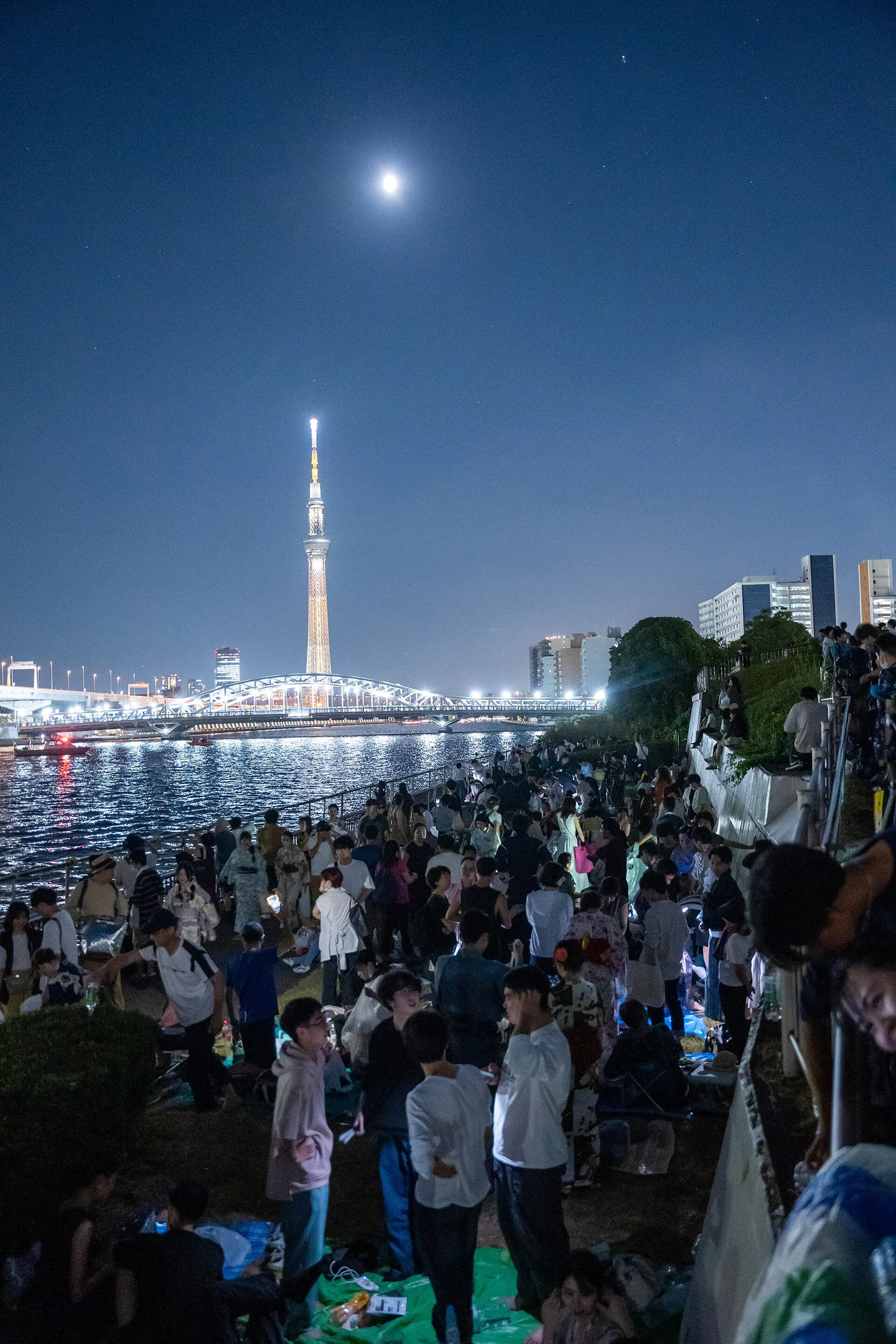
July changes the shape of a Japan trip more than a packing list can show. An early-month route through Tokyo, Kyoto, Osaka and northern Kyushu may still need a plan for Baiu rain. Later in the month, long walks in those same cities can become a heat problem even on a dry day. Hokkaido offers a much cooler monthly baseline; Okinawa remains warm overnight and still needs a backup for sea activities. Plan the day around the actual forecast rather than treating one nationwide “July outfit” as an answer.
The Japan Meteorological Agency's 1991–2020 July normals put the monthly mean at 25.7°C in Tokyo, 27.7°C in Osaka, 27.4°C in Fukuoka and 21.1°C in Sapporo. Kyoto's normal daily high is about 32°C; Naha's normal low is about 27°C. These are climate averages, not a prediction for any particular July date. Their use is to reveal where the itinerary needs a cooling break, dry shoes, or a genuinely different regional route. June's rainy-season pattern is useful context if the trip crosses the month boundary.
The calendar changes the main risk before it changes your wardrobe
JMA's climatological Baiu withdrawal reference falls around July 15 for southern Kyushu, July 17 for Shikoku, July 19 for northern Kyushu, Chugoku, Kinki, Tokai and Kanto-Koshin, July 23 for Hokuriku and later for Tohoku. These dates mark the middle of regional transition periods; an individual year can be earlier, later or less orderly. A July 4 trip should keep indoor and wet-footwear options ready. A July 27 trip should ask how many exposed hours the route demands. Neither date guarantees mild rain or uninterrupted sun. This rain-plan decision guide helps choose which outdoor block to keep when the forecast turns.
↔ Scroll table left or right
| Route situation | Daily adjustment | Easy mistake |
|---|---|---|
| Tokyo, Kyoto or Osaka during early July | Quick-dry clothing, compact rain cover, indoor fallback and a way to dry shoes | Assuming humid rain will feel cool |
| Mainland city route after the Baiu transition | Long outdoor block early or late; midday indoors or at the hotel | Keeping a spring-style 09:00–17:00 walking circuit |
| Fukuoka or northern Kyushu | Carry a wet-weather option while scheduling for summer heat | Discarding rain plans on the normal July 19 withdrawal date |
| Hokkaido | Summer clothes with one light layer for morning, evening or exposed countryside | Packing a Sapporo day as if it were Osaka |
| Okinawa | Sun protection, hydration and a movable marine-activity day | Assuming post-Baiu seas and boats are always available |
Even before the rainy season withdraws, Tokyo's normal July daily high is 29.9°C and Osaka's is 31.8°C. A wet afternoon can therefore be physically demanding without clear sunshine. Quick-dry summer clothing helps with both phases, but the route and the next dry pair of shoes often matter more than adding another garment. August planning shows how the heat-first version of this problem continues.
Heat alerts should change the outdoor appointment
Japan's Ministry of the Environment and JMA announce regional Heat Stroke Alerts when a forecast wet-bulb globe temperature, or WBGT, reaches 33 or above. WBGT combines more than ordinary air temperature. A regional alert is a reason to cut optional midday exposure, move an exposed walk, find air-conditioned breaks and check the conditions of the people travelling with you. It is not a promise that a lower reading makes a strenuous plan safe. The alert system's current operating season should be confirmed before travel, and the local day's forecast matters more than a climate normal.
That can be a hard choice when a trip spreadsheet contains a long temple hike or several outdoor districts. Keep the appointment that cannot move, then shorten the rest of the exposed day. A museum or a lunch break may protect the evening as well as the next morning. If walking continuously through the hottest hours is the only way a route works, another shirt will not repair the timetable. The Tokyo National Museum is one example of a substantial indoor block that should be selected for interest as well as cooling.
Tokyo: count the pavement between attractions
Tokyo's July monthly mean is 25.7°C and the normal high is 29.9°C. The city can feel more demanding than that number suggests when a day repeatedly adds station exits, road crossings and surface walks. An Asakusa and Ueno morning followed by one indoor afternoon is easier to adapt than crisscrossing town for unrelated outdoor stops. Group Tokyo sights by area before deciding what gear to bring. A breathable, quick-dry outfit, water and shade are generally more valuable on a hot day than a second warm layer; keep a light layer only if air-conditioning or a wet spell makes it useful.
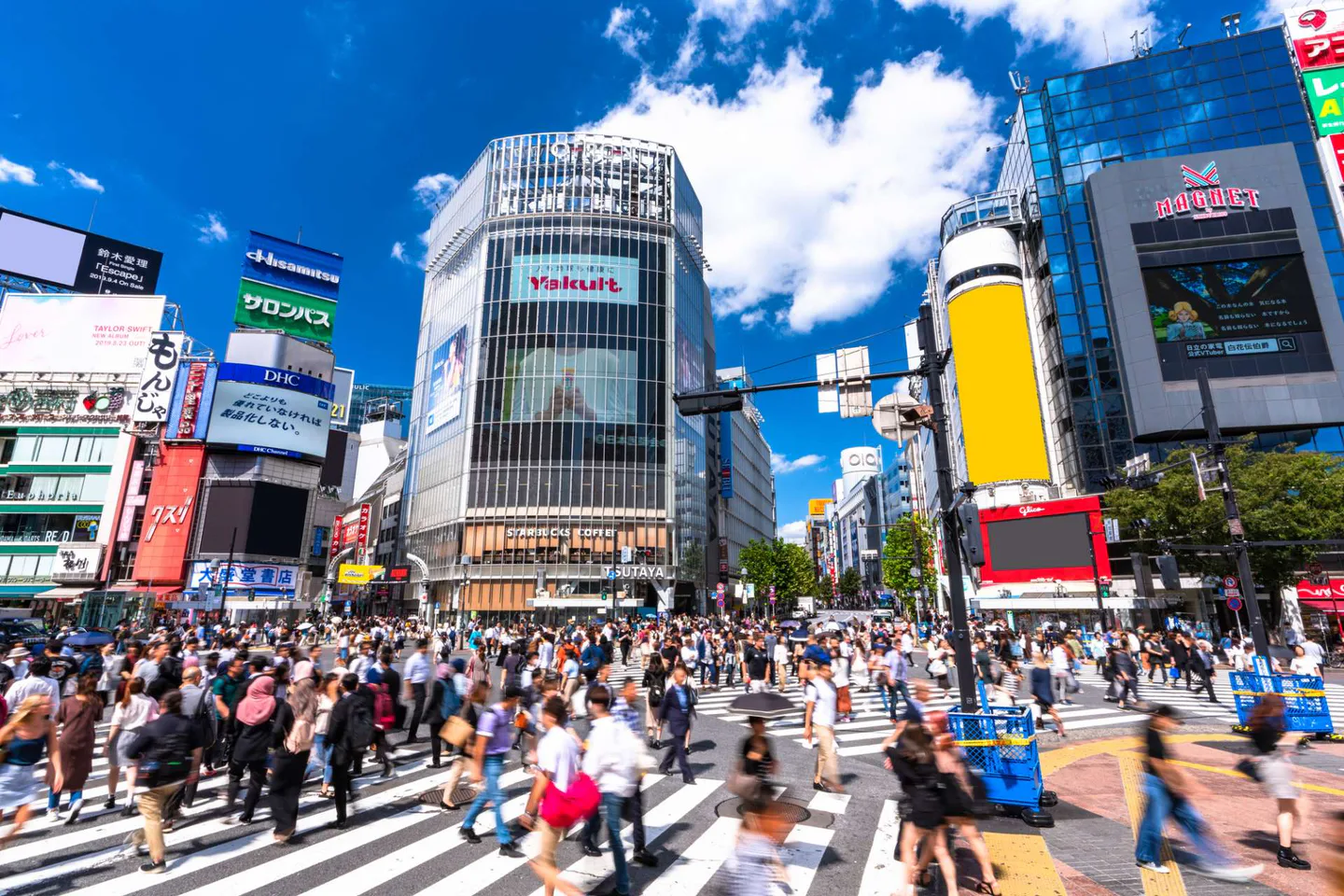
The image shows Shibuya's broad crossing on a clear day. It illustrates how an apparently short city transfer can mean open pavement and little protection from sun. The photograph cannot establish the month, temperature or conditions during your visit. Use an indoor stop or shorter district loop when the forecast makes the exposed crossing part of a much longer outdoor circuit.
Kyoto: put the break between the two outdoor anchors
Kyoto's normal July daily high is around 32°C. Kiyomizu-dera and Higashiyama add slopes and paved streets; Fushimi Inari adds uphill walking; Arashiyama can turn into another lengthy open-air circuit. Pick the one outdoor visit that matters most for early morning, use lunch plus a museum, café, hotel return or transport leg around midday, then consider a second walk later. The Fushimi Inari timing guide and Arashiyama route guide make those visits easier to size honestly. Putting four famous areas into one July day only works on paper if nobody needs relief from heat.
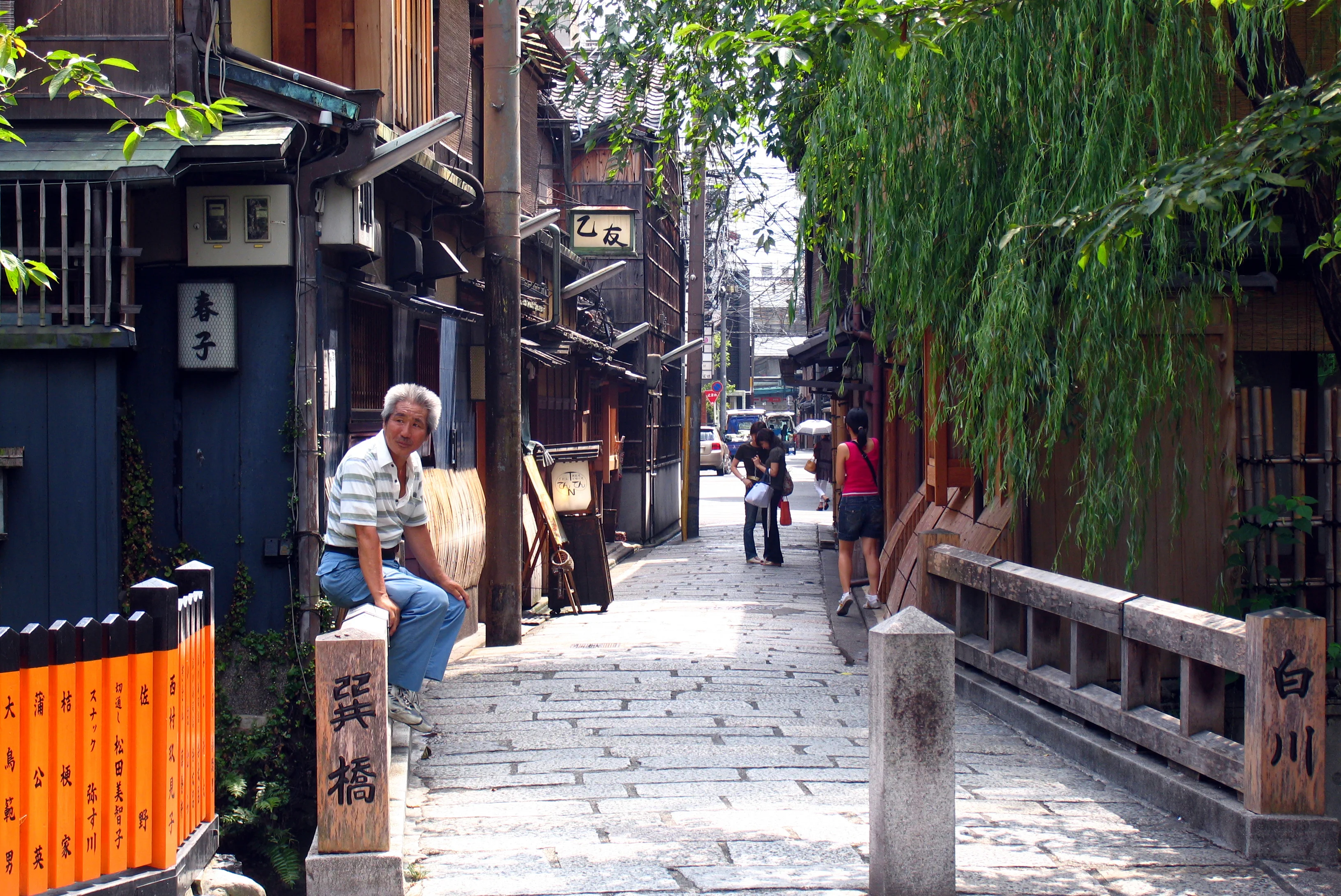
This Gion lane has paving stones, wooden buildings and willows beside Tatsumi Bridge. It is a better illustration of a walk through Kyoto than a generic claim about temple temperatures. A shaded lane can be pleasant for part of the route, but it does not erase the exposed walking before and after it. A one-day Kyoto choice is particularly important if the city is a day trip rather than a hotel base.
Osaka: indoor abundance only helps when you use it
Osaka's July mean is 27.7°C and its normal daily high 31.8°C. Its shopping arcades, department stores, museums and cafés give useful cooling breaks, yet a day that bounces between Namba, Umeda, Tennoji and the bay area spends too much time moving between them. Keep one main district and one deliberate indoor interval. Osaka by area helps find a coherent cluster, while rainy-day options can double as heat relief when chosen for the group's interests.
Arrival day from Kansai Airport is a poor place to force a second full city circuit after baggage and the transfer. Evening removes direct sun, although Osaka's normal July low remains 24.6°C; do not count on a cool night. If an Osaka hotel is also the base for Kyoto or Kobe, station access can save two outdoor transfer walks each day.
Fukuoka: design for both wet feet and a hot afternoon
Fukuoka's July mean is 27.4°C, its normal high 31.2°C and its normal precipitation 299.1 mm. Northern Kyushu's Baiu withdrawal reference is about July 19, not an annual deadline for heavy rain. A compact umbrella and a plan to dry or rotate shoes remain useful, while quick-dry summer clothing helps avoid being trapped in a warm shell all day. Put on a rain jacket for sustained rain or wind that calls for it; it may be uncomfortable as a permanent July layer. If the main shoes are soaked at 17:00, decide whether they will be wearable the next morning. A light second pair or fast-drying footwear can be a more practical solution than an extra outfit.
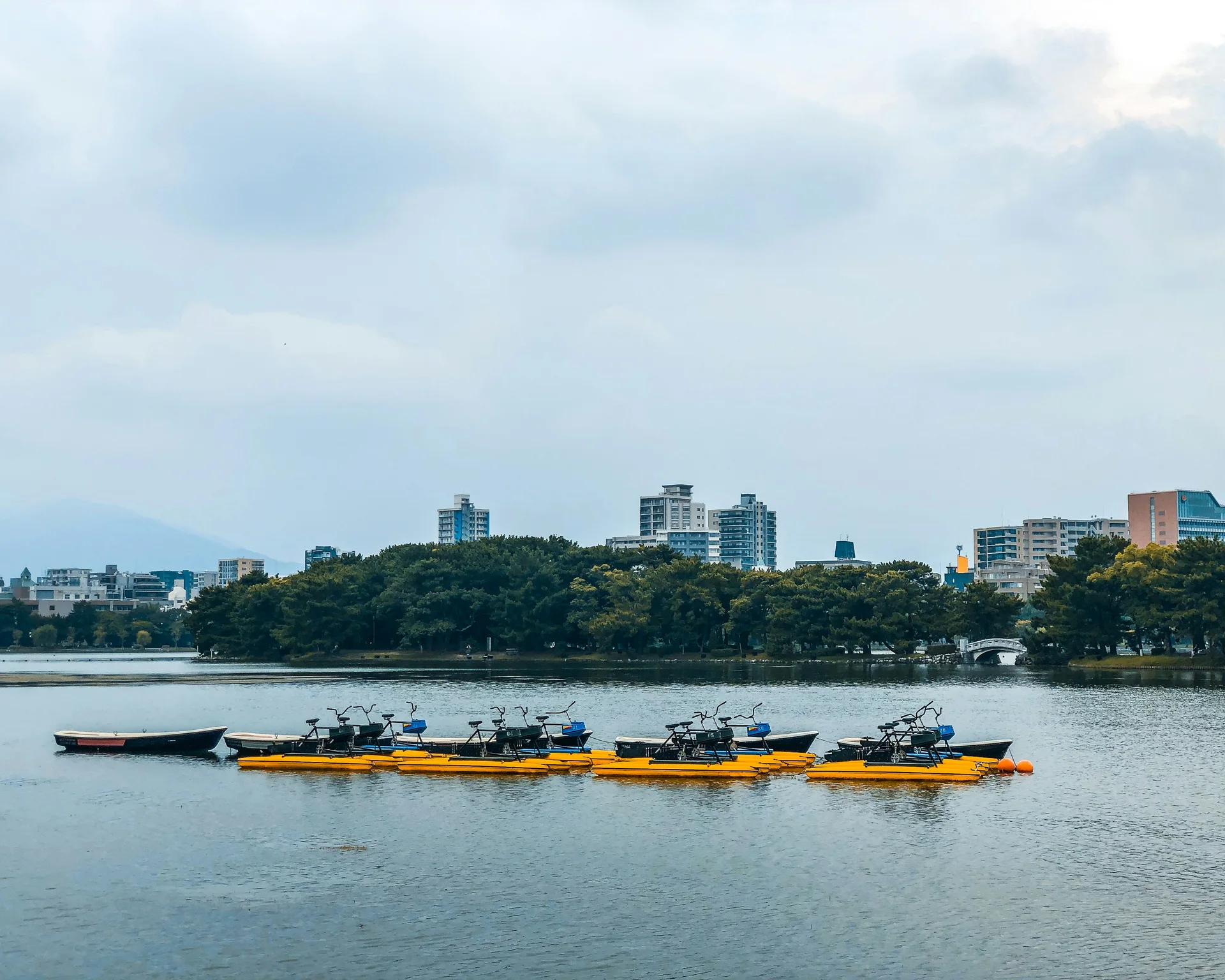
The Fukuoka picture shows Ohori Park's yellow pedal boats on calm water beneath cloud. It cannot stand in for a forecast or show the city's rainfall total. A park walk is a movable part of the day; the Tenjin rainy-day route or a hotel with better wet-weather access can reduce the next transfer's exposure. If a day is already packed with indoor tickets, use the park only when the weather and energy permit.
Hokkaido and Okinawa need different exceptions
Sapporo's July mean is 21.1°C and normal high 25.4°C. That gap from Kyoto and Osaka can change how long a visitor can comfortably stay outside, so choosing Hokkaido may be a route decision as much as a clothing decision. Summer clothes plus one light long-sleeve or wind layer cover cooler mornings, evenings and exposed rural areas. Do not label Furano or Biei uniformly cool: direct sun and warm spells can still matter. This five-day Hokkaido route helps weigh extra countryside travel against a simpler Sapporo-and-Otaru base.
Naha's July mean is 29.1°C, normal high 31.9°C and normal low around 27.0°C. A warm night gives less recovery than a cooler northern base. Use breathable clothing and sun protection, with a thin layer mainly for strong air-conditioning or wind. The core Okinawa Baiu season normally finishes earlier than mainland Japan's, but thunderstorms, tropical weather, wind and waves can still stop boat or beach plans. If a marine trip is the reason for travelling, leave more than one possible day and follow the operator's sea-state decision. Blue Cave boat and shore options illustrate why weather may change the activity itself.
The July day bag and the next morning
Carry the items that alter the day: water, sun protection, compact rain protection where relevant, a small towel, phone and power, and essential medication. Avoid filling a bag with spare warm clothes that never leave it. This matters for families because one adult carrying everybody's bottles, purchases and layers through Kyoto at midday takes on a different load from the forecast temperature alone. Wet-shoe recovery overnight is equally practical: check what will be dry before the next train or walking day.
During a wet early-July forecast, a quick-dry base, umbrella and light shell for sustained rain make more sense than a heavy waterproof outfit. During a clear late-July hot spell, reduce insulation and shift time into shade and air-conditioned places. Hokkaido keeps the light layer for its cooler edges of day; Okinawa needs it mainly for indoor air-conditioning or wind. The five mistakes to avoid are assuming rain will be cool, keeping an all-day outdoor schedule after the heat arrives, treating the climatological Baiu date as a fixed annual switch, packing Sapporo like Osaka, and answering a route problem only with clothing.
For a July booking, start with the regional weather pattern, then mark the longest exposed part of each day. Leave the wet-weather alternative open early in the month, and make the midday break real when summer heat dominates. The next day's condition matters as much as today's checklist. A ten-day city route is easier to enjoy when every stop is not also an outdoor transfer in the hottest hours.
If a cooler Hokkaido route replaces a hotter city stay, compare Sapporo rooms for the July leg and plan the onward regional journey separately.
Related travel decisions
Japan Meteorological Agency — Climatological Normals 1991–2020 · Japan Meteorological Agency — climatological Baiu onset and withdrawal · Ministry of the Environment / JMA — Heat Stroke Alert and WBGT information · Japan May Weather: Tokyo Warms Up, Kyoto Nears Summer, and Okinawa Turns Rainy · Kyoto Gozan Okuribi: What the 2026 Viewpoint and Exit Plan Teaches · Japan in February Is Still Winter: What to Wear in Tokyo, Kyoto, Hokkaido and Okinawa · lyf Tenjin Fukuoka Review: Is a 12m² Room Worth the Shared Kitchen and 24-Hour Lounge? · Fukuoka Tower: Is the ¥1,000 Ticket Worth the Detour? Timing Changes the Answer · Yame Tea Experience: Hoshino, Tea Fields or a Factory Tour? · KidZania Fukuoka Tickets 2026: 4 vs 6 vs 8 Hours — and Is the English Program Worth It? · Fukuoka Budget Hotels: The Cheapest Night Can Cost More Once You Add Transfers, Tiny Rooms and Unused Perks · Japan April Weather Is Not One Spring: Kyoto Warms Fast, Sapporo Stays Cold, Okinawa Runs Warm · Osaka for Couples: A 7-Day Itinerary That Saves the Best Nights for Kyoto, Kobe and One Big View