
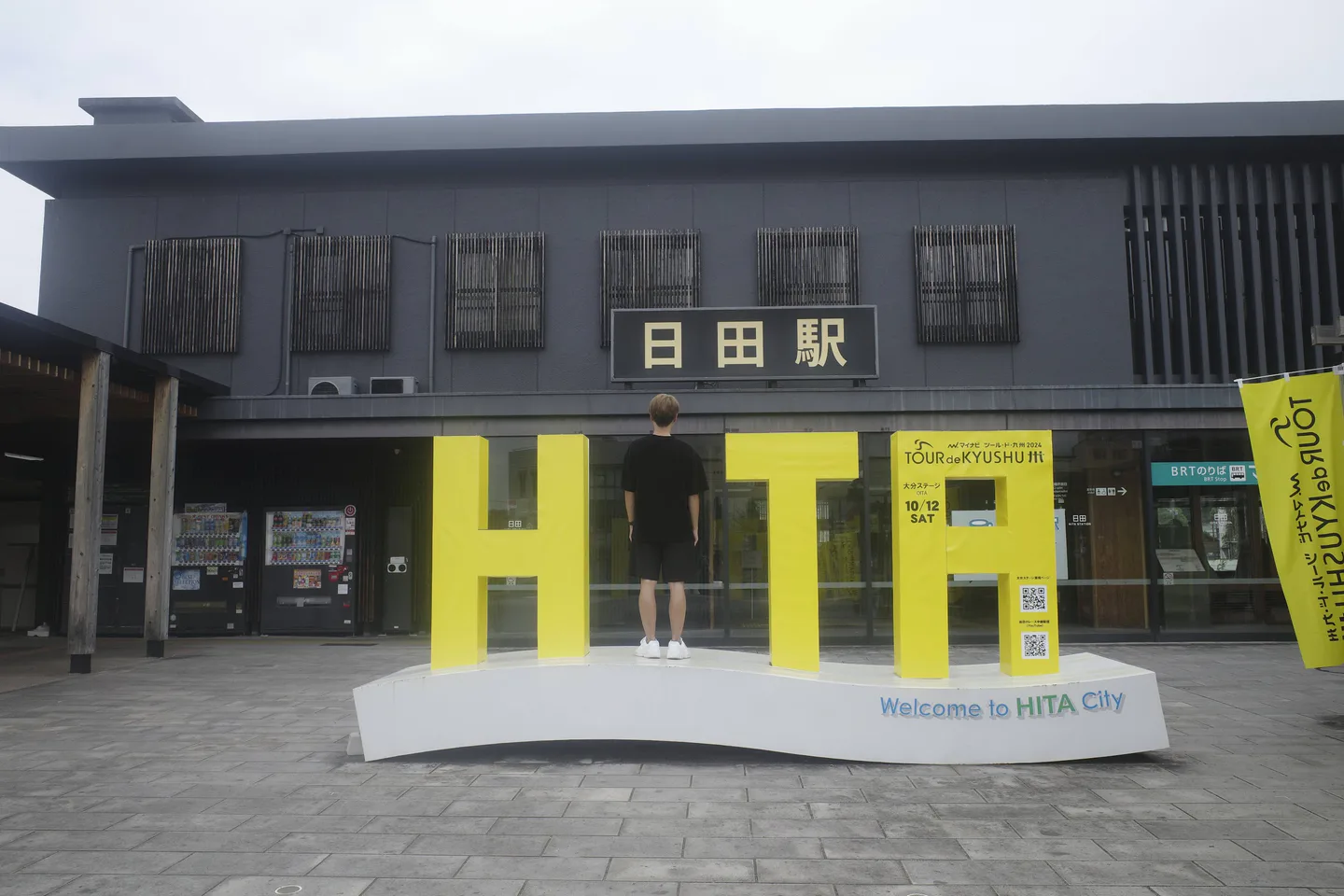
The decisive reservation in a two-day Hita–Yufuin trip is often the ryokan dinner, not the first train. Hita is worth a stop for its old streets or its Attack on Titan sites, but those are different kinds of visit. A short Mameda-machi walk can fit between two trains. The main manga museum and Oyama Dam lie well beyond Hita Station and require a planned vehicle. Giving both routes equal time, then arriving late at a Yufuin half-board property, uses the most expensive part of the trip as little more than a bed.
For a car-free journey starting in Fukuoka, a morning train into Hita and the 13:39 Yufu service onward to Yufuin gives the overnight a workable afternoon. Travellers whose central goal is the Oyama manga circuit should reserve transport and accept less town time. If the start is late or large suitcases make a transfer awkward, go straight to Yufuin. The direct Fukuoka–Yufuin transport comparison helps with that simpler version.
The Hita stop changes shape when the manga sites are the goal
| What matters most | Useful Day 1 pattern | Cost of that choice |
|---|---|---|
| A calm Yufuin ryokan evening | Hita old town, lunch and the 13:39 onward train | The Oyama sites stay out of the plan |
| Attack on Titan locations | Reserve a taxi, car or arranged circuit; pick the main museum and dam or a shorter ANNEX visit | Historic Hita sightseeing becomes secondary |
| Large luggage and a dinner-included stay | Forward cases or arrange collection; keep one small overnight bag | Requires agreement with the receiving property |
| A late departure from Hakata | Travel to Yufuin without a Hita stop | Save Hita for a day with enough ground time |
| A complete Beppu visit as well | Add a third day | One extra night rather than a truncated Yufuin morning |
Mameda-machi suits a short rail stop because you can choose how far to walk and turn back if lunch or weather takes longer than expected. One preserved-street loop, one shop or small museum, and a meal are a credible use of the window. An independent Hita afternoon with a festival, such as Sennen Akari's lantern route, is a different trip: it deserves its own timing rather than being squeezed before a fixed Yufuin meal. Families, older guests and travellers moving with a small case often benefit most from the compact town version.
The Attack on Titan locations are spatially scattered. The ANNEX occupies the Sapporo Beer Kyushu Hita factory grounds, about ten minutes by car from Hita Station. The original museum is at the Mizube-no-Sato Oyama roadside station, around nineteen minutes from the station by car. Oyama Dam's childhood statues of Eren, Mikasa and Armin take roughly twenty minutes by car from the station. Those are driving estimates, not walks between neighbouring exhibits. A rail arrival alone does not solve the movement between them. The broader driver-versus-rail calculation is useful if Hita is one stop within a longer Kyushu route.
Work backward from the train out of Hita
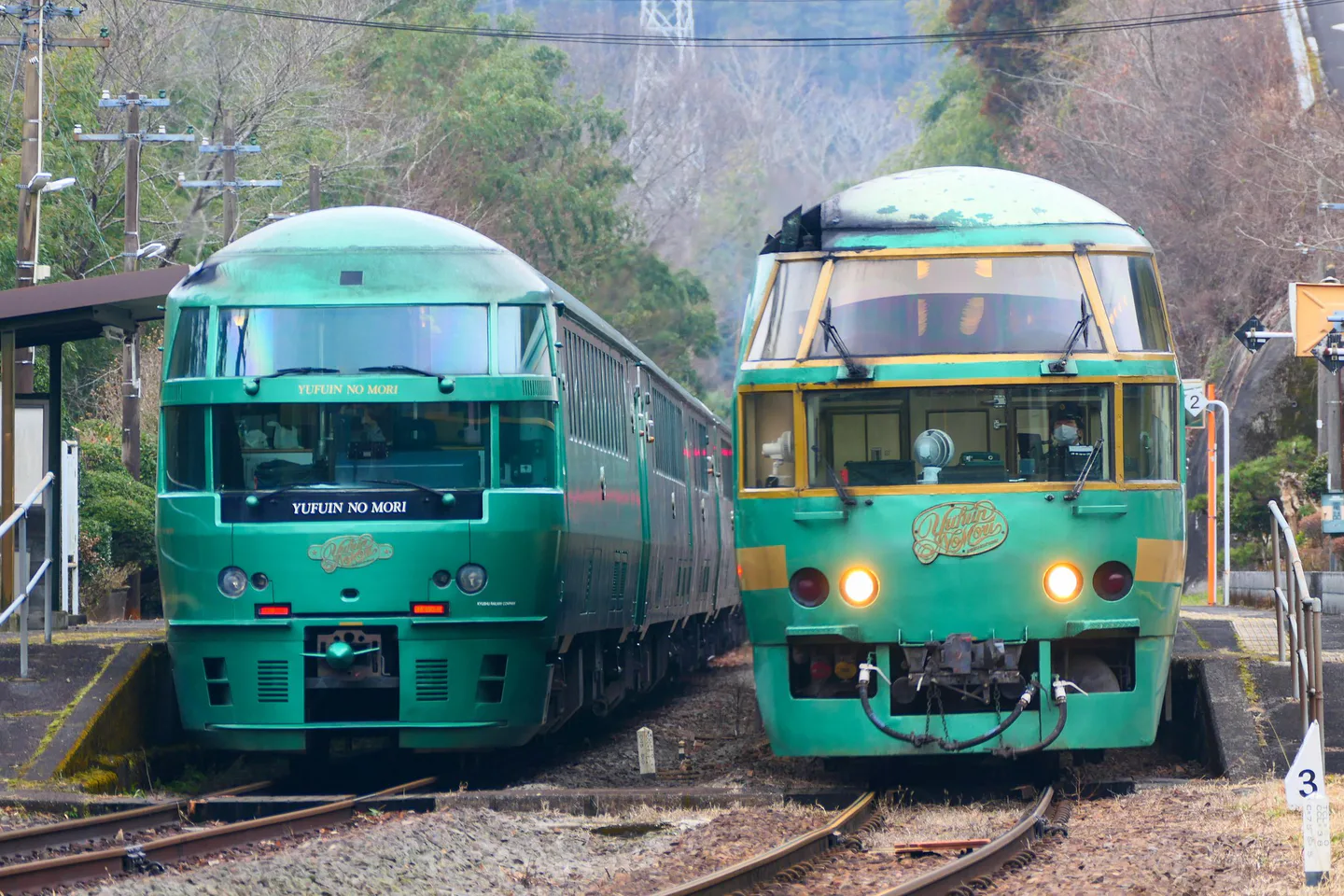
JR Kyushu's timetable for 14 March 2026 through 28 February 2027 shows Yufuin no Mori 1 leaving Hakata at 09:17 and reaching Hita at 10:37. Yufuin no Mori 3 leaves Hakata at 10:11 and reaches Hita at 11:33. Both put Hita before lunch, but they produce very different stop lengths if you use the same 13:39 Yufu 3 departure. The first gives about three hours, measured from train arrival to departure; the second gives about two. Allow walking time back to the platform, so the usable sightseeing window is shorter.
Yufu 3 reaches Yufuin at 14:45. That makes it a sensible anchor for a ryokan check-in and early-evening bath. It is a recommendation for this kind of stay, not the day's final eastbound train. A later local departure at 14:39 can give more Hita time, and Yufuin no Mori 5 leaves Hita at 15:56 to arrive at Yufuin at 16:50. The latter is entirely possible if your accommodation accepts that arrival and the promised dinner time, bath reservation and pickup still work. Check the JR Kyushu timetable covering these dates and the operating calendar for the particular train before paying for a rigid room rate. The Yufuin no Mori booking guide explains the seat decision.
The 09:17 start has enough Hita ground time for Mameda, lunch and perhaps one central extra. The 10:11 start may be right for a single meal and street walk, but not for a leisurely lunch plus an outlying museum. If the morning train is late, do not preserve every planned Hita activity by sacrificing the transfer margin. Keep an exit time, and cut the least important stop. On a heavy rain day, the rain-day itinerary decision offers a way to shorten the walk without losing the whole overnight.
JR Kyushu states that a Yufu service can run on a Yufuin no Mori schedule when the sightseeing train itself does not operate. That does not mean you have the same train interior or an interchangeable reserved seat. Confirm the running train on your date using the train's operating calendar and the date-specific station search. The Northern Kyushu pass comparison is relevant only after the actual rail legs and seat requirements are known. A pass should not dictate an extra Hita activity that the half-board booking cannot absorb.
The manga circuit consumes more than its ticket time
The ANNEX currently lists 10:00–19:00 hours, adult admission of ¥700 and free admission under 18. The main Oyama museum lists ¥500 for adults, under-18 entry free, and 09:30 opening; its weekday close is 16:00, with weekend and holiday closing at 17:00. Check the date as well as the daily clock: the main museum's 2026–27 closure calendar includes the third Wednesday of each month and 31 December and 1 January, while the ANNEX has a different closure pattern. A combined ticket may span the purchase day and following day, with adjustment when the next day is a closure, but that ticket validity does not create transport time.
Hita tourism's shuttle-taxi itinerary explains why an improvised station-to-dam walk fails. Its short pattern begins at the tourist information centre, spends about twenty minutes driving to Oyama Dam and twenty minutes there, drives about ten minutes to the main museum, allows between one and three hours at the museum, then spends roughly twenty minutes returning toward central Hita or the ANNEX. Even at the one-hour museum minimum, those components total about two hours ten minutes. This is before a late start, queue, lunch, onward-station buffer or the separate ANNEX visit. Reserve the circuit that matches your train and confirm its pickup terms through Hita tourism's route details.
The ANNEX is the easier single-site alternative if you cannot dedicate the morning to Oyama. Yet ten minutes by car each way, admission time and return coordination still need a real allowance. A taxi to one site is not evidence that both museums and the dam will fit. If the original museum and statues are the personal reason for visiting Hita, choose them over the Mameda walk, then consider a later Yufuin arrival or another night if the museum deserves unhurried time. The decision resembles the five-versus-seven-day Kyushu route: adding a destination is cheap on a map, but the transport and opening-hour boundaries determine its real cost.
When booking the taxi or a rental vehicle, name the exact site. “Attack on Titan museum” can mean the Oyama museum or ANNEX, and they are not interchangeable for a driver or a 13:39 train connection. Ask whether the planned return ends at Hita Station or somewhere else. The main museum is inside the Oyama roadside-station complex, whereas the ANNEX is on the brewery grounds. A visitor who wants merchandise, a specific exhibition or the dam statues should confirm which property provides it. Current site notices carry the museum hours and closure calendar.
A 14:45 arrival leaves a narrow luggage decision
Yufuin Chikki operates inside the tourist information centre next to the station. Its current ryokan-delivery intake runs 09:00–15:00, while temporary luggage storage is available 09:00–17:00. Delivery and collection serve member accommodations of the Yufuin Onsen Tourist Association; the list of eligible lodgings can change. An arrival at 14:45 gives only a small published window before the delivery desk stops accepting bags, with station exit, walking and any queue still ahead. It is unwise to make that desk the only way the ryokan can receive your cases.
Ask your lodging whether it collects at the station, whether staff can accept a forwarded suitcase from Hakata, and when you must present yourself for dinner. Travel through Hita with a small overnight bag when possible. If forwarding the main case, confirm the sending hotel's cutoff, delivery date and exact receiving name; do not assume same-day arrival. The Hakata–Yufuin luggage guide works through those route-specific choices. The 16:50 train is even less compatible with Chikki's 17:00 storage close. A ryokan taxi or direct ride can resolve that, but only if arranged rather than guessed.
The published Chikki fee varies by size and weight, and was revised in October 2025. This article's timing decision does not depend on a fixed yen quote: storage and delivery are different products, and delivery is limited to participating inns. If you need it, use Chikki's current service details to match the actual bag and property. For a group with multiple large cases, avoiding a tight cutoff can be worth more than saving a modest fee. The extra-night comparison helps when carrying luggage changes the whole route.
Private bathing must be matched to a named room or slot
A search result labelled “private onsen” may describe three different arrangements. An in-room bath belongs to a particular booked room; a family bath may be reservable by guests in several room categories; another property may sell a timed private session for an extra charge. A bath attached to one premium suite does not make every room at the ryokan private. Before paying, open the chosen room's facilities and the property's bath policy, then confirm whether the private slot can be held on your arrival evening. The Yufuin ryokan guide separates these products, while the general ryokan booking guide covers meals, tattoos and in-room baths.
Half-board is another time-bound product. A good dinner and breakfast are part of what the overnight buys; arriving after the dinner intake or departing before breakfast reduces its practical value even if the room remains expensive. Ask for the last accepted check-in and meal start, not just the general front-desk hours. Also confirm any shuttle's final departure and whether a later Hita train leaves enough time for bathing before the meal. A room-only Yufuin hotel may be more flexible for a manga-focused Hita day that ends late. Beppu versus Yufuin compares the alternative of a more flexible city base.
There is no universal price threshold at which a private bath becomes worthwhile. It depends on whether your party will use the evening, whether a shared bath is comfortable, and whether the premium displaces another experience. The private-versus-public bath comparison gives a useful test outside Yufuin. For someone whose trip is built around ryokan time, the 13:39 Hita departure protects a real purchase; for a manga fan using the room mainly to sleep, the same cutoff may be unnecessary.
The station itself has a temporary layout in 2026
Since 26 March 2026, Yufuin Station has operated from a temporary station building while the older structure is repaired. During the work, the ticket counter has 07:00–18:00 hours. The platform footbath has been closed since 14 March, and the station art hall has suspended its usual exhibits during the 2026 renovation. Station-front areas may be fenced off. None of that prevents a ryokan visit, but an older itinerary that budgets time for the platform bath or assumes the previous station arrangement is unreliable.
For the late-afternoon Chikki decision, walk from the actual temporary exit to the information centre rather than following an old station photograph. If meeting a driver, agree on a pickup point that remains accessible during work. The station works notice gives the planned operating arrangement; the train, bus and car comparison matters if construction or cases make a particular arrival awkward.
Use Day 2 before choosing another city
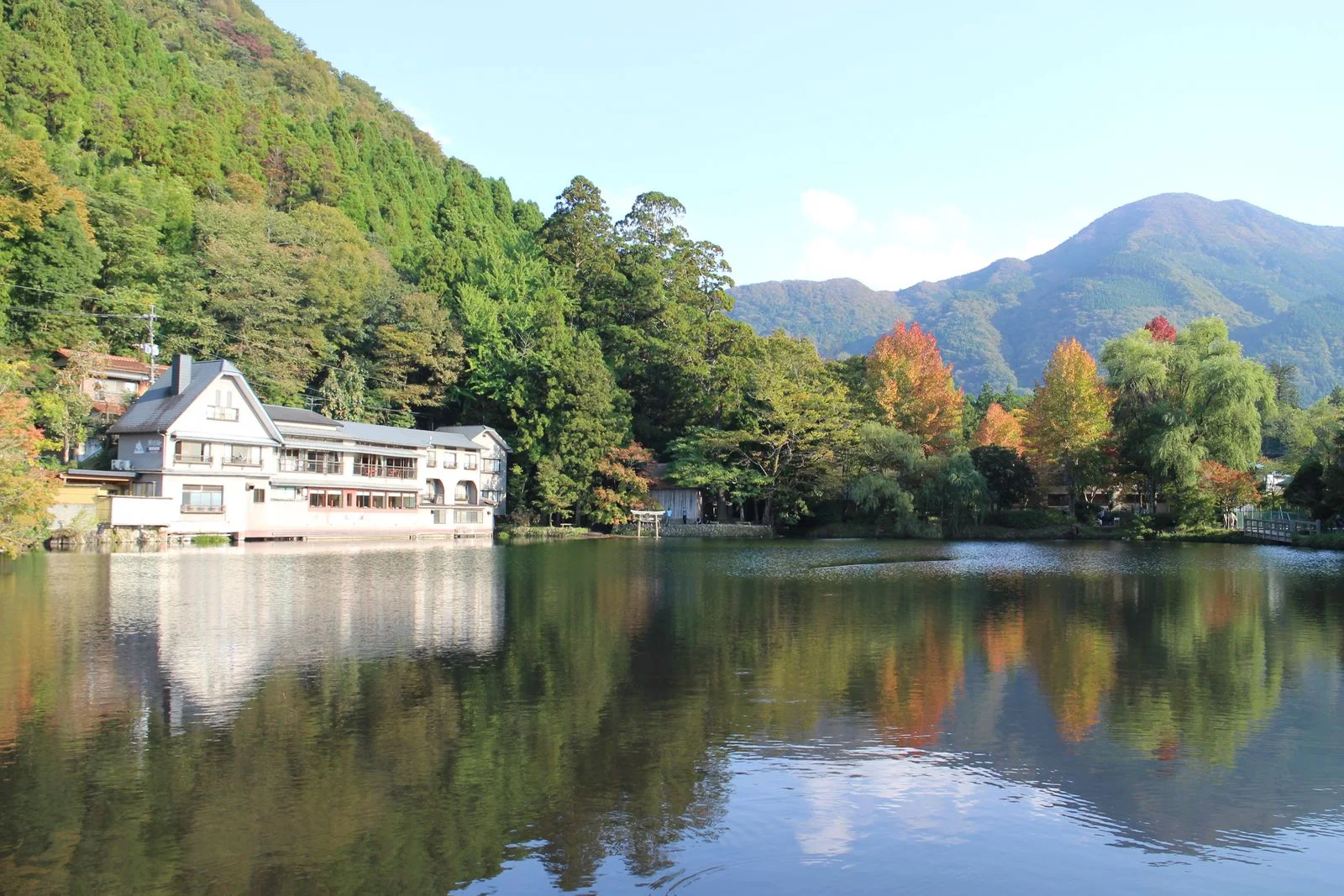
Kinrin Lake is roughly a half-hour walk from Yufuin Station. In cold autumn and winter conditions, early mist can appear above the water, but weather determines whether it does. The morning still has value without a photogenic fog bank: a lake walk, breakfast and another bath happen before the main daytime flow. Do not book an early departure merely because the station is within reach. You have already paid for the night. The Kinrin Lake guide explains the seasonal timing and access in more detail.
After checkout, return to Fukuoka on a reserved service, continue to Beppu for a limited afternoon, or connect deeper into Kyushu after checking the actual timetable. A map can make Aso or Kumamoto look close enough, but sparse connections and luggage handling can make a same-day addition poor. The Kyushu Odan bus update distinguishes a restored cross-island service from access to specific Aso sights. In foliage season, the Kyushu colour-timing map can inform the direction of the next leg without turning this overnight into a rushed loop.
A Beppu afternoon can accommodate one chosen block. It is not a full Beppu day with the Hells, Kannawa streets, a significant bath and a relaxed onward trip all at once. Add Day 3 when you want several of those. The three-day Hita–Yufuin–Beppu split handles the added night, and the Beppu Hells route shows why the attractions themselves need real ground time. A resort evening, sand bath or steam-bath visit may justify Beppu as a separate stay; the Beppu bath comparison helps choose which.
Three bookings produce three different trips
Historic Hita followed by a ryokan: Book a morning Hakata train that reaches Hita at 10:37, walk Mameda and eat there, then use the 13:39 Yufu to Yufuin. Keep the Yufuin evening for the named dinner and bath, and leave Day 2's first hours open for the inn and Kinrin Lake. This is the cleanest car-free two-day balance when neither site needs a long private transfer.
The Oyama fandom route: Reach Hita early, arrange transport before travel, and prioritise the main museum with Oyama Dam. Add the ANNEX only if the booked circuit, opening day and return train leave enough time. Most of Mameda drops away. Confirm the Yufuin ryokan's latest meal and pickup; if the circuit needs the 15:56 Hita train, consider a more flexible room or an extra night in Hita. The museum choice is the reason for this itinerary, so the hotel should adapt to it rather than silently shortening it.
Late start or cases that cannot move easily: Omit Hita. Travel directly to Yufuin, deliver or store luggage during the appropriate hours, and use the accommodation for the evening you purchased. You can visit Hita on a separate rail day or during a longer Kyushu journey. A two-day trip should not turn the only ryokan night into a transfer deadline just to collect another destination name.
Compare Yufuin stays near the station and Kinrin Lake against the exact arrival time, dinner rule and bath type you intend to use. The most useful booking confirmation names the room and its private-bath access, states the meal window, and explains how cases reach the property. If those details fail to fit a Hita afternoon, change the Hita plan or the accommodation, rather than assuming the timetable will stretch.
Other routes and ryokan decisions
Hakata-to-Yufuin luggage guide · Beppu vs Yufuin stay decision · Sounkyo Kurodake 2 Day Itinerary: Ropeway, Chairlift, Onsen and Hotels · Naruko Gorge 2 Day Itinerary: 2026 Trains, Trails, Onsen and Hotels · Hakone Ryokan with Private Onsen: Dinner, Tattoos and Car-Free Access · Mount Kurikoma vs Naruko Gorge: Hiking, Access, Onsen and Sendai Day Trips · Tohoku Summer Festival One-Week Itinerary 2026: Morioka, Aomori, Akita and Sendai · Sapporo Private Ski Lessons: Don’t Compare Hours Alone — Check Gear, Lift Passes and Transfers · Nikko vs Kinugawa Onsen: Where Should You Stay for One or Two Nights? · Ishigaki Private Car Charter: 4–8 Hours, 5-Seater vs 10-Seater, and Hirakubosaki · Tokyo First & Last Day Itinerary: What to Do With 3, 5 or 7 Usable Hours