
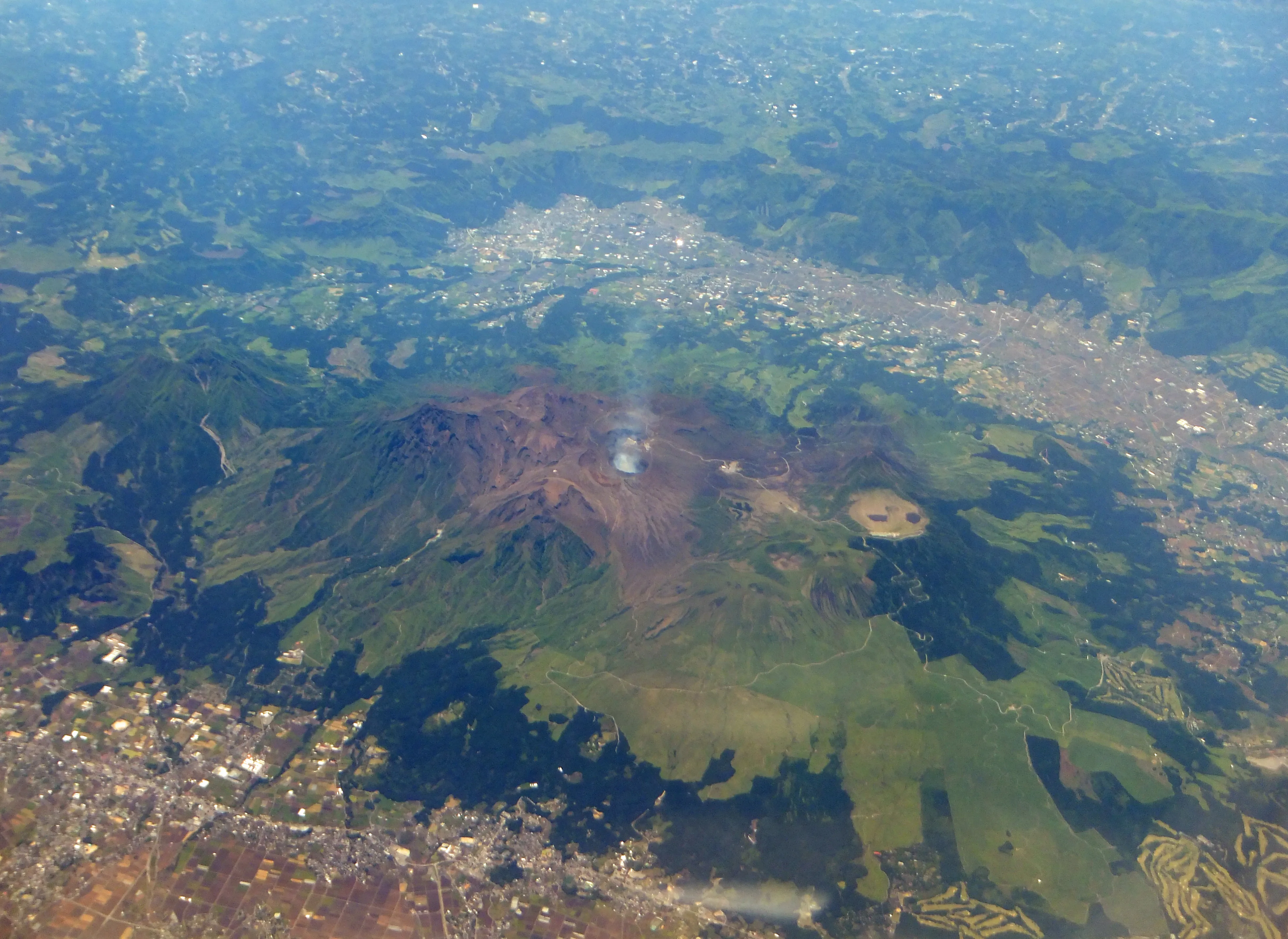
Five days in Kyushu gives you four hotel nights. If the trip begins and ends around Fukuoka, those nights can make a satisfying city-and-onsen route: two in Fukuoka, one in Yufuin and one in Beppu. Hita can be a purposeful pause en route, but its place on a map does not make it a free extra day. Seven days gives you six nights, enough for one distinct extension: western Nagasaki, the Aso–Kumamoto corridor, or an overnight in Takachiho. Each points the trip in a different direction.
This is a route decision before it is a ticket decision. A late arrival in Fukuoka or an early flight home can remove most of the first or last sightseeing day. Count usable hours, the last transport of each day and the number of checkouts before buying a rail pass. The Fukuoka three-day plan can absorb a spare city day; the Kyushu autumn route guide explains how mountain foliage can change an October or November version.
Four nights leave room for two hotel moves
| Trip | Working overnight sequence | Transport logic | Leave out |
|---|---|---|---|
| Five days, first visit | Two nights in Fukuoka; one each in Yufuin and Beppu | Rail or bus handles the city–onsen progression with two room changes | Nagasaki, Aso and Takachiho |
| Five days, Nagasaki is the purpose | Fukuoka plus Nagasaki | Keep the westward rail journey and its city time | The Yufuin–Beppu pair |
| Seven days, western city | Fukuoka 1 · Nagasaki 2 · Yufuin 1 · Beppu 2 | Put Nagasaki beside the Fukuoka rail segment | Aso, Kurokawa and Takachiho |
| Seven days, central landscape | Two in Fukuoka; one night each in Yufuin, Beppu, Aso and Kumamoto | Continue west from Beppu on the Aso rail corridor | Nagasaki and Takachiho |
| Seven days, gorge and kagura | Shorter Fukuoka/Oita block plus Takachiho overnight | Reserve the sparse bus or a deliberate mountain drive | Nagasaki and usually Hita |
The table is a set of shapes, not a promise that every five-day or seven-day flight fits the same order. An open-jaw ticket can let Nagasaki or Kumamoto become an endpoint; a round-trip Fukuoka ticket may require a final return night. Check the departure airport before fixing the last hotel. A family hauling large suitcases may gain more by keeping two extra nights in existing bases than by adding another prefecture. The one-base versus split-base Japan guide gives a useful comparison of the same packing trade-off elsewhere in Japan.
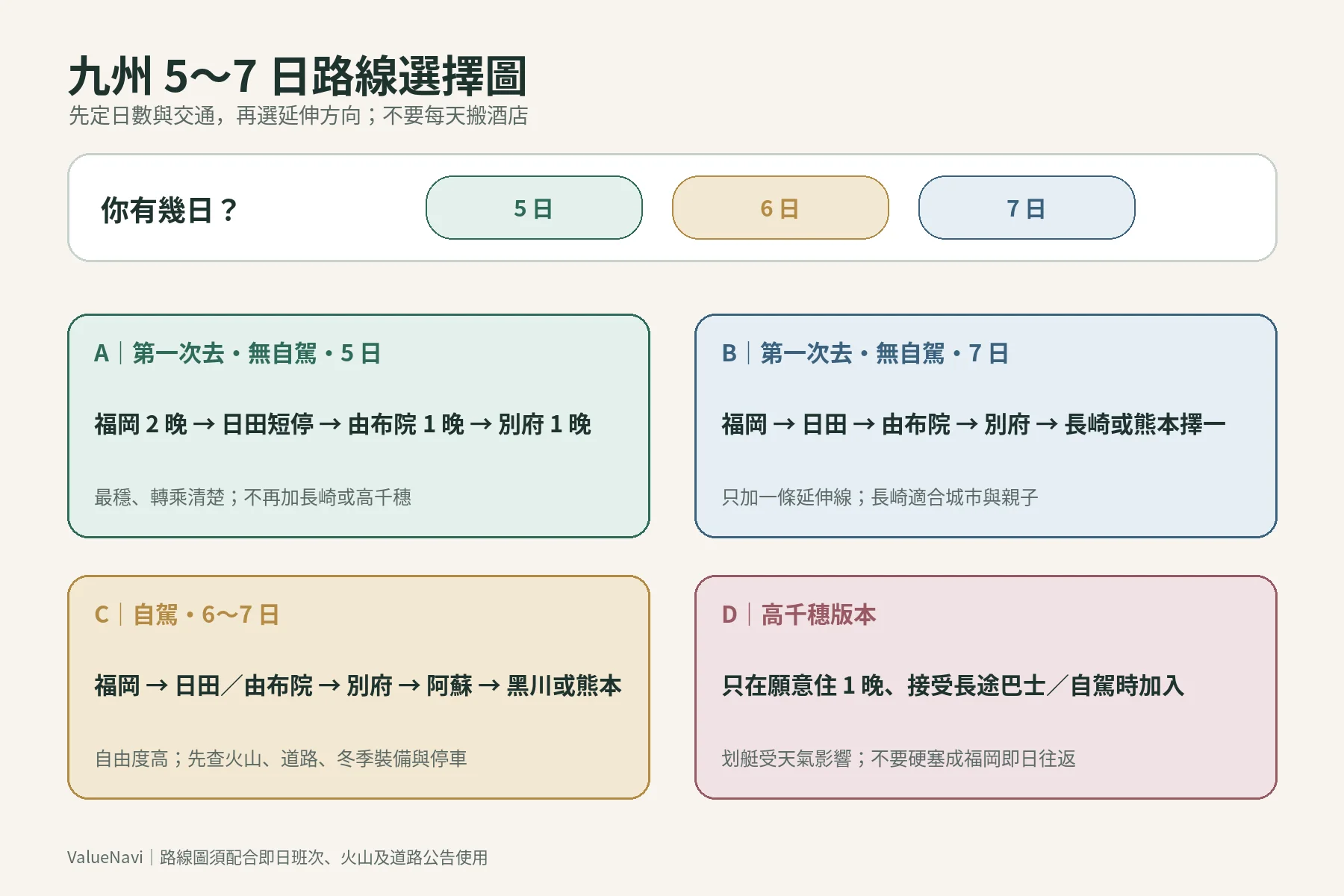
The five-day Fukuoka–Yufuin–Beppu run
On Day 1, arrive in Fukuoka and sleep around either Hakata or Tenjin. An evening landing leaves time for dinner and little else; reaching an onsen town after check-in or dinner service can waste the very room you paid for. Day 2 belongs to Fukuoka itself. A city day protects the itinerary against the arrival-day uncertainty and gives food and neighbourhood time instead of using the city solely as an airport corridor. If the airport arrival is early, this day can take a half-day outing, but do not turn it into another overnight base.
Move to Yufuin on Day 3 at a time that leaves the afternoon and evening usable. A ryokan night earns its place through the meal and bath, rather than merely putting a bed closer to Lake Kinrin. Decide between train and highway bus using the actual departure, luggage and room check-in window; the Fukuoka–Yufuin train, bus and rental comparison separates those trade-offs. If a private bath is central to the cost of this night, use the Yufuin ryokan and private-onsen guide before treating every ryokan as equivalent.
Keep the Yufuin morning on Day 4, then move to Beppu. That sequence gives the compact town and the broader hot-spring city different jobs. Beppu can absorb a later arrival or a changed plan more easily than a dinner-led ryokan evening. On Day 5, use only the time that remains after allowing for the airport or Fukuoka return. Do not insert Aso or a distant gorge ahead of the flight. If a second onsen night has little value to you, the Beppu versus Yufuin stay comparison may point to one town and a longer city stay instead.
Two moves are already a full movement budget for four nights. That number is editorial guidance, not a restriction of the transport network. A solo traveller with a backpack may accept another move; someone travelling with children, a stroller or multiple 29-inch cases may find even the Yufuin-to-Beppu checkout costly. The question is whether a new bed changes what you can do the next morning. Hita, Aso and Nagasaki all need more than the fact that they appear along a line on a map to justify another one-night booking.
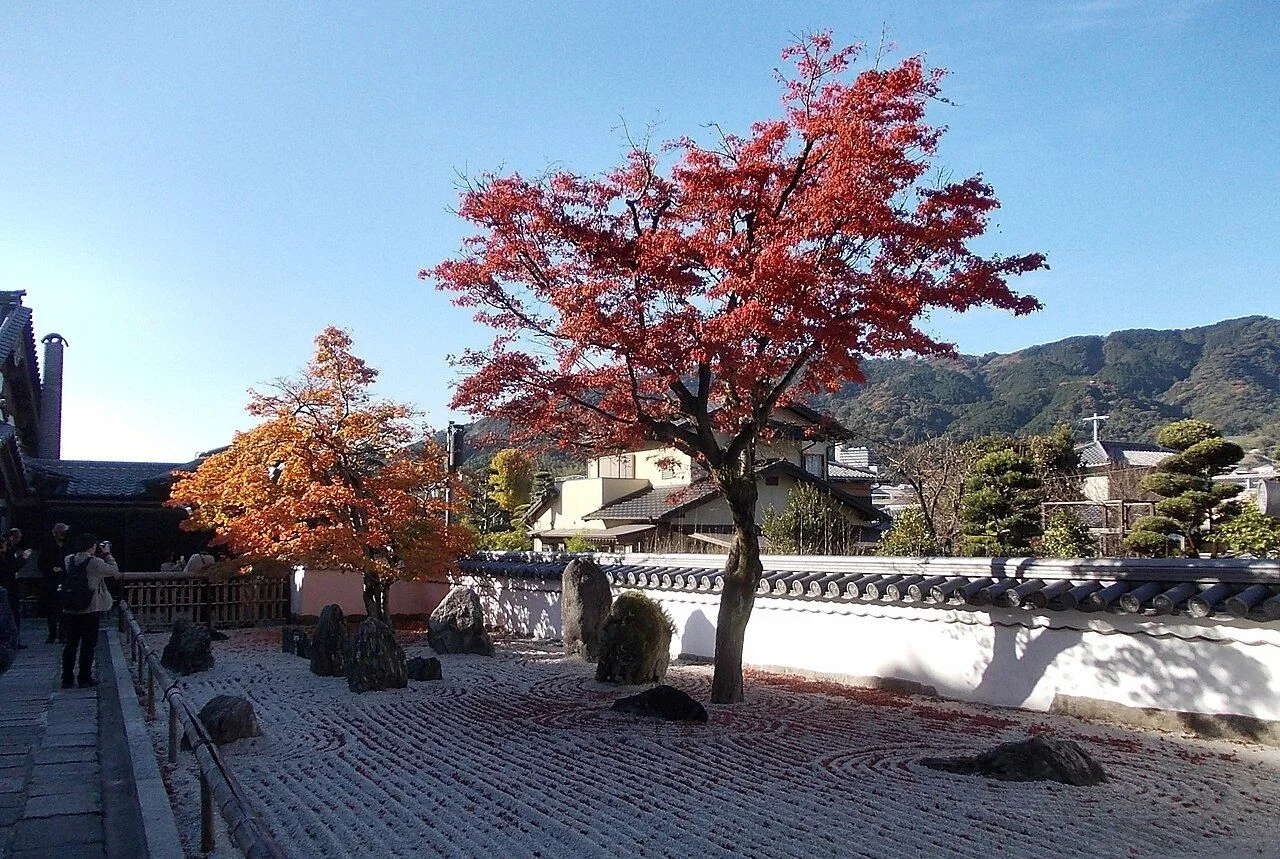
When Day 2 happens to fall in autumn, Dazaifu can make a compact outing from the Fukuoka base without moving luggage or booking another hotel. A spring or summer visit can instead keep the full day in the city; the itinerary does not depend on foliage. This is a better use of a spare half-day than moving the Yufuin ryokan check-in earlier solely to fit one more attraction.
Hita works only after the suitcase has a plan
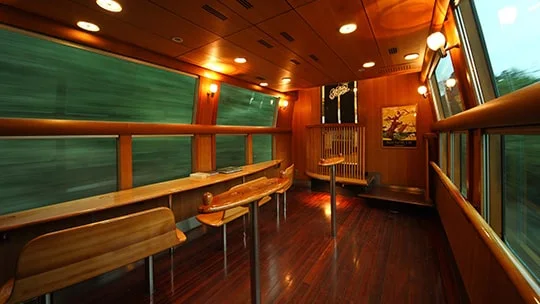
Hita is tempting between Fukuoka and Yufuin, especially for its old town. A two- or three-hour walk changes character when the travellers must locate storage, unload two large cases, retrieve them and reconnect with a booked evening meal. Use Hita when the large bags stay in Fukuoka, a transfer or forwarding arrangement is settled, or the town has a specific activity that merits the handling time. Otherwise take a direct connection and give that time to Yufuin. The Hakata-to-Yufuin luggage options deals with the baggage decision.
A Hita night is harder to justify inside four nights because it makes three hotel changes rather than two. If it is the main destination, change the route honestly: use Hita as a base and reduce Fukuoka or one onsen night. Do not label a connection as sightseeing without checking where the cases go and how late the next train or bus still reaches Yufuin. The Fukuoka self-drive hotel guide is relevant if the Hita day is part of a longer rental block.
Seven days: choose the west or the centre
Nagasaki is the western option when city history and evening time matter more than mountains. It pairs naturally with Fukuoka during the western part of the week. From Hakata, take the Relay KAMOME as far as Takeo Onsen, then change onto the KAMOME service on the Nishi Kyushu Shinkansen; JR shows a same-platform connection there. That is a coherent rail trip, but it does not turn Beppu into Nagasaki’s neighbour. Putting Nagasaki immediately after an east-Kyushu stay creates a long cross-island transfer at precisely the point when the trip should be slowing down.
One allocation of six nights gives Fukuoka a night, Nagasaki two, Yufuin one and Beppu two. The Nagasaki-to-Yufuin transfer should be treated as travel, with sightseeing on either end limited by the departure and arrival. Two Nagasaki nights let you use one complete day there, while the Oita pair still has a ryokan evening and a flexible Beppu day. If a round-trip Fukuoka flight makes the ending awkward, shift a Fukuoka night to the end rather than making the Beppu departure chain fragile. The Nagasaki rail connection shows the train structure.
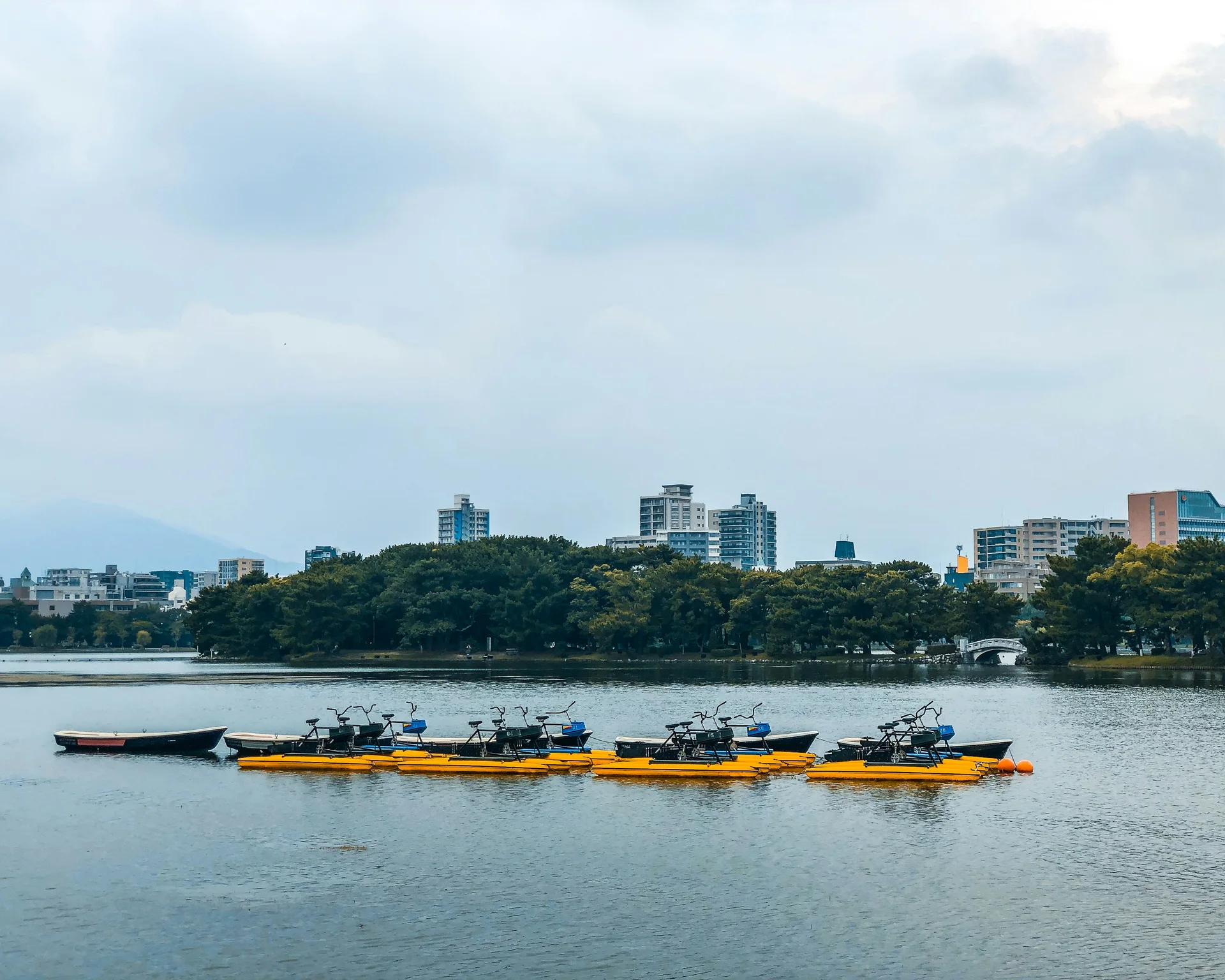
The original Hakata-labelled photo above actually shows long boats beside a green urban shoreline; it should not be used to identify a station or to promise a specific transport facility. For hotel choice, keep the purpose of each base separate: Nagasaki deserves two evenings, Yufuin earns a dinner-led night, and Beppu can handle a later flexible day. A traveller whose main reason for Kyushu is Nagasaki can make a more honest five-day Fukuoka–Nagasaki trip and omit Oita entirely.
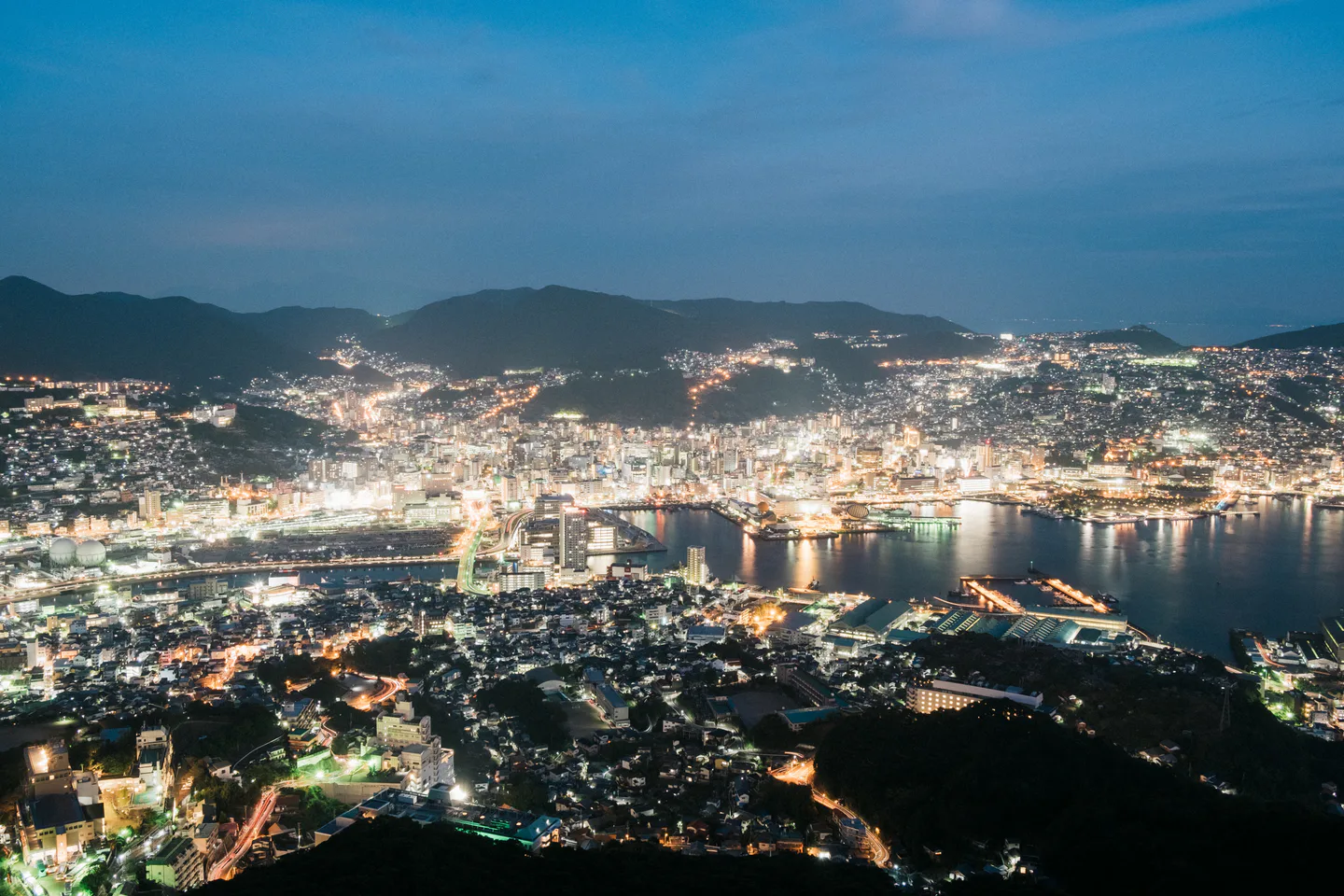
The central option moves the other way after Beppu. JR Kyushu’s current Kyushu Odan Tokkyu timetable lists three daily services in each direction, although only the 07:49 westbound train begins at Beppu; the later two start at Oita. On that departure the listed arrival is 10:08 in Aso and 11:21 in Kumamoto. It makes a Beppu–Aso–Kumamoto line possible without returning through Fukuoka. The exact service must still be checked for your date, especially if the Aso stop depends on a particular morning.
A six-night example is Fukuoka two, Yufuin one, Beppu one, Aso one and Kumamoto one. This is five hotels in six nights, so use it only if a night near Aso is a major trip goal and the group handles frequent checkout well. For an easier family version, skip the Yufuin overnight and keep Beppu as the single onsen base; alternatively, sleep in Kumamoto and make Aso a day trip. The Aso overnight versus day-trip comparison helps decide whether dawn, landscape access or merely a brief look is driving that extra room.
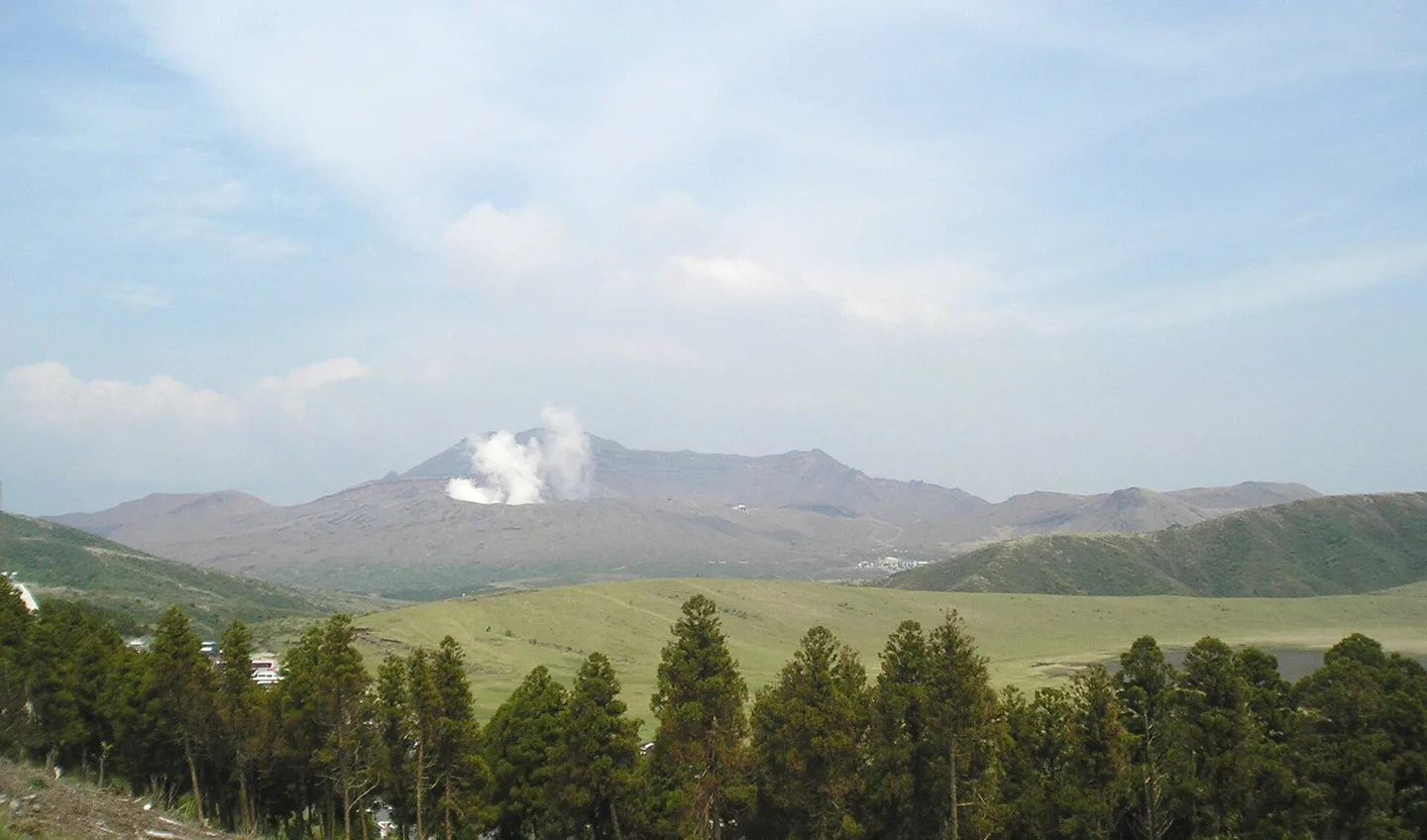
A rental can help with outer Aso viewpoints and rural stops, but that does not mean it must begin at Fukuoka Airport. Keep the rail spine if it serves your cities and rent only for the mountain portion when the schedule and vehicle return allow. The Kyushu car-versus-public-transport cost guide shows how tolls, parking, insurance and the final rural connection can change a seemingly simple fare comparison. Aso crater access also varies with weather and volcanic conditions; the Kyushu Odan bus and Aso access update keeps the rail or bus arrival distinct from crater entry.
Kurokawa changes the overnight plan
Aso Station and Kurokawa Onsen should not be written as a single stop. Aso lies on the Beppu–Kumamoto JR corridor. Kurokawa needs a separate reserved or scheduled bus connection, a taxi or a drive, and its ryokan stay is often the reason to travel there at all. If that stay is central, replace the Aso or Yufuin base instead of layering it on top of both. Check the live bus and the room’s dinner arrival window before paying for the night; a good rail connection into Aso does not guarantee a practical last leg to Kurokawa.
Confident drivers who want dispersed mountain viewpoints may get more from a short regional rental. The benefit is access, not the right to add yet another hotel. When a six-night draft already has Fukuoka, Yufuin, Beppu, Aso and Kumamoto, Kurokawa should force a choice about which onsen town or mountain base disappears. Public-transport travellers can also choose one Aso-focused stop and leave Kurokawa for a longer Kyushu journey.
Takachiho needs its own night and transport day
Takachiho is a different kind of extension because the bus supply sets the shape of the day. The local tourism association lists a reserved Fukuoka-side Gokase-go service and a single reserved daily Aso/Kumamoto-side bus in its route options. Timings can change, so do not make a hotel booking on the assumption that the Beppu train will meet a mountain bus the same afternoon. A car also demands a realistic mountain drive and parking plan. The Takachiho gorge, boat and overnight guide details the separate booking clocks.
Sleeping locally makes Takachiho Kagura’s 8–9 p.m. performance accessible after a day at the gorge. The performance has online reservations, but it is not held on 31 December or 1 January; the November 22–23 festival period also changes the ordinary nightly arrangement. The association currently lists admission at ¥1,000 for adults and free entry through elementary-school age, with cancellation conditions for advance bookings. Confirm that the selected night has the performance you expect, especially around festival dates. The kagura evening and two-day route helps decide whether this is worth sacrificing another stop.
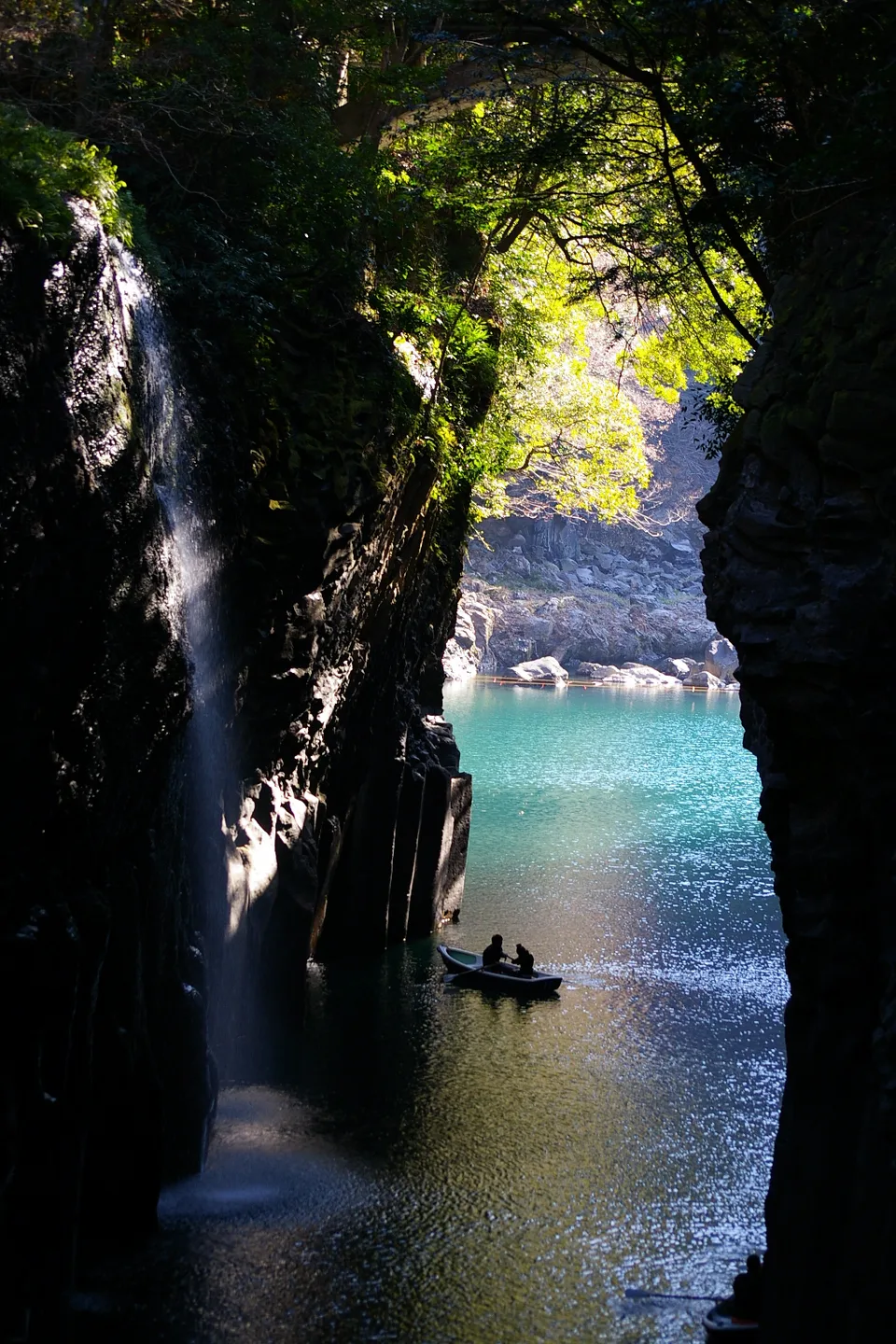
Do not make the gorge boat the only reason for the journey. Advance online reservation currently opens two weeks before a ride date and closes at 9 a.m. two days before; popular slots can disappear, and the river can close operations for safety. Build a visit that still has the walking paths, shrines and evening event if the boat is unavailable. A seven-day Takachiho route generally removes Nagasaki, usually removes Hita, and may compress either Fukuoka or Beppu. Anyone determined to include Nagasaki, both Oita towns, Aso and Takachiho needs more days rather than a more elaborate transfer diagram. Boat operating status appears on the Takachiho gorge boat page.
Rail passes follow the itinerary, not the other way round
| JR Kyushu product | Current online adult fare | Other listed sales channel | What this route must still buy |
|---|---|---|---|
| Northern Kyushu, 3 days | ¥14,000 | ¥15,000 | Subway, highway/rural buses and non-JR rail |
| Northern Kyushu, 5 days | ¥16,000 | ¥17,000 | Takachiho/Kurokawa final-mile travel and any car |
| All Kyushu, 3 / 5 / 7 days | ¥21,000 / ¥23,000 / ¥25,000 | ¥22,000 / ¥24,000 / ¥26,000 | The same non-JR transport and local attractions |
Those are JR Kyushu’s published prices as checked in October 2026, with the lower column tied to its Rail Pass Online Booking channel. Northern Kyushu covers eligible JR travel in the Fukuoka, Saga, Nagasaki, Kumamoto and Oita area, including the Nishi Kyushu Shinkansen within the valid area. The pass does not cover the Sanyo Shinkansen between Hakata and Kokura, subways, highway buses or other companies’ railways. Northern Kyushu also limits reserved-seat uses to six. A Fukuoka–Yufuin highway bus, a Takachiho connection and a Kurokawa bus therefore remain separate costs. Current conditions are on the JR Kyushu pass page.
Price the actual eligible JR legs after fixing hotels. A rail-heavy Nagasaki and Aso journey gives a pass more to do than a short Fukuoka–Yufuin–Beppu holiday partly using buses. An All Kyushu pass is not automatically justified because the article covers the whole island; the particular itinerary must use enough eligible travel. The Northern Kyushu pass calculation guide is the place to compare individual fares and pass dates. Trains with required reservations can sell out even when the pass is valid, so resolve those departures before treating the price table as an itinerary.
Let the awkward leg decide whether a car earns its cost
| Route problem | First workable mode | Why the decision changes |
|---|---|---|
| Fukuoka, Yufuin and Beppu for one or two people | Rail or highway bus | Direct public transport already links the main bases |
| Beppu through Aso to Kumamoto | Check the JR Kyushu Odan Tokkyu | It supplies an east-to-centre line, though only one westbound service starts at Beppu |
| Aso, Kurokawa and rural viewpoints | Live buses or a partial rental | A car may unlock the stops beyond the station |
| Takachiho overnight | Reserved bus or planned drive | Sparse departures make the whole day depend on the connection |
| Several adults and large cases | Fewer hotel changes before choosing a vehicle | A car does not remove packing and check-in |
For a solo traveller or couple on the city–onsen spine, rail and bus usually avoid urban parking and vehicle collection. A car becomes more persuasive where several rural stops cannot be joined by practical buses. For a family, a vehicle may ease luggage transfers, but a different hotel every night still means repeated packing and room access gaps. Count those costs as well as fuel, tolls and parking. The Fukuoka self-drive bases discusses which city nights can remain car-free.
Late flights create an especially poor first rental day: a vehicle can be paid for while the family is sleeping near the airport. An early return flight similarly demands a predictable final night. In a nominal five-day trip with a late arrival and early departure, there may be only three meaningful sightseeing days. Reduce the route to Fukuoka plus one onsen base if that is what the flight allows. An extra stop cannot create daylight or extend a ryokan dinner service. The Okinawa five-day no-hotel-hopping example illustrates why rental days and hotel days need not begin together.
When the group travels slowly, keep the experience and drop the checkout
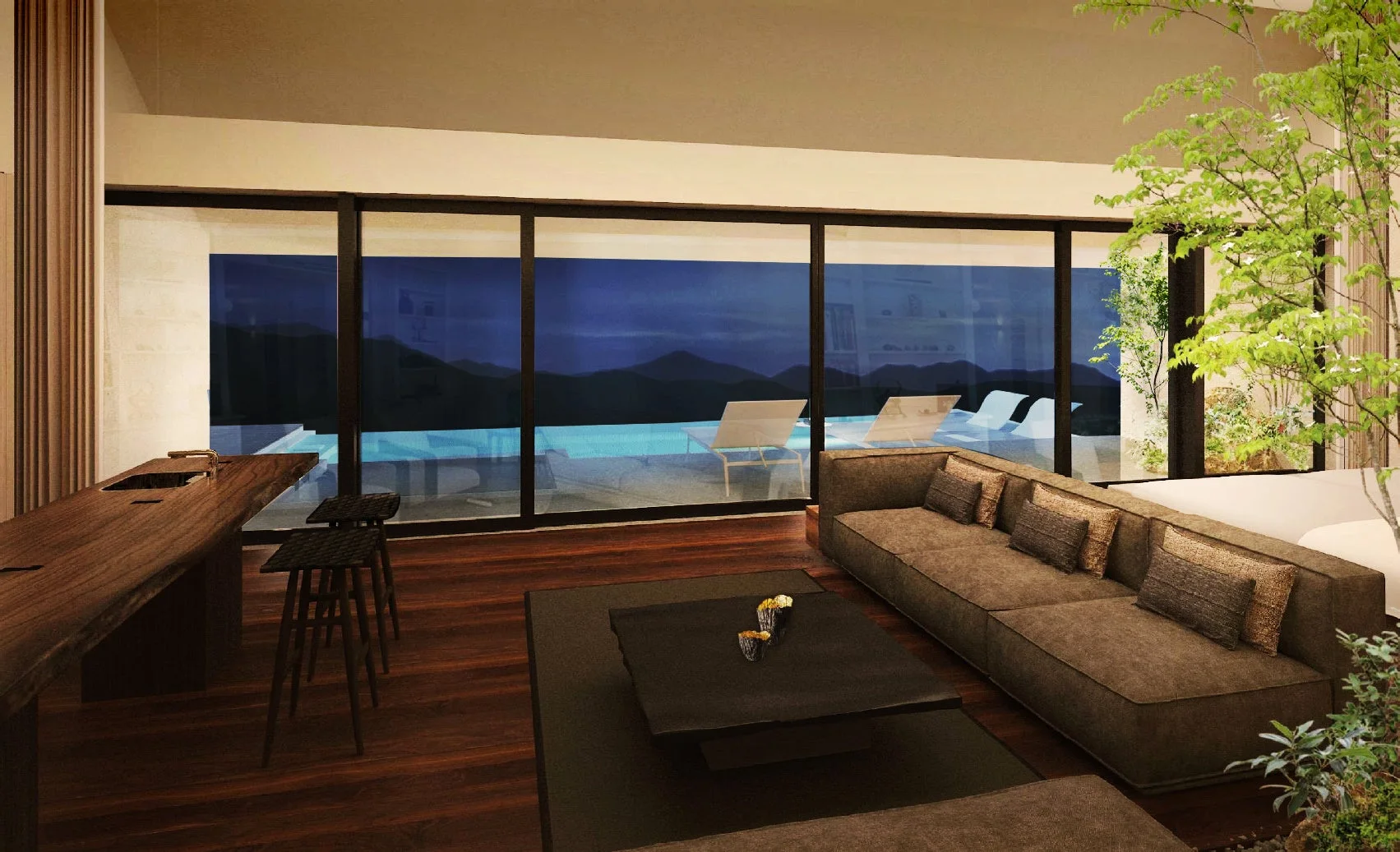
Keeping both onsen nights in Beppu and visiting Yufuin by day may ease travel with heavy bags, a stroller or limited walking pace. That sacrifices the ryokan dinner and dawn in Yufuin, so make the trade knowingly. Keeping a pair of Kumamoto nights with Aso as an excursion likewise removes an Aso checkout. A single Kumamoto night can still position an onward train or flight; a Hita overnight needs a stronger activity reason.
For a six-night trip, a useful starting ceiling is three planned hotel changes, with more only when a specific overnight experience earns one. For four nights, two changes usually suffice. These are planning limits rather than railway rules. Light packers can choose differently, while older travellers and families may want still fewer. Each move contains a checkout, a place to hold bags, travel, locating the next room and waiting for check-in. A mode change cannot erase those steps. The Japan luggage forwarding guide can reduce carrying, but the sending window and receipt day need to be part of the plan.
Cut an overloaded week in a practical order
If a draft contains Fukuoka, Hita, Yufuin, Beppu, Aso, Kurokawa, Takachiho and Nagasaki inside six nights, remove Hita first unless there is a named activity or a solved luggage transfer. Next decide whether the central overnight is Aso or Kurokawa; the two serve different station and ryokan purposes. Then choose Nagasaki or Takachiho because those extensions pull west and into the mountains respectively. Finally decide whether Yufuin truly needs the overnight, based on the meal and bath rather than its appearance on a list of towns.
If Nagasaki is the primary reason for the trip, a five-day Fukuoka-and-Nagasaki route is more coherent than squeezing both Oita onsen towns into it. If Kurokawa is the room you most want, organise the central week around that stay and the actual bus or drive. If kagura is non-negotiable, protect the Takachiho night and reduce an Oita or Fukuoka night. The Shikoku four-day festival route shows the same principle when a fixed-time evening event determines the overnight base.
The four workable templates remain simple: four nights on Fukuoka–Yufuin–Beppu; six nights with Nagasaki before the Oita leg; six nights continuing from Beppu through Aso to Kumamoto; or six nights that deliberately trade another extension for Takachiho. A family can simplify the central version by dropping the Yufuin or Aso room. A traveller using a round-trip Fukuoka flight may need the final city night, whereas an open-jaw ticket can make Kumamoto or Nagasaki a sensible endpoint. Write those airport and room decisions onto the itinerary before choosing the pass or vehicle.
For wider comparisons, the Takayama–Shirakawa-go–Kanazawa no-car route shows how a bus-only link affects a multi-city trip; the Tohoku five- or seven-day autumn route has a similar rail-pass decision. The Tokyo four-, five- and seven-day itinerary is useful if Kyushu is one part of a longer Japan holiday rather than the whole stay.
For accommodation, choose the actual ending area on the map: browse Fukuoka stays if the flight is round-trip, or compare Beppu stays when the onsen city is the final base. For the train corridor, JR Kyushu’s Beppu–Aso timetable fixes the direction; the Takachiho access routes and kagura schedule matter before committing to a mountain night.
Other regional route ideas
Okinawa five-day buses · Shikoku festivals without a car · New Chitose–Niseko transport · Four days through Takayama · First Fukuoka visit
Okinawa rental timing · Tokyo trip lengths · Fukuoka car days · Kyushu leaf timing · Osaka and Koyasan
Chubu mountain circuit · Osaka cultural week · Aso bus operations · Seven days in Japan · Tohoku rail and autumn