
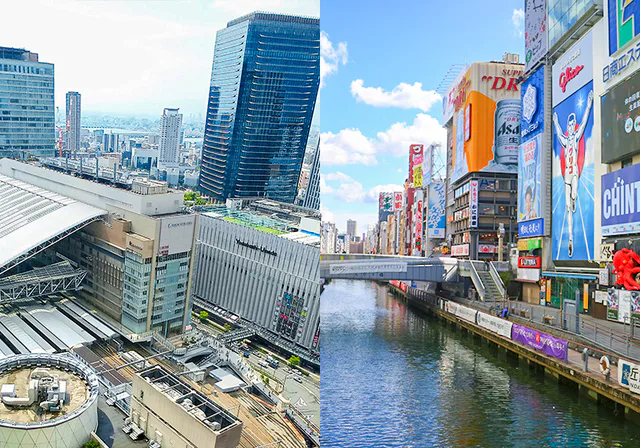
The hotel decision turns on journeys you repeat. Namba puts a room near Dotonbori, Hozenji, Shinsaibashi and Minami dinners, and can work well for Nankai’s Kansai Airport trains. Umeda is useful when your mornings regularly begin at JR Osaka or the northern rail hubs for Kyoto, Kobe and Himeji. A single airport trip or one night out rarely outweighs three or four repeated departures.
Neither name identifies one platform. Nankai Namba, Osaka-Namba for Kintetsu and Hanshin, JR Namba and the Metro platforms occupy different positions. Across town, JR Osaka, Hankyu Osaka-Umeda, Hanshin Osaka-Umeda and three Metro stations form another large district. Once you choose a district, test the hotel door against the railway you will actually use.
↔ Scroll table left or right
Your repeated pattern | Likely base | What you gain | What might reverse it |
Three or more Minami evenings | Namba | Walk home from Dotonbori, Hozenji or Shinsaibashi repeatedly | Most mornings use northern regional trains |
Two or more Kyoto, Kobe or Himeji rail days | Umeda | Use the hub on departure and return | Hotel is on the wrong side of the station complex |
KIX with large bags and a Nankai-side room | Namba | Rapi:t can reach Nankai Namba in as little as 34 minutes | The airport is a single edge in a longer northern itinerary |
Nara plus several Minami nights | Namba | Kintetsu and the evening district reinforce each other | Nara is the lone southern trip |
One normal USJ day | Neither by itself | Keep the base that serves the other days | Two park days or an unusually late event |
Transport pattern tied | Choose the room | Bed layout and the last 300–800 metres settle a close call | One district owns most hard morning or evening legs |
Count the difficult journeys before comparing room rates
Write down the first time-sensitive move of each morning and the place you expect to finish each evening. The hotel district matters most when the same awkward leg recurs. A normal daytime Metro ride is less costly than dragging bags through a large station before a reserved train, or crossing the city again after a late dinner.
A simple way to check the pattern is to mark these repeated edges:
Mark a Namba advantage for each late dinner or evening that finishes around Dotonbori, Shinsaibashi or Hozenji.
Mark a further Namba advantage for a baggage-heavy KIX journey only when the hotel is actually near Nankai Namba.
Mark an Umeda advantage for each morning starting from JR Osaka, Hankyu Osaka-Umeda or another north-side hub.
Mark another Umeda advantage when a late regional return would otherwise leave you with a cross-city Metro ride.
The marks are a planning aid, not a published transport score. Give luggage, accessibility and early departure constraints more weight than a relaxed midday outing. Otherwise one attractive map pin can conceal several tiring trips.
If Minami owns four meaningful ends of the day and Umeda only two, the southern base usually makes sense unless its room is substantially worse. A five-to-two advantage for north-side trains points the other way. A close result sends you to the actual hotel: bed layout, cancellation terms and the walking route to the right platform can break the tie.
Namba earns its place after dark
Visitors spending several Osaka evenings around Dotonbori, Hozenji and Shinsaibashi can use a Namba room between daytime sightseeing and dinner. Dropping purchases, changing clothes or resting before going out gives that location a repeated use. It is a stronger reason than simply wanting to see the Glico sign once. See rooms around Namba and Dotonbori. See a Namba room with laundry.
Over three or four nights, the ability to return to the room can matter more than a small saving on one regional departure. If every morning instead begins with a northbound rail trip, that convenience erodes. Put your actual evenings and mornings on the same page before paying a premium for either area.
Nankai links Kansai Airport with Nankai Namba. Its reserved-seat Rapi:t can take as little as 34 minutes; the Airport Express takes about 45 minutes and uses the regular fare. These are station-to-station train times, not a promise about the hotel door. Check the hotel’s walking route to the Nankai entrance and whether the airport trip occurs at a difficult hour. See Nankai Electric Railway — KIX/Namba Rapi:t and Airport Express travel times. See the full KIX hotel-door route. See a station-connected Nankai Namba hotel example.
Airport access is often only an arrival and departure advantage. On a five-night stay, four or five ordinary evenings may matter more. Large luggage or a very early flight can increase the value of Nankai access, but should not erase a clear pattern of regional rail days from Umeda.
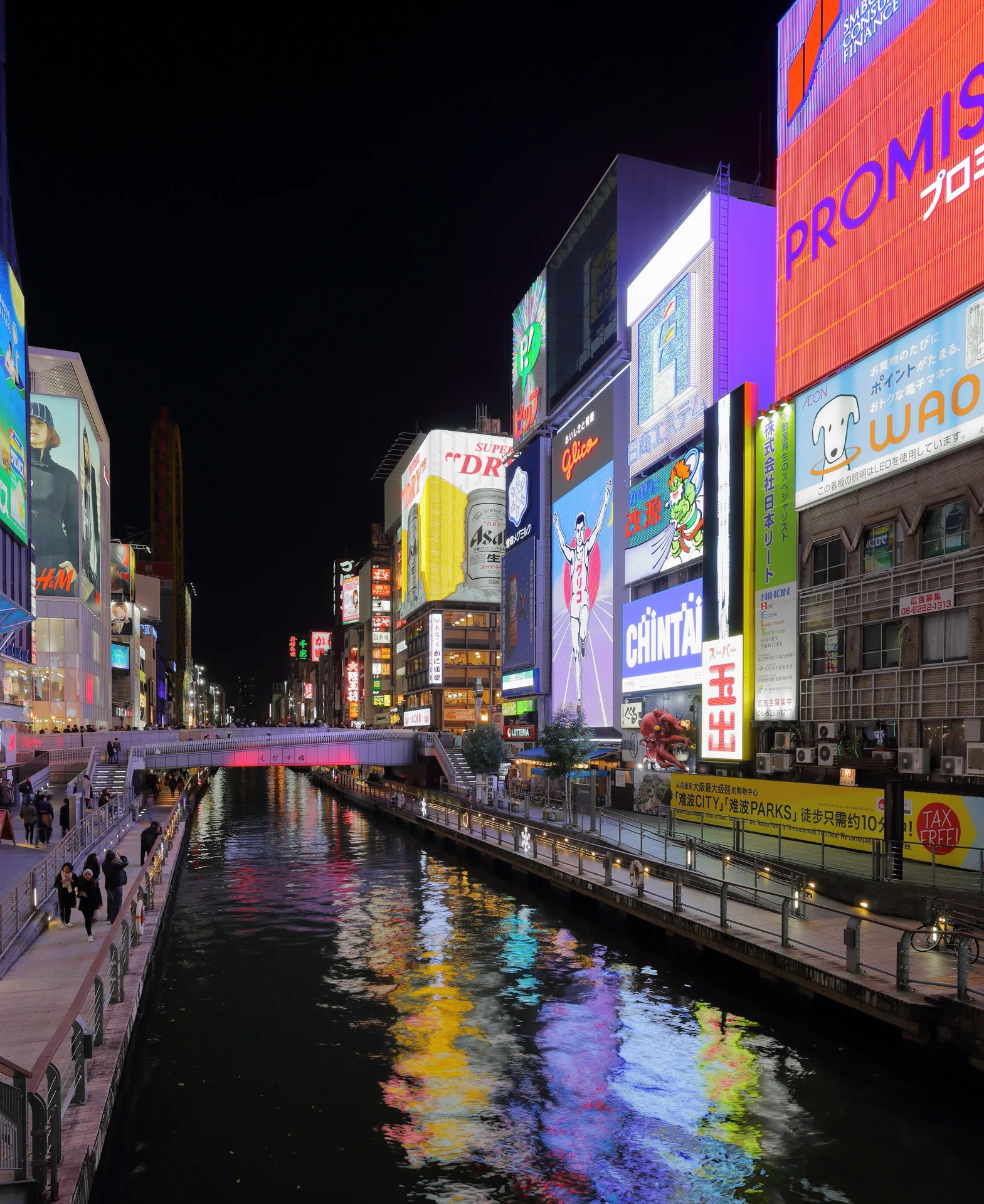
Namba has several station names for a reason
The Metro’s Namba interchange covers the Midosuji, Yotsubashi and Sennichimae lines and connects toward JR, Hanshin, Kintetsu and Nankai. That network is useful; it also means a hotel advertised as “Namba” can be closer to the wrong operator for your trip. See Osaka Metro — Namba station transfers and facilities. See Namba family room layouts.
For an airport-focused booking, trace the walk to Nankai Namba. For a Nara day, inspect Osaka-Namba and the Kintetsu access. A JR Namba address is a different proposition again. Two properties in the same district can reverse their practical ranking once the right platform is named.
The booking route should include every segment:
room door → lift → suitable entrance → operator’s platform.
A hotel pin beside the word “Namba” does not show the walk between them.
With a stroller or two large suitcases, even an indoor 700-metre connection can involve lifts, level changes and a slow final exit. Verify the step-free path and the side of the station before treating a short train ride as a short hotel journey.
For a small group travelling light, some extra walking may be harmless. For a family with luggage, the difference between the right and wrong Namba entrance can dominate a few minutes saved on the airport train. Compare the final stretch as carefully as the rail timetable.
Umeda works for repeated Kansai rail departures
Osaka Metro’s Umeda interchange connects with JR, Hankyu and Hanshin, while Higashi-Umeda and Nishi-Umeda extend the network nearby. A base here pays off when several day trips use these northern and western corridors. The value comes from arriving back near the room after each outing, as well as from the easier morning start. See Osaka Metro — Umeda station transfers and facilities. See rooms around Osaka Station and Umeda.
Two or three full days heading toward Kyoto, Kobe or Himeji create multiple uses of the hub. A few minutes saved on both ends can be more meaningful than one direct airport run. The calculation still depends on the exact hotel exit; Umeda’s large station area can consume the apparent gain on foot. See Kyoto versus Osaka as a base.
The area has its own evenings: Osaka Station City, Grand Front, department stores, Kitashinchi and restaurants keep dinner close to the room. What Umeda does not give you is a Dotonbori walk home. Decide how often that particular Minami ending will actually happen.
One Dotonbori night is easy to make as a separate outing. Three nights there, especially if the hotel is used for a break before dinner, change the balance. The number of repeated endings matters more than a reputation for nightlife.
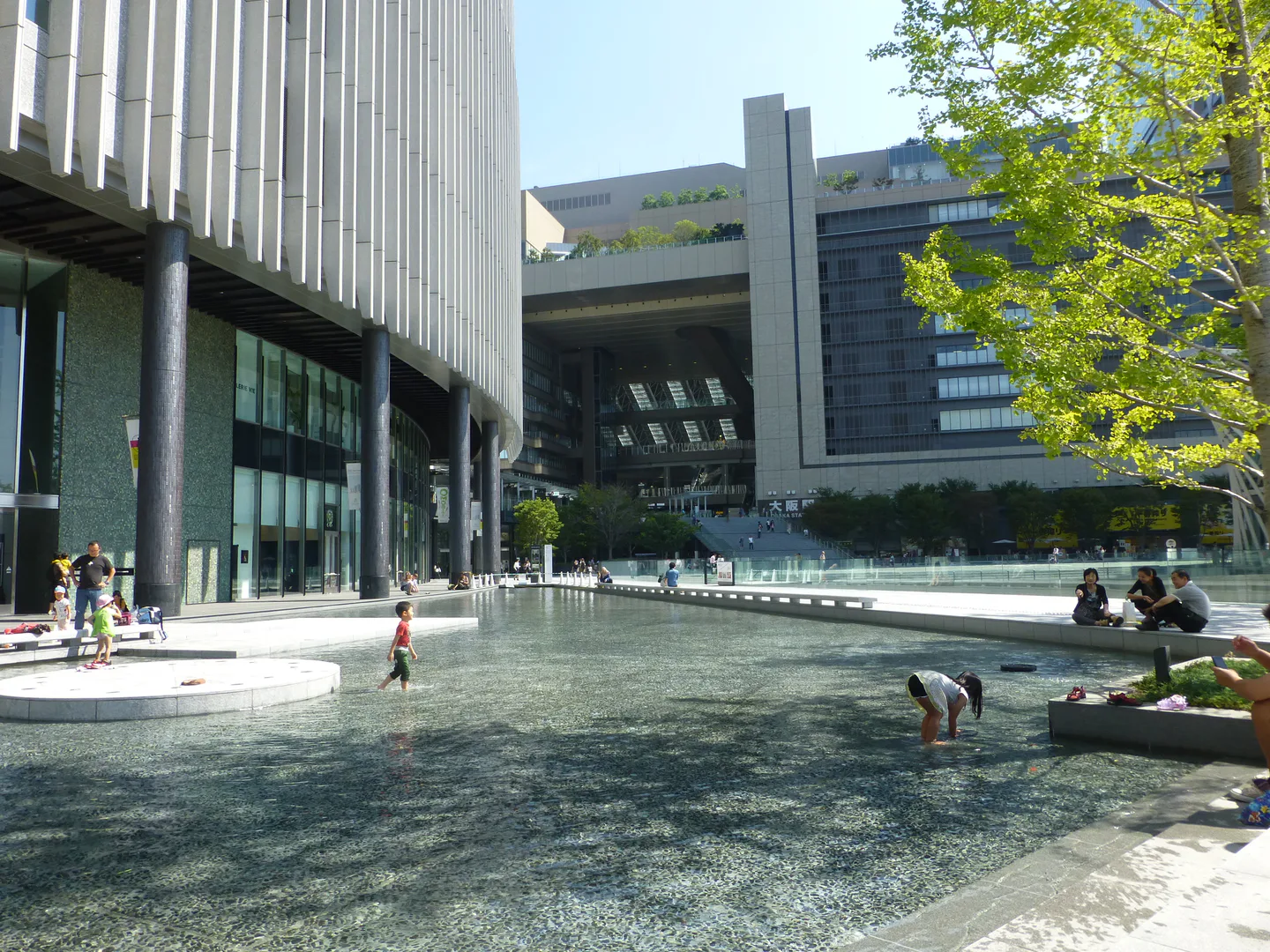
The correct side of Osaka Station matters
The broader Umeda district includes JR Osaka, Hankyu Osaka-Umeda, Hanshin Osaka-Umeda, Metro Umeda, Higashi-Umeda and Nishi-Umeda. These are linked but do not share one ticket gate. A room across the complex from your regular departure can turn a supposedly station-side booking into a long underground walk. See a JR Osaka Station hotel example.
Hankyu for Kyoto, JR for another regional trip and Metro for city journeys can pull you to different corners. Check the relevant exit and barrier-free path on the station map. A west-side property may suit one itinerary and penalize an east-side departure every morning.
For older parents, a stroller or large cases, the side of the complex can matter more than the headline hotel-to-station distance. The Umeda recommendation holds only if the actual route from room to platform is manageable for your group.
Compare specific Osaka Station hotels once the railway choice is settled; identical district labels do not promise identical walks, rooms or access. See Osaka Station hotel comparison. See Where to Stay in Osaka for First-Time Visitors. See Namba Hotel Comparison.
Nara is a useful tiebreaker, not a whole-stay verdict
Kintetsu access at Osaka-Namba makes a classic Nara Park day straightforward from the southern district. That strengthens Namba when other Minami evenings already point there. It is a smaller reason when the remainder of the stay runs north.
One direct Nara journey should not dictate four hotel nights if two Kyoto days and a Himeji trip repeatedly use Umeda. Count the full hotel-door journey, including the walk within Namba, and weigh it against the other days.
The Nara route comparison is most useful when the two bases are otherwise close. It can settle a tie, but it should not override a strong pattern elsewhere in the itinerary. See Nara from Kyoto or Osaka.
A final-night move needs an evening purpose too
Changing hotels before a Kansai Airport flight can work when the last night also belongs in Minami. For example, finish a Kyoto or Umeda day, transfer to a Namba room, eat around Dotonbori, then use Nankai for the airport in the morning.
That sequence uses the move twice: it improves the evening and the departure. If the only gain is a shorter final train, the packing and second check-in may cost more effort than the transfer saves.
A mid-afternoon flight from KIX usually leaves room to travel from an Umeda base once, especially when that base worked for the previous days. Keep the same room when a relocation solves no other problem. See whether a KIX last-night move helps.
The airport edge has greater weight with an unusually early departure, heavy luggage or a difficult companion route. Check actual rail and hotel timings before moving; “closer to KIX” is not by itself a full itinerary.
USJ should control the base only when the park controls the stay
One Universal Studios Japan day within a three-to-five-night Osaka visit is a dedicated commute. Choose between Namba and Umeda on the other days, then travel to the park once.
Two serious park days, a very early entry plan or a late event can make Universal City lodging a different accommodation choice. In that case, compare the park-area option with both city bases instead of forcing the usual Namba–Umeda answer.
The USJ hotel comparison sets out when proximity is valuable enough to justify a separate base. See Universal City vs Umeda vs Namba.
Length of stay changes the weight of each journey
Two nights: the arrival or departure can dominate
A short stay with bags arriving at KIX, one Minami evening and a quick departure can favour a hotel close to Nankai Namba. If you arrive by Shinkansen, visit Kyoto and continue by regional rail, the north-side hub may fit better. At two nights there are fewer ordinary days to dilute a hard boundary journey. See arrival-night planning.
Look at the actual first and last movement, not a generic Osaka neighbourhood ranking. A hotel swap on such a short visit rarely pays for itself.
Four nights: repeated patterns take over
Three Minami evenings plus a Nara day make a strong Namba case. Two Kyoto or Kobe days, another regional outing and only one Dotonbori visit pull toward Umeda. One airport leg matters, but it should not become the deciding vote against several repeat journeys. See an Osaka and Kyoto four-day route.
Six nights: the room begins to matter more
For five or six nights, laundry, floor area, bed configuration and space for open luggage can outweigh a modest location difference. A workable 28 m² room farther from the station may serve the group better than a cramped 16 m² room at the closest exit. Compare actual inventory and price for your dates rather than assuming the district determines room quality.
Lifts and transfers change the family calculation
A traveller with a day bag can absorb a wrong exit. A sleeping child, stroller or older parent makes a staircase and another station transfer consequential. Test the routes the group will repeat, including the return when everyone is tired.
For an accessibility-sensitive booking, compare the practical route in this order:
Transfers on the repeated journeys.
Availability of lifts or escalators at the stations and exits your family will use.
Distance and weather exposure of the final walk.
Floor area, beds and bathroom arrangement in the room.
Only then, the advertised rail time.
A route with one fewer transfer can be preferable even if the advertised train time is five minutes longer. The useful hotel is the one your group can reach reliably from the operator you will use. See station access with older parents.
Most short stays do not need both districts as hotel bases
The Midosuji Line connects Namba and Umeda directly. During a normal three- or four-night Osaka stay, packing, checkout, luggage movement and a second check-in usually cost more than a few rides across town. See how to group Osaka areas.
A second hotel makes sense only when it performs a different task, such as:
Namba as a final base when a Minami evening and Nankai airport departure both benefit.
Universal City for two serious park days.
Shin-Osaka before a genuinely early Shinkansen.
A second room because the original base cannot provide a needed family layout or accessible route.
Visiting both districts does not require sleeping in both. Keep one base unless the later room solves a specific early departure, multi-day park plan, family layout or accessibility need.
If the districts tie, compare rooms on identical terms
Hold the dates, taxes and cancellation conditions constant. Then compare usable floor area, bed count and width, bathroom layout, laundry, luggage storage and the lift route to the railway. Those practical differences can be more valuable than a small area-level time advantage.
Usable floor space and the number and width of real beds.
Bathroom arrangement, including separation if the group needs it.
Laundry access for a longer visit.
Luggage storage on check-in and checkout days.
The lift-equipped walking route to the right railway.
A better room can defeat a five-minute location edge. It should not erase three repeated hard departures unless the room or accessibility difference is material to your group.
Book the hotel for the recurring route
Namba is the stronger base when Minami evenings, Kintetsu Nara access and Nankai airport travel genuinely recur. Umeda is stronger when the room anchors multiple north- or westbound Kansai rail days. Both districts have food and shopping; the distinction is how often you need to cross the city at the beginning or end of a demanding day.
Before paying, name the operator. Nankai Namba is the airport rail terminus, Osaka-Namba handles Kintetsu and Hanshin, and JR Namba sits elsewhere. In Umeda, JR, Hankyu, Hanshin and Metro likewise require different entrances and walks.
Count the mornings and nights, inspect the correct station entrance and the last few hundred metres, then choose the room when the transport result is close. That sequence makes a hotel price comparison useful instead of comparing two broad district labels.