
Art Aquarium Nagoya 2026 closed on 23 September. Its Sakae exhibition and ¥2,100 advance web ticket were for a finished event; a ticket listing or social post that still appears in search does not make the Chunichi Hall show bookable in October. If you were hoping to see this kind of goldfish installation on a current Japan trip, the relevant alternative is Art Aquarium Museum GINZA in Tokyo. Its final Ginza programme began on 2 October 2026 and is announced through 6 January 2027. That is a separate venue and exhibition, not an extension of the Nagoya ticket.
This page keeps the Nagoya details as a record of what was shown and as a way to judge whether a future temporary edition would suit you. It also helps with the immediate itinerary decision: spend your Nagoya hours on another attraction, or use an existing Tokyo day for the Ginza installation. If you want a living-animal aquarium rather than staged goldfish art, Port of Nagoya Public Aquarium answers a different question. The Ginza Art Aquarium review covers the currently relevant format.
What Nagoya offered before it closed
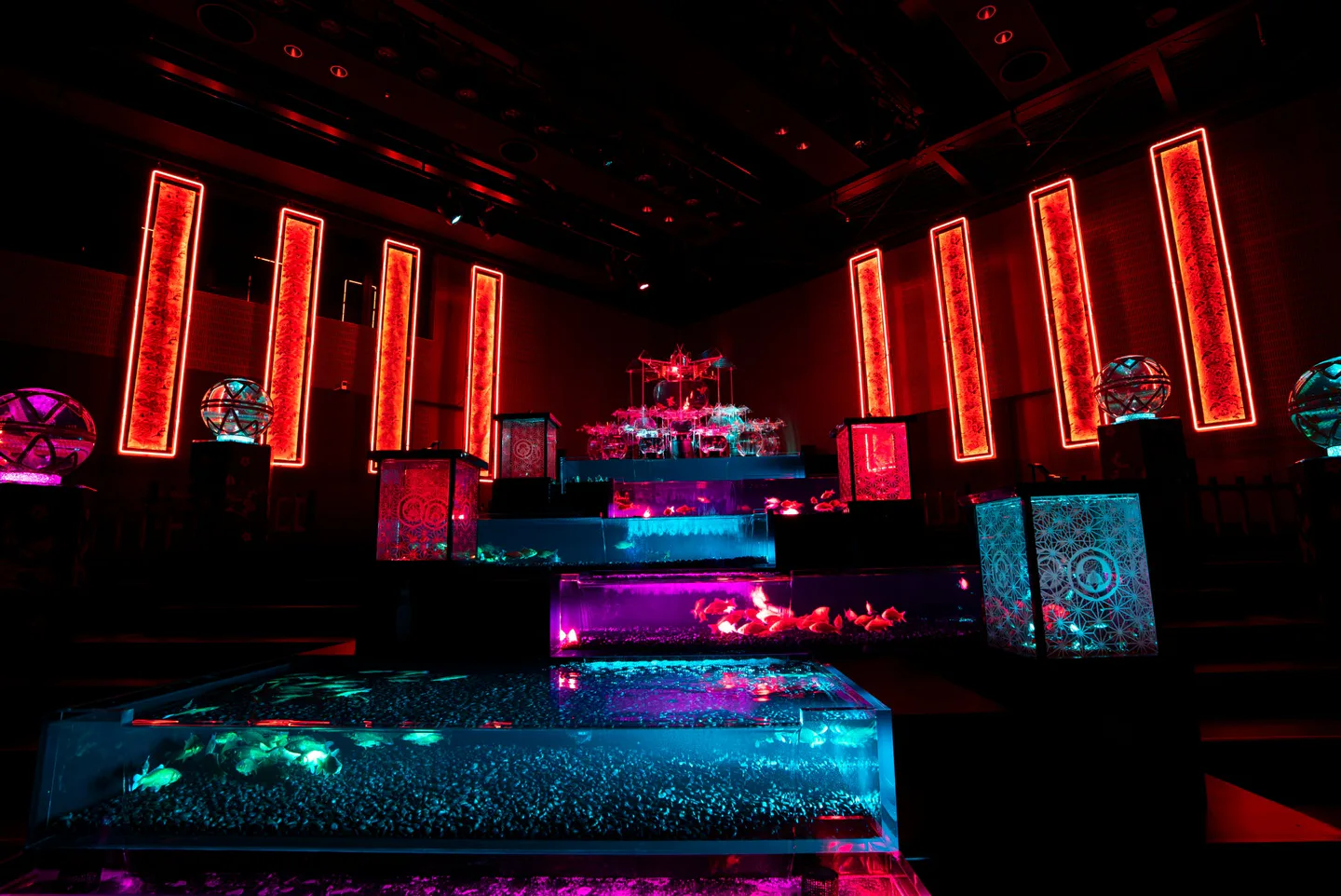
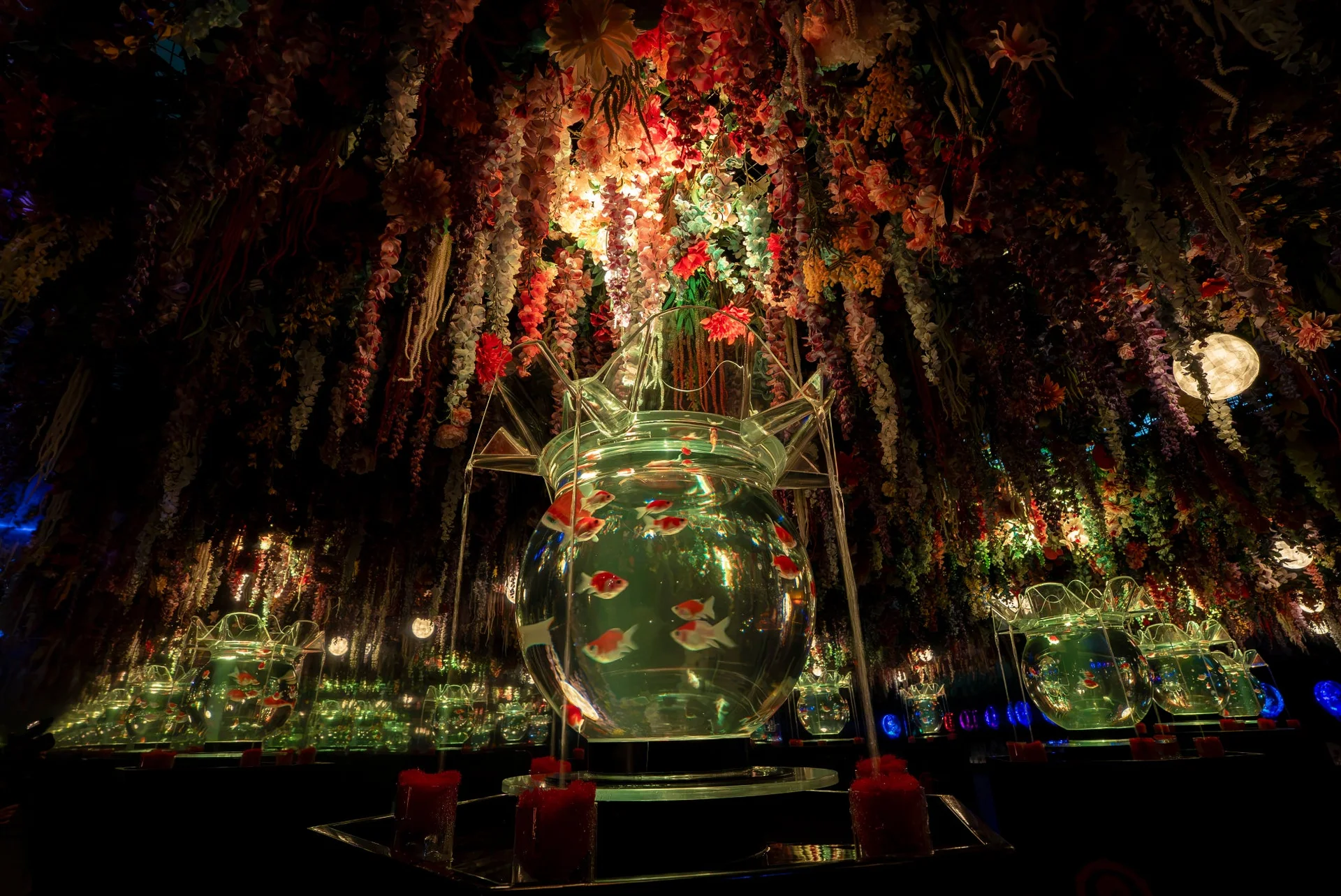
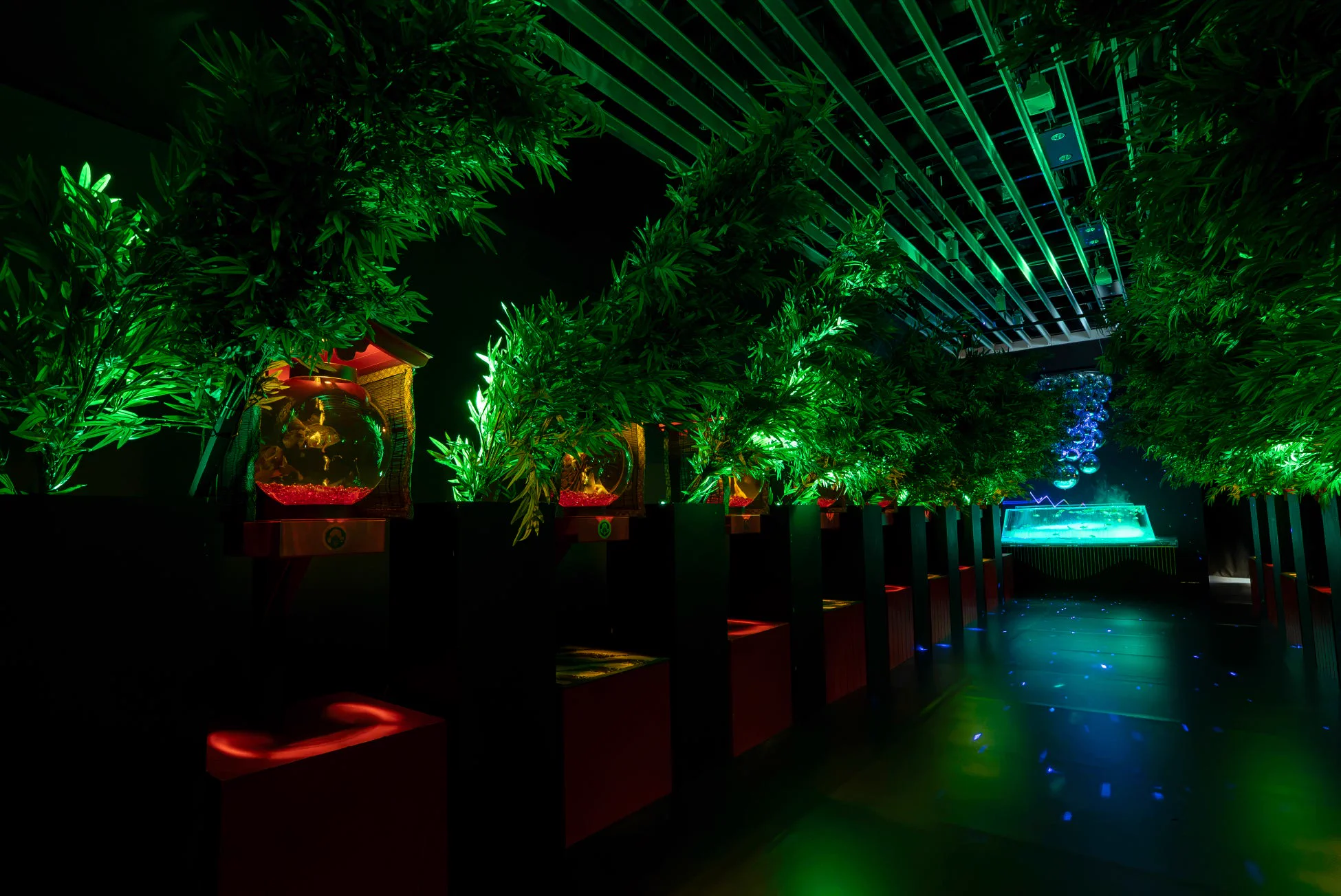
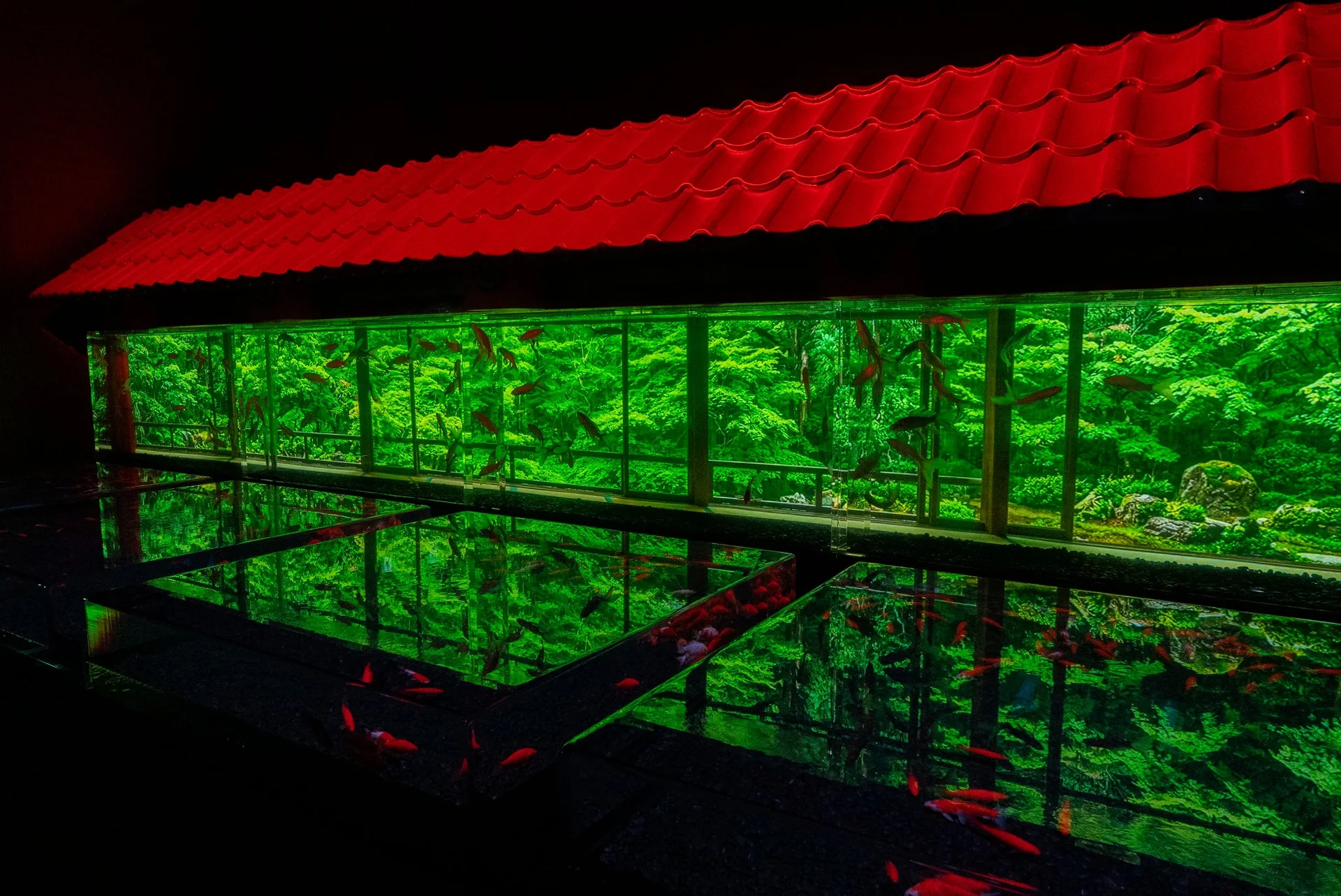
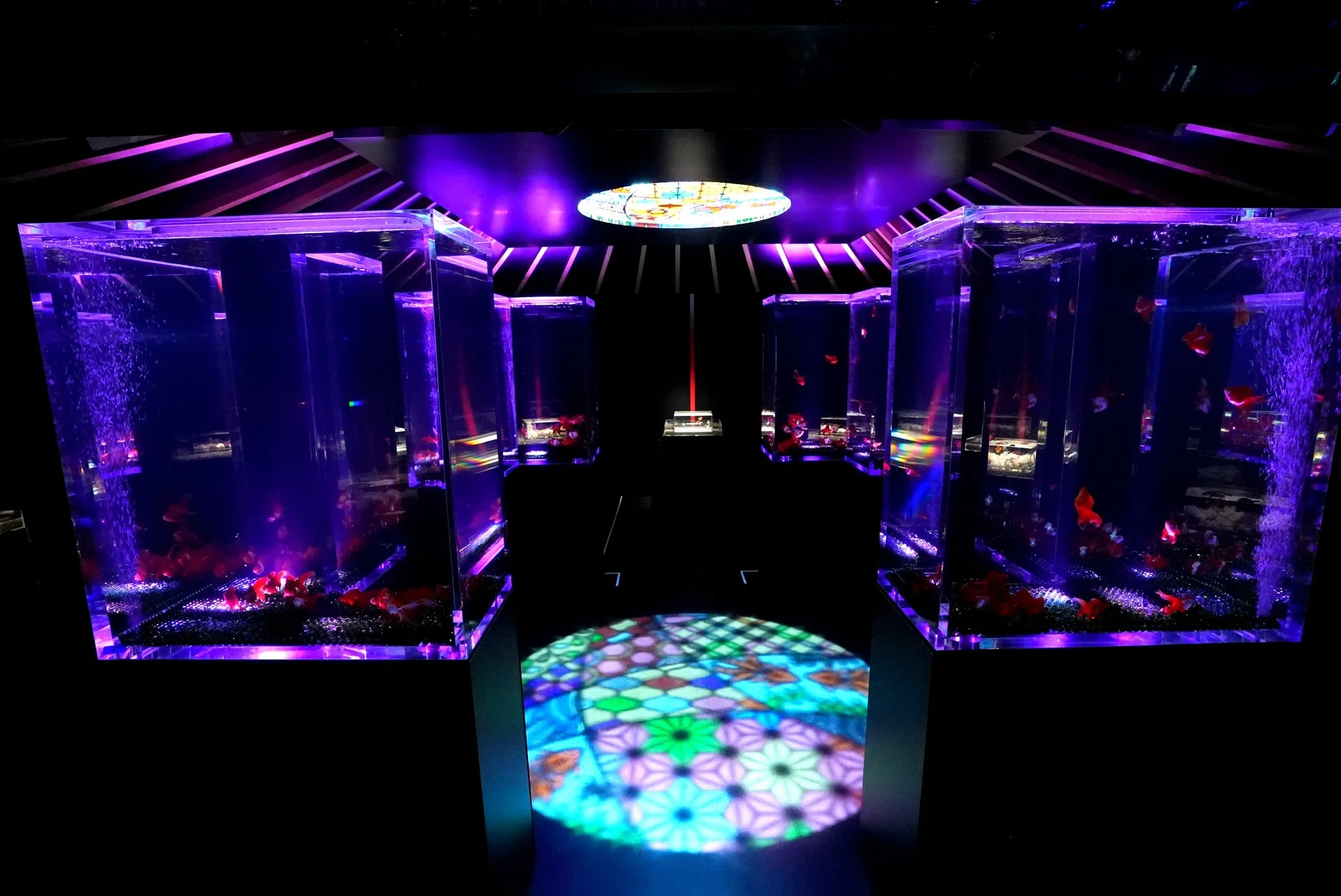
The show ran from 24 July to 23 September 2026 on the sixth floor of Chunichi Building in Sakae. Its published scale was twelve areas, twenty-one works, about forty kinds of goldfish and roughly 4,000 live fish. The large Kinyo Ryoran Grand Stage was the centrepiece. Hanamai combined flowers and lit tanks; Lantern Alley used a sequence of lantern-shaped displays. Water Mirror Scroll played with reflection, while the new Kinyo no Iori–Bosuian area used coloured light and a different viewing setting. These descriptions and the photos are of the finished Nagoya edition. They should not be read as a promised work list for Ginza or any unannounced return to Nagoya.
The distinction matters to repeat visitors. Someone who had seen Art Aquarium in Tokyo could have compared Nagoya-specific or first-in-Nagoya installations, especially the Grand Stage. For a first visitor, the bigger question was whether the visual art format deserved a 60–90 minute Sakae block at all. The show used live goldfish in shaped tanks with light, sound, flowers and fragrance, drawing on Japanese goldfish-viewing culture. It was not a conventional marine-life aquarium with sharks, penguins or a broad education programme. If those are your interests, Toba Aquarium's animal focus, Osaka's Kaiyukan or Kyoto Aquarium are more useful comparisons than a ticket for this former Nagoya show.
↔ Scroll table left or right
| Situation on a trip now | What makes sense | Reason |
|---|---|---|
| You found a Nagoya 2026 ticket page in search | Do not purchase it for a future date | The temporary Chunichi Hall edition ended on 23 September. |
| Tokyo is also on your route before 6 January 2027 | Consider the separate Ginza exhibition | It is the announced current Art Aquarium programme, with its own ticket and work list. |
| You want marine-life variety and education | Choose a conventional aquarium | Art Aquarium centres aesthetic goldfish displays. |
| Your Nagoya day is a transfer to the Alps | Protect the transfer and bag plan | A closed temporary show should not shape a Takayama or Shirakawa-go day. |
| Living fish used in art displays are outside your preferences | Skip this format in any city | A different venue does not change that personal boundary. |
For a real Sakae afternoon, an Osu Kannon food walk or a broader Nagoya neighbourhood plan can take the time once earmarked for the closed exhibition. If the visit is seasonal and outdoors, Korankei's autumn route has a very different transport commitment. Gozaisho Ropeway depends on mountain visibility and a full excursion, not a spare hour in Sakae. The right substitution depends on how much of the day you actually have.
Historical ticket terms help explain the decision, not sell an expired admission
During the Nagoya run, a timed adult web ticket was ¥2,100 and a venue-machine ticket ¥2,300. The ¥200 difference was small beside the opportunity cost of taking a 60–120 minute exhibition block out of a short city stay. Web slots could sell out, and a sold-out slot could also remove walk-up inventory. A purchaser could change the reserved date or time through purchase history before the admission time, subject to availability, while cancellation was generally unavailable. Those terms applied to the 2026 Nagoya product; they are not current offers or a guarantee for any future edition.
The old article also compared marketplace timed and open-date tickets. An open-date option could make sense when a trip day could not be fixed, but it needed a real price-and-rule comparison against the standard web ticket's built-in change process. That is still a useful method for a future exhibition: decide whether the event deserves the time, then decide how much flexibility to buy. The old Nagoya marketplace product may remain indexed; treat it as an archived listing, not a way into Chunichi Hall now. The same caution applies to the former summer programme at Ginza, which ended on 30 September before the final Ginza season began.
The old Nagoya page allowed photography and video but prohibited flash, extra lighting, monopods and tripods. Its listed hours were 10:00–18:00, with last admission at 17:00. A quick visual pass could fit about 60–90 minutes; someone waiting for cleaner compositions or portraits might have needed 90–120. Those were planning allowances rather than venue-imposed visit times. The former Sakae venue was connected by the underground passage from Sakae or Sakaemachi Station near Exit 13, which made it easy to pair with a downtown shopping block. None of those historical hours or access instructions should be copied into a current Ginza reservation.
Where a short day is already full, the same replacement question applies to other art stops. Otsuka Museum of Art demands a larger time commitment; Hakone Open-Air Museum illustrates why last entry is not usable visit time. Tokyo's nature and science museum can absorb several hours even with a modest ticket. A temporary Art Aquarium was appealing precisely because it was a shorter indoor addition; it still displaced something else.
Ginza is available now, but its calendar is finite too
Art Aquarium Museum GINZA's final programme at Ginza Mitsukoshi began on 2 October 2026. The operator says the exhibition at that site ends on 6 January 2027 and describes later developments for its twentieth anniversary without announcing a replacement venue here. Its current general web admission is ¥2,500, with a ¥2,700 same-day machine price. Use the Ginza admission and hours page and Ginza ticket selector for the date you actually intend to visit. Do not assume the old Nagoya ¥2,100 ticket or its room list transfers to Tokyo.
The final Ginza programme has its own installations. Even where themes overlap—goldfish, flowers, coloured light—the two editions are not identical. The old Nagoya-versus-Ginza comparison therefore survives only as a decision method: if one city has a relaxed block and the other is packed, choose the city where the exhibition replaces less valuable time. In October 2026, Nagoya no longer offers that choice. A repeat fan can still compare remembered Nagoya works with the current Ginza set, while a first visitor need only decide whether immersive live-goldfish art belongs in the Tokyo day at all. The Tokyo attraction day-planning guide and Ginza-versus-other-shopping-base guide help place it without manufacturing a cross-city detour.
↔ Scroll table left or right
| Question from the old Nagoya comparison | Answer for October 2026 onward |
|---|---|
| Can I still see the Nagoya Grand Stage at Chunichi Hall? | No. That 2026 exhibition closed on 23 September. |
| Can I use a Nagoya timed or open-date ticket at Ginza? | No. Ginza is a different venue and ticket product. |
| What was the historical two-ticket cost? | Nagoya ¥2,100 plus Ginza ¥2,500 would have been ¥4,600 for two adult web tickets during the overlap, before travel time. |
| What is the live Art Aquarium option? | The announced final Ginza programme runs through 6 January 2027, subject to its own operating dates and ticket rules. |
| Will Nagoya return next year? | No future Nagoya run is established by the 2026 closing notice. |
A traveller deliberately comparing installations could have justified both editions during their overlap. For most first-timers, two similar live-goldfish art visits would have taken at least several usable hours, so the second needed an independent purpose. That historical ¥4,600 total is not a present-day purchase recommendation. If your Tokyo plan already has Artizon Museum or Tokyo National Museum, the question is which exhibit you would remove, not how many tickets fit the budget.
Live goldfish are part of the experience and the choice
Art Aquarium uses living fish, not only projected animals or sculptural tanks. The organiser presents the work as a contemporary form of goldfish viewing. That description and the photographs explain the format but cannot by themselves settle every husbandry concern. Nor does a lack of public detail establish mistreatment. Someone who does not want live animals used primarily in an immersive aesthetic display can decide against both the former Nagoya edition and current Ginza programme without trying to price that preference away. Nara Kingyo Museum is another goldfish-art option with its own location and format, while Port of Nagoya Public Aquarium serves the conventional-aquarium interest.
For those who enjoy the format, the finished Nagoya photographs show why time in front of individual tanks could vary: the Grand Stage needed a wider composition, Hanamai framed fish through flowers, Lantern Alley used a long sightline and Water Mirror Scroll relied on reflections. The newer Bosuian area changed the mood again with purple light. A visitor focused on photography would have spent longer than one simply moving through the rooms, especially with flash and tripods prohibited. The Kyoto Manga Museum time comparison is another example of choosing an indoor attraction by the time it takes away from a city day rather than by admission alone.
Keep the Nagoya transfer day intact
The original exhibition was easy to add because Chunichi Building sat in Sakae; it was never a luggage solution for travellers passing through Nagoya on the way to the Japanese Alps. A suitcase needed a separate storage or forwarding plan before a timed admission. Now that the temporary show has ended, there is even less reason to shape a Nagoya transfer around it. Nagoya-to-Takayama day trip versus overnight and the Takayama–Shirakawa-go–Kanazawa route should set the departure first. If Nagoya itself has a full day, decide which local attraction fits after that fixed travel is secure.
The useful answer to a search for “Art Aquarium Nagoya 2026 tickets” is therefore that the event is finished. Its historical prices, works and access remain here so a visitor can recognise an old listing and understand the sort of show it was. For an Art Aquarium visit on a current itinerary, consider the separate Ginza programme before its announced January 2027 end. For a Nagoya visit, spend the spare Sakae slot on something operating for your date, whether that is a neighbourhood walk, food stop or an aquarium that matches your interest.
For a Nagoya stay with Sakae as the evening base, compare Sakae-area rooms for your dates against a station hotel before adding a temporary exhibition to the day.
Related exhibitions and travel guides
Archived Nagoya 2026 ticket listing — event closed · Art Aquarium Nagoya 2026 · Nagoya opening announcement — · GINZA summer exhibition 2026 · Fukuoka Tower: Is the · Kawaguchiko to Oishi Park: · Chiikawa Park Tokyo 2026: · Okinawa Private Boat Charter · 35 Best Things to · Sapporo Shopping Hotels: Stay · Nagashima Spa Land Tickets · Yame Tea Experience: Hoshino, · Yamagata Hanagasa Festival Reserved · MAPPA EXPO 2026: Overseas