
Kyoto Aquarium is easiest to justify when it fills a real gap in the day. A family near Kyoto Station may need an indoor place with animals and facilities; summer heat or sustained rain can make another long outdoor route unappealing. An adult paying ¥2,600 and giving up two or three hours of a first Kyoto visit should ask what that time would otherwise hold. The aquarium is a stronger choice when its salamanders, penguins, jellyfish or local ecology are the attraction, rather than a generic shelter.
That comparison is about the day you have, not a universal ranking of sights. If you have only one clear-weather day for Higashiyama, Gion or Fushimi Inari, the aquarium takes a substantial part of it. If an exhausted child is finished with temples or rain is making a planned walking route miserable, the same ticket can protect the rest of the trip. The location inside Umekoji Park is useful when you are already spending time on the Kyoto Station side.
↔ Scroll table left or right
Situation | How the visit fits | What could change the answer |
First visit with one full Kyoto day | Usually leave the aquarium out | Heavy rain, heat or group fatigue can displace the outdoor plan |
Family near Kyoto Station | Good two-to-three-hour indoor anchor | Allow time for toilets, food and the park instead of filling every hour |
Persistent rain or a very hot afternoon | Better than another uncomfortable walking block | Light rain may still leave the historic streets attractive |
Kaiyukan already on the trip | Only add Kyoto for its distinct exhibits | Salamanders, penguins, jellyfish and local ecology need to matter |
Umekoji or station half day | Low transfer cost beside the park and railway museum | Two major paid venues may be too much for young children |
One scheduled program is the only draw | Do not commit before reading that day’s calendar | Animal programs can change |
The price buys a sizeable part of a Kyoto day
General admission is currently ¥2,600 for an adult or university student, ¥2,000 for a high-school student, ¥1,400 for a primary or junior-high student, and ¥900 from age three. A family of two adults and two primary-school children would pay ¥8,000 before any food or transport; the exact mix of ages changes that sum. Check the admission page for your date. The larger cost for a short visit may be the other Kyoto stop that no longer fits.
On a first visit with one full day, protect the historic places you came to Kyoto to see. Kiyomizu-dera and the surrounding streets, Gion, Fushimi Inari or Arashiyama are difficult to replace with an aquarium in another city. This does not make animal exhibits less interesting; it means the scarce part of the itinerary is Kyoto-specific outdoor time. Put the aquarium on a later day or omit it if your priorities are elsewhere.
Weather and walking capacity can reverse that decision. A 35°C afternoon, a long spell of rain, a child whose tolerance for shrines has run out or an older traveller needing a seated pause can make two indoor hours productive. The comparison should use the realistic alternative on that day, not an ideal outdoor route drawn up before the forecast and the group’s energy changed.
What Kyoto offers alongside a visit to Kaiyukan
Osaka Aquarium Kaiyukan has the larger spectacle. Kyoto Aquarium instead makes its region part of the exhibits: a River of Kyoto zone, a Sea of Kyoto tank and species interpreted through local habitats. Giant salamanders are prominent near the start. Someone seeking only the largest tanks may prefer Kaiyukan; someone interested in Kyoto rivers, animal behaviour and smaller displays has a different reason to come here.
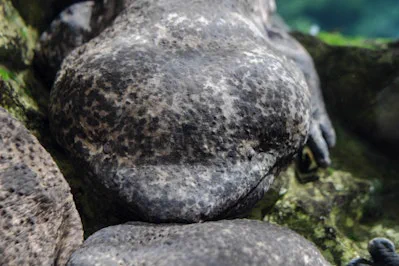
The Japanese giant salamander is a national Special Natural Monument. Kyoto Aquarium shows the native animal, the introduced Chinese giant salamander and hybrid individuals in its river area. That makes the display more than a large amphibian photo opportunity: it introduces the conservation issue facing local river populations. Spend enough time to look for an animal among the rocks rather than assuming every individual will be active on command.
If your group will call both visits “another aquarium,” choosing one may leave more time for the rest of Kansai. Doing both is easier to defend when a traveller specifically wants to see Kyoto’s salamanders, the penguin relationships or the jellyfish husbandry area. The difference should matter to the people buying the second ticket, not just exist on a brochure.
Jellyfish and penguins reward slower looking
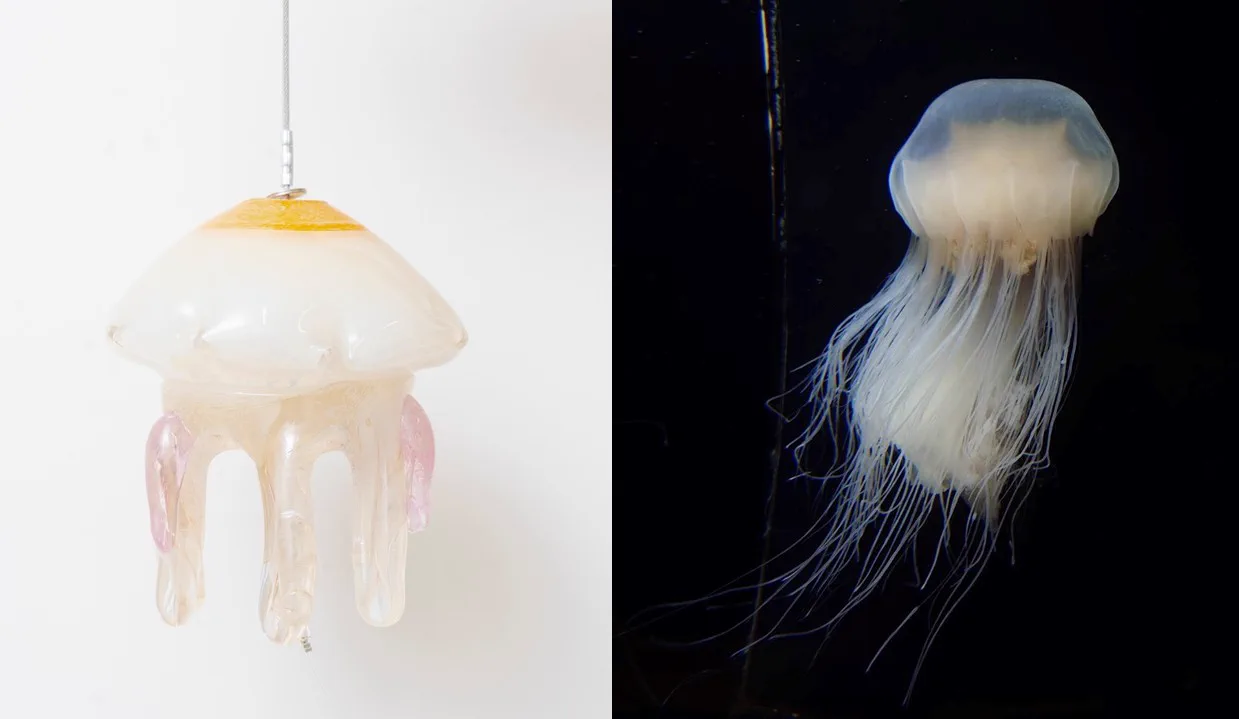
Jellyfish Wonder contains the panoramic GURURI display and the Kyoto Jellyfish Research Department, where breeding and care form part of the interpretation. This is a place to slow down after moving through bigger tanks: watch the animals drift, compare their forms and notice the work behind keeping them. It changes the tempo of the visit without needing a scheduled show.
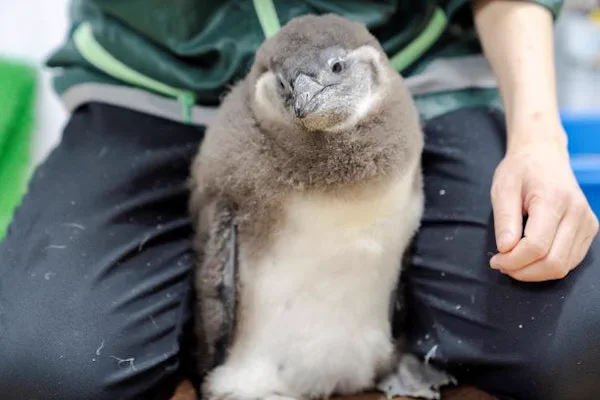
The aquarium also gives its penguins individual identities through a relationship chart. Names, family ties and changing social connections invite visitors to look for particular birds instead of scanning a single group and moving on. Families with children who like to follow a story may linger here; a visitor mainly collecting large exhibits may spend much less time.
Those areas explain the appeal of a more compact aquarium. They do not turn it into a compulsory Kyoto stop. A group that enjoys watching individual animals and reading about their care will draw more from the same displays than one moving quickly from tank to tank.
Allow two hours inside, then count the journey
Two hours is a workable exhibit block for many adults if they move steadily. Three gives a family more room for toilets, snacks, questions, a rest and stops at the animals that hold a child’s attention. A shorter ninety-minute visit can still work with a young child and park time afterward; an enthusiast may stay longer. These are planning allowances, not a rule set by the aquarium.
The door-to-door block is longer than time spent at the tanks. Include the fifteen-minute walk from Kyoto Station or the JR connection, entry, a toilet stop and the transfer to your next activity. A visit slotted between two distant Kyoto areas can quietly absorb much of a half day. Decide where the group goes afterward before you buy a timed ticket.
This is why a Kyoto Station or Umekoji day is the natural place for the aquarium. The area makes the travel around the attraction smaller, leaving more of those two or three hours for the visit itself.
Umekoji lets a family avoid another cross-city transfer
From Kyoto Station’s Central Exit, the aquarium estimates about fifteen minutes on foot. JR Umekoji-Kyotonishi is roughly seven minutes away. The building sits within Umekoji Park, near the Kyoto Railway Museum, and has no dedicated parking. This cluster can make a family afternoon simpler than repeatedly boarding buses across town.
One possible sequence is aquarium, an outdoor break in Umekoji Park and the railway museum if everyone still has energy. The stations and park are close enough that the next choice can respond to the group rather than a rigid cross-city itinerary. A shorter aquarium-and-park pair is also legitimate: deleting a transfer can matter more to a tired child than adding one more paid attraction.
The railway museum and aquarium each deserve time and admission money. Buying both because they are nearby can be a mistake, especially with preschool children or persistent rain that limits park recovery time. Choose one as the main indoor block, then add the second only if the day and the group can still support it.
A Kyoto Station hotel makes this block much easier to insert than a day based around Gion and Higashiyama. The linked station-versus-Gion guide helps compare those bases. From the eastern side, the journey to Umekoji may erase the convenience that made the aquarium attractive in the first place. Read: Kyoto Station vs Gion
Rain changes the alternative, not the aquarium
Sustained rain can spoil a long Higashiyama walk; heat and humidity can make another afternoon outside physically costly. On those days, indoor exhibits and predictable facilities are valuable. Much of Kyoto Aquarium is under cover, though the riverside and open-air passages are not entirely weatherproof and wind can carry rain into the dolphin stadium.
Light rain is a different case. Gardens and old streets may remain pleasant and sometimes quieter, while a half day indoors still removes time from a short Kyoto stay. Check whether your original plan is genuinely degraded before replacing it. A child’s fatigue, the group’s mobility and the length of the remaining trip matter as much as the rain icon.
For adults with little interest in animals, the Kyoto International Manga Museum may fill an indoor cultural block better. A tea ceremony is another Kyoto-specific use of that time when the group wants a guided cultural activity. Those options involve different locations and reservation rules, so compare the actual route and available times rather than treating all indoor stops as interchangeable. Read: Kyoto International Manga Museum · tea ceremony
Children, grandparents and the useful stopping point
Fish, penguins and salamanders give young children something to engage with before they can read long exhibit text. Toilets, places to sit and feeding or nursing facilities also make the attraction easier to use than a sequence of museum rooms. That supports a preschool or primary-school visit, particularly when the rest of the Kyoto itinerary has become demanding.
A family visit need not fill the whole day. Ninety focused minutes with a small child, followed by park time, can work better than insisting on every display. An older child fascinated by marine life may happily use the full three hours. Let attention, not the ticket price, determine when to leave; staying longer after everyone is tired does not recover the admission cost.
A multi-generation group may value the reduction in walking and the chance to sit after Kiyomizu-dera slopes or long station passages. The aquarium still involves standing and moving between exhibits, so it is a lighter block rather than a promise of complete rest. Compare it with returning to the hotel if someone truly needs a break.
Buy around the entry rule for your date
Web tickets are offered from thirty days before the visit. During designated busy periods, including parts of Golden Week, Obon and Silver Week, a date and entry time may be required; many other days require only a date. A sold-out web slot is not necessarily recoverable at the on-site machines. Check the ticket page and daily calendar when the date is fixed, because entry arrangements and animal programs can change.
On an ordinary weekday, waiting until the forecast is clearer may preserve a useful choice between indoor and outdoor Kyoto. For a peak-date family visit, the risk of losing an entry time may outweigh a small discount elsewhere. Do not buy early merely because a marketplace lists a price; first decide whether that ticket’s date and entry conditions fit your day.
Klook and KKday may list admission options, but the same attraction can appear with different cancellation terms or ticket types. Compare the exact day, entry requirement and refund rule with the aquarium’s own web ticket before paying. The links below are ways to inspect those offers, not a substitute for reading the terms on the final checkout page.
Klook · Check Kyoto Aquarium options for your date
KKday · Compare the same date and cancellation terms
When the aquarium takes too much from the day
A first Kyoto day already short on historic districts is the clearest reason to leave it out. If Kiyomizu-dera, Gion, Fushimi Inari or Arashiyama are the purpose of the trip, a convenient indoor stop should not quietly replace them during good weather. The aquarium becomes more reasonable if that outdoor plan is no longer workable.
A second aquarium also needs a specific purpose. After Kaiyukan, a group that does not care about Kyoto’s giant salamanders, penguins, jellyfish or local river interpretation may experience a great deal of repetition. Save the admission and time for another Kyoto activity if those differences do not interest anyone.
Do not build the purchase around one animal program without checking the date’s calendar. Sessions can move or be cancelled for operational or animal-welfare reasons. If the whole visit would be disappointing without a particular show or feeding, keep the itinerary flexible until its current schedule is clear.
When the ticket earns its place
A family needing a controlled indoor stretch in heavy rain, strong heat or after too much walking has a clear use for the aquarium. The two-to-three-hour block can replace a poor outdoor experience and give children a different kind of attention, rather than competing with a good-weather temple route.
The case improves when you are already near Kyoto Station or Umekoji. A short final walk and nearby park or railway museum mean less of the half day is spent on transport. For a family staying on this side of Kyoto, that route advantage can matter as much as the exhibits.
The strongest content-led reason is genuine interest in the animals shown here: local giant salamanders, individual penguins, jellyfish displays and Kyoto’s waters. If those are the reason the group wants an aquarium, Kyoto offers more than a generic rainy-day fallback.
The decision for this itinerary
For most first-time travellers, Kyoto Aquarium belongs after the city’s central historic priorities. It moves up the list for families, people who enjoy observing animal behaviour and groups whose day already passes through Umekoji. Heavy rain or heat can make it the better use of a block that would otherwise be physically draining.
Remove the aquarium from the draft itinerary and see what happens. If the day gains a place everyone wants more, leave it out. If the removal creates a difficult gap near Kyoto Station, pushes a tired group back into heavy rain or drops the one set of exhibits they specifically came to see, allow the admission and travel time. That test makes the choice about this trip rather than an attraction’s general reputation.
Kyoto planning nearby
Kyoto vs Osaka: Where Should First-Time Visitors Stay? · Kyoto International Manga Museum · Kyoto Station vs Gion
Aquarium ticket and exhibit pages
Admission, opening hours, animal programs and the dates that require an entry time can change. Match the selected ticket to the calendar before travelling.
Admission prices · Web tickets and entry conditions · Access and daily hours · Exhibits and programs
Related guides: National Museum of Nature and Science 2026: The ¥630 Ticket Is Cheap — Your 3–5 Hours Aren’t · Kyoto Private Car Charter: 8 vs 10 Hours? Check the 100km Limit First · Fukuoka Tower: Is the ¥1,000 Ticket Worth the Detour? Timing Changes the Answer · Toba Aquarium 2026: Is the Sea Otter and Dugong Detour Worth It? · Kanmon Strait Museum: When the ¥500 Ticket Is Worth It—and When the Free Areas Are Enough · KidZania Fukuoka Tickets 2026: 4 vs 6 vs 8 Hours — and Is the English Program Worth It? · Sakura Castle: The Stamp Is Open 24/7 — The Castle Is in the Moats, Not a Keep · DMM Kariyushi Aquarium Isn’t a Smaller Churaumi — Its Best Use Is 1–2 Hours Near Naha Airport · Zentis Osaka: Is Room 001 Worth the Walk from Osaka Station? · Oriental Hotel Okinawa Resort & Spa Review: Is the 170m Pool Worth a 7-Minute Beach Walk?
More Kyoto and family routes
Osaka and Kyoto in 7 Days: 3 Nights Each — When One Hotel Move Is Actually Worth It
Cup Noodles Museum Yokohama: The ¥500 Ticket Is the Easy Part — Secure Your Workshop First
One Day in Kyoto: Choose Fushimi Inari or Arashiyama Before You Build the Route
Mitsui Garden Hotel Fukuoka Gion: Is the 26.6 m² Triple Room Worth It for 3 Adults?
Tokyo Dome Hotel: Is Walking Back After a Concert Worth the Premium?
The aquarium sits in the Umekoji area, which is straightforward to fit around a Kyoto Station arrival or departure. For an overnight base on that route, look at Kyoto Station accommodation and compare the station exit with your luggage and aquarium plan.