
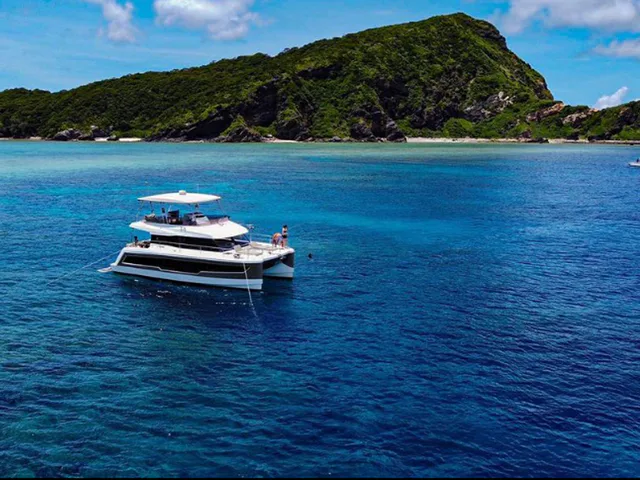
The quoted price for an Okinawa boat charter belongs to the vessel and its booked block of time. It does not shrink when only two people board. That is why a private trip can look extravagant to a couple yet become a plausible alternative to several premium group activities for eight or ten friends. Before looking at the deck photos, count the people who will actually come, decide how many hours they want at sea, and locate the departure port against the hotel. Those choices change the bill and the shape of the day more than a yacht label does. Okinawa trip budget offers a useful check against the cost of the full holiday.
Private use can buy a quieter schedule, space for people with different interests, and control over food or water activities. A skipper remains part of the package; the listings discussed here are crewed charters, not self-drive boat rentals. Privacy alone may justify the price for a celebration, but a party whose main aim is one snorkelling session should compare a shared tour first. Kerama day-trip options show what a per-person marine day can include.
↔ Scroll table left or right
First question | Why it changes the choice | What to check |
How many will board? | The base hire is shared by the actual group, not the advertised capacity | Whole-boat total and individual extras |
Where will the day start? | Naha, Chatan, Ginowan and Onna serve different hotel bases | Exact marina, transfers and parking |
What will happen on board? | A short scenic cruise differs from a day with snorkelling, food and sports | Activity-specific boat and time block |
How much weather flexibility exists? | Wind or swell may change or cancel the intended route | Refund, reschedule and add-on terms |
A boat for twelve is not automatically a twelve-person bargain
A simple calculation prevents most bad comparisons: add the charter fee and any compulsory extras, then divide by the number of confirmed passengers. Do the same for a shared excursion, including transfers, equipment and activities that people will genuinely buy. A party of two carries half a fixed boat bill each. Eight friends divide it eight ways, provided the vessel is comfortable for all eight. A quoted passenger maximum is a legal or operating ceiling; it says little about seats in the shade, dining space or whether everyone can snorkel at once.
For a concrete scale rather than a promised rate, an older SAFARI cruiser listing described a boat for up to twelve and a base price above ¥100,000. Its published operating period ended on 31 March 2026, so that price must not be used as a current booking quote. Current listings include a Y.M.C. luxury vessel for up to twelve, with a published starting figure of ¥230,000, and a larger Naha/Chatan catamaran with substantially more capacity. The latter listing and its Japanese version differ in published passenger limit and starting rate, which makes a date- and package-specific written quote essential.
The smaller group should also resist paying for unused scale. If six travellers want a scenic departure, a photo stop and some time in the water, the most expensive multi-deck boat may spend most of its hire period idle. A group of several households can make the larger boat useful because different people can stay dry, eat, rest or rotate through activities. Ask how the operator prices children, crew, equipment, fuel and port fees, rather than dividing a headline rate that excludes something everyone will need. Okinawa fishing choices provides a separate example of how shared and whole-vessel prices behave.
↔ Scroll table left or right
Actual group | Price interpretation | Likely comparison |
Two or three | Fixed hire is concentrated on few people | Shared snorkelling or a deliberately short private cruise |
Four to six | Privacy has a substantial per-person premium | Smaller crewed boat against premium shared activities |
Six to twelve | A compact private vessel may use its capacity well | Deck space, shade and activity rotation as well as price |
Several households or a large event | A bigger boat can spread hire and accommodate different plans | Written quote, actual seated comfort and group logistics |
The departure marina should fit the hotel day
Naha is a sensible starting point for a city stay without a car, particularly if the boat day can end with a simple dinner rather than another island transfer. Chatan is more logical when the group sleeps around American Village and wants to return there for the evening. An Onna departure can protect a resort afternoon or simplify the return with tired children. Ginowan lies between Naha and Chatan; it is useful only when its actual pickup point and transport work for the group. One product can offer a choice of ports while another is tied to a specific marina, so an island-wide brand name is not enough.
The current private charter marketplace listing includes Naha, Chatan and Onna departure options across different boats; those are not interchangeable seats on a single trip. The Y.M.C. vessel lists water-sports use with a Ginowan departure. Check the exact quay, reporting time and the route offered from that quay before booking accommodation around a photograph of the sea. A Naha traveller can use the two-day no-car city plan to decide whether a one-day port transfer is the only special transport needed.
A car may help reach a marina, but it does not make a distant departure harmless. A Chatan guest who drives south at dawn, returns north after hours in the sun and then seeks dinner has spent much of the day moving around a single activity. Check parking and the designated driver as well as kilometres. For a car-based trip, compare Okinawa rental options before committing to an awkward pickup. If the holiday already ends in Naha, the Onna versus Naha final-night decision may change which charter day is easiest.
Port geography also affects accommodation choice. A family sleeping in Chatan may prefer the evening flexibility compared in the Hilton, Vessel Campana and LeQu guide. An Onna party paying resort rates should leave time to use the property rather than convert its only beach day into transport; the Monterey, Manza and Seragaki comparison makes that trade-off clear. The broader Okinawa hotel-area guide can settle the base before a boat dictates it.
Two hours at sunset and eight hours on the water solve different problems
A compact cruise can work when the vessel and the coastline are the event. The Y.M.C. listing separates a two-hour sunset option from four-hour daytime and seven-hour longer formats; that is one operator’s package structure, not a standard for every boat. Some products have minimum hire blocks even if the guest only wants a brief sunset passage. Ask whether the clock begins at check-in, boarding or departure and whether it ends on return to port. Those definitions can turn a nominal half day into much less usable swim time.
A half day often holds one clear water objective plus transit and a relaxed spell aboard. Full-day pricing earns its place when the group plans several real activities—perhaps a snorkel stop, lunch, paddleboarding and time for non-swimmers to rest. A five- or eight-hour catamaran booking merely because it sounds complete can become hours of unused hire. Name the three things people most want to do and estimate the time needed for equipment changes, briefing, sea travel and food. If all three fit a shorter block, keep the balance of the day free.
The same logic works for a private party. A birthday group may want a meal and a scenic circuit, while a keen water-sports group needs enough daylight and a suitable embarkation point. An underwater-focused group should first compare the Kerama discovery-diving plan, since a dedicated dive outing can be better matched to instruction and dive logistics than a general charter. If the outing is actually about fishing, Okinawa fishing charters separate an ordinary shared boat from trolling and whole-vessel hire.
Extras can occupy more time than the cruise
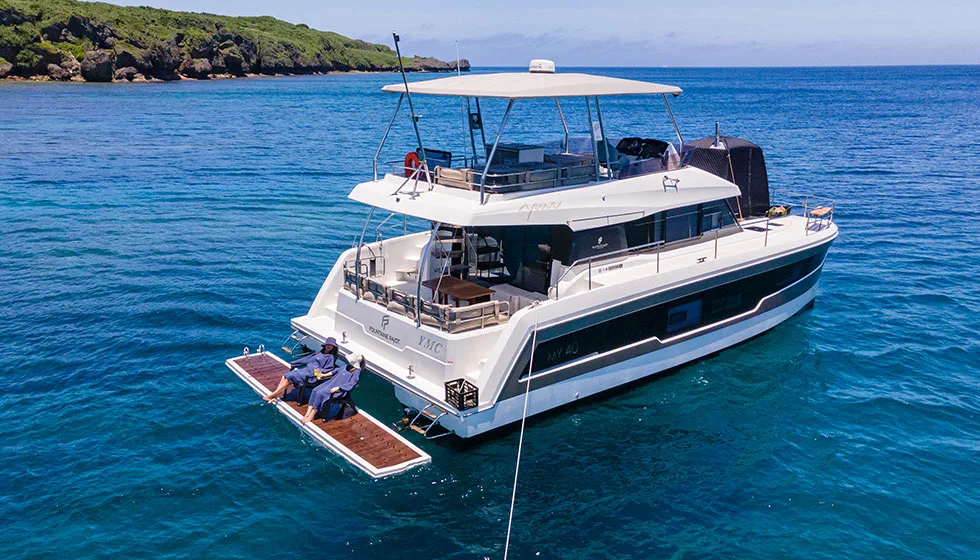
Listings offer combinations of snorkelling gear, wetsuits, stand-up paddleboards, fishing, diving, towing sports, barbecue, catering and other marine options. Availability changes by boat, departure port, season and operator. None should be presumed included just because it appears among the photographs or optional menu. A pre-ordered meal needs storage and service space; water sports need equipment, safe conditions and turns. Seven advertised activities do not mean seven activities a mixed-age group can enjoy in one afternoon.
Choose the central activity first. For an ocean-and-snorkel day, food may support that purpose without adding fishing and tow sports. For a celebration, catering and deck space may matter more than a long list of aquatic add-ons. For families, check whether anyone who remains on board has shade, a toilet and a place to sit while others swim. The Okinawa children’s road-trip plan helps decide whether the boat outing fits a nap window and the rest of the day.
A private vessel can keep a mixed group together, but it cannot give simultaneous individual instruction to everyone. Ask how many people can enter the water safely at once, what age and swimming rules apply, and how long equipment rotations consume. The same boat may accommodate a dozen people yet offer seating or shade that feels crowded at that number. Anyone prone to seasickness should consider the water conditions and transit duration; privacy does not calm the sea. Okinawa parasailing timing highlights a similar difference between boat time and active time.
Weather can change the activity even when the boat still sails
Wind, swell, rain and typhoon conditions remain the operator’s safety call. A boat may depart but take a different route, skip an exposed snorkel point, limit tow sports or have less comfortable water time. A trip can also be shortened, postponed or cancelled. Read the rules for all four outcomes, including whether prepaid extras follow the charter refund rule or have different treatment. Because each party may be paying a significant amount, clarify this in writing before paying, especially around a school holiday or celebration.
Leave a buffer before a dinner booking, a show or a flight. A delayed return, an alternative quay or a weather-related reschedule can affect a fixed reservation on land. A sunset outing depends particularly on the conditions of that specific evening. The Okinawa rainy-day and typhoon guide offers other uses of the day if the sea plan moves. A final-night hotel closer to the airport may also reduce the stakes; Tokyu Stay Okinawa Naha is one practical comparison.
↔ Scroll table left or right
Possible change | Question before payment | Plan on land |
Route shifts | Are the listed activities still possible and are extras refundable? | Avoid a non-refundable stop tied to one specific return point |
Shorter operation | How is unused time treated? | Keep the evening flexible |
Postponement | Which alternate dates can the full group attend? | Leave one movable day in the island plan |
Cancellation | When and how is the decision communicated? | Have a rain-friendly substitute already chosen |
Five group shapes produce five different answers
For two to four people seeking one private sea moment, the small or short-format boat deserves first comparison; a large event catamaran only makes sense if the vessel itself is the splurge. A party of six to twelve interested in lunch, snorkelling and a few water activities should compare a compact cruiser with a more spacious twelve-person option. The decision turns on deck comfort and service as much as equipment. Once attendance rises into the teens or several dozen, request a larger-vessel quote and calculate the total against individual activity tickets for every person who will actually come.
A Chatan or Onna group that refuses a long early transfer should filter by marina before boat type. A group whose real purpose is Kerama snorkelling or diving should price the specialist shared tours before paying for exclusivity. Solo visitors and pairs have different hotel and excursion economics; the Okinawa solo base guide can keep a costly boat day from distorting the whole trip. For multi-generation groups, Okinawa with parents explores why small transfers matter.
Four warning signs argue for waiting before payment: a party of two or three chooses the largest boat merely for ordinary snorkelling; the selected Naha marina forces a Chatan or Onna group into a pre-dawn cross-island run; every available add-on is selected although no one wants all of them; or a fixed non-refundable plan begins immediately after the boat’s expected return. Each problem is visible before the deposit. Changing the port, duration, activity mix or land schedule can fix it without giving up the sea day.
The booking questions that settle the real price
Obtain one written quote for the same date, passenger count, marina and duration across the options you are comparing. It should state whether the price is the whole boat or a per-person charge, the capacity and any child policy, and whether fuel, skipper, insurance, equipment, food and port charges are included. Ask for the exact meeting point, parking or pickup arrangement, check-in time and time counted on the boat. Then confirm usable shade, seats, toilet, shower and the number of guests who can do the chosen activities together.
The final part is the weather and change policy. Ask about a route change, a shortened trip, postponement, cancellation and what happens to add-ons. Divide the full expected charge by the actual confirmed group, then compare it with a shared excursion plus transport. Privacy can be a valid reason to pay the difference; it should be a conscious purchase rather than a surprise caused by comparing a whole-boat price with one person’s ticket. Tokyo Bay private cruise choices offer another cost-per-group example, although its inland-water conditions differ.
For the vessel options themselves, review the current charter boat catalogue and the multi-boat Okinawa listing by date and port. One older SAFARI page remains useful only to understand the former small-cruiser tier; its stated operating period has ended. Once the marina is fixed, search Naha accommodation, Chatan stays or Onna resorts for nights that support the departure. The room should fit the rest of the itinerary too, not only this one activity.
Related Okinawa planning
A charter can anchor one day without forcing the whole holiday to revolve around it. Compare five days with fewer hotel moves, babies and toddlers in Okinawa hotels, and a Chatan resort stay if the sailing day must fit family routines. The private car-charter timing guide explains another common mistake of equating purchased hours with active sightseeing. For travel disruption outside marine activities, Japan travel insurance questions may be relevant.
If a boat day prompts a wider activity search, keep the logistics separate. Furano rafting choices demonstrate how group privacy changes a river outing, but do not answer Okinawa sea-state questions. Kyoto car-charter limits show why a purchased time block can conceal route constraints. Families looking for a weather-proof indoor day might consider the Nagoya goldfish art exhibition only if Nagoya is already on a separate trip; it is not an Okinawa backup.