
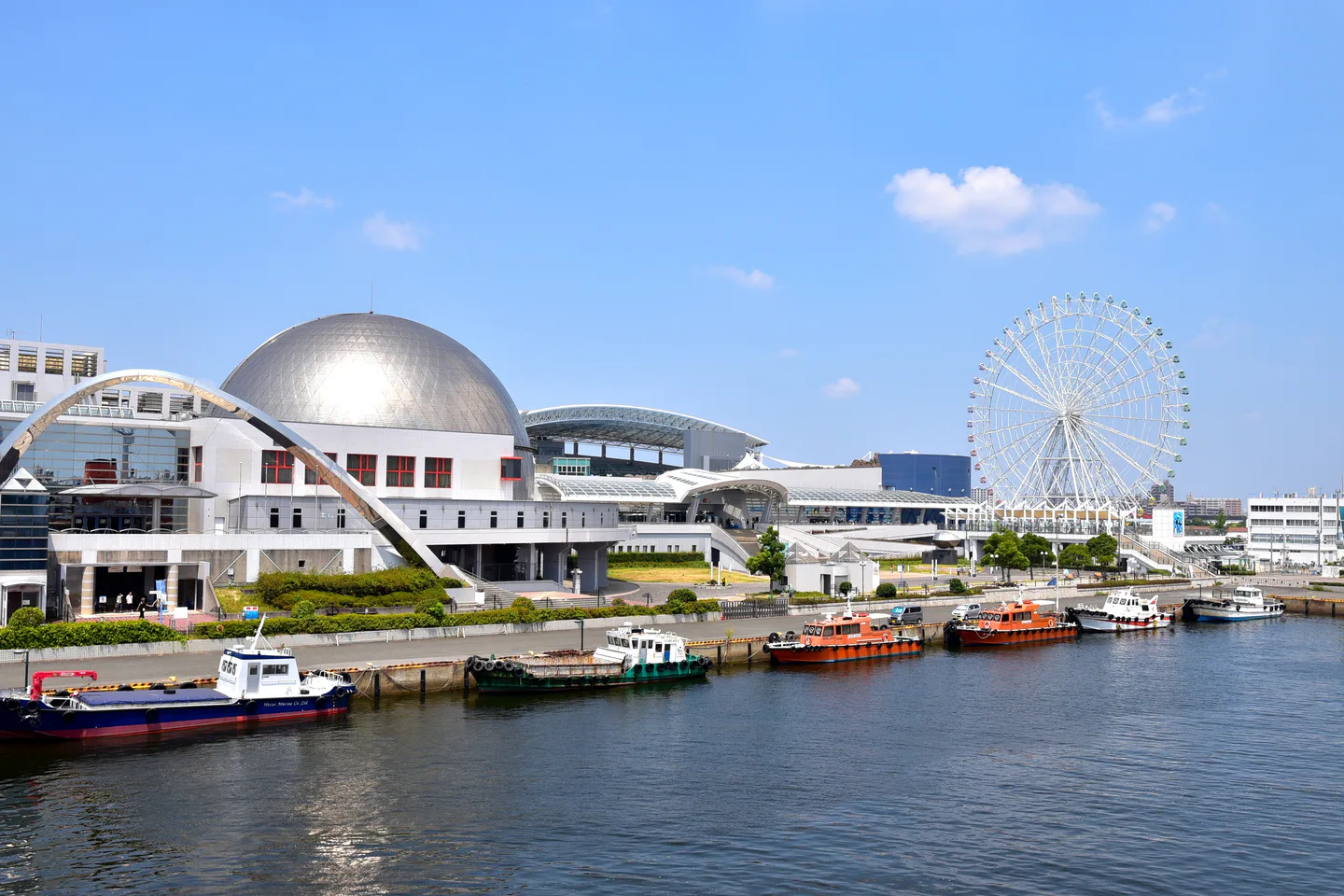
Port of Nagoya Public Aquarium is a sensible half-day choice when the dolphin and orca programmes matter as much as the tanks. Allow two to three hours for the buildings and one performance; protect three to four if you want two scheduled activities, time to eat or a child-led pace. The aquarium itself gives two to three hours, including a dolphin show, as a basic whole-facility estimate and says extra events take longer. The ticket decision should follow that time plan. A cheaper late entry cannot create more hours in the day.
The 2026 summer night programme ended on 31 August. During its 18 July–31 August run, entry after 17:00 cost ¥1,620 for an adult, compared with ¥2,030 at the standard rate; the aquarium stayed open until 20:00. That was a ¥410 saving in exchange for no more than three hours inside. As of October, the seasonal rate is not a general every-evening ticket: night prices apply only on designated late-opening days. The permanent planning question is whether a focused three-hour visit covers what you want, and the current calendar determines when such an option exists.
↔ Scroll table left or right
Visit aim | Time to reserve | Admission plan | Main limit |
Major tanks plus one animal programme | About 2–3 hours | Normal daytime ticket; night entry on a designated late-opening day | An efficient circuit leaves little time for extra events. |
Dolphins and orca training with breaks | About 3–4 hours | Daytime admission | Performance gaps and family rest can extend the visit. |
2026 summer arrival after 17:00 | At most 3 hours to 20:00 | ¥1,620 adult night fare through 31 August | Seasonal discount was unavailable on ordinary October evenings. |
Family meal outside and return | A flexible half day | Same-day re-entry stamp | Return no later than one hour before closing. |
Garden Pier visit through 30 November 2026 | Aquarium as main 2–4-hour stop | Aquarium ticket only | Museum, observation room, Fuji ship and Port House were temporarily closed. |
Photo: Bariston / Wikimedia Commons, CC BY-SA 4.0

What the 2026 night fare actually bought
The adult daytime ticket is listed at ¥2,030. On the 2026 summer late-opening dates, the adult 17:00-entry ticket was ¥1,620, a ¥410 difference of roughly one fifth. Elementary and junior-high visitors paid ¥800 at night rather than the usual ¥1,010; children aged four or over paid ¥400 instead of ¥500. Those rates were tied to late-opening periods such as summer holidays, not a standing evening discount every day of the year.
A 17:00 arrival before a 20:00 close left three hours at most. That is close to the aquarium’s own two-to-three-hour basic estimate with a dolphin performance, so a night ticket could fit a purposeful first circuit. It gave much less margin for waiting at a second animal programme, letting children revisit a tank, or leaving for dinner and returning. Saving ¥410 made sense only if the shorter visit was the one you already intended.
For the summer night window, the route worked best with a small number of priorities:
Decide whether one or two animal programmes are essential before entering.
Move efficiently between the North and South Buildings.
Keep any meal short within a three-hour window.
Accept that an animal-related programme change leaves fewer alternatives than a daytime visit.
Anyone visiting outside a designated late-opening period should use the ordinary hours and admissions calendar. Anyone whose main aim is both headline programmes should compare their start times before treating the night fare as better value. A ¥410 saving is small if it causes a second port trip or forces the group to abandon the exhibition it came to see.
The last week of August showed the trade-off clearly
The 25–31 August 2026 evening schedule listed orca public training at 17:30 and the BLUE ECHO dolphin performance at 19:00. Those times gave a late visitor two possible anchors but little slack between them and 20:00 closing. The aquarium can alter animal activities for health and operational reasons, so the schedule was an example of how to plan the window, not a promise for another day or season.
A visitor who entered at 17:00 and wanted both activities had a practical sequence: reach the first training area promptly, use the middle of the evening for selected tanks and the South Building, then return for dolphins. That itinerary made the reduced ticket useful because it matched a deliberate set of interests.
Reach the orca training area for the scheduled 17:30 start.
See selected tanks and the South Building between activities.
Return for the 19:00 BLUE ECHO dolphin performance.
Finish any remaining exhibits before the 20:00 close.
It also had a clear failure point. Arriving after the first animal activity or taking a long meal left almost no recovery time before the later performance. A daytime visit could absorb a changed programme with more exhibition time around it. Families who need a quiet break may get more from ordinary admission and a wider clock window than from the lowest adult fare.
Garden Pier was a shorter circuit through November 2026
The aquarium stayed open while three other Garden Pier facilities closed from 1 August through 30 November 2026 for Aichi-Nagoya Games preparations. Those closures covered the Nagoya Port Building’s Maritime Museum and observation room, the Fuji Antarctic Museum Ship and Port House. It was therefore possible to visit the aquarium while the older “four port attractions in a day” route was unavailable.
Nagoya Port Building: Maritime Museum and observation room.
Fuji Antarctic Museum Ship.
Port House.
An old itinerary might show aquarium, museum, tower view and Fuji on one port journey. During the temporary closures, reserve the aquarium’s own two-to-four-hour block and decide separately whether a meal at JETTY or another confirmed area stop merits more time. Do not buy a multi-facility plan from an outdated description without checking what is open on the visit date.
This changed the use of a short Nagoya day. A morning or afternoon at the aquarium could leave space for Osu, Sakae or another city area rather than obliging a full port day. The shorter surrounding circuit did not make the aquarium itself less extensive; it removed the nearby activities that once filled the rest of an itinerary. After 30 November, the operating calendar still needs checking before those facilities are put back into a plan.
The Asian Games also affected port-area access and parking preparations. A traveller visiting during the 2026 event period needed the actual day’s transport plan, not assumptions from a normal summer outing. The linked Games guide belongs to that wider scheduling decision; the aquarium’s opening calendar remains the place to establish the visit window.
The Aichi-Nagoya Games transport guide places venue access and temporary transport within the wider 2026 Games trip. A normal aquarium day still begins with the opening calendar and programme, not the assumption that every Games-period port facility is open.
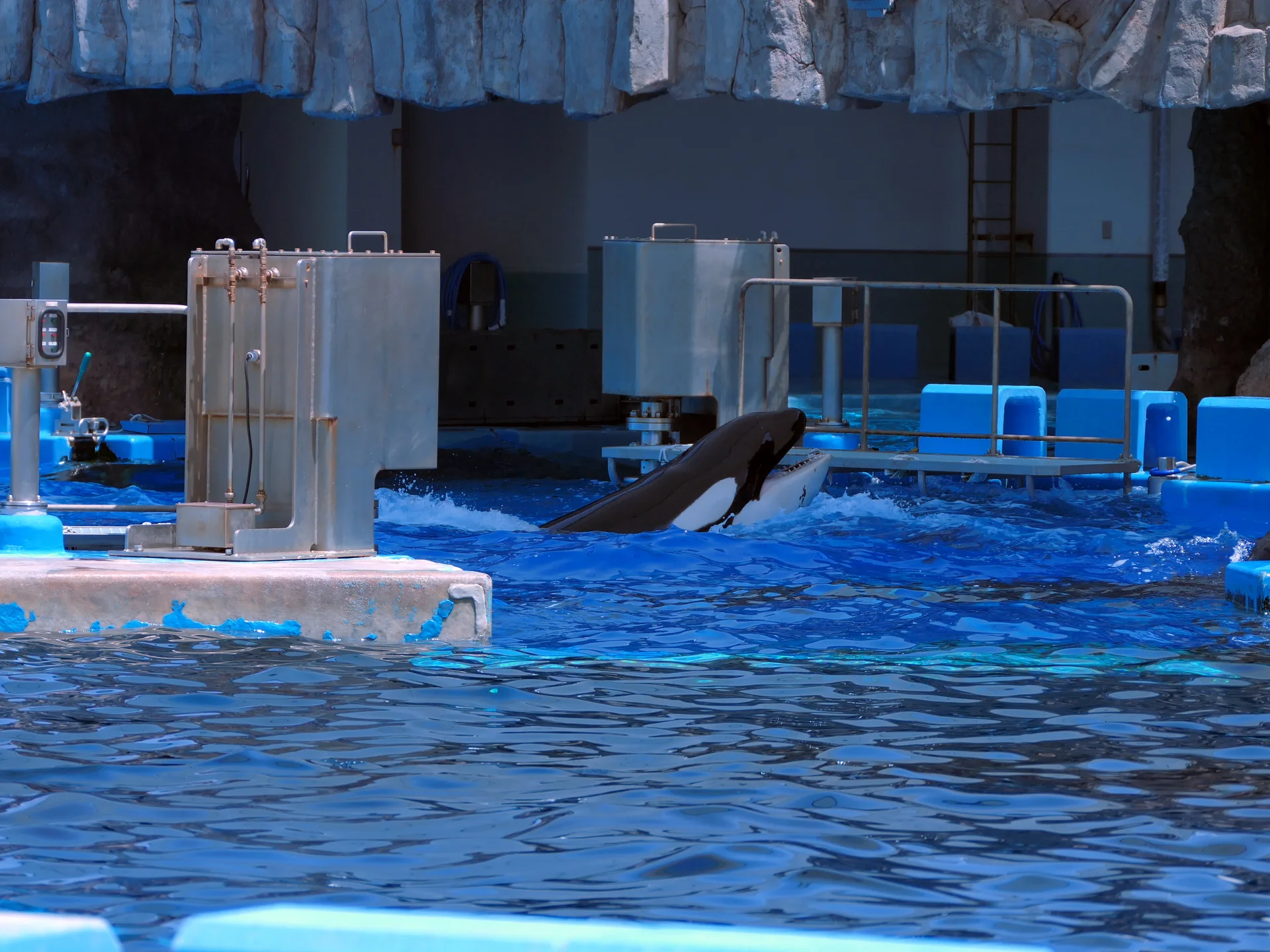
Photo: Hyppolyte de Saint-Rambert / Wikimedia Commons, CC BY 4.0

Schedule the animals first, then fill the gaps
Dolphin performances and orca public training are natural fixed points, but animals and staff needs can change a published activity. The 2026 website also carried news about a beluga calf: after artificial rearing following its 4 August birth, the calf died on 6 September. A pre-September note saying it was simply unavailable for viewing is now out of date. Neither one animal sighting nor a particular training session should be the sole reason for buying a fixed-time port trip.
The exhibits still give the visit a foundation. Choose the one programme your group would most regret missing, then see whether a second falls naturally into the same visit. Between those times, use the North and South Building tanks instead of waiting idly beside a stadium. This is more resilient than copying a sequence of event times weeks before arrival.
The order of choices is short:
Identify one animal programme that matters most.
Add a second only when the day’s timing works.
Use the permanent exhibits for the intervals rather than trying to follow every scheduled item.
If the first-choice activity changes, the ticket still admits you to the wider aquarium. A copied minute-by-minute route has no such flexibility. The day’s event board should inform where to go next, especially when a 15-minute performance is being fitted into a two-hour rather than a four-hour visit.
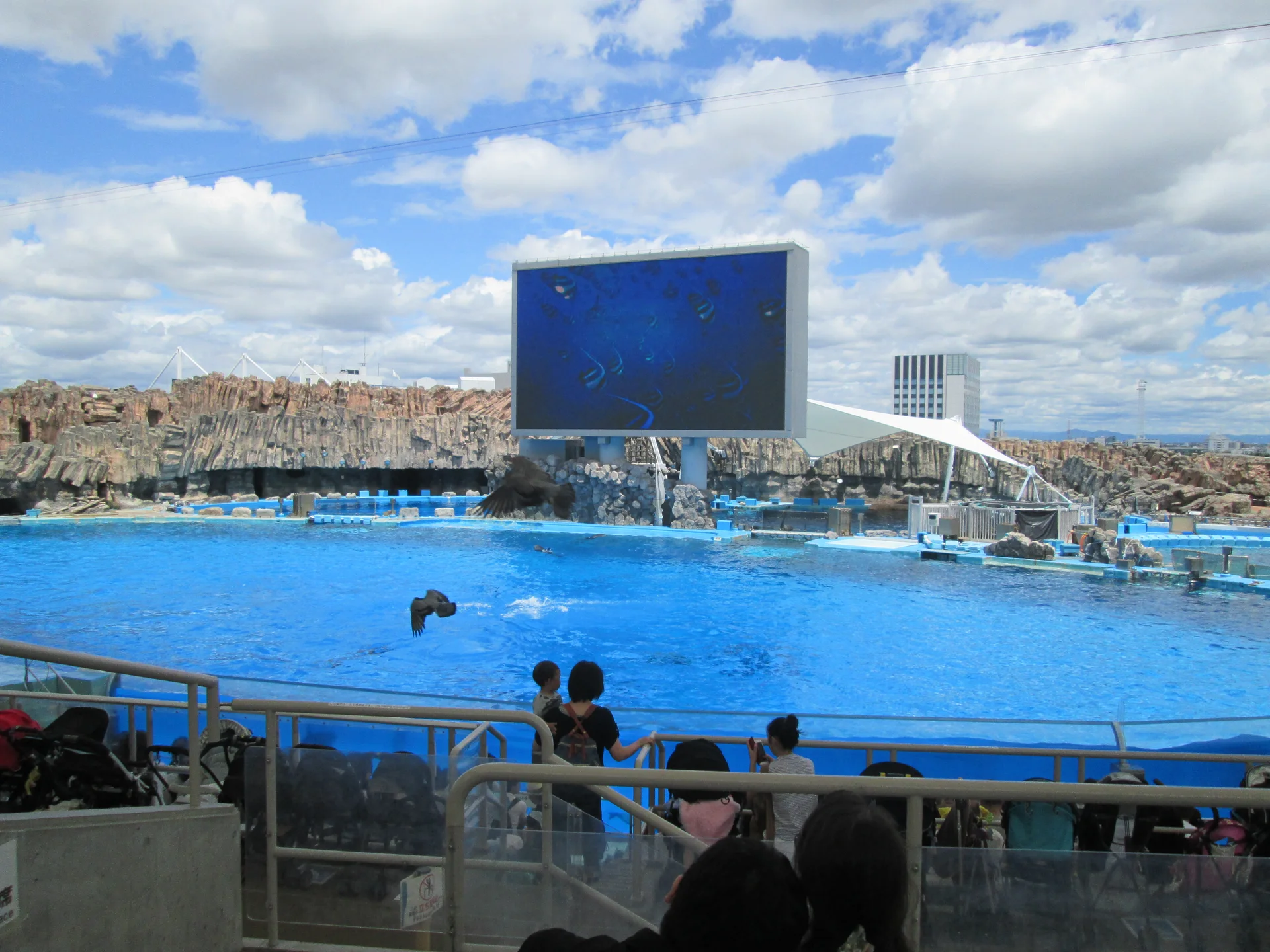
Photo: Maplestrip / Wikimedia Commons, CC0

Re-entry can split a family visit into two comfortable parts
With the transparent stamp provided at the exits, visitors may leave and return repeatedly on the same day. Aquarium re-entry ends one hour before closing, so a late break cannot be treated as an open-ended pause. For a family, this can be more useful than adding another attraction: see the first tanks and programme, go outside for a proper meal or quieter spell, then return for the second part.
That structure suits a child who needs to reset or an older traveller who would rather not remain inside continuously. It can also keep a long lunch from consuming attention that would otherwise go to the South Building. A shorter 17:00–20:00 ticket leaves much less room for the same split, even though the re-entry rule still exists.
The key is to note the final re-entry deadline before leaving the building. On an ordinary 17:30 closing day, one hour before close is 16:30; on a designated 20:00 evening it is 19:00. These are implications of the rule, not separate tickets. Check the day’s hours because the aquarium also uses a shorter winter closing time.
During the 2026 Garden Pier closures, the break should be for food, air or rest. It could not be a museum-and-ship loop through buildings temporarily closed to visitors. JETTY remained a possible dining stop, but the return stamp was valuable even without another paid attraction.
For a group that would otherwise leave early from fatigue, re-entry can make normal admission feel more useful than a tightly packed reduced-price evening. It changes the pacing of the same ticket, not the quantity of programmes guaranteed on a particular day.
Two hours or four? Count the scheduled anchors
The aquarium’s stated baseline is roughly two to three hours for the whole facility including a dolphin performance. That works for an efficient first circuit, particularly when one headline programme and the major tanks are enough. It is an estimate, not a requirement to leave after three hours.
A longer visit becomes useful for a different combination of activities, not merely because the party includes children. Two performances separated by an inconvenient gap, a slow look at the South Building, food or repeated returns to a favourite tank can fill three to four hours naturally.
Two to three hours covers one programme and the major tanks with limited breaks.
Three to four hours supports two programmes, food or rest, and slower exhibits.
More than four hours suits a visitor making the aquarium the day’s main interest or deliberately using re-entry.
Age alone does not predict the duration. One marine-life enthusiast can spend longer at the tanks than a family whose goal is a single dolphin show. The programme times and the group’s appetite for wandering are better planning inputs than a generic “family half day” label.
Leave the large suitcase with your travel route
The aquarium does not offer staffed baggage holding. Lockers near the North Building entrance and connecting passage are listed at ¥400 for extra-large, ¥300 for large and ¥200 for small. Those prices identify locker categories; they do not guarantee that a particular 29-inch suitcase fits or that an empty extra-large compartment will be available when you reach the port.
On a hotel-change day, leave the main case at the accommodation or station if that route works, then carry only what the visit needs. Trying to make the aquarium hold a full transfer load can complicate a simple half day. The better choice depends on where the next train departs and whether a return to the hotel adds a large detour.
A wider multi-city transfer may be easier with luggage forwarding; a local aquarium locker is only a short-term bag solution.
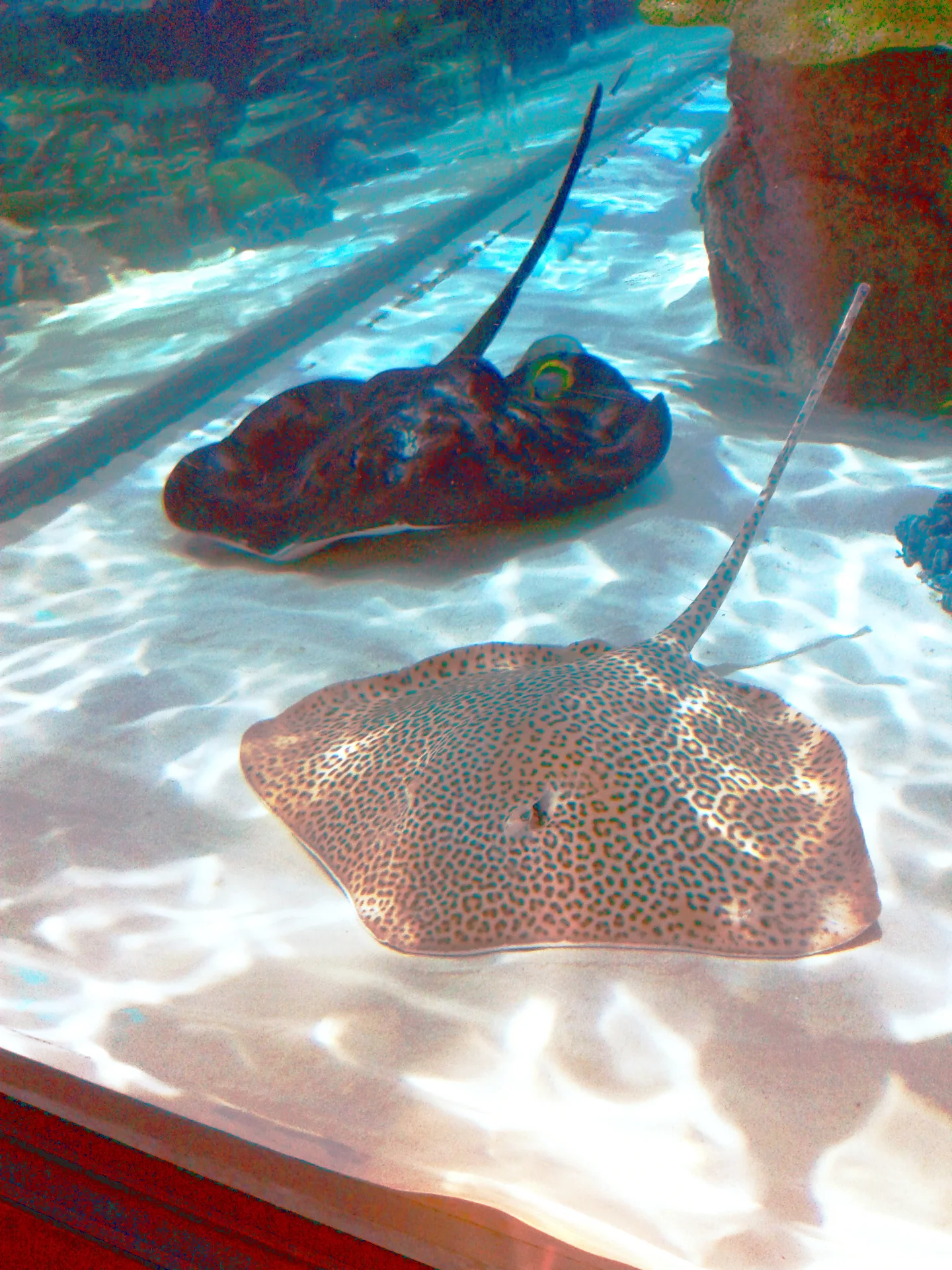
Photo: Maplestrip / Wikimedia Commons, CC0

The subway avoids a parking problem the aquarium cannot remove
The aquarium warned that nearby roads and car parks could be heavily congested on weekends and holidays, and Garden Pier parking arrangements were changing for the 2026 Games. For an ordinary Nagoya sightseeing day, the subway to Nagoyako Station gave a clearer arrival than keeping a rental vehicle just for the aquarium. The short port walk was easier to plan than a queue whose length varied with crowds and road controls.
A car could still belong to a regional trip before or after Nagoya. That is a reason arising from the wider route, not from the aquarium itself. If driving is necessary, the current parking notice and the day’s opening hours both matter; do not assume an old car-park location or entry path survived the temporary Games work.
The comparison changes again if Korankei or another road-dependent outing shares the itinerary. Put the aquarium into a weather-flexible city block and give the rural drive its own congestion margin.
Choose the visit window before comparing sellers
Third-party daytime tickets may suit a preferred app or its purchase terms, but start by deciding whether you need standard daytime admission. The summer after-17:00 fare was a different entry window, not simply another seller of the same day-long product. Ticket restrictions and cancellation terms should be compared only among options that admit you when you actually plan to arrive.
For the 2026 summer programme, someone entering only after 17:00 had a ¥1,620 adult night option at the aquarium counter. Buying a discounted ¥2,030-type daytime ticket would not be a saving if the seasonal evening admission met the visit plan. That example belongs to the concluded 2026 season; the current fee page says night tickets are sold only for designated late-opening periods.
Conversely, a family aiming for two activities and a rest break could rationally pay the ¥410 adult difference for daylight time. The comparison is between the visits available, not two prices detached from opening hours. The cost of a second journey to Nagoya Port could exceed the apparent ticket saving if the first visit was cut short.
When the aquarium is a poor fit
A port detour is harder to justify when Nagoya has only one usable day and another destination is the trip’s real priority. It is also a weak fit for a group with little interest in marine exhibits or animal programmes. The 2026 temporary closures removed the older attraction bundle as a stand-alone reason to reserve a full day at Garden Pier.
Another destination needs the only usable Nagoya day.
Nobody in the group particularly wants marine exhibits or the scheduled programmes.
The plan depends on the older four-attraction Garden Pier bundle during the 2026 closures.
A port detour would put a fixed train or event at risk.
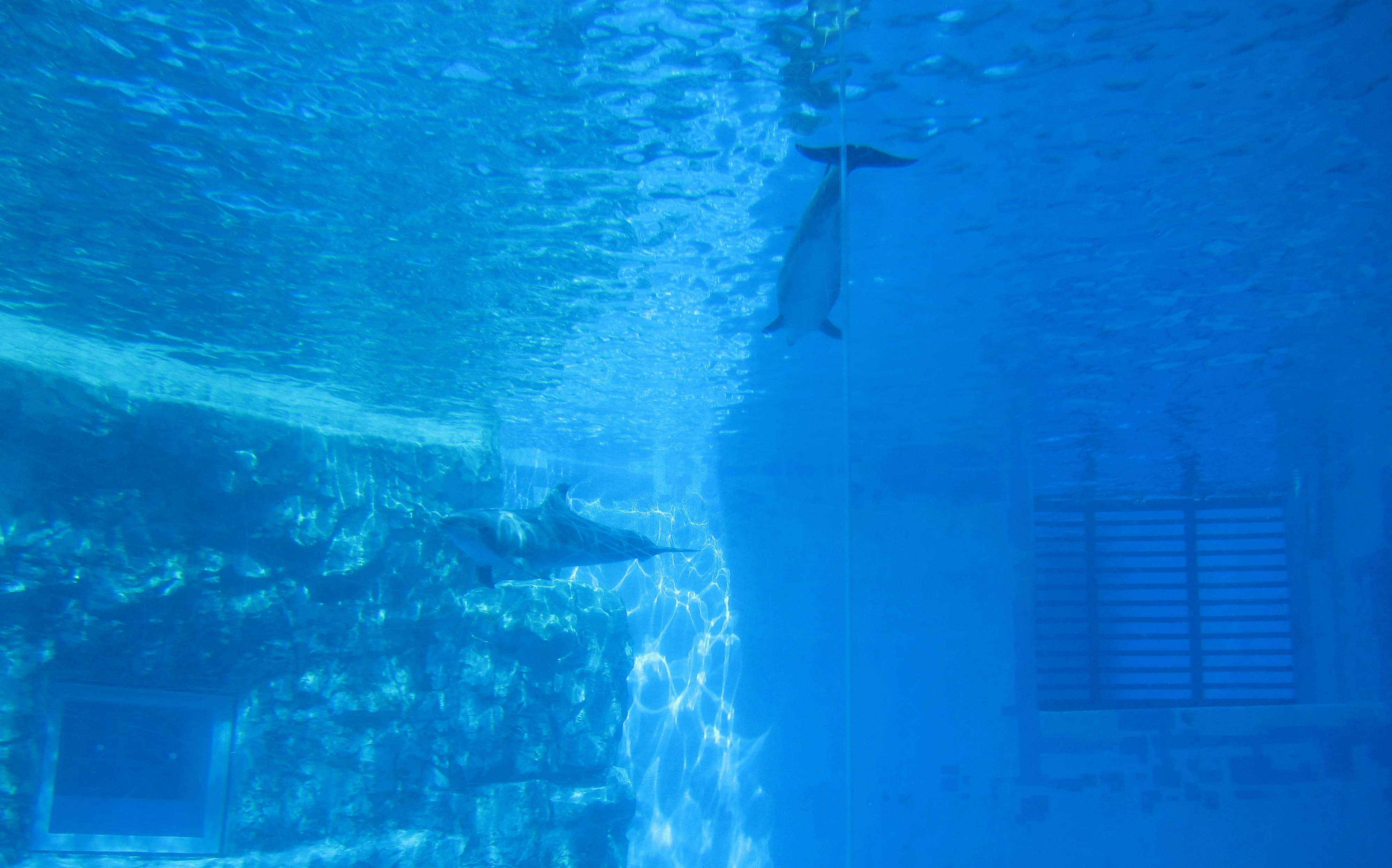
The aquarium remains a useful indoor option in rain or heat and a strong half-day for families or travellers interested in marine life. Its programme provides structure, while the tanks keep the visit worthwhile if one performance changes. The visit is less attractive when it must be wedged immediately before a fixed long-distance train or an event with no timing slack.
If the real dispute is whether Nagoya has time for another destination, compare the Takayama addition to a short Nagoya stay before compressing an aquarium visit into a train-change day.
Photo: カイロス / Wikimedia Commons, public domain

Enough time matters more than the smallest fare
For a first visit involving dolphins and orca training, three to four hours is the safer block. A focused one-program circuit can fit into roughly two to three. The 2026 summer night ticket served people content with a maximum three-hour 17:00–20:00 visit; that season ended on 31 August. A later visitor should use the live calendar to see whether any designated evening opening exists rather than assuming a summer rule runs year-round.
Through 30 November 2026, the Maritime Museum and observation room in Nagoya Port Building, the Fuji Antarctic Museum Ship and Port House were listed as closed while the aquarium remained open. Build the port stop around what is actually available. Re-entry can create a comfortable meal break, and public transport reduces exposure to temporary parking changes.
The sequence is practical: identify the programme and length you want, establish the opening window, then compare the appropriate admission options. A small fare difference is useful when it matches that plan. When it shortens the only aquarium visit too much, more time is the better purchase.
If the aquarium is one stop in a Nagoya stay, compare Nagoya hotel areas around the rail journeys you will use on the other days.