
A Yame tea day starts with a choice of experience. Hoshino is for tasting and learning how shaded tea is prepared. The Central Grand Tea Plantation is for the shape of the growing landscape. A factory appointment is for watching a particular producer's process. All three belong to the Yame region, but they do not sit in one walkable tea quarter. Decide which experience would make the journey worthwhile before plotting a route from Fukuoka.
The geography is the main constraint. Yame City extends into Hoshino and other rural districts, while the plantation and individual producers have their own road approaches. A short workshop can still occupy much of a day once you include the outward journey, a final taxi or bus leg and the return. With a rental car or hired driver, two contrasting stops can fit. Without one, a carefully chosen single destination often leaves more time for tea itself.
A tasting day, a landscape day or a production day
The trip you want | Where to concentrate | What you get | When to change course |
A lesson in brewing and gyokuro | Hoshino Tea Culture Museum | Tea tasting, displays and workshops at one address | There is too little time to make the final road journey worthwhile |
Broad tea-field views | Yame Central Grand Tea Plantation | A hillside panorama and a sense of growing scale | Poor visibility or no workable road transport |
A look at processing | A reserved factory session | A guided production visit on an operating day | Only a tasting is being offered on your date |
Two different experiences in one day | One indoor stop plus the plantation | A contrast between tea making and landscape | The driving and reservation sequence would rush both |
A day without a car | One reachable venue or pre-booked ride | Time to stay with the tea rather than chase transfers | A confirmed driver makes a second stop practical |
The table separates three different purchases of time. A tasting teaches you what is in the cup; a viewpoint explains the scale and topography; a factory can show the work between leaf and finished tea. Combining them can be rewarding when the route is simple, but collecting addresses does not guarantee a deeper day. The weakest plan is a long sequence of transfers followed by a few hurried minutes at each stop.
Hoshino: a full tea visit at one address
Hoshino Tea Culture Museum brings several parts of the subject together. Its exhibition explains cultivation and processing, including the shading associated with gyokuro. There is tea to drink and food on site, with hands-on work available through the workshop programme. That concentration gives the trip a purpose even if you do not add another Yame stop.
General admission is free. The museum opens 10:00–17:00 and normally closes on Tuesdays, except national holidays and the summer vacation period. Those hours leave time for an exhibition and a meal, but a late arrival after the drive from Fukuoka can miss the workshop window, which ends at 15:30. The tea lounge serves shizuku gyokuro from ¥1,000, while the restaurant's lunch service ends earlier than the museum.
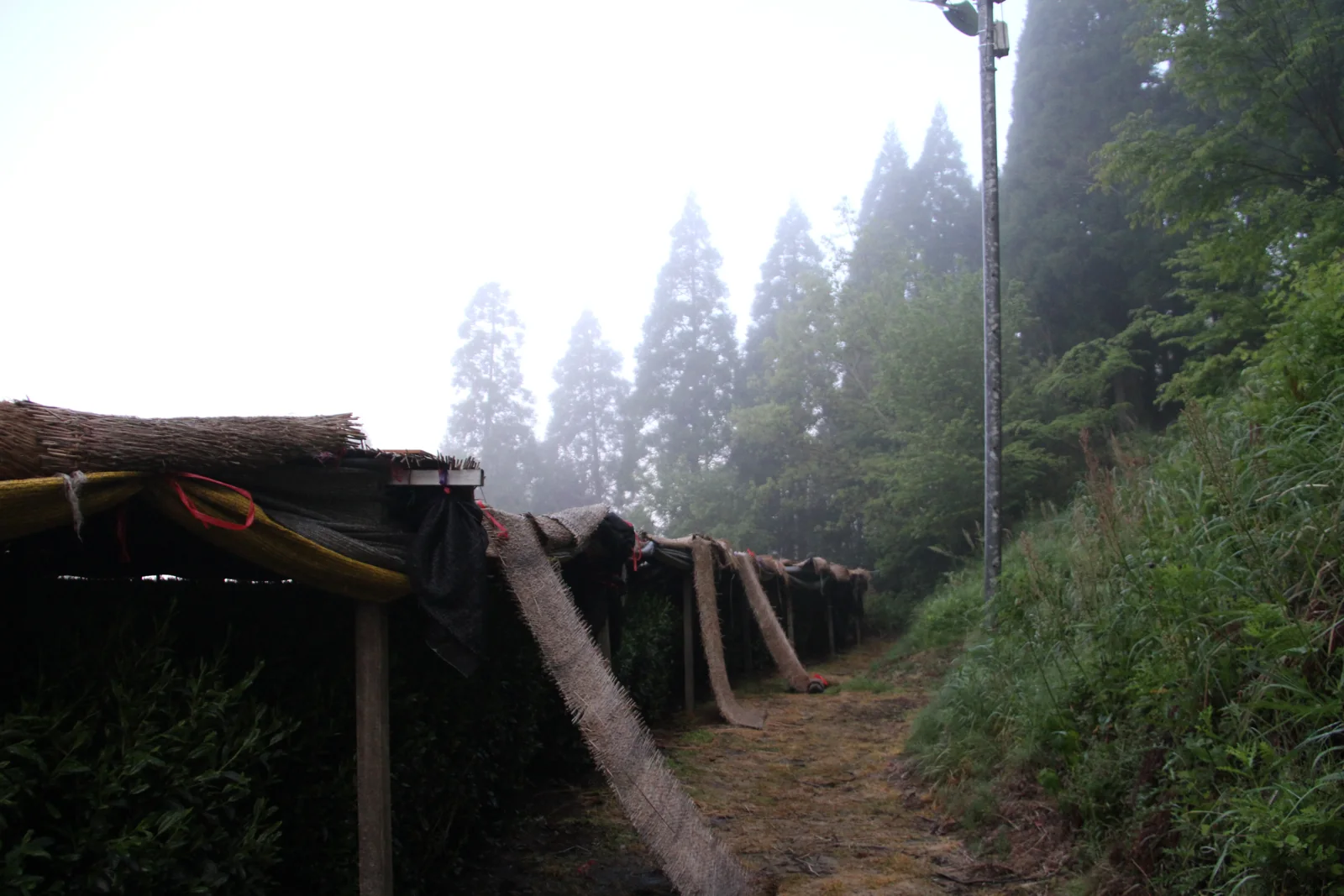
Traditional gyokuro fields elsewhere in Yame show the shading technique that the museum explains. The pictured field is in Yabe, not at the Hoshino museum; it illustrates the regional method rather than the workshop venue.
The workshop is where a casual visit becomes a scheduled one. The current English programme lists stone-mill matcha grinding, hojicha making and hand-rolling green tea. A tasting challenge and a brewing lesson have advance-booking and minimum-charge conditions for smaller parties. These are distinct activities: grinding tencha into matcha is not the same process as rolling sencha leaves, so select the one that answers your curiosity instead of booking any available slot.
Matcha grinding and hojicha making each cost ¥1,000; hand-rolling green tea costs ¥2,000. The hand-rolling sessions begin at 11:00 and 14:00, take no more than eight guests each, and need a reservation at least 30 minutes ahead. The tea-tasting challenge and brewing lesson normally need five participants, with smaller groups charged for five places and reservations at least five days ahead. For two travellers, that minimum changes the real price more than the headline per-person fee.
For a solo traveller or couple, read the group conditions before planning the road journey around a specific lesson. A listed per-person price can be misleading if a small party must cover a minimum group fee. Hand-rolling also has set sessions and limited capacity. Once a workshop becomes the centre of the day, reserve it first and arrange transport to suit that time. The museum's general exhibition can be a more flexible fallback when the workshop you wanted is unavailable.
The museum also has tea rooms that can be booked for lessons or group gatherings. That is a different arrangement from turning up for a public workshop; ask about a reservation if a formal tea-ceremony setting is central to the visit.
Hoshino works especially well when rain makes a hillside panorama uncertain. You still have tea exhibits, preparation and tasting to fill the visit. The trade-off is the last road leg: a free or inexpensive museum entry does not make the journey from Fukuoka short. Give the place enough time that the travel is part of a deliberate tea day, not an elaborate detour for one cup.
The plantation is about seeing the land
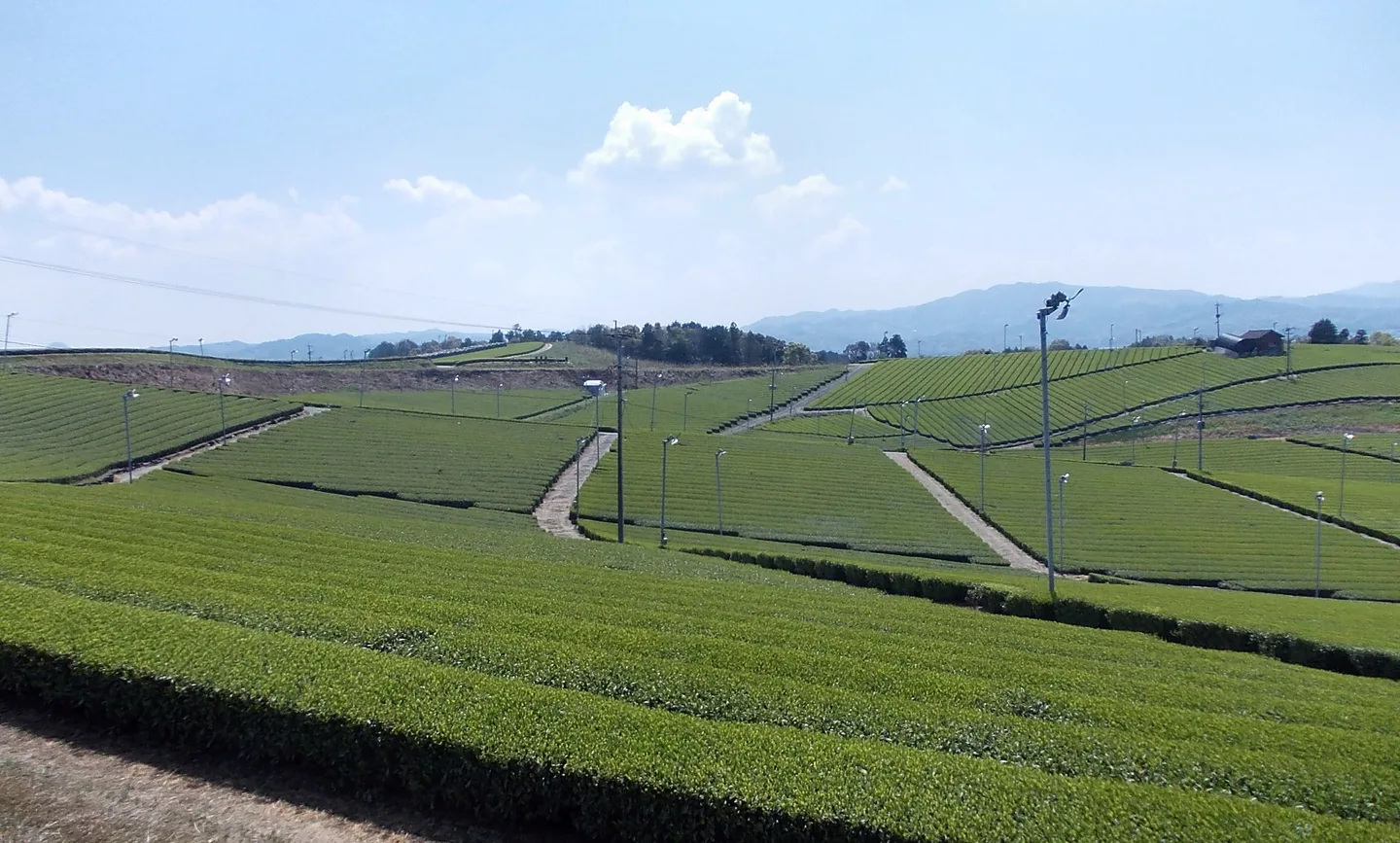
The Yame Central Grand Tea Plantation spreads over roughly 70 hectares of rolling hillside. From the viewing area, the rows make the scale of tea growing immediately legible. That is a different kind of understanding from a tasting room: you can see why cultivation needs land, light, weather and a working landscape around it.
The viewpoint is free and open throughout the day. It sits roughly 25 minutes by road from Yame IC, so the zero-yen entry price says little about the total cost of a car-free trip. In clear weather, the view can reach the Ariake Sea and Shimabara Peninsula. Tea picking normally falls around April to mid-May; a tasting or sale tied to that season still needs to be confirmed for the particular date.
The view has its own conditions. On a clear day, the horizon can extend far beyond the fields; low cloud or rain can flatten the scene you travelled to see. The new-tea period in spring gives the fields another layer of interest, but a seasonal photograph is not a promise of tea-picking or a staffed event on every date. If the weather forecast is poor, pair the viewpoint with a confirmed indoor tea activity or leave it out.
There is no reason to use the plantation as a substitute for learning to prepare gyokuro. Its strength is the landscape, not an all-weather lesson. A driver can link it with Hoshino or another reserved appointment, provided you allow time for rural roads and stop before the museum or factory closes. Without a car, establish the exact taxi or other final connection before treating the viewpoint as an easy add-on.
A factory visit must be a real factory visit
Tea production has a calendar, so a search result for a factory tour does not mean the same activity is available every month. Ushijima Seicha's current programme, for example, offers factory tours mainly on weekdays from January 11 to June 20 and October 1 to December 20, with some new-tea exceptions. It suspends the normal factory route through the hottest summer period. Its summer alternative is an indoor tasting, which is worthwhile for the right traveller but does not show the working process.
That tasting takes roughly 30–40 minutes, much shorter than a production visit. A factory booking needs at least a week's lead time, and the walking route between tea fields and work areas has steps and no seated rest point. It is a poor substitute for a relaxed tasting if anyone in the group cannot manage that route.
The operator has also revised its factory-tour fees for reservations from October 2026. Check the product for your exact date before using an old price in the trip budget. Confirm the meeting point, start time, language needs, whether production will actually be running and what the tour route includes. A tour can teach more than another generic tea tasting, but only when the appointment and content match what you came to see.
Matcha deserves an extra question. Seeing green tea processed does not automatically mean you will watch tencha being ground into matcha. Ask what leaves and machinery feature in the visit. If you mainly want to handle a stone mill and taste the result, Hoshino's matcha workshop is a more direct choice than booking an unspecified factory route.
Build the day around the slowest connection
Plan | Allow for | The part that determines the day |
Central Yame tasting | A half-day block or longer from Fukuoka | The outward and return journeys remain substantial |
Hoshino museum visit | Most of a day if arriving from Fukuoka | The final road connection and workshop time |
Plantation plus Hoshino with a car | A full day with daylight margin | Weather at the viewpoint and the museum closing time |
Three dispersed stops by public transport | Rebuild the plan | Waiting and transfers can consume the hours reserved for tea |
From Fukuoka, a central-Yame appointment and a Hoshino visit have very different last legs. Yame transport information is a useful starting point, but the final calculation is from your hotel door to the named venue at the required time. A bus that reaches a town centre does not by itself solve a road journey onward to a hillside museum or viewpoint.
For a car day, put the fixed appointment first and let the weather decide the order of the open-air stop. If a factory tour begins at 10:00, the visit should shape the morning. If the plantation view is the priority, keep enough flexibility to wait for clearer skies rather than treating the stop as a rigid five-minute checkpoint. Leave daylight for the rural drive back.
For a public-transport day, avoid building the itinerary around three distant points. Each additional transfer increases the chance that a missed connection will erase the only booked experience. Choose a museum, tasting or producer visit that stands on its own, then price a taxi for the last segment if needed. Splitting that cost between two to four people may change the calculation, but include it in the day price before booking anything.
Compare the practical risks, not invented scores
Decision factor | Hoshino museum | Central plantation | Factory visit |
Main reward | Taste and learn in one place | See the landscape where tea is grown | Understand a specific producer and process |
Weather dependence | Most activities are indoors | The view is the principal reason to go | Check whether the visit includes outdoor sections |
Booking dependence | Some workshops need a time or group booking | The viewpoint itself is generally unticketed | A confirmed tour and operating day are essential |
Without a car | Plan the last road leg deliberately | A taxi or driver is usually the practical answer | Depends on the producer address and session |
Best use of the day | A focused tea day or one main stop | Pair with an indoor tea stop on a clear driving day | Build the route around the confirmed appointment |
What to verify | Workshop eligibility and closing day | Visibility and access | Season, fee, route and what is actually shown |
Poor fit | A short gap in a city itinerary | Rainy day with no other tea activity | A date when the factory offers tasting only |
These differences explain why the best stop changes with the traveller. A tea enthusiast who wants to compare brewing methods may spend most of the day at Hoshino. Someone travelling with a car and camera may find that the plantation makes the strongest memory in good weather. A visitor interested in agriculture or manufacturing needs a confirmed producer appointment, not a scenic stop dressed up as a factory experience.
When tea is a minor interest on a first Fukuoka visit, the rural journey may take more time than you want to spend. Buying Yame tea in the city is then a sensible decision, especially if your remaining days already contain other regional excursions. The dedicated Yame day makes sense when tasting, place and production are themselves the purpose of travel.
The booking order that keeps the day coherent
First choose the anchor: Hoshino, landscape or production. Reserve any workshop or factory visit that requires a specific session. Next decide whether you can drive or need a pre-arranged last-mile ride. Only then add a second stop, and only if it contributes something different. A weather-dependent viewpoint is easiest to keep optional; a reserved workshop is not.
Recheck opening days, workshop terms, tour season and road access close to departure. Prices and schedules can move, while the underlying choice remains the same: spend the limited travel day on the kind of tea experience you actually wanted. If the first-choice activity cannot be confirmed, change the route rather than forcing an unrelated substitute into the same long journey.
Where this day fits around Fukuoka
If Yame is one of several rural outings, our Kyushu route guide helps decide which days actually need a car. The Fukuoka self-drive hotel guide deals with the nights before and after a rental-car day. If you plan to stay car-free, use the Fukuoka transport-pass comparison for city travel, while remembering that a city pass will not solve Yame's final rural leg.
Yame also competes for time with easier excursions. The Dazaifu–Itoshima comparison and Yufuin transport guide show different levels of travel commitment. If an overnight outside the city is still undecided, the Fukuoka versus Yufuin night is another useful trade-off. If you have only two or three days in the city, read how many days to give Fukuoka before sacrificing one full day for tea.
For the nights around the outing, start with the Fukuoka hotel-area decision; a room near the right departure route can matter more than an attractive room photograph. The budget-hotel comparison helps if the taxi or rental car has already raised the day cost. A simple early breakfast plan is useful before a fixed morning workshop.
If the Hoshino or factory visit needs an early start rather than a Fukuoka day trip, compare Yame-area stays on your visit date before committing to the last return connection.