
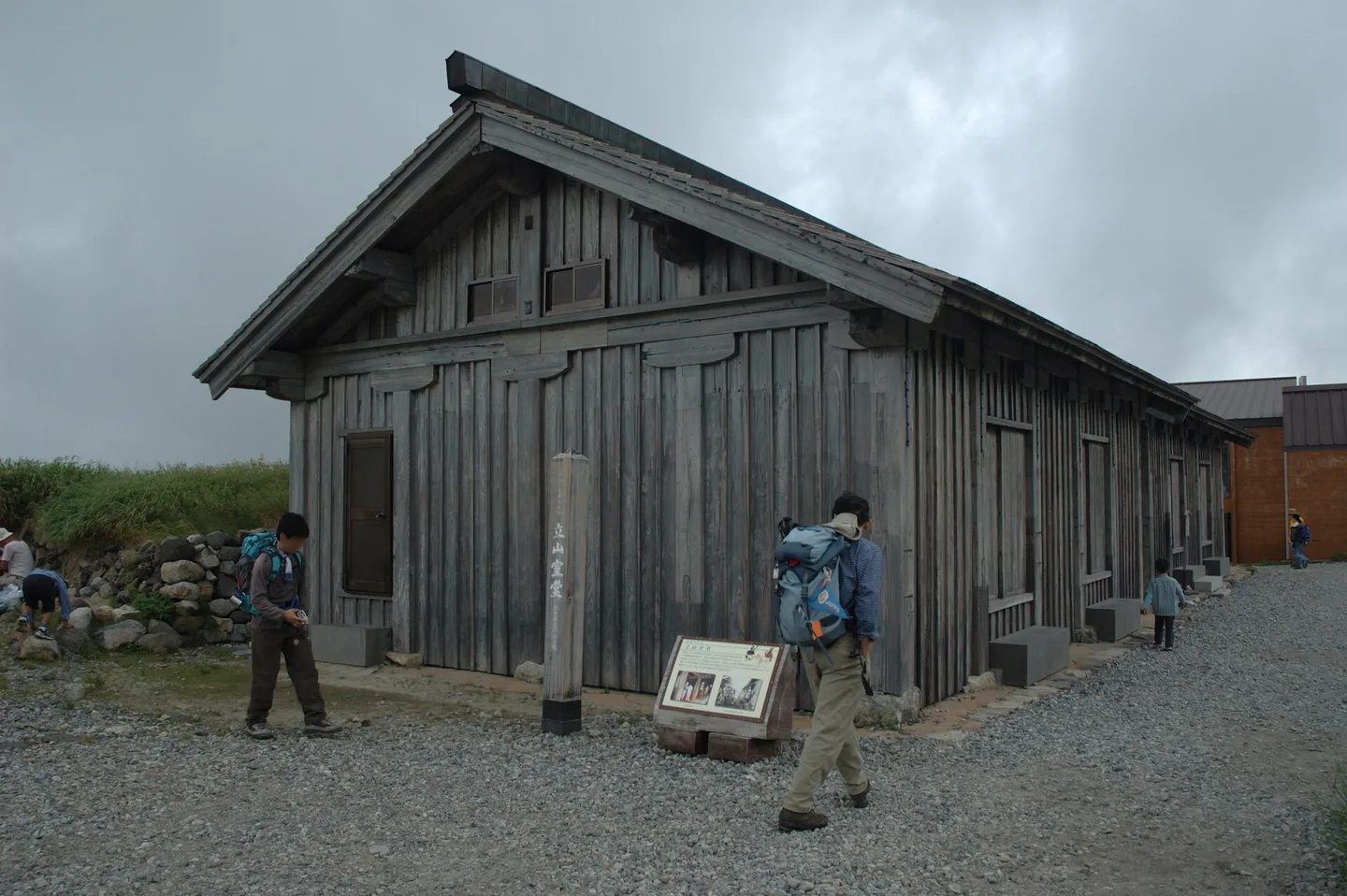
The best reason to cross the Tateyama Kurobe Alpine Route in summer is that the mountain day also moves your trip between Toyama and Nagano. If you need to end where you started, a shorter return to Murodo or Kurobe Dam often gives you more time where you actually want to walk. The route links Tateyama Station and Ogizawa through several vehicles and a dam crossing; it is not a single scenic train. Budget a full day. For a Dentetsu Toyama to Ogizawa journey, the route’s 2026 same-day ticket guidance gives about seven to eight hours, including transport and sightseeing.
Build the day around one substantial Murodo visit, brief Daikanbo and Kurobedaira stops only when the view earns them, and unhurried passage across Kurobe Dam. The direction should follow your hotel sequence. Send a large suitcase around the mountains if the seasonal forwarding endpoints fit; carrying it through the vehicle changes uses the time and energy you need for the plateau.
↔ Scroll table left or right
If your trip is… | Use this route shape | Why it fits |
Toyama or Kanazawa, then Nagano or Matsumoto | Cross west to east | The mountain day also handles the regional transfer |
Nagano or Matsumoto, then Toyama or Kanazawa | Cross east to west | You finish on the side needed for the next hotel |
A visit mainly to Murodo | Return from the Toyama side | The Dam and Ogizawa legs may add little to your goal |
A visit mainly to Kurobe Dam | Return from Ogizawa | Access the dam without a full journey to Toyama |
A crossing with a large suitcase | Use the seasonal forwarding service if both endpoints qualify | Remove the heavy bag from stairs and repeated boardings |
A late morning entry | Reduce stops or choose a shorter return | Sightseeing pauses compete with the last useful onward service |
When a crossing pays for itself
A west-to-east Alpine Route day makes sense after a night in Toyama or Kanazawa when the next bed is in Shinano-Omachi, Nagano or Matsumoto. You see the mountains while making a transfer the itinerary already required. If you cross all the way to Ogizawa and then travel back to Toyama, the final hours repeat ground instead of advancing the trip.
A single-stop goal points toward a return ticket. From Toyama, Murodo is a plausible focus without pushing through the dam. From the Nagano side, Ogizawa gives access to Kurobe Dam without requiring an onward journey to Toyama. The return still needs careful last-service planning, but it can remove several vehicle changes and a distant hotel transfer.
Ask where you would sleep if the dam were removed from the plan. If the answer is still on the other side of the mountains, a traverse is doing useful work. If your next night remains on the departure side, compare the shorter out-and-back journey before buying a full crossing.
What the seven-to-eight-hour estimate contains
The advertised Dentetsu Toyama–Ogizawa planning time of roughly seven to eight hours is an overall journey estimate, not a grant of seven hours on foot. It includes multiple vehicles and the pauses needed to change between them. Add travel to the first route station and onward transport from the last one if your hotels are in Kanazawa, Nagano or Matsumoto.
Write the day as a chain rather than one line on a map. The time can disappear in these places:
the approach from Toyama toward Tateyama Station, or from the Nagano side toward Ogizawa
arrival before your designated first boarding time
queues and changes among the separate mountain vehicles
a Murodo walk, food and facilities
optional views at Daikanbo and Kurobedaira
the walk across Kurobe Dam
a final bus or train from the far end to your hotel
A nine-hour window outside the hotel may leave only a few hours for mountain walks. An extra half hour at a transfer point can be harmless early in the day and costly near the final bus. Find that last connection first, then distribute your available sightseeing time backward.
Murodo is the flexible sightseeing centre
At about 2,450 metres, Murodo offers plateau scenery and walks close to the terminal. In clear summer weather, allow roughly 90 minutes to two hours on a through journey if walking there is the main reason for crossing. This is an editorial planning allowance, not a route-operator minimum or a guarantee that every trail suits your group.
That block covers more than photographs. People need time for a short trail, toilets, food and a check of the next departure. A party that reaches Murodo late should choose one modest walk rather than race through several viewpoints and hope the remaining vehicles line up.
If cloud removes the mountain panorama or rain makes the path unpleasant, leave before the planned two hours are used. The saved time becomes insurance for queues, the dam walk or the final connection. A timetable with movable stops is more useful here than a list that demands equal time at every station.
Daikanbo and Kurobedaira depend on visibility
These two intermediate stops can be rewarding on a clear day, especially for the wide mountain and valley views. Their value changes quickly in cloud. Spending a long interval at both when nothing can be seen can squeeze the dam or the onward train without adding much to the visit.
Use what you can actually see, rather than what a photograph promised months ago:
Open sky: take a viewpoint pause if the next connection still works.
Patchy cloud: look briefly, then favour a useful departure.
No view: use the stop as a transfer and hold time for Murodo, the dam or the hotel connection.
The next departure matters as much as the sky. A brief view that requires missing a timely vehicle may cost more than it gives back, particularly late in the crossing.
The dam is part of the route, not a detachable photo stop
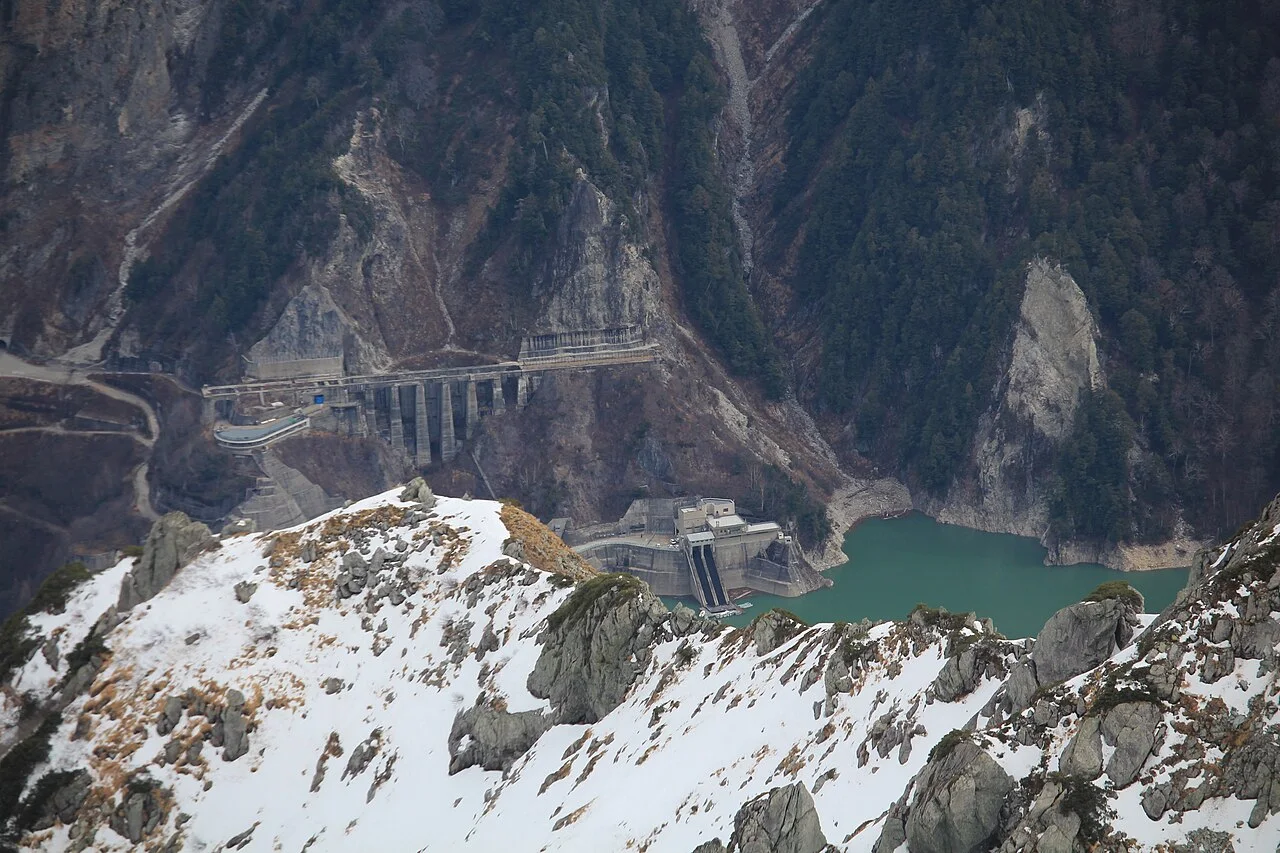
You pass through the Kurobe Dam area between transport modes. Walking is therefore built into the crossing; the viewpoint visit is an addition to that necessary movement. Someone imagining a platform-side photograph will undercount both the distance and the time.
Set aside at least an hour around the dam if you want to cross at a normal pace and include a viewpoint. This is a practical allowance rather than a fixed operator duration. On a tiring or delayed day, omit upper viewpoints first and preserve enough time to reach the next vehicle.
Late arrivals should check the last onward bus before climbing to another viewing deck. One fewer angle of the dam is a small loss beside a missed departure to the night’s hotel.
Which end of the mountains holds your next hotel?
Toyama to Ogizawa works naturally after Toyama or Kanazawa, with the following night in Shinano-Omachi, Nagano or Matsumoto. You reach Murodo earlier in the mountain sequence, which helps when that plateau walk deserves the freshest legs and the largest weather-dependent block.
Ogizawa to Tateyama reverses the logic for a trip coming from Nagano or Matsumoto and heading toward Toyama or Kanazawa. Kurobe Dam arrives early; Murodo falls later, so check the plateau departure and weather window before assuming that the reverse direction creates the same walking day.
A supposed universal “better view” direction is weaker evidence than the location of two paid hotel nights. Avoid a detour across the route and back solely to copy somebody else’s sequence. Pick the direction that replaces the transfer you would otherwise make.
Only the first mountain vehicle has a booked departure
The Alpine Route FAQ identifies designated boarding times for the Tateyama Cable Car from Tateyama Station and the Kanden Tunnel Electric Bus from Ogizawa. A web booking reserves entry on one of those services. It does not assign a fixed boarding time for every later bus, ropeway and cable car across the mountains.
Separate what the reservation controls from what the day still demands:
The entry ticket fixes the departure from Tateyama Station or Ogizawa.
Later transport depends on how long you stop, the operating timetable and any queue.
An 08:00 entry ticket cannot protect a 17:00 onward connection if you spend too long between vehicles. Carry the date-specific timetable and check your position after each substantial stop.
Web inventory and same-day seats are separate
A sold-out web departure does not always mean that every same-day ticket has gone. The Alpine Route FAQ says same-day seats may still be sold, though the departure you want may be unavailable and waiting can lengthen the day. This is a possibility, not a dependable substitute for a booked start.
The risk changes with the rest of your trip. A traveller based in Toyama for two nights can choose another day if the first entry is poor. Someone crossing between prepaid hotels has fewer ways to recover from a late start or no suitable departure.
Reserve ahead when the crossing and direction are fixed. Keep same-day purchase as an option when weather may cause you to cancel the mountain day and your other arrangements can move with it.
A suitcase can go around while you go through
For 2026 the Alpine Route lists same-day baggage forwarding on specified route-side pairs from April 15 to November 8. That season ends before the entire passenger route closes, so a late-November crossing cannot assume the service is still operating.
The cross-route example connects Dentetsu Toyama Station or eligible Tateyama-side hotels with Shinano Omachi Station or participating Omachi Onsen hotels. The listed charge is ¥4,000 per item. Reception and collection hours depend on the handover point, and the service does not make every hotel pair eligible.
The practical gain is fewer heavy loads on platforms, stairs and crowded vehicles. If your day includes a walk at Murodo, carrying only a small day bag can change what your group can comfortably do there.
Baggage forwarding does not deliver to any Nagano city room you choose. Confirm the eligible stations or hotels, hand-in cutoff, payment method and pickup time before relying on it. If those endpoints do not fit, the Japan luggage-forwarding guide explains ordinary hotel-to-hotel shipment; send that bag ahead with enough lead time and carry one small overnight bag.
Stairs and vehicle changes matter for families
The FAQ describes elevators at limited points and recommends a compact stroller because the route has many stairs and transfers. Station wheelchairs are available for support, but a single wheelchair is not carried continuously across every section. Check the specific assistance arrangement needed by your group before treating the whole route as step-free.
For a child, older traveller or anyone with limited mobility, assess the transfers themselves:
the number of separate boardings the group can manage
repeated stairs and station walking
whether the stroller folds quickly for vehicles
how to keep a large suitcase off the mountain route
acceptable standing and waiting time
Reduce optional walking to fit the group, but do not steal the minutes needed for the necessary vehicle changes. A shorter sightseeing return may be the better route if the full traverse would make the transfer count exhausting.
The first stop to cut when mountain weather turns
Murodo can feel cold, wet or windy while Toyama city is comfortable. Carry a warm layer and rain protection even when the lowland forecast looks mild; check the mountain forecast before taking the first departure.
The day also needs one visit you can remove without breaking the route:
Keep a Murodo walk if weather and pace allow.
Shorten a long Daikanbo viewpoint stop first.
Leave Kurobedaira promptly if there is no view.
Allow the necessary walk across Kurobe Dam.
Never count the final onward connection as expendable.
If the schedule slips by 45 minutes, this order tells you what to drop. It is an example of time management, not a claim that every clear-weather plateau walk must last the same amount of time.
A west-to-east day, in workable order
Leave Toyama early enough to reach Tateyama Station, collect any ticket and board the entry departure you actually reserved. The required buffer depends on that day’s rail timetable and your hotel location.
Continue through Bijodaira and the Highland Bus in the morning. Make an extra stop only if it is an intentional part of your route and the later services still fit.
Give the late morning or midday block to Murodo. Choose the walk after seeing the weather, your party’s pace and the next available vehicle.
In early afternoon, decide whether Daikanbo and Kurobedaira merit a viewpoint pause. Move on promptly if cloud hides the scenery or the next departure is the useful one.
Keep a real allowance for the walk and photographs at Kurobe Dam later in the day, then leave for Ogizawa with the bus schedule in hand.
From Ogizawa, take the bus and rail connection toward the hotel already chosen for that night. Searching for a route only after arrival at the terminal risks discovering that the last useful service has passed.
Going east to west reverses the stops, but the time hierarchy remains: one large alpine walk if conditions allow, short conditional viewpoints, an unhurried dam crossing and a firm onward-transport margin.
When the full traverse costs more than it returns
A one-way crossing is hard to justify under these conditions:
the next hotel is near the place you started
only Murodo or the dam interests the group
repeated changes would be too demanding
a late start removes the walking and connection margin
mountain weather makes a long cross-region day unrewarding
A shorter return to one part of the route can then give the group a better day. If poor weather removes the scenery entirely, keep open the possibility of a different day trip. Completing every transport segment is not a benefit in itself.
The useful summer plan
Treat the Alpine Route as a regional transfer when your hotels naturally sit on opposite sides. Start in Toyama after a western stay, or in Ogizawa after a Nagano-side stay. Protect the Murodo walk when conditions are good, make Daikanbo and Kurobedaira responsive to visibility, and leave enough time to cross Kurobe Dam before the final connection.
If Toyama is your departure base, compare rooms near Toyama Station before fixing the first Alpine Route departure: the station area helps an early Dentetsu Toyama start. See stays around Toyama Station.
Book the entry vehicle if the date is fixed, match any baggage forwarding request to eligible endpoints and hours, and know which scenic stop you will shorten first. That combination keeps the day rewarding without asking the mountain weather or several separate vehicles to follow a rigid sightseeing script.
Routes that connect with this crossing
The Chubu five-day itinerary shows how a Toyama start can continue toward Kamikochi and Matsumoto. For a less transfer-heavy mountain day, compare the Kamikochi day-trip guide. An autumn journey has a different foliage and daylight calculation, covered in the Tateyama traverse guide. The Japan luggage-forwarding guide helps when the same-day Alpine Route endpoints do not fit your hotels.
Timetables, tickets and baggage details
Transport hours vary by date. Use the date-specific timetables, same-day tickets and fares, boarding and accessibility questions, 2026 baggage forwarding terms and service announcements for the journey you are buying. Confirm the first and last legs before committing to a hotel on the other side.
Related guides: Tateyama autumn foliage · Fukuoka Tower detour · Furano lavender · Naoshima by e-bike · Japan eSIM setup · Shakotan summer route · Dazaifu Shinko-sai · Japan summer festivals · autumn photography · Sapporo hotels with a car