
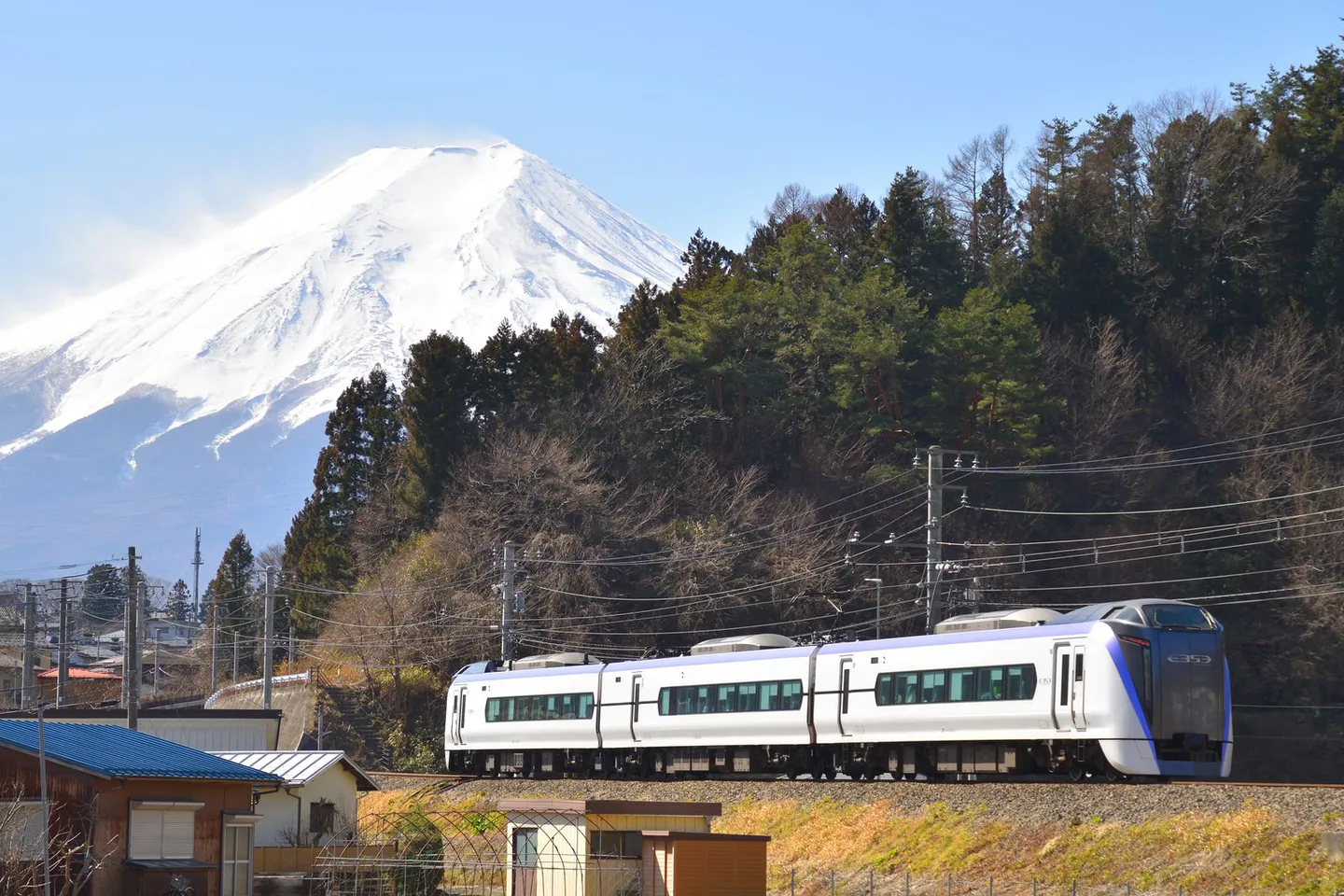
A direct Shinjuku–Kawaguchiko train is easiest to value by the transfer it removes. For a family carrying cases, an older companion or somebody who needs predictable boarding, the Fuji Excursion's through ride can be worth planning a month ahead. For a flexible Mount Fuji view day, committing to a particular train early can be the wrong trade. A sold-out reserved seat search does not close every rail option: JR East sells a seat-unreserved limited-express ticket for Fuji Excursion. It gives permission to use an empty ordinary-class seat, with no promise that you can keep it when its reserving passenger boards. This is a legitimate fallback for some travellers and a poor substitute for adjacent family seats.
The booking also has two fare layers because the train crosses from JR East to Fujikyu Railway at Otsuki. As listed by Fujikyu in October 2026, Shinjuku to Kawaguchiko is ¥4,200 one way: a ¥2,580 basic fare plus ¥1,620 limited-express fee. Confirm what each ticket or pass already covers before paying. A pass valid on JR lines alone does not automatically settle the private-railway portion. The wider Tokyo–Kawaguchiko transport comparison is useful if your main concern is a reliable day-trip plan rather than this particular train.
Start with the reason you want a through train
Fuji Excursion begins at Shinjuku and goes directly to the Fuji area, including Kawaguchiko. The benefit is strongest when Shinjuku is already convenient to your hotel and Otsuki would add an awkward platform change. It can remove a handling problem with luggage, reduce the number of decisions for parents with children, or let a mobility-limited traveller remain aboard. The train's name does not make it faster or simpler if you must first cross Tokyo with cases to reach Shinjuku. A Tokyo Station or Ueno base changes the total journey. Compare Tokyo Station and Shinjuku as hotel bases before moving accommodation to fit one rail departure.
Visibility is the other side of the choice. The mountain can disappear behind cloud even when a ticket was purchased weeks ago. If your dates allow you to choose Tuesday over Wednesday after seeing a useful forecast, a prebooked round trip may take away the flexibility you wanted. An Otsuki connection or a highway bus can sometimes fit a later decision, although a bus adds road-traffic exposure. Do not assume either alternative has unlimited last-minute capacity. For an outing where the value depends almost entirely on clear Fuji views, the day-trip versus overnight question should be settled before choosing a train.
The ticket has a basic fare and an express charge
Fujikyu publishes ¥4,200 for a one-way Shinjuku–Kawaguchiko adult journey, split into ¥2,580 basic fare and ¥1,620 limited-express charge. For Shimoyoshida, the listed total is ¥4,010: ¥2,390 basic fare plus the same ¥1,620 express portion. These are route examples, not a promise about every promotion or later fare revision. The checkout for your exact date and passenger category is where the payable total is confirmed.
The distinction prevents a common mistake. A basic fare lets you travel the route; the limited-express entitlement addresses the train and its seating rules. Some interfaces package them together, while an IC-card, paper basic ticket, limited-express e-ticket or regional pass may cover only part. Do not buy a second fare layer merely because you see two line operators, and do not assume a JR ticket automatically includes Fujikyu after Otsuki. If the booking screen is ambiguous, inspect the receipt's origin, destination, train, date, seat and fare components before leaving the transaction.
| Situation | Action | What remains uncertain |
|---|---|---|
| Travel date fixed; the direct ride matters | Look for both outbound and return reserved seats when sales open | The preferred return may sell out before the morning train |
| Reserved seats full | Compare another departure, a seat-unreserved ticket, Otsuki rail and highway bus | A seat-unreserved ticket provides no fixed seat or adjacency |
| Young children, mobility limits or several large cases | Give confirmed seats and an easy transfer the highest weight | Legal boarding does not guarantee the calm trip you sought |
| Mount Fuji view day can move with weather | Protect a rail or bus fallback before locking a full round trip | Late booking has its own inventory and road risks |
| JR TOKYO Wide Pass holder | Check pass validity and reserve the exact through train | Other Fujikyu premium trains have distinct extra-charge rules |
What “seat-unreserved” actually lets you do
Fuji Excursion ordinary cars are sold as all-reserved-seat service, yet JR East lists this train among those allowing a seat-unreserved limited-express ticket. That ticket states the day and travel section without assigning a specific train seat. You may occupy an empty ordinary-class seat. If someone with the reservation for that seat arrives, move to another free seat or use the deck. The express charge is the same as for a reserved-seat ticket, so you are buying boarding flexibility rather than a discount.
JR East permits a seat assignment without extra charge if a suitable place becomes available before travel. Its ticket guidance says this unreserved-seat product cannot be purchased through Eki-net; use an eligible reserved-seat ticket machine or station sales channel. Do not confuse it with simply standing on the train without a valid express ticket. Ask staff for the correct basic fare and express-ticket combination if your pass or IC card complicates the purchase.
A solo traveller who values the through ride may accept the risk of moving seats. A couple might accept separation. Four family members, including small children, cannot count on sitting together merely because all four hold valid seat-unreserved tickets. In that case a confirmed Otsuki itinerary or another direct reserved product may meet the real need better. The Fuji-Q day plan is another example where grouping everyone under one ticket choice can solve the wrong problem.
| Ticket position | What it provides | Best fit |
|---|---|---|
| Reserved seat confirmed | A specified place on the selected train | Families, groups, older passengers and anyone who needs seating certainty |
| Seat-unreserved limited-express ticket | Use of an empty ordinary-class seat until its reserving passenger arrives; moving or standing may follow | Solo travellers or flexible couples who prize the through ride over a fixed place |
| No suitable direct-train ticket | Choose a different departure or route | Travellers for whom the missing seat defeats the reason for choosing Fuji Excursion |
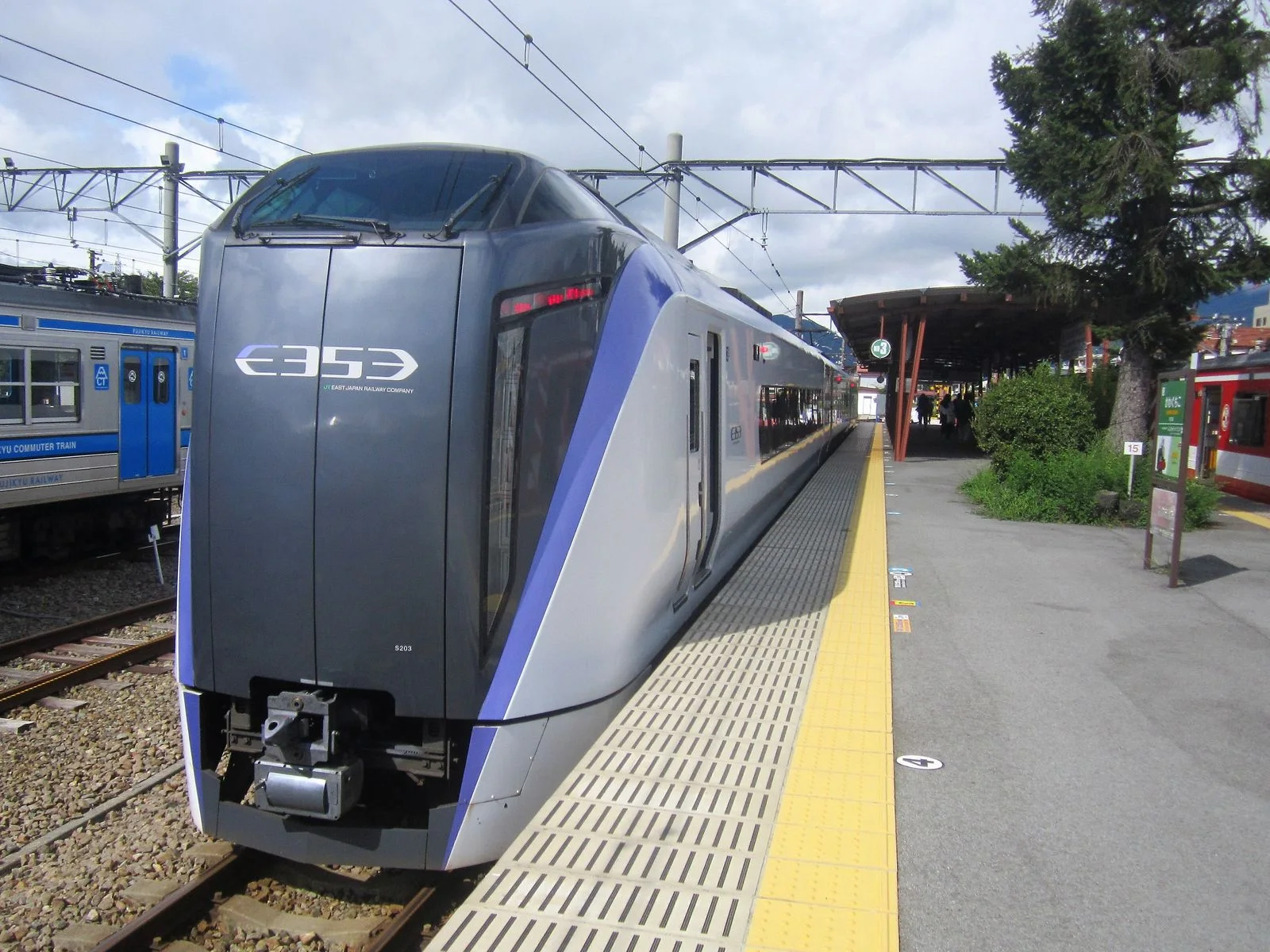
Book the return as part of the same decision
Fuji Excursion seats generally go on sale at 10:00 one month before the departure date through JR East reservation channels, eligible ticket machines and ticket offices, with specified Fujikyu stations also selling them. An international visitor using JR-EAST Train Reservation should select the train, date, section and seats, then check the pickup or ticket-use method shown for that purchase. The four regular daily round trips on the timetable from 14 March 2026 are a service pattern, not a single permanent set of departure times. Seasonal extras can appear on selected dates, including train numbers 81/78 and 93/94, and weekday and holiday patterns can differ.
A fixed-date day trip should be sketched as two journeys before either is paid. Decide the earliest useful Kawaguchiko arrival and the latest acceptable return to Tokyo. Morning departures can be spread across several trains, but many people target a similar afternoon exit after sightseeing. A confirmed 07:30 outbound is not a complete itinerary if the only available return leaves before your main activity. Another outbound with a workable return may be the better booking. Check the current timetable for both directions and do not preserve a screenshot from an earlier month as the authority for a later travel day.
Count the connection after Kawaguchiko too. A north-shore hotel, Oishi Park or a boat trip takes additional local transport; a train departing Kawaguchiko Station soon after the last activity may be unusable. The Oishi Park local-transport comparison makes that last link explicit, while the Kawaguchiko activity plan helps decide how much time should remain after arrival.
JR TOKYO Wide Pass is a specific exception
The JR TOKYO Wide Pass covers all Fujikyu Railway lines within its area as well as eligible JR East travel. Its current adult price is ¥16,000, with ¥8,000 for a child aged six to eleven, and it is valid for three consecutive days. A single Fuji Excursion round trip does not automatically justify that outlay. Compare the other journeys you would make during the same three-day period with their separate fares before calling the pass a saving.
Pass conditions distinguish Fuji Excursion from Fujisan Express, Fujisan View Express and Fuji Tozan Densha, whose specified reserved or premium seats may require extra charges. Do not generalise those rules to every train on the Fujikyu line. Likewise, do not infer that a national rail pass covers the private segment merely because the car is a JR E353. Verify the pass's route and seating entitlement for the exact service, then obtain any seat reservation required for a calm family trip. If the Fuji excursion is one part of a long national itinerary, the 14-day JR Pass calculation addresses a different product and should not replace the Tokyo Wide Pass terms.
Sold-out seats: choose the fallback that preserves your reason for travelling
Try another Fuji Excursion time first, including seasonal services that run on your date. If the direct ride matters more than a guaranteed seat, ask for the seat-unreserved ticket described above. It may preserve the transfer-free journey for a flexible solo traveller; it does not promise space beside a companion, nor a luggage rack. A family that chose this train to reduce uncertainty may find it a poor rescue.
The rail fallback is JR to Otsuki, then Fujikyu Railway to the Fuji area. A limited express such as Azusa or Kaiji can shorten the JR leg when its timetable fits; ordinary Chuo Line services may reduce the cost. The change at Otsuki restores seat certainty when both segments can be booked appropriately, but it adds a platform and luggage transfer. Check the connection time and the Fujikyu departure, not merely the time the JR train reaches Otsuki. Fujikyu publishes an alternative-train plan for fully booked Fuji Excursion services; it is worth comparing with a real-date timetable before choosing a route.
A highway bus also provides a direct journey, although road traffic can upset the arrival or return. It may be better than an Otsuki transfer for an older relative whose main concern is changing trains; the Otsuki rail route may be better than road travel for someone prioritising a more predictable arrival. A guided tour is a separate product if local transport and a fixed sightseeing circuit are valuable. The train, bus and tour comparison puts those costs and constraints alongside one another.
If the outbound is available but the return is unworkably early, reconsider the one-day assumption. A Kawaguchiko overnight has a case when it buys an unhurried first afternoon and a valuable second morning, not when it only shifts a sold-out train problem to tomorrow. Compare one, two and more Lake Kawaguchi nights and view-focused hotel choices if the second morning itself is part of the reward. The station, north-shore and Fujiyoshida location comparison shows why a room near the train is a different purchase from a sunrise view. See rooms around Lake Kawaguchiko for your date only after deciding that the extra night has that purpose.
Luggage and group seating change the ranking
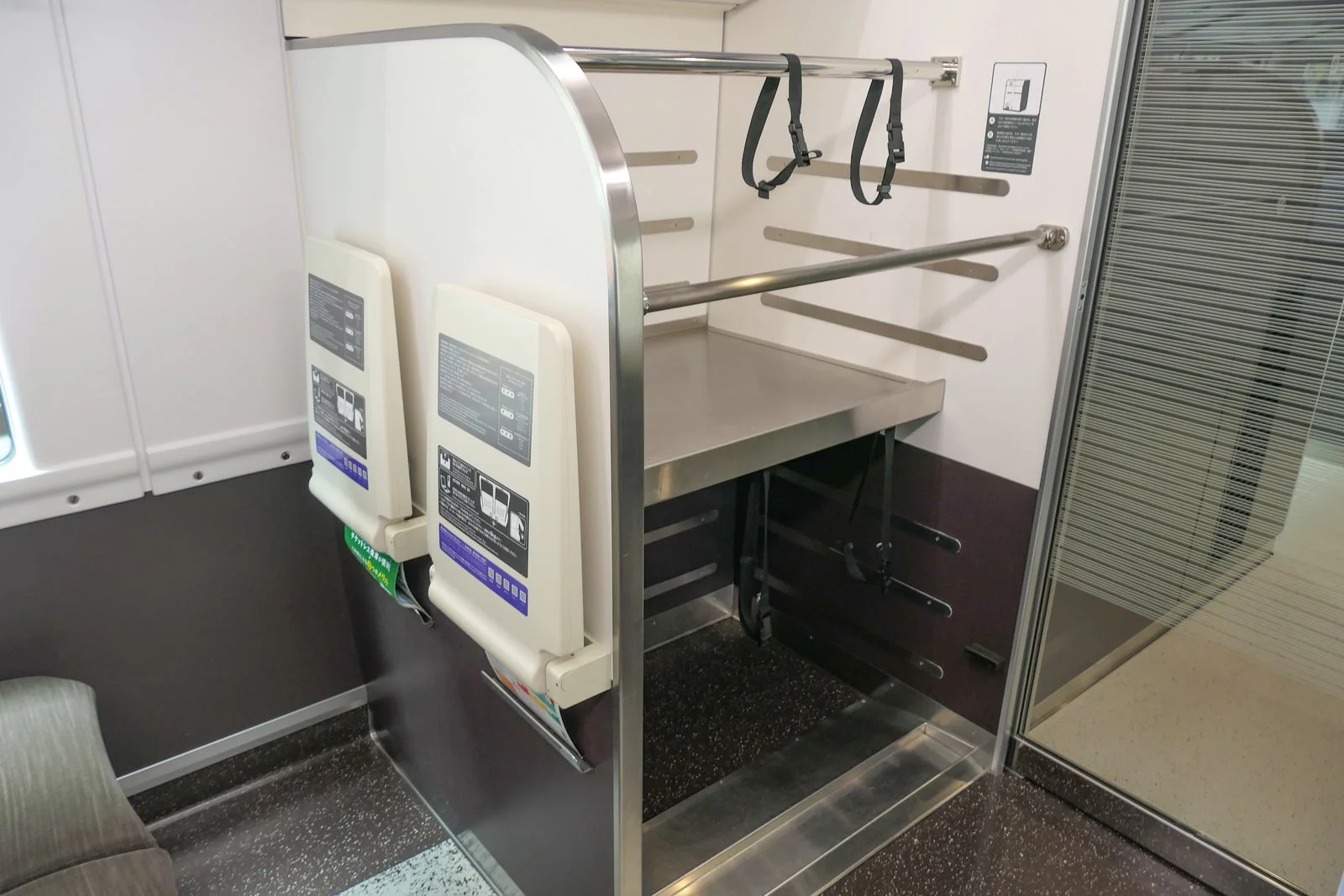
The E353 has shared luggage areas, including the rack shown below, but buying a reserved seat does not assign you a separate suitcase space. A through train reduces the number of times a heavy case must be moved; a seat-unreserved ticket makes the same case harder to manage if you must shift seats or stand in the deck. Count both effects. With two large suitcases, ski equipment or a child who needs a nearby adult, the direct train's value lies as much in a settled place as in avoiding Otsuki.
Before buying, inspect the seat map and confirm that the party has adjacent seats where that matters. A valid seat for each person is not an adjacency guarantee. A solo traveller can take a different risk from a family of four. If you carry only a small overnight bag, the Otsuki change may become easy enough to save the trip when through seats sell out. The luggage-forwarding decision is relevant to a Tokyo–Fuji–Hakone or onward Kansai route, provided the next hotel accepts delivery on the required date. Fuji and Hakone delivery limits deserve attention before relying on a suitcase arriving that evening.
Missed departure and onward travel
A reserved seat belongs to a specified service under the ticket's change and missed-train rules. Do not assume a missed Fuji Excursion reservation grants the same seat on the next departure. Find out what remains valid from the original sales channel or station staff before boarding another train. The option to assign a seat later to an eligible seat-unreserved ticket is useful before departure when inventory reappears; it is not a general promise about missed reserved tickets.
A multi-stop itinerary needs more than a technically possible arrival. If the day continues from Kawaguchiko toward Hakone, allow for the local connection and the final route rather than placing the whole trip on the last fragile train. The three-day Tokyo–Kawaguchiko–Hakone sequence shows where the overnight and luggage choices interact; the rail, bus and pass options for that corridor make the onward transfer concrete. If the choice is between the two Fuji-area bases altogether, Hakone versus Kawaguchiko should come before purchasing a non-flexible out-and-back.
A purchase sequence that survives a sold-out result
First, decide whether a Shinjuku direct train actually saves your group a difficult transfer. Then choose a date and pair the outbound with an acceptable return, using the travel-day timetable. At the published one-month, 10:00 opening, try to reserve both when the date is fixed. Check the ¥4,200 one-way fare example against the live checkout and make sure basic fare, express entitlement and any pass coverage are correctly accounted for. Record the seat positions, not just the transaction number.
If the seats you need are unavailable, do not confuse boarding with comfort. Another Fuji Excursion departure, a seat-unreserved express ticket, an Otsuki rail connection, a highway bus or a purposeful overnight each solves a different part of the problem. For a solo traveller, moving seats may be tolerable. For a family or someone carrying large luggage, a confirmed alternative may preserve more of the intended ease. The best plan is the one whose seat, transfer and return conditions still work after the initial direct-train search comes back full.
Ticket and timetable pages
JR East train reservation · Fuji Excursion timetable and fares · JR East seat-unreserved ticket terms · JR East limited-express ticket rules · JR TOKYO Wide Pass terms
Other Japan trip decisions
Mt Fuji day trip or overnight guide · Edogawa Fireworks 2026: The Best Free Side to Watch, When to Arrive and How to Get Out · FUTURE OF LIFE+ at Takanawa: What Changed from Expo 2025 and How the 45-Minute Tokyo Experience Works · Yamaga Lantern Festival 2026: What Was Cancelled and How Refunds Work · MUWA Niseko Review: When Is Ski-in/Ski-out Worth the Premium? · The Naha Terrace: Are 35m² Rooms and 12:00 Check-Out Worth a 15–20 Minute Station Walk? · Nada no Kenka Matsuri 2026: If You Only Go One Day, Choose Oct 15 · Osaka Hotels for Kyoto and Kobe Day Trips: When 3–5 Minutes to the Station Matter Twice a Day · Japan Autumn Leaves Reservations 2026: What to Book Early and What to Keep Flexible · Kyoto Gozan Okuribi: What the 2026 Viewpoint and Exit Plan Teaches · Things to Do in Tokyo When It Rains: The Best Plan Depends on How Hard It’s Raining · Asakusa Samba Carnival 2026: When to Arrive, Where to Stand and What Not to Bring · Kyushu National Museum Tickets: When ¥700 Is Enough — and When the Special Exhibition Is Worth It · Fukuoka Tower: Is the ¥1,000 Ticket Worth the Detour? Timing Changes the Answer · Arashiyama Guide: How Long to Spend, Which Station and What to Skip