
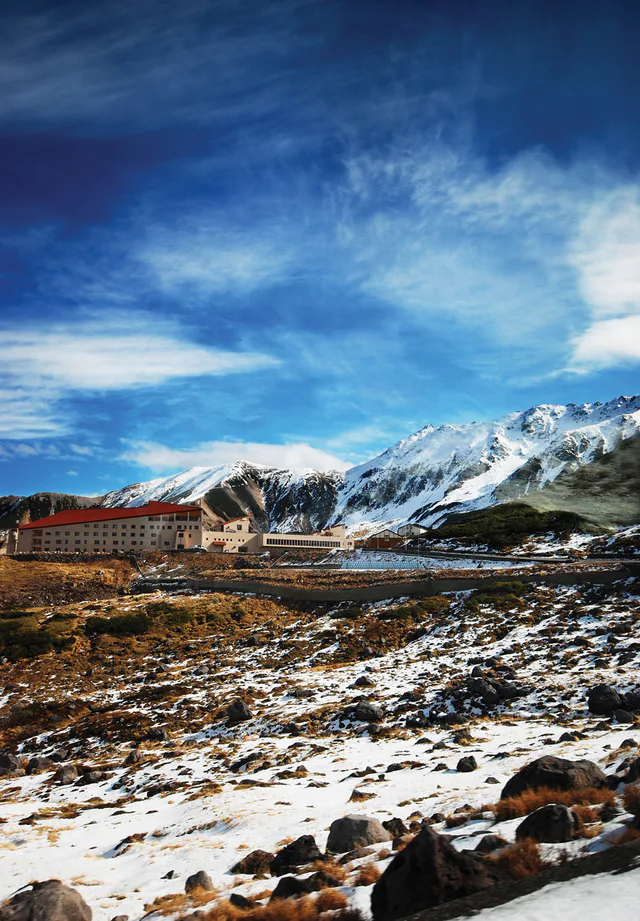
Tateyama Kurobe has no single autumn peak. Between Murodo and Kurobe Dam the route drops by almost a kilometre, so yellow and red colour travel downhill as weeks pass. Murodo may have frost or snow while the ropeway slopes are still bright and the dam is only beginning to change. Set a target elevation for your date first. The separate traverse or same-side return guide deals with crossing direction, luggage and return journeys.
For 2026 travel, the Alpine Route operates from 15 April to 30 November and switches to a different timetable on 4 November. Same-day baggage forwarding ends on 8 November. Kurobe Dam’s sightseeing water release ended on 15 October; autumn colour there continued afterward. These are transport and dam operation dates, while foliage varies by elevation and weather.
Colour moves down the mountain, then the timetable changes
The route spans close to 2,000 metres from its lowest to highest parts, with the broad autumn season usually described as mid-September to early November. Murodo changes early; Daikanbo and Kurobedaira take over in the middle; the dam and lower Toyama-side stations follow. The Japan foliage calendar gives the national context, while the early-October timing guide helps place the early-October mountain window among other regions. Neither replaces the route’s current condition updates. This sequence is useful only when it changes the stop you select. In late September, a high plateau walk can be the main aim while the dam is still green; later in October, the same through-ticket might be better spent looking from the ropeway and taking time around the dam. Carry a second, lower-elevation option for a day when cloud hides the upper slopes. A traveller choosing a single photograph from a past autumn can easily target the wrong altitude for the date.
Murodo can be wintry before the valley reaches peak colour
At about 2,450 metres, Murodo is the earliest main stop to colour and one of the first to feel winter. The operator’s 13 October 2026 note already described some higher plants past peak, although colour remained around the Murodo plateau. An exposed walk is a poor bargain in wind, fog, frost or fresh snow. The summer route guide describes the same transport stages. For a multi-city plan, the Central Japan foliage route helps place this high stop relative to Takayama and Kanazawa without assuming they peak together. Murodo should be planned as an alpine stop even when a city forecast looks mild. A windproof layer, dry shoes and a willingness to shorten the walk matter more than squeezing every viewpoint into one connection. If the plateau is already bare or frosty, the route can still offer a striking mountain day, but it is a different experience from a maple walk. The colour target may have shifted below; use the ropeway and lower stations deliberately instead of waiting on the exposed plateau for a view that weather is hiding.
The ropeway frames the middle-elevation colour band
Between Daikanbo and Kurobedaira, the ropeway reveals the vertical sequence: thinner or snowy upper slopes, coloured middle forest and greener patches below. This is a stronger early-October target when Murodo is fading. The operator’s 13 October report said the upper Tanbo-daira ropeway slopes were already past their best while the view below Kurobedaira retained good colour. For another mountain day built around walking rather than a vehicle chain, compare the Kamikochi autumn walks itinerary. A ropeway view is brief compared with a walking trail, so choose which side of the cabin offers the terrain you most want to see and allow room for a second look at the station. Crowds and poor visibility can change how much of the colour band is visible from a single ride. Daikanbo and Kurobedaira are transport points as well as viewpoints; do not let a long photo stop erase the connection needed for a same-day crossing. If the middle slopes are the purpose of the trip, build more time here and less at an already faded plateau.
The companion Tateyama traverse or return decision sets out the transport direction, full crossing, luggage and overnight base. Here the practical question is which altitude is likely to reward the trip.
The dam becomes more useful after the highest slopes fade
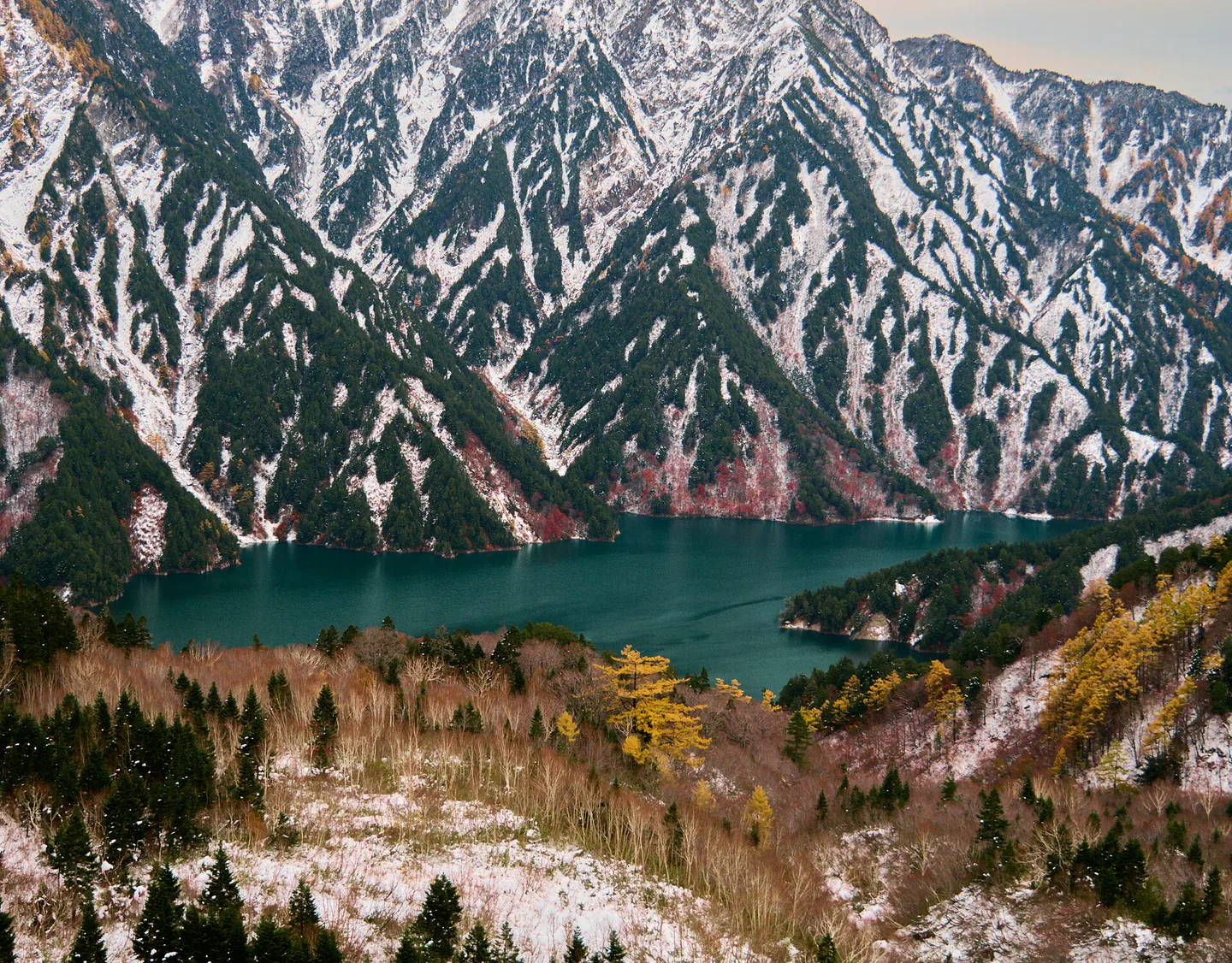
Kurobe Dam is far below Murodo and can keep gaining colour after the alpine plateau fades. On 20 October 2026 the route operator described dam-area leaves at their best, though the sightseeing water release had ended on 15 October. Dam paths still involve stairs, tunnels and long corridors; lower elevation does not mean step-free access. A traveller continuing toward Matsumoto or Kamikochi can fit the dam into the five-day Toyama to Matsumoto route without doubling back solely for a late-season colour patch. The dam also presents two separate reasons to visit: the structure and surrounding autumn colour. The sightseeing water release is seasonal, and in 2026 it ended before the late-October foliage observation. A visitor arriving on 20 October could therefore have good leaves without the dramatic water display. Keep those expectations separate when reading older photographs or hotel marketing. Stairs and tunnels also mean a dam-focused day is not necessarily a low-effort alternative to Murodo; decide how much of the site each traveller can comfortably walk.
A historical window is a starting point, not a same-day report
As a broad historical sequence, Murodo tends to move in the second half of September, the middle slopes from late September into early October, and Kurobe Dam through October. In 2026 the dam was described as near its best on 20 October, after the water release ended. These are observations and typical ranges, not a guarantee for another travel date. The early-October foliage guide adds context before the season, while the mid-November foliage guide and late-November foliage guide are more relevant when the trip has slipped beyond the high route’s main colour.
Approach from the side that matches the next hotel
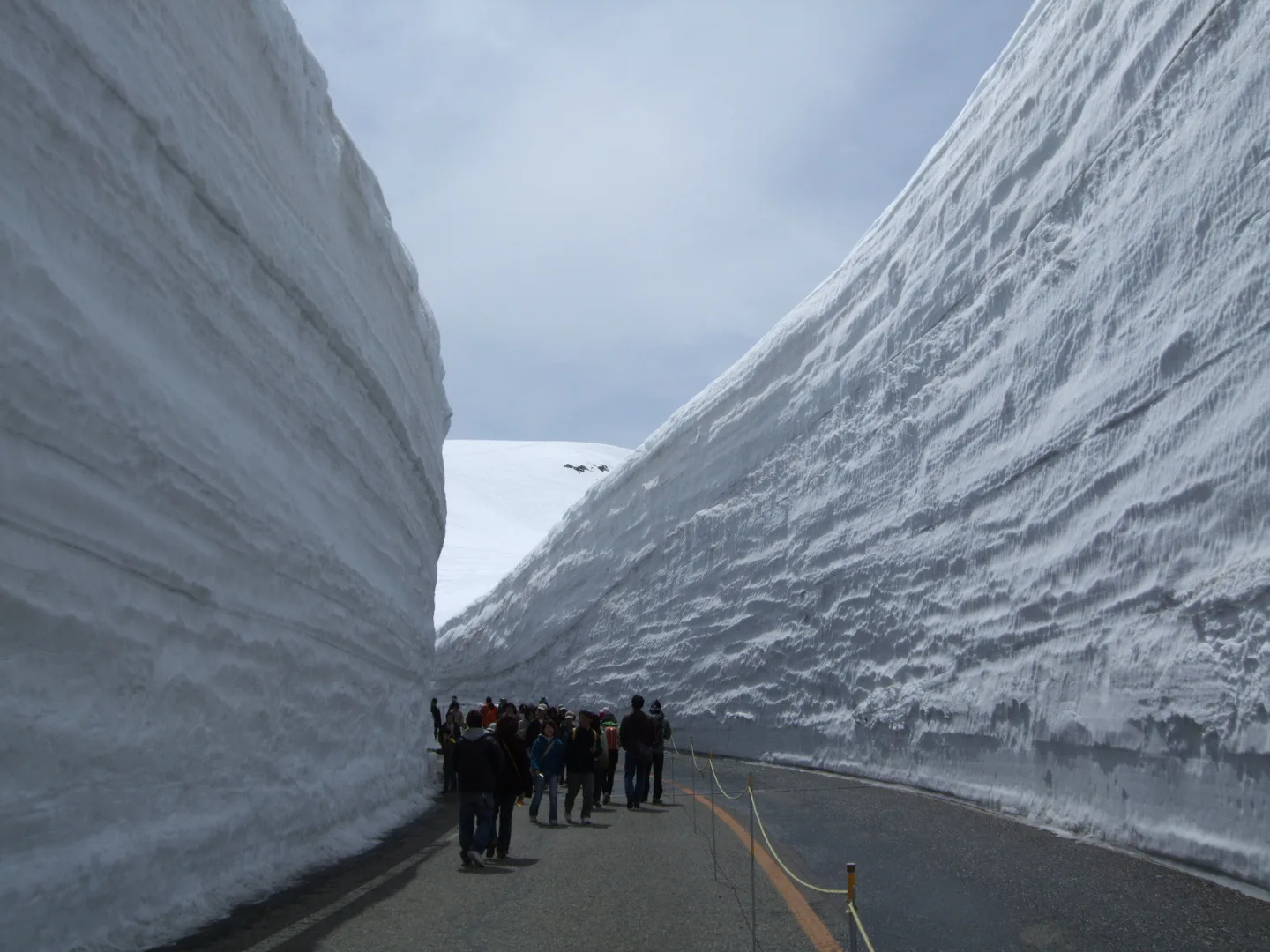
Start from Toyama when the hotel and next train are on the Toyama side and the desired stop is Murodo or the ropeway. Crossing to Nagano merely to return west spends hours without advancing the journey. A one-way traverse fits better when the next city is Matsumoto, Nagano or Tokyo. From Matsumoto or Omachi, Ogizawa is the natural side for the dam and Kurobedaira. The Kamikochi day-trip plan is useful if Matsumoto will also serve a Kamikochi walking day. The approach side can save a hotel move as well as a return fare. A westbound traveller who is sleeping in Toyama after the route may prefer a same-side visit to Murodo or the ropeway, while someone continuing to Matsumoto can use the crossing to advance the itinerary. Work backward from the next bed and last onward train. Luggage forwarding is useful only within its stated dates and handover rules; beyond that window, carrying a case across multiple vehicles can turn a foliage day into a bag-management exercise.
2026 connections, forwarding and reserved departures
The full 2026 transport season runs from 15 April through 30 November.
The schedule changes on 4 November. A late-November trip needs the later timetable rather than an October connection plan.
Same-day luggage forwarding runs from 15 April through 8 November. Tateyama-side to Shinano-Omachi or Omachi Onsen costs ¥4,000 per item; no reservation is needed, but handover cutoffs apply.
A designated boarding time applies to the Tateyama Cable Car when departing Tateyama Station and the Kanden Tunnel Electric Bus when departing Ogizawa. Other stages can still have peak-period waits.
Allow roughly six to eight hours from Tateyama Station to Ogizawa including transfers and sightseeing; the exact pace depends on weather and crowds.
The high route can consume a complete transfer day. If a seven-day foliage trip already contains other mountain journeys, use the seven-day Japan foliage routes to compare whole-route demands. The first autumn region comparison is the earlier decision when the region itself has not been chosen. Separate transport duration from sightseeing time. A six-to-eight-hour traverse estimate already assumes a sequence of vehicles and transfers; meals, queueing for a preferred departure and waiting for cloud to clear can extend it. If the colour is concentrated at one level, a same-side outing may give that stop more attention than a rushed full crossing. If the crossing itself is the travel goal, start early and accept that there may be little energy for another major attraction after reaching the far side.
A bed near the starting side keeps the morning simpler
Toyama Station is a practical base for a western start, with straightforward rail, meals and a place to leave bags. Sleeping at Murodo reduces morning transport pressure but makes weather and limited room availability more consequential. Omachi or Omachi Onsen suits early Ogizawa entry; Matsumoto fits a trip that also includes Kamikochi. Keep the booking flexible while conditions are uncertain. The Central Japan autumn route shows how those beds connect to the larger journey. Toyama, Murodo, Omachi and Matsumoto solve different morning problems. Toyama offers a city base before the western entrance; Murodo puts the high plateau outside the door but makes accommodation scarcer and weather more consequential. Omachi or its onsen area fits the Ogizawa approach. Matsumoto can make sense when Kamikochi or another Nagano-side journey follows. A low room rate in the wrong city may cost the morning colour window through an extra transfer, so compare the first vehicle as well as the hotel itself.
Bad visibility calls for a shorter route
At Murodo, strong wind, dense fog or whiteout is a reason to shorten exposed walking. Fresh snow requires footwear suited to slick ground, and a transport delay may make a same-side return safer than pressing on with a full crossing. If the chosen altitude is too early or too late for colour, examine a lower or higher stop before abandoning the region. For a different mountain day, compare Kankakei Gorge or the walking routes at Kamikochi.
For a Toyama-side early start, compare station-area rooms against the first Alpine Route connection.
Image credits
The Tateyama Kurobe autumn and Kurobe Lake photographs are JapanLayer media originally sourced from Wikimedia Commons / Ka23 13 under CC BY-SA 4.0. The route photograph is a Tateyama Kurobe asset. The date-and-elevation graphic is a JapanLayer illustration and does not show live foliage conditions.
Route information
Read the 2026 Alpine Route ticket calendar for the operating window, the 2026 route timetables for dated connections, baggage forwarding terms for handover points and cutoffs, and the route travel guidance for boarding times and typical route duration.
Related guides: Nikko Autumn Leaves Guide: Foliage Timing from Okunikko to Toshogu · Hakone Autumn Leaves Guide: Foliage Timing from Gora to Lake Ashi and Hakone-Yumoto · Hakodate and Onuma Autumn Leaves: Late Foliage Timing, Transport and Where to Stay · Kyushu Autumn Leaves: Timing Map from Fukuoka to Yufuin, Unzen and Takachiho · Jozankei Autumn Leaves 2026: Day Trip or Overnight? The Foliage Buses Change the Answer · Kyoto Autumn Leaves Guide: Timing Map from Mountains to City · Tohoku Autumn Leaves: Timing from Aomori and Iwate to Miyagi and Yamagata · Japan Autumn Leaves Live Update 2026: Weekly Regional Foliage Status · Japan Autumn Leaves in September: Hokkaido, Alpine Routes and Grass Foliage · Autumn Leaves Day Trips from Fukuoka: Dazaifu, Akizuki, Raizan or Yabakei?
More seasonal routes
Mt. Takao Autumn Leaves Day Trip: Cable Car, Trails and Timing
Tokyo Autumn Leaves Day Trip by Train: Gardens, Ginkgo and Evening Foliage
Japan Autumn Leaves in Early November 2026: What You Can Book Before the Forecast Exists
Koyasan Autumn Leaves Guide: Temple Lodging, Morning Prayers and Access from Osaka
Best Airport for Japan Autumn Leaves: Choose by Foliage Window and Open-Jaw Route