
Tokyo is the most forgiving base for a first independent autumn trip of five to seven days. One hotel can support city gardens, a ginkgo walk, a higher day trip and a rainy museum day without turning each change of weather into a luggage move. Kyoto is the stronger answer when temple foliage and historic streets are the main reason for travelling. Hokkaido and Tohoku belong earlier in the season and reward travellers who want mountain landscapes enough to plan around fewer buses and colder days.
For 2026, there is now a published forecast rather than the absence of one described in the earlier version of this guide. The Japan Weather Association's October outlook says colour is generally near or later than normal, with some northern mountain areas earlier. Japan Meteorological Corporation's published forecast likewise places some lowland city colour later. These are regional forecasts, not promises for a temple or gorge on a booked date. Choose a corridor that can absorb a timing miss, then check live local conditions near departure. The month-by-month foliage guide narrows the first decision.
↔ Scroll table left or right
| Main reason for this trip | Region to price first | Useful fallback | When to choose elsewhere |
|---|---|---|---|
| First independent Japan trip with mixed interests | Tokyo | Rail trips, gardens, museums and food districts from one hotel | Travelling too early for Kanto lowland colour with mountains as the sole goal |
| Temples and traditional streets in autumn | Kyoto | Different city corridors and evening visits | Walking or crowd tolerance is limited |
| September or early October alpine colour | Hokkaido | Onsen, towns and lower elevations | Expecting Tokyo-style city sightseeing every evening |
| October gorges and mountain foliage | Tohoku | Gateway towns and rail-based alternatives | Unwilling to protect a scarce final bus |
| Alps plus historic towns over a longer route | Chubu or Hokuriku | Two-night bases as elevation changes | Only four or five days or aversion to moving luggage |
| Late-season food and onsen journey | Kyushu | Complete regional trip if one foliage day is weak | Tokyo and Kyoto landmarks are still the real first-trip aim |
What a first trip needs when the leaves miss their forecast
A destination's best photograph is a poor measure of how the whole booked week will work. Four practical questions matter more. Can you move to a higher or lower nearby spot if colour is a week off? Is there another reasonable departure after a missed train or bus? Would rain still leave a good day? Can the same hotel support those alternatives? Tokyo scores well across all four. A spectacular remote gorge can still be the right choice, but its final bus and weather window need more deliberate protection.
The answer also depends on whether foliage is the whole holiday or one element of a first visit. A traveller who wants museums, neighbourhoods and an occasional maple day should not use the same route as someone photographing high mountain colour at dawn. The seven-day regional routes show what committing to one corridor looks like; the airport comparison helps avoid landing far from the season you are chasing.
Tokyo: several responses to one imperfect week
A Tokyo hotel can remain useful even if the city trees are behind schedule. Cooler or higher trips to Okunikko, Mt Takao, Kawaguchiko or Nagano can move up the calendar when conditions support them. If city foliage is already attractive, gardens, parks and ginkgo avenues avoid a long transfer. When wind or rain makes an outdoor excursion poor value, a museum, shopping district or food neighbourhood still gives the hotel night a purpose. Tokyo's train-based foliage days and Mt Takao's access choices can be held as alternatives rather than booked as fixed daily obligations.
The Tokyo neighbourhood should follow the repeated expensive movement. Shinjuku often suits western buses and day trips. Tokyo Station is stronger for Shinkansen and eastern or northern rail days. Ueno can work with Narita and northern Tokyo plans. The first-time Tokyo hotel-area guide puts airport arrivals beside day-trip direction. A single well-placed room matters more than changing hotels because one park turned red early.
Five to seven days without a car, or a group with children and older relatives, are strong cases for Tokyo. It loses that default position if the fixed dates sit in September or early October and the only real aim is mountain foliage. Kanto's lower city sites will not become an alpine season merely because Tokyo is easy to reach. Hakone versus Kawaguchiko helps distinguish a Fuji-area detour from an ordinary urban leaf day.
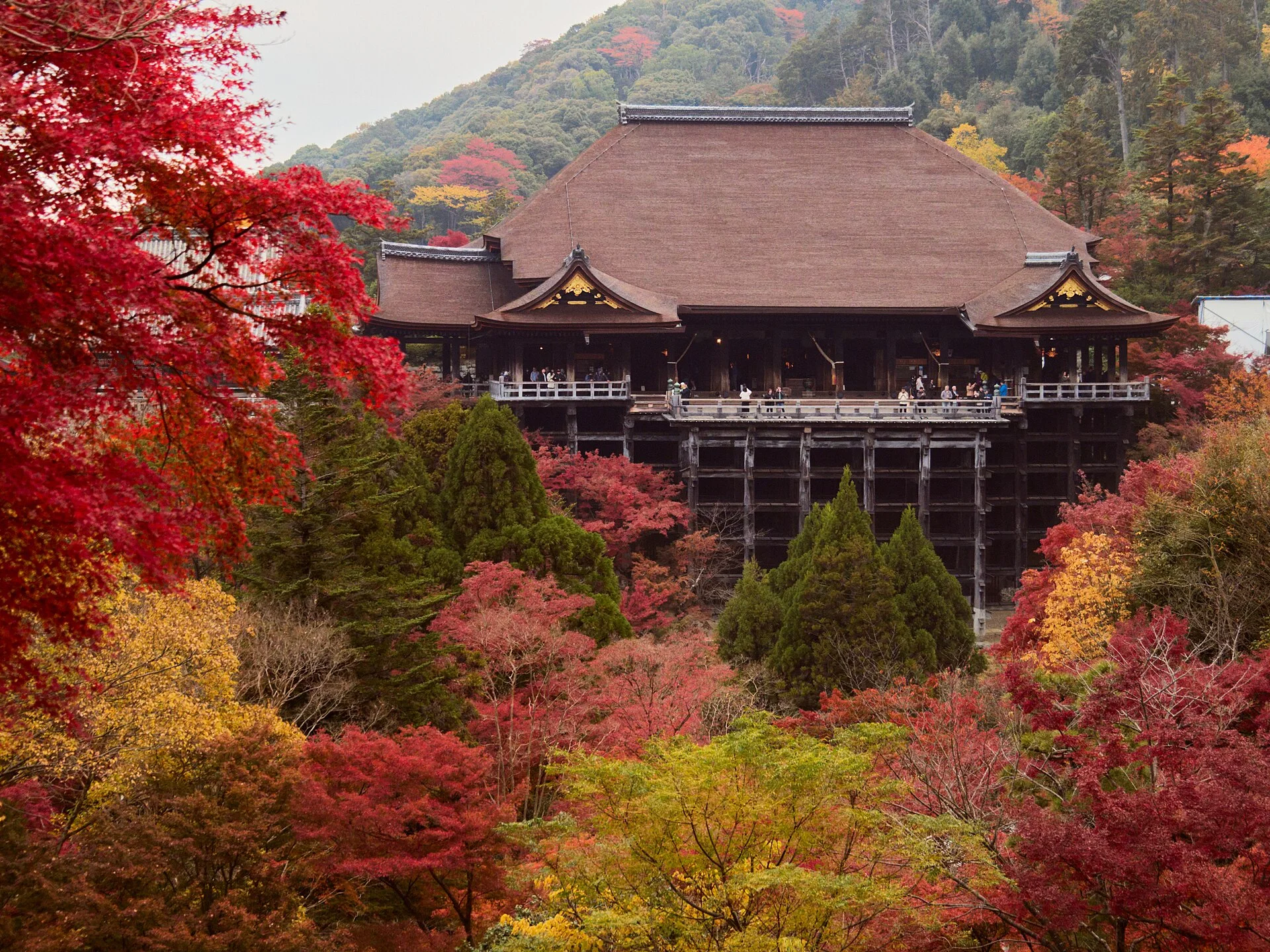
The Kiyomizudera photograph shows why Kyoto can override Tokyo's flexibility when the actual dream is a temple framed by maples. It also illustrates a concentrated attraction: many visitors want the same view.
Kyoto: a denser foliage day has a crowd cost
Higashiyama, temple gardens, Arashiyama and evening illuminations give Kyoto a collection of autumn settings within one city. If that is the trip's central image, choose Kyoto and make the rest of the itinerary serve it. Book a sensible base early, then organize each day by one geographical corridor rather than treating all famous sites as a short walk on a map. Arashiyama in the morning followed by Kiyomizu and a distant evening opening can become a day of buses, queues and fatigue.
Kyoto's tourism office publishes area- and time-specific congestion forecasts and live cameras. They are useful for deciding when to move a visit, although they do not eliminate crowding. The Kyoto crowd route guide builds around rail corridors and early starts; three days in Kyoto gives each day a distinct part of the city. Kyoto Station versus Gion matters when the return trip after an illumination is part of the daily cost.
For people who dislike dense crowds, long standing periods or uncertain bus time, Tokyo may deliver a better whole week even if Kyoto offers more classic autumn scenery. Kyoto works best when the temple walks justify that effort and there is enough time to keep the schedule narrow. The 2026 forecast's later lowland tendency makes a mid-November trip especially dependent on site-level colour reports rather than a fixed city-wide peak date.
Hokkaido: the early season needs more than a Sapporo hotel
Hokkaido suits September to early or mid-October travel when mountains, onsen and landscape photography outrank Tokyo and Kyoto landmarks. But Sapporo, Asahikawa, Daisetsuzan, Biei and southern Hokkaido are different route pieces. New Chitose gives a broad flight network and easy Sapporo access; Asahikawa shortens ground travel toward Daisetsuzan. Even after a good intercity connection, the last mountain bus or ropeway can decide whether a day is possible. Asahikawa Airport's Asahidake bus information notes that the bus is not arranged to connect with flights, a detail a neat map can hide.
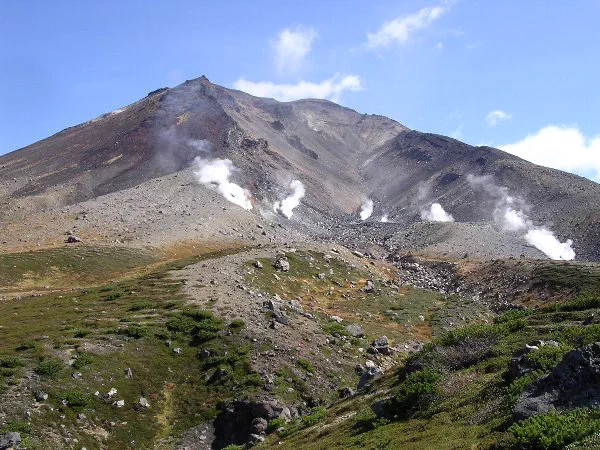
The Asahidake photo shows a rocky summit and steam vents, with very little visible colour in the frame. The mountain setting is relevant to an early Hokkaido route; the image itself is not evidence of a peak foliage date. Asahidake versus Kurodake compares access and the kind of mountain day each supports. Six Hokkaido bases shows why one Sapporo hotel cannot efficiently reach every early-colour site.
Use a weather-led sequence and accept colder mornings. A car can reach some dispersed places but adds its own responsibilities; five days by car or transit makes the trade-off explicit. Hokkaido is a good first Japan trip for someone who actively wants nature and is comfortable making that the main product. It is a weak automatic recommendation to a group expecting dense city sights and uncomplicated evening dining every day.
Tohoku: a fast rail gateway does not supply a final bus
Oirase, Hakkoda, Naruko and Yamadera can each support a memorable October journey, but they do not sit around one interchangeable hotel. Shinkansen service can make the regional gateway straightforward while a rural bus, road opening or accommodation location decides the day. Confirm that scarce last connection before optimizing a rail pass or adding another gorge. The autumn rail-pass guide separates ticket value from whether the final local transport exists.
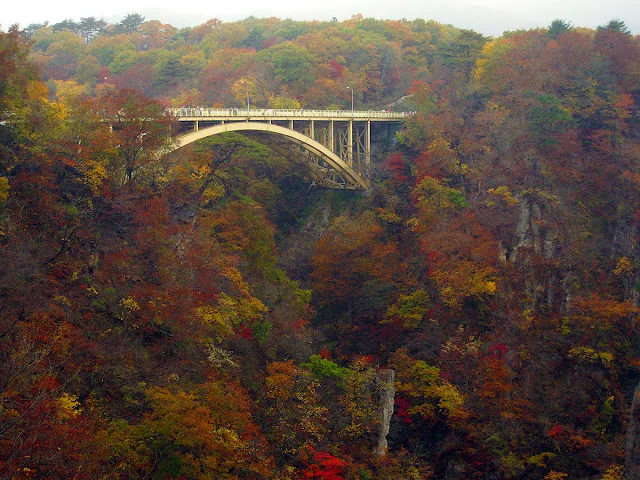
The Naruko Gorge image shows a bridge above mixed red, orange and green trees. Its remote geometry is the point: a successful day requires an actual return plan. Hakkoda's ropeway and weather choices and Hachimantai's road and bus limits show the different transport tasks behind the label “Tohoku autumn.”
Choose Tohoku when October mountain colour and quieter gorges matter more than major-city evenings, and when fixed transport can be protected. “Less crowded” alone is not enough reason for a first visit if a missed bus would erase the day's main purpose. A gateway town or onsen stay should be worthwhile even if clouds obscure the intended view.
Central Japan and Kyushu answer different timing problems
Chubu and Hokuriku can trace colour down from the Alps through Takayama, Shirakawa-go, Matsumoto, Kanazawa and lower valleys. This is rewarding over seven to ten days for someone who likes route design, but each hotel move should create at least two useful blocks: perhaps an old-town evening and a mountain departure next morning. Moving bags for one attraction and immediately backtracking often spends more time than the foliage earns. The elevation-based Central Japan route helps set the sequence. The Tateyama Kurobe Alpine Route's published 2026 season ends 30 November, so a December plan cannot rely on it as an elevation fallback.
Kyushu is a later-season answer for someone who would still enjoy Fukuoka, Beppu, Yufuin, Nagasaki or Kumamoto if one maple day disappoints. Onsen and food are genuine substitutes, not consolation prizes added after the fact. Fukuoka makes a useful northern gateway but is a poor base for repeatedly commuting to Yufuin, Kuju, Takachiho and Unzen in different directions. Let the next day's hard transport determine the hotel order. Kyushu's timing map and five- versus seven-day Kyushu routes turn that into a realistic journey.
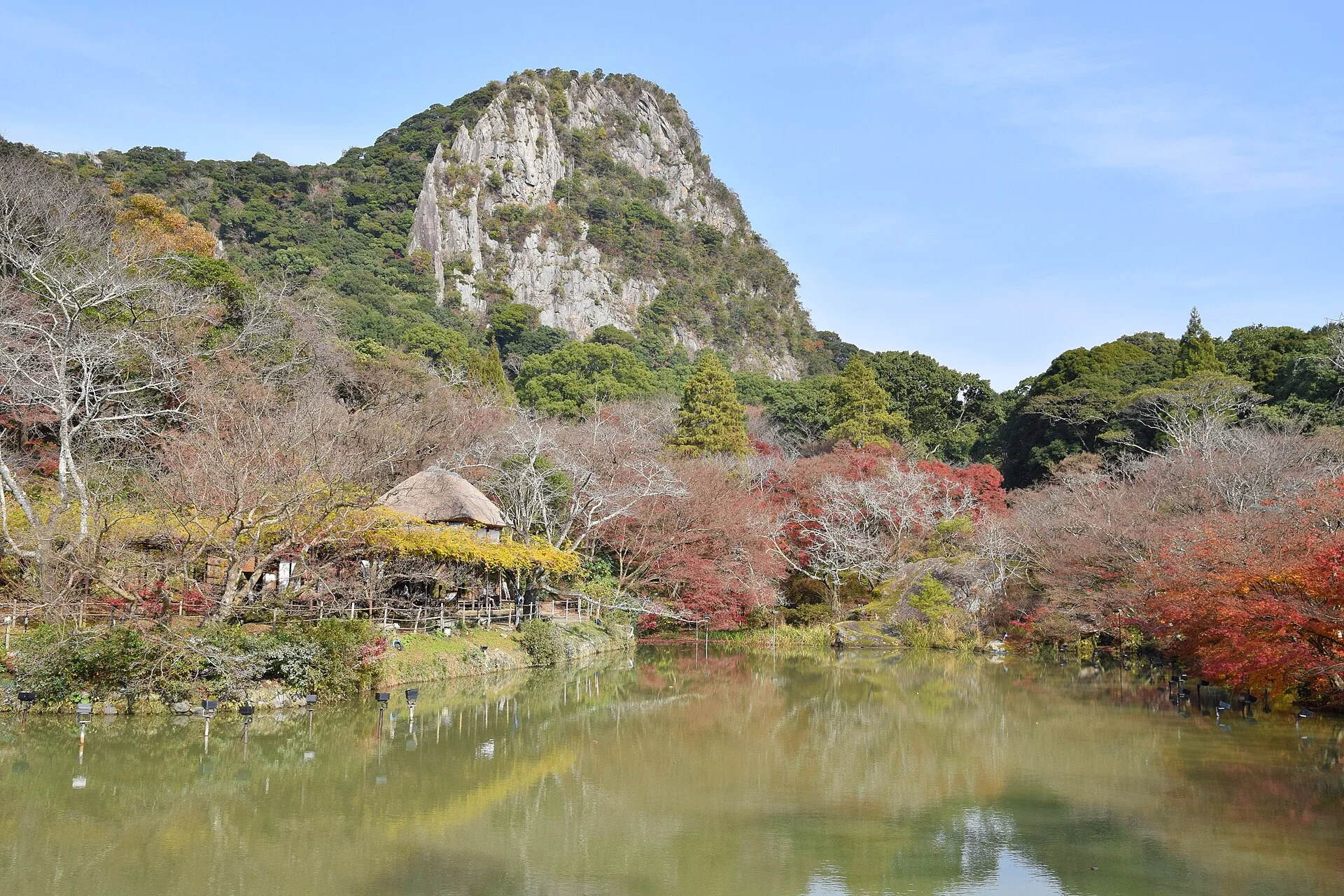
Mifuneyama Rakuen's pond and rocky hill in the photograph illustrate a Kyushu garden day that can sit beside an onsen or regional-food trip. It should not be used as a blanket promise of late colour everywhere on the island.
One, two or three bases depends on trip length
With five days, choose one main base and perhaps one destination night: Tokyo with Kawaguchiko, Kyoto with a nearby overnight, or Sapporo or Asahikawa with a mountain stop. Seven days can support two bases when the second creates a distinct time window, such as Tokyo with Nikko or Fuji, Kyoto with Osaka or Nara, or Sapporo with Asahikawa. A ten-day open-jaw route can justify three when it keeps moving in one direction: Tokyo to the Alps to Kyoto, or Asahikawa to Sapporo to Hakodate.
No fixed three-night hotel rule makes those moves right. Each change should remove repeated travel, protect an early or late visit, or shift the trip's centre forward. Ten-day regional routes expose backtracking; autumn with children or older travellers gives extra weight to lifts, walking distance and a viable indoor day.
A family with a stroller or a traveller with limited walking tolerance can have a worse rainy mountain day than two fit adults, so the replacement plan belongs in the destination choice. Tokyo has many museums and rail alternatives; Kyoto can work with a more deliberate crowd and walking plan; Kyushu works when an onsen and food day are already reasons to go. A remote mountain hotel earns its place when the town, bath or next route remains worthwhile even after clouds arrive.
For a first autumn visit with several interests, Tokyo is the most resilient base. Put Kyoto first if temples are the trip's purpose. Move north to Hokkaido or Tohoku for early mountain colour only when the extra transport planning is welcome. Choose Central Japan for a longer one-way progression, or Kyushu for a later regional holiday whose pleasures extend beyond leaves. The 2026 forecast can refine the day trips; it should not make you pretend one predicted peak will carry the entire booking.
If the flexible Tokyo route is your first-trip choice, compare Tokyo rooms for the foliage dates before adding a second base solely to chase a forecast.
Regional route details
Japan Autumn Leaves Calendar and Route Guide · Japan Autumn Leaves Calendar and Route Guide · Japan Meteorological Corporation — public autumn foliage forecast · Kyoto City Travel Guide — congestion guidance and · Tateyama Kurobe Alpine Route — 2026 operating season · Best Japan eSIM for Tokyo, Osaka and Kyoto: · Japan Autumn Leaves Late November: Kyoto, Tokyo, Nara, · Japan Autumn Leaves in Mid-November: Kyoto, Tokyo, Fuji, · Tokyo Autumn Leaves Day Trip by Train: Gardens, · Niseko vs Rusutsu: Which Ski Resort Is Better · Shinjuku Gyoen vs Meiji Jingu Gaien vs Rikugien · 10 Days in Japan: Tokyo, Kyoto and Osaka · Best eSIM for Hokkaido: Sapporo, Rural Drives and · Japan Autumn Leaves December: Tokyo, Kyoto, Osaka, Nara · Takamatsu or Matsuyama: Best Base for a 5-Day