
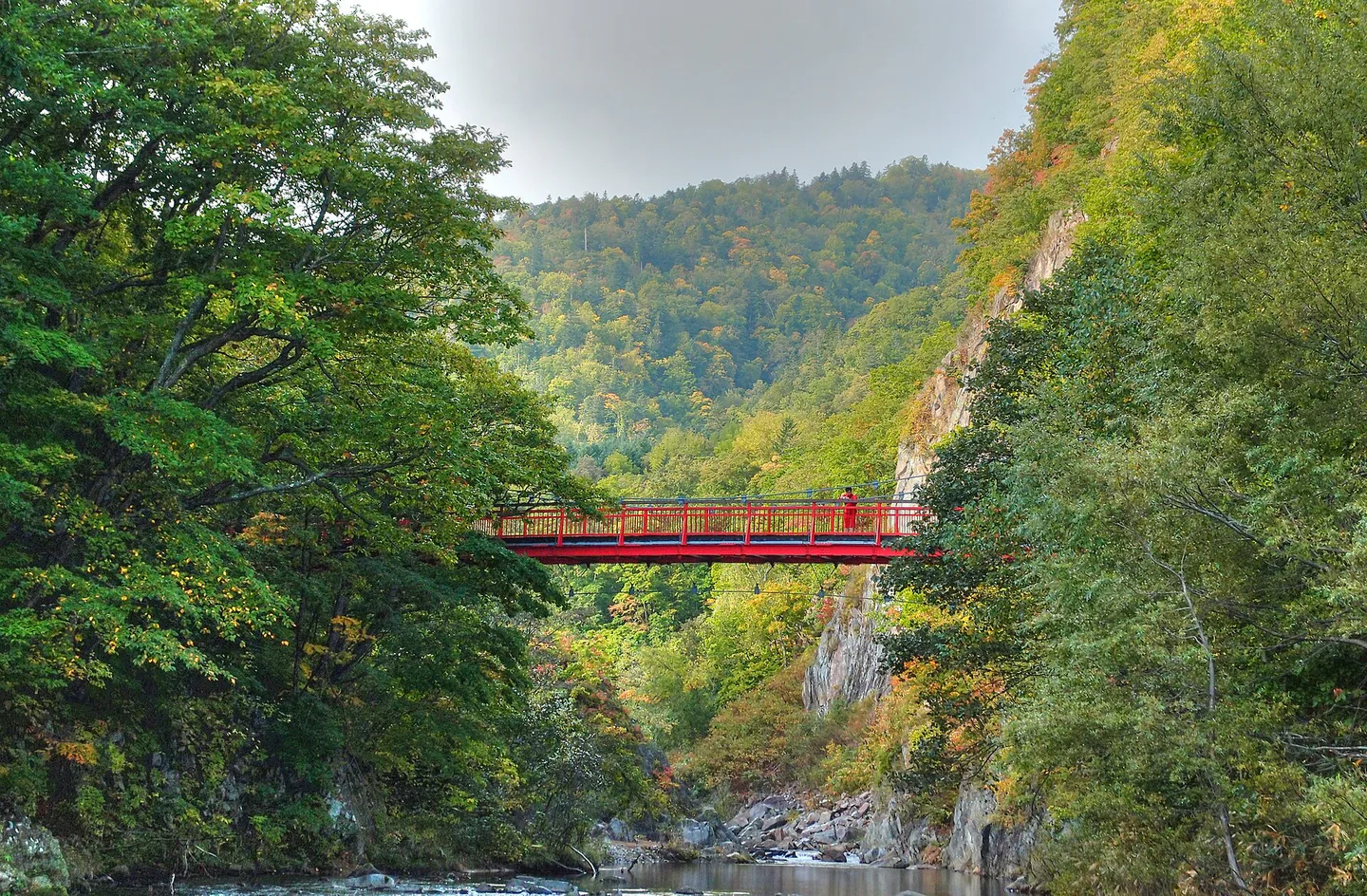
Jozankei makes a manageable autumn day out from Sapporo if the plan centres on the onsen town and one further foliage area. A night in the valley is better justified by a ryokan dinner, repeated bathing, an unrushed morning or a second outer destination. The distinction became clearer in 2026, when separate seasonal buses served the town, Hoheikyo Dam and Sapporo Kokusai. Those services did not make all three fit comfortably into one day. As of 24 October 2026, the guided Koyo Kappa Bus and Kokusai gondola liner have finished their published autumn runs; the Hoheikyo Dam Liner is scheduled only through 25 October, and the Kamui-no-Mori shuttle through 31 October. The 2027 seasonal programme is not yet published. Use the 2026 details below as a route and cost benchmark, not as a ticket offer for a future date.
A Sapporo day trip works best with one outer destination
Central Jozankei gives you the Futami suspension bridge, riverside walking, lunch and a possible day-use bath without relying on a seat on a separate seasonal excursion. Hoheikyo Dam is a distinct reservoir-and-gorge trip with another vehicle transfer. Sapporo Kokusai adds a mountain gondola and a fixed return bus. Trying to cover both outer destinations, the town and a long soak on the same Sapporo day trip spends much of the day on timed vehicles. The Sapporo Station, Odori or Susukino base comparison is relevant because returning to a city hotel avoids a room move when the valley itself is the only goal.
↔ Scroll table left or right
What you want from the day | Better base | Why the choice fits |
First visit, bridge and a bath | Sapporo day trip | The central area is satisfying without an outer shuttle |
Hoheikyo Dam as the main landscape | Sapporo day trip can work | Make the dam the only outer-area commitment |
Gondola views at Sapporo Kokusai | Sapporo day trip can work | Reserve the mountain outing as the day's main event |
Hoheikyo and Kokusai plus time in town | Jozankei overnight | Separate the two transport-heavy blocks |
Kaiseki dinner or an in-room bath | Jozankei overnight | The room adds an evening experience rather than only a shorter bus ride |
Early flight or fixed long-distance train next morning | Sapporo base | Peak foliage traffic makes a tight onward connection fragile |
On a short Japan itinerary, a ryokan move has a price in packing and checkout time as well as money. Choose the overnight only if you will use its evening or the second morning. The Japanese ryokan choice guide helps compare dinner, baths and room benefits; the luggage-forwarding guide helps if a large suitcase is the reason you hesitate to move hotels.
The four 2026 foliage buses had different purposes
The 2026 Jozankei programme used the Tourist Information Center as the reception and departure point for the seasonal services. Reaching the town from Sapporo was therefore only the first leg of a Hoheikyo or Kokusai outing. The published dates are useful for understanding how short some of these windows were, but most are already over on 24 October 2026. No 2027 timetable can be inferred from them. The seasonal Jozankei transport overview redirects to the current foliage transport page where a new season should be checked when announced.
↔ Scroll table left or right
2026 service | Published season and travel block | Fare or entry arrangement | What the route bought |
Koyo Kappa guided bus | 1–21 October; departures 09:15, 11:15, 13:15 and 15:15; about 70 minutes | ¥700 per seat, adult and child alike | Guided town and Sapporo Lake foliage overview |
Hoheikyo Dam Liner | 3–25 October; three outbound and three return departures; around two hours from the information centre | ¥1,000 return, with the dam electric bus paid separately | Reservoir and gorge scenery |
Koyo Gondola Liner to Sapporo Kokusai | 1–20 October; roughly 2 hours 15 minutes from and back to Jozankei | ¥3,000 adult bus return; ¥4,200 adult bus-and-gondola set | Aerial colour and a higher-elevation view |
Kamui-no-Mori shuttle | 1–31 October, with Tuesday and Wednesday closures | Free small-vehicle transfer | A separate outer-area attraction, only if that stop is the goal |
The town's autumn colours and the outer mountain areas do not peak at precisely the same time. Mid-October is a common central-Jozankei planning window, while the higher Kokusai side often colours earlier in the month. These are seasonal tendencies rather than a forecast for a particular day. The Hokkaido regional foliage status and autumn timing by elevation on the Tateyama Kurobe route explain why one fixed autumn date does not fit both a valley and a mountain.
The guided Kappa Bus was the least complicated add-on
In 2026 the Koyo Kappa Bus ran four times daily from 1 to 21 October. Its approximately 70-minute loop had 45 seats per run, cost ¥700 per seat, and added Sapporo Lake scenery to the guided route. Reservations were made at the Jozankei Tourist Information Center on the day, first come first served. That made it a contained addition to a central-town visit, but not an excursion you could lock into a holiday months ahead. If your only satisfactory day depended on one particular departure having space, the itinerary had too little margin.
For another autumn, do not assume identical dates, stops or fare until that season is released. The useful general pattern is to arrive with two possible days in mind: one including a guided bus if a seat is available, and another built from Futami Park, the red suspension bridge, riverside paths, lunch and a confirmed bath. A missed seat then changes the day rather than ruins it. Compare Korankei's access and foliage traffic or Mt Takao's cable car and trail timing if your wider trip has other short autumn excursions; both show why a final departure or timed ride needs its own margin.
Hoheikyo Dam requires two transport decisions
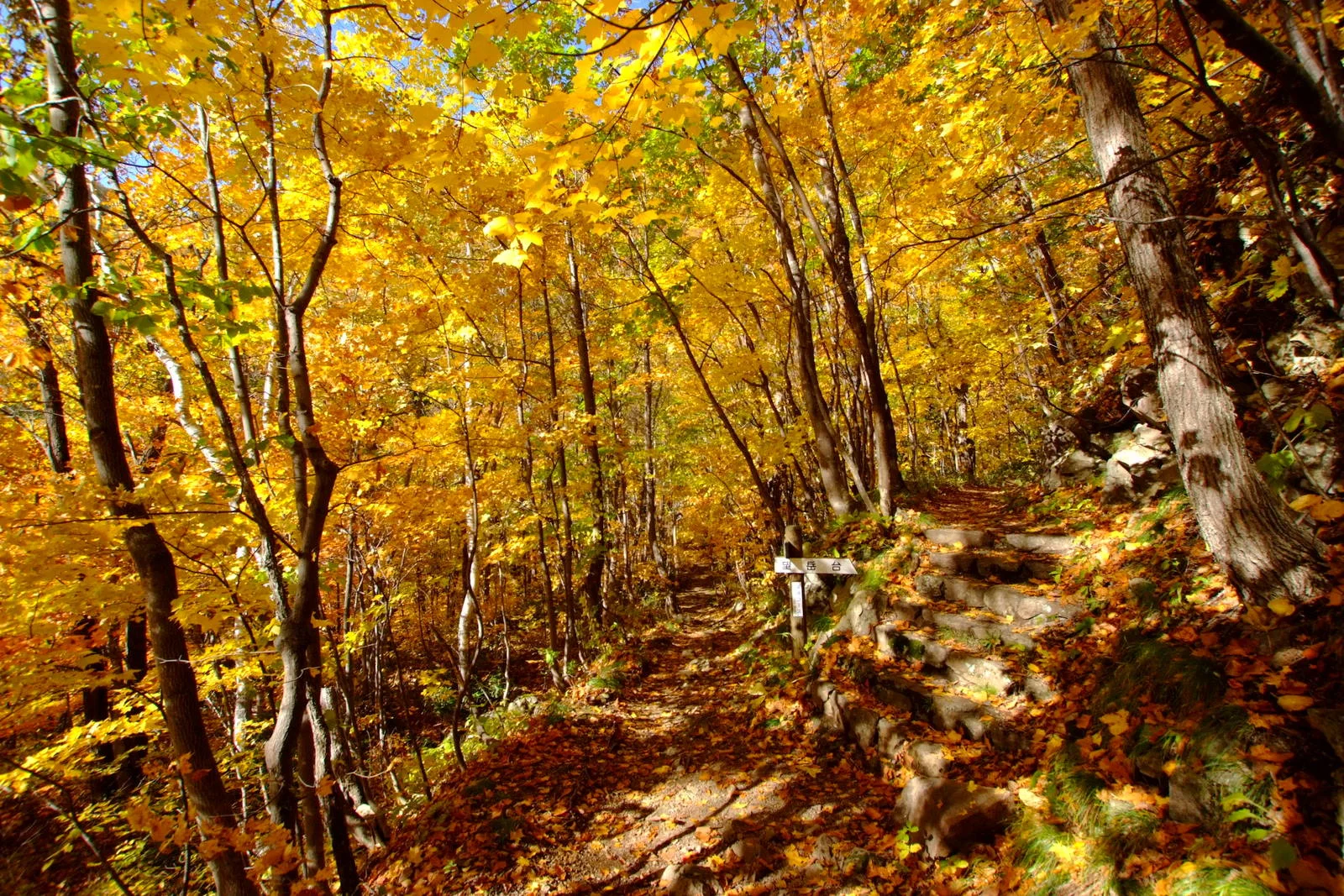
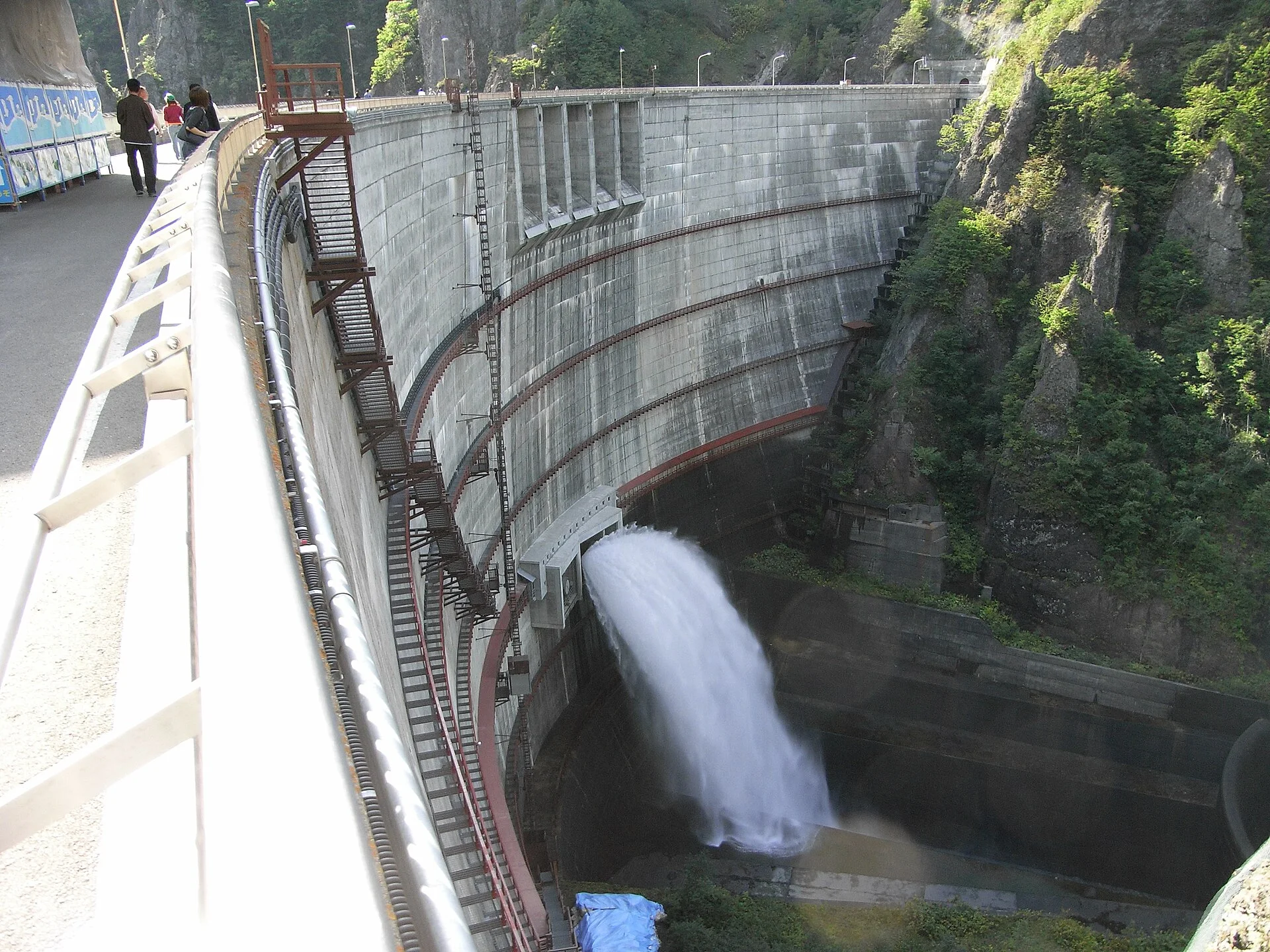
The 2026 Dam Liner was scheduled from 3 to 25 October, leaving the Jozankei Tourist Information Center at 09:30, 11:00 and 12:00 and departing the electric-bus parking area on returns at 11:30, 12:45 and 14:00. The liner alone cost ¥1,000 round trip for adults and elementary-school children; preschool children travelled free. It ended at the parking and electric-bus boarding point, not at the dam viewpoint. Private vehicles cannot simply continue into the core area, so visitors need the separate paid electric bus. This is why a quoted ¥1,000 liner ticket was not the total dam-visit cost.
↔ Scroll table left or right
2026 Hoheikyo component | Adult return | Elementary-school child return |
Jozankei Dam Liner | ¥1,000 | ¥1,000 |
Dam electric bus | ¥1,200 | ¥600 |
Combined vehicle spend | ¥2,200 | ¥1,600 |
The practical cost includes a two-hour excursion block before the Sapporo–Jozankei leg, meals, walking or a bath. Make Hoheikyo the single outer area on a day trip. It can be the second-morning outing if you stay over, provided the service operates on your date and the return suits checkout and onward travel. Keep the names separate: Hoheikyo Onsen is a hot-spring stop on the Kappa Liner route; Hoheikyo Dam is the reservoir destination with its own seasonal liner and electric bus. A ticket or bus stop marked for the onsen does not put you at the dam. The difference resembles the transport layers on a Nokogiriyama ropeway and walking route, where getting to the base is only one part of the outing.
Sapporo Kokusai was a higher-cost mountain excursion
The 2026 autumn gondola at Sapporo Kokusai was scheduled for 1–20 October, 09:30–15:30, with last uphill boarding at 15:00. The adult return fare was ¥1,500 and the elementary-school fare ¥800. Wind or other conditions could suspend operations. The separate Koyo Gondola Liner from central Jozankei cost ¥3,000 adult round trip, while the adult combined bus-and-gondola ticket was ¥4,200. It used a fixed corresponding return rather than a bus you could board whenever you felt finished. The roughly 2-hour-15-minute liner block therefore occupied a substantial part of a Sapporo day trip.
That extra spend made sense if altitude and an aerial view were the purpose of the journey. If the aim was simply a photograph of autumn colour, the bridges and valley may have delivered it with less cost and less exposure to gondola weather. For a family or multigenerational group, consider the time spent boarding, queuing and standing as well as the adult ticket. A mountain viewpoint does not become better value because it is reachable on a map. The Nikko versus Okunikko autumn lodging choice has a related highland-versus-valley trade-off.
The Sapporo–Jozankei Kappa Liner has its own timetable
Jotetsu changed the Kappa Liner again for the period 1 October 2026 through 31 March 2027, increasing the published winter schedule to 11 trips each way. This is the Sapporo-to-Jozankei service, not the 70-minute guided Koyo Kappa Bus inside the valley. The regular one-way fare between Sapporo Station and Jozankei/Hoheikyo Onsen is ¥1,700; advance web purchase is ¥1,460. Reservations open one month before departure and close at 17:00 the preceding day. Seats are unassigned, and same-day boarding without a booking is possible only if a service has space. The current Kappa Liner page gives stops and times; the October schedule change notice explains the 11-each-way revision.
↔ Scroll table left or right
Kappa Liner change | What it helps | What it cannot fix |
11 trips in each direction during the current winter timetable | More choices between Sapporo and Jozankei | Road congestion and a sold-out preferred departure |
¥1,460 advance web fare versus ¥1,700 regular | A lower booked one-way cost | Capacity on a separate outer foliage bus |
Reservation window from one month ahead to 17:00 the prior day | Secures the Sapporo leg in advance | Same-day first-come seats on seasonal tours |
The revised frequency is helpful, yet Route 230 congestion during peak foliage can still affect the bus, hotel shuttles, taxis and rental cars alike. Jotetsu cautions against tight onward connections after its service. If your next-day flight or train is immovable, a Sapporo hotel may be the safer base even if the ryokan price is tempting. The Sapporo autumn food festival route is one possible city-based evening instead of moving bags into the valley. The Osaka-to-Nara day-trip foliage route and Arashiyama early train plan are other cases where your hotel base and final return matter more than the number of places technically reachable.
What the day and overnight actually look like
For the lowest-friction day trip, go from Sapporo to the central valley, walk to Futami Bridge, eat lunch and use a day bath whose opening hours suit your date. A guided-bus version adds one confirmed same-day Koyo Kappa seat when that service operates. A dam or gondola version makes that one outer area the day's main activity, returning to town only if there is time and energy. Combining all these versions ignores the transfer from Sapporo, local boarding windows, lunch, weather and the reserved bus home. The town works as a fallback precisely because it has worthwhile riverside scenery without another excursion seat. The Tokyo-to-Nikko autumn day and overnight options provide another example of how a single outer foliage route can consume most of a day.
↔ Scroll table left or right
Sapporo-based day | Morning and midday | Later part of the day |
Central valley | Futami Bridge, town walk and lunch | Day bath, then reserved return to Sapporo |
Guided foliage | Confirm a Koyo Kappa seat when the seasonal bus is running; see central town | Short bath or riverside walk before the return |
One outer highlight | Hoheikyo Dam or Kokusai as the main excursion | Central town only if the liner's return leaves daylight and energy |
A two-day plan can put the bridge and town on Day 1, then ryokan check-in, dinner and bathing; Day 2 holds one dam or mountain outing before returning to Sapporo. That separates the outside transport block from a fixed meal time. A half-board ryokan loses much of its value if you arrive stressed and late from a remote shuttle. Repeated baths, a quiet night and an early riverside walk can themselves be enough reason to stay if rest is the actual objective. Otherwise, pay attention to the hotel change and the Sapporo time you give up. The Sawara autumn festival day-or-overnight comparison asks the same question for an evening event, while the Yamadera autumn rail-and-stairs day trip shows how a single demanding excursion can fill a day without a second destination.
For older travellers, families and anyone with limited mobility, remove the second outer extension first. Valley paths may be wet or sloped, Hoheikyo adds a vehicle transfer, and Kokusai adds gondola boarding and a fixed bus block. None of these is automatically unsuitable; their combined waits and transfers are the issue. A central walk plus bath can form a complete visit. If the group still has energy, one further ride can be considered. The rain-plan guide for Japan itineraries helps when a weather-sensitive outdoor stop should be shortened rather than defended simply because it was planned.
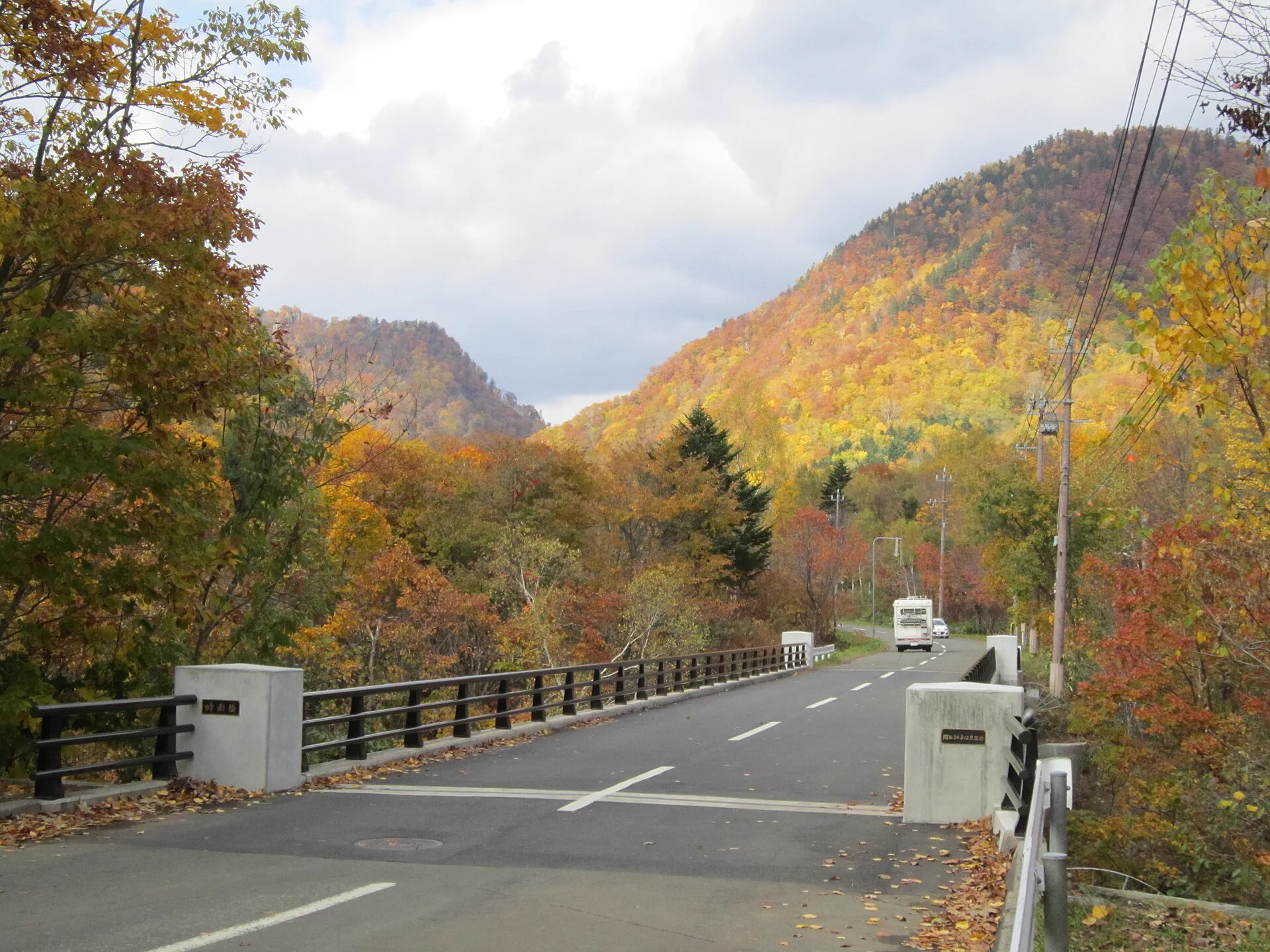
Autumn weather can change the best version of the trip. Wind may stop the Kokusai gondola, and heavy rain makes long riverside walks and slopes less attractive. Keep the Sapporo-to-Jozankei leg if buses are operating, shift time toward indoor bathing, and drop the exposed outer destination first. Congestion can delay every road vehicle, so protect a fixed flight or train with a larger buffer or sleep in Sapporo. The Tokyo autumn-day-trip timing guide and Takachiho gorge autumn itinerary make different regional plans, but the same discipline applies: the optional scenic leg should not control a non-movable next connection.
The 2026 programme established what each excursion costs in time, but its dates must not be reused as a 2027 schedule. For travel after 24 October 2026, check which 2026 services are still within their published windows; for a future autumn, wait for that year's valley and operator notices before building around a shuttle. Pick central Jozankei and one extension for a Sapporo day trip. Choose a ryokan night when its dinner, baths or second morning matter in their own right. Compare Jozankei accommodation around the onsen town only after deciding whether the valley needs to be your overnight base.