

A four-day Kansai trip with Universal Studios Japan already booked may have only one other complete sightseeing day. If arrival is Day 1 and departure Day 4, a Kyoto day trip claims that second day. Osaka then fits into the travel-day fragments and the evenings. That can be a good choice when Kyoto is central to the holiday, but it needs a deliberate loss elsewhere in the Osaka plan.
The cities are near each other by rail; the day is still more than an intercity train ride. A Kyoto visit adds a local journey after arrival, a different crowd pattern and a return after several hours on foot. The decisive comparison is the complete hotel-to-sight-to-hotel day, including how much energy remains for Osaka at night. See a compact Osaka itinerary.
Two full days create the actual trade-off
↔ Scroll table left or right
Already fixed | Additional choice | What it displaces | Schedule judgment |
|---|---|---|---|
USJ | No Kyoto day | No large Osaka block | Most balanced first Osaka visit |
USJ | One complete Kyoto day | An Osaka district or long shopping period | Works when Kyoto is a firm priority |
USJ and Kyoto | Arashiyama, Higashiyama and Fushimi Inari together | Meaningful time at each place and the evening | Too much crossing for one day |
USJ and Kyoto | One-night Kyoto hotel move | Checkout, bags, check-in and Osaka evening continuity | Rarely useful for only one Kyoto day |
USJ | Two Kyoto days and one Kyoto night | Osaka becomes secondary | Extend the trip or make it a Kansai itinerary |
Three four-day shapes, scored for fit
The following numbers are editorial planning scores for a first Kansai visit in which USJ is fixed. They judge how the schedule works, not the quality of either city or the theme park.
↔ Scroll table left or right
Four-day structure | Money | Time | Booking | Weather | Crowds | Route | Uniqueness | Overall |
|---|---|---|---|---|---|---|---|---|
Osaka plus USJ, without Kyoto | 9.0 | 8.5 | 8.0 | 7.5 | 6.0 | 9.2 | 7.5 | 8.0 |
Osaka room, USJ and one Kyoto day | 7.5 | 5.5 | 7.5 | 6.5 | 4.5 | 6.0 | 9.3 | 6.7 |
Osaka/Kyoto split inside four days | 6.5 | 5.5 | 6.5 | 6.5 | 5.0 | 6.5 | 9.3 | 6.5 |
Keeping one Osaka city day is the easiest timetable. A Kyoto day receives a lower logistics score but a higher score for distinctiveness; for someone who came for Kyoto’s streets or temples, that benefit may justify removing another Osaka activity. See a five-day Osaka plan.
USJ occupies a day even when the calendar shows spare hours
USJ publishes hours by date and can alter them; admission can also begin before the posted opening. Park events, attraction closures and the entry process for SUPER NINTENDO WORLD affect the day you actually book. Since January 5, 2026, timed or standby area entry has used the park app where required. Do not reserve a second major Osaka district on the assumption that the park visit is a tidy 10:00–17:00 block. See USJ operating calendar. See SUPER NINTENDO WORLD entry. See USJ with children.
Even a date with a roughly 21:00 close can be filled by entry, ride queues, meals, shows, timed windows and the journey back. A spontaneous Dotonbori dinner may fit afterwards; a compulsory second sightseeing programme makes the day brittle. See the final train after USJ.
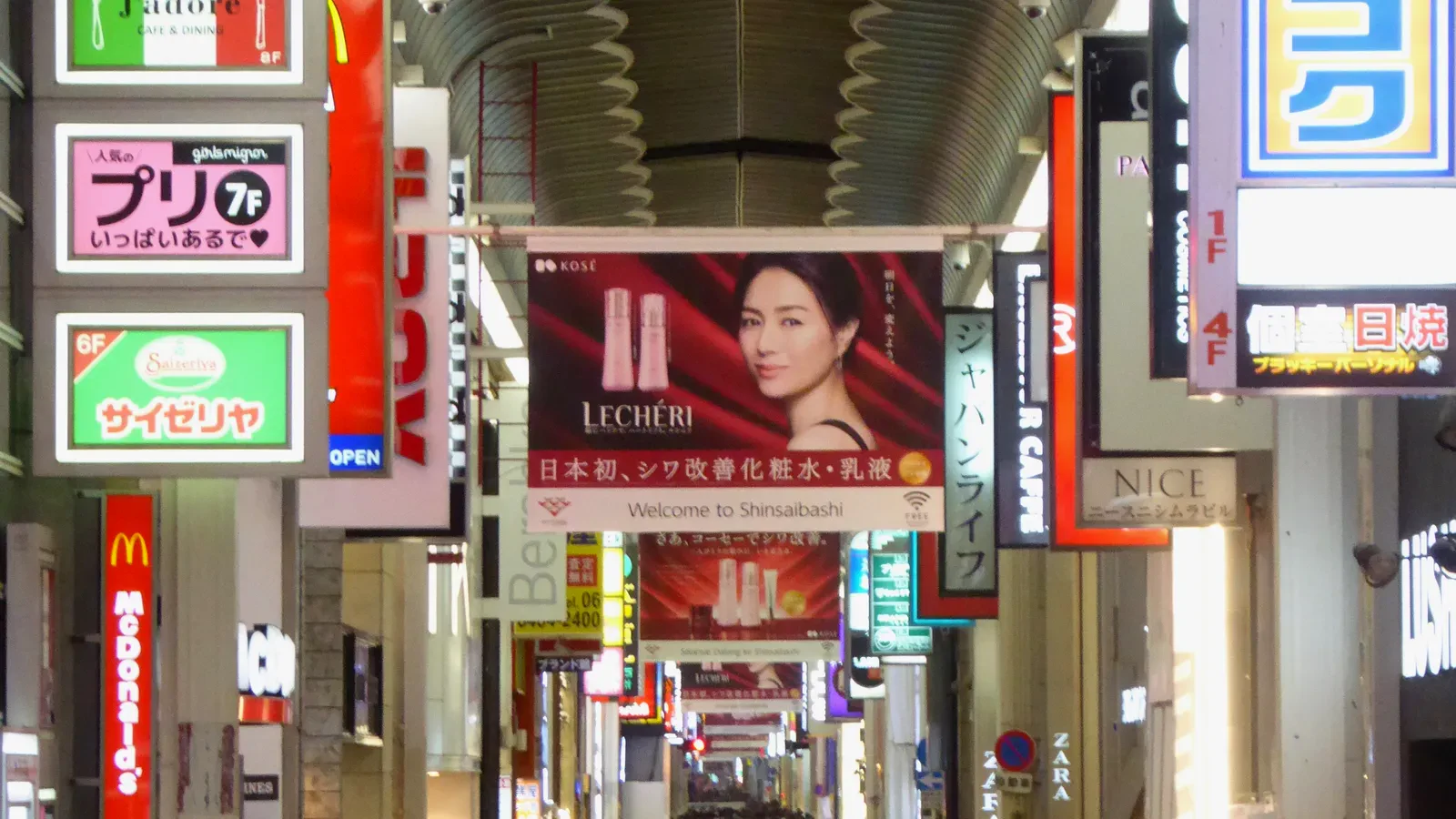
Kyoto begins again after the Osaka–Kyoto train arrives
The first journey is from the Osaka hotel to a Kyoto rail stop. The second is from that stop to the sightseeing area. Kyoto’s transport advice favours taking rail near the destination and using bus or walking for the final section where needed; traffic can make a simple map estimate much too optimistic. See Kyoto transport routes. See Kyoto as an Osaka day trip.
Calculate hotel door to the first substantial Kyoto visit, then the last Kyoto visit back to the same hotel door. A quoted intercity journey of less than an hour is only one part of that day.
Give the Kyoto day one geographic line
A one-day visit can work when its stops sit along one sensible corridor: See Fushimi Inari Guide. See Fushimi Inari early walking.
↔ Scroll table left or right
Kyoto corridor | Who gains most | Leave out |
|---|---|---|
Fushimi Inari then Higashiyama and Gion | First visit centred on a shrine and older streets | Arashiyama and Kinkaku-ji |
Higashiyama and Gion | A slower walking day for families or older guests | Temples on the far side of Kyoto |
Arashiyama | Bamboo, river and western temples | An eastern add-on just because Kyoto looks compact |
The Kyoto congestion map shows popular areas such as Gion/Kiyomizu, Arashiyama and Fushimi Inari by time and weather. If the forecast shows a busy window, shift the hour within the same district before adding a third district across the city. See Kyoto congestion map. See a one-day Kyoto route.
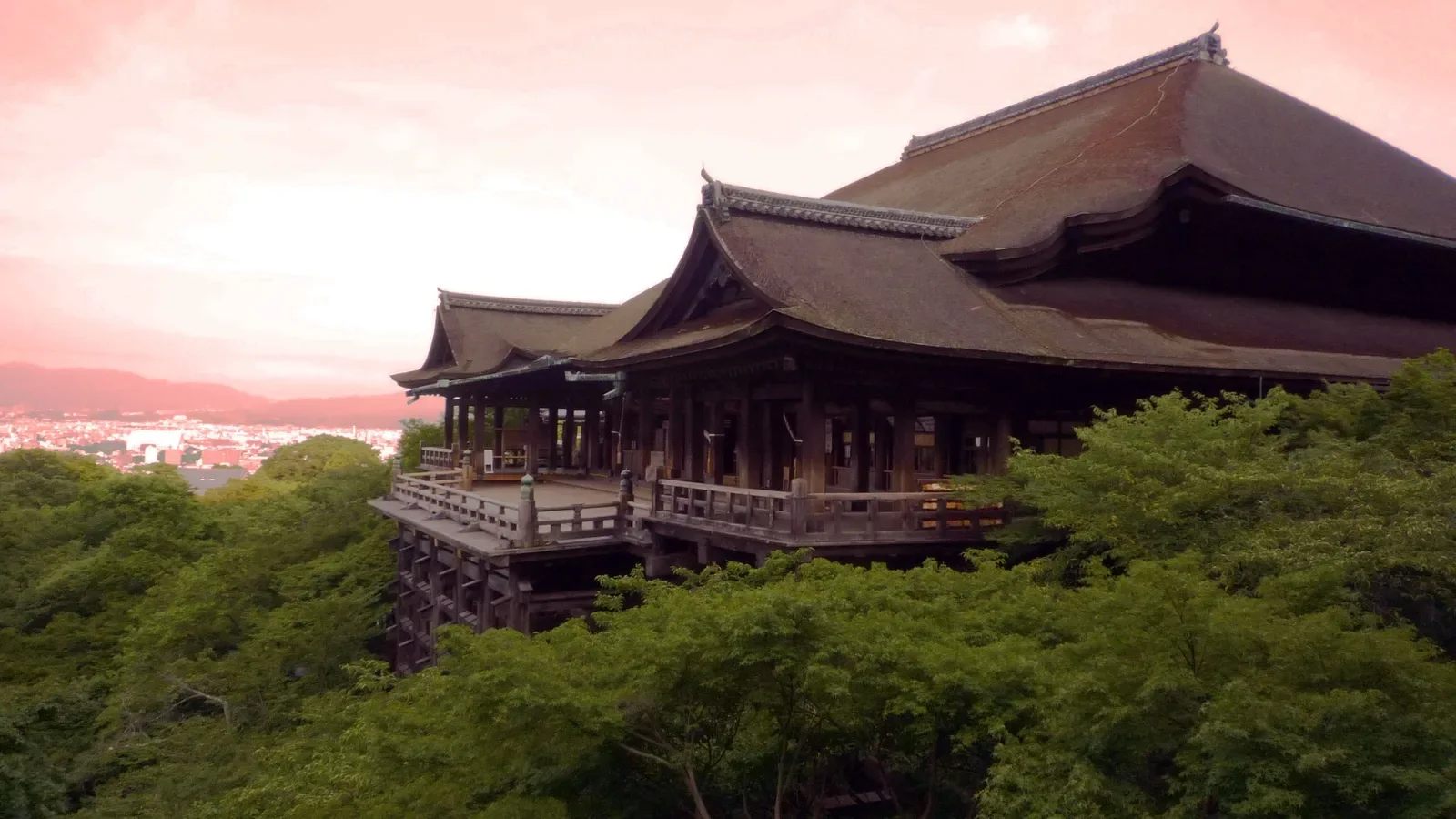
Name the Osaka block Kyoto replaces
The lost block might be Osaka Castle, Umeda, Tennoji and Shinsekai, a long Namba/Shinsaibashi shopping period, Kaiyukan and the bay, or simply a slow day of food and nightlife. It cannot all be preserved after USJ and Kyoto take the only full days. See Osaka Castle and bay grouping.
Choose Kyoto when you would honestly prefer Kiyomizu and Gion to one of those Osaka experiences. If no Osaka block can be removed, the itinerary is still overcommitted.
For one Kyoto day, keep the Osaka room See seven days from an Osaka base.
Three nights in one Osaka hotel usually make more sense than spending part of a four-day trip on checkout, bag storage, a hotel transfer and another check-in. Take one complete Kyoto day and return to the existing room.
An overnight switch becomes more useful if Kyoto has two meaningful periods, such as Gion after dark and an early temple start, or if the onward journey naturally leaves from Kyoto. That is a different trip structure and deserves a whole-city base comparison. See Kyoto vs Osaka as the main base. See a two-city hotel split.
Choose the Osaka base by the evenings you retain
Namba and Shinsaibashi serve late meals, Dotonbori and shopping. Umeda serves Osaka Station connections, JR-heavy movement and department stores. With one USJ day and one Kyoto day, both are defensible; pick the neighbourhood that makes the two remaining Osaka evenings easiest. See Namba and Umeda bases.
The Namba-versus-Umeda comparison is more useful than choosing whichever station seems geometrically halfway between USJ and Kyoto. See Namba vs Umeda comparison. See Osaka hotels for Kyoto trips.
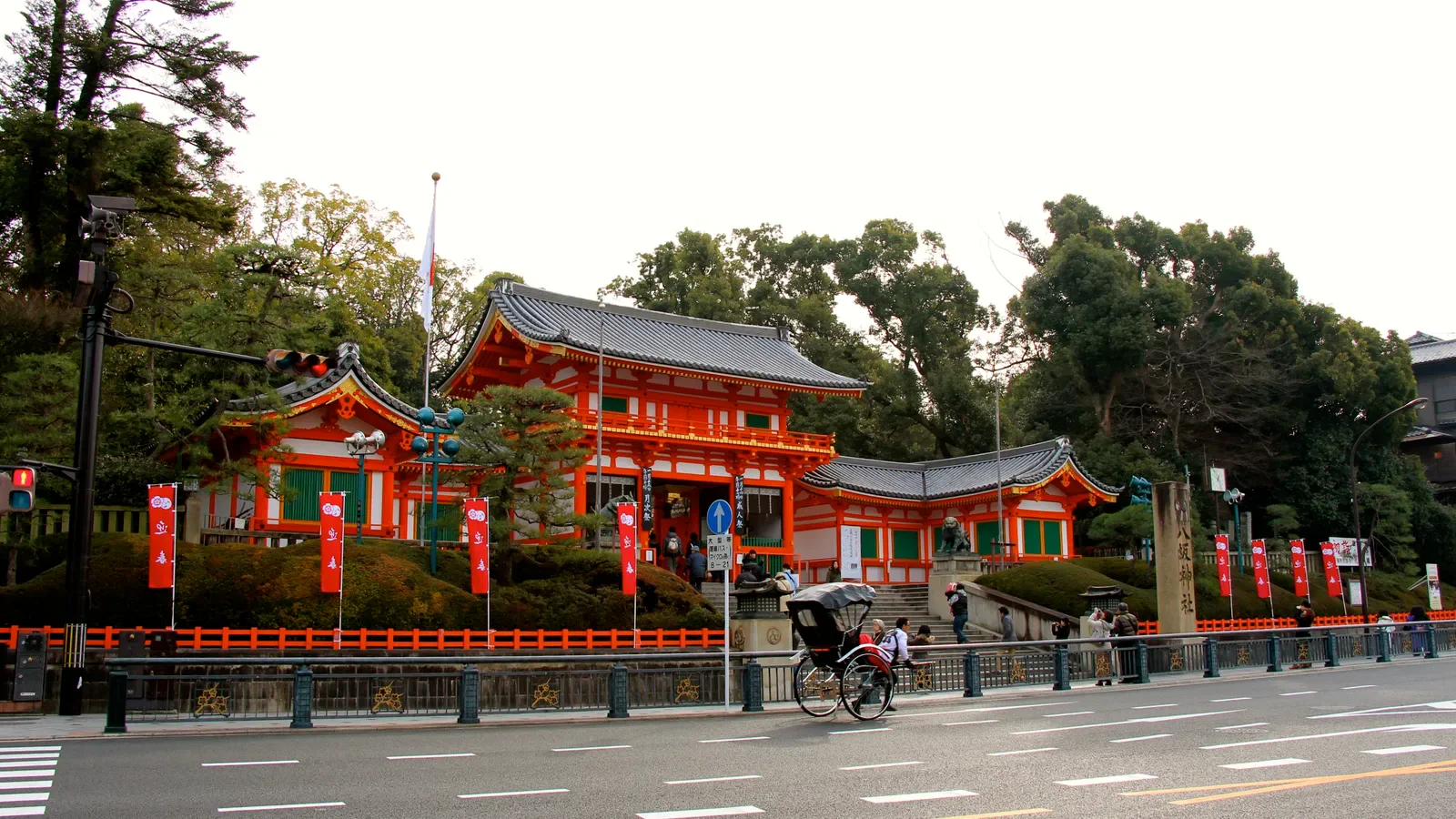
Family stamina can overrule the rail timetable
USJ is often a long walking and queueing day. An early Higashiyama start immediately afterwards asks for another substantial walk, including slopes, regardless of the short train segments on a map. For children or older parents, keep the Kyoto route smaller rather than attempting to rescue an overfilled day with passes and taxis. See Osaka with older parents.
If an older parent most wants Kyoto, protect that day and remove an Osaka district. If the family’s real priorities are USJ and Osaka food, a forced Kyoto visit may leave everyone with a tired afternoon. Adding one wish per traveller can produce a schedule that serves none of them well. See an Osaka family route.
Flight times can give Osaka back a day
↔ Scroll table left or right
Arrival and departure shape | Kyoto decision |
|---|---|
Day 1 lands after 15:00; Day 4 flight before noon | Usually skip Kyoto if Osaka city and USJ both matter |
Day 1 lands before noon; Day 4 flight in the evening | Kyoto is easier because the edges can rebuild an Osaka day |
Travel continues onward from Kyoto | A hotel split can now serve the onward route rather than create a round trip |
Early KIX departure on Day 4 | Place the final room for the airport chain, not Kyoto for its own sake |
Four dates on the booking are not four full sightseeing days. Count usable arrival and departure hours before deciding that Kyoto has displaced every Osaka city visit. See usable arrival and departure hours.
Three itineraries that fit different priorities
Osaka first: arrive and eat around the hotel; give USJ a complete day; spend the other complete day in Osaka city; use departure day nearby. This is the cleanest choice for a party focused on the park, food and shopping. See Osaka’s Namba and Tennoji days.
Kansai sampler: keep the Osaka room, devote one full day to USJ and another to one focused Kyoto route, then use the flight edges for Osaka. Accept that a third city such as Nara does not fit without removing something else. See Kyoto and Osaka base choices.
Both cities need room: add a fifth or sixth day, or arrange flights and onward travel so Kyoto becomes a real overnight rather than a rushed out-and-back. Then each city can carry more than one partial visit. See a seven-day Kansai route.
The booking decision
When USJ is fixed, the other complete day should usually remain in Osaka if a full first Osaka experience is the aim. If Kyoto’s temples and traditional districts are a primary reason for the journey, use that day for one Kyoto corridor and consciously delete an Osaka block. Four days cannot give both cities a complete first visit plus USJ.
Decide which Osaka experience is replaced before buying the Kyoto train or another hotel. That choice resolves the apparent transport puzzle.
Choose the hotel after the day allocation
If Kyoto stays, compare Namba and Umeda by where the usable Osaka evenings end. For a room search, use the district you will actually walk in after USJ and after the Kyoto return. See Where to Stay in Osaka for First-Time Visitors. See choosing an Osaka base by your final stop. See rooms around Namba. See rooms around Osaka Station.
Day-specific details
Use the date-specific USJ park calendar for operating hours and the SUPER NINTENDO WORLD entry rules. For Kyoto, the transport and congestion maps help set the rail approach and the time spent in each district. The scores above are planning judgments, not measured attraction ratings.
Related guides: Kansai 7-Day Itinerary From Osaka: One Hotel for Kyoto, Nara, Kobe and USJ — When Not Moving Is Better · Osaka Budget Itinerary: 7 Days With USJ, Kyoto, Nara and Kobe — Without Buying Every Pass · A 7-Day Osaka Premium Experiences Itinerary: USJ Express, Sumo, Samurai — and Only One Big Splurge · Osaka 5-Day Itinerary: Give USJ a Full Day — Namba, Umeda, Kaiyukan and Tennoji Without Backtracking · Osaka Solo Travel Itinerary: 7 Days of USJ, Kyoto and Kobe — Without Filling Every Hour · Osaka Cultural Itinerary: 7 Days of Sumo, Tea Ceremony, Samurai and Sake — With One Night in Kyoto · Osaka Itinerary With Friends: 7 Days of USJ, Sumo, Food and Kobe — Without Moving as One Group · Osaka for Couples: A 7-Day Itinerary That Saves the Best Nights for Kyoto, Kobe and One Big View · Osaka Hotels for Kyoto and Kobe Day Trips: When 3–5 Minutes to the Station Matter Twice a Day · Best Day Trips from Osaka: Kyoto, Nara, Kobe or Himeji — When Does a Tour Actually Save Time?