
Your first hours in Tokyo begin after immigration, the airport journey and a place to leave your bags. On departure day, the usable time ends when you need to retrieve them and head to the correct terminal. A flight schedule alone hides both boundaries. If the clear window is no more than three hours, keep the outing beside your hotel; four to six hours can hold one neighbourhood; seven or more can support a connected half-day, provided the airport journey still has breathing room.
The last day needs a backward calculation. Set the time you intend to reach the airport, then allow for the full journey from your hotel and the trip back to collect luggage. What remains is the sightseeing window. A museum across town may look close on a map, yet its return leg can consume the hour you thought you had. Keep the final stop on the same side of Tokyo as your bags or the airport train.
Count hours after your bags are dealt with
Use two separate clocks: one starts when you can walk away from your luggage on arrival; the other stops when you must leave the city on departure. Include station exits, queueing, hotel storage and the walk to a platform rather than counting only train minutes.
For an arrival, start the clock here:
Time free to move after storing luggage → the personal end of your day. The difference is the usable window; a scheduled landing is only the beginning of the airport process.
For a departure, find the city cutoff first:
Airline airport-arrival target → subtract the complete city-to-terminal journey and a sensible disruption margin → subtract the return to stored bags. Sightseeing must finish before that resulting city cutoff.
Domestic and international flights, terminals, airlines and routes impose different requirements. There is no sound universal rule such as leaving every Tokyo hotel a fixed number of hours before take-off. Use your airline's check-in instructions and the actual train or bus you plan to take. A heavy suitcase, a complicated transfer or a tight final connection calls for more room in the schedule.
Choose the size of the outing before choosing a sight
↔ Scroll table left or right
Clear time after storing bags | Scale of the outing | Works well | Usually too much |
Up to 3 hours | Stay close to the room | Dinner, supplies, a short walk or local view | Cross-town travel and prepaid entry |
4–6 hours | One neighbourhood | Ueno, Asakusa, Tokyo Station/Ginza, Shinjuku or Shibuya | Adding a second area solely because a map shows a short train ride |
7 hours or more | A connected half-day | Asakusa with Ueno; Marunouchi with Ginza; Meiji Jingu with Shibuya | Several bookings that leave no room for a late arrival |
A second neighbourhood is reasonable only when you can abandon it without losing a reservation or an airport connection. A route that depends on every transfer, queue and meal ending exactly on time is too brittle for a flight day. This matters even when a journey planner shows a neat 20-minute link between two attractions: that estimate rarely includes leaving one building and finding the next entrance.
Which Tokyo base keeps the airport journey simple?
The hotel, the last activity and the airport line need to form a route you can follow without returning across the city. The examples below rank route patterns for that purpose; they do not rate the neighbourhoods as holiday destinations. When two options look close, prefer the one with fewer luggage-bearing changes and more ways to shorten the outing.
Hotel, final stop and airport | Route score | What works | What can go wrong |
|---|---|---|---|
Ueno room; Ameyoko or the park; Narita | Collect bags once and join the Skyliner nearby | A west-Tokyo detour makes you cross the city twice | |
Tokyo Station room; Marunouchi or Ginza; Narita | Central walking remains close to luggage and N'EX | Shopping expands until the airport margin disappears | |
Shinagawa or Hamamatsucho room; Haneda | A clear airport-facing finish and an easy city cutoff | Short airport access tempts a distant last stop | |
Shinjuku room; local half-day; Haneda | No separate cross-city trip to collect luggage | Large station and longer airport leg than Shinagawa | |
East-side room; west-side last stop; Narita | The sights themselves may be appealing | The return for bags sits between two long journeys |
Haneda can leave room for an evening, if the hotel is on the way
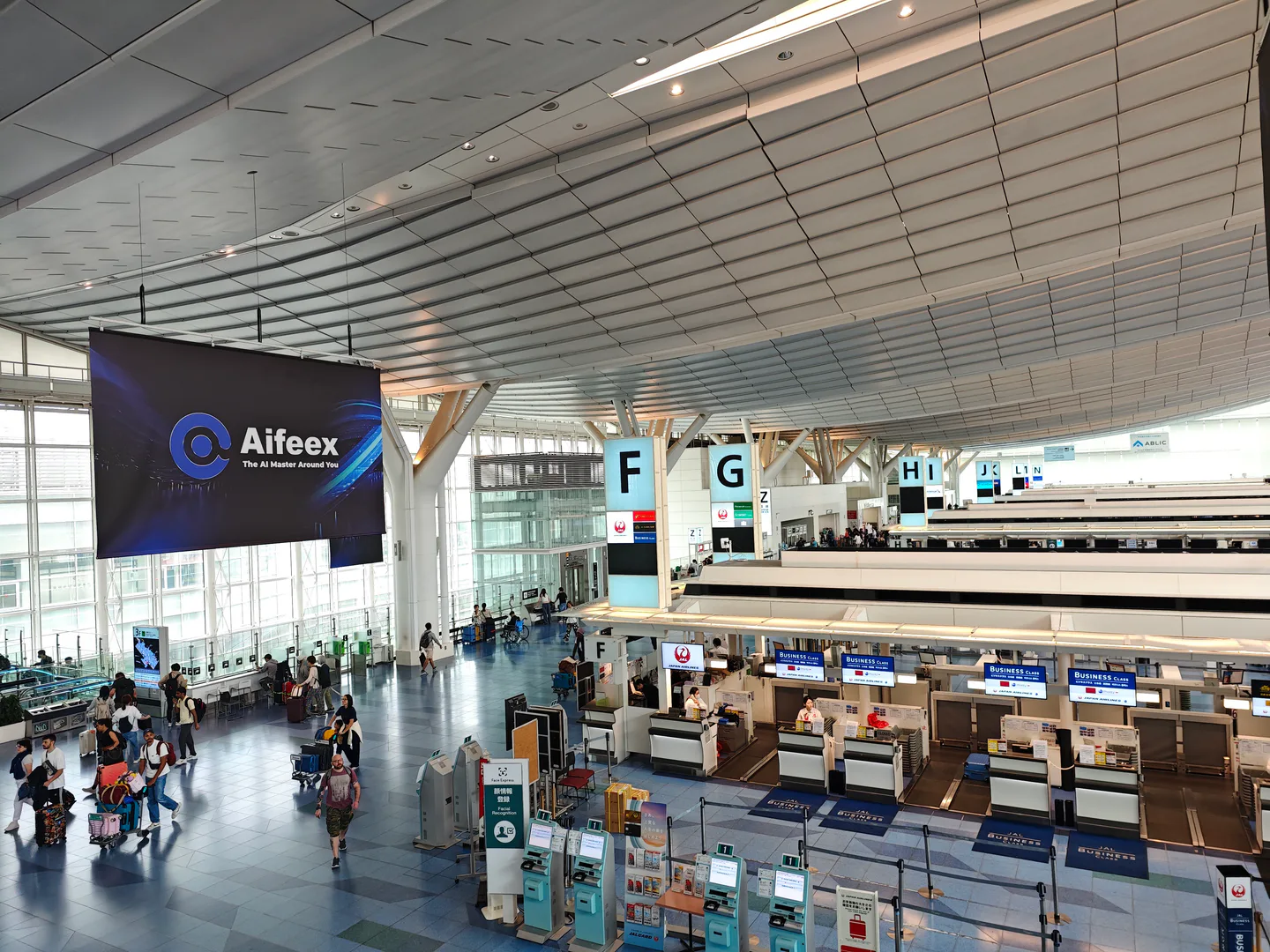
The Haneda rail and monorail map gives approximate station journeys of 15 minutes to Shinagawa, 20 to Hamamatsucho, 30 to Tokyo Station, 40 to Ueno or Asakusa, 45 to Shibuya and 50 to Shinjuku. Those are useful bearings, not door-to-door hotel times. You still have to clear the airport, reach the correct platform and find your room. A late landing can therefore leave much less free time than the shortest number suggests.
If you put your bags down around 18:00 in Shinjuku, dinner and a local walk are a good use of the evening. Crossing to Asakusa for one photograph would add two more city journeys and a late return. A hotel in Shinagawa or Hamamatsucho gives Haneda-bound travellers a particularly clear departure route, but proximity to the airport does not justify a distant final-day detour.
Narita changes the value of an east-Tokyo hotel
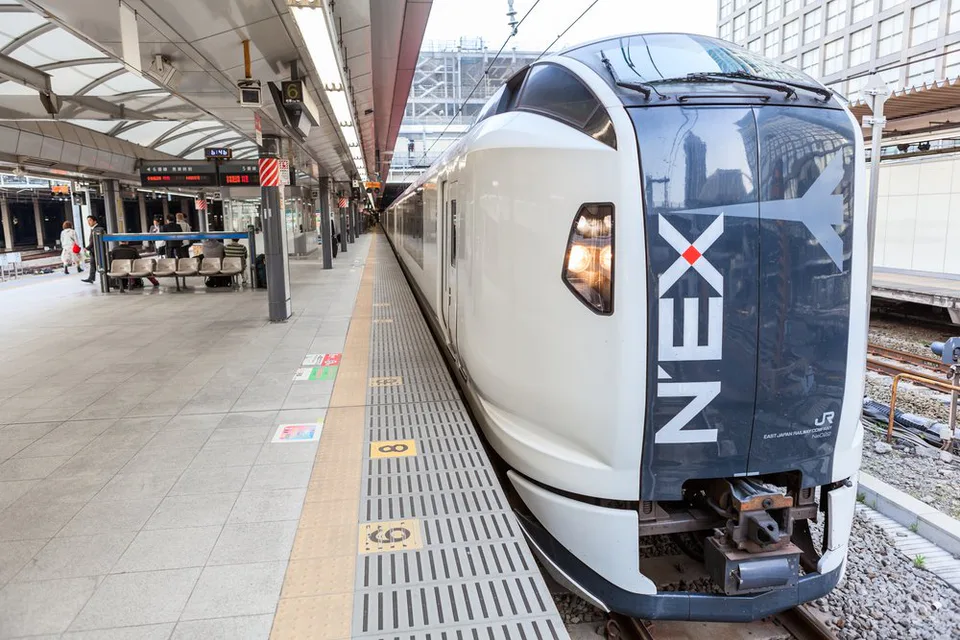
The Skyliner route to Ueno lists a fastest 41-minute run from Narita Airport Terminal 2·3. The Narita Express route lists a fastest 53-minute trip from Narita Airport Station to Tokyo Station; N'EX also serves Shinagawa, Shibuya and Shinjuku directly. These station-to-station examples come from different routes. They cannot decide your hotel on their own, because an additional subway or a long walk with bags can erase the headline gap.
A Ueno room pairs neatly with the Skyliner and a final walk around Ueno Park or Ameyoko. Tokyo Station makes Marunouchi or nearby Ginza a manageable last block before N'EX. Someone sleeping in Shinjuku may prefer one direct N'EX journey to a faster airport train that first requires hauling luggage across central Tokyo. Compare the whole hotel-to-terminal route, including where you collect bags, rather than the fastest segment in isolation.
When arrival leaves three hours or less
Learn the exit you will use tomorrow, have dinner and buy whatever you need for the first full morning. A short neighbourhood walk or a free nearby view is enough. This small block can be useful without being called a sightseeing day: it gives you a chance to find the station, check breakfast options and recover from travel before the next morning's longer route.
If the flight lands so late that even the trip into town is uncertain, decide on the airport night first. The Haneda late-arrival choices and Narita late-arrival choices deal with the last-train and hotel-location question separately.
With four to six hours, stay in one area
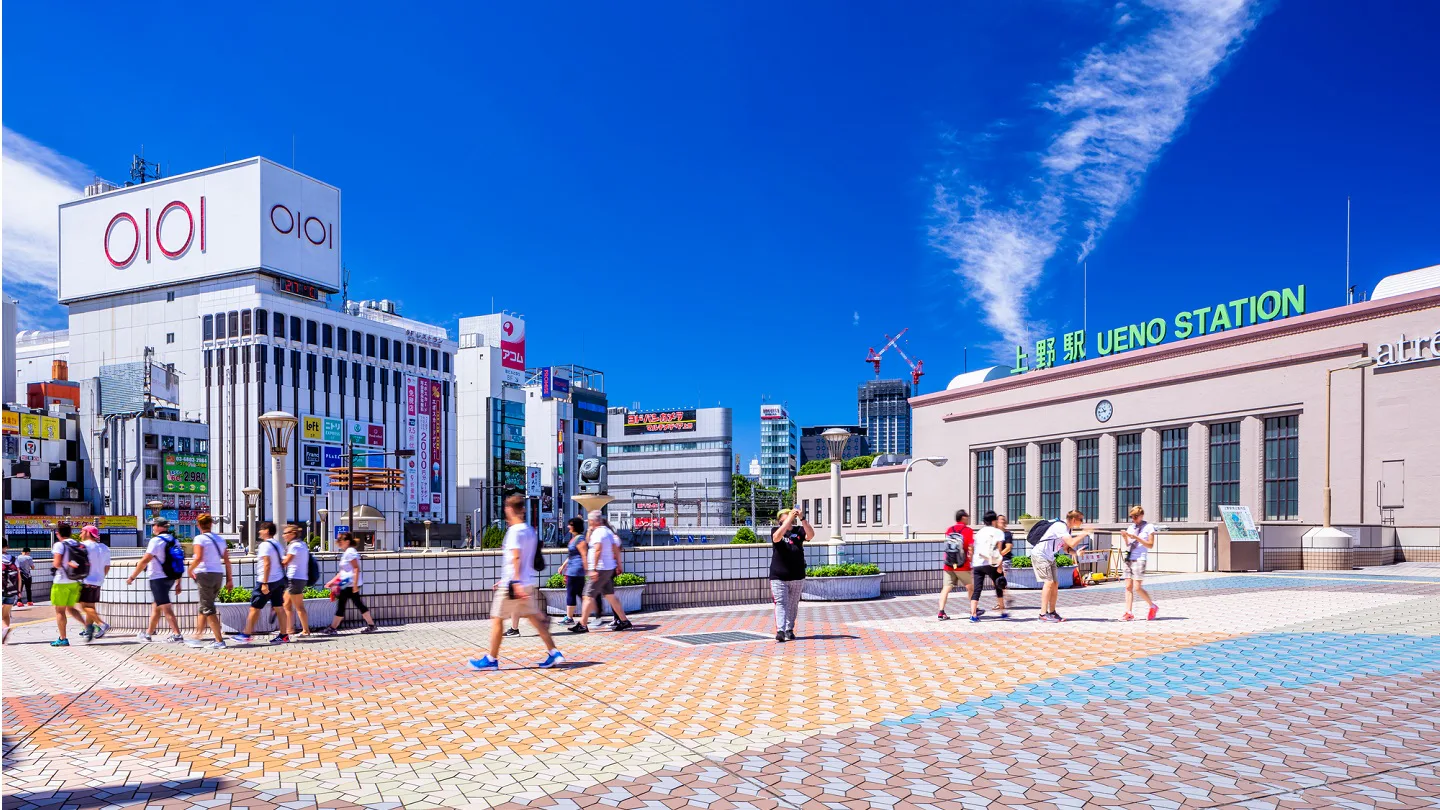
Ueno makes sense after a Narita arrival or when the hotel is already nearby. Walk the park and Ameyoko, then add a museum only if its remaining opening hours justify admission. The point is that food, station and hotel can stay close together. If the museum closes early, the neighbourhood still supplies an easy evening.
Asakusa can absorb a late arrival without a timed booking. Kaminarimon, Senso-ji and the riverside offer a route you can shorten at almost any point. Check your actual hotel journey before choosing it: Asakusa is a natural continuation for some east-side stays, but less convincing when your bags are in west Tokyo.
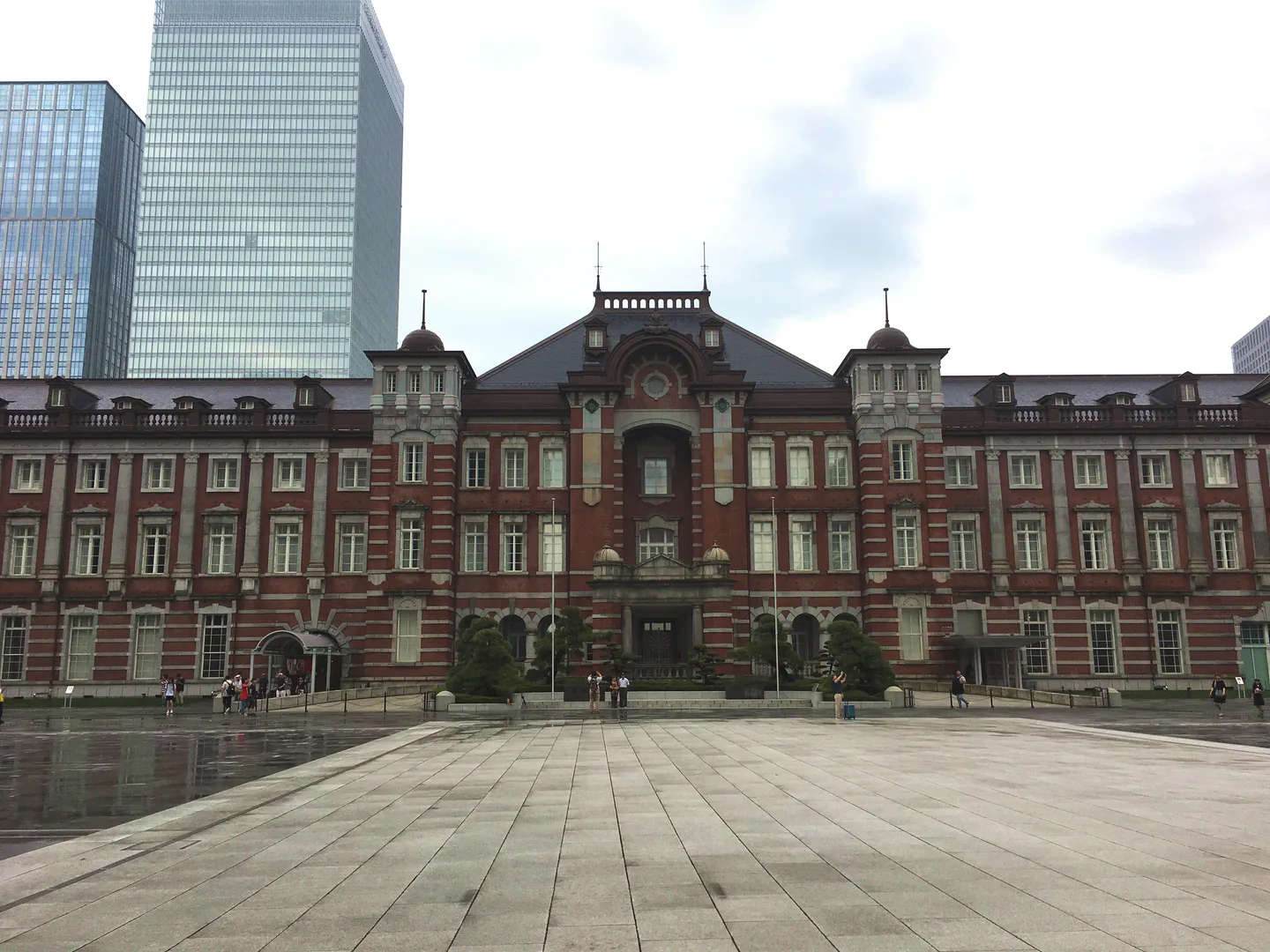
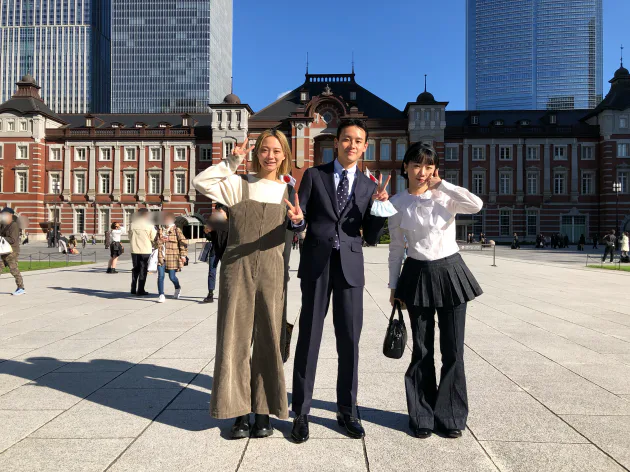
Around Tokyo Station, Marunouchi, KITTE, the station shopping streets and Ginza can form a compact central loop. Stop after the first two when you are tired, or extend the walk if you still have daylight. The choice works best when your room or luggage storage is central; a nominally convenient station does little for you if you must go back across town afterwards.
For a Shinjuku or Shibuya hotel, spend the first evening in the west. Dinner, a local street walk and an early return are easier to adjust after a delayed flight than a prepaid sunset admission. If you want a major view, give it a full Tokyo day when you can respond to weather and queue times.
Build the final day backwards from the terminal
Before you buy a last-day ticket or reserve lunch, write a timetable that ends at the airport rather than at the attraction:
Start with the airport arrival target printed by your airline.
Trace your chosen journey all the way to the correct terminal.
Leave time for a disrupted train, an unfamiliar platform or a slower bag-laden transfer.
Work out when you need to return to the hotel and collect stored luggage.
Use only the hours that survive those deductions for an attraction.
A 19:00 flight does not create a free day until 19:00. Once check-in, the airport journey and the bag collection are deducted, a short central outing may be all that fits. Protect the airport time first; the activity should use the remaining block, not set the departure time for you.
A stored suitcase creates a return journey
Leaving bags with the hotel is often easier than carrying them, but storage fixes a point you must revisit. Count the journey from your last sight to the hotel, the wait to retrieve bags, and the journey from there to the airport station. A locker elsewhere changes the route rather than removing the constraint. A short attraction beside your hotel can save more time than a free one across town.
Add three legs to the final-day plan: sightseeing stop → luggage, luggage retrieval, then luggage → airport transport. Give each leg a real time allowance, including station navigation with a suitcase.
Admission cost is not the only price of a stop. If a free gallery takes 30 minutes each way from your stored suitcase, it may consume the buffer that makes the flight comfortable. A paid visit on the same block as your hotel can be the easier choice. Follow the geography of the whole final route rather than ranking activities by ticket price alone.
For a same-day move to another city, sending, storing or carrying your suitcase becomes a separate decision. Delivery timing and the next hotel's acceptance matter more there than the airport cutoff used here.
Keep fragile bookings away from the flight edges
↔ Scroll table left or right
Save for a full day | Risk on a flight day | Better point in the trip |
SHIBUYA SKY at sunset | Entry time, rooftop weather and arrival uncertainty interact | A west-Tokyo day without a flight |
Mt Fuji road excursion | Traffic and weather can shift the return | A middle day with no airport commitment |
Disney park | A full-day ticket loses value when the clock is short | Its own park day |
Non-refundable tasting meal | One delayed flight or queue can forfeit the booking | An ordinary city evening |
A far-edge Tokyo neighbourhood | The visit can create a long return to stored bags | A day already based in that part of the city |
A reservation can sometimes fit a departure day
A booked attraction is workable when bags are already placed along the airport route, the entry conditions allow some delay and the entire journey still leaves a generous margin. Check those conditions before paying. A fixed ticket should occupy a window that already exists; it should not force the airport cutoff later. The same logic favours a nearby lunch over a long tasting menu when your final train must be caught.
A domestic arrival without checked baggage gives you a different starting point. If the flight is early, the hotel route is straightforward and a paid attraction has flexible entry, a first-day visit can be sensible. A long-haul arrival with immigration, bags and an uncertain transfer deserves more space. Use the actual arrival process rather than treating both situations as identical.
Put the last stop beside the route out
For up to three genuinely free hours, use the hotel neighbourhood. Four to six hours can hold Ueno, Asakusa, Tokyo Station and Ginza, or a west-side area as one focused outing. Seven or more hours can support pairs that already sit together: Asakusa with Ueno, Marunouchi with Ginza, or Meiji Jingu with Shibuya. On the final day, select among them by the position of your luggage and airport line.
The practical test is whether a long queue or a delayed train merely shortens sightseeing, or threatens the departure. If one disruption can erase the airport margin, cut the final stop before you leave the hotel. You can always extend a simple walk; you cannot make a timed airport check-in more flexible after you have gone across Tokyo.
Related guides: four-to-seven-day Tokyo plan · slower seven-day Tokyo route · Disney hotel split · rainy Tokyo Station walk · Osaka and Kyoto short trip · three-day Disney package · autumn week in Japan · Tokyo hotels with parents · Tokyo, Kawaguchiko and Hakone
For an arrival or departure night, compare Tokyo hotels along the airport route you will use before deciding which final attraction fits the luggage and transfer window.