

For children, I would make daytime Universal Studios Japan the complete Halloween visit. The 2026 autumn programme runs through 8 November, with seasonal Minion greetings and trick-or-treat moments alongside normal family attractions. Horror Nights operates from 11 September through 8 November; its street zombies begin at 18:00 on most nights. That gives a family a clear choice in late afternoon: leave before the park's atmosphere changes, or stay for a specific evening experience that the child wants and can handle.
The age guidance matters. Horror Nights is not recommended for guests aged five or under, and guests aged 12 or under require parental consent. A six-year-old being technically above the first threshold does not mean the night is gentle. Work from the child's response to noise, crowds, darkness and jump scares, then look at the exact attraction's restrictions. The Horror Nights attraction guide helps separate the event's broad guidance from each experience. If Halloween is one day in a larger Kansai trip, use the 2026 dates and ticket overview before making the hotel decision.
Give the child a complete morning before the adult wish list
Pick one first-hour objective that the child would recognise as a success: a favourite ride, character area or play space. Do it before crossing the park several times to chase fluctuating wait times. A shorter queue across the map may consume more family energy than it saves after stroller movement, toilet stops and an extra walk. Super Nintendo World can be a priority for some children, while others will care more about Minions or gentler Universal Wonderland attractions. Choose the morning around the actual child rather than an adult ranking of rides.
The 2026 Minions Belloween Greeting is a seasonal daytime option near the entrance canopy and in front of Minion Park; showtimes vary by date and are normally published about a week ahead. It gives families a Halloween-specific encounter without committing to the night programme. The wider park also lists trick-or-treat encounters. These are enough to make the autumn visit distinctive for a younger child. Do not promise a precise greeting time before the schedule for your day is available.
Universal Wonderland remains a useful family area, but the former Sesame Street Fun World and its linked performances closed in May 2026. An older itinerary that still routes a child there is unreliable. Check current attractions and show availability on the visit date. Meal timing belongs in the same morning plan: feed the child before exhaustion turns a routine queue into a crisis. A Halloween-themed kids' meal can be a seasonal treat, but the location, stock and menu can change. Choose a restaurant near the part of the park you are already using rather than walking across USJ solely for a themed plate.
Protect an afternoon recovery window
I would leave at least 30 to 60 minutes without a ride target after lunch. Sit, snack, use a low-intensity attraction or let a child decide whether to continue. This is the point at which a family learns whether the evening is realistic. A child can look excited at noon and be unable to manage loud horror effects by 18:00. The recovery block makes the late-afternoon decision based on actual energy rather than the sunk cost of tickets.
At about 16:00, check four things: whether the child has eaten enough, is still moving comfortably, wants more time without being persuaded and has an evening activity that is age-appropriate. If several answers are negative, begin the exit while transport and hotel arrival are still simple. Leaving then does not mean the Halloween day failed. The morning seasonal programme, rides and food already form the visit. The full opening-to-night itinerary is useful for older children, but it should be shortened whenever the family's real pace demands it.
A family with children of different ages may need two versions of the afternoon. One adult can take the older child to a suitable thrill ride while the younger child rests with the other adult, provided the meeting place is simple and neither group is left without food, a phone or the room key. Agree in advance which adult is responsible for each child if the attraction queue runs long. A timed ticket or Express Pass should fit that real group arrangement; buying four uses for an attraction that only two family members want can waste the saving it was meant to create. This is also a good reason to keep a second, gentle activity near the reunion point rather than forcing the waiting child to stand at an exit.
| Family situation at 16:00 | Plan I would use | Reason |
|---|---|---|
| Young child is tired or scare-sensitive | Eat, collect belongings and leave before 18:00 | A clear, calm exit protects the rest of the trip |
| Older child is curious but uncertain | Choose one suitable evening area and keep an exit time | One controlled encounter is easier to reverse |
| Child is rested and requests more park time | Check the day's map and individual restrictions before staying | Eligibility and route matter as much as enthusiasm |
| Adults want a horror attraction but the child does not | Separate one adult for that attraction with a fixed reunion plan | The child's schedule need not wait on an unpredictable queue |
Before 18:00, decide the route out or the route through
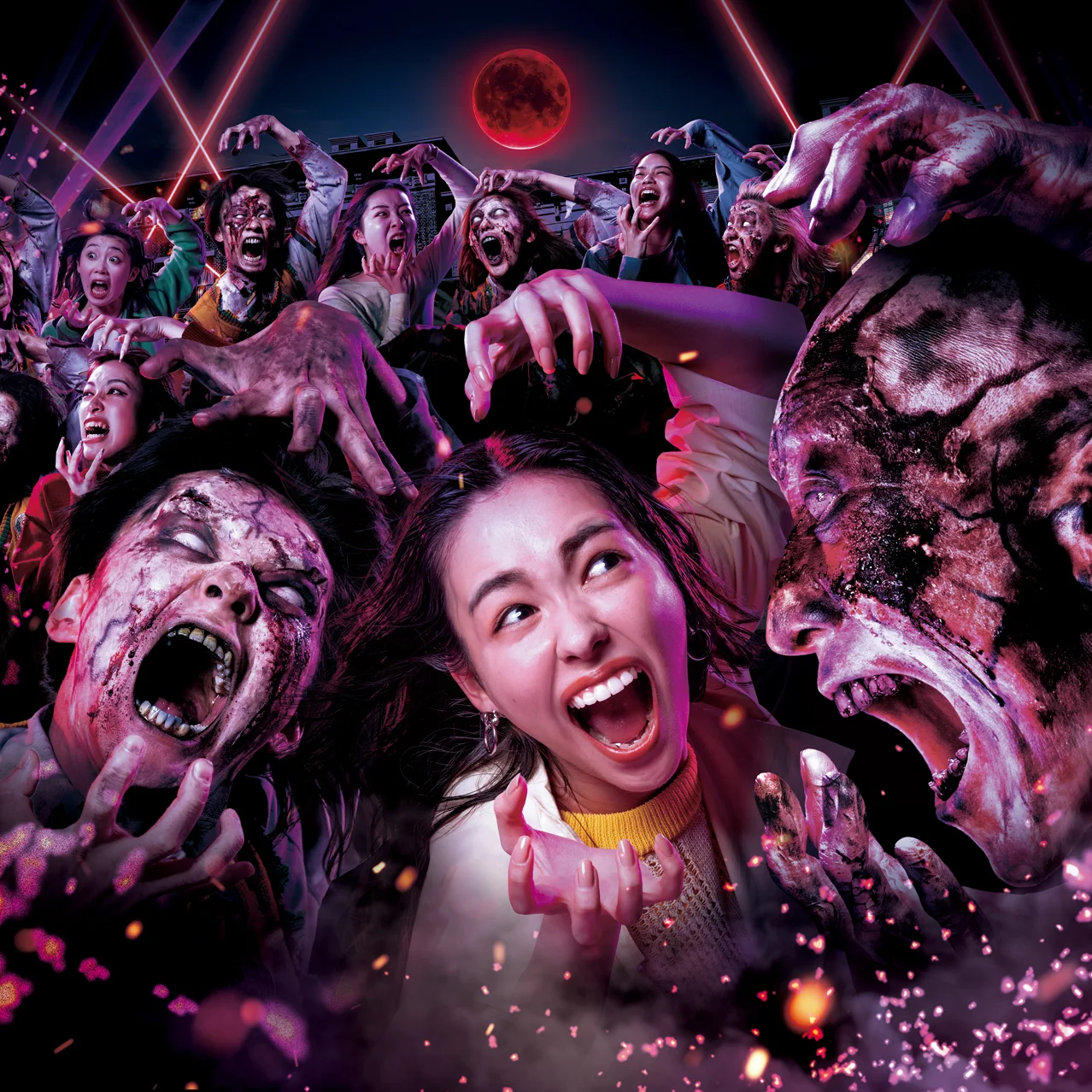
Street Zombies is scheduled from 18:00 until park close on most 2026 Horror Nights dates. The park publishes an event map marking zombie areas, safe areas and safe routes. Save the map for the visit day and follow crew directions as conditions change. A safe route is a practical navigation tool, not a promise that a sensitive child will never hear screams or see costumes. If the child is strongly frightened by such scenes, leaving before the transition is the more dependable choice.
Before the evening change, handle the tasks that become harder in dense crowds: toilets, water, food and deciding whether everyone is travelling together. A child in a stroller may need a different route from an adult moving quickly to a timed attraction. Do not use a young child as a trial run in the zombie zone to see whether they are “brave enough”. If you do stay, know where the next quiet pause and the park exit are before entering a busier part of the map. Families returning to Umeda or Namba should check the late-train and backup route before deciding on an evening exit time.
One adult can queue for a horror attraction while another stays with the child, but the waiting party should not be parked outside the attraction without a time limit. Agree on the meeting point and what happens if the queue runs long. The child and caregiver should be free to eat, use a quieter area or return to the hotel. The adult attraction is optional; the child's sleep and safe exit are fixed. Check the Halloween ticket and Express Pass decision before paying for a timed product that only one person can use, and compare the wider Express Pass value against your actual family priorities.
The 25 September overnight event has already passed
The one-off Halloween Horror Nights All Night event ran from 22:00 on 25 September to 05:00 the following morning and admitted adults aged 18 or over. It should not appear as an available option for families visiting after that date. The earlier family plan for that event still illustrates why a late-night adult split is not the same as one parent taking a short ride: it requires a child caregiver, hotel access, overnight belongings and a lighter next morning. For remaining 2026 Halloween dates, plan against the normal Horror Nights programme rather than an overnight ticket.
If a family already has an adult-only late event on another date, finish the hand-off before entering the park. The caregiver needs the room key or mobile access, a way to enter after dark, the child's medicines and pyjamas, and a transport plan that does not depend on the adult inside USJ. If those items remain in the other adult's locker, the split is incomplete. The former All Night event explanation is useful as a record of the 25 September rules, but it is no longer a ticket-buying option.
A nearby room matters when it changes the child's day
A Universal City hotel can make a midday nap, costume change or quick post-park return straightforward. It is especially useful when one caregiver may leave with the child before another adult, or when two consecutive park days create repeated early starts and late finishes. A hotel near the gate does not improve the holiday simply by having a nearby address; the family has to use that proximity. For one park day inside an Osaka and Kyoto trip, moving all luggage for a single night may cost more time than the return train. The one-day versus two-day hotel comparison addresses that breakpoint.
When a nearby bed would be useful, compare the Universal City, Umeda and Namba bases with the child's actual bedtime. The Park Front Hotel is a gate-proximity option; Park Front versus LIBER asks whether a shorter walk or a larger hotel experience matters after the night programme. The Oriental versus Park Front decision is another price and room comparison. Confirm the exact room's beds and late-return route rather than assuming every Universal City property has the same family layout.
Clothes matter too. A child's costume should allow ordinary shoes, comfortable queueing, meals and toilets, with pieces that can be removed if the child gets hot or wants to leave. USJ advises secure footwear and has seasonal costume and conduct rules. Read the mask, makeup and props guide before packing an elaborate outfit. A costume that cannot be simplified makes a tired child's afternoon harder than it needs to be.
Keep the following morning believable
A child who stayed late at Horror Nights needs a gentler next morning. Do not schedule an early hotel move, a distant temple reservation and a second full theme-park day simply because the calendar has space. If an adult stays later than the child, decide who handles breakfast, checkout and luggage before going to bed. The family's energy budget crosses midnight. A park day may be one square on the itinerary, but its sleep cost belongs to the following day as well.
For a wider Kansai itinerary, the Osaka–Kyoto four-day plan tests whether the next morning has room to slow down. A longer family stay can use the seven-day Osaka family pacing plan to place a quiet day after USJ. If rain or stroller friction changes the original attraction list, the Osaka family alternatives are more useful than trying to recover every skipped USJ ride the next day. The date itself can alter queues and room rates; see the Halloween date comparison before buying a peak weekend.
I would book the family day around one child-led morning win and a flexible afternoon. At 16:00, decide whether the child is finished; if staying, use the current map and a firm exit plan. For a mixed-age group, let adults pursue one horror experience without making the child wait for it. If a room near USJ saves a real nap or late transfer, inspect the same-date Universal City choices on the Universal City hotel map before paying for a room that the family may barely use.