
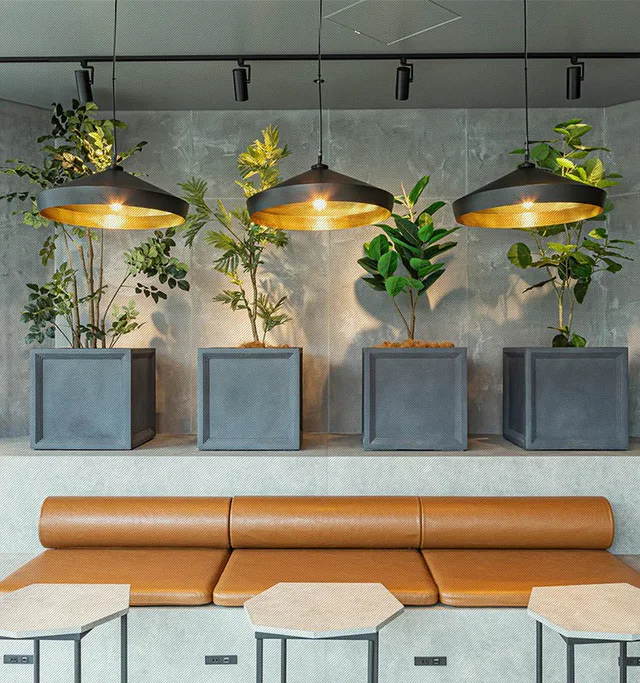
Choose an Osaka hotel for the family journey you will repeat, then check whether its room actually works for the people sleeping in it. A family spending four or five nights in the city with one USJ day will usually use a Namba or Osaka Station base more often than a Universal City room. Two park days change the balance: sleeping near the gate removes two early approaches and two tired returns. A room in Namba earns its price when laundry, food storage and real beds help every evening. Osaka Station earns its price when a stroller and luggage repeatedly cross JR platforms for Kyoto, Kobe or the onward train.
The park-side decision has a firm limit. An ordinary Studio Pass does not allow guests to leave Universal Studios Japan and re-enter later; Annual Passes are the exception. A hotel across the road may shorten the final walk, but it does not create a midday nap break on a standard ticket. That distinction is especially important for a toddler. Before comparing family rooms, mark the actual park days on the itinerary and read the one-day versus two-day USJ hotel calculation.
Match the base to the family's repeated journey
| Trip pattern | First area to price | What the hotel must deliver | Reason to choose elsewhere |
|---|---|---|---|
| Two consecutive USJ days with a stroller | Universal City | Short approaches to both park mornings and short returns after both evenings | A standard park ticket still prevents a midday exit and re-entry |
| One USJ day in a four- or five-night Osaka stay | Namba or Osaka Station | One practical base for the other days; accept one park commute | A late finish or limited mobility can justify one park-side night |
| Three to five nights with laundry, milk or reheating | Namba | Check the precise room's washer, fridge, microwave, sinks and beds | Do not pay for equipment the family will not use |
| Two or more JR day trips and JR arrival or departure | Osaka Station | A manageable lift route and fewer repeated station approaches | The advantage shrinks if most evenings finish in Minami |
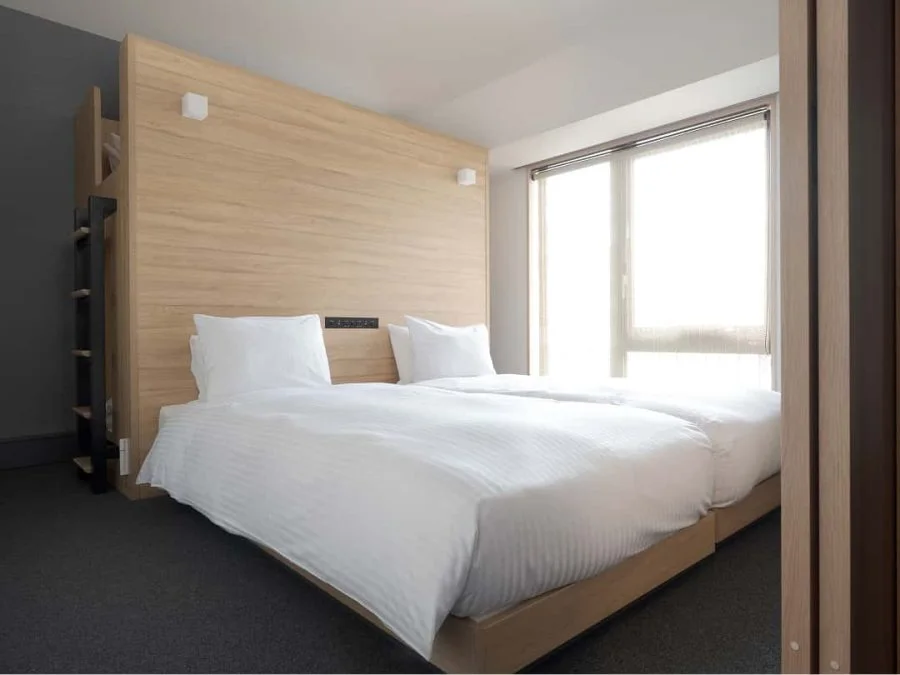
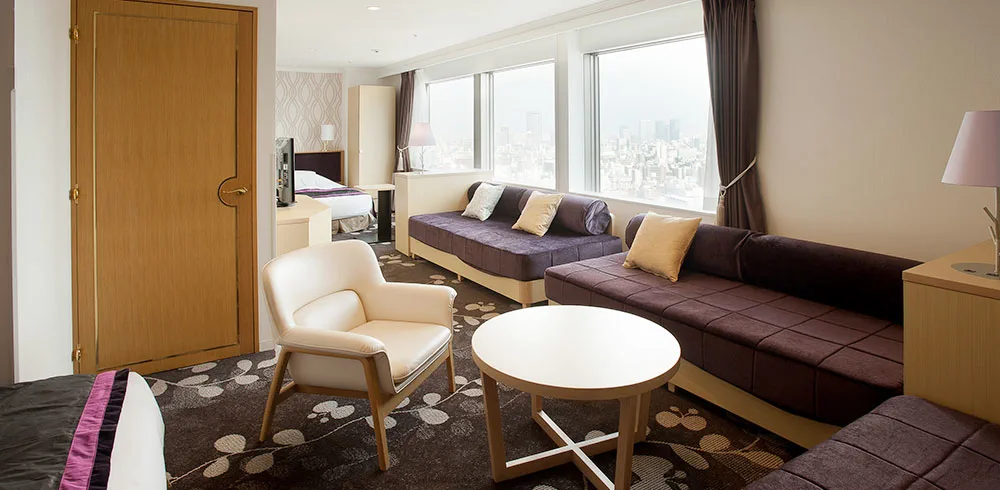
This table is a starting point, not a ranking of hotel brands. The wider Osaka base comparison helps locate the rest of the itinerary; the seven-day family route shows why a crowded schedule changes the room's job. Write down the difficult day first: a second early USJ entrance, an exhausted child after the park, a run of clothes to wash, a six-person bathroom queue, or the third time a stroller must reach a JR platform. Choose the room that removes the difficulty more than once.
Universal City: valuable for the edges of a park day
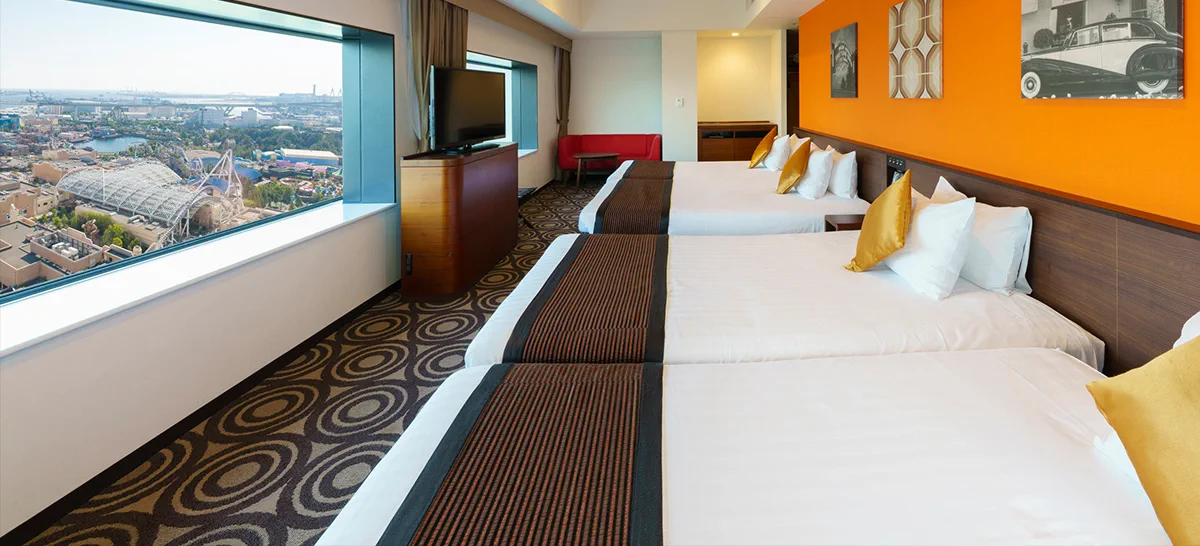
A family using USJ on two consecutive days has four city-to-park or park-to-city legs if it stays centrally throughout. Moving close to the gate can remove several of the most tiring ones. The Park Front Hotel lists the entrance at about one minute, while its Park View Family categories run roughly 40–45.5 m² with configurations for three or four sleepers. That is a real room and walking-distance proposition; compare the exact Park View category and bed arrangement in the Park Front room decision. The photograph here shows the room and park view rather than proving every room has the same view.
For one standard park day, a nearby hotel chiefly protects the morning approach and the walk after leaving the park. If a child needs to sleep at midday, the family can take a break inside the park where allowed, but leaving for the hotel normally ends that ticket's park visit. The current USJ re-entry rule is explicit. An Annual Pass changes this calculation because it permits re-entry; a normal one-day pass does not. A family planning an early start should also use the day's park-hours calendar because entry can sometimes begin before the published opening time.
That does not mean every two-day visit requires two or three Universal City nights. A single middle night between two park days removes the first day's late trip back to central Osaka and the second day's early trip out. It also creates one hotel move. If the family carries several suitcases, a stroller, snacks and sleep gear, that move can be more work than the two train rides it replaces. The luggage-forwarding options are useful only if they make an otherwise sensible split manageable. For a Halloween evening, compare the timing separately in the USJ Halloween base guide; late-night fatigue can make a park-side night valuable even when the daytime count is one.
If you are holding a central Osaka room for four nights, moving everyone to Universal City and back solely to save one ordinary return is a high bar. One park day among three or four central days normally favours a single base. A child who cannot manage the last journey, a traveller with reduced mobility or a very early priority arrival may still justify one specialist night. Price the actual family room, not the cheapest double in the same building; room capacity can reverse the apparent saving.
Namba rooms: judge the nightly household work
Namba works when the family needs to eat, clean and reorganise in the room after several days out. Hotel Keihan Namba Grande's Family Room is listed at 44 m² for up to five people. Four guests have four 110 cm fixed beds; a fifth uses an extra bed. The listed equipment includes a washer-dryer, IH cooking, an oven-microwave, a 90-litre fridge/freezer, two washbasins and a bathroom with a separate washing area. A family using those features on four nights is buying something different from a large room that merely sleeps five. The Family Room versus connecting rooms choice depends on whether one shared space or two bathrooms are the greater need.
Count when the equipment would be used. A washer that runs after children sleep can replace a laundrette trip; two sinks can shorten the morning queue; a fridge can hold food that avoids another late restaurant search. For a single night, those amenities may sit unused. If the family eats out and travels light, compare the price with a simpler Namba room. The Namba family hotel comparison tests that trade against a different room style.
MIMARU Osaka Namba Station answers a different group problem. Its 35 m² Family Apartment has two singles and a bunk bed, one washbasin, one toilet and one bathroom; it does not have an in-room washer-dryer. The 51 m² Two-Bedroom Japanese Apartment has two basins, two toilets and an in-room washer-dryer. At 61 m², the Two-Bedroom Family Suite has four single beds plus a bunk bed, two basins, two toilets, a bathroom and another shower room, as well as a washer-dryer. Those differences matter more than the shared property name. Check the MIMARU room-by-room comparison before assuming the least expensive apartment includes laundry or that its sole toilet will work for six people.
| Family bottleneck | Room detail to confirm | Example to compare |
|---|---|---|
| Four people mainly need proper sleeping surfaces and a place to eat | Named beds, table and kitchenette; in-room washing may be unnecessary | MIMARU 35 m² Family Apartment |
| Five people want nightly laundry and easy food storage | Fifth bed, washer-dryer, fridge/freezer and cooking equipment in the actual category | Hotel Keihan Namba Grande Family Room |
| Six people all prepare at once | Two toilets, two basins and separated sleeping or washing areas | MIMARU 51 m² or 61 m² two-bedroom categories |
| Family wants immediate JR access | Lift route to platforms and whether room layout accommodates every sleeper | Hotel Granvia Osaka Family 4 or Family 7 |
The same square-metre figure can hide a different morning. Four travellers with one toilet may be fine; six with one toilet can lose the first hour of every day. Conversely, paying for a second bathroom is wasteful if the group leaves at different times. A group travelling as four adults should also compare the station-connected hotel against an apartment on its own bed and bathroom needs. For this family itinerary, room type has to be checked as carefully as district.
Osaka Station pays back on repeated JR days
Osaka Station is the stronger base when the family keeps travelling through JR. If Kyoto, Kobe or Himeji day trips occur on two or more days and the arrival or departure uses JR too, the same station approach can be repeated morning and evening. Hotel Granvia Osaka connects directly to JR Osaka Station. Its Family 4 is listed at 43 m² for up to four people; the Family 7 is 70 m² for four to seven, with living space, a separate bathroom and separate shower room. For a large family, the larger category can reduce both the walk to rail and the queue to get ready. Read the Osaka Station hotel comparison against the exact room price.
Paying a station premium for one Kyoto day among four Namba-focused days is much less persuasive. The useful unit is not a vague claim that Umeda is convenient; it is the number of repeated station entries and exits removed from the trip. A Kyoto and Kobe rail-day calculation makes that repetition visible. The Namba station-connected hotel test is a useful comparison when the family's journeys stay farther south. If the final trip is a Shinkansen departure from Shin-Osaka, the JR-oriented base may help again, but the station route and luggage transfer still need to be checked for the exact hotel.
A stroller makes an advertised five-minute walk a poor measure by itself. Locate the usable lift, station exit, platform and hotel door. Add the crowded interchange, rain exposure and whether a sleeping child has to be carried while the stroller is folded. A flat, slightly longer Namba walk can be easier than a shorter route with a difficult platform change. The last 500 metres should be walked on a map using the accessible route, not guessed from a distance pin. Families accompanying grandparents can apply the same test in the Osaka with parents base guide.
Breakfast, airport arrival and a hotel move
Breakfast deserves a morning-by-morning calculation. The Park Front lists a 07:00–09:30 breakfast period, yet a family trying to maximise an early USJ arrival may leave before a relaxed hotel meal. A JR day trip or flight can also make prepaid breakfast poor value. Count the mornings on which everyone will actually sit down and eat; compare that with a room-only rate and nearby food, rather than treating breakfast inclusion as a universal plus. An early park morning and a generous buffet are both attractive, but they can compete for the same hour.
Kansai Airport affects the first and last nights. Nankai rail brings many arrivals into the Namba side of Osaka; Hotel Keihan Namba Grande lists about six minutes from Nankai Namba, and MIMARU Osaka Namba Station lists four. That is useful with tired children and luggage. It should not determine every night if the middle of the itinerary repeatedly uses JR from Osaka Station. Separate arrival, full days and departure on paper; the full days occur most often and normally deserve the highest weight. The first-time Osaka area guide covers that geometry beyond family rooms.
Split hotels only when the new base does a distinct job. Two or three central nights followed by two Universal City nights around two full park days can make sense. Namba arrival nights followed by an Osaka Station stay can work when multiple JR outings and the final departure all point north. A one-night USJ detour followed by an immediate move back usually adds packing, storage and check-in to save one park journey. A switch from Namba to Osaka Station solely for one Kyoto day has the same problem. The one-base Kansai route gives a fuller example of days where remaining in one room wins. For a larger family, sending luggage ahead lowers the work of a justified move; it does not create a reason to move.
For the actual shortlist, price the room that holds every traveller with the required beds, then add the daily route. Compare Universal City family stays for a two-day park block, Namba rooms if the nightly household work is the deciding factor, or Osaka Station rooms when JR journeys repeat. The Park Front category check and MIMARU layout check matter before comparing headline prices. Confirm the exact occupancy, bedding and cancellation terms before choosing; a cheaper room category that cannot sleep the group is not a cheaper family stay.