
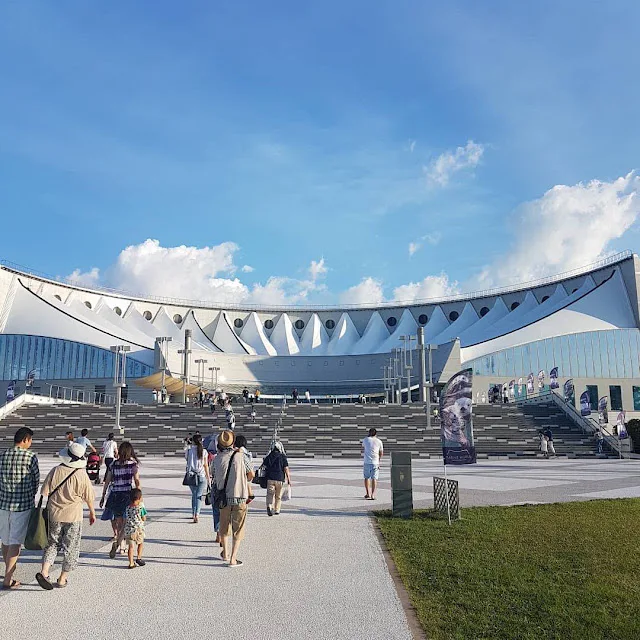
An aquarium ticket can be an easy purchase and a difficult fit. Marine World Uminonakamichi charges ¥2,500 for an adult, but the visit sits on the coast beyond central Fukuoka. Allow two to three hours among the exhibits, then add the journey in both directions and any wait for a train, bus or boat. That makes it a half-day decision for most Hakata or Tenjin visitors. A family that wants the aquarium, a traveller interested in Kyushu’s marine habitats, and someone pairing it with Seaside Park have a stronger case than a visitor filling a spare gap before dinner. If Fukuoka itself is still optional in a first Japan trip, the Fukuoka versus other city stops is the decision to make before this one. The Fukuoka trip-length guide is useful before buying a ticket for a short stay.
The journey takes the cheap ticket out of its original context
Uminonakamichi Station is beside the aquarium, but it is not in the Hakata or Tenjin sightseeing core. A rail trip from Hakata involves planning the route through Kashii and the onward connection; a boat or bus may suit a different starting point. Compare the whole door-to-door chain, including the trip back, rather than treating the time inside as the duration of the excursion. The Fukuoka transport-pass guide helps with the city-side decision, and the three-day first-visit itinerary shows what a coastal half-day displaces.
| Traveller’s day | Aquarium fit | The time cost to examine |
|---|---|---|
| Children or adults keen on marine exhibits | Strong if the attraction is a main event | Protect enough time for galleries and the return, not only a show |
| Aquarium plus Uminonakamichi Seaside Park | Strong as a full coastal outing | One long outward and return journey serves both places |
| Two complete Fukuoka days and mild aquarium interest | Usually weak | City neighbourhoods or another day trip lose a large block |
| Staying on the Uminonakamichi coast | Potentially strong | The daily commute no longer starts in central Fukuoka |
| A 90-minute hole between city bookings | Poor | The door-to-door journey can use the whole gap |
The contrast with another excursion makes the choice clearer. A Dazaifu-versus-Itoshima day-trip comparison tests whether your next free half-day should be temples, coast and food, or neither. If your visit is built around children, the Fukuoka family-hotel guide also matters: a convenient base and an early return can have more value than squeezing in an extra attraction.
Admission is straightforward; the clock is less forgiving
Individual entry is ¥2,500 for adults, ¥1,200 for elementary and junior-high students, ¥700 from age three until elementary school, and ¥2,200 from age 65. Those are aquarium charges, before a separate feeding experience or transport. The usual opening window is 09:30–17:30, with 10:00–17:00 shown for December through February. Entry closes one hour before the building does. A 16:20 arrival during normal hours is therefore within the gate window but leaves little room for the regional galleries, a meal and a performance. On winter dates a 16:20 arrival would miss the 16:00 final-entry cutoff.
There is no reliable single number for the return from every Fukuoka hotel. Someone based beside Hakata Station has a different rail connection from a guest in Tenjin or a traveller already at a bay-side pier. A Hakata-versus-Tenjin hotel decision can help locate the repeated transfers in a multi-day plan. If a transport package appears cheaper, price the exact journey you would take without it. A ticket that includes a city bus pass has little value if you intended to come by JR.
The galleries follow Kyushu’s water, not an animal checklist
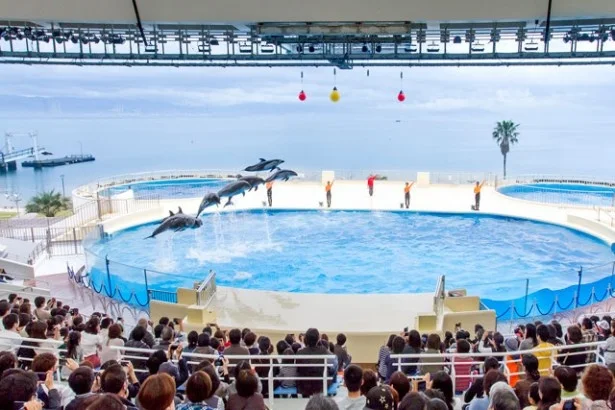
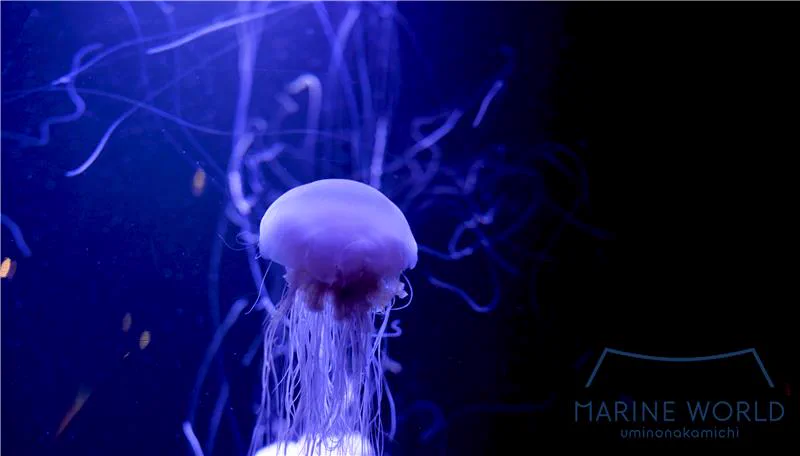
Marine World’s exhibits use the seas around Kyushu as a thread. The open-ocean tank and warmer southern-water material give the visit a sense of place that is easy to miss if you move straight from one headline species to the next. Give yourself time to follow that geography, pause at the large tank and look at the jellyfish room before scheduling the show. For a traveller who has already seen several major Japanese aquariums, this regional structure is the clearest reason to choose this one. A visitor looking only for a single dramatic tank photograph may find the transfer harder to justify.
Two to three hours inside can work without rushing: galleries first, one performance if available, then whatever tank or exhibit held your attention. It is a planning range, not a promise that every family moves at the same pace. Feeding or a park visit adds time. The Fukuoka attractions and day-order itinerary can hold the aquarium as a protected block rather than placing it between distant city stops.
The 2026 night season has finished
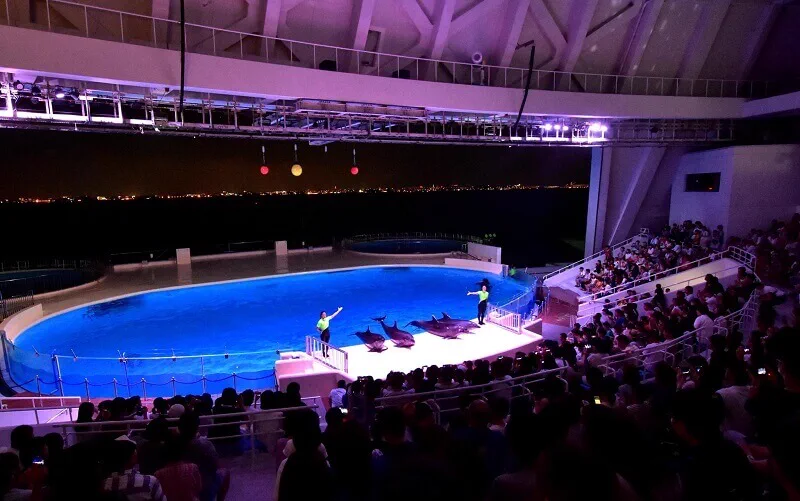
Marine World’s extended 2026 evening dates ended on 23 September. They covered 18–20 and 25–26 July, 1–23 August daily, and weekends or holidays from 29 August through 23 September. On those event dates the building operated 09:30–21:00, final entry was 20:00, and the night lighting began at 18:00. That schedule is useful context for understanding older travel plans and photographs, but it is not an evening option for a late-October 2026 visit. Use the current day’s opening hours for any new booking.
When such an evening event is actually offered, the interesting itinerary change is shifting the aquarium out of the middle of the day. Entering before dusk allows a comparison between daytime galleries and the changed lighting; arriving just before final entry does not. The earlier event did not require a second general ticket merely to remain after the lighting change. The Fukuoka night-food guide illustrates the opportunity cost for a city-based visitor: an extended aquarium evening also changes where dinner ends up.
A show seat is only useful on dates with a show
The outdoor sea lion and dolphin pool looks over Hakata Bay, giving the performance a setting distinct from an enclosed urban tank. Its schedule varies by date, and the front rows may get wet. Work one suitable performance into the middle of the visit if there is one; do not leave a large empty interval simply to protect a particular seat. Poor weather complicates an outdoor highlight even though many aquarium galleries are indoors. The Fukuoka rainy-day route may be a stronger city-centred alternative on a day of heavy rain.
There is an important dated exception: the aquarium plans show-pool repair from 12 January to 9 April 2027, including reserve construction days. Sea lion and dolphin shows are suspended and the seating area is closed during that period. A winter or spring 2027 trip should be judged on its galleries and any other available activity, without budgeting for the pool performance. The photo of a jumping dolphin records the usual experience, not a promise for those construction dates.
Paku Paku Dolphin is a separate, timed purchase
The dolphin-feeding activity costs ¥1,000 for one serving and admits participants from age three. Aquarium admission is additional. For October and November the published session is on weekends and holidays from 12:30 to 12:45. From December through February it moves to 13:20–13:35, except 24 and 25 December at 13:30–13:45. Tickets open at midnight two weeks before the intended date and a sold-out day disappears from availability. A family whose child cares particularly about feeding should secure that place before organising the rest of the coastal day; entry to the aquarium alone does not reserve a serving.
The experience takes place at Kaiju Island’s dolphin pool, with the meeting time five minutes before the start. A parent accompanying a participating young child also needs the appropriate activity ticket. Do not confuse the feeding slot with the main sea lion and dolphin show, and do not assume construction dates will preserve the same activity arrangements without checking the date offered for sale. The Fukuoka family itinerary should place a timed feeding appointment before flexible galleries or a long lunch.
The Seaside Park combination saves ¥260 only if you enter the park
The adult Marine World plus Uminonakamichi Seaside Park combination costs ¥2,690. Separately, the ¥2,500 aquarium ticket and ¥450 park entry would total ¥2,950, so the combined product saves ¥260. It is an adult high-school-age-and-up offer on the current ticket page. That saving is real if you already want outdoor park time. It is no reason to add a park you would otherwise skip, especially if another Fukuoka appointment limits the day. Cycling, seasonal flowers and play space may make the park a natural second destination for a family, but they require more daylight and energy than a ticket calculation reveals.
| Purchase or activity | Published adult amount | What it covers or changes |
|---|---|---|
| Aquarium entry | ¥2,500 | Marine World admission, before transport or feeding |
| Aquarium plus park separately | ¥2,950 | ¥2,500 aquarium plus ¥450 Seaside Park admission |
| Aquarium plus park set | ¥2,690 | Both entries; ¥260 less than separate adult purchases |
| Paku Paku Dolphin | ¥1,000 extra | One timed feeding serving, with aquarium entry also required |
| JR, bus or Uminaka Line set | Varies by product and departure point | Compare the included journey against your actual route |
Transport-inclusive sets need their own calculation. The current range includes aquarium admission paired with JR return travel, a Fukuoka city bus day ticket, or a Uminaka Line boat return from the bay-side approaches. The useful product depends on the hotel and where the rest of the day is spent. JR removes road traffic risk, while a boat can suit a waterfront start; a city bus package may be attractive only when further city rides are part of the same date. The Fukuoka hotel area guide and transport-pass comparison help match the ticket to an actual route.
When a coastal hotel changes the value of the day
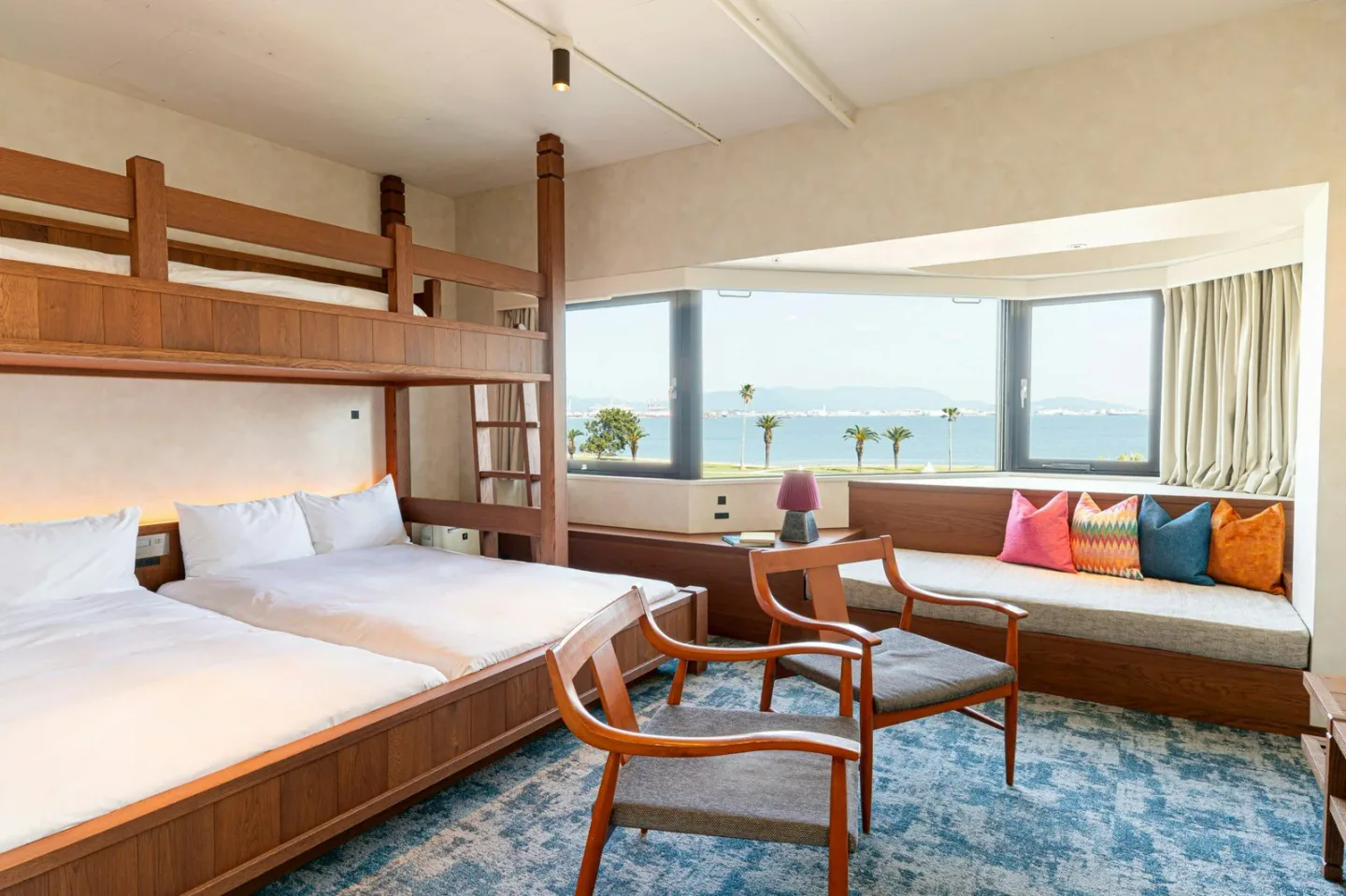
Most aquarium visitors can keep a Hakata or Tenjin hotel. An overnight by Uminonakamichi starts to make sense if the park, coast and slower resort time are all goals in their own right. It avoids treating the aquarium as an isolated return trip from the city. The THE LUIGANS room and location guide weighs that move against losing easy access to Hakata evenings. The Fukuoka family hotel comparison is a better starting point if daily returns and children’s bed arrangements matter more than one coastal night.
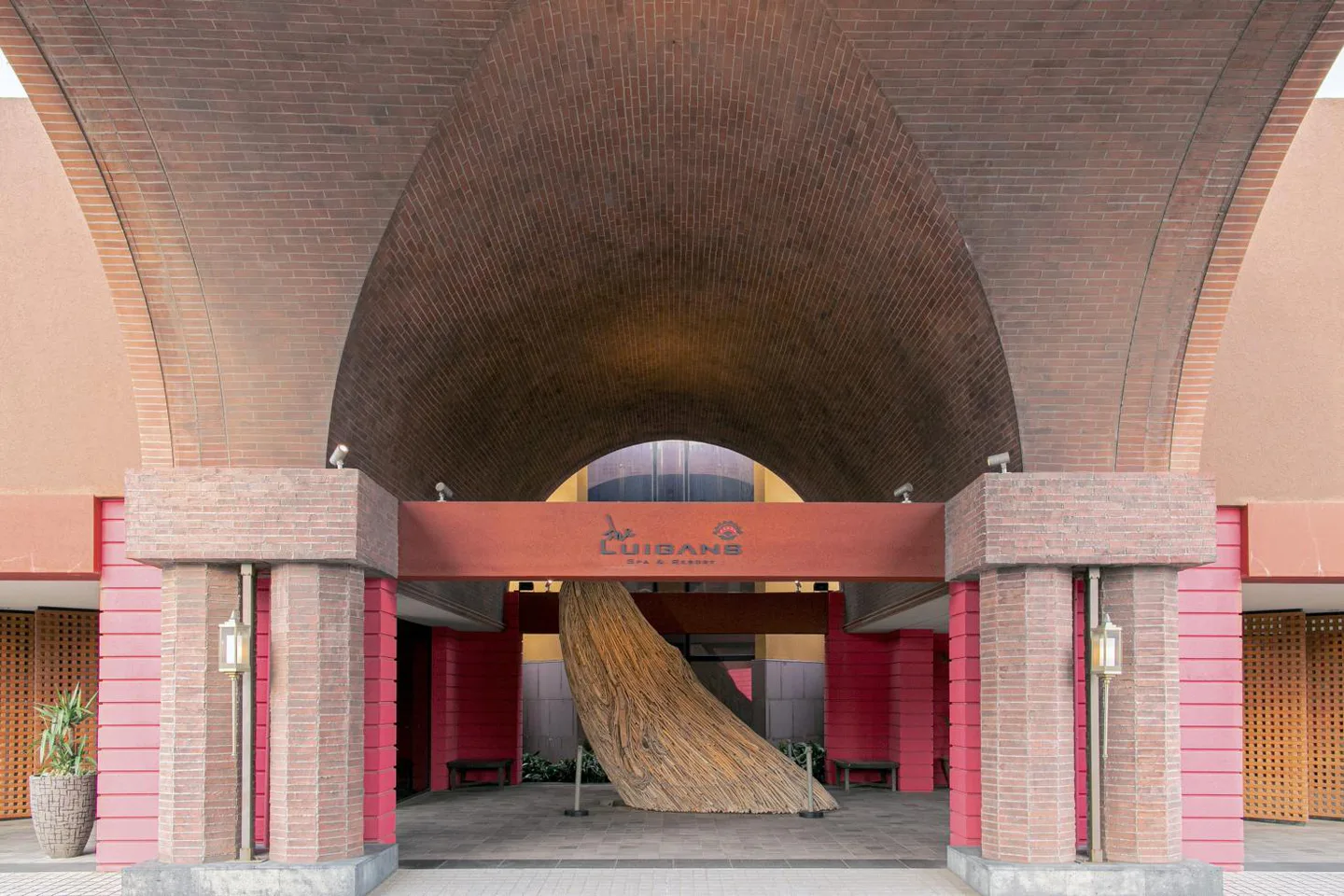
A coastal room is not an automatic upgrade to the aquarium visit. Its value comes from what else you would do there: a leisurely park day, an unhurried dinner, perhaps a morning near the water. If the next morning begins at Hakata Station or Fukuoka Airport, returning from the peninsula becomes the new trip to plan. The Fukuoka early-flight hotel guide helps keep that final morning realistic. The hotel photo here shows the nearby resort entrance; it should not be mistaken for a Marine World facility.
Some Fukuoka days are better without the aquarium
A first-time visitor with only two complete days may prefer the city itself, especially if Dazaifu or another out-of-centre visit is already booked. Someone with mild aquarium interest after visiting several large aquariums has less reason to spend a second long transfer. A traveller seeking a fully indoor storm-proof plan should remember the outdoor show pool and coastal transport; the Fukuoka rain itinerary keeps more of the day under cover. An aquarium-plus-distant-day-trip combination often sounds efficient on paper and becomes tiring once the connections are counted.
The alternative need not be another big attraction. The Fukuoka food-trip base guide and Tenjin coffee-and-dessert walk point to time that remains inside the city. If the coast itself is the priority but marine exhibits are not, the Itoshima day-versus-overnight decision is a different use of the day. These comparisons make the choice about the activity you would enjoy, rather than about using a low-looking ¥2,500 ticket.
Choose the date and journey before the ticket seller
First decide whether the aquarium deserves a continuous half-day, then select the transport chain, the applicable opening date and any timed activity. Use a general ticket if the galleries are the reason to come; use the park set only when both sites are genuinely planned. On 2027 show-pool construction dates, remove the dolphin and sea lion performance from the expected itinerary. If comparing a third-party admission listing, check the exact Marine World product, validity, redemption and cancellation terms rather than letting a small headline discount decide the route.
The existing Marine World Klook ticket listing and Marine World KKday ticket listing are two purchase options for that final comparison. They do not change the coastal journey. If staying near the aquarium makes the day worthwhile, compare Uminonakamichi-area rooms after you have decided how many coastal hours you want. A Fukuoka one-night-or-extra-night comparison can help if this competes with the rest of a Kyushu itinerary.
Other trips on the site
Additional reading: Cup Noodles Museum, ANA InterContinental Manza, Kanmon Strait Museum:, Kushimoto Marine Park, Nagashima Jumbo Pool.
Additional reading: Nara Prison Museum:, Otsuka Museum of, Suzuka Circuit Park, Tokyo Attractions Map:, Tokyo Budget Hotels:.
Additional reading: Abashiri Drift Ice, Chiikawa Park Tokyo, Tokyo Disney Split, Kishiwada Danjiri October.
Dates, admission and ticket choices: entry fees, seasonal hours and the 2027 show-pool closure, 2026 night-event record, Paku Paku Dolphin dates and combined tickets.