
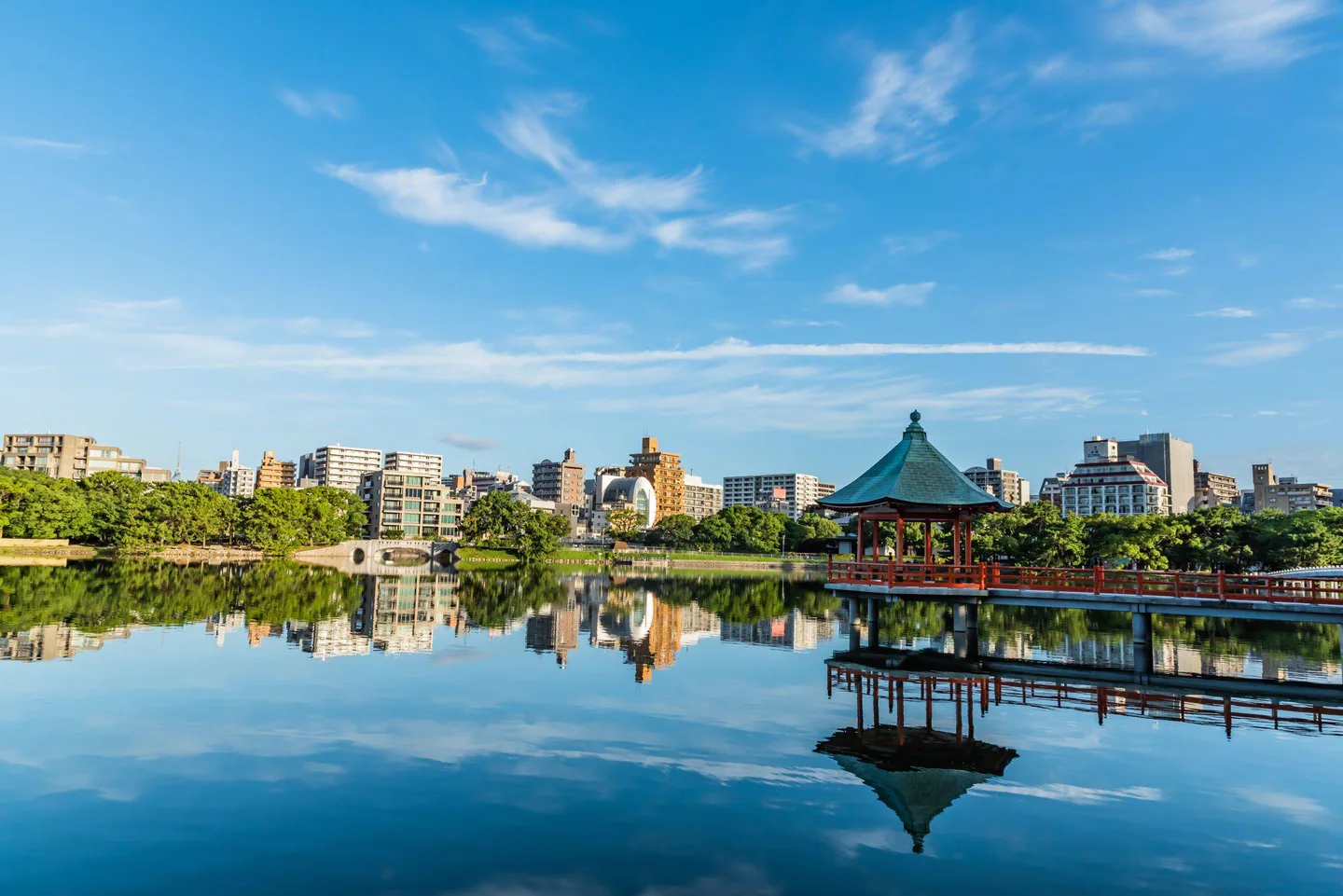
Give Fukuoka two complete days if the city itself is the trip. Add a third usable day for Dazaifu or Itoshima. A fourth is easy to enjoy when you want another excursion, a slower food itinerary or recovery time, but it should have a place in the calendar before you pay for another hotel night. The number of nights booked in Fukuoka can be much larger than the time actually spent seeing it.
For example, a Hakata hotel can serve as a base for Yufuin and Beppu on separate days. That may simplify baggage and check-ins, yet those are largely Yufuin and Beppu days. Count them that way. If a destination's dinner, bath or early morning is the reason for going, compare moving the night with returning to the same Fukuoka room.
What counts as a Fukuoka day
↔ Scroll table left or right
Time available | Reasonable shape | What it leaves out |
One evening and a morning | One neighborhood, a meal and an easy onward departure | A complete city visit |
Two full days | Hakata/Gion on one, Ohori/Tenjin on the other | A substantial excursion |
Three full days | Two city days and Dazaifu or Itoshima | A second regional day unless the city is shortened |
Four full days | Room for two distinct side trips or a slower city pace | Another Kyushu base that might serve those excursions better |
Arrival and departure can add useful hours, but do not count them as full days before you know the flight and transfer. Fukuoka Airport gives about five minutes by subway from the domestic terminal to Hakata and about eleven to Tenjin. International arrivals use a free shuttle to reach the domestic terminal's subway station; the airport estimates roughly ten minutes for the shuttle, subject to traffic. Immigration, bags, the shuttle and hotel check-in still determine how much of the first day remains. A noon arrival may allow one neighborhood and dinner; an 18:00 arrival is mostly an evening plan. An early flight home can remove the final morning entirely, so mark check-out and airport departure on the day grid before labeling the stay three or four days.
Two city days can feel complete
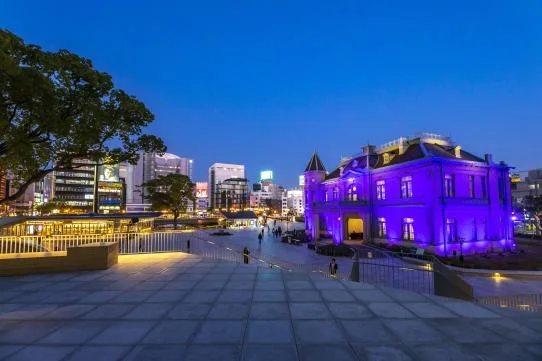
Fukuoka's main districts are close enough that two unhurried days can show different sides of the city. Put Hakata and Gion together rather than repeatedly crossing town. Spend the second day around Ohori, Maizuru and Tenjin, leaving room for Daimyo or a waterfront evening if those interest you. This creates time for meals and wandering without filling every hour with a named attraction.
A single night is a different product. It works well as a gateway to Kyushu: drop bags, choose one area for food and a walk, sleep, then continue. If an early train starts the next day, Hakata may be the natural hotel location; if the evening is the main event, Tenjin can still work. Use the Hakata or Tenjin base comparison after fixing the departure and evening, rather than choosing the district by habit.
The third day belongs to one excursion
Dazaifu is a structured choice for a visitor without a car. Dazaifu Tenmangu gives about 35 minutes by Nishitetsu rail from Fukuoka (Tenjin) Station to Dazaifu Station, followed by roughly five minutes on foot, or about 45 minutes by direct bus from Hakata Bus Terminal to the station. Allow for waiting, crowds and the time you want around the shrine rather than interpreting those published travel times as a door-to-door half-hour visit.
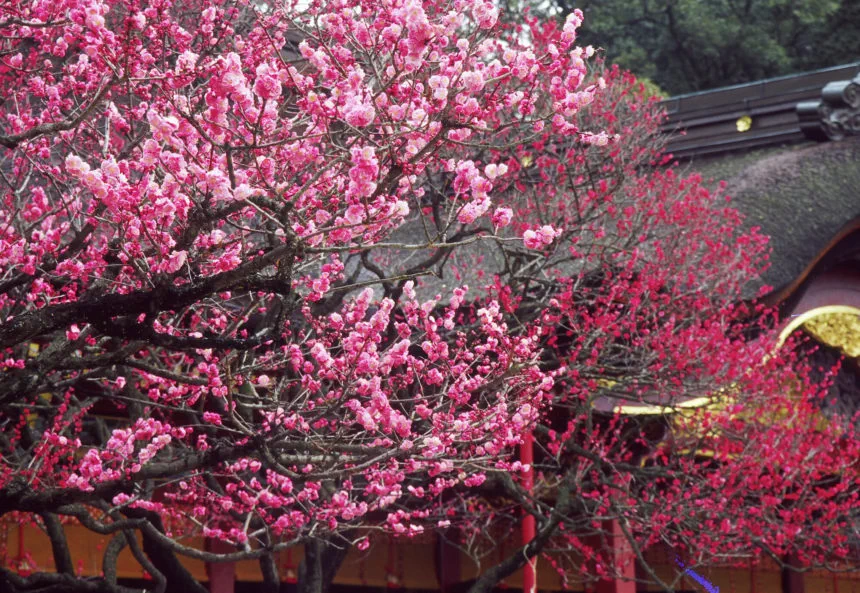
Itoshima offers a different day: coastal scenery and stops spread out enough that weather and local transport shape the route. When the coast is the reason for going, move the trip to the better weather day if the itinerary allows. It is a weaker choice when a rainy forecast removes the beach or sunset you had in mind. Dazaifu can also be affected by weather, but its visit is less dependent on a clear horizon.
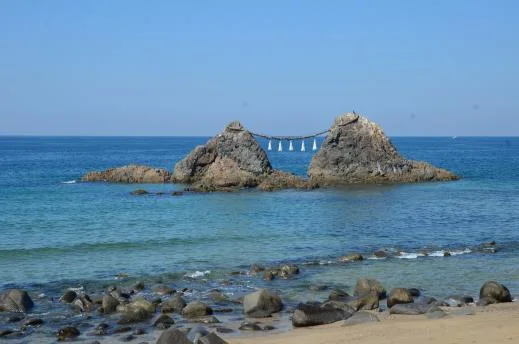
Trying to put both into the third day defeats the purpose of adding it. Select the shrine-town route or the coast, then return to Fukuoka for an evening that is still enjoyable. A second excursion is a reason for a fourth usable day, not a reason to turn two distinct areas into a race between transport connections.
What three days can look like in practice
Give Day 1 to Hakata and Gion, with an evening around the river or the hotel district. Day 2 can start in Ohori Park and continue toward Tenjin at a pace that allows a proper lunch. Use Day 3 for one excursion. If it is Dazaifu, let the shrine and surrounding streets occupy the main daylight block and return for dinner. If it is Itoshima, pick the coastal stops that fit the transport you will actually use, then keep the evening free of another fixed appointment.
Swap the excursion and city days when weather argues for it. A rainy morning does not ruin a food and neighborhood day in central Fukuoka, while a coastal view can lose much of its purpose under heavy rain. This is one reason to avoid paying for timed activities on every day of a short stay: an open middle day lets the trip react to conditions without losing the place you most wanted to see.
A Fukuoka hotel can serve a trip that barely visits Fukuoka
Four nights in one Hakata room may be comfortable with a family or a large suitcase. It is also possible to spend only two days in Fukuoka if Yufuin and Beppu occupy the other two; Kumamoto could be another long branch with the same counting problem. The choice to keep the room is then a luggage and logistics choice, not evidence that the city needs four sightseeing days.
Before booking repeated intercity returns, ask what the destination offers after day visitors leave. A ryokan dinner, a late onsen or an early landscape walk cannot be moved back to a Hakata hotel. The Beppu versus Yufuin stay comparison helps decide where a night is doing more than a day trip. If a location is only a daytime stop and returning to the same room reduces real family friction, a Fukuoka hub can still be the better arrangement.
This distinction matters more with every added excursion. One long day out can be a useful branch. Two or three long days out mean the city hotel is functioning as a regional base; compare the cost and fatigue of those repeated returns with one well-placed hotel move. A simple map of nights and day destinations often makes the trade obvious.
Consider where the first activity starts and the last one ends. A ryokan dinner in Yufuin is difficult to enjoy as a Fukuoka-based day trip, because the return journey cuts the evening short. A Beppu stop centered on a few daytime sights is easier to return from, though it still needs the train and local transport in both directions. If the following day's route continues farther into Kyushu, sleeping at the destination may also remove a second pass through Hakata. These are itinerary advantages that a fare comparison alone will miss.
When a fourth day earns its place
A fourth day can be reserved for a second excursion, a weather swap, or an intentionally slower Fukuoka day. Food-focused travelers may want a market or late breakfast, one district in the afternoon and a long evening meal. That fills time differently from a landmark list and can be a good reason to stay. Recovery after an international flight is another real use, provided it is the kind of pace you want.
If Day 4 has no purpose beyond “we have the hotel,” look at the next destination on the route. An extra night in Yufuin, Beppu or elsewhere may buy a stronger evening and a calmer morning. Conversely, a final Fukuoka night before a flight can protect the departure even if most sightseeing is finished. The decision is about what that night accomplishes.
Choose the hotel after the length
For a short gateway stay, station and airport access dominate. After several nights, room layout, laundry, breakfast times and the district you return to each evening matter more. A Hakata hotel can be convenient for successive rail excursions; a Tenjin room can suit a stay focused on shopping and late dinners. A more expensive room is worthwhile only when it solves a repeated inconvenience.
For a Hakata-based stay, the Miyako Hotel Hakata versus Blossom Hakata Chuo comparison examines whether direct access earns its price. For a different nightly pattern, start again with the Hakata–Tenjin location choice. A single district recommendation cannot serve a one-night transfer and a four-night food trip equally well.
For travelers with children or limited mobility, count the walk from station to room as well as the train. A hotel that saves ten minutes every morning and evening can matter more over four nights than a more attractive lobby farther away. Check the bed configuration, whether laundry is in the room or shared, and what happens to luggage before check-in. On a single-night stay, those same features may be less important than a direct route from the airport and an easy departure the next morning.
Two city days make a satisfying first look at Fukuoka. Three days allow one nearby excursion without stealing the city's best hours. Keep four when you know how the extra time will be used, and count Kyushu day trips under their own destinations. Hotel nights are a separate calculation; they should make the chosen days easier rather than decide where every day must happen.
After assigning the outings to each day, compare Fukuoka rooms for the full stay rather than paying for a station location used only once.
Airport and Dazaifu access
Fukuoka Airport — current access information · Fukuoka Airport — international/domestic terminal shuttle · Dazaifu Tenmangu — current access information.
Related guides: Fukuoka Itinerary: 3 Days for First-Time Visitors · How Many Days in Sapporo? 2, 3 or 4 Nights · 3, 4 or 5 Days in Tokyo? How Long First-Time Visitors Need · Japan Itinerary for First-Time Visitors: 10, 12 or 14 Days? · Kishiwada Danjiri 2026: Yoimiya or Honmiya for a First Visit? · Skiing from Sapporo or Staying at the Resort: How to Choose for 1, 2, or 3+ Days · Fukuoka Late-Arrival Hotels: Make the First Night Easy Before You Chase Tenjin · 1 or 2 Days at Tokyo Disney? How to Split Disneyland and DisneySea · Japan eSIM for 7 Days: 5GB, 10GB, 20GB or Unlimited
Best Place for a First Japan Autumn Trip: Tokyo, Kyoto, Hokkaido or Tohoku?
Is Fukuoka Worth Visiting on a First Japan Trip? When to Add It—and When to Skip It
Fukuoka Hotels for Day Trips: Choose Hakata or Tenjin by Where Your Mornings Start
Hakone vs Kawaguchiko: Which Is Better for Your First Japan Trip?
Mitsui Garden Hotel Fukuoka Gion: Is the 26.6 m² Triple Room Worth It for 3 Adults?