
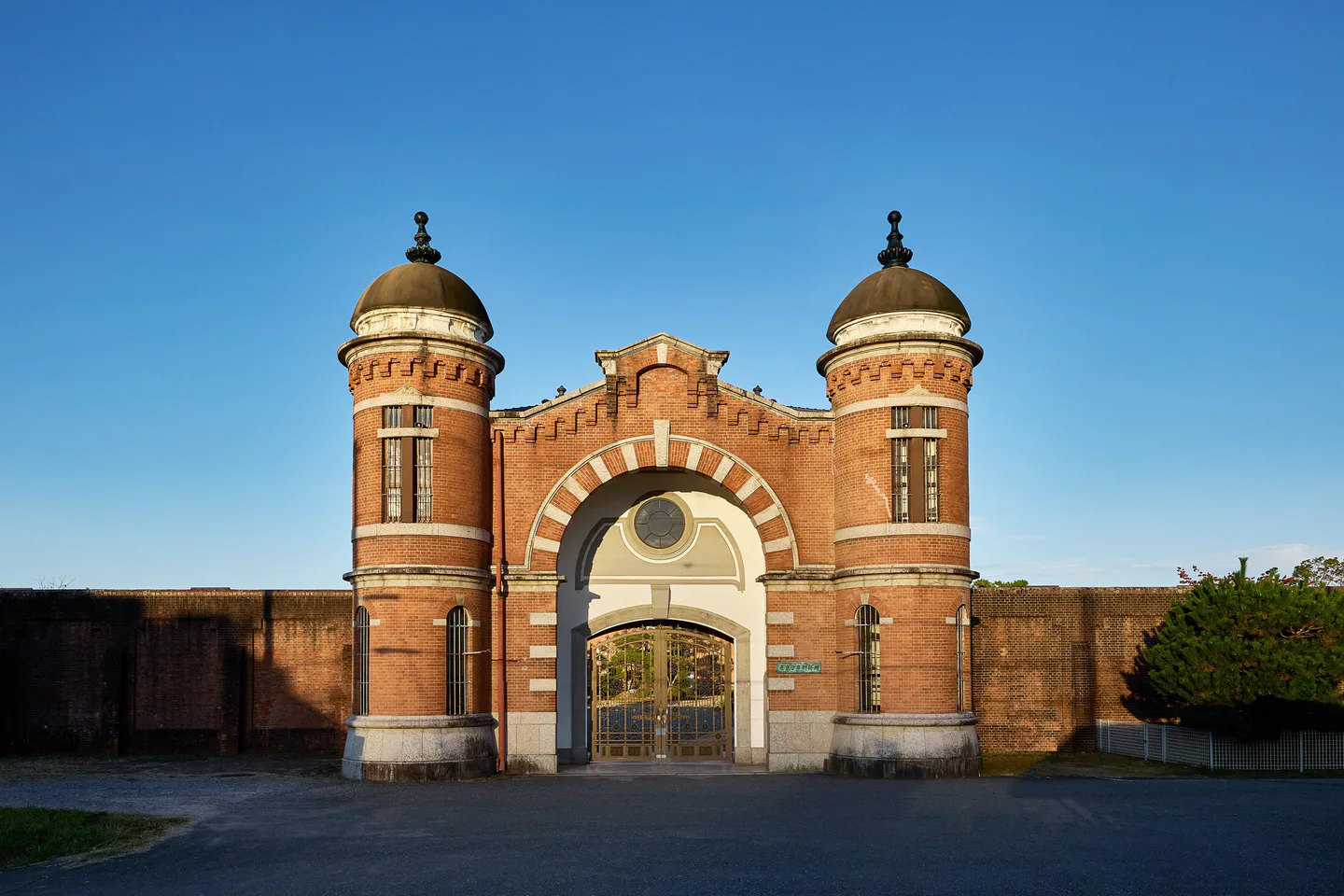
Nara Prison Museum asks a more demanding question than most additions to a Nara day: which part of the day will you give it? The former prison has enough architecture and interpretation to occupy a half-day, while Nara Park can already fill one. If this is your only visit and the Great Buddha, Kasuga Taisha and deer all matter, the museum should replace a stop rather than follow them. A second Nara day changes the equation. Our day-trip versus overnight comparison helps decide whether that extra time belongs here.
The building itself is the draw. Opened in 1908, Former Nara Prison is the only fully intact survivor among the five major Meiji-era prisons and is designated an Important Cultural Property. Its cell wings radiate from a central observation point under the Haviland plan. This is a chance to walk through the institution's architecture while learning how its system operated. A visitor interested mainly in deer and temples will probably value a slower Nara Park day more.
| Your Nara day | Museum decision | What changes in the itinerary |
|---|---|---|
| First visit; Todaiji, Kasuga Taisha and deer are priorities | Usually leave it for another visit | Preserve time in the park rather than adding a fixed afternoon booking. |
| Architecture or prison history is a principal reason for coming | Book admission before filling the rest of the day | Make the former prison one of two main anchors. |
| Central Guard Station slot secured | Plan around its separate reservation | Allow for the walk from the entrance to the internal meeting point. |
| Second Nara day or overnight stay | Strong fit | Put the park and museum on separate half-days. |
| Large suitcase, essential stroller or limited mobility | Check practical access before paying | Storage and a workable route matter as much as the ticket. |
The ¥3,500 ticket buys a visit to the prison, not a quick display room
Adult admission for a visitor living outside Japan is currently ¥3,500. The museum lists ¥2,500 for residents of Japan and ¥2,000 for Nara Prefecture residents, with age-based rates of ¥1,500 for ages 15–22 and ¥700 for ages 6–14; children five and under enter free. These are different eligibility categories, so select the rate that applies when reserving. By comparison, entry to Todaiji's Great Buddha Hall is ¥800 for an adult. The higher museum price is easiest to justify when the former prison is a primary interest, rather than an incidental photo stop.
Building A explains the architecture, the prison's history and the evolution of Japan's correctional system. Building B moves into prison life: discipline, meals, hygiene, labour, rehabilitation, money and freedom. Building C, in the former infirmary, brings in contemporary art and another way of looking at prisons and society. Seeing only the entrance gate would miss why the admission costs more than a conventional short museum stop.
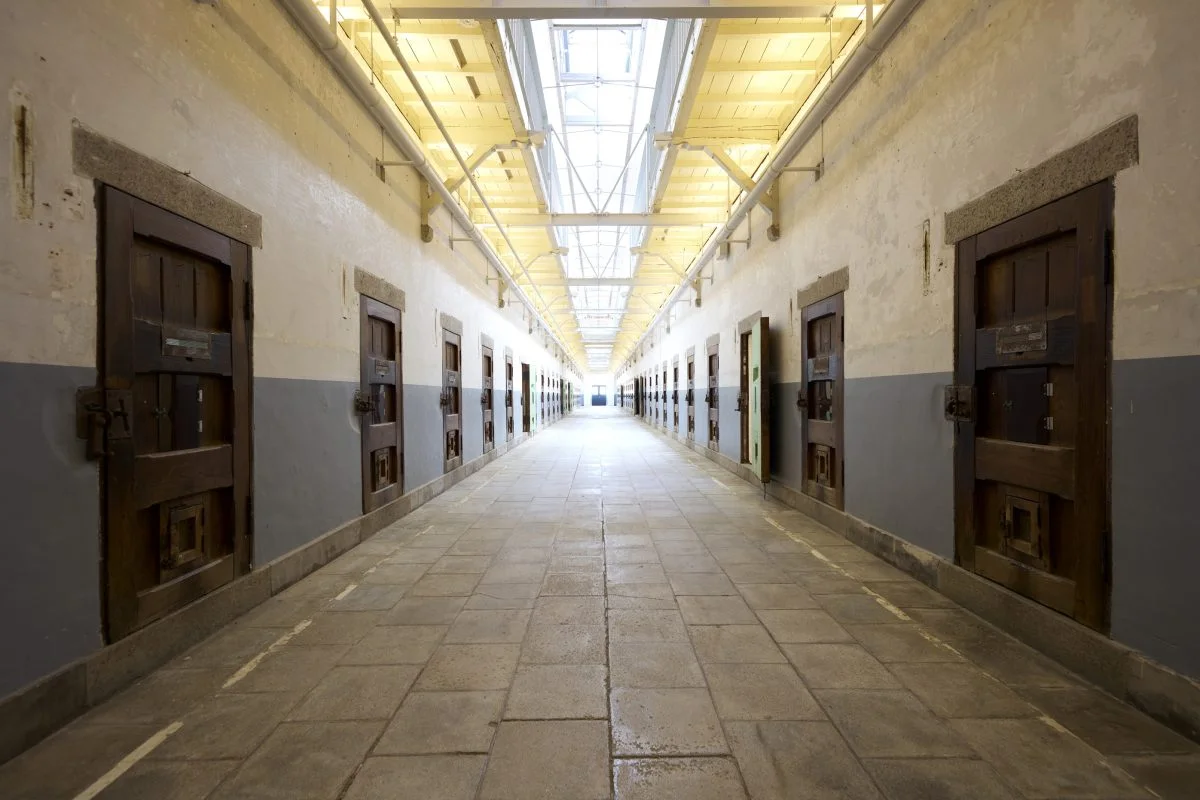
The museum is open 09:00–17:00, with last admission at 16:00, except for maintenance closures. Entry is timed, although the museum does not impose a standard visit-duration limit once you are inside before closing. A 16:00 slot gives you at most one hour in the building, which is a poor match for its scale. If your schedule only has that slot, use the afternoon elsewhere: the goldfish museum at Mi Nara is a separate detour with a different time and ticket decision, while the park can absorb an unhurried walk.
Reserve the Central Guard Station before arranging lunch or Todaiji
General admission does not include a timed place at the Central Guard Station. That viewing is free, but capacity is limited and a separate reservation is required. You also need a museum admission ticket that lets you enter before the activity. The internal meeting point is the information desk, roughly a 30-minute walk from the entrance through the site. A visitor who reaches the gate just before the viewing time is already late for practical purposes; missed slots cannot simply be moved to another departure.
Choose the guard-station slot first, then allow enough time for entry checks and the internal walk when selecting museum admission. Finally position the temple, meal and return transport around those two clocks. The published 13-minute walk from Todaiji to the museum describes the movement between attractions, not the trip from Todaiji to the guard-station meeting point. If the guard station has no suitable availability, the general museum remains a worthwhile visit for a specialist, but do not pay assuming that viewing can be added at the door.
The Central Guard Station reservation details should be read separately from the ordinary ticket confirmation. Keep both confirmations accessible on your phone. If you are travelling with someone who walks more slowly, use that person's pace for the 30-minute internal estimate and add time for the first ticket check. The reservation is most valuable to visitors trying to understand the radial layout; it is less critical if the exhibitions and the preserved cell wings are already the main attraction. That distinction may save you from building an awkward day around the only available activity time.
For a visit covering the exhibitions, the architecture and that reservation, protect about three to four hours from arrival near the museum to departure. This is an itinerary allowance, not a museum rule. Someone skipping the guard station and reading lightly may leave sooner; someone using the audio guide, stopping at the café or taking another activity may stay longer. This difference is why the museum fits better beside a single classic Nara anchor than beside the full Kyoto or Osaka day-trip circuit.
| Time commitment | What to protect | Common mistake |
|---|---|---|
| Admission slot | Arrival at the prison entrance before the chosen entry time | Taking the last 16:00 admission and expecting a long visit |
| Guard-station viewing | Its own reservation plus about 30 minutes to the internal information desk | Confusing arrival at the outer gate with arrival at the activity |
| Whole museum block | About 3–4 hours if the principal exhibitions and guard station matter | Treating the prison as a spare-hour stop after Nara Park |
The cleanest first-visit pairing is Todaiji and the museum
Todaiji's Great Buddha Hall opens at 07:30 in April–October and 08:00 in November–March; its seasonal closing time is 17:30 or 17:00 respectively. An early temple visit leaves room for a meal and a reserved afternoon at the prison. Reverse the order if the available guard-station time sits in the morning: use the museum as the fixed commitment, then walk south into the park. Our Nara autumn route comparison is useful when a foliage stop is competing for the same daylight.
At Todaiji, the seasonal hall hours and admission matter more than the distance between the two entrances. Starting at opening gives you freedom to pause around the hall without immediately watching the museum clock. A mid-afternoon museum booking can work, but leave enough time to enter and see the exhibitions before 17:00. If the only guard-station appointment is close to the museum's closing hour, calculate the walk through the site and the viewing itself before assuming it fits. A museum-first day has the opposite constraint: Todaiji's earlier winter close can make a leisurely prison morning incompatible with a late temple visit.
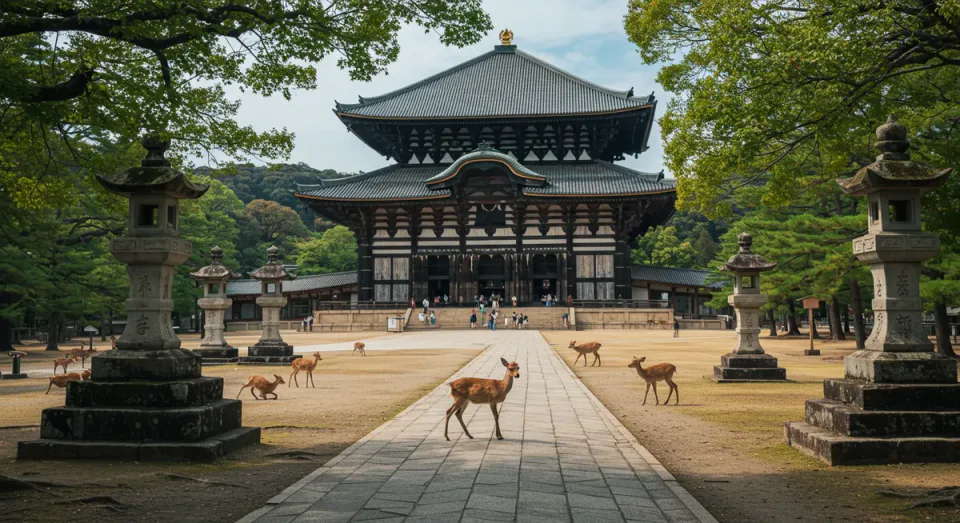
Trying to retain a long deer stop, Kasuga Taisha, Naramachi, Todaiji and the prison turns a one-day route into repeated deadline watching. Pick the park sights that matter most. If Kasuga Taisha and its approach are the reason for the day, let them have time and leave the museum for a return visit. If you have an overnight stay, put the prison on the quieter of two half-days and let dinner remain near your hotel; the Nara lodging alternative during Kyoto's busy season may also explain why the overnight works financially.
Use the direct bus for one station leg, then walk through Nara
The direct museum bus leaves JR Nara Station West Exit stand 11 and Kintetsu Nara Station stand 2. The listed journey takes about 25 minutes from JR Nara or 18 minutes from Kintetsu Nara. Adult fare is ¥250, child fare ¥130, and the museum entrance is about one minute from its named bus stop. Check the particular day's timetable before relying on the last departure. The Hannyaji local-bus stop is another option but leaves a roughly ten-minute walk, which is material with luggage or in rain.
When the museum comes first, take the bus in and walk towards Todaiji afterwards. When the park comes first, walk north to the prison and take the bus back to the station. Using the station bus both before and after a park visit can add two unnecessary radial journeys. The broader Osaka day-trip comparison shows how that final return leg affects your evening train; a family choosing between Osaka and Kyoto hotels can test the same route in our Granvia Kyoto and Swissôtel Nankai comparison.
JR Nara and Kintetsu Nara are not interchangeable hotel locations. The better base depends on which train line brings you to Nara and where the day ends. For a multi-city Kansai trip, see our Kyoto versus Osaka base decision and the seven-day one-hotel plan before adding a hotel move solely to reach the museum.
Tickets can sell out; language support differs by activity
Buy the timed museum admission as soon as the prison becomes a fixed part of your date. A sold-out online date may have no walk-up allocation, and being nearby is no substitute for a ticket. Check the admission calendar, activity reservation and access details together at the museum's visit page, access page and visitor questions. These links provide the current operational details; the decision here is how much of your Nara day to give the site.
The core displays have a free audio guide in Japanese, English, Simplified and Traditional Chinese, Korean and French. Bring your own smartphone and earphones because devices are not loaned. The separate “Prison and Freedom” curator tour is a different product: it currently runs on Saturdays and Sundays 13:30–14:30, costs ¥2,000 for an adult on top of admission, needs its own reservation and is conducted in Japanese. English interpretation in the museum does not make the paid tour an English-language activity. If you need English throughout, stay with the self-guided displays and consider the guard-station viewing only after checking its conditions.
The weekend tour listing also sets its own booking window. Decide whether that spoken explanation is useful to you before combining it with the guard station; two timed activities can make the visit feel more rigid than the self-guided galleries. A visitor who wants to read the prison-life sections carefully may gain more from an unstructured hour in Building B than from another scheduled walk. Bring a charged phone for the audio guide, especially if the museum is your first stop and you will use the same device for the return bus timetable and hotel route later.
Parents should also compare the prison with child-centred alternatives rather than assuming every indoor attraction solves the same problem. The Nara Ikimono Museum and the goldfish museum both sit at Mi Nara, outside the classic park loop. They make more sense for a child-led museum day than as an additional third museum after the prison.
Large bags, strollers and historic floors need a plan before entry
The museum asks visitors to avoid large suitcases and strollers because there is limited room inside; its outside coin lockers are limited. Re-entry is not available as a routine solution if you need to retrieve something mid-visit. A Kyoto–Nara–Osaka hotel-transfer day may be efficient on a rail map but still awkward here. Forward a large case only if both hotels and the carrier can support the timing, or confirm station storage and carry a small day bag. Our luggage-forwarding decision guide helps choose between those options. The Kyoto–Osaka seven-day split is also worth reconsidering if the museum date falls on a moving day.
Parts of the preserved building cannot be made step-free. Staff provide alternative accessible routes where possible, but some historical spaces remain inaccessible. Two manual wheelchairs are available at the entrance or information desk and there are multipurpose toilets. Visitors using an electric wheelchair should check the current transfer requirement in advance; the museum's present guidance says electric chairs cannot enter the historic interior. The direct bus saves part of the approach, not the considerable movement through the prison grounds. If a particular wing or the Central Guard Station is essential, contact the museum about that exact route before buying a tight activity slot.
Rain increases the value of the indoor exhibits compared with a fully exposed park day, but the prison is a large site with walks between spaces. Bring a raincoat for ordinary wet weather and allow extra time to move carefully. A major storm calls for checking transport and the museum's same-day status, not merely swapping deer for prison cells. Travellers planning other rainy Kansai days may prefer the more flexible choices in our Kyoto base guide or the Osaka day-trip hotel comparison.
For a child-led trip, consider what the museum asks the child to do. The strongest parts depend on looking closely at a historic building and following interpretation about correctional life. The site covers real walking distance, and the large-stroller restriction removes an easy fallback for a tired young child. An older child interested in architecture or social history might engage with it; a younger child expecting animal encounters may be happier elsewhere in Nara. This is a better filter than the simple label “indoor,” which says little about the visit's pace or subject.
Where the museum earns its place
Book Nara Prison Museum if the architecture, history of corrections, prison society or contemporary art programme is among your strongest reasons to visit Nara. A repeat visit or overnight gives it room without sacrificing Todaiji. If you obtained a Central Guard Station slot, treat that appointment as the day's fixed point and reach the internal desk early. A first-time visitor who mainly wants deer, the Great Buddha and Kasuga Taisha should keep the broader park day, especially when only a 16:00 museum admission remains.
If staying overnight removes the time pressure, compare Nara accommodation near the station you will actually use and check the return journey before paying. The regional Nara stay map can help place a room against the station and museum route. On a December visit, the Kasuga Wakamiya Onmatsuri evening decision may make an overnight more useful than the prison alone. In summer, Nara Tokae timing is another reason to protect the evening rather than fill every daytime hour.