
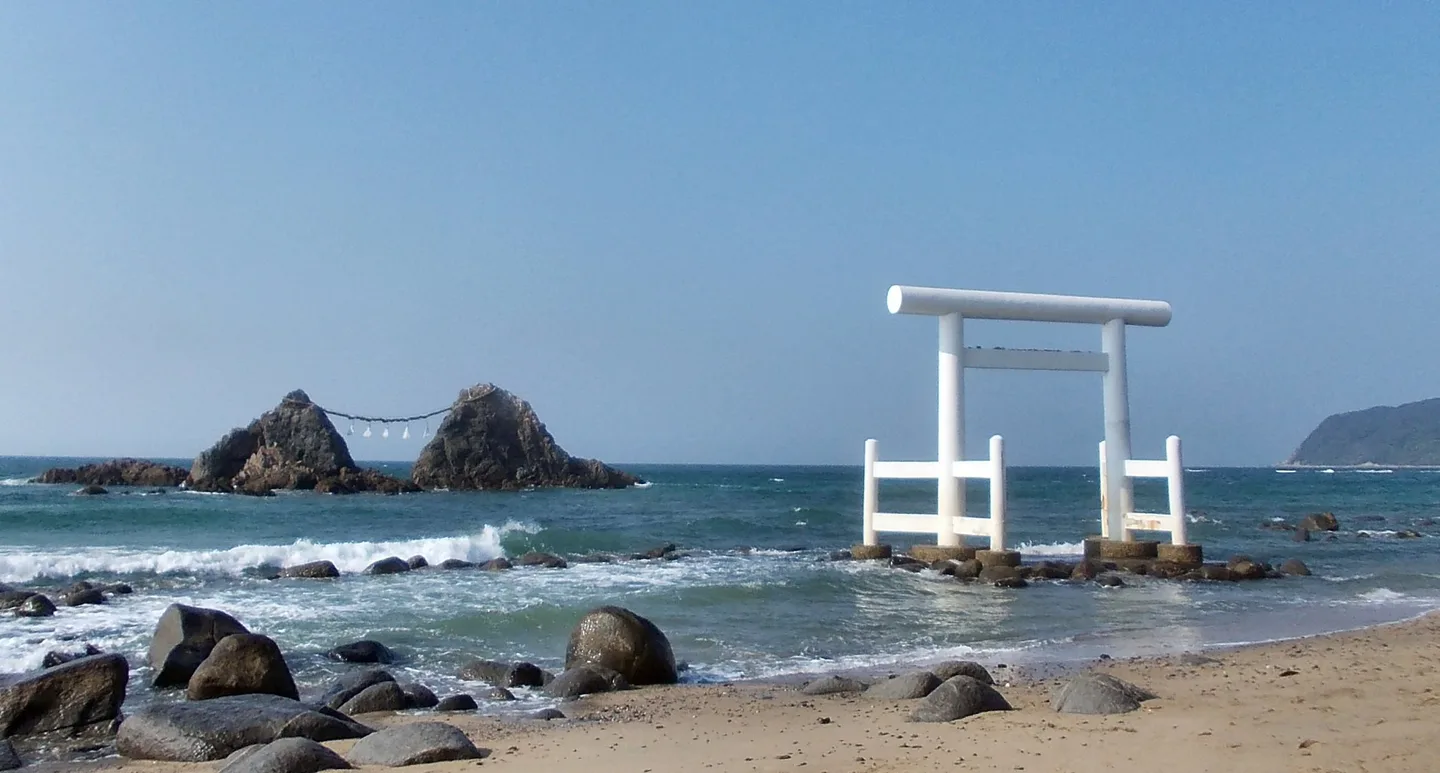
For a first Itoshima visit, keep the Fukuoka hotel and make a day trip to Sakurai Futamigaura unless the coast itself deserves your evening and next morning. One overnight can be a good purchase when it gives you sunset without a return deadline, blue hour, a leisurely dinner, and another stretch of coast before ordinary day visitors arrive. It is a poor cure for scattered sights and limited buses. Moving the bed does not make the peninsula into a walkable network.
The bus detail is more consequential than it first appears. Showa Bus's 4 April 2026 timetable has a direct West Coast Liner to Hakata leaving Futamigaura's Tsuki to Taiyo stop at 17:31 on weekdays and 18:36 on weekends and holidays. Some later local buses shown at the PALM BEACH stop run toward Ito Sales Office, not toward Fukuoka city. On the weekday Nishi-no-ura timetable, the last service listed from PALM BEACH toward Kyudai-Gakkentoshi Station is 18:22, reaching the station at 19:01. Do not build a sunset day trip from the later opposite-direction 19:22, 20:17, 21:08 or 22:10 departures. Check the direction, stop, service day and rail connection for the actual date.
↔ Scroll table left or right
| Plan | Better starting point | What determines the outcome |
|---|---|---|
| Futamigaura, a nearby café and daylight coastal time | Day trip | A compact anchor and a return bus that is easy to use |
| Sunset is essential, but hotels in Fukuoka are already booked | Only a long day trip with a confirmed return | Direct bus and later station-bound local services may end before the light you want |
| Sunset, blue hour and a quiet morning | One coastal night | The room removes the evening return and creates a second session |
| Several distant stops without a car | Simplify the day first | An overnight does not increase local bus frequency |
| Self-drive coastal progression | Overnight can work well | Room and dinner location should support parking the car for the evening |
| Uncertain weather and a room chosen only for sunset | Flexible Fukuoka base | A grey evening can remove the night’s main benefit |
Sunset has a return journey attached
Sakurai Futamigaura is known for its white torii and the paired Meoto Iwa rocks linked by a sacred rope. The prefectural tourism guide describes both sunset and the blue light after it as part of the attraction. That makes timing the central choice. A bus that is suitable for a mid-afternoon photograph may not serve a summer sunset, and a later bus in the printed timetable may travel away from the railway. The timetable must be read as a directed route, not as a list of departure numbers beside a beach name.
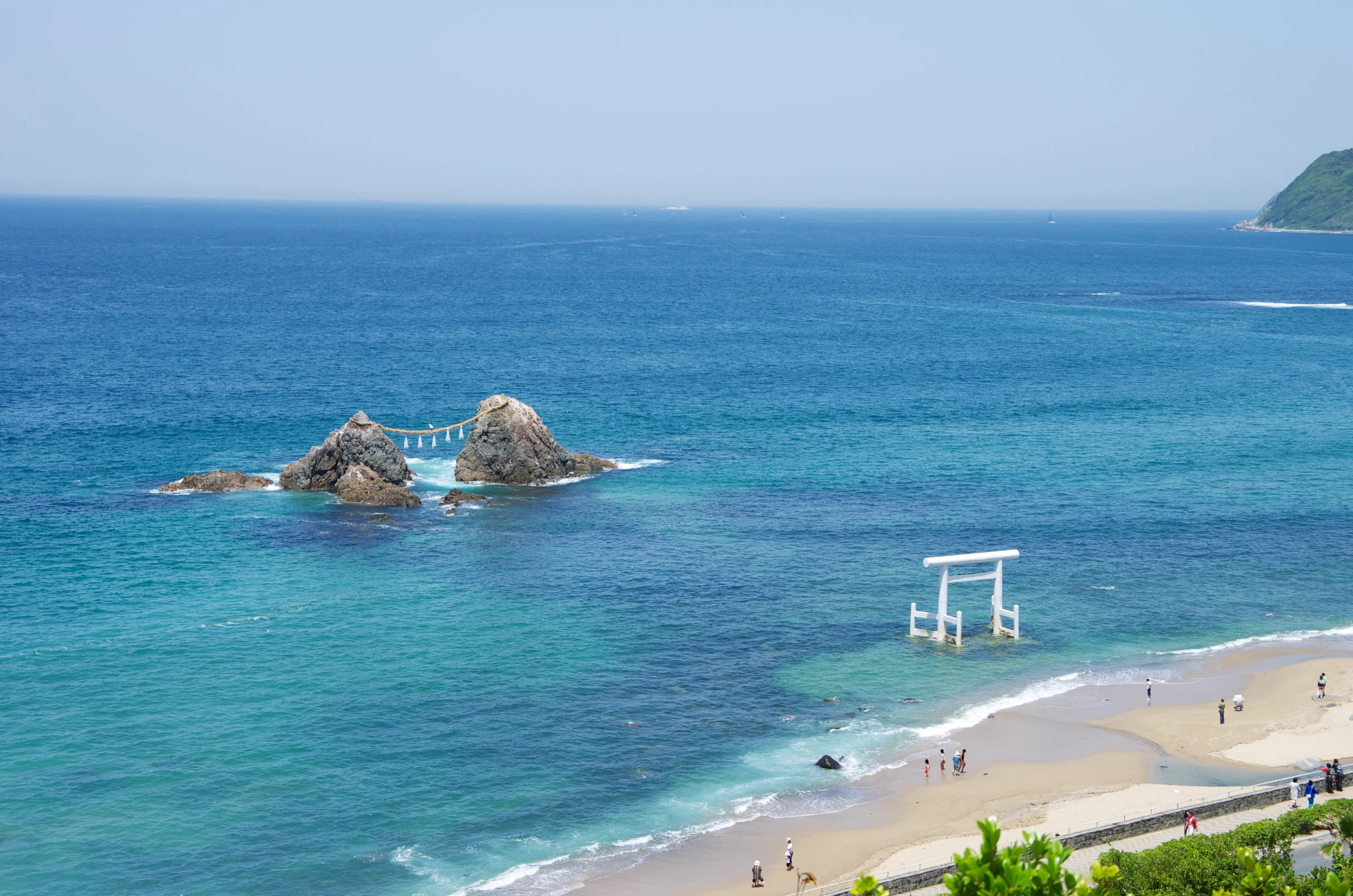
Showa Bus separates the direct West Coast Liner from local Nishi-no-ura services. The current liner's last Futamigaura-to-Hakata trip differs by day type: 17:31 on weekdays, 18:36 on weekends or holidays from the Tsuki to Taiyo stop. The local weekday timetable still has a PALM BEACH departure toward Kyudai-Gakkentoshi at 18:22, but the later 19:22 and subsequent times often quoted for this stop are printed in the column travelling toward Ito Sales Office. They are not a replacement ride to Hakata. Even a valid station-bound local bus still requires the onward rail leg and sufficient connection time.
Seasonal sunset time changes the feasibility. In part of the year, the last direct trip may be late enough for an attractive sky; on a longer summer evening it may leave before the light you came to see. A taxi with a confirmed pickup can be an alternative for some groups, but it should be priced and arranged before counting on it. The operator's current timetable page is the correct place to check service updates. For a traveller who dislikes the return calculation, a coastal room has real value because it removes the deadline, not because sunset is otherwise impossible in every season.
A day trip also has the advantage of flexibility. Keep the Fukuoka room, watch the forecast and choose the clearest available day. If a coastal café and Futamigaura are the main interests, a short outing can deliver them without taking luggage across town or paying for another check-in. Dazaifu versus Itoshima is the earlier decision when only one excursion fits your Fukuoka stay.
The coast is broad; the buses are not a sightseeing loop
Itoshima's attractive places are dispersed. Futamigaura, Keya-side beaches, inland craft stops and other seaside viewpoints cannot be treated like neighbouring subway exits. A one-day public-transport plan works best with one coastal anchor and a small number of nearby additions. Add stops only after checking the route between them and the return. The direct liner's existence does not mean it functions as a frequent hop-on service among all peninsula attractions; the operator even limits boarding and alighting on part of the route.
Sleeping on the coast solves the journey back to Fukuoka that night. It does not automatically solve the next morning. Before choosing a room, locate the closest usable bus stop, the dinner option, the first stop of the following day and the route out with luggage. Some stays offer dining and enough room to spend the evening on site; others would require another car journey after check-in. If every part of the next day still depends on infrequent buses, the extra night may add waiting rather than exploration.
This is particularly important for a family carrying bags. A Fukuoka room already holds luggage, meals and transit in a denser area. Moving to Itoshima is justified when the property changes the stay itself—more space, a kitchen, a coast-facing common area, dinner, or a calm morning everyone will use. The seven x seven Itoshima stay decision asks whether the room and shared facilities receive enough waking hours. A late arrival followed by early checkout pays a coastal-room price for little time on the coast.
For travellers travelling without a car, a confirmed one-way taxi between two specific points may sometimes be more useful than a second hotel night. That is a conditional budget choice, not an assumption that taxis will appear instantly after sunset. Ask the property about access and transport before booking, and do not describe a hotel as walkable merely because the map's straight-line distance looks short. A Fukuoka base chosen for the whole trip may remain the more efficient solution.
What one Itoshima night can genuinely add
A strong overnight has at least two useful periods beyond the ordinary day trip. Sunset can be the first; blue hour or an unhurried meal can be a second; a quiet beach or short drive the next morning can be a third. The prefecture highlights Futamigaura's post-sunset blue light, so a traveller interested in photography may value remaining after the last direct bus. A morning on the coast can also make the move worthwhile if it is the opening of a road trip rather than a return to the same Fukuoka hotel.
That does not mean a coastal night is mandatory for every sunset seeker. On some dates, light and the direct service may align. On others, a verified local bus and train combination, or a booked taxi, may permit a day trip. The point is to price the actual return, not a vague fear that all transport stops at sunset. The timetable correction above matters: later departures in the wrong direction cannot safely be converted into a Fukuoka connection by optimism.
One night is enough for most visitors who do choose to stay. Arrive in the afternoon, spend the evening near the coast, sleep, use the morning, and continue or return. A second Itoshima night needs another distinct purpose: beach time, a longer walk, a winter oyster-hut plan, a property-centred resort stay or a self-drive circuit that keeps going. Otherwise, the extra day may be better used in Fukuoka or the next Kyushu stop. The Fukuoka length decision helps measure that trade.
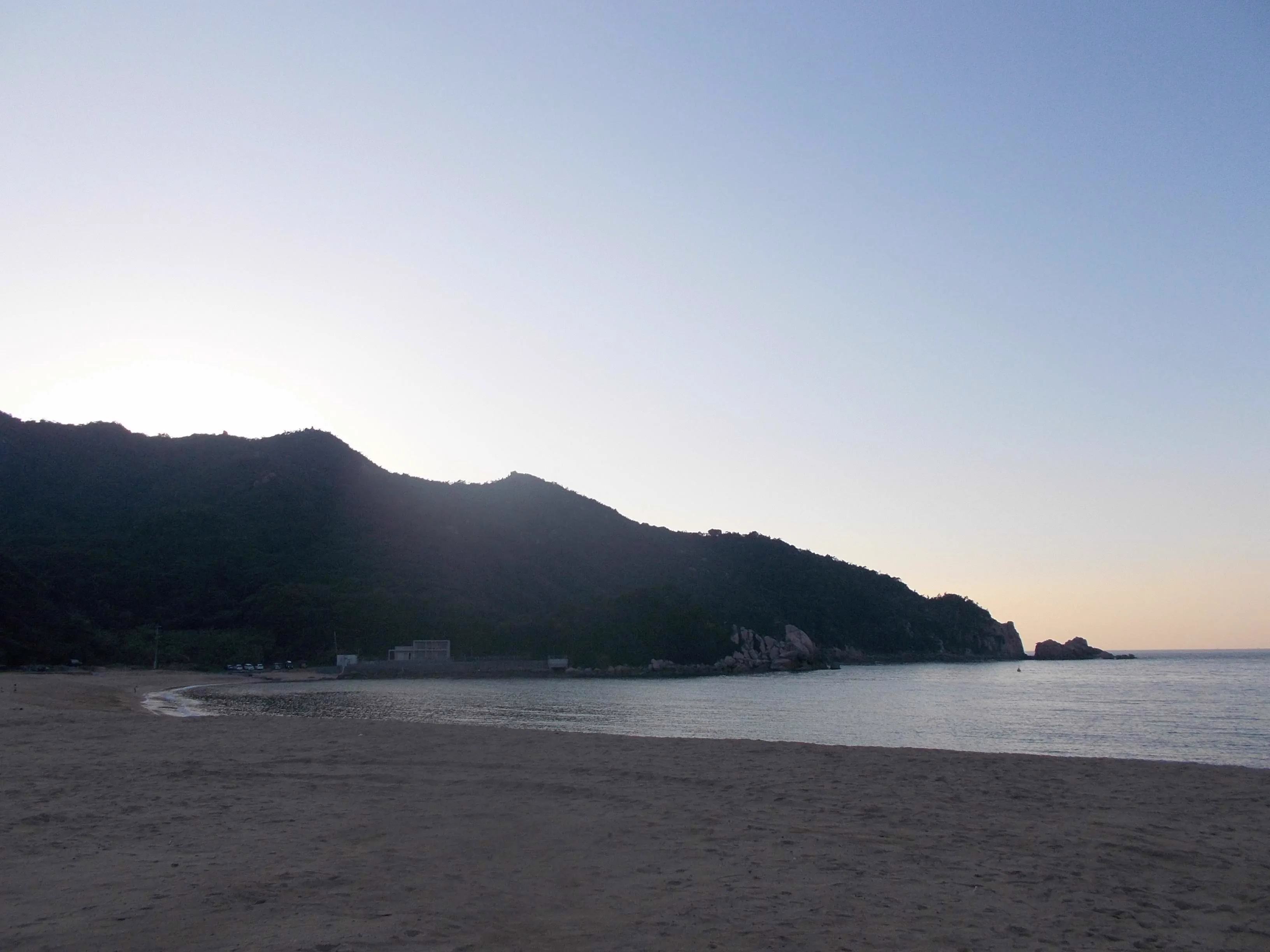
Keya illustrates what an extra morning can offer: a different coastal setting from Futamigaura and more unhurried time by the sea. The retained image shows a quiet bay and wooded headland rather than a sunset over the white torii. Those are separate places and should be planned as separate travel legs. A hotel near one does not make the other next door, especially without a vehicle.
Driving changes the shape of the choice
Fukuoka Prefecture describes Shima Sunset Road as approximately 33 kilometres from Sakurai Futamigaura toward Benten Bridge by the Izumi River mouth. With a car, scenic pauses, cafés and Keya-side stops can form a continuous coastal drive rather than several bus connection problems. A self-drive overnight can progress westward: visit the coast in the afternoon, park at the property, enjoy the evening, then continue the following morning instead of retracing the whole route to central Fukuoka.
The car also creates a responsibility. A coastal dinner with alcohol must be planned around a parked vehicle, a walkable restaurant or another driver. A hotel that requires a return drive for every meal is not automatically a relaxed seaside stay. Check where you will park, where dinner happens and whether the property has the facilities you expect. A wider Kyushu self-drive plan may make a progressive Itoshima stay useful, but the onward road should be a deliberate route rather than an invented excuse for one more booking.
Driving does not make every coastal stop compulsory. An afternoon can be lost in repeated parking, short photo stops and backtracking. Choose a direction and a few places that differ from one another. Futamigaura's torii and rocks have a clear first-visit claim; a Keya morning changes the landscape. A hotel earns its place when the route can be walked or driven sensibly after check-in and the next morning, without turning the stay into another sequence of transfers.
Weather decides how much to commit in advance
A clear sunset can be the strongest reason to spend the night. It is also a fragile reason to buy a non-refundable room far in advance. Clouds or rain do not make the coast worthless, but they can remove the specific light that justified leaving a flexible Fukuoka base. The overnight is more resilient if the property has its own appeal in poor weather: usable space, a bath, dining, a view or shared facilities the group actually wants. If the only purpose is one photograph at Futamigaura, keep the room decision flexible where possible.
The flexible day-trip version preserves choices. An itinerary with several Fukuoka days can move Itoshima to the clearer one, keep luggage at the same hotel and use a rainy day in the city. This may matter more than squeezing a supposedly perfect sunset into a fixed sequence. A three-day Fukuoka plan can leave room to swap the coast with another outing when weather changes.
Season also affects the last bus's relationship to sunset. A timetable alone cannot say whether a particular departure lets you see golden hour or blue hour. Compare the date-specific sunset time with the stop-specific bus time, and allow walking from the shore. A booking made solely on an old generic “18:36 last bus” claim can be wrong on a weekday, where the current direct liner leaves Futamigaura at 17:31. The return must be checked for the date, not simply the destination name.
Three versions that make different promises
Compact first trip: Keep the Fukuoka hotel, travel to Futamigaura, walk the beach, have a meal or café stop nearby and return while the chosen service is simple. This gives the torii and coastal landscape without a luggage move. It is the strongest default for someone travelling without a car and without a strict sunset goal. The first-time Fukuoka hotel base can be chosen for the entire city stay.
Sunset-focused day trip: Confirm the actual sunset, last station-bound bus, train connection or prearranged alternative before leaving the city. The direct West Coast Liner may finish earlier than the light you want. A later local service in the opposite direction is not a return plan. If the full chain works and the group accepts a long evening, there is no rule requiring a coastal hotel.
One night beside the coast: Give the afternoon to Futamigaura, remain through the light, use the hotel or nearby dinner, and plan a specific morning. This version has value even when the direct bus has finished because the overnight removes the same-day return. Compare Itoshima-area stays by the beach, dinner and departure route you will actually use.
Before paying for either a taxi or coastal room, mark the last usable bus in the correct direction on Showa Bus's timetable index. Then decide how much a quiet evening and morning are worth to this itinerary. The ordinary day trip is sufficient for the white torii and sea; the overnight becomes compelling when it changes two or more parts of the experience.