
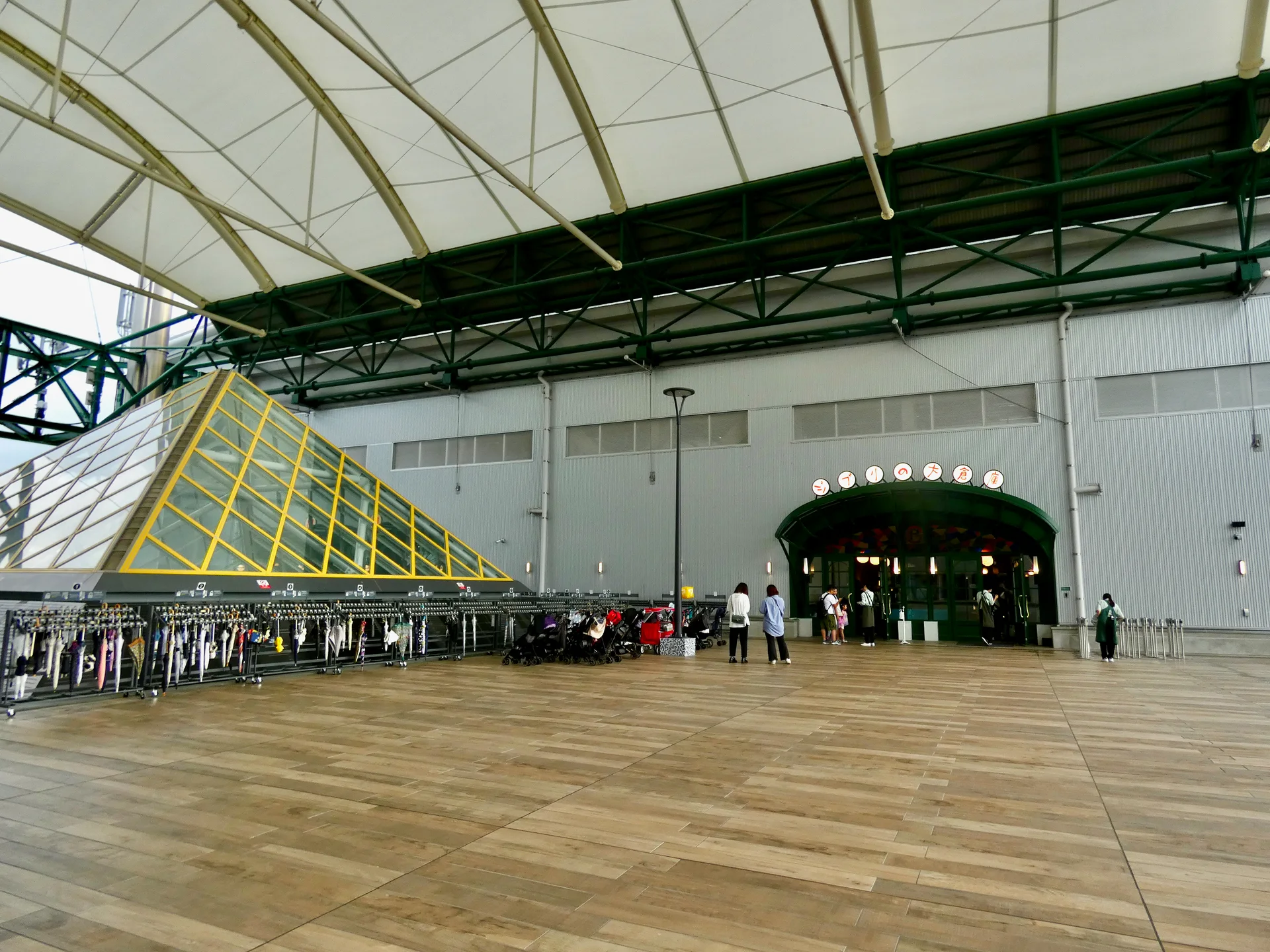
A Ghibli Park ticket decision starts with buildings, not the number of areas printed on a pass. Standard covers Ghibli’s Grand Warehouse, Mononoke Village and Valley of Witches. Premium adds Hill of Youth and Dondoko Forest, plus entry to five designated building interiors. If World Emporium, Satsuki and Mei’s House or Howl’s Castle is a reason you are travelling to Nagoya, write it down before comparing prices. The extra ¥4,000 can be good value for that visitor. If your best day would be a long Grand Warehouse visit and an unhurried Valley of Witches afternoon, Standard leaves more time for the parts you actually want.
| 2026 day pass | Adult weekday / weekend | Access that changes the choice |
|---|---|---|
| O-Sanpo Day Pass Standard | ¥3,300 / ¥3,800 | Grand Warehouse, Mononoke Village and Valley of Witches. The three Valley building interiors need limited same-day tickets. |
| O-Sanpo Day Pass Premium | ¥7,300 / ¥7,800 | All five areas and the designated interiors, including World Emporium, Satsuki and Mei’s House and Howl’s Castle. |
| Standard plus all three Valley interiors | ¥5,100 / ¥5,600 if tickets remain | Adds Howl’s Castle, Okino Residence and The House of Witches; Hill of Youth and Dondoko Forest remain excluded. |
Children aged four to twelve pay half the adult day-pass price; ages zero to three enter free and are excluded from the ticketed-party count. A service charge can be added at issue. The table compares ticket categories, not a promise that same-day Valley building tickets will be available. For a Nagoya trip that also has a Takayama day or overnight, this single park day needs to fit the whole itinerary, not just a ticket budget.
The three buildings that change the answer
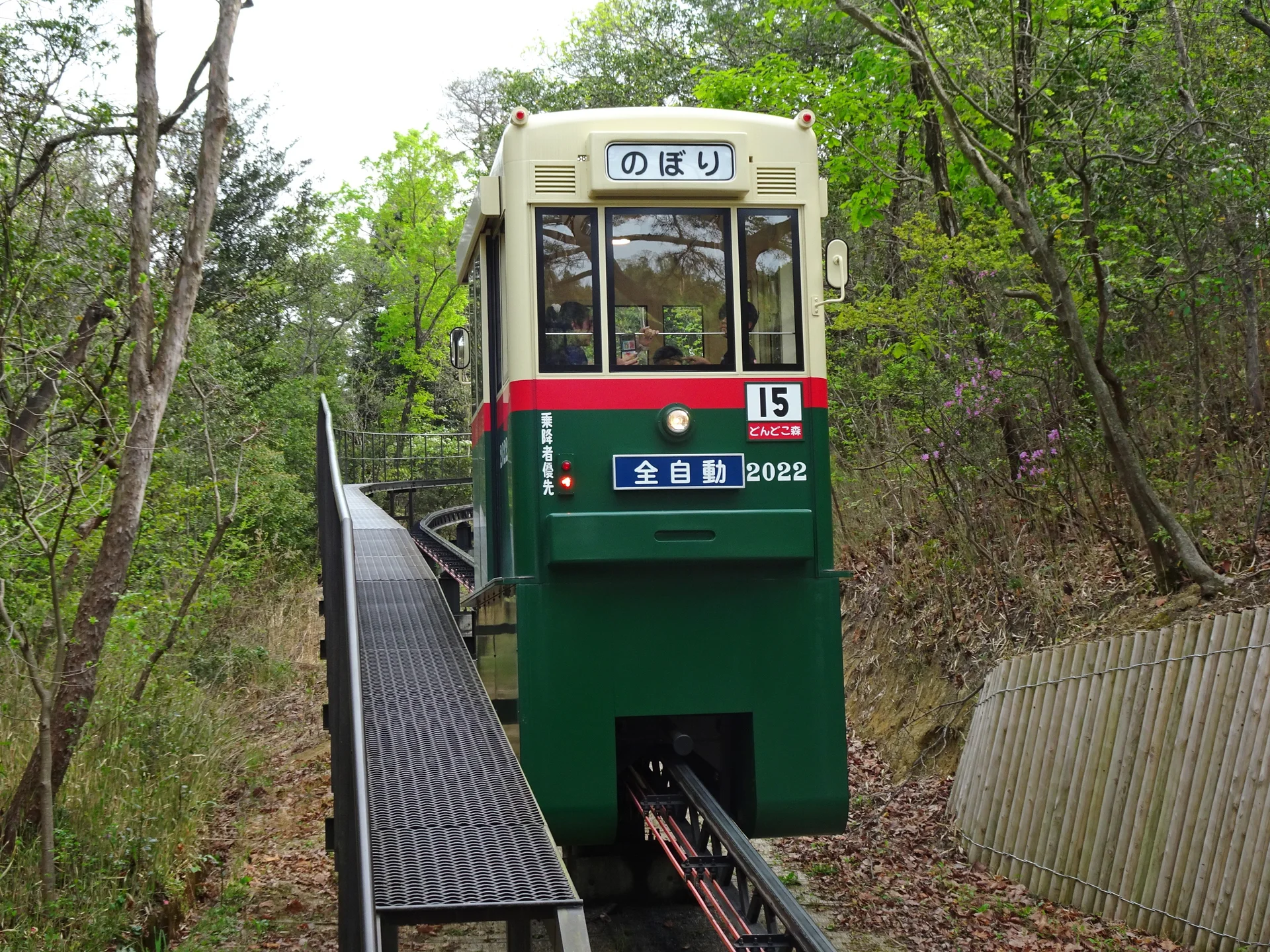
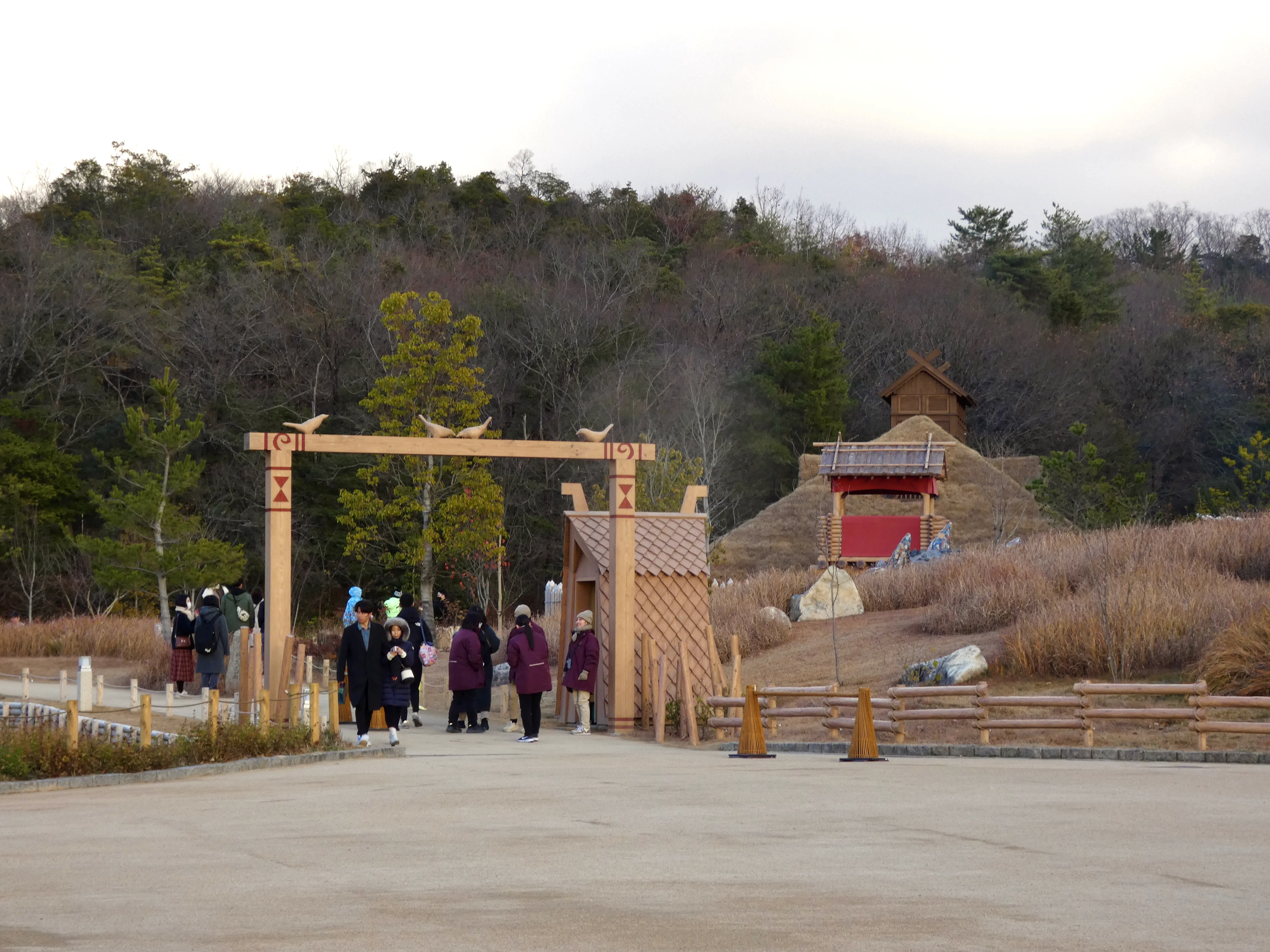
Standard is not a reduced version of every area. It grants three real areas: the dense indoor Grand Warehouse, the outdoor Mononoke Village and the expansive Valley of Witches. You can spend hours with sets, exhibitions, food and shops without touching the two areas Premium adds. The missing places are specific. Hill of Youth contains World Emporium from Whisper of the Heart; Dondoko Forest contains Satsuki and Mei’s House from My Neighbor Totoro. Standard does not open those areas at all. A visitor who travels chiefly for either house should not plan to repair the omission with a ¥1,000 purchase in Valley of Witches.
Howl’s Castle, Okino Residence and The House of Witches are different: Standard holders may seek separate same-day admission to these three Valley interiors. Adult tickets cost ¥1,000, ¥400 and ¥400 respectively. On a weekday, adding all three to a ¥3,300 Standard pass creates the tempting ¥5,100 total. That still omits Hill of Youth and Dondoko Forest and depends on limited allocations. If only Howl’s Castle matters, the potential extra is ¥1,000, but uncertainty becomes part of the price. The decision is clearest when you name physical spaces rather than film titles. Three film favourites might all be represented within Standard's areas; one indispensable house might be outside them.
My practical threshold is two excluded must-enter interiors. If you will feel the trip has failed after missing both World Emporium and Satsuki and Mei’s House, Premium is the straightforward ticket. If the only uncertain priority is Howl’s Castle, Standard can work when a missed same-day ticket would be disappointing rather than trip-ruining. This resembles the choice behind Nagashima’s family pass decision: the expensive tier is useful for the people who will actually use its extras, not automatically for every person in the group.
Howl’s Castle has a second queue before its ticket
Since July 2026, Standard holders need an exchange voucher before buying any of the three designated Valley building tickets. Vouchers are distributed near the Valley ticket hut; the current ticket process starts at 10:00 a.m. on weekdays and 9:00 a.m. on weekends and holidays. Each voucher specifies the earliest purchase time. You can buy the corresponding same-day ticket from that time until 4:30 p.m., provided stock remains. Earlier purchase times are issued first, and the three buildings can give you different return times. The sequence may therefore be voucher, another area, return for one building, then another return for the next. A family with a fixed Grand Warehouse slot should think about that movement before counting the ¥2,200 theoretical saving against Premium.
Limited allocation is the decisive condition. A Standard pass plus voucher strategy is sensible for someone happy to improvise; it is fragile for someone who would travel home regretting a missed Howl’s Castle interior. Premium includes it without that purchase step. Buying Premium merely because it sounds complete can create a different problem: the urge to cross all five areas regardless of queues, heat or how much time you want in the Warehouse. Compare the uncertainty you dislike with the walking you will actually accept. The same discipline applies to timed-entry studio tours elsewhere in Japan: first protect the entry you care about; add extras only once the day still works.
The Warehouse now makes a slower Standard day stronger
Ghibli’s Grand Warehouse gained the Panorama Box Exhibition and a new Cinema Orion short film on 8 July 2026. The 31 boxes use layered scenes created by Hayao Miyazaki, while A Night in the Valley of Witches is the first original short film made specifically for Ghibli Park. The announced screening run continues until around June 2027. Both Standard and Premium include the Warehouse. A guest who wants to inspect exhibits, see the film, browse props and shop without hurrying has a concrete reason to spend more of the day inside, rather than paying for two additional areas and then racing through the room that already holds their favourite material.
This matters on a first visit because all five Premium areas are spread through Expo 2005 Aichi Commemorative Park. The pass does not shorten the paths between them. Mononoke Village changes the pace with outdoor space; Valley of Witches has its own food and buildings; Dondoko Forest and Hill of Youth pull you in other directions. A shorter Standard route is not inherently incomplete. It can be the version that lets you stop for lunch and notice the small details. If your Nagoya stay already includes the Port of Nagoya Public Aquarium on another day, two consecutive attraction marathons may be the larger mistake.
Choose the Warehouse time before building the route
Grand Warehouse is the only area with a reserved entry time on the overseas Standard and Premium day passes. The current choices run from 9:00 a.m. on applicable early-opening days through 10:00, 11:00, 12:00, 13:00 and 14:00. You can enter during the hour after your booked time, never before it. Other included areas admit visitors until 4:30 p.m. and may have queues. Premium's added Hill of Youth and Dondoko Forest can become crowded late in the afternoon. A 14:00 Warehouse slot is therefore not automatically the relaxed option it appears to be: it may leave too little practical time for the farther Premium areas afterward.
| Ticket and time | Day shape | Failure point to avoid |
|---|---|---|
| Standard, Warehouse at 10:00 or 11:00 | Spend the first substantial block indoors, then choose Mononoke Village and Valley of Witches with time for a meal. | Trying to turn optional Valley building vouchers into guaranteed fixed appointments. |
| Premium, Warehouse around 11:00 or noon | Use the morning for a farther area, enter the Warehouse on time and make Valley of Witches the main afternoon block. | Booking the farthest included area for the last hour because it appears on the pass. |
| Either pass, Warehouse at 14:00 | Commit the morning to outdoor areas and keep the Warehouse visit focused. | Assuming a 4:30 p.m. final entry means a new area can be fully explored before closing. |
For Standard, an early Warehouse slot can be a gift: the remaining two areas fit into the afternoon without chasing a five-area route. For Premium, the booked slot is the hinge between a distant morning and the Valley. If your party includes young children, leave more than a map's walking time for toilets, food and a slow queue. Nagashima’s bus-and-pass calculation is another Nagoya-area example of why an attraction ticket cannot be evaluated apart from its actual travel day.
Re-entry helps families, with one Warehouse limit
Premium wristbands are collected at the first area, with the ticket applicant and all party members present; wristband pickup must be complete by noon. After that, included areas generally allow re-entry and party members may enter separately, but the Warehouse still requires the named applicant and the group together at the reserved slot. Re-entry to the Warehouse begins only after 3:00 p.m. Standard permits re-entry only to Valley of Witches. A family in which one adult wants to revisit a shop while a child rests may genuinely value Premium's flexibility. A couple content to walk one continuous loop may gain little from it.
Young children do not make Premium an automatic bargain just because ages zero to three enter free. They may care more about the Warehouse's indoor displays, food and a shorter walk than the number of film locations their parents can unlock. For an older child whose real preference is rides and water attractions, compare Ghibli Park against Nagashima Spa Land before buying either ticket. An extended family may even split ticket types or activity days, provided everyone understands which buildings they can enter together. Ticket coverage and family coordination are separate decisions.
Rain changes the value of those two extra areas
The Warehouse provides substantial shelter, but Ghibli Park is not a sealed indoor complex. Rain can stop or limit outdoor features such as Lord Okkoto, the Dondoko walking trail, the Valley carousel and the Flying Machine. Premium still admits you to its areas, yet the extra walking and some weather-sensitive activities may yield less on a bad day. Standard can work better when the forecast points toward a long Warehouse visit. For a compact city-centre alternative, Art Aquarium Nagoya in Sakae has a very different travel shape. If the weather is merely damp, keep the Ghibli visit; if a major storm threatens access to the park, use the ticket's actual change and refund terms rather than assuming that rain itself permits a free move.
The weather choice is also a hotel issue. An arrival from Tokyo on the same morning adds train risk to a timed Warehouse slot. A first-time Japan route can make Nagoya look like a convenient one-day bridge between Tokyo and Kyoto, but a pre-booked park entry needs a night before it in the region if missed trains would be expensive. Do not create a same-day long-distance transfer and then call the park an easy stopover. A nearby base provides time margin; it does not need to be a hotel beside the park gate.
Keep the hotel in Nagoya unless the rest of the trip says otherwise
Ghibli Park is in Nagakute inside Expo 2005 Aichi Commemorative Park. Rail access ends with the Linimo to Ai-Chikyuhaku Kinen Koen, with the park near Exit 2. Direct Meitetsu buses from Nagoya Station run on operating days; there is no dedicated Ghibli Park car park. A one-day park visit seldom justifies moving luggage to Nagakute. Nagoya Station is more useful for a Shinkansen arrival, an onward departure or a Takayama departure. A property such as the one assessed in the Vessel Hotel Campana Nagoya room-and-station review can be judged by that entire sequence, rather than by a single park commute.
If food and evenings are the priority, the hotel need not be welded to a rail terminal. Osu’s food streets work better as a flexible post-park option than an inflexible 18:00 restaurant booking. A 17:00 park closing time still leaves walking to the Linimo, a transfer and the onward journey into central Nagoya. Premium visitors in particular may try to squeeze one last included house into the afternoon. Let dinner happen once you have actually returned, or make the reservation late enough to absorb a slow exit. Nagoya Station hotel choices are especially relevant when a reserved Nozomi or early next-day train follows the park.
In December, Nabana no Sato's evening illumination is a separate Nagoya-area decision, not a sensible obligation to bolt onto a full Premium park day. Its return route and night-time hours change the hotel calculation. Give the illumination its own evening if it matters; otherwise the Ghibli visit should end when the group has finished the buildings it came to see, without a second distant clock controlling dinner and the journey home.
For room search, compare accommodation around Nagoya Station if this is one stop in a longer rail trip. If the visit sits inside several Nagoya nights, look at Sakae-area rooms against the evening and airport routes. Both maps put the hotel where the rest of the stay happens; neither implies that an attraction on the edge of the metropolitan area requires a second check-in.
Large groups have to split the purchase before the visit
One overseas application covers no more than six ticketed guests; children aged zero to three do not count toward that number. Seven or more ticketed visitors need separate groups of six or fewer, each with its own applicant. The applicant must attend entry with the members of that group, and identity may be checked. A party cannot plan to send eight QR codes to relatives arriving at different times as if the named applicant were irrelevant. Decide the sub-groups, applicants and Warehouse slots before sales open. Families with different ages may also want different touring paces after the required entries. The structure is closer to booking a multi-day Disney decision than adding eight undifferentiated seats to a restaurant reservation.
The day passes generally go on sale two months ahead on the 10th at 14:00 Japan time. A December 2026 visit, for example, opened on 10 October. Date, time, type and party size cannot be changed after purchase; tickets are non-refundable and not transferable. Check the calendar, the exact Grand Warehouse slot, all building priorities, the six-person limit and any fixed train or dinner commitment before paying. Compare the same date and pass category if choosing between Lawson Ticket and Klook. A cheaper listing is not a saving if it represents Standard while you thought you were buying Premium. The caution is similar to Shibuya Sky’s timed sunset purchase: the slot and product conditions can matter more than a small displayed price difference.
When Standard is the better first choice
Start with Standard if Hill of Youth and Dondoko Forest are optional, your useful park window is around five hours, a young child limits walking, or a missed Howl’s Castle same-day allocation would not ruin the visit. Those reasons do not have to arrive in a neat tally. One fixed late-afternoon train may be enough by itself. The park has food, exhibitions, film and shops within the three Standard areas, so a slower day can still be full. If the real aim is simply to see a recognisable Ghibli scene without devoting an entire day, verify whether this park ticket belongs in your itinerary at all; a Korankei autumn day or a Gozaisho mountain day asks for a very different season and energy budget.
Premium wins when several excluded interiors are the purpose of the trip and the group can use a full park day. The ¥4,000 difference buys access and removes much of the same-day Valley ticket uncertainty. It does not buy shorter paths or more endurance. If you leave the Grand Warehouse after its film and exhibitions still wishing you had time there, a rushed five-area sweep was the wrong use of Premium. If you leave Standard after hours in the three included areas still wishing you had entered World Emporium and Satsuki and Mei’s House, the wrong thing was the pass category. Name those spaces before checkout, then book the category that covers them with a schedule your party can actually walk.