
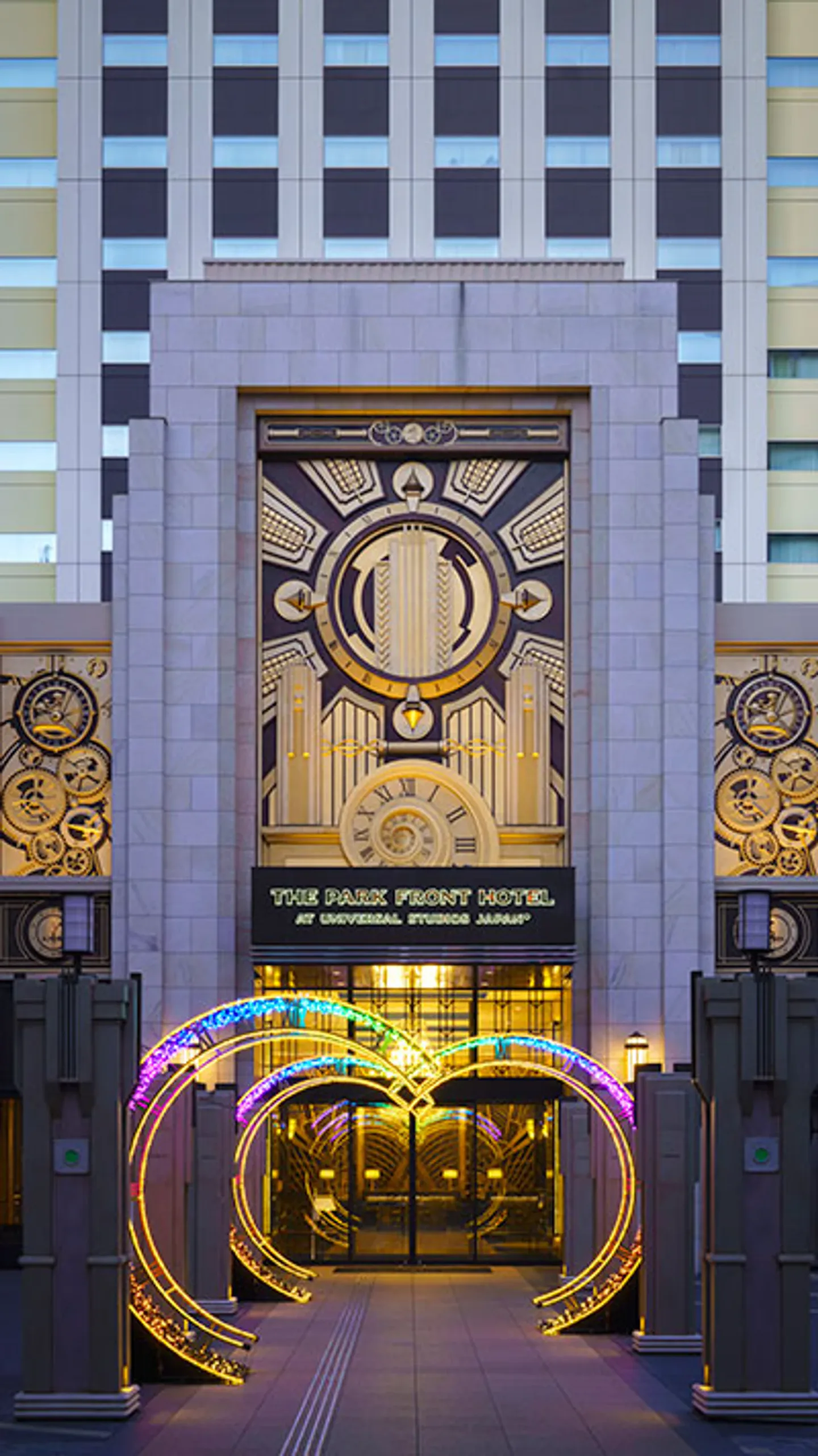
The Park Front Hotel earns its gate-side premium at the beginning and end of a Universal Studios Japan day. It can make an early arrival easier and the walk back after a late finish almost trivial. The park’s current rule sharply limits another apparent benefit: a standard Studio Pass does not allow re-entry after you leave. Most one-day visitors cannot walk to the room for a midday nap and then resume the park. Judge the hotel by the hours you can legally use it, the room your group needs and whether the rest of the Osaka trip belongs somewhere else.
The hotel describes both the park entrance and JR Universal City Station as approximately one minute away on foot. Those are exceptionally short walks, but the room does not replace a Studio Pass, Express Pass or advance park plan. It also does not guarantee an earlier admission. A parent planning a family reset should read the no-re-entry condition before paying for a Park View upgrade. The one-day versus two-day USJ hotel decision is the first comparison if the number of park days is still open.
Where the one-minute walk helps
↔ Scroll table left or right
Trip shape | Best use of Park Front | Main limit |
One standard-ticket park day within a city trip | Compare a single pre- or post-park night | A hotel move may cost more than one return train |
Two full USJ days | Two nearby nights protect both starts and finishes | The room still must fit the group |
A family wanting a midday room break | Confirm ticket re-entry before valuing proximity | Ordinary Studio Passes do not allow that return |
Annual Pass visitor | Gate proximity can support multiple sessions | Check pass validity and event restrictions |
Early city or airport departure after USJ | Compare moving toward the next journey | Another Universal City night can create a rushed morning |
Park View as a room experience | Use it during arrival or a relaxed morning | The view does not change entry rights or walk length |
The room is outside the gate once you leave
USJ states that ordinary Studio Passes do not permit re-entry after exiting; Annual Passes are the exception. Its ticket information repeats the same restriction. That means a midday return to the hotel is not a safe plan for a standard-ticket family that intends to rejoin the rides later. A one-minute distance cannot override the admission condition. The hotel is still useful before first entry and after the final exit. The 2026 USJ ticket and Express Pass guide covers the separate purchase decisions.
USJ also keeps suitcase-sized and roller bags out of the park, with large storage outside its gates. The hotel’s own lockers can help guests before entering or after leaving, but a guest already inside cannot simply step out to retrieve a bag and return on an ordinary pass. Match the baggage plan to the park rule. A hotel beside the entrance is not a substitute for checking what you may bring through security.
For a visitor with a standard one-day ticket, useful room-adjacent moments are:
- Before first entry: prepare the group, leave bags and walk to the gate.
- After the final exit: reach the room without another city train.
- Between separate park days: keep cases and supplies in the same room overnight.
An Annual Pass holder has a different calculation because re-entry is currently permitted under the pass rules, subject to operating conditions. That person may be able to use the room between park sessions. A separately ticketed event or unusual admission product needs its own rule checked; do not generalise the Annual Pass exception. Most overseas first-time visitors should price the hotel as a before-and-after-park property.
The night before and the night after have different jobs
If you will book only one night, name the part of the park day it protects. That makes the room comparison more precise than “closest hotel”.
Sleep at Park Front the night before when a calm gate approach matters most. You can arrive at Universal City, settle the group, prepare bags and tickets, and walk over in the morning without a city-to-park rail journey. This is useful when the party wants to be near the entrance before the published opening; USJ warns that actual admission may begin earlier on some days. The USJ Express Pass certainty test is separate from the hotel choice.
Choose the night after when the strongest benefit is avoiding a late return to Umeda or Namba with tired children. Halloween or other evening programmes can make that final walk especially valuable. The USJ Horror Night last-train plan shows why the central-Osaka return can become a real constraint. The hotel is useful once the party has finally exited; it does not create a legal room break earlier in the day.
Two nights can protect both edges: arrive the previous afternoon, use one complete park day and depart after a proper rest. That is the cleanest pattern when USJ is a principal reason for the trip. It is not automatically superior for a one-day park stop amid several Osaka-city days. A second Universal City night can cost a city evening and create another transfer later. The Osaka five-day route helps see what that time displaces.
Before selecting two nights, map the following morning. If the group leaves early for Kyoto, Kobe or an Osaka neighbourhood far from Universal City, the extra post-park sleep may not help as much as returning toward the next route. If departure is leisurely, staying one more night near the gate may still be pleasant. The decision is about the next fixed journey, not an assumed value of a second hotel night.
Pay for uses of the short walk, not its headline distance
The property markets the park entrance and Universal City Station at roughly a minute away. Count how often that short walk replaces a journey you would otherwise make. On a single park day, the main gains are the morning approach and the final return, depending on which night you book. On two consecutive park days, the hotel can save or shorten two mornings and two evenings. The price premium should be compared with those actual uses, not with the fact that the number “one minute” is impressive.
For one standard-ticket park day, the hotel can remove or simplify:
- The city-to-park morning journey when sleeping at Universal City before USJ.
- The late return to central Osaka when sleeping at Universal City after USJ.
- A luggage-heavy transfer on a day when lockers or desk storage can help.
- An extra overnight park commute when two consecutive park days are planned.
It normally cannot remove several midday round trips between park and bedroom because re-entry is restricted. That narrows the value for someone mainly considering an afternoon shower or nap. For an Annual Pass holder, the calculation may differ; confirm the pass conditions for the visit. A one-day or two-day Universal City hotel guide is a useful next check if the room premium seems high.
Two full USJ days make the location more durable. The group begins and ends both days nearby, and bags can stay in one room between them. But even then, choose the specific room by bedding, space and breakfast plans. If both days are partial, the saving may be smaller than the map suggests. A Kansai seven-day single-hotel itinerary shows when a single central base can remain simpler.
A family may gain more from floor space than from the final minute
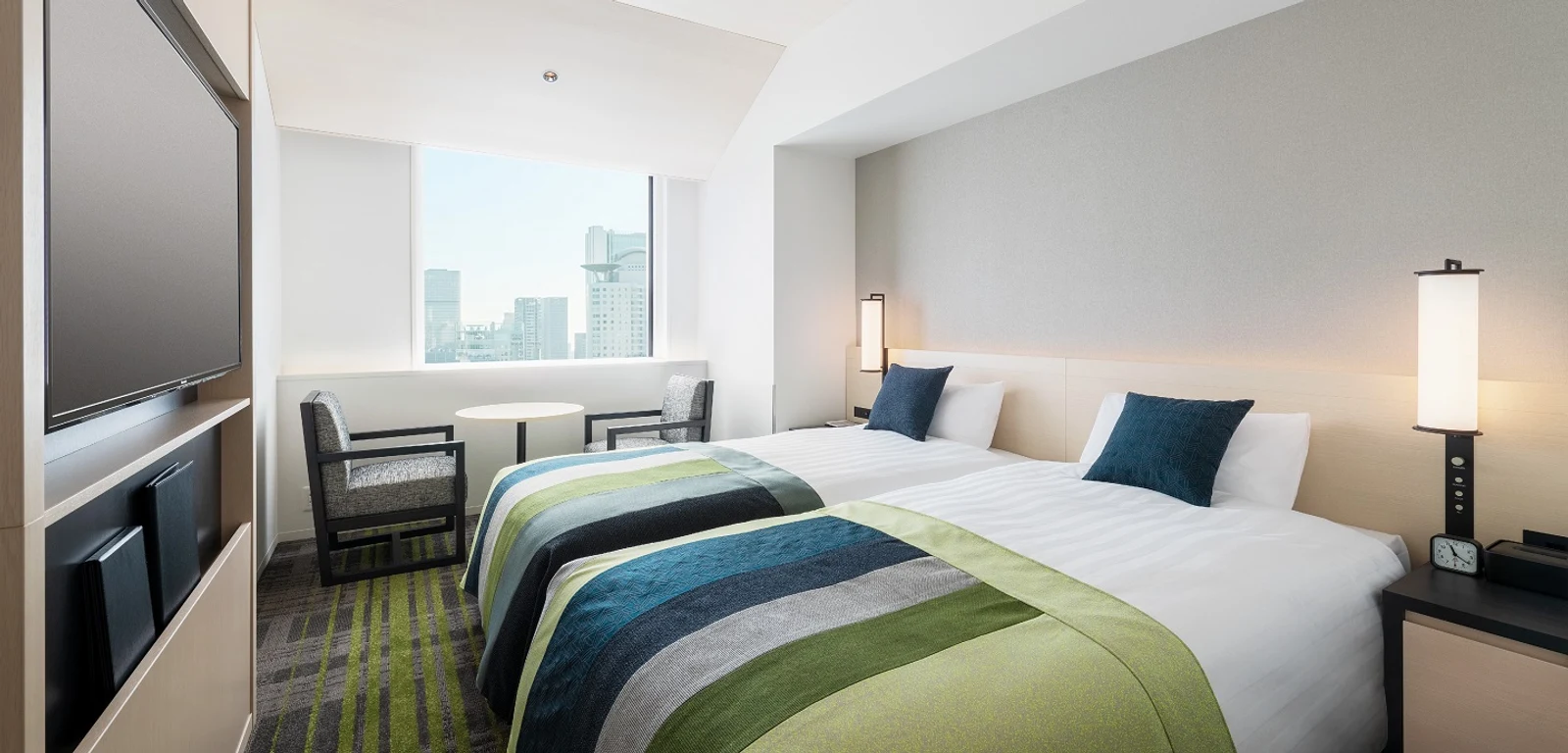
The hotel lists City View Guest Rooms around 30–34m², typically with two twin beds and, in relevant categories, an extra sleeping place for a third guest. Its wider family and Park View categories include rooms around 40–45.5m² with configurations that can sleep four. The precise category matters more than a generic “large room” label. A family of four should check whether the quoted room has two fixed twins plus extra beds, not infer four conventional beds from occupancy.
Four people can mean a stroller, cases, park purchases and different bedtimes. A room can be legal for four and still require careful circulation once extra beds are deployed. Check the layout and sleeping surfaces before buying a view premium. For a group of friends, the Osaka four-to-six-person hotel comparison asks whether one room remains a better deal than two.
Use this order when comparing actual rooms:
- Confirm legal occupancy and the exact fixed or extra sleeping surfaces.
- Check floor space after cases, stroller and any extra beds are in place.
- Decide whether City View or Park View will be used during awake room hours.
- Compare the full rate and cancellation terms for the room category that actually fits.
Two adults staying a single night may find a 30–34m² City View room ample. Do not pay for a 40–45.5m² Park View solely because the hotel is beside USJ. The bigger category becomes more persuasive when the extra beds, luggage and awake time in the room have a purpose. A family hotel location comparison for Osaka can help if the same room must also support non-park days.
Park View is a separate experience purchase
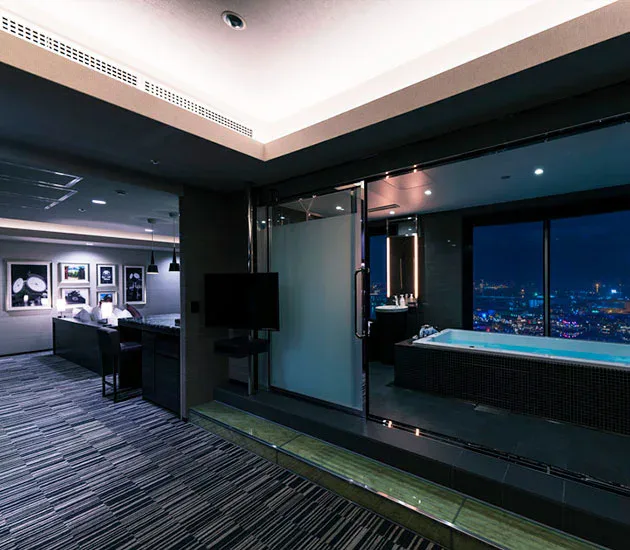
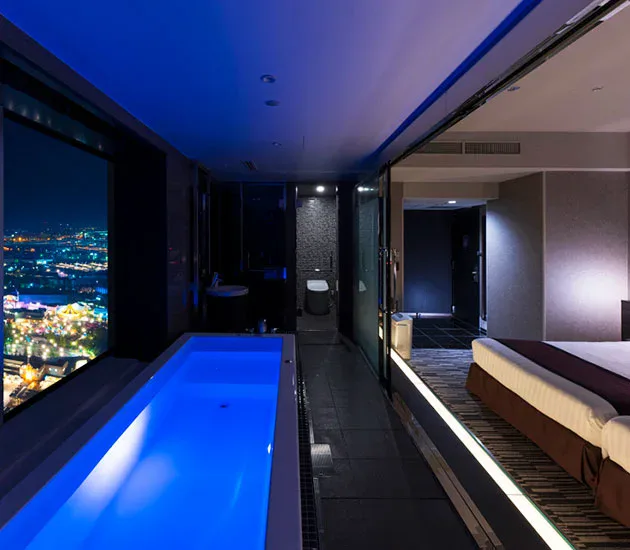
Some Park View rooms and family variants list approximately 40–45.5m², often with two twins and additional beds, depending on the booked category. The view lets the resort atmosphere continue from the room, but it does not shorten the already short walk or alter admission rights. Treat the view as something the party intends to enjoy while awake, not as a transport upgrade. The Park Front versus LIBER after Halloween highlights a different post-park hotel use.
A visitor who leaves before sunrise and comes back only to fall asleep may scarcely look out of the window. For that schedule, gate position and workable beds deserve priority over a panorama. The City View alternative may preserve the access advantage for less money, depending on the date and rate. Always compare the total booking, not a generic category price.
A Park View room gains more value on an arrival afternoon, during a relaxed second morning, or when children sleep early and adults remain awake in the room. It may also matter to a traveller who actively wants the hotel to be part of the USJ experience. The exact floor, view, bed setup and cancellation terms should be checked together. A room photograph alone may not represent every category in the hotel.
A hotel breakfast can conflict with a gate-first morning
The Akala buffet currently lists breakfast from 07:00 to 09:30. USJ says admission can begin before the published park opening on some days. If the reason to stay a minute away is an aggressive early queue, a leisurely hotel breakfast may consume the very morning advantage the room purchased. Check the actual park hours, breakfast inclusion and your group’s pace rather than assuming the two benefits stack neatly.
A guest might eat quickly at 07:00 and still reach the entrance early enough for their own plan, but that depends on the date and the park’s operating decision. Others may prefer a simpler breakfast before joining the queue. There is no need to buy an included buffet for every guest when the group expects to be outside before it begins. The USJ Halloween one-day itinerary is a particularly long-day example of where morning minutes matter.
Breakfast is easier to use after the park day, before a later train or on a two-night stay whose second morning is not an opening sprint. Then the hotel meal and short station walk support a slower departure. Compare the breakfast rate with nearby food options for the same schedule. The buffet’s present 07:00–09:30 hours are a service condition, not a reason to ignore the park opening pattern.
Lockers and laundry support the hotel edges
The hotel lists complimentary coin and self-service lockers on the second floor, available 24 hours; coin lockers return the ¥100 coin used to operate them. Access to the locker room requires a key card from the third-floor desk. If bags do not fit or lockers are full, staff are the route to another solution. This can be useful before the room is ready and after checkout, but check baggage handling if a very early or late transfer is planned.
Washer-dryers are listed on floors 4–28, operating around the clock at ¥600 per load with detergent included. That can be useful during a longer family stay or after wet park clothes. It is a practical facility, not necessarily a reason to make Universal City the base for several unrelated Osaka days. For a longer trip, the Osaka station hotel comparison may be a better city-base check.
Luggage storage and laundry work before admission or after the final park exit, so their value is less dependent on re-entry rights than a supposed midday room break. The property also lists a 24-hour Lawson and water dispensers, useful after a late return. Compare these amenities with how many days the group will actually be at the hotel. A one-night park stay may use the locker and convenience store far more than the laundry.
A USJ address is a specialist base within Osaka
Universal City is excellent for a park day but less convenient for repeated Umeda, Namba, Kyoto or Kobe outings. If the itinerary has one USJ day and several city days, the group may be better in central Osaka with a strategic resort night—or with no move at all. The Osaka base guide treats the location as part of the whole route rather than a park-only map.
Three lodging patterns cover most uses:
- USJ-centred stay: two Universal City nights around a full park day.
- One park day in a wider Osaka trip: one strategic specialist night, then a city base.
- No hotel move: retain central Osaka when the park commute is easier than repacking.
The USJ accommodation-area guide helps decide whether Universal City should be a base at all. If the rest of the trip relies on JR connections, compare the Osaka Station hotel options. A family doing Kyoto and Nara day trips may value avoiding hotel moves more than a one-minute park approach.
Park Front and THE SINGULARI sell different evenings
THE SINGULARI HOTEL connects directly with Universal City Station and has a guest Skyspa. It is the clearest nearby alternative when a post-park bath and station access matter more than being beside the gate. Park Front has the shorter approach to USJ and a broad room-size range that may suit families. The SINGULARI room and Skyspa guide lets the group compare what it will actually use after the park closes.
Choose Park Front for gate proximity, a suitable larger room or a Park View stay you will enjoy. Choose SINGULARI when the station connection and Skyspa are the stronger evening routine. Compare the same dates, guest count and cancellation terms; a spa preference cannot compensate for a room that does not fit four people, and a one-minute walk cannot compensate for missing beds. The USJ hotel one-day versus two-day decision determines how long either specialist base should be booked.
Both hotels remain outside the same USJ re-entry rule. A standard Studio Pass holder cannot turn either one into a dependable midday retreat with a return to the park. The comparison is about the legal pre-entry and post-exit windows, station use, room geometry and evening amenities. An Annual Pass holder can make a different day plan, subject to that pass’s conditions.
Who should pay for the gate-side room?
Book Park Front when USJ is a major trip anchor and at least two real advantages apply: an early gate approach, a very short walk after the final exit, a room that sleeps the group properly, a Park View you will use while awake, or a two-night plan with both edges protected. Each has a distinct value. A traveller with one park day and central-Osaka sightseeing before and after should compare the hotel move against a single city base.
Reconsider if the main justification is “we can return to the room at lunch and go back in.” That conflicts with the current standard Studio Pass rule. Reconsider too if the room booked for four depends on extra beds the group has not examined, or if breakfast is included but everyone plans to queue before 07:00. These are concrete ways to pay a premium for a benefit that is not actually available.
A multi-night Universal City booking is hardest to justify when USJ takes only one day and the rest of the trip belongs in Osaka, Kyoto or Kobe. One strategic Park Front night may still help at the right edge of the day. The Osaka itinerary of three to five days can show where that move fits, while a Kansai week from one hotel makes the no-move case.
The short walk is real, and its value is specific. It improves the approach before first admission and the return after the final exit. It can repeat across two park days. Room size and the next day’s route determine whether the premium remains worthwhile. Compare the exact room type and breakfast plan against those uses rather than treating one minute as a complete booking argument.
Compare Park Front room types for your dates
The gate-side hotel in seven scores
| Dimension | JapanLayer score | What matters for this booking |
|---|---|---|
| Location | The park gate and Universal City rail stop are both moments away, saving the transfer after a long USJ day. | |
| Room | City View rooms around 30–34 m² and named 40–45.5 m² family layouts provide meaningful space choices. | |
| Cleanliness | Large recent stay samples consistently rate room upkeep highly. | |
| Service | Staff and luggage handling support the high-turnover park arrival and checkout pattern. | |
| Facilities | Lockers, laundry services and family conveniences help, though the hotel is primarily a park base. | |
| Food | Breakfast and nearby CityWalk meals offer choice, but eating times must fit the desired park entry. | |
| Value | The shortest walk earns its premium on full park days, especially with children and a late finish. |
JapanLayer score: 8.7/10 for a park-focused family stay with time to use the gate-side location before or after USJ. The address alone should not drive an expensive Park View upgrade when the booking is mainly a place to sleep.
Related USJ and Osaka decisions
SINGULARI and its Skyspa · USJ hotel neighbourhoods · Halloween park-day sequence · Osaka Station hotel bases
Park rules and hotel details
USJ re-entry and locker conditions · Studio Pass conditions · Daily park hours · Park Front gate and station access · Park View room sizes and bedding · Hotel lockers and laundry · City View room sizes · Akala breakfast hours. Verify your exact booked category and park date.
Related guides: Hakata hotel walk and room · Susukino bath and walk · Shinjuku East Exit hotel · Naha Terrace room and station · Sapporo onsen hotel · Otaru station and canal · Ueno station hotel · Hakodate station hotel · Sapporo Grand winter access · Solaria Sapporo station walk