
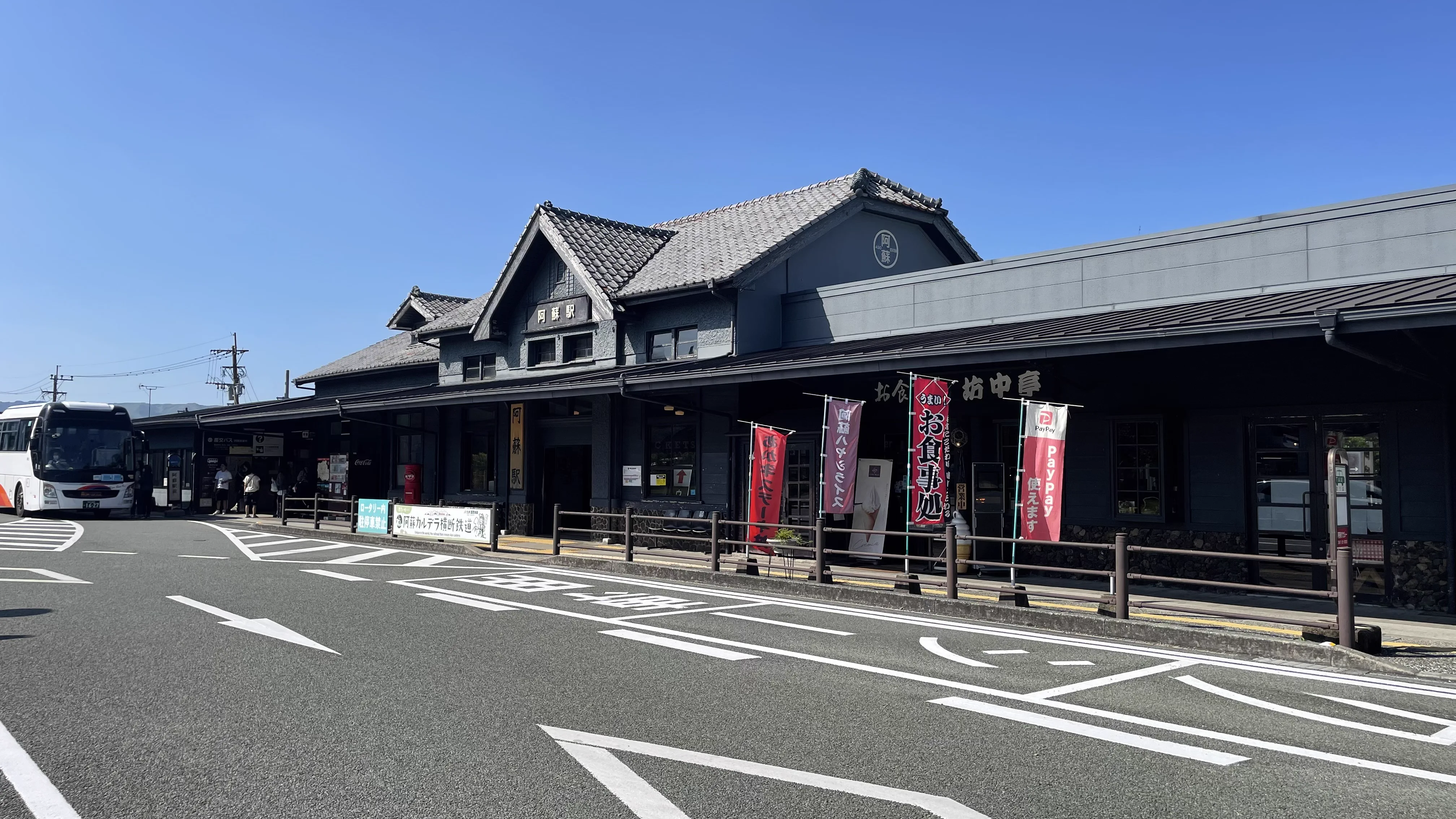
The Kyushu Odan Bus again offers three daily departures each way across the Kumamoto–Aso–Kurokawa–Yufuin corridor. The full pattern returned on 1 September 2026 after the earthquake-related reduced timetable. For a traveller moving hotels across central Kyushu, that is useful news: 07:23 and 08:23 departures from Kumamoto can reach Kurokawa before lunch, while a 12:08 bus continues through Yufuin to Beppu. The service is still sparse enough that a missed reserved departure can reshape the day.
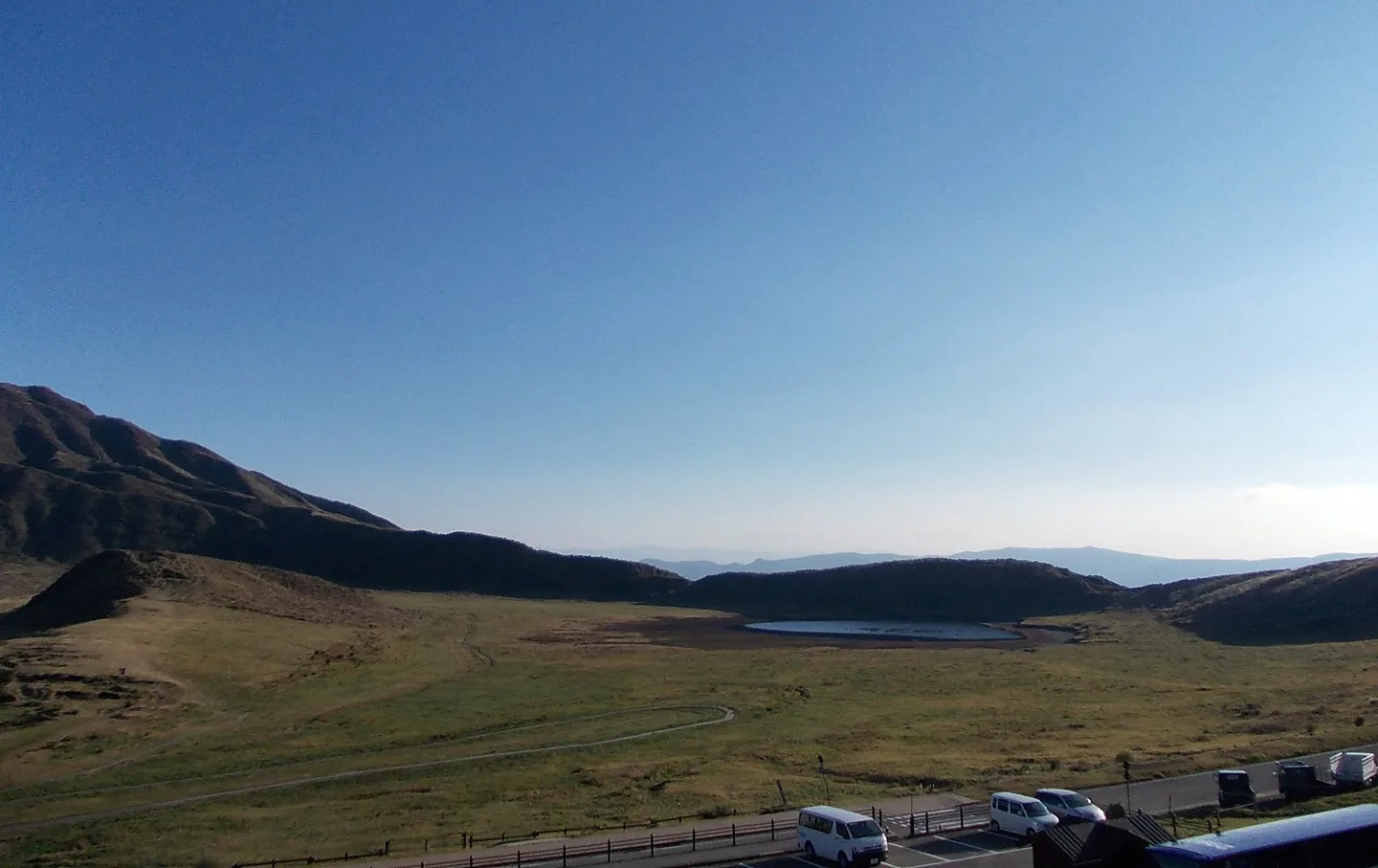
The Aso crater is a different journey. On 23 October, the volcano warning was Level 2, which bars entry within roughly one kilometre of Nakadake crater. The Aso–Takachiho service revised on 1 October again lists Kusasenri and Asosanjo Terminal, but the separate crater shuttle reports suspension while the park road is closed. Reaching Aso Station, Kusasenri or even Asosanjo Terminal therefore does not grant access to the crater rim. Check the volcano restriction and each bus layer for the date of travel. volcano warning.
This route works best as a chain of overnight bases. Use the intercity bus for the long movement between Kumamoto, Kurokawa, Yufuin and Beppu, then budget separate time and transport for any mountain visit. A place that is open to passengers can have a nearby restricted zone. The practical test is whether every later bus and hotel deadline still works after the extra excursion, not whether the map shows the attractions on one line.
↔ Scroll table left or right
Journey | Current role of Odan Bus | Decision that still needs work |
Kumamoto to Kurokawa ryokan | Strong overnight transfer | Arrive with margin for pickup, check-in and dinner |
Kurokawa to Yufuin or Beppu | Useful eastbound continuation | Reserve the separate sector and decide whether Yufuin is a stop or overnight |
Kumamoto to Aso and Kusasenri | Intercity bus plus local mountain connection | Match mountain return with onward bus; check volcano and road status |
Kumamoto to Nakadake crater | Odan reaches only Aso Station; other transport is needed | Level 2 excludes the crater zone and the last shuttle reports suspension |
Aso + Kurokawa + Yufuin as brief same-day stops | Still a poor plan | More buses do not turn three destinations into hop-on/hop-off sightseeing |
The restored timetable and the journey it creates
Before September, earthquake recovery left the corridor with a single through bus each way: the 12:08 Kumamoto departure and the 08:10 Beppu departure. The restoration brought back two earlier Kumamoto options and two later Yufuin-to-Kumamoto options. By late October the operator’s route page still showed three daily departures in each direction, with the printed long-distance timetable carrying the same times. Recheck your dated sector before buying because an operational notice can alter a journey. Sanko Bus — Kyushu Odan Bus current operation status. current timetable. reservation rules.
The three eastbound departures perform different jobs. The first two end at Yufuin, while the midday bus continues to Beppu. The times below are station-to-station schedule figures, not guarantees that a sightseeing stop can be inserted between separately reserved legs:
↔ Scroll table left or right
Kumamoto Station departure | Aso / Kurokawa / Yufuin arrival | Useful pattern |
07:23 | 09:14 / 10:15 / 11:48 | Earliest arrival for a mountain connection or ryokan day |
08:23 | 10:14 / 11:15 / 12:48 | A later Kumamoto checkout with time for Kurokawa |
12:08 | 13:59 / 15:00 / 16:33; Beppu 17:29 | Hotel-to-hotel transfer with little ambitious sightseeing time |
Westbound, the Beppu bus leaves at 08:10, passes Yufuin at 09:10 and Kurokawa at 10:45, and reaches Kumamoto Station at 13:23. Yufuin also has departures at 13:50 and 14:50, reaching Kumamoto at 18:03 and 19:03. A guest sleeping in Kurokawa must choose the departure that fits checkout and onward arrival, not the one that merely looks convenient at Yufuin.
Three services per direction give real choices but not metro-style frequency. A stop at Aso, Kurokawa or Yufuin ends the sector for which you boarded. The next bus is another departure with its own seat availability and timing. If a ryokan dinner, ferry or final train depends on the second leg, reserve and protect that second leg before committing to the stopover.
Aso Station, Asosanjo Terminal and the crater are distinct stops
The Odan Bus calls at Aso Station on its way across the island. It does not deliver passengers to the Nakadake crater. Aso Station is an interchange for mountain buses; Kusasenri is an upland sightseeing area; Asosanjo Terminal is the interchange for the last crater approach. A ticket or route map naming one of those places should never be treated as proof that the restricted crater itself is accessible.
The September 2026 snapshot in the earlier article reflected Level 3: the resumed Kumamoto mountain bus then ran only as far as Kusasenri. That is no longer the complete position. The operator’s current timetable lists Asosanjo Terminal, and the revised Aso–Takachiho route also stops there. The volcanic warning is Level 2, yet entry to the one-kilometre crater zone remains prohibited. A terminal service and a closed crater can coexist. current crater restriction.
Treat the mountain as three service checks. The Aso Tozan Line links Aso Station with Kusasenri and Asosanjo Terminal on its published schedule. The Asochiho bus links Aso and Takachiho with a mountain stop again after its October revision. The short crater shuttle remains a separate service and currently reports suspension because the park road is closed. Check the exact service number and direction you need, then the restriction on foot or vehicle entry beyond the terminal. Kumamoto–Aso mountain service. Asochiho October timetable.
Aso Tozan Line: the published Aso Station service lists Kusasenri and Asosanjo Terminal; confirm the day’s operating notice.
Crater shuttle: the final vehicle beyond Asosanjo still reports suspension while the park road is closed.
Asochiho: the 1 October revision again includes Kusasenri and Asosanjo Terminal on its Aso–Takachiho itinerary.
Takamori and other mountain buses: read each route’s current notice separately; an old September Level 3 diversion is not a current timetable.
Kusasenri and the mountain scenery can still justify an Aso stop even when the crater edge is barred. Decide whether grassland, museum or a shorter mountain visit meets the purpose of your journey. If seeing the active crater is the single reason for the detour, do not buy a ticket to Asosanjo on the assumption that the last segment will reopen by arrival. Volcanic gas, weather and emergency restrictions can also change access at short notice. crater shuttle status. the fukuoka to aso day trip or overnight guide.
Make Kurokawa an overnight, then use the bus to move east
The strongest Odan itinerary changes base: Kumamoto to Kurokawa for a ryokan night, followed by Yufuin or Beppu. The bus crosses a section of Kyushu where rail does not conveniently join those stays. One seat and a luggage compartment can remove a series of rail and local-bus changes. The value comes from ending a travel leg at the hotel you actually want, not from seeing every settlement through the window.
Adding a stopover is possible only after you price the lost flexibility. Getting off at Aso to spend several hours there creates a second reservation; getting off again at Kurokawa creates another. You must know where luggage waits and whether the next bus arrives before check-in or dinner. A map of a continuous line can conceal those separate transport commitments.
↔ Scroll table left or right
Route design | Fit | Reason |
Kumamoto hotel to Kurokawa ryokan | High | One direct ride reduces rail backtracking and ends at the overnight town |
Kurokawa ryokan to Yufuin hotel | High | The bus links two places rail does not join conveniently |
Kumamoto to Aso sightseeing then Kurokawa dinner | Fragile | Local mountain timings and a fixed meal compete for the same hours |
Aso, Kurokawa and Yufuin stops before Beppu | Low | Multiple bus departures and luggage arrangements dominate the day |
Why Kurokawa benefits from this particular service
Kurokawa Onsen is appealing as a ryokan destination but awkward to insert into a rail-first route. Odan Bus links it with Kumamoto, Aso, Yufuin and Beppu without requiring a return to a major rail station. That advantage is greatest when you actually stay the night. You can arrive, check in, use the bath and town, then continue east the next day rather than spending the visit watching for another bus.
Choose the arrival backward from the property’s dinner seating. A late bus may be technically valid but leave too little margin for the walk or pickup from the stop. The relevant sequence includes:
Walk or arranged pickup from the Kurokawa bus stop.
The ryokan’s check-in and luggage arrangements.
The exact dinner seating included in the booking.
Bathing and town time that make an overnight worthwhile.
An Aso stop inserted before a Kurokawa dinner has a real cost even if the extra sightseeing admission is free. A delayed local bus or a longer mountain visit can erase bathing time and threaten a meal included in the room rate. If the ryokan is the expensive anchor of the day, board the Odan departure that protects it. Give Aso its own day or night when the volcano landscape is a serious priority.
Yufuin can be a pause, but decide that before reserving
The restored morning departures reach Yufuin at 11:48 or 12:48, and the midday Kumamoto bus reaches it at 16:33 before going on to Beppu. That makes a daytime pause possible with a later sector. It does not mean Yufuin can be experienced as an unhurried overnight and a quick interchange simultaneously. The bus spacing, your luggage and any dinner reservation determine the useful length of the stop.
If Lake Kinrin, a private onsen, an included ryokan dinner or a quiet early walk is the main draw, stay in Yufuin. If the trip is chiefly Kurokawa and Beppu, Yufuin may be a shorter planned break. A stopover should have an onward seat that you can actually catch; an overnight should leave room for the experiences that justified its hotel premium.
Compare Beppu and Yufuin by the sort of evening and lodging you want, then place the bus between those hotel decisions. The restored service helps a sensible order of places. It cannot compensate for rushing a town you intended to enjoy slowly simply because a route line appears to pass through it.
Reserve by sector when a deadline follows the ride
The intercity bus has limited seats and reservations for eligible sectors open two months ahead, with booking normally possible until the day before travel. Some short sectors are handled differently and cannot be reserved, so check the specific origin and destination. A multi-stop day is not one continuous guaranteed seat after you step off. Treat every later boarding as a separate transport commitment.
Once the hotel order is set, reserve each hotel-to-hotel movement at its exact stops. For a sightseeing break, confirm the onward sector before deciding how long to linger. If only one acceptable departure remains after a stop, use that deadline to set a turnaround time. A flexible attraction can be shortened; a full bus cannot be negotiated into an extra seat at the roadside.
A confirmed seat matters most before a ryokan dinner, flight, ferry or another long-distance ticket. A missed local connection may strand a traveller for hours even when the intercity route has technically resumed full service. Leave margin for walking to the stop, retrieving bags and road conditions. An early arrival is usually more useful than a perfectly tight sequence that fails after one delayed vehicle.
Kumamoto to Beppu uses most of a travel day
The 12:08 Kumamoto Station departure is scheduled to reach the Beppu Station area at 17:29, about five hours and twenty minutes later. The operator describes a 37-seat bus arranged four across, with Wi-Fi and no toilet on board. Confirm the current vehicle details when booking, particularly if comfort or a long uninterrupted ride matters to your party. This is a transfer with scenery, not a substitute for a full day in both cities.
The long bus can be efficient when it replaces awkward transfers and carries the main bag in one vehicle. It is a poor fit for a plan that claims a complete Kumamoto morning, several mountain stopovers and a Beppu afternoon. Choose which destination receives usable daylight. The journey itself takes a large block and a road delay can eat into an evening reservation at the far end.
The comparison with rail is broader than departure-to-arrival minutes. Consider how many changes you avoid, where the luggage travels, how much daylight sits on the bus, what happens if a departure is missed, and whether the vehicle’s facilities suit the passenger. These are practical costs that a single fare or headline travel time does not show.
Bus value = rail and road backtracking avoided + simple luggage movement − daylight used in transit − risk from sparse departures − comfort cost of a long ride without a toilet.If the bus removes two uncomfortable changes with cases, it may be worth taking even when another route is a little faster on paper. A passenger who needs frequent breaks or an early arrival should weigh the no-toilet vehicle and five-hour duration differently. Decide against the day you are actually planning rather than declaring the bus universally better or worse than a train route.
Bags turn a stopover into a logistics decision
A suitcase is simple on a hotel-to-hotel bus: store it for the ride and collect it at the town where you sleep. It becomes a burden during a three-hour visit to Aso or Kurokawa before a second departure. The bus luggage hold is not a locker for travellers who have left the vehicle. Work out where the case can legally and practically wait while you sightsee.
Check a real storage option at Aso for your particular date before relying on one. For a ryokan visit, ask the property about holding bags before check-in or after checkout. A complex route may be easier with the main case forwarded and an overnight bag carried on the bus. Those arrangements take planning, but they can allow a genuine stop rather than a stressful walk with luggage.
Starting from Fukuoka adds another baggage choice. Sending the largest case toward a later hotel can remove it from the mountain corridor while you travel with a smaller bag. Match the delivery date to the hotel that will receive it; forwarding does not help if the case and guest arrive at different towns that evening.
Do not count on a nationwide IC card for an unplanned replacement ride
Sanko stopped accepting the nationwide interoperable transport IC cards, including Suica and SUGOCA, on its services in November 2024. Contactless credit-card payment exists on many routes, while a reserved passenger may already have a purchased ticket. The exact payment method on a substitute bus still needs to be checked. A card that worked in Tokyo does not automatically settle an unexpected ride in this network.
That distinction matters when a volcano notice or missed connection forces a same-day change. Check whether the alternative service accepts the payment method in your wallet, and carry the booking confirmation for any reserved sector. Do not assume that tapping a national rail IC card is a universal backup. Payment is a small detail until the bus you need is about to depart.
Three schedules that the restored corridor cannot rescue
↔ Scroll table left or right
Conflict | What goes wrong | Better route |
Aso crater visit before Kurokawa dinner | Crater access remains restricted; local transport adds another deadline | Visit Kusasenri only if the actual bus chain works, or stay in Aso |
Late Yufuin sightseeing before a Beppu evening | Sparse onward seats leave little room for queues or a leisurely meal | Plan Yufuin as a short booked stop or an overnight |
Last plausible bus before a fixed onward ticket | Road delay or full seats put the later product at risk | Take an earlier bus or shift the fixed connection |
If the alert or the bus pattern changes again
Respond to the specific layer that changed. A crater closure does not automatically cancel the Odan Bus across Kyushu. A restored route to Asosanjo does not reopen the prohibited crater zone. First identify whether the change concerns the volcano warning, the mountain bus, the final crater shuttle or the intercity bus. Each affects a different part of the itinerary.
If Level 2 remains, regard the one-kilometre crater zone as prohibited while considering accessible Kusasenri or terminal-area sightseeing.
If restrictions tighten, remove the mountain extension first and keep the intercity hotel sequence if its buses continue to run.
If the restriction and shuttle situation improve, calculate a fresh mountain visit using current local timetables and an onward seat.
The Kumamoto–Kurokawa–Yufuin or Beppu overnight sequence can remain useful while Nakadake access is restricted. Keep the base-change spine if its buses are running and the hotels still suit the trip. Remove or shorten the optional mountain extension when the local status worsens. If crater access later resumes, rebuild that visit using the new mountain timetable and a genuine return connection, not an old screenshot.
The bus is back; the crater remains a separate decision
The September 2026 restoration gives travellers three eastbound and three westbound daily choices in the published Odan pattern. Early Kumamoto departures can make a Kurokawa or Yufuin arrival before lunch; afternoon Yufuin departures make a westward transfer possible. Use those choices to support a hotel order. The full timetable is helpful, yet the route remains too infrequent for casual multi-town hopping without reservations and luggage planning.
As of 23 October the volcanic warning was Level 2 and the crater’s one-kilometre zone was off limits. The revised October Asochiho service calls at Asosanjo Terminal, while the final crater shuttle still reports suspension. Kusasenri sightseeing and an intercity Kurokawa transfer are therefore feasible questions to evaluate separately from a crater-edge visit. Confirm each service and restriction close to departure because volcano and road conditions can change faster than a hotel booking. Next decision | Decide whether Aso deserves its own day or overnight before adding the mountain bus. Level 3 Aso transport restrictions.
If the mountain is central to the trip, give Aso enough time for a separate day or overnight before inserting its local bus into the cross-Kyushu transfer. Compare Kurokawa Onsen ryokan for the overnight.
Routes, reservations and mountain status
The intercity schedule, mountain buses, crater shuttle and volcano restriction answer different parts of the route decision. Check the dated departure for the sector you booked and the current destination access before leaving. An older Level 3 notice describes September rather than the late-October position.
Plan the onward seat and the mountain return as carefully as the outbound ride. A live restriction may change what is possible at the top even when the intercity bus runs its usual route. Beppu vs Yufuin. Hakata-to-Yufuin luggage guide.