
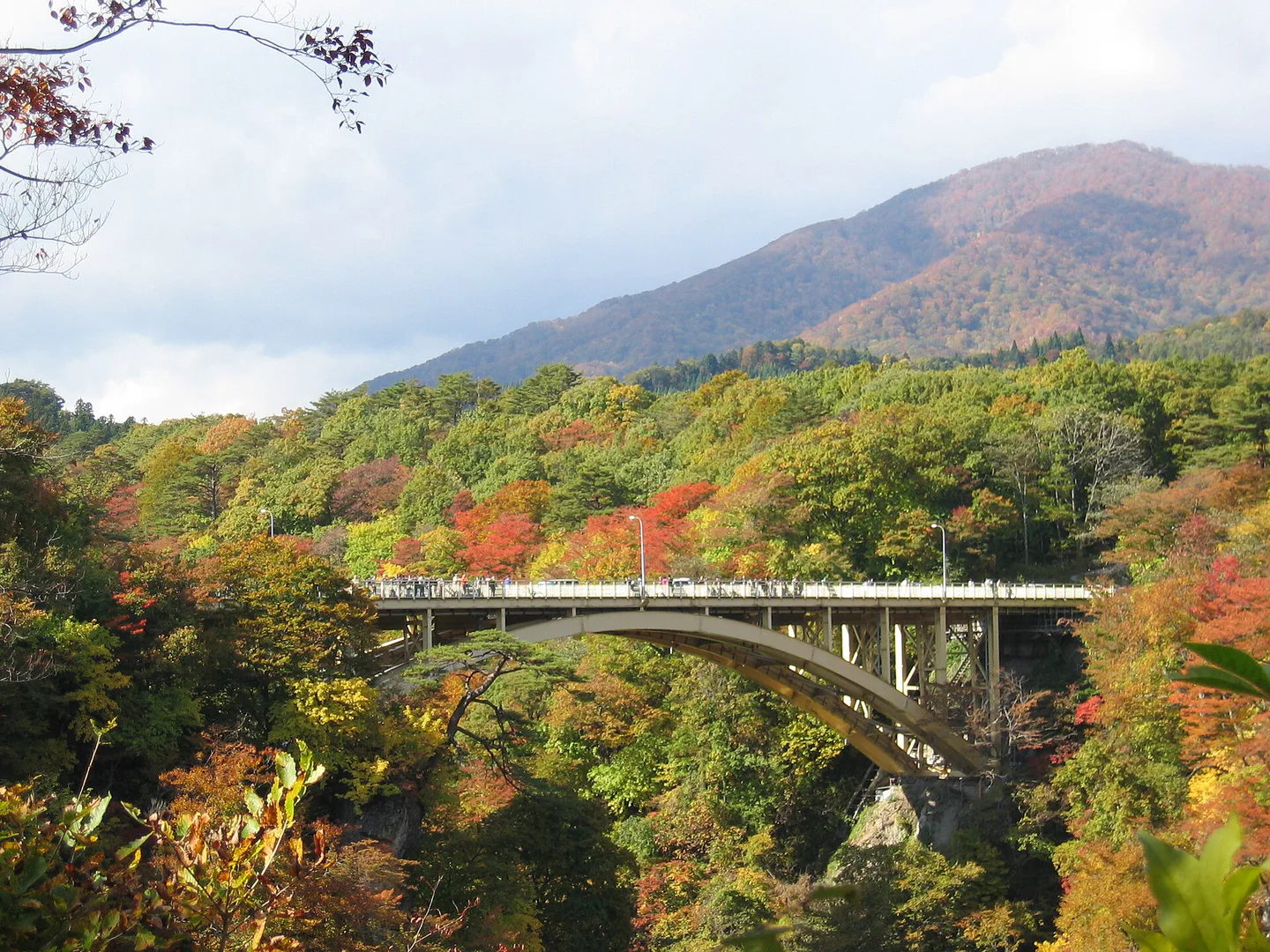
Naruko Gorge can be visited in a half-day. The reason to stay overnight is the choice it gives you when the weather, a rural connection or autumn road traffic refuses to cooperate. Book the ryokan night first, protect its dinner deadline, and keep the gorge for the clearer of two available half-days. A car-free first visit usually works best from Naruko Onsen rather than the apparently closer Nakayamadaira: the train still reaches Naruko Onsen from Furukawa, while the railway west of town remains suspended and uses a replacement bus.
The walking map needs the same care. In 2026 there is no single open through-trail across the gorge. Two short gorge sections are separate out-and-backs; a 2.2 km Ofukasawa loop is a different walk. You can have the bridge view and an onsen evening without promising yourself a long hike. For a broader regional comparison, see when Naruko beats Mount Kurikoma and use the Tohoku foliage timing guide to choose a plausible week, rather than treating any October weekend as peak colour.
The trip's fixed point is dinner, not the gorge
An overnight adds two chances for a dry view: arrival day before dinner and the following morning before you return toward Sendai. It does not turn Naruko Gorge into a destination with two full days of trails. Put the gorge into the better forecast window. Fill the weaker one with the bath, a local meal, Naruko town and an unhurried breakfast. This order also works for a photographer who wants another chance at light without committing to a second long drive.
The ryokan sets the one hard appointment. Half-board dinner may have a last check-in or seating time that is earlier than a city hotel traveller expects. Ask the property for its exact deadline, whether it can store bags before check-in, and what happens if a delayed train or Route 47 queue makes you late. Work backward from that answer when choosing the final gorge walk. A hotel night still has value when one afternoon is lost to rain, provided the bath and dinner were reasons for coming. The half-board ryokan booking guide helps separate included meals from room-only rates.
↔ Scroll table left or right
Arrival-day condition | Where the gorge goes | What must stay protected |
Clear arrival, uncertain next morning | Visit the gorge before hotel check-in | Exit the trail and reach the ryokan before its dinner deadline |
Wet arrival, better morning forecast | Use Naruko town and the onsen first; visit the gorge after breakfast | The return vehicle, luggage pickup and Furukawa connection |
Heavy rain or same-day safety closure | Skip the affected walking section | Do not substitute another unverified trail just to keep the itinerary full |
Low walking tolerance | Use a vehicle to the Rest House or bridge viewpoint and one short legal path if open | Confirm a return ride rather than assuming the gorge is beside the station |
The bridge crossing the coloured valley is the visual reward most visitors have in mind. A photograph of it should not be mistaken for a promise that the entire river-side path below is open; the approach options are limited to the sections listed for the current season.
Three open walks are not one continuous route
The Naruko Gorge route description separates the Nakayamadaira-side section from the Naruko-side section. From the Rest House entrance on the Nakayamadaira side, you can go roughly 350 metres one way to Kaiko Bridge and come back. From the Otani Bridge entrance on the Naruko side, the available path runs about 230 metres one way before turning back. Both are listed for 09:00–16:00. Do not draw a connecting line between them on a historic map and budget time for a non-existent through-walk.
The Ofukasawa path is a separate loop of about 2.2 km starting at the Rest House. Its seasonal listing says it can be used through the day, subject to weather closure. The city lists the 2026 seasonal opening from 28 April to late November for these routes, with the possibility of unscheduled closure. The gorge's usual colour period runs from around mid-October to mid-November, but that is a broad seasonal range, not a promise for a specific booking. Check the route notice and weather on the travel morning. The autumn Tohoku route planner is helpful when you can shift a regional date, while a fixed ryokan booking calls for a more modest weather backup.
For a person who mainly wants the bridge view, the short legal sections and viewpoint area can be enough. A family with a pushchair, an older traveller, or someone managing knee pain should not feel obliged to add the loop. A fit walker who wants the Ofukasawa circuit should allow a different time budget and wear footwear suited to damp leaves. Neither approach is a lesser version of the same through-hike; they answer different purposes. The easy autumn routes for seniors and children put this accessibility decision in a wider trip context. The Lake Towada–Oirase two-day plan shows another autumn trip where a longer waterside walk is a genuine part of the draw.
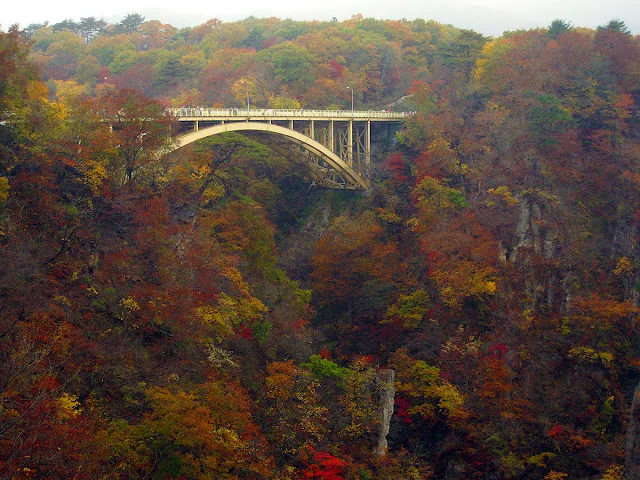
The foliage image looks toward the bridge from within the valley. It depicts the landscape, not current access to the point where the camera stood; use the open out-and-back and loop descriptions when deciding where you may actually walk.
Furukawa to Naruko Onsen still works by rail
The July 2024 rain damage did not remove every train to Naruko. From Sendai, the practical car-free approach remains the Tohoku Shinkansen to Furukawa followed by the operating Rikuu East Line to Naruko Onsen. The railway is suspended between Naruko-Onsen and Shinjō, the section that includes travel onward toward Nakayamadaira. JR East's current Tohoku status states that substitute buses run across the suspended section; the April 2026 bus timetable revision changed some departures. Read the current bus schedule if your hotel or outing depends on travel beyond Naruko Onsen.
That distinction explains why a map can mislead. Nakayamadaira looks closer to the gorge, yet its last connection from a Sendai train involves the suspended part of the railway, a replacement bus, a hotel pickup or a taxi. Naruko Onsen is farther from the viewpoint but sits on the operating side of the line. Osaki City gives approximately ten minutes by taxi from Naruko Onsen to the gorge and roughly 60 minutes on foot to the Nakayamadaira-side entrance. The walk is a poor default when a suitcase, dinner deadline or bad weather is involved.
The source article's useful rule survives: choose the hotel by its failure-recovery path, not by kilometres alone. At Naruko Onsen, ask the ryokan to keep your overnight bag while you go out, and agree on a pickup or return taxi if it provides one. At Nakayamadaira, confirm how you will reach the hotel if the intended substitute bus is missed and how you will leave the following morning. If that answer depends on an assumed shuttle that the property has not promised, the shorter map distance has not saved you time. The Tohoku accommodation-base comparison helps decide whether the region merits a separate Naruko night at all.
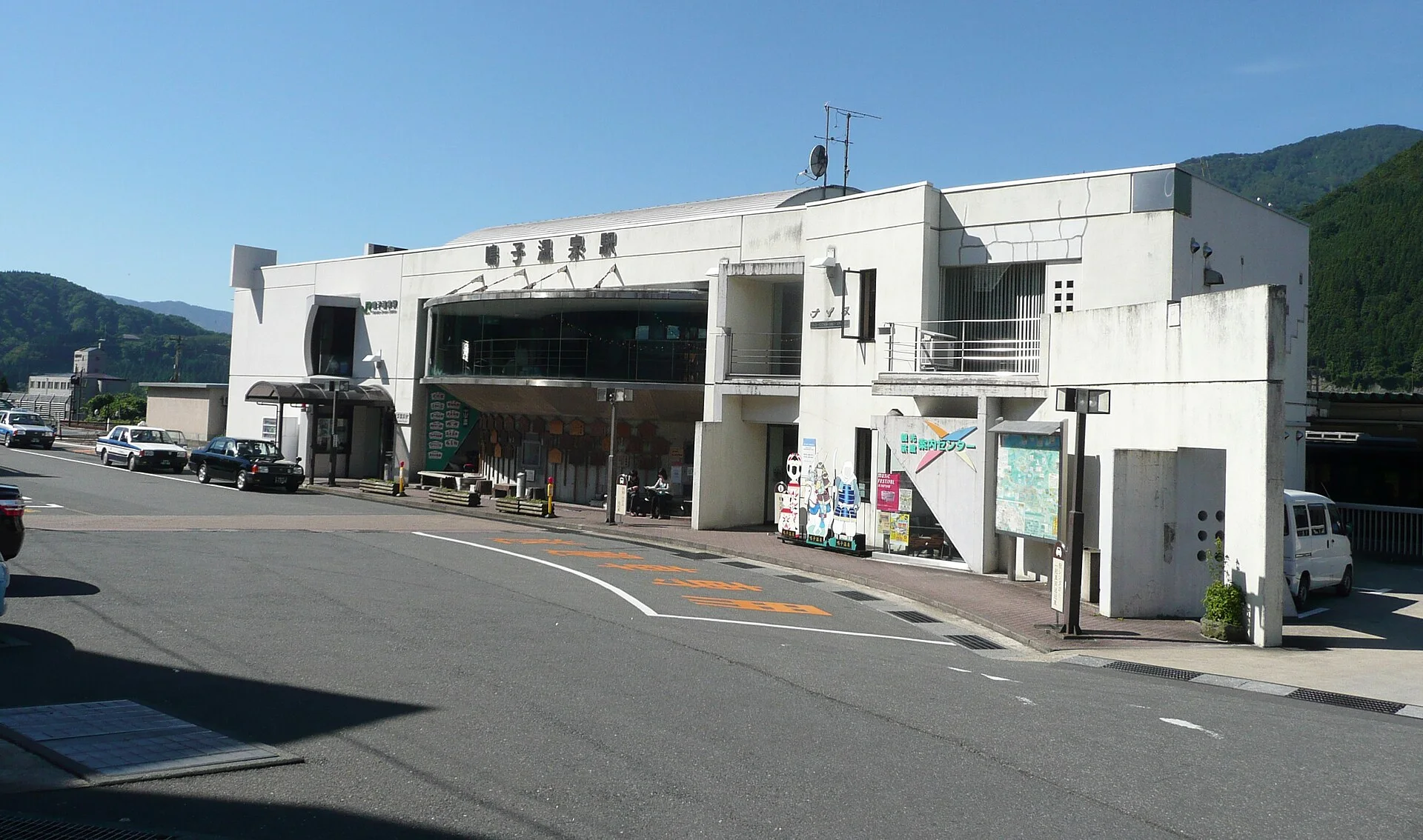
The station building shown here is Naruko-Onsen. It is the useful rail-side base for a traveller arriving from Furukawa; it does not imply that a train continues normally through Nakayamadaira to Shinjō.
A clear first day: gorge before the bath
Leave Sendai early enough that the Furukawa transfer and final taxi are not squeezed into the ryokan's check-in deadline. If the hotel accepts bags before the room is ready, leave the overnight bag there. Then take the prearranged taxi, a confirmed hotel transfer or a genuinely operating seasonal service to the gorge. Do not assume a bus mentioned in an old autumn itinerary will run on your exact 2026 date. The Sendai day-trip alternatives make a useful comparison if you cannot obtain that last vehicle connection.
At the Rest House area, decide the walking level before starting. For the bridge and a short taste of the canyon, use the viewpoint and the open 350-metre out-and-back. A second 230-metre section requires approaching its own Otani Bridge entrance; it is not a continuation of the first. Add the Ofukasawa loop only if the route is open, the ground is suitable and you have enough margin to return. Leave while the final transfer is still easy to obtain, not at the final moment before dinner. A reservation at a ryokan is a poor reason to rush on wet leaves.
Even if both days are forecast clear, putting the gorge first protects you from a deteriorating second morning. The next day can then be a bath, local food, souvenir time and a straightforward trip back through Furukawa. A quiet second day is a design choice, not a gap to fill with unrelated attractions. For travellers considering more complex regional routing, the late-October foliage route comparison gives the wider progression rather than pretending Naruko must occupy every hour.
A wet first day: move the gorge, keep the departure margin
If arrival day is rainy, do not enter a path that has been closed for weather or force the loop because it appeared on a booking plan. Use Naruko town and the ryokan instead. Tell the hotel if travel delays affect check-in. In the morning, go to the gorge only if the route is open and the transfer is feasible. You still need a ride back to Naruko-Onsen Station, any stored luggage, the operating train to Furukawa and the onward Sendai connection. Weather flexibility is useful because of the overnight; it is not an excuse to ignore the return timetable.
The August 2026 storms affected other local walking routes too, but their present status is more nuanced than the old article stated. The Miyagi Olle Osaki/Naruko route reopened after its storm closure; the city lists a season through late November. It is about 10 km and roughly four hours, with bear-sighting cautions, so it is an independent hike rather than a rainy-day substitute for two short gorge paths. Jigokudani in Onikobe also partly reopened: the section from its car park to Tochinoki-yu is accessible, while the route beyond remains closed. It requires a separate journey from Naruko Onsen and is not a casual replacement when the gorge closes in bad weather. The Mt Kurikoma and Naruko comparison makes the hiking difference explicit.
If both outdoor windows fail, let the ryokan stay stand on its own merits. An onsen evening and a relaxed morning can still justify the room for someone who booked them deliberately. If the gorge was the sole reason to travel and the bath holds no appeal, change the destination when the cancellation terms allow rather than silently substituting a closed walk. The Japanese bathing etiquette guide is useful for a first onsen night, especially when the weather gives you more bath time than expected.
The onsen ticket no longer belongs in a new booking plan
Naruko's shared Yumeguri bathing ticket stopped being sold after 30 April 2026 while the programme is reviewed. Earlier tickets remain usable only within their stated six-month validity; individual baths may still accept cash. A visitor arranging a new 2026 stay should choose the particular day-use bath they want and check its current entry conditions. Do not plan an afternoon around buying the former multi-bath ticket on arrival. The hotel bath, local food and a short town walk make a simpler weak-weather half-day.
The distinction also matters for price comparisons. A room with good baths or half-board cannot be compared to a cheaper room by assuming an inexpensive town-wide bathing pass will cover the difference. The old pass is not a current purchase option. The Naruko versus other Tohoku bases guide helps identify when one night in town has enough independent value to justify moving hotels.
Driving gives an extra attempt, with a parking cost and queue
A rental car removes dependence on the substitute bus and makes either Naruko Onsen or Nakayamadaira possible as a hotel base. It also lets you come back to the viewpoint next morning if rain spoils the first visit. Those benefits are real, but Route 47 can be congested in the foliage period. The Nakayamadaira-side parking area has space for about 253 passenger cars and 12 buses. For 2026, the paid period is 10 October to 30 November; a passenger car costs ¥500, a motorcycle ¥200, a medium vehicle ¥1,000 and a large vehicle ¥1,500. The previous article said the season's paid dates had not yet been announced; they now have.
From Furukawa Interchange, Osaki City gives about an hour via Route 47 in ordinary conditions, and around ten minutes from Naruko Onsen town. These are route descriptions, not guaranteed late-October drive times. If the ryokan dinner starts early, visit the gorge in the morning or create a generous buffer between leaving the parking area and reaching the hotel. Do not use an optimistic map ETA to decide the final start of the 2.2 km loop. For a larger Japan road trip, compare this day with the Kyushu autumn car-or-transit planning method: the extra vehicle flexibility is valuable only when the driver has allowed for seasonal traffic and the final hotel check-in.
The autumn view toward the bridge is another photograph of Naruko Gorge, not evidence that a closed section has reopened. Keep the vehicle and trail decisions tied to the current entry point and return plan.
Keep the suitcase out of the gorge day
A full-size case makes the rural sequence harder without improving the visit. If you return to the same Sendai hotel, ask whether it will hold the large bag and carry a one-night pack. If the next city is different, forward the suitcase and travel with essentials. If the case must reach Naruko, confirm before booking that the chosen hotel will accept storage both before check-in and after checkout. Do not assume station lockers or a tourist desk will have room on a peak autumn weekend.
Pack for the way the two-day plan actually works: walking shoes that cope with wet leaves, a small waterproof layer, any medication for the overnight and the dinner booking details. If your transfer depends on a taxi, keep its contact or pickup arrangement available even if mobile data fails. A digital-ticket and eSIM backup plan matters more on a sparse rural timetable than on a city shopping day.
Who gains enough from the extra night?
↔ Scroll table left or right
Trip style | Better use of the night | When a Sendai day trip may suffice |
First car-free visit | Naruko Onsen base, small bag, confirmed gorge vehicle and flexible weather order | A dry stable forecast and a secured same-day final transfer |
Driver in foliage season | Either onsen base, early parking arrival and protected dinner buffer | The viewpoint is the only aim and a long drive is acceptable |
Older traveller or low-walking group | Station-near ryokan, taxi to viewpoint and one short open section | Accessible vehicle connections make the return comfortable |
Photography-focused traveller | Two possible light and weather windows around the hotel night | One forecast window is already excellent and no onsen stay is wanted |
Sendai hotel retained | Leave main case in Sendai and carry one overnight pack | Avoid moving hotels if the bath and dinner do not add value |
The overnight should solve a real constraint: weather uncertainty, a late rural connection, a valued ryokan dinner, or a desired onsen morning. If none applies and the gorge viewpoint is your only target, a well-arranged day trip from Sendai can be enough. Conversely, a traveller trying to combine every short path, a separate long Olle hike, Jigokudani, Katanuma and a half-board dinner into one day is asking the overnight to do more than it can. Katanuma alone needs its own transfer and time plan. The autumn photography timing guide may be a better use of planning time than adding another distant stop. The Lake Chuzenji two-day itinerary offers a useful comparison: a second day makes sense there for different transport and landscape reasons, not because every onsen destination requires two days.
For the typical first-time car-free trip, reserve one night in Naruko Onsen and leave the gorge half-day unassigned until the forecast and path notice are clear. Confirm the hotel dinner and bag storage, arrange the ten-minute vehicle connection, then place the 350-metre or 230-metre legal section in the better window. A driver can choose Nakayamadaira when the room and bath make it attractive, but should allow for the 2026 paid parking period and Route 47 queues. Compare Naruko Onsen accommodation for your dates. The useful booking is the one that leaves a credible way back to dinner and the next train.