
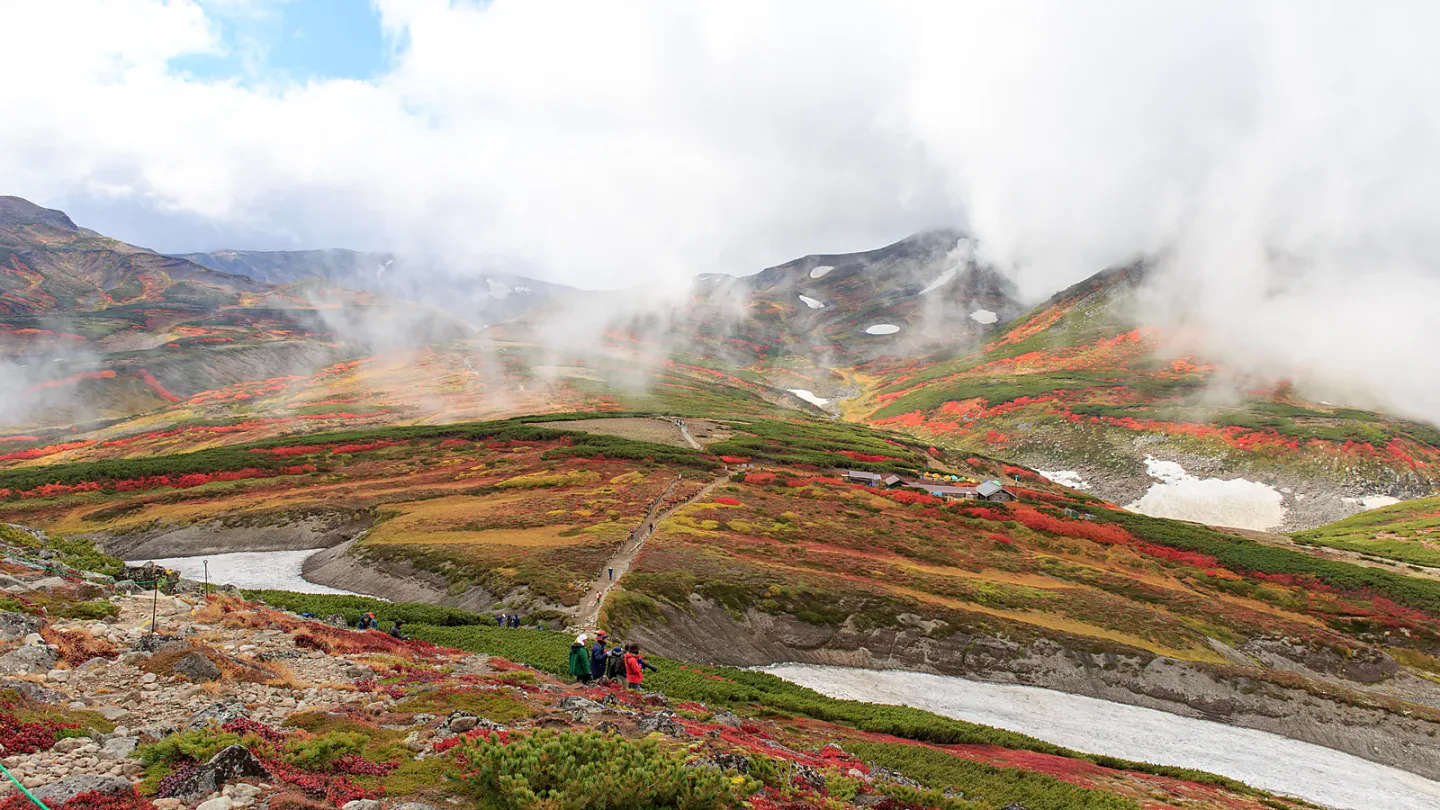
Five days in Hokkaido are enough for one good autumn route, provided the airport and foliage elevation agree. Arrive near the part of the island you actually want to see, hold one outdoor day in reserve for weather and use no more than two hotel bases. A loop through Asahikawa, Sapporo and Hakodate can consume its best daylight on intercity travel. The right five-day plan in early September looks very different from the one that works in late October.
Start by deciding whether the trip is a mountain trip, an onsen-and-city trip or a southern Hokkaido trip. Early colour is usually high in Daisetsuzan; later colour descends toward Sounkyo and Sapporo; Hakodate and Onuma make more sense toward the end of the season. A calendar date narrows the choice, but a forecast, wind and access notice should decide the actual mountain day. This is why the itinerary carries a weather swap rather than five pre-booked outdoor stops.
Choose the airport and colour band before booking a hotel
| Travel window | Best five-day shape | First hotel base | Second base only if it adds value | Main access check |
|---|---|---|---|---|
| Early September | High Daisetsuzan with a lower fallback | Asahikawa | Sounkyo for two mountain sessions | Ropeway weather and mountain buses |
| Mid September | Asahikawa plus Sounkyo | Asahikawa | Sounkyo for Kurodake or a reserved Ginsendai start | Season-specific Ginsendai controls |
| Late September to early October | Lower Daisetsuzan and foothills | Asahikawa or Sounkyo | Only if the second site has two useful sessions | Chairlift and road end dates |
| October | Sapporo with Jozankei or other lower sites | Sapporo | Jozankei for a ryokan evening and second morning | Autumn bus and gondola operating days |
| Late October to early November | Hakodate and Onuma | Hakodate | Onuma for dawn, cycling or a resort stay | Local colour and JR train times |
Asahikawa Airport is the efficient northern arrival for an Asahidake or Biei-heavy trip. New Chitose is the stronger airport for Sapporo and Jozankei, while Hakodate Airport suits the southern version. New Chitose has a larger flight choice, but that alone does not make it an efficient Daisetsuzan gateway. The reservation-only Taisetsu Liner had just two New Chitose departures for much of 2026, at 14:25 and 16:25; its timetable now advertises another evening departure beginning on 1 December 2026. Neither fact guarantees a useful same-day mountain connection. A late arrival deserves a first night near the airport or the intended city base; the New Chitose late-arrival choice is more relevant than forcing an upland transfer after dark.
Day 1 should be for arrival, luggage and positioning. Hold Days 2 and 3 as an outdoor day and its weather substitute, let Day 4 move to a lower site or city, and keep Day 5 realistic for departure. A half-day ropeway after an international connection may look efficient on a schedule; it gives away the margin needed for flight delay, bags and a mountain visibility check. The six-base Hokkaido stay comparison helps match that first hotel to the actual transport axis.
Early September: give Asahidake a clear-sky day
In the first part of September, base in Asahikawa and watch the higher Daisetsuzan slopes. Asahidake is the obvious first candidate, but it should be an option in the calendar rather than an unmovable appointment. Biei, Higashikawa or an Asahikawa city day can take the cloudier of Days 2 and 3. A second mountain such as Kurodake belongs in the itinerary only when transport and current colour justify the detour. Asahidake versus Kurodake resolves the different bases, lift approaches and walking commitment.
The Asahidake Ropeway's published ride is about ten minutes. Its June 1–October 20 pattern has departures every 15 minutes, and the adult June–October return fare listed in October 2026 is ¥3,500. From 21 October the operator moved to a 20-minute interval and shorter daylight hours. Those figures explain why a ropeway is easy to fit once you are at the station; they do not solve the road or bus approach. Without a car, work backward from the Route 66 return before deciding how long to walk at the upper station. With a car, leave enough daylight for descent and do not treat fog, wind or early snow as a reason to drive on to another trailhead.
A Sounkyo hotel is useful when you want an early Kurodake attempt as well as an onsen or gorge evening. The two-day Sounkyo plan shows what that night can hold. If only one Asahidake outing is certain, keep the Asahikawa base and avoid a room change for a speculative second summit. The station-connected JR Inn decision is one way to test whether a smaller room makes sense for repeated departures. Compare Asahikawa Station area rooms against the bus departure you will actually use; a central hotel is more useful here than a generic regional search.
Mid September: Ginsendai changes the hotel decision
Ginsendai can give a very different high-slope autumn day, but its access is not a casual add-on to a five-day road trip. During the 2026 foliage control period, 12–23 September, visitors faced season-specific vehicle rules and advance arrangements. The Sounkyo charter offered morning departures at 06:00 and 07:00, returns at 15:00 and 15:30, a 40-seat bus and a ¥2,500 one-way fare. A private-car booking was a different product from the charter seat. This has already passed for 2026; the next autumn plan needs that year's road and reservation notice before you fix the hotel.
The date within September matters too. The small summer shuttle ran only through 6 September in the source season, with a transition gap before the main control period. A traveller arriving on the wrong date could be left with a Sounkyo hotel but no intended Ginsendai transport. The Ginsendai access guide breaks apart the charter, private-car and hiking decisions. Its best use is before paying for a second base, especially for a car-free traveller.
Book Sounkyo for at least two rewards: a clean charter start or early Kurodake attempt, and a worthwhile onsen or gorge evening if cloud erases the mountain. A hotel move that merely replaces one early bus with another does not buy enough. Compare Sounkyo Onsen accommodation by its relationship to the charter pickup and Kurodake Ropeway, then keep a lower-elevation activity available for a weather loss.
When upper Daisetsuzan has finished, descend locally
Late September and early October should follow colour down rather than demand another high summit. Lower Sounkyo, Biei foothills and Asahikawa can produce a stronger short trip than an emergency drive to a distant mountain of similar height. Kurodake's ropeway reaches the fifth station, so it can still offer a shorter outing when a summit walk is unwise. The chairlift is separate: its 2026 summer season finished on 15 October, and the lift then closed for winter changeover. The ropeway remained listed through 8 November before its 9–30 November maintenance closure. A visitor after 15 October should not assume the summer chairlift is part of the ticket or route.
That cutoff changes what a Sounkyo second base earns. A gorge walk, onsen dinner and a fifth-station ropeway can still justify it, but a plan built entirely on the seventh-station lift no longer does. The high ground can also turn icy while the road below looks like autumn. Check the actual upper-station conditions and allow the lower site to win without calling the day a failure. The Hokkaido timing map provides the wider north-to-south context; the ten-day route is useful only if you genuinely have enough nights for a second region.
October: Sapporo and Jozankei need different kinds of time
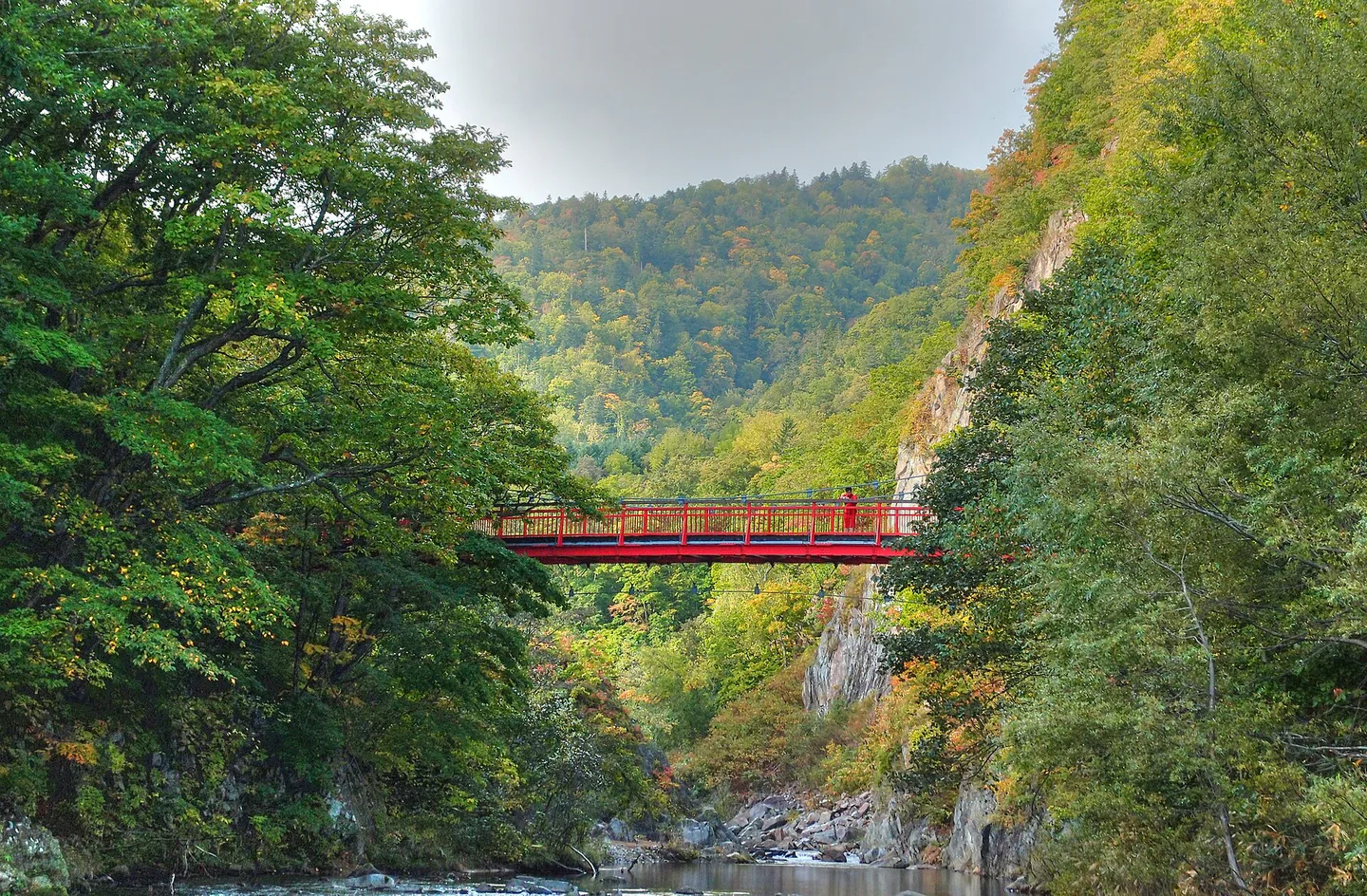
For a lower-elevation October trip, Sapporo is the resilient base. Its flight access, restaurants and indoor alternatives make a wet or windy day less expensive in lost holiday time. Jozankei can be a day outing when you want a river walk and autumn colour, or an overnight when the ryokan dinner, bath and next morning are part of what you are buying. The Jozankei day-trip versus overnight choice turns on those evening hours and the actual bus season. Heavy luggage, a tight departure or no interest in an onsen stay are good reasons to spend four nights in Sapporo and visit the valley once.
The 2026 Koyo Kappa Bus ran from 1 to 21 October with four Jozankei information-centre departures at 09:15, 11:15, 13:15 and 15:15. The published seat price was ¥700, capacity 45 and reservations were made on the day at the information centre. That 2026 service has ended as of this 24 October update. A later-October traveller cannot build the day around it; choose another operating bus or a different lower-site outing. Jozankei, Hoheikyo Dam and Sapporo Kokusai may look adjacent on a map but have different access and closing times. A car can connect scattered stops, though an early-winter weather change can remove the advantage quickly.
If the ryokan evening is the point, compare Jozankei Onsen stays by dinner time and the next morning's departure. If it is only a foliage day, Sapporo Station hotels keep the airport and rail legs simpler. Noboribetsu versus Jozankei matters if the onsen night itself is more important than being close to Sapporo.
Late season: Hakodate and Onuma work as one short route
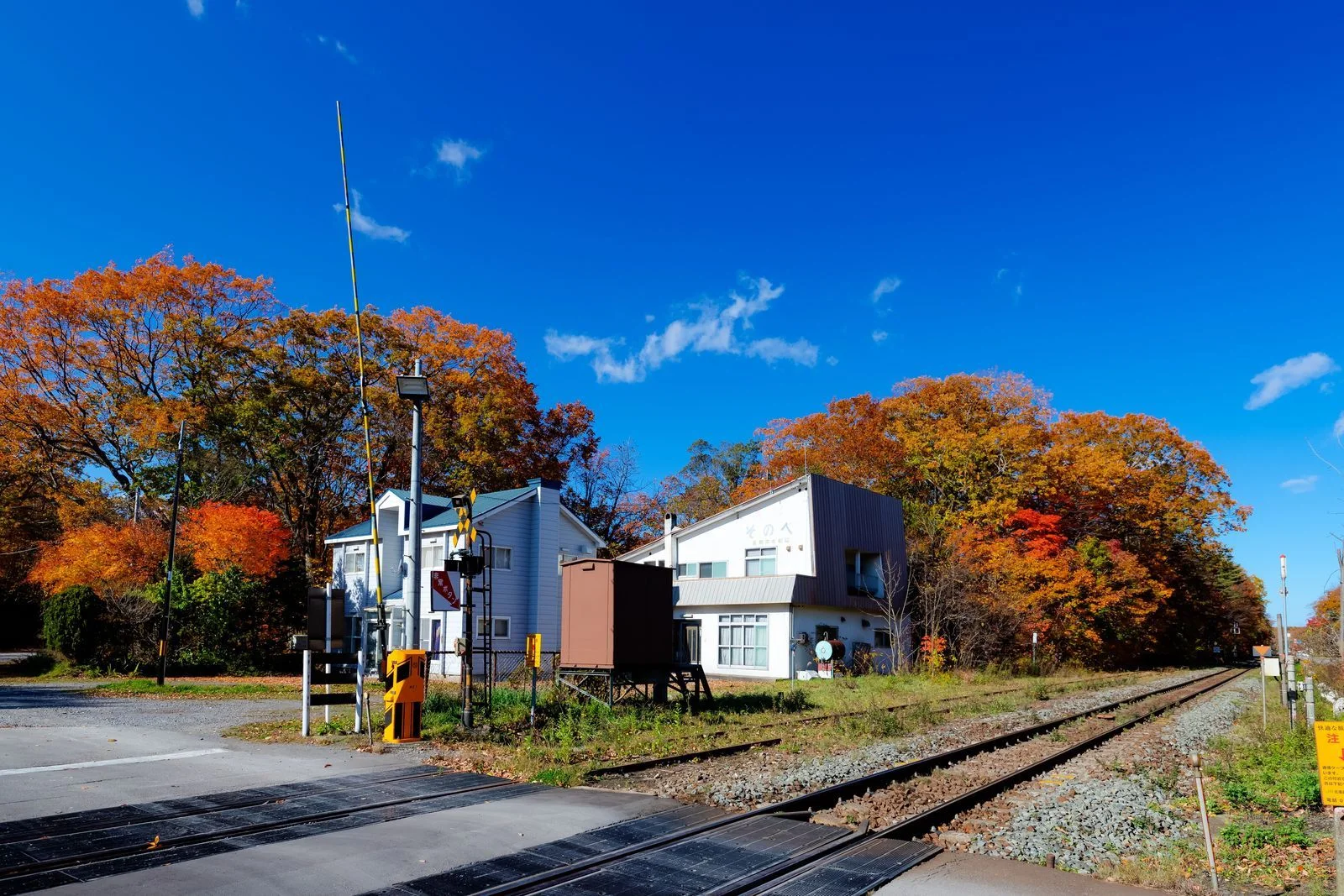
When southern Hokkaido has the better colour window, use Hakodate as the main hotel base and Onuma as the outdoor day. Kosetsuen, Goryokaku, Motomachi and city dining give the route alternatives if the lake is grey or the trees are late. Onuma can be reached by JR for a day visit; check the particular train you need for the return rather than assuming city-style frequency. The Hakodate–Onuma timing guide helps decide which site belongs on the clearest day.
An Onuma hotel earns its move when dawn at the lake, cycling or a slower resort stay are priorities. If the aim is a few hours of foliage and then dinner in Hakodate, a Hakodate Station base retains more options. Compare Hakodate Station rooms with the morning train and departure airport; Onuma-area rooms are a deliberate lake-stay choice, not a default substitute for the city.
Adding Sapporo to a five-day Hakodate–Onuma route only because it is famous can leave the lake with no weather flexibility. Asahikawa and Hakodate are useful gateways in different parts of the season; they are not automatically good partners in the same short itinerary. If you insist on north plus south, price an open-jaw flight so the long positioning trip happens once. The Asahikawa-in, New-Chitose-out route shows how flight direction can save a return across the island. A full intercity day may still be too expensive for a trip with only four effective sightseeing days.
The five-day rail pass needs an actual fare calculation
JR Hokkaido listed the consecutive five-day Hokkaido Rail Pass at ¥22,000 when pre-purchased and ¥23,000 at a designated station in October 2026. The shared number of calendar days is not a reason to buy it. Add only the qualifying JR fares on the route you have chosen; compare that total with the current pass price. Airport legs, a Sapporo–Otaru side trip and one return to a regional city can cost much less than a network-wide pass. The operator's sample Sapporo–Furano return via Asahikawa plus Sapporo–Otaru cost ¥14,480 on regular tickets. A long Sapporo–Hakodate leg may change the result, but buying a pass to justify that move reverses the logic.
| Transport item | What to count | What the rail pass does not solve |
|---|---|---|
| JR airport and intercity trains | Actual qualifying fares after the hotel route is fixed | Unnecessary positioning inserted only to use the pass |
| Daisetsuzan and Jozankei days | Mountain bus, charter, ropeway and any separate ticket | Most last-mile services and weather closures |
| Rental car | Rental, protection, NOC exposure, fuel, parking and one-way fee | Ice, low visibility and the driver's ability on mountain roads |
A rental car is most useful for two to four people visiting scattered rural stops when one confident driver is comfortable with left-side traffic and long distances. Add winter tyres when conditions demand them, and check the rental's snow and road terms. It does not make a mountain day safe after first snow. Public transport is stronger when the plan follows Asahikawa–Sounkyo or Sapporo–Hakodate corridors, but a national rail pass still will not pay for every mountain bus, Ginsendai charter, ropeway or onsen shuttle. If the flight lands at New Chitose, renting at the airport versus waiting until Sapporo changes the bill and the amount of city driving.
Make the second hotel earn two useful sessions
A five-day route works better with a day pack in the mountains and the large case left at a city hotel or forwarded to the later base where practical. Forwarding is not same-day transport: check the receiving hotel's acceptance and delivery lead time. Keep medication, insulation, rain protection and an overnight set with you. The luggage-forwarding guide deals with when to send, store or carry the case.
Before booking a Sounkyo, Jozankei or Onuma overnight, name the two sessions it unlocks. Early Kurodake plus onsen dinner is a clear pair. So are a fixed Ginsendai charter and a second-morning gorge walk, a Jozankei ryokan evening and river morning, or Onuma sunrise and a relaxed lake activity. If the move saves only one bus ride, retain the city base and spend the weather buffer where it matters. A fixed event or an unusually good open-jaw flight can change the answer, but it should be a conscious trade rather than a fourth hotel squeezed into a four-day sightseeing allowance.
The final booking test is simple: draw the airport, first hotel, main outdoor site and departure on one line. If the route crosses itself, delete a stop before buying transport. Keep one of Days 2 and 3 movable, verify the current lift and bus dates, then choose the second hotel only where it makes both the evening and following morning better. For a wider autumn journey, the seven-day regional comparison shows when extra nights genuinely allow a second band.