
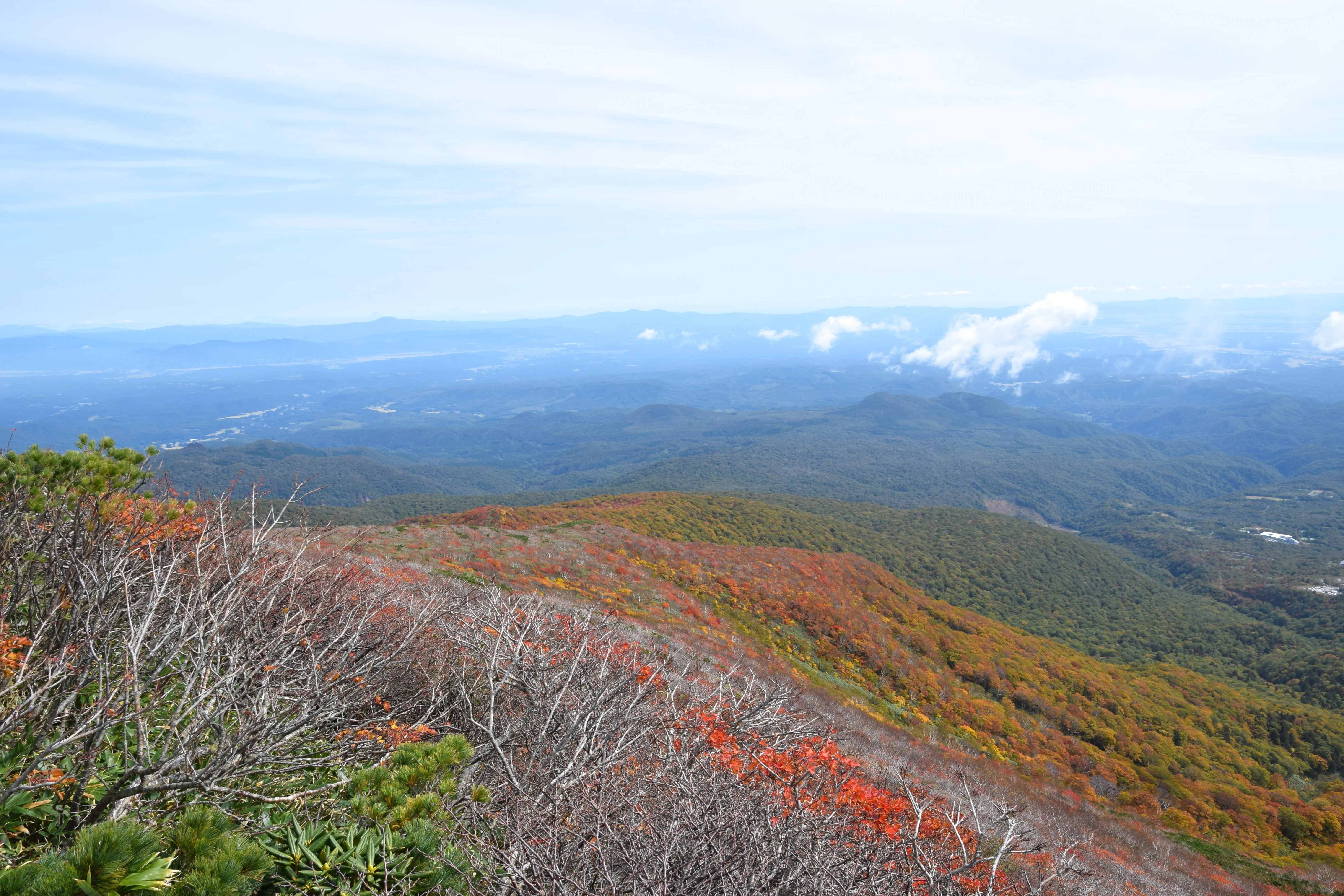
A ten-day autumn trip works best when it follows one foliage region and a second nearby band of colour. Japan's leaves generally appear first in colder northern or high-elevation places, then spread to warmer areas and lower ground. A route that moves with that pattern has a better chance of keeping useful options than one that collects famous names across the country. In late November, Tokyo and Kyoto can form a straightforward first trip. In September, the same route is too early for lowland Kyoto foliage.
The date window is the first decision. In October 2026, new regional foliage forecasts show some high mountain sites already past peak, while later-season sites are still developing. An early-August or late-August temperature outlook was only a risk signal; it could not assign peak colour to an individual temple. The 8 October update expects many sites that usually colour after late October to run somewhat late, including a late-November or later window for lower Kyoto sites such as Arashiyama. That still leaves weather, local elevation and storm damage capable of changing an individual visit. Build the hotel route around reliable geography, then adjust day trips using recent local observations.
Choose the route by departure date
| Travel window | First route to test | Second band | Do not build around |
|---|---|---|---|
| September to early October | Hokkaido or one high alpine region | Lower ground within the same region | Lowland Kyoto foliage |
| Mid October | Linear Tohoku journey | Tokyo/Nikko only if travel continues south | Hokkaido plus Kyoto within ten days |
| Late October to early November | Chubu high to low, or Tokyo–Nikko–Fuji | Lower cities on that route | Several disconnected mountain regions |
| Mid to late November | Tokyo toward Kyoto and Kansai | City gardens and nearby hills | A northern Tohoku foliage chase |
| Early December | Late Tokyo, Kyoto, Setouchi or Kyushu lowlands | Urban gardens and lower elevations | High mountain routes selected for leaves alone |
The table is a route filter, not a claim that a region will peak on every date in a row. The updated 2026 foliage calendar is useful close to departure; the hotel sequence should also have a fallback that does not require buying another long-distance ticket. If the mountain turns colour early, descend within the same region. If it is late, consider a higher site only while the transport still runs.
A foliage ladder beats a national checklist
Start with the band that historically suits your dates, then pick a second band farther south or lower in altitude along the path to the departure airport. Reserve one movable day for a mountain, gorge or Fuji view. If clouds cover the first target, the traveller can use the city already booked. If colour has moved, the party can make a shorter local adjustment. The approach is more robust than ten fixed leaf locations because the uncertainty is in timing and weather, not in the number of famous places named.
Hokkaido → Tokyo → Kyoto is the weak ten-day version when all three are added just because they appear on a foliage list. It involves separate flight or rail legs, several hotel clusters and three different colour calendars. A well-timed Hokkaido trip may need only a mountain and a lower-elevation fallback on the same island. A late-November first-time trip can get more from Tokyo and Kyoto than from inserting a northern mountain that has already finished. The seven-day autumn route sets an even stricter version of this geographic choice.
A ten-day foliage itinerary is already transport-heavy, so begin with three major hotel bases, extending to four only if a special mountain or onsen night is the point. A change can earn its place through early gorge hours, a ryokan dinner, a private bath or an essential departure connection. A different Tokyo hotel chosen to shave a single suburban commute usually does less. Once five hotel names appear in the plan, price the packing, luggage storage, local last miles and check-in times before adding any more sights. Autumn hotel booking timing matters because keeping one cancellable mountain night can be more useful than locking every stop months ahead.
September and early October: keep the trip north or high
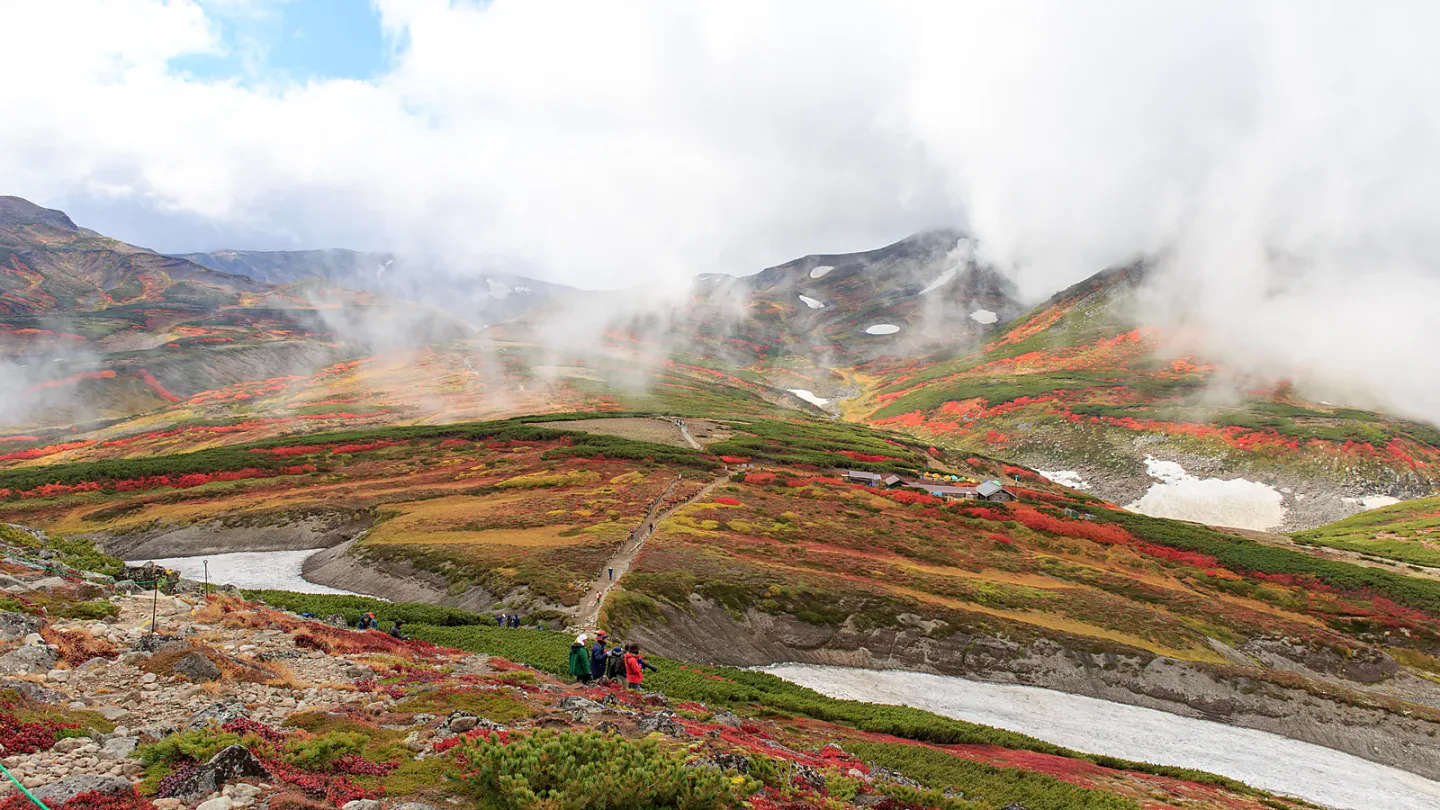
For early leaves, choose Hokkaido or one alpine system rather than a broad sweep to Kyoto. A practical Hokkaido frame is Asahikawa 2N, Sounkyo 3N and Sapporo 4N. Asahikawa supports the airport arrival and a Biei or Asahidake decision. Sounkyo earns its nights when Kurodake and the mountain stay are central, not simply because its name is on a map. Sapporo supplies the lower-elevation second band, food and indoor alternatives if a summit day is lost. Asahidake versus Kurodake helps identify which mountain day deserves a weather slot.
Do not append Hakodate and eastern Hokkaido to that nine-night sequence merely to cover the island. Both add worthwhile places, but each asks for a longer transfer and another weather decision. If Daisetsuzan access is interrupted or upper leaves have finished, shift lower within Hokkaido rather than buying a last-minute flight to Honshu. The five-day Hokkaido foliage route gives a shorter regional alternative; six Hokkaido lodging bases shows which overnight removes a last-mile problem.
By October 24, 2026, some high mountain foliage has already ended. An itinerary starting now should check current lift and road operation before treating this early-season example as a live ten-day recommendation. The structure remains useful for planning a September departure in another year; its dates are not a promise that the colour stays at elevation through late October.
Compare Sounkyo rooms only after deciding whether the mountain stay earns two or three nights; Sapporo Station stays are a more flexible final base for a flight or lower-elevation days.
Mid October: let Tohoku lead toward the exit
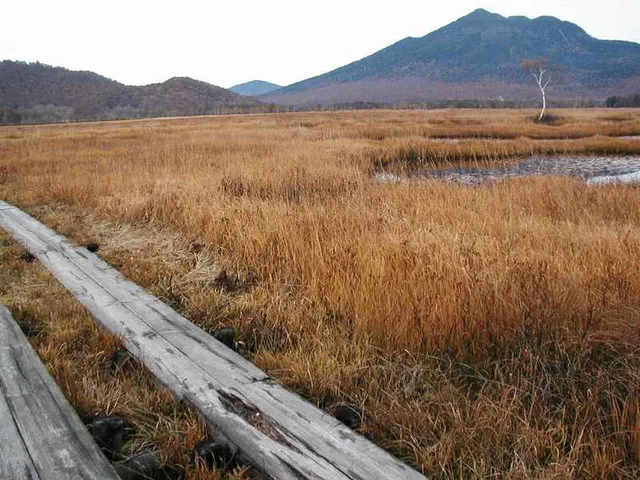
A Tohoku journey is strongest when the sequence is linear. One ten-day outline is Sendai 2N, Morioka or Hachinohe 2–3N, Oirase/Towada 2N, Aomori 1N and Tokyo 1–2N. That example needs the arrival and departure airport to cooperate; it is not a request to visit every gorge between the cities. The mountain bus, stream walk, lake connection and autumn road condition determine the useful day far more than a fast Shinkansen between major stations.
Oirase is an overnight candidate if dawn, late gorge light, a ryokan meal or a hotel shuttle is part of the trip. If the goal is a daytime walk and photographs, a city hotel can be simpler. Oirase, Lake Towada, Hachinohe or Aomori lodging tests those last miles; the Oirase Keiryu Hotel decision tests whether a resort stay earns its extra cost. The broader Tohoku five- or seven-day route gives the region its own time rather than using it as a brief detour from Kyoto.
If Tokyo lies after Tohoku on the flight path, it can be the second lower band and a resilient final base. Tohoku → Kyoto → Tokyo creates a loop and spends valuable daylight on backtracking. The same principle applies to a Sendai/Aomori open-jaw choice: pay any flight premium against the cost, bags and hotel hours of the journey it removes. An open-jaw ticket is useful when it deletes a real long return, not as a rule by itself.
For a gorge overnight, compare rooms around Oirase against the actual bus and trail entrance. A property labelled Towada may still leave a substantial morning transfer.
Late October to early November: choose one mountain system
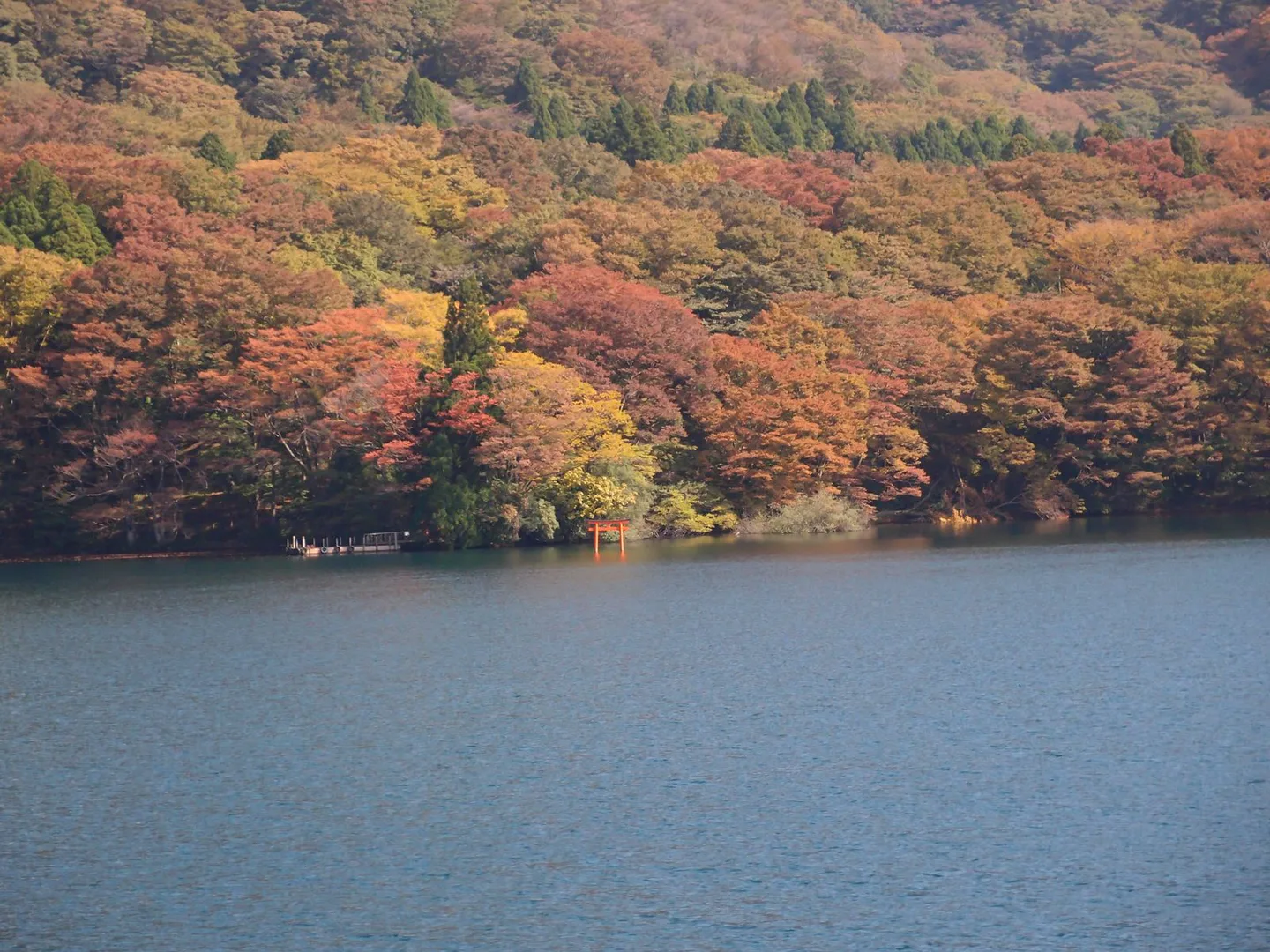
This is the period in which Chubu, Nikko, Kawaguchiko, Hakone and Kyoto may all look plausible in one search session. They are not a comfortable single ten-day checklist. Choose one of two shapes: a Chubu high-to-low route, or Tokyo as a base with Nikko and one Fuji-area stay.
Chubu: Toyama 2N → Takayama 2N → Matsumoto 2–3N → Nagoya or Kyoto 2–3N. Let elevation fall through the itinerary. Tateyama, Kamikochi, Shinhotaka and a Takayama mountain day should be alternatives selected around operating dates, not four hard reservations. Keep a city day in Takayama, Matsumoto or Kanazawa if a lift, trail or road is unavailable. The five-day Chubu route details a shorter segment; Tateyama's elevation timing shows why one mountain can have more than one colour band.
Tokyo, Nikko and Fuji: Tokyo 4–5N → Nikko 2N → Kawaguchiko 1–2N → Tokyo 1–2N is more familiar to an independent first visitor. Tokyo acts as a recovery hub between two weather-sensitive excursions. A moveable city day allows the party to take the clearer forecast for the mountain. The Tokyo–Nikko autumn route distinguishes a day out from an overnight, while Hakone versus Kawaguchiko helps choose one Fuji-area night. Adding both lake and onsen solely for another map pin often creates transfer debt.
The October 2026 outlook calls for care with later sites rather than a national reroute. The October 8 update expected Nikko mountain colour from late October and many lower sites later than normal; a traveller should compare those forecasts with reports from the particular lake, temple or trail just before travel. The 2026 foliage calendar helps change a day plan without reopening every hotel booking.
A Chubu route may need Takayama Station area rooms for bus departures. A Tokyo-based version should compare Nikko Station stays with an Oku-Nikko night if the upper lakes are the main purpose.
Mid November to early December: Tokyo and Kyoto become easier
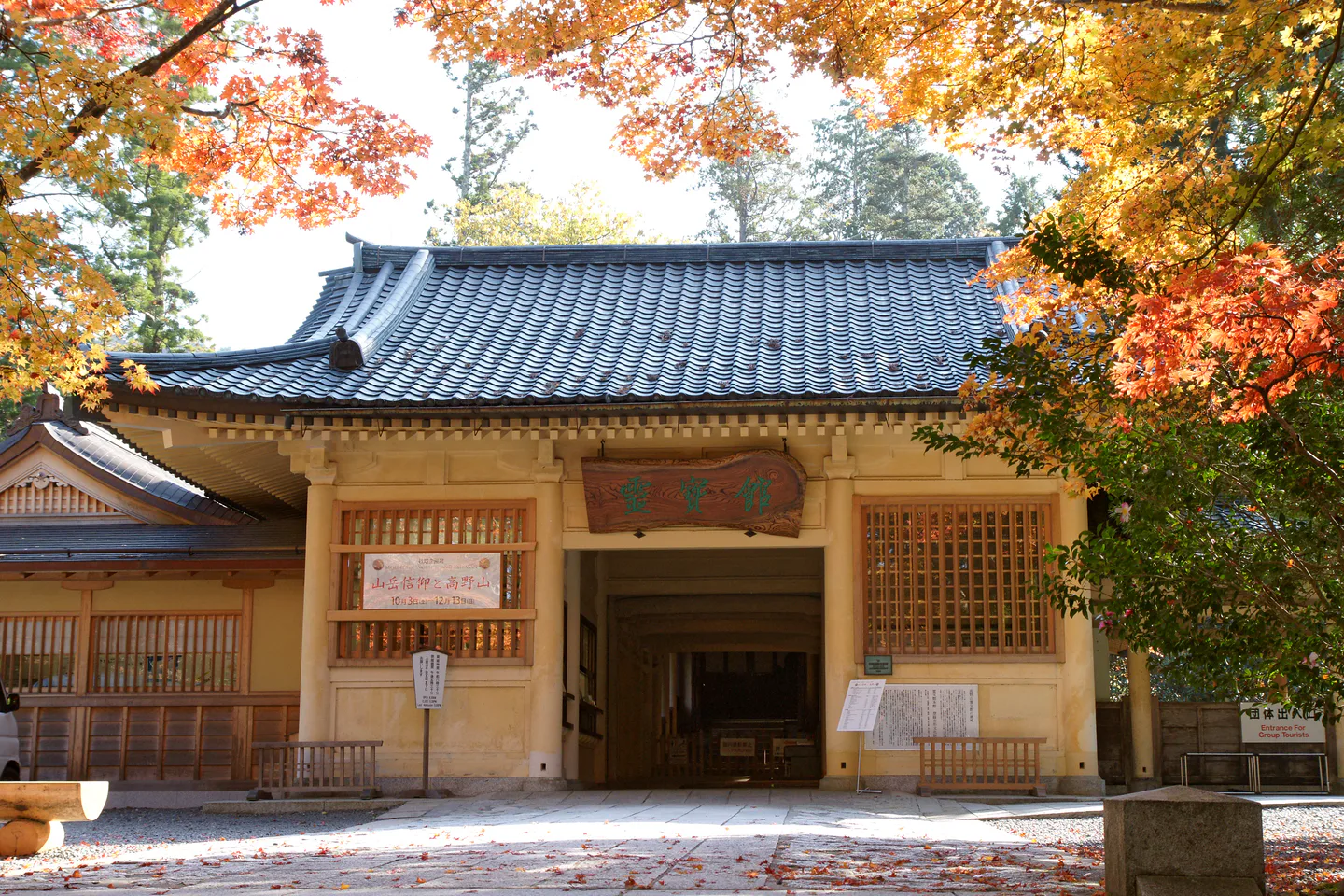
Once colour reaches lower elevations, the trip need not operate like a mountain expedition. Tokyo 4N followed by Kyoto 5N is a durable first-time route with gardens, temples, indoor alternatives and rail choices on a wet day. One flex day should remain moveable rather than being preassigned to a specific leaf spot. Tokyo can choose one or two from Takao, Okutama, city gardens, Nikko or a Fuji-region overnight for the actual date and weather. Kyoto days should be grouped by area and elevation rather than turning every shrine into a separate cross-city ride. Free Kyoto foliage stops and Kyoto's elevation sequence give the city route alternatives.
Very late dates can make Kyushu attractive instead of a northern detour. Fukuoka → Yufuin or Beppu → Kyoto can move toward later lowland colour while adding a distinct onsen and food stay. It works only if the hotel route and departure airport support the extra long-distance move. Kyushu's autumn sequence tests that region; Beppu versus Yufuin should decide what the overnight actually delivers. A first-time ten-day traveller does not need to append Kyushu to an already full Tokyo–Kyoto trip.
The October 2026 forecast's warmer late-season tendency is a reason to retain a city-garden and lower-elevation fallback, not to tell every November guest that Kyoto will peak on one particular day. For 2026, current reports should control the final day order. The hotel route can remain Tokyo-to-Kansai unless the traveller's date or main reason for travelling changes.
When the simple city route wins, Kyoto Station rooms make the national transfer straightforward, while a different Kyoto district may better serve repeated early temples. Compare the actual first and last stop before booking.
Keep one day movable and the luggage light
A flex day need not be blank. Give it a low-risk default: a city garden, museum, food neighbourhood, shopping or laundry. It can then be exchanged for the clear-sky alpine, gorge or Fuji outing. This prevents two weather-sensitive bookings back to back and also prevents a supposedly empty date from being filled with another distant destination. If the week is clear, enjoy the easy default; if the mountain opens, use the option without moving rooms.
When colours are early, descend within the region. When they are late, go higher only if the relevant lift, bus or road is still operating. A local altitude change normally costs less than an emergency Shinkansen or flight plus another hotel. Some places have road or trail closures after heavy rain; even a good leaf forecast does not override safe access. Hachimantai's autumn transport choices show why a scenic road and bus route need their own access check.
Send the large suitcase between major city hotels if a one- or two-night mountain stay lies between them, while carrying medicine, valuables and the next day's clothing. This is particularly useful for bus-dependent Sounkyo, Oirase, Takayama/Kamikochi sequences or Kawaguchiko. Forwarding has delivery lead times and hotel acceptance rules; it is not an instantaneous transfer. The luggage-forwarding guide helps decide when to send, store or carry the case.
A rail pass is the last pricing decision, not the route generator. List the actual Shinkansen and other qualifying rail journeys after removing backtracking, then compare a national or regional pass with individual fares. Mountain buses, ropeways, local ferries, hotel vehicles and occasional rentals may not be covered by the same product. A pass that looks less attractive after deleting an unnecessary cross-country leg is evidence of a better route, not a lost deal. Use the autumn regional-pass comparison and, for a longer national journey, the 14-day ticket calculation for the route that remains.
When the foliage-first rule should give way
The two-band approach is meant for travellers who want colour without making the whole trip vulnerable to one mountain. A repeat visitor photographing one exact ridge, someone with flexible flights and hotels, a confident driver who can change valley each morning, or a person attending a fixed-date festival may need a different plan. Let that non-negotiable target set the first hotel, then avoid pretending the rest is a flexible national foliage chase. A slower autumn route for families and older travellers may also benefit more from shorter transfers than from a nominal peak at a difficult trail.
For most ten-day guests, decide the departure-date route family, book at most three or four useful bases, and protect one moveable day. September points north or high; October rewards a linear Tohoku or one mountain system; late October and early November favour Chubu or Tokyo–Nikko–Fuji; later November makes Tokyo–Kyoto much easier. The 2026 forecast narrows daily choices as reports arrive, while the national hotel sequence should stay simple enough to survive a cloudy mountain, a late colour shift or a cancelled bus.