
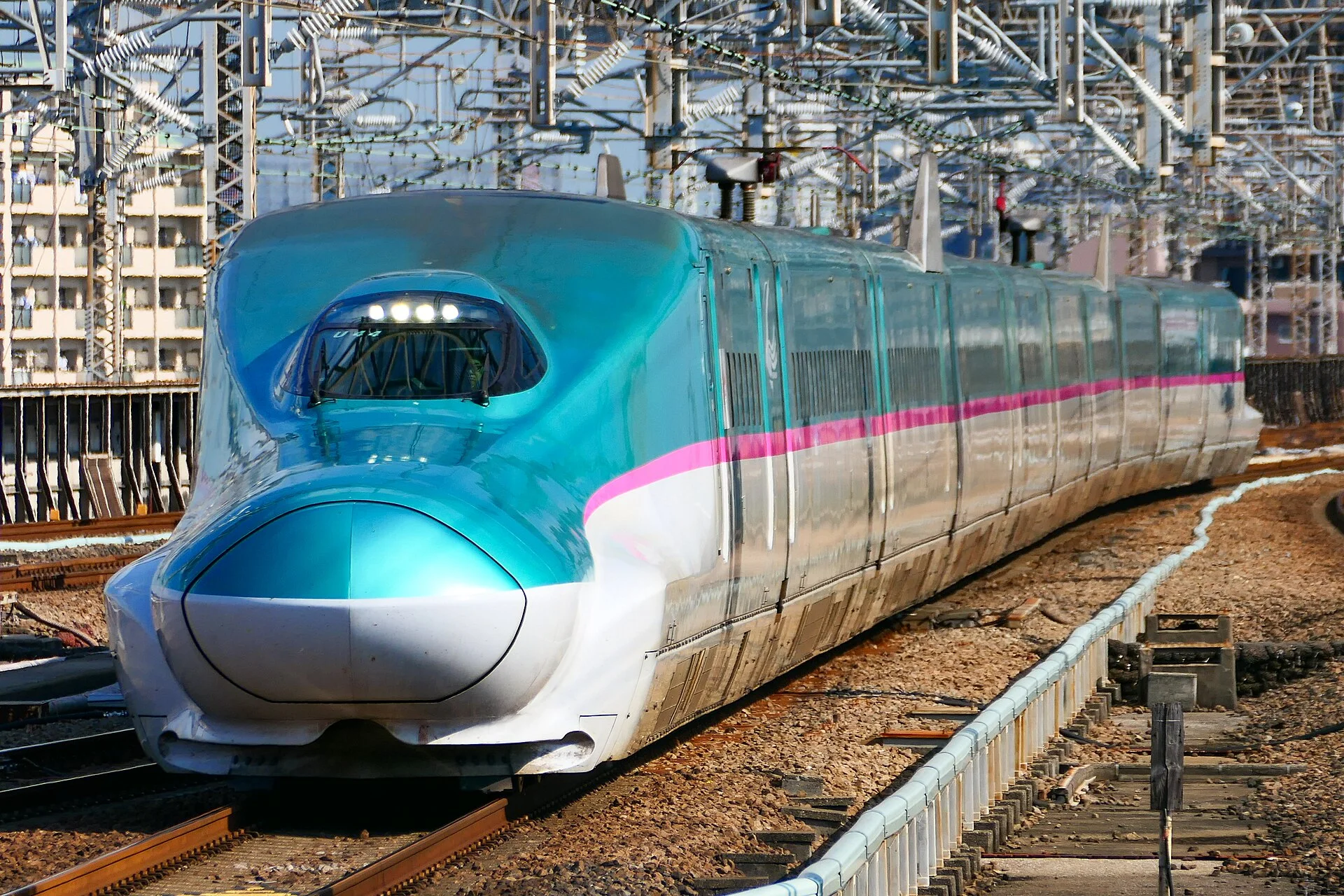
Fourteen days in Japan do not require a 14-day rail pass. The ticket has to pay for train rides you will actually take, within its validity period. A first trip that starts in Tokyo, visits Kyoto and Osaka, then flies home from Kansai usually buys far less covered rail travel than the ¥80,000 online Ordinary pass costs. Even a Hiroshima detour and a Tokyo return can leave a sizeable gap.
Work from the fixed route and flight airports. If the expensive trains fall within one seven-day block, compare a 7-day pass as well as point-to-point fares. If you would need to invent distant day trips to recover the 14-day price, buy the travel you wanted in the first place. The 10-, 12- and 14-day itinerary comparison is useful before any pass calculation; it helps settle the cities without making the ticket the reason for a detour.
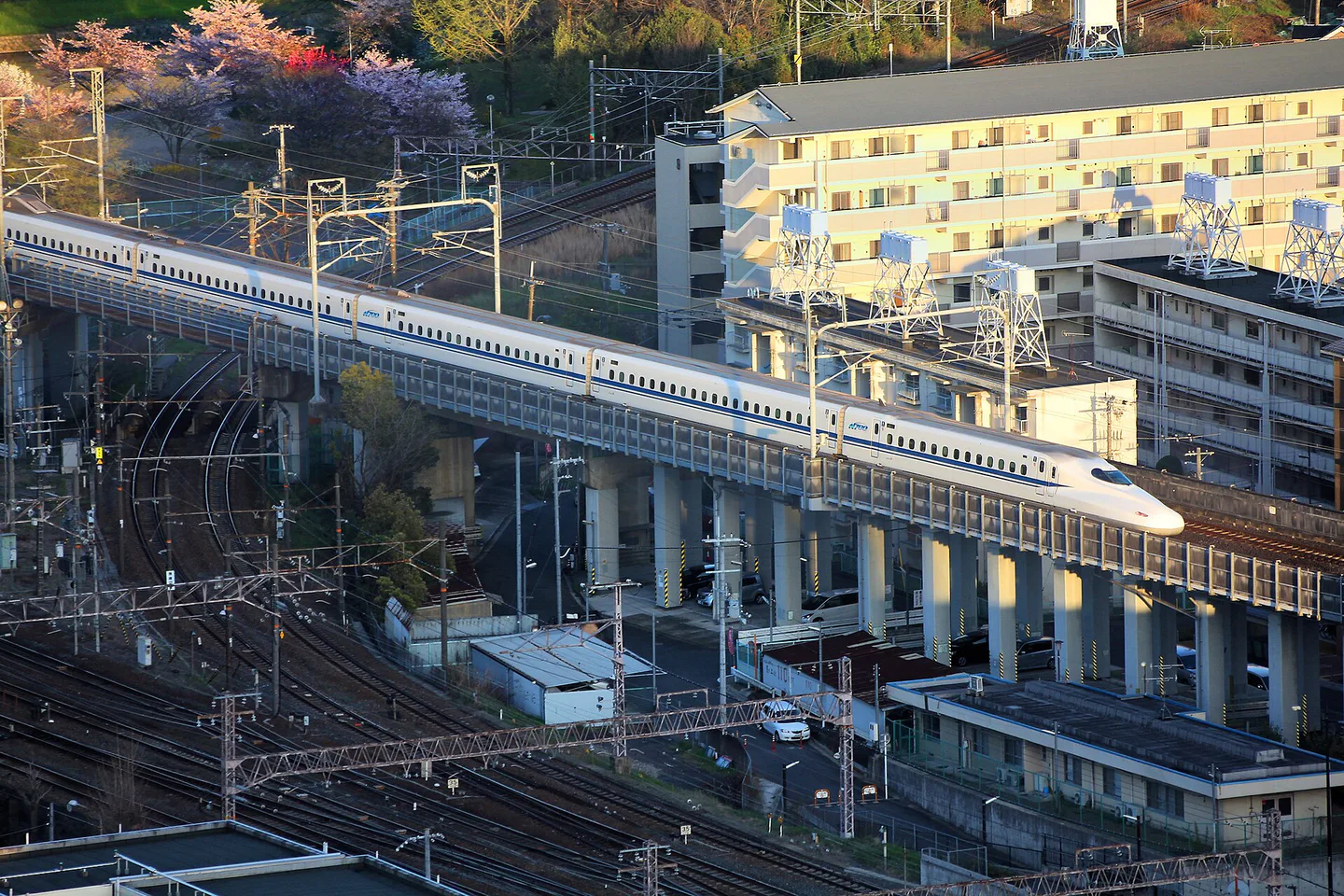
The purchase channel changes the break-even line
On 24 October 2026, the Japan Rail Pass price schedule lists an Ordinary adult pass at ¥50,000 for seven days and ¥80,000 for 14 days when purchased online. An overseas designated-agency Exchange Order is ¥53,000 or ¥84,000 respectively following the 1 October 2026 channel change. The 14-day online pass did not rise to ¥84,000 across every sales channel. Confirm which product the checkout is selling and the yen amount before converting to your home currency.
The source article translated yen into August 2026 US dollars at about ¥10,000 to US$62.82. That historical conversion is no longer a dependable checkout estimate, so the comparisons below remain in yen. Exchange rates, issuer fees and an agency's local-currency conversion can alter the card charge without changing the rail economics.
A separate future issue affects tickets rather than the pass price. Smart EX announced on 16 October 2026 that its Nozomi and Mizuho ordinary reserved-seat product prices will be revised for purchases from 1 July 2027; Green Car changes apply to travel from 15 December 2027. Advance products are also due for revision, with details to follow. The 2026 examples below should therefore be recalculated for a 2027 purchase. The Smart EX announcement identifies the dates; it does not give this article a sound basis to invent future sector fares.
Three route shapes expose the difference
The example fares here are the source article's regular-season Smart EX Ordinary reserved Nozomi benchmarks, not quotes for a departure you have selected. Smart EX varies reserved-seat prices by season and route. Local trains, subway rides and airport transfers are excluded until the itinerary makes them specific. That deliberately understates some point-to-point spending, but it avoids padding the calculation with city trips a pass might not cover.
↔ Scroll table left or right
| Actual long-distance route | Illustrative one-way Shinkansen sectors | Gap below ¥80,000 online pass | What it means |
|---|---|---|---|
| Tokyo → Kyoto, then Osaka; fly home from Kansai | Tokyo → Kyoto ¥13,970 | ¥66,030 | The nationwide pass cannot be justified by this core rail move. |
| Tokyo → Kyoto → Hiroshima → Shin-Osaka; Kansai departure | ¥13,970 + ¥11,740 + ¥10,750 = ¥36,460 | ¥43,540 | Hiroshima adds meaningful rail, yet the pass remains distant. |
| Same route, then Shin-Osaka → Tokyo | Above route + ¥14,520 = ¥50,980 | ¥29,020 | Additional covered travel must be real and substantial before the 14-day pass catches up. |
Against a ¥84,000 overseas-agency pass, the last example is short by ¥33,020. A simple Tokyo–Kansai return without Hiroshima falls further away. A ¥29,020 deficit cannot credibly be made up by a handful of city rides. Add the actual covered limited expresses and JR day trips only after their destinations and dates are fixed; don't count subway or private railway journeys as nationwide-pass value.
Open-jaw flights change this arithmetic immediately. Ending in Kansai rather than returning to Tokyo removes the ¥14,520 Shin-Osaka → Tokyo example sector. The extra airfare for a multi-city ticket must be compared with the saved rail fare, but the rail pass itself cannot recover a journey you no longer make. If the final hotel move is the hard part, the Kansai airport rail route and early Shin-Osaka departure decision address it more directly.
A Kyoto or Osaka base should also be chosen for the days spent there, rather than because a return ticket is already in a pass spreadsheet. The Kyoto versus Osaka stay comparison separates room location and evening use from the long-distance fare. Adding Hiroshima is an itinerary decision first: see whether Hiroshima belongs on the first trip and what one Hiroshima day can actually hold before treating the extra train as pass value.
Seven days can match the expensive part of a two-week trip
The source article compared four Hikari/Sakura-compatible long-distance sectors at roughly ¥49,170: Tokyo → Kyoto ¥13,650, Kyoto → Hiroshima ¥11,100, Hiroshima → Shin-Osaka ¥10,220, and Shin-Osaka → Tokyo ¥14,200. Those train types are usable with a nationwide pass without a Nozomi or Mizuho special ticket. Their total sits near the ¥50,000 online seven-day pass, unlike the ¥80,000 14-day product. Against the ¥53,000 overseas-agency seven-day pass, the same benchmark is about ¥3,830 lower.
The condition is time, not trip length. Count seven consecutive calendar days from first use. If the first expensive train is on day four of a 14-day holiday and the final long trip is on day ten, the seven-day pass may fit. If the Tokyo return falls eight or nine days after the first long leg, that solution fails even though the vacation remains two weeks. Then recalculate individual tickets, a regional pass or the 14-day product against actual dates.
↔ Scroll table left or right
| Trip pattern | First calculation | Why |
|---|---|---|
| Tokyo to Kansai, return flight from Osaka | Individual tickets | Open-jaw flight deletes the Tokyo rail return. |
| Tokyo, Kansai and Hiroshima with long rides inside seven days | Seven-day pass versus dated tickets | Four covered Hikari/Sakura benchmark sectors total about ¥49,170. |
| Same cities but long rides spread over eight or more days | Individual tickets, then test additions | A seven-day pass cannot span the rail window; the 14-day threshold is ¥80,000 online. |
| Another distant JR region genuinely added within 14 days | Recalculate the 14-day pass | It can become worthwhile when covered trains comfortably exceed the pass price. |
| Mostly two or three city bases and optional short outings | Individual or regional products | Local and private-rail travel rarely rescues a large nationwide-pass gap. |
Regional rail products can fit a concentrated area better. A Kyushu extension should be tested against the Northern Kyushu pass; a Kanto excursion has a different boundary under the JR TOKYO Wide Pass. Autumn routes often cross both JR and private lines, so the autumn rail-pass comparison is relevant when foliage towns rather than the Golden Route drive the travel.
Individual tickets have several prices, and several conditions
A standard Smart EX reserved fare is one benchmark. EX Hayatoku 21 can be booked up to 23:30, 21 days before travel, for eligible reserved trains. The source article's March 2026-onward examples were Tokyo → Kyoto ¥12,430 and Tokyo → Hiroshima ¥15,390. The offer has limited seats and blackout periods such as major holidays; after purchase you cannot simply move it to a different train. The stated route price should be checked in the live booking flow for the boarding date, particularly in light of the announced 2027 revision.
That discounted product is useful when plans are fixed, but a lower fare with limited changes is not equivalent to a flexible ticket. Compare a standard fare for the same date, a discounted fare if available, the pass-eligible train schedule and the refund terms. Ordinary Smart EX reservations have their own change rules before departure. A small price advantage should not override a hotel check-in deadline, a dinner reservation or an essential family connection.
One older saving must be removed entirely: Smart EX round-trip discount ended on 31 March 2026. Historical examples that keep subtracting it for later travel will misstate the ticket side of the comparison. Likewise, a 2026 timetable or 2026 seasonal fare should not be silently applied to a 2027 purchase. Price the products that are actually offered on the date and route you intend to board.
Nozomi convenience has a price under a pass
The nationwide pass covers eligible Hikari, Sakura, Kodama and other JR services under its conditions. It does not by itself admit a traveller to Nozomi or Mizuho. A pass holder can purchase a separate special ticket: JR Central currently shows ¥4,960 for Tokyo or Shinagawa to Kyoto or Shin-Osaka, and ¥6,500 to Hiroshima. One is needed for each relevant ride. It is not an ordinary included seat reservation, and the Nozomi special-ticket guidance says the ticket is bought after arrival rather than reserved online before reaching Japan.
Using covered Hikari and Sakura services avoids the supplement but may mean a slower or less convenient departure and sometimes a transfer. JR Central describes Nozomi as more frequent, with up to 13 trains an hour on the Tokaido line in its published explanation. A theoretical ¥1,000–¥3,000 pass advantage can disappear after several supplements or feel poor if the covered train costs a valuable afternoon. During some major holiday periods Nozomi runs reserved-seat only, making seat planning even more important; the Obon reserved-seat example explains the practical difference.
More distant regions can reverse the calculation. A trip that truly includes Tohoku or long JR Hokkaido sectors within the same 14 days may add enough covered travel to clear the pass price, subject to the pass's route rules and any supplements. That is a different itinerary from adding an optional outing just because the pass has unused days. If Hiroshima is followed by another city, the Hiroshima–Fukuoka time choice and Onomichi day-trip decision help determine whether those rides are real plans.
Do not buy a rail product to solve a luggage problem
The pass changes payment and coverage, not the weight of a 29-inch case or the distance through Tokyo Station. Large baggage rules on Shinkansen services still apply. Luggage forwarding may solve an awkward multi-city transfer directly. Same-day Tokyo–Kansai delivery has different cutoffs and costs. A hotel by the right station exit may also remove more friction than a national pass; compare the Tokyo Station departure hotel or Kyoto Station final-night option on a route where the early train is the actual concern.
Once flights and hotels are set, list only journeys you would take without a pass. Mark the date and train for each costly sector, then total the covered ticket prices available for those dates. Compare ¥50,000 or ¥53,000 if the rail-heavy window fits seven days; compare ¥80,000 or ¥84,000 only when those journeys actually require 14 days. Account for Nozomi/Mizuho supplements if you intend to ride them, and leave private rail and subway rides on the ticket side. If the result is close, the train timetable and change conditions decide more than a small calculated saving.
For the common two-week Tokyo–Kyoto–Osaka trip, individual tickets remain the first option to price. A Hiroshima loop with a Tokyo return warrants a calculation but does not automatically justify the 14-day pass: the four-sector Nozomi example totals ¥50,980 against ¥80,000 online. The genuine reversal is another planned, distant JR region or a seven-day block that makes the shorter pass competitive. Recalculate for 2027 bookings when the announced Smart EX changes take effect.
For an itinerary beginning with a Tokyo Station Shinkansen departure, compare rooms near Tokyo Station separately from the pass calculation; the better first-night base can remove a transfer without changing the rail fare.
Other route reading
JAPAN RAIL PASS — conditions and coverage · Smart EX — current standard reservation service and fare tables · Sawara Grand Festival Autumn 2026: Day Trip or Stay After Dark? · Sanrio Puroland Tickets 2026: Save on the 2 PM Pass Only If You Know What You’ll Skip · Nagashima Spa Land Tickets 2026: Do Not Buy the Same Pass for Everyone in Your Family · KidZania Fukuoka Tickets 2026: 4 vs 6 vs 8 Hours — and Is the English Program Worth It? · Yokohama Hakkeijima Sea Paradise Tickets 2026: Aquarium, Rides or Night Pass? · USJ Tickets and Express Pass 2026: Halloween Buying Guide · Tokyo Pingu Exhibition 2026: Is ¥2,200 Worth It? Tickets, Hours & Must-Sees · SHIBUYA SKY Tickets 2026: Is Sunset Worth the Extra ¥700? Klook vs KKday vs · Kishiwada Danjiri October 2026: Districts, Transport and How to Plan the Day · Shima Spain Village Tickets 2026: Park Pass, Kintetsu Bundle or Hotel Guest Ticket? · Nada no Kenka Matsuri 2026: If You Only Go One Day, Choose Oct 15 · USJ Express Pass 2026: Is It Worth Paying More for Certainty? · Itoshima Day Trip or Overnight? Is One Coastal Night Worth It?