
An Express Pass makes sense when several parts of your only USJ day would be hard to recover if they went wrong. The purchase is separate from park admission, and the number on the package does not tell you whether its rides fit your group. Begin with the date, then the exact included attractions, any advance SUPER NINTENDO WORLD entry and the designated times. A visitor who mainly wants one ride may need a smaller product; a family whose children cannot ride the featured coasters can pay for benefits it will never use.
The decision is easier after you place USJ in the Kansai itinerary. A single park day between Kyoto and Osaka nights carries more pressure than two relaxed days based nearby. The four-day Osaka and Kyoto route shows what that park day displaces. If the schedule is still open, compare three, four or five Osaka days before buying queue protection for a visit that might move.
Where an Express Pass protects enough of the day
↔ Scroll table left or right
Visit pattern | Express decision | Why it changes |
One USJ day; Nintendo and several named rides are essential | Strong case for a matching pass | It protects area access and several scarce priorities |
One park day but only two must-do attractions | Compare a smaller pass | A broad bundle may charge for unwanted rides |
Two park days or a real return option | Lower need for broad protection | A missed queue can be recovered on another day |
Solo, early and willing to use Single Rider where offered | Often optional | Flexibility can replace some paid priority |
Family cannot use several included rides | Choose a different package | Per-person spend rises while usable items fall |
Cannot arrive early and Nintendo loss would spoil the day | Strong case if advance area entry is included | The specific entry entitlement matters more than headline ride count |
Three separate entitlements sit behind one ticket decision
The Studio Pass admits you to Universal Studios Japan. An Express Pass does not do that by itself; you need a Studio Pass or another valid admission for the same date. A bundle may include both, but the product description must say so. Park-entry prices have their own date-based schedule, which changed for admissions from September 2026. Add admission and Express before judging the day budget, rather than treating a pass supplement as the entire ticket price. The dated park-admission options are the starting point.
Express then gives priority access to the attractions named on that particular product. Some packages also include Area Timed Entry: Advance Booking for SUPER NINTENDO WORLD; others do not. Area entry is different from a shortened queue for Mario Kart or Mine Cart Madness. Read the named rides and the entry entitlement as separate lines. A pass can be valuable for one and weak for the other. The current pass categories show that the contents cannot be inferred from the number alone.
The total price changes with the visit date and product availability. USJ changed its Studio Pass pricing for September 2026 admissions, and Express selection also varies by date and remaining slots. A screenshot of someone else's Pass 4 or Pass 7 is therefore a poor budget figure. The dated admission-pricing change is useful background; use the live basket for the day you will actually enter. If Halloween is the reason for the visit, date selection belongs before product selection.
Nintendo-area entry can be the key benefit
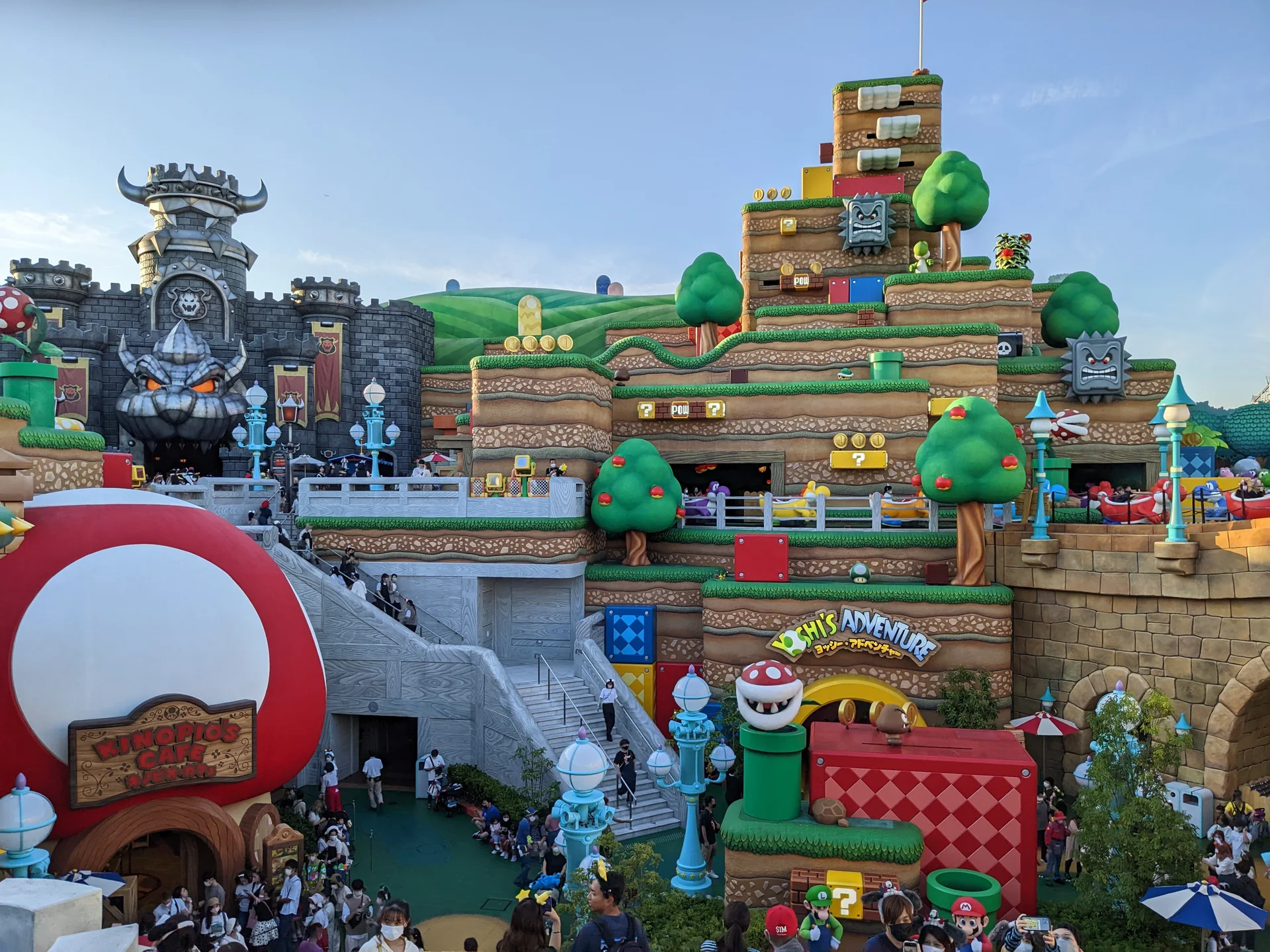
Since January 5, 2026, same-day Area Timed Entry and Standby Entry tickets for SUPER NINTENDO WORLD are obtained through the USJ app after park admission. Their distribution can finish once capacity is assigned, while on some days the area can be entered without a timed ticket. A qualifying advance-entry product reduces one uncertainty before the trip. It does not make every Nintendo ride immediately available. The area-entry conditions describe the difference.
Without advance area entry, arrive early, register admission tickets in the app and try for a same-day slot after going through the park gate. That strategy can work, but its outcome is conditional on capacity and your group executing a fast start. If the entire day is built around Nintendo, identify a package that explicitly grants the advance area window. The timed-entry system also explains why a ride shortcut is not automatically an area-entry reservation.
Missing Nintendo may be an inconvenience on a varied Osaka trip or the main failure of a once-only park visit. Price those situations differently. A parent buying for children who care mainly about the themed area can count advance entry as a core outcome even if a high-speed coaster is irrelevant. A repeat visitor who can accept an alternate afternoon has a smaller need for certainty. The question is what happens to this specific day if the area slot is lost, not how attractive the words 'guaranteed entry' sound on a product card.
Read Pass 4, 5, 7 or 8 by contents, not rank
Similarly numbered passes can name different attractions, include choice groups instead of fixed rides, use different entry windows and omit or add advance Nintendo access. A broader package is not inherently better. List each included item for the exact date and cross out any attraction your party would skip in a normal queue. If a four-attraction selection protects all four priorities while an eight-attraction selection protects only three, the larger number does not justify its premium. The Halloween ticket comparison matters when seasonal rides change the package contents.
Use three checks on every included line: would you choose the attraction without Express, can each paying guest meet its restrictions, and can its slot fit the rest of the day? Those checks prevent a cheap-looking per-ride calculation from counting unwanted experiences as savings. For children, compare the wider family week before making a large park add-on the centre of every day's budget.
↔ Scroll table left or right
Included item | Priority for your trip | Who can use it |
Advance Nintendo area entry | Essential, optional or irrelevant | Area admission helps the group; ride rules still apply |
Mario Kart or Mine Cart Madness | Choose only if wanted | At least 107 cm, with supervision below 122 cm |
Hollywood Dream or Flying Dinosaur | Thrill ride or easy skip | 132 cm minimum; Flying Dinosaur also has a 198 cm maximum |
Other listed attractions | Would you wait without Express? | Read each attraction restriction and the timed window |
Do not assign value to an Express ride nobody would queue for. Bundled inventory may fill a schedule but cannot reimburse the cost of a priority your group never had. A ride with a height limit one child fails also needs separate accounting: adults may use their passes, while the child does not gain equivalent benefit. Check each guest, not merely the group's list of attractions.
Count protected priorities instead of invented hours saved
Standby waits vary by date, ride operation, weather and the minute a group enters each queue. A universal claim that Express saves a fixed number of hours would turn an uncertain day into a false break-even formula. Count the outcomes the specific pass protects: a desired area entry, rides that everyone paying can use and timed slots that do not collide with your other plans. This gives a small but honest set of benefits to compare with the premium.
For an item to count, the traveler must want it, meet its ride conditions and care enough that missing it would noticeably weaken the visit. The criterion is stricter than 'included on the ticket.' It also stops two similar rides from being counted as separate essentials when the party would be content with either one. A family can count Nintendo access as one shared priority, then assess each ride on the actual rider list.
Multiply the per-person supplement by the number of people buying it. Express cannot be passed around the group, so a family of four buys four if all four expect those benefits. If two children cannot use major coasters, compare a better-matched product or buying for fewer eligible riders only when the group can safely split and regroup. A couple who wants every named ride can extract much more from the same package. The USJ family route is relevant when evening scares and age rules also divide the party.
The price beside Express is only part of the budget
↔ Scroll table left or right
Cost or constraint | What to inspect | Effect on total value |
Separate Studio Pass | Express is not park admission | Add the admission price for each guest |
Each person needs a pass | The supplement multiplies across the group | Four-person cost can rise quickly |
Unused inclusions | Height, health, motion comfort and interest | A broad pass can have a poor usable rate |
Fixed windows | Attraction and area times may be designated | Meals and seasonal shows must fit around them |
Walking and regrouping | Cross-park moves between windows | Saved queue time can be spent in transit |
No recovery day | Nothing moves automatically to tomorrow | Certainty has greater value on a single visit |
Timed entries and timed ride slots are appointments. The pass is valid for its stated date, and the attraction windows printed on the product cannot be treated as unlimited all-day access. A larger pass may compress the day into several fixed movements across the park. Check the first slot against transport and security, then check later slots against meals, shows and seasonal content. A tidy four-item schedule can feel less rushed than a poorly spaced eight-item one.
Build an arrival plan backwards from the first valuable slot. Include the train to Universal City, walk, bag check or security, and the time needed to reach the correct attraction. A guest leaving Osaka Station after a slow hotel breakfast may find an early window stressful even if it is technically usable. A later window or a different package can protect more real park time. The one-day versus two-day USJ hotel decision shows when a nearby room reduces that exposure.
Halloween nights add fixed performances and potentially separate priorities after dark. Before purchasing a daytime Express schedule, check whether its final slots overlap the events that brought you to the park. The Horror Nights attraction and age guide helps families test whether the evening plan is even suitable for everyone buying the daytime pass.
For the seasonal product itself, use the Halloween Studio Pass and Express guide. The Halloween hotel-area comparison addresses the other fixed point: getting home after the evening programme. Neither should be decided by the number on a general Express package.
Check the riders before multiplying the cost
Mario Kart and Mine Cart Madness require a guest to be at least 107 cm, with supervision below 122 cm. Hollywood Dream requires 132 cm. The Flying Dinosaur has a 132–198 cm range and further health and ride conditions. These are not interchangeable family attractions. The ride-height list gives the current thresholds; read the individual attraction rules for health and transfer restrictions before purchasing a pass around them.
Two adults who actively want the thrill rides may use most of a broad pass. Two adults with small children could spend the same total amount but get fewer usable attractions per person. An area-entry entitlement still benefits the whole party, so the answer is not automatically to avoid Express. Choose the package whose named rides work for the actual people attending. If one adult must wait with a child while another rides, account for how the group will reunite before the next fixed window.
Ask whether you would still buy each slot if it were sold separately to the guest who can use it. Several 'no' answers suggest moving to a smaller product. Health, motion sensitivity and personal willingness matter as much as height. The product is assigned to one person and date; it cannot be shared to make an unsuitable package efficient. The use conditions cover identity, inventory and restrictions.
Early arrival can replace some, but not all, certainty
A focused visitor can enter early, use the app for a same-day Nintendo area slot and choose a first queue before waits build. Where offered, Single Rider can provide another way for one person to gain flexibility. This strategy is more plausible for a solo traveler or a group comfortable separating than for a family guarding several shared attractions. It asks for preparation rather than an Express premium, and it can still fail if area-entry capacity runs out.
Express shifts some uncertainty into a paid booking; it does not erase the walk between attractions or the possibility of operational disruption. Without Express, your group must be willing to change its order, use the app promptly and perhaps drop one planned ride. Those are reasonable choices when the park day is flexible. They are harder on a once-only visit built around a small set of must-do experiences. The solo Osaka itinerary shows where a park day can tolerate more spontaneity.
Being willing to wake up early is only the first condition. The group must actually get through the gate, have working ticket registration and accept a fallback if the first plan disappears. A visitor who cannot risk missing Nintendo should compare an appropriate advance-area package; one who can return on a second day can make a different bet. The budget Kansai week puts the supplement against other trip costs.
Same-day sales are a fallback, not dependable inventory
Express inventory is limited by date, product and attraction window. Same-day sales can exist, but a product sold out in advance may not reappear at the gate. Waiting to see queue times is sensible only when you are prepared to visit without that pass. When the package is necessary to make a one-day visit acceptable, settle it before the trip and verify the schedule. The current lineup also makes clear that displayed products and prices are examples that move with stock.
If Express is optional, wait or choose the least expensive package that protects the few priorities you have. If it is essential, postponing the decision risks losing both the desired attraction mix and workable time slots. A ticket purchase cannot recover a late arrival or a ride a child is barred from using. Check the full basket only after those constraints are solved.
A nearby Osaka hotel may strengthen the early start
A costly pass and a fragile morning commute work against each other. If early gate entry matters, compare the hotel-to-Universal City journey on the actual morning rather than choosing a room merely because it is in Osaka. Namba and Umeda can work for a wider city visit; Universal City reduces the final train and walk on park days. The Osaka base comparison weighs the park against nights spent elsewhere. A Namba rail-hub hotel makes more sense if other Kansai days rely on that station. Families with children should also count the late return.
The Park Front Hotel is the clearest test of whether a very short approach is worth its own premium. OMO7 versus Centara Grand compares a different room-and-transport trade. A nearby room is most useful when it removes a difficult start or gives young children an easy exit; it should not be treated as another paid queue shortcut. For a local shortlist, compare Osaka hotels for the park days by room and route.
Four avoidable ways to buy the wrong product
An Express Pass does not admit the holder to the park. Unless a bundle explicitly includes admission, add a dated Studio Pass or another valid entry ticket for each traveler.
Do not buy by the number after seeing someone else's Pass 7. Read every ride, any choice group, the Nintendo-area entitlement and the designated windows for your visit date.
The first timed slot needs a route with margin. A hotel breakfast, train delay or security line can turn a premium ticket into a rushed arrival, even when the printed time is technically achievable.
Check each child's height and each adult's ride suitability before multiplying the supplement across the party. An unused attraction still cost money when it was bundled into the pass.
Buy certainty only for outcomes the day cannot easily replace
An Express Pass earns its premium when USJ is the only feasible park day, the exact package secures several real priorities for the people buying it and losing Nintendo entry or major rides would materially alter the trip. It is strongest when admission, area entry, ride restrictions and timings line up. A larger product can make sense for a group that will use it thoroughly; the product number is never the proof.
A smaller pass or no Express can suit a visitor with few must-do rides, reliable early arrival and comfort with the app and changing queues. Two park days provide more recovery room than one. Single Rider can help a solo visitor when the attraction offers it, but it should not be assumed for every ride. The friends' Osaka itinerary explains why a group need not move as one unit for the whole week.
Compare the total Express supplement with the cost of a second park day, the hotel change needed for a calmer start and the other Kansai day it might replace. Those alternatives are not equal for everyone: a second day needs accommodation and time, while a nearby hotel may help the family after closing as well as before opening. The purchase is justified when its exact protected priorities matter more than those alternatives to this trip.
Compare dated USJ ticket options after confirming separate admission, the named Express product and the time slots.
If your only park day ends late, compare hotels around Universal City Station alongside the Express Pass total; the return journey is part of that day’s cost.