
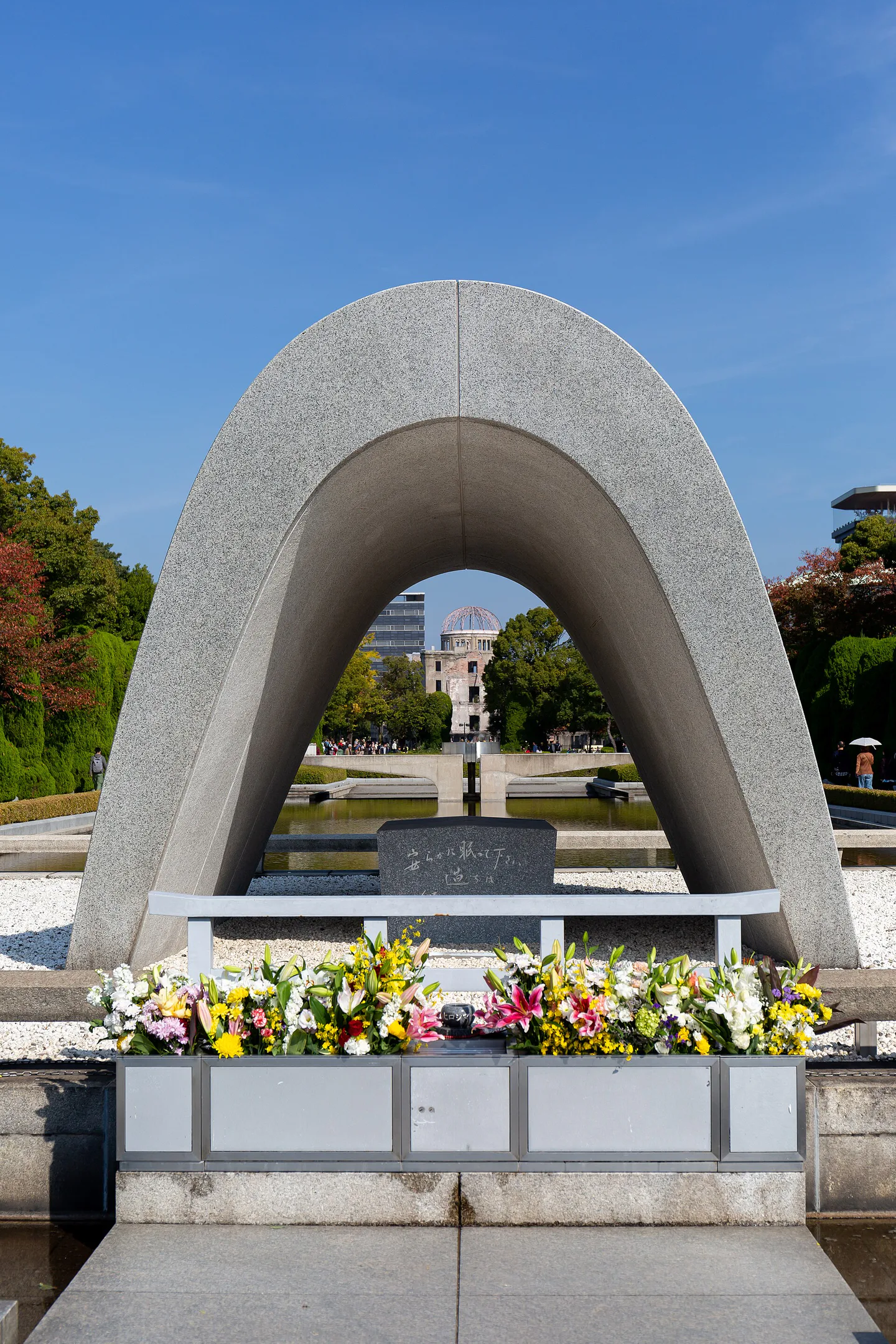
A day in Hiroshima city has a natural centre of gravity: the Peace Memorial Museum and the surrounding park. Give them the part of the day when you can pay attention. Hiroshima Castle and Shukkeien then become choices for the time and energy you actually have, rather than appointments that force a rushed museum visit. This route works for an overnight stay or a day trip, but the departure time changes how much of the afternoon survives.
There is one important 2026 change. Hiroshima Castle's reconstructed main keep closed to visitors on 22 March 2026. You can still see its exterior and the moated grounds, and the restored Ninomaru buildings remain a separate stop. Any itinerary that allocates time to climb the keep is out of date. Use that recovered time either at the museum or at Shukkeien.
↔ Scroll table left or right
Part of day | Route | Where to allow flexibility |
Morning | Peace Memorial Museum, then Memorial Park and the Atomic Bomb Dome | Do not fix a lunch reservation immediately after the museum |
Midday | Lunch near the park or toward the castle | Eat earlier or later if the museum takes longer |
Early afternoon | Castle moat, grounds and Ninomaru if they interest you | Skip this stop first if the morning runs late |
Later afternoon | Shukkeien Garden | Enter with enough time for a walk before closing |
Evening | Dinner in Hiroshima or return to the station | Protect the time needed for your train |
The museum sets the pace
Go to the Hiroshima Peace Memorial Museum early if it is your main reason for coming. The displays ask for sustained attention, and visitors differ widely in how long they need to read and absorb them. A timetable that assumes a quick circuit can leave you choosing between unfinished galleries and the next attraction. Decide on the day when to leave; do not let a castle photo stop dictate it in advance.
The museum visit and the outdoor memorial area are related, but they are different experiences. After the galleries, keep the Cenotaph, Children's Peace Monument and Atomic Bomb Dome in the same walking block rather than leaving for lunch and returning. If you need a break, take one before adding more sightseeing. The first-visit Hiroshima decision guide explains why this city often deserves a place in a longer Japan route, while the 10-, 12- and 14-day itinerary comparison helps allocate the night.
A late arrival changes the plan. If you reach the centre around 10:30 or later, make the museum and park the core, then choose at most one of the castle area and garden. An arrival after noon may leave time only for the memorial area and a meal. Start the museum while you still have concentration instead of touring less important sights first to make the map look tidy.
For an early start, one workable set of planning blocks is 08:00–10:00 in the museum, 10:00–11:00 in the park, lunch around Hondori or Hatchobori at 11:15–12:15, castle grounds around 12:45–13:45 and Shukkeien around 14:15–15:30. Treat those as movable estimates, not reservations: the museum determines whether the afternoon shrinks.
Where the castle fits after its closure
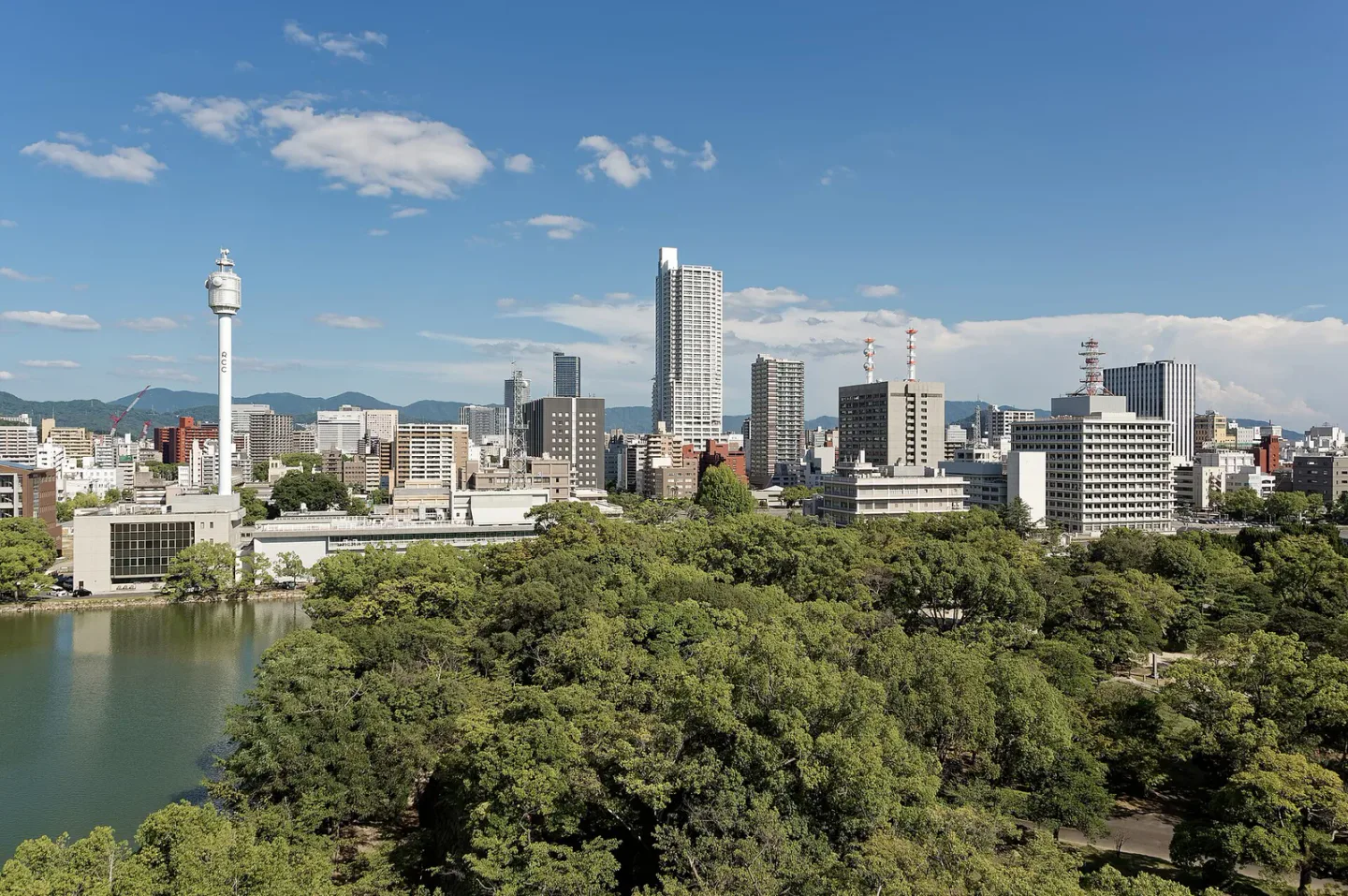
The castle grounds provide a change of setting after the memorial area: moat, trees and the main keep's exterior. The keep itself closed on 22 March 2026, and the castle announced that its exterior and restored Ninomaru buildings would remain available. That makes the stop shorter and more open-ended than older guides suggest. It is still worthwhile for someone interested in the city's different periods of history, but do not buy a route around a tower interior that no longer operates.
If the museum took most of the morning, consider whether the castle is the best use of the remaining daylight. Shukkeien gives a distinct garden visit; the castle gives a historical landscape and exterior architecture. You can walk one without committing to the other. Check the day's Ninomaru access if that interior is important, because it has its own calendar. For a short city stay, the Station versus Peace Park hotel-area guide shows how the morning transfer changes.
Moving across town with luggage is a poor way to spend this narrow afternoon. A station locker or confirmed hotel storage may save a return trip, while luggage forwarding can work when there is enough delivery time. Put the bag plan into the day's route before trying to fit another attraction around it.
Shukkeien needs daylight, not a rushed finish
Shukkeien's pond circuit is a calmer end to the sightseeing part of the day. The garden's visitor map offers a short walk of about 20 minutes and a longer circuit of roughly 40 minutes; those are walking routes, not a guarantee that you will want to leave as soon as the circuit ends. Leave room to stop, take photographs and sit. Someone who reaches the entrance shortly before closing will have a materially different visit.
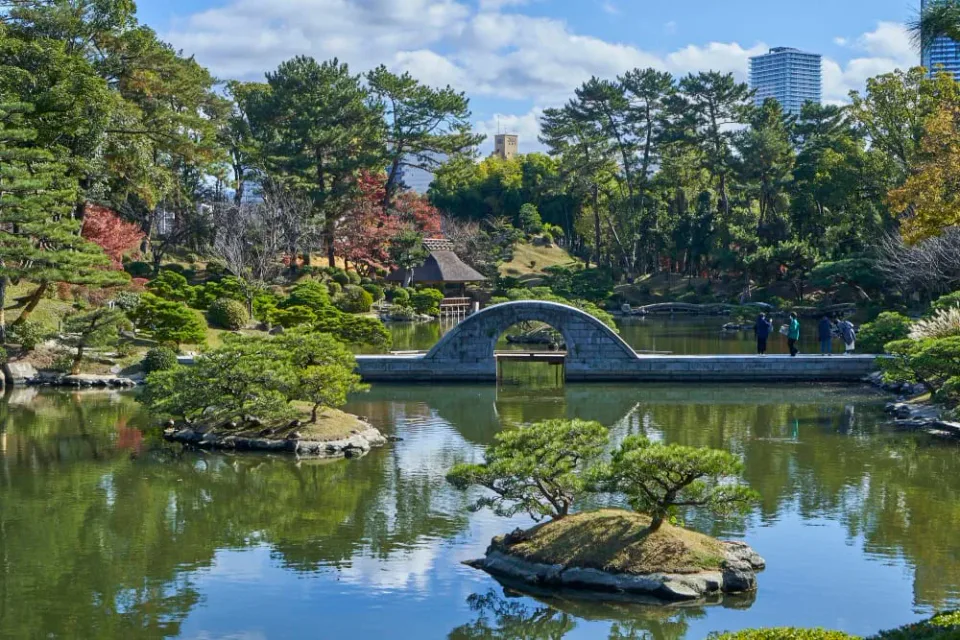
The garden's published general hours are 9:00–17:00, with an 18:00 close from 16 March to 15 September; special evening openings are separate events. Check the date-specific notice before relying on an extended opening, especially in autumn. The adjacent Hiroshima Prefectural Art Museum is another option, but an exhibition visit needs its own time and ticket. Do not count it as part of a quick garden circuit.
If the day is running late, finish the memorial area properly and omit the garden. A visitor staying overnight can often put Shukkeien on the following morning before leaving. That is one reason the two-day Hiroshima and Miyajima plan feels less compressed. When the garden is your chief reason to visit, reverse the afternoon choices and leave the castle grounds for another time.
Lunch belongs between visits, not on a stopwatch
The museum's duration is hard to predict, so a flexible lunch is more useful than a reservation that forces an exit. Near the park, you can stop before walking toward the castle. If you return through Hiroshima Station, the station restaurant comparison helps with a meal before a train. The broader Hiroshima food guide separates city dishes from Miyajima meals; it is useful if you have another night rather than trying to squeeze both into a city day.
Hiroshima-style okonomiyaki is a good dinner plan when you can stay after the attractions close. A traveller on a 17:00 train has a different problem: eat earlier or choose something at the station with enough departure margin. The meal should fit your train, not the other way around. If you have not yet set the city nights, settle the big Japan route decisions before locking restaurant times.
What a day trip from Osaka or Kyoto changes
A day trip can cover the museum and park well, provided the long rail journey leaves a meaningful block in Hiroshima. An Osaka start usually offers more room than an otherwise identical Kyoto start because Kyoto adds a transfer or more rail travel before the Shinkansen segment. Compare your actual hotel door, station access and last comfortable return train. The Kyoto or Osaka base comparison is useful here.
Do not confuse a train's arrival at Hiroshima Station with arrival at the museum. Add the city transfer and the time to orient yourself; repeat that calculation in reverse for the return. A late morning train may leave enough time for the memorial area but little reason to force the castle and garden into the same visit. If the weather is poor, the rain-day itinerary guide helps decide whether to keep the museum and shorten the outdoor section.
For a 17:00 departure, treat the museum and park as the day and add one nearby meal. For dinner in Hiroshima followed by a later train, the castle exterior or garden may fit if its opening hours line up. The difference is the time you are willing to spend in the city after the central visit, not a universal “one-day” route that fits every train.
Miyajima belongs on its own schedule
It is physically possible to put Hiroshima city and Miyajima on the same day. Whether it is enjoyable depends on what you are prepared to remove. Ferry travel, island walking and the museum's uncertain duration leave little slack. If Miyajima is non-negotiable, give it a separate day or deliberately make Hiroshima a half-day focused on the memorial area. The one-night city-versus-island guide and the two-day route show how the overnight choice changes the order.
With three days, Onomichi becomes a separate candidate rather than an addition to this single city day. Read the Onomichi trade-off before using the spare day, and consider Onomichi or Fukuyama for the Shimanami Kaido if cycling follows. The Hiroshima versus Fukuoka comparison is more relevant when the extra nights are still unassigned.
The shorter version
If only half a day remains, visit the museum and walk through the park to the Dome. Allow lunch or a quiet break before the onward train. Cut the castle first and Shukkeien second as time tightens. For an afternoon arrival, work backward from the museum's closing time before promising any additional stop. A traveller who has already been through the museum might choose a different half-day, but for a first Hiroshima visit the memorial area carries the most distinctive purpose. If your half-day follows a night on the island, use the Hiroshima or Miyajima overnight comparison to place the ferry journey before this city route.
If you can spend the night, place dinner and the station transfer after the garden rather than squeezing the garden between a late museum exit and an early train. A hotel near the station or park can remove one cross-city leg. For a wider route, the extra-nights comparison and food guide help turn an overnight into more than a place to sleep.
Continue planning
Read Where to Stay in Hiroshima and the Hiroshima–Miyajima two-day itinerary
If the route becomes an overnight visit, find Hiroshima rooms near the end of your walking day so the next morning does not begin with a long return.
Other Japan routes
Related guides: Osaka for Couples: A 7-Day Itinerary That Saves the Best Nights for Kyoto, Kobe and One Big View · Kansai 7-Day Itinerary From Osaka: One Hotel for Kyoto, Nara, Kobe and USJ — When Not Moving Is Better · A 7-Day Osaka Premium Experiences Itinerary: USJ Express, Sumo, Samurai — and Only One Big Splurge · Nagasaki 2-Day Itinerary: History, Food and Night Views · Okinawa 5-Day Itinerary: Don’t Rent a Car on Day 1 — Naha, Onna and Churaumi Without Hotel Hopping · USJ Halloween 2026 One-Day Itinerary: Opening to Horror Night · Osaka and Kyoto 4-Day Itinerary With USJ: Does Kyoto Still Fit? · Osaka 5-Day Itinerary: Give USJ a Full Day — Namba, Umeda, Kaiyukan and Tennoji Without Backtracking · Lake Chuzenji 2 Day Itinerary: Kegon Falls, Irohazaka and Hotels · Furano Lavender Guide: Farm Tomita, Flower Timing and a One-Day Route
Ishigaki, Taketomi and Iriomote: A Flexible 4-Day Island Itinerary
Miyakojima 4-Day Itinerary: Turtle Snorkeling, SUP, Pumpkin Cave and Bridges
Osaka Itinerary With Friends: 7 Days of USJ, Sumo, Food and Kobe — Without Moving as One Group
14-Day Japan Autumn Leaves Itinerary: Six Routes, Flights and Hotels
5- or 7-Day Kyushu Autumn Leaves Itinerary: Fukuoka, Yufuin, Beppu and Mountain Routes