
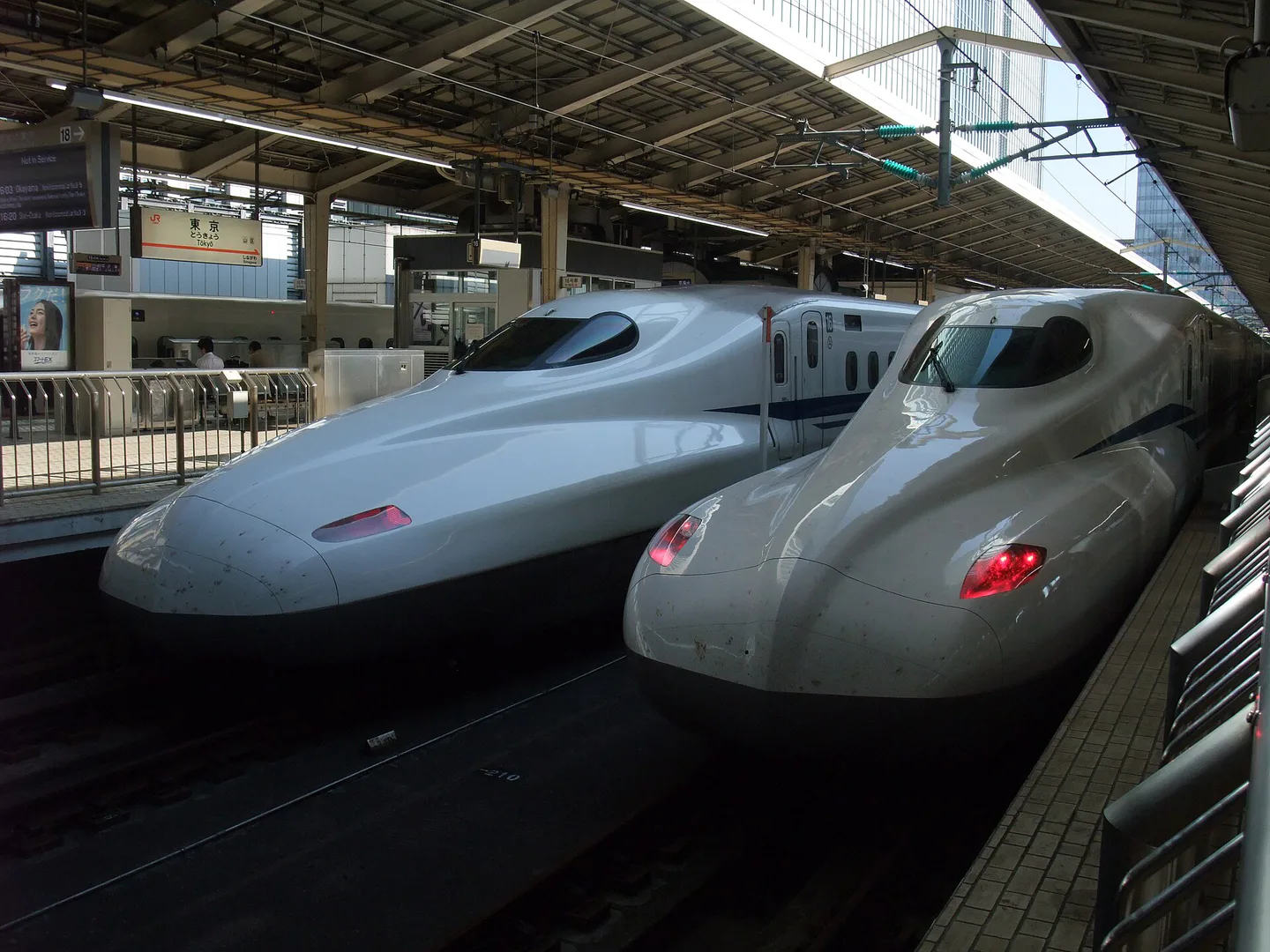
The case for paying ¥13,200 to move a suitcase from Tokyo to Kyoto or Osaka is strongest when the luggage would otherwise dictate your entire transfer day. A large case by itself is not enough reason. If you can go directly from a hotel near Tokyo Station to accommodation close to Kyoto or Shin-Osaka Station, the Shinkansen can carry the bag with you. If you can live from a small overnight bag, ordinary forwarding may be a better fit. Same-day delivery earns its price when it gives you genuinely usable time between hotel checkout and arrival at the next hotel.
LUGGAGE EXPRESS currently offers three Tokyo–Kansai service levels, each priced per item. Regular takes a bag by 10:00 and aims for the destination hotel by 20:00 at ¥13,200. Express keeps the same handoff deadline but moves the stated hotel delivery to 18:00 for ¥16,500. Late Check Out costs ¥16,500, accepts the bag by 12:00 and delivers by 20:00. Those two upgrades protect different hours. They also become expensive quickly if you have two or three cases, so decide how many bags actually need to travel separately.
Start with the transfer day you are trying to protect
| Your actual movement | First option to test | What you gain or give up |
|---|---|---|
| Checkout, sightseeing in Tokyo, later train, evening at a Kyoto/Osaka hotel | Same-day delivery | Several city and train hours without the main case |
| Hotel, station, train, station-side hotel | Carry on the Shinkansen | Keep the bag and avoid a five-figure delivery charge |
| You can carry one night's essentials | Ordinary forwarding | Lower-cost category, but the large bag may arrive the next day or later |
| The problem is only the final station-to-hotel journey | Storage or local delivery | Remove the difficult last leg rather than buying an intercity service |
| The destination is not an eligible receiving hotel | Carry or arrange another courier | The standard same-day hotel-delivery plan cannot solve this booking |
The destination hotel determines what is possible. For a Kyoto Station hotel, carrying may be straightforward even with a large suitcase. A family continuing by local transport to a Higashiyama property has a different day. The same is true if you plan to spend the afternoon at teamLab Biovortex Kyoto before checking in, or if you need to keep a train-day buffer for a Nara day trip. Estimate the useful hours the luggage-free plan creates; avoid paying simply because the suitcase looks inconvenient in a photograph.
For example, two or three free hours in central Kyoto could support the International Manga Museum; a fixed museum visit is harder to enjoy while towing cases. If the transfer day is really a direct hotel move before a short Osaka–Kyoto itinerary with USJ, however, you may have no meaningful sightseeing block to recover.
A 170 cm suitcase can still travel with you
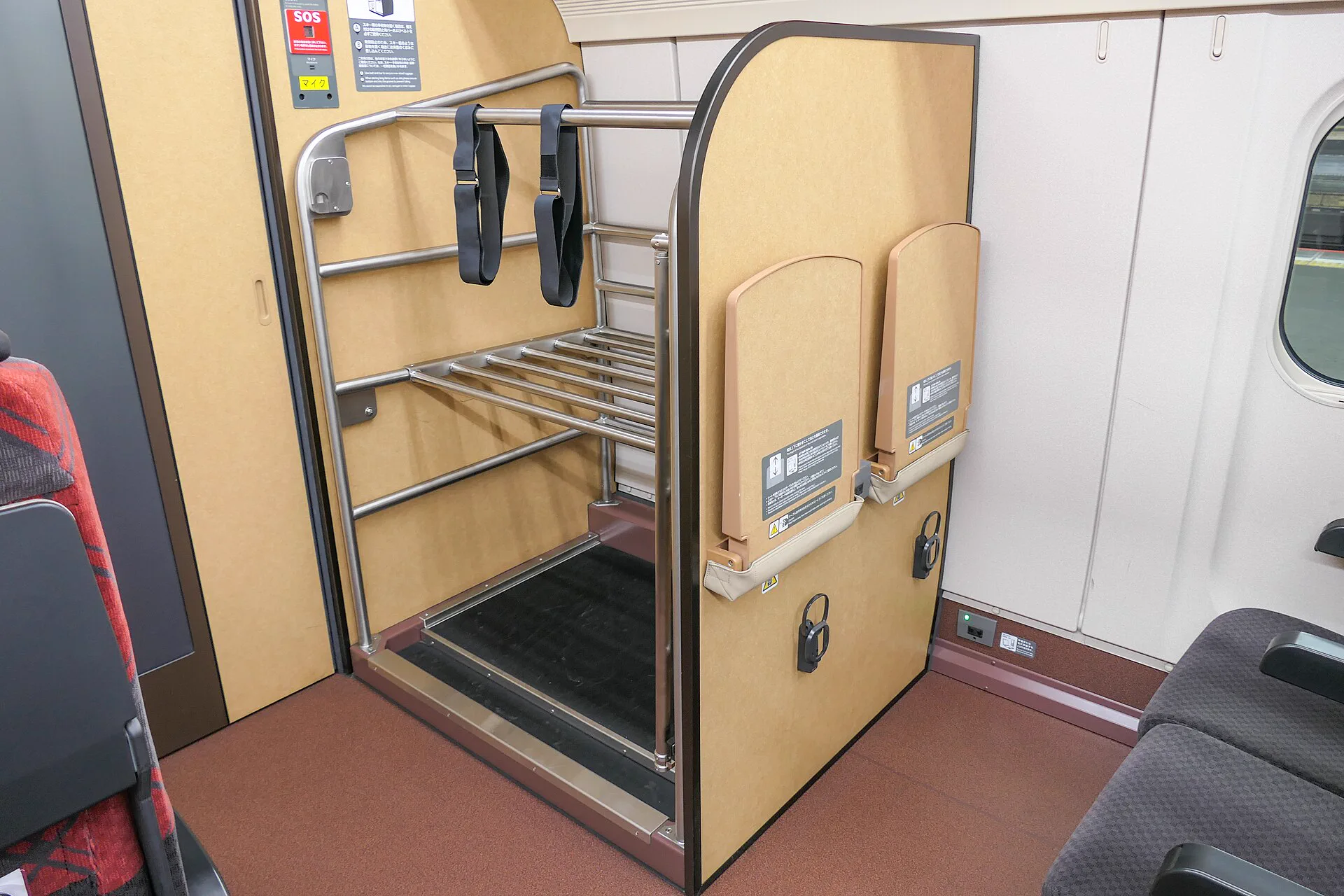
Measure the combined height, width and depth of the packed case. On the Tokaido Shinkansen, a total of 160 cm or less is ordinary passenger baggage and does not require an oversized-baggage reservation. A bag above 160 cm and up to 250 cm requires an appropriate reserved seat with an oversized baggage area or the applicable storage arrangement. The baggage-area seat costs the same as another reserved seat in its class; JR Central does not add a separate premium for the space. If you board without the required reservation, the railway lists a ¥1,000 baggage fee and staff will assign a place for the item. That is an avoidable problem, not a cheaper planned way to travel.
The rail limit and the courier limit are different. LUGGAGE EXPRESS accepts a secure, closed bag with a three-side total no greater than 200 cm and a weight below 30 kg. A 210 cm suitcase can therefore fit inside the railway's 250 cm ceiling but fall outside this delivery product. A bag over 250 cm is not ordinary Shinkansen passenger baggage. Do this measurement before choosing a train seat or paying for a delivery plan. If you are carrying, book the suitable oversized-baggage seat early; those places are finite, especially when multiple family members each have a large case.
Hotel location affects that comparison as much as suitcase size. The Tokyo Station versus Shinjuku base decision changes the pre-train leg, while an early Shin-Osaka departure changes whether keeping the bag at the hotel is useful on the next day.
| Combined three-side size | Shinkansen treatment | Same-day courier fit |
|---|---|---|
| Up to 160 cm | Normal passenger luggage | Possible if under 30 kg and otherwise accepted |
| 161–200 cm | Reserve an oversized-baggage area seat | Possible if under 30 kg and otherwise accepted |
| 201–250 cm | Reserve an oversized-baggage area seat | Outside this courier's 200 cm limit |
| Above 250 cm | Cannot be taken as ordinary passenger baggage | Outside this courier's limit |
A reserved space on the train does not make the day hands-free. You still take the case through the Tokyo hotel, station, boarding, arrival platform and final hotel transfer. Conversely, courier delivery does not remove the need to carry anything: keep passports, medicines, electronics, valuables, a change of clothes and anything needed before the evening delivery in a small day bag. The broader send, store or carry comparison explains how to choose the bag that stays with you.
What the extra ¥3,300 buys
| Plan | Latest handoff | Stated hotel delivery | Price per bag | Useful when |
|---|---|---|---|---|
| Regular | 10:00 | 20:00 | ¥13,200 | You will not need the case before evening |
| Express | 10:00 | 18:00 | ¥16,500 | You expect to reach the hotel before dinner and need the bag |
| Late Check Out | 12:00 | 20:00 | ¥16,500 | Keeping the case through a later Tokyo morning solves a real handoff problem |
Express shifts the expected delivery two hours earlier without changing the 10:00 handoff. Late Check Out shifts the handoff two hours later without changing the 20:00 delivery. The ¥3,300 premium works out to ¥1,650 per shifted hour per item, a useful way to expose an upgrade that achieves nothing. If your train gets you to Kyoto at 21:00, an 18:00 delivery provides no benefit. If a 12:00 hotel handoff means you can check out after a proper breakfast instead of crossing Tokyo to a station counter, that later handoff may have a job.
Two Regular bags cost ¥26,400. Two upgraded bags cost ¥33,000; three Regular bags cost ¥39,600. The discomfort of another suitcase does not necessarily double, but the fee does. Try a mixed strategy if one case is easy to handle and another creates the problem. A family with a stroller may find that removing just the biggest case makes station lifts and supervision manageable. A couple moving between station-adjacent hotels may find that carrying both bags with reserved seats preserves ¥26,400 for actual experiences or a better located room.
The receiving address can veto the entire plan
For a hotel handoff or hotel delivery, this service is limited to guests with a reservation at a participating property. Eligible hotels and ryokans are selected in the booking flow. Current coverage includes participating hotels in Tokyo, Kyoto City and Osaka City; a property outside those city boundaries or one absent from the eligible list cannot be assumed to work. A vacation rental with no staffed reception needs a separate solution. Check both ends of the reservation before settling on an itinerary built around a luggage-free day.
There are designated drop-off counters at Tokyo, Kyoto and Shin-Osaka stations. They are dispatch points, not ordinary delivery destinations. You cannot solve an ineligible Kyoto hotel by assuming the bag will be waiting for collection at Kyoto Station. The exact counter, operating hours and route shown for your chosen date matter. This is particularly relevant if your Kyoto hotel is in Gion rather than by the station, or if you have chosen an Osaka–Kyoto hotel split with another move soon afterward.
The service has expanded beyond its Tokyo–Kyoto launch. Tokyo–Osaka is in the current intercity lineup, and an Osaka–Kyoto Regional plan costs ¥4,400 per item with a 10:00 handoff and 20:00 hotel delivery. That short-distance Regional plan does not accept station drop-off. Separate airport–Tokyo hotel plans also appear in the current lineup; do not confuse their cheaper advertised starting price with the Tokyo–Kyoto fare. The temporary lower-priced Kyoto Station counter described in spring 2026 operated only on specified March dates. It is not a year-round tariff to use for an October transfer.
Normal forwarding remains useful if tonight's suitcase is unnecessary
Ordinary TA-Q-BIN commonly reaches the destination the following day or two days after acceptance, depending on the route. Same-day service from that courier is restricted to selected counters, cutoff times and local service areas. It is not a general promise that any Tokyo hotel can send a bag to any Kyoto hotel by the evening. For many Tokyo–Kansai journeys, sending the large case ahead and carrying a small overnight bag is the lower-cost way to travel without dragging the main luggage through the stations.
The trade-off is one night without the main case. Pack medication, essential clothing, chargers and valuables with you, and confirm that the next hotel will accept a delivered bag before your arrival. If it will not, the cheaper courier is not a functional alternative. On a route that continues to Kinosaki, Hakone or Kawaguchiko, or another smaller base, the forwarding chain deserves separate checking rather than assuming the Tokyo–Kansai timing applies unchanged.
The final-mile problem may be solved more narrowly. A traveller arriving at Kyoto Station and going straight to a staffed hotel nearby can walk the bag over and become hands-free for the rest of the afternoon. Someone spending the day in Tokyo may store luggage near the station and collect it before boarding. Choose storage by the station you will return to, not by the largest station on the map. Paying ¥13,200 makes sense only if those simpler movements still consume the hours you meant to use.
Run the calculation against your own day
Consider a solo traveller with one 28-inch case. They check out in Tokyo before 10:00, have a late Shinkansen and will not reach their Kyoto hotel until evening. Sending the case can protect museums, lunch and a long city walk. There is one per-item fee, and the destination hotel receives it the same day. The question becomes whether those protected hours are worth ¥13,200 compared with storing the bag at the station and collecting it before departure.
Now take a couple with two cases staying by Tokyo Station and moving to a property beside Kyoto Station. Their transfer is already direct. With suitable reserved train seats, the ¥26,400 Regular fee buys comparatively little. If the second hotel is far into Higashiyama or a mobility constraint makes the local route arduous, the arithmetic may change. The decision should name the exact handoffs removed, not rely on an abstract claim that delivery is “convenient.”
A family managing a stroller and two large cases has more transitions per adult: checkout, station entrance, lift, platform, train, Kyoto arrival and local transport. Same-day delivery can remove repeated supervision problems. They still need a bag with snacks, medication and spare clothes. If a 20:00 delivery misses a child's bedtime needs, the Express option or a differently packed carry-on may matter more than the Regular savings. Ask what must be accessible by 18:00 and what can wait until 20:00.
Finally, measure the oversize edge case. A 210 cm bag is outside the delivery service's 200 cm limit even if you are happy to pay. If it stays within the railway's 250 cm passenger-baggage ceiling, reserve the correct space and carry it, or locate a different courier that accepts the item. A reservation on a delivery website is not a way around the published acceptance limit.
Things that can break the plan
Missing the selected 10:00 or 12:00 handoff window can destroy the same-day premise. Failing to confirm the receiving hotel can do the same. A station counter can dispatch the bag but cannot substitute as the promised hotel destination. Transport disruption can delay delivery, so do not pack an irreplaceable evening outfit or a needed medicine inside the case. The service says it contacts customers about substantial delays, but that communication cannot replace the items you need before bed.
Carrying the bag has its own failure mode: oversized-baggage-area seats can sell out. Decide early and reserve the correct seat with your train ticket. A spontaneous switch from courier to carry may become awkward if only unsuitable seats are left. The separate Tokyo–Hakone rail comparison illustrates why the transport mode should be decided before the luggage plan when you are adding an intermediate stop.
Choose same-day delivery when the exact hotel pair is eligible, the case fits, and the hours between handoff and check-in are hours you will use. Carry on the train when the movement is direct and a baggage-area seat solves the physical problem. Send ahead by ordinary courier when a one-night bag is easy to live from. Those are different purchases; matching the purchase to the transfer day is what keeps a ¥13,200 service from becoming an automatic tax on every large suitcase.
Keep the bag decision aligned with the journey length: a four- to seven-day Tokyo plan has different spare hours from a Kansai week based in one hotel. If you are not changing hotels at all, intercity hotel-to-hotel delivery should not be in the budget.
If the lodging location is still undecided, compare the hotel map for Kyoto Station or Shin-Osaka against the number of local transfers your case would require. A nearer hotel can remove the need for a delivery purchase altogether.