
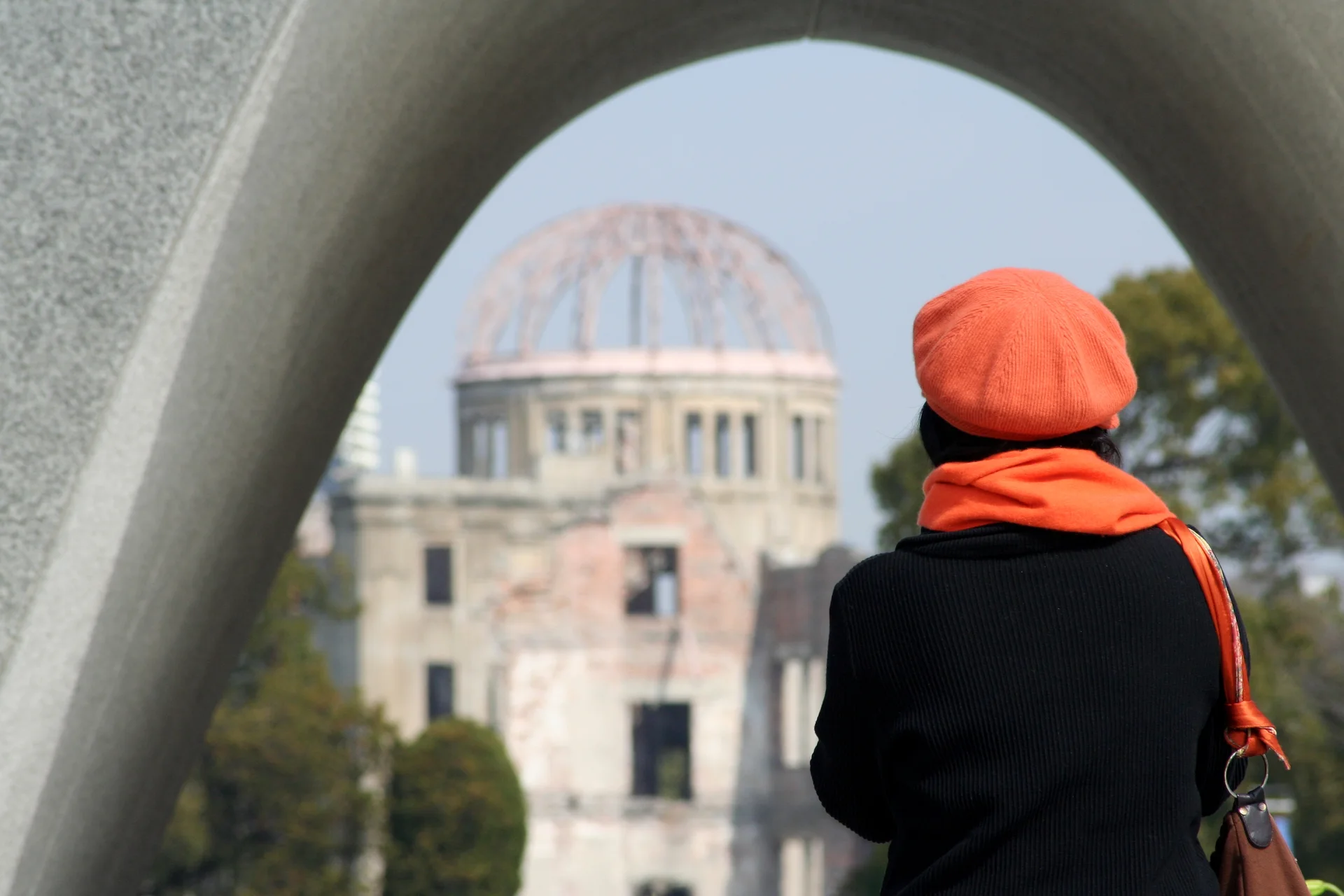
Two available nights in western Japan and a third available night are different itinerary questions. If this is a first visit to both Hiroshima and Fukuoka, the first two often belong to Hiroshima: Peace Memorial Park and Museum need their own attention, and Miyajima can occupy another day. Night three is less automatic. It might buy an unhurried island stay, a slower Hiroshima morning, a Fukuoka evening before Kyushu, or a Fukuoka departure flight. Allocate it by the specific day it creates, rather than giving all three to the city whose hotel you booked first.
There is also an airport trap. Hiroshima Airport involves a city-to-airport road transfer; Fukuoka's airport is much closer to central stations. Yet the commonly quoted five-minute Hakata subway ride ends at Fukuoka Airport's Domestic Terminal station, while an international departure uses another building. The useful comparison is hotel door to the terminal your ticket names, then the actual flight schedule. Airport convenience should influence the last night only after that calculation.
↔ Scroll table left or right
| Your situation | Use the available night for | Reason to reconsider |
|---|---|---|
| First visit to both places; only two usable western nights | Hiroshima | Kyushu or Fukuoka is the main purpose of this journey |
| Hiroshima already has two nights; Kyushu follows | Fukuoka as gateway or regional stop | A late arrival would leave no useful city time |
| A third Hiroshima night makes Miyajima overnight or Mount Misen possible | Hiroshima or Miyajima | The added island plan is not actually wanted |
| Fukuoka evening precedes a sensible FUK departure | Fukuoka | The flight fare, baggage or connection is poor |
| Flight departs Hiroshima Airport | Usually keep the final night in Hiroshima | A separate Kyushu plan already requires going west |
The first two Hiroshima nights have separate purposes
A first city day can centre on Peace Memorial Park and Museum, with enough room to absorb what the visit actually involves rather than treating it as a short checkpoint before a ferry. Museum admission arrangements and opening hours vary by date, so the time of an available slot matters to the day. The Atomic Bomb Dome, memorial spaces and the museum form one geographical cluster, but proximity does not make their emotional and practical time cost trivial. The Hiroshima city itinerary helps place other stops around that core without pretending every attraction needs equal time.
Miyajima gives the second day a different landscape and pace. The ferry, Itsukushima area, tides and optional mountain walking can fill the day without adding Fukuoka. A compact city-and-island tour is physically possible, but two nights let a first-timer avoid squeezing the museum and island into the same breath. A two-day Hiroshima and Miyajima plan shows where the overnight sits; Miyajima sights and Mount Misen covers ferry, tide and ropeway decisions.
That is why Hiroshima tends to take the first two spare nights when neither city has been visited and the main trip still follows Tokyo and Kansai. It is a conditional first-trip priority, not a ranking of which place is more enjoyable. A traveller whose aim is Kyushu may have a different route. Someone who has already visited the memorial sites and Miyajima may gain more from a new region. Check whether Hiroshima belongs on this first trip before making a competition out of the extra nights.
Night three can change the island day
An additional Hiroshima-area night has value when it changes what is possible, especially if the first evening arrives late. More time may permit a Miyajima overnight, Mount Misen without racing a return ferry, a fuller museum visit, or a slow city morning after an emotionally demanding day. If one of those is named, the night is doing work. If Day 3 is merely a blank because the hotel is already booked, compare it with Fukuoka or a later city.
The hotel location matters to that third night. An island stay changes the evening and early morning on Miyajima, but also introduces a ferry and luggage decision. A Hiroshima Station stay keeps the Shinkansen and airport bus straightforward. Hiroshima city versus Miyajima overnight is a better test than asking whether a third night in the wider prefecture is always worthwhile. The answer depends on what that exact night buys.
A late train arrival can consume the first nominal night. In that case, three bookings might yield only two usable sightseeing days, and cutting the third night would mean either rushing the museum or losing island time. Conversely, an early arrival plus two full days may cover the chosen Hiroshima experiences comfortably. Write arrival and departure times beside the night count. This simple accounting prevents an itinerary from mistaking booked rooms for available daylight.
Travellers with only one usable Hiroshima day should decide which sites are essential rather than assume a night count solves the problem. A city-focused day protects the memorial sites; the city-and-island sequence requires a second real day. A third hotel night is valuable if it delivers that day, not merely because it appears in a standard itinerary.
Fukuoka grows stronger once Hiroshima is secured
With two meaningful Hiroshima nights protected, a westbound move to Hakata can make sense. The Shinkansen journey is about an hour and ten minutes at the route-planning scale. Fukuoka then has several possible functions: a city evening around food, a flight endpoint, or the beginning of a Kyushu leg. Hakata and Tenjin support different hotel patterns. The Hakata versus Tenjin base decision should follow the next day's train or flight rather than a generic preference for centrality.
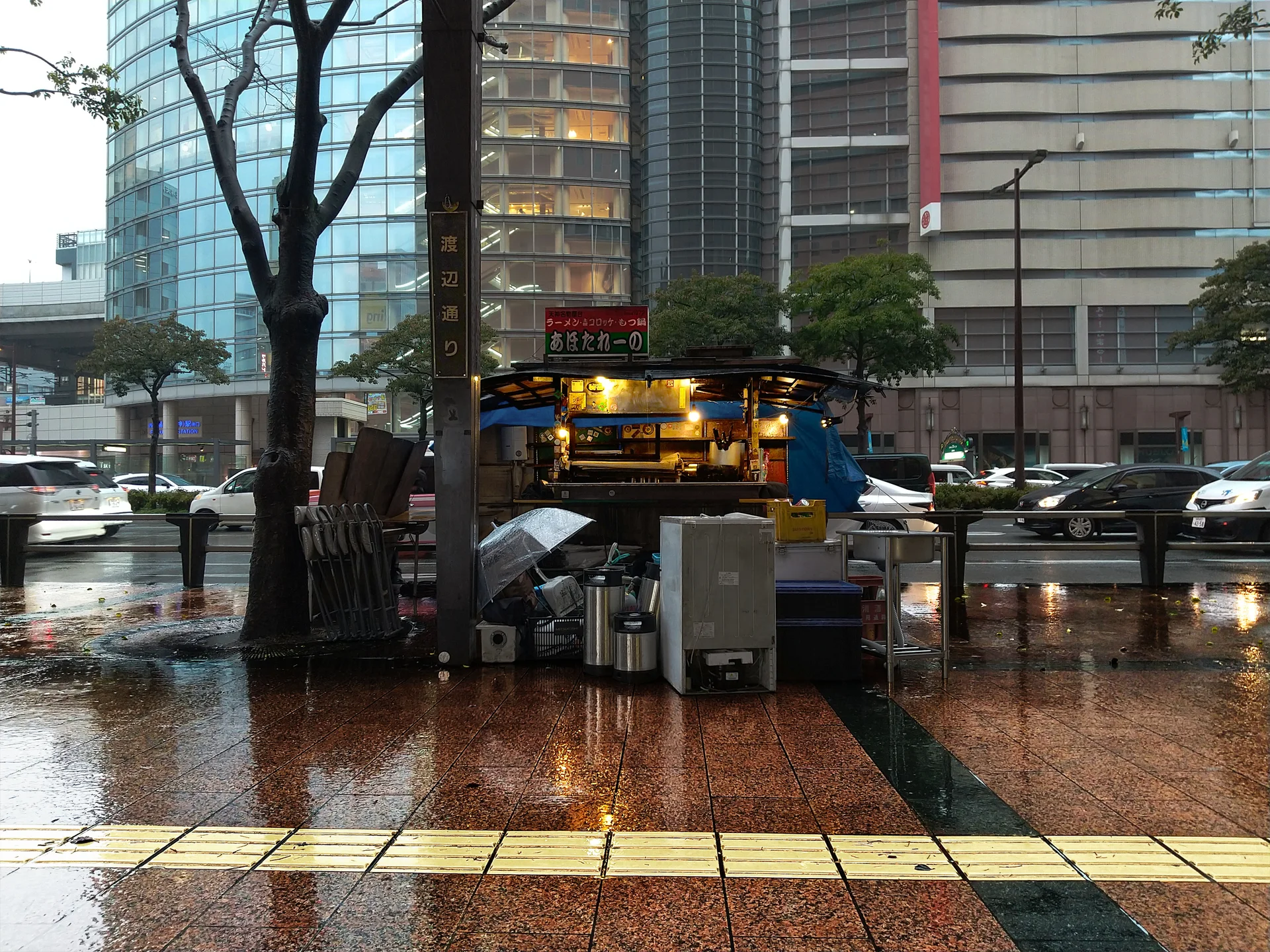
A Fukuoka evening is a plausible use of a positioning night. The city’s food scene, yatai and compact centre may make the stop feel like more than a transit hotel. But a very late arrival and early departure leave little of that evening. The worthwhile version gives enough time to eat and walk locally before the next day begins. The breakfast choice then follows the actual departure rather than sending the traveller across town for a queue.
Fukuoka is especially persuasive if the trip continues to Yufuin, Beppu, Nagasaki, Kumamoto or a wider Kyushu route. A city night can simplify the first regional departure and provide a different urban interval between Hiroshima and onsen or countryside. A five- or seven-day Kyushu outline clarifies how many stops fit; Fukuoka–Yufuin transport tests one common next leg. If the route is already westbound, Fukuoka has a different cost than a fresh Kansai out-and-back.
One night in Fukuoka can be sufficient when it is the hand-off. If the city itself is a major goal, two nights allow an evening, full day and departure morning. A third Fukuoka night should buy a named local or regional day, such as Dazaifu or Itoshima. The Fukuoka length decision is more useful after the route has already justified bringing the city in.
Two airports have different city-to-terminal journeys
Hiroshima Airport currently lists 45 to 50 minutes on the limousine bus between Hiroshima Station's Shinkansen Gate and the airport, at ¥1,500. The Bus Center route is listed at about 55 minutes and the same fare. These are operator estimates; road conditions and the exact bus departure create additional uncertainty. The bus does give Hiroshima a direct airport link, so the airport is not an argument that the city must be replaced by Fukuoka. It is a time block to include when planning a final night. The airport's live access table provides the fare and route timetable for the travel date.
Fukuoka City Subway lists Hakata to Fukuoka Airport Station at five minutes. That is a rail line-haul figure for the Domestic Terminal side. The International Terminal is separate; the airport provides a free shuttle that takes approximately ten minutes between buildings under normal traffic. An international flight therefore involves station access, the domestic-side arrival, a shuttle wait and ride, then the airline's check-in and security needs. Depending on the hotel, a direct bus or taxi to the International Terminal may be preferable. The subway's station times and the airport terminal shuttle answer different parts of the same journey.
If a Fukuoka flight removes an eastbound return after Hiroshima, the shorter city-airport journey is only one of its advantages. The larger gain may be avoiding another Shinkansen trip and hotel change. If the international flight requires a poor connection, high fare or restrictive bag rules, that gain can disappear. Compare the actual bookings, including the last hotel door and the correct departure terminal. An early Fukuoka flight may also change whether Hakata or Tenjin is the sensible final base.
When the ticket departs from Hiroshima Airport, moving to Fukuoka merely for its easier airport geography makes little sense. You would pay for a westbound rail move and another hotel, then still need to reach the airport your ticket names or alter the flight. Fukuoka remains appropriate if Kyushu is part of the itinerary for other reasons. The airport argument should follow the real flight, not substitute for checking it.
More days can accommodate both without flattening either
On a longer westbound first trip, the choice need not be exclusive. Hiroshima can hold the Peace Memorial visit and Miyajima; Fukuoka can then provide the city evening, Kyushu starting point or final flight. The two cities are on the same Shinkansen corridor, so this is a more coherent expansion than treating one as a day trip from the other. The ten-, twelve- and fourteen-day national routes show whether the extra nights exist after Tokyo and Kyoto have received enough time.
A hotel move still has a cost even in a linear route. Pack, check out, travel with bags, find the next property and check in. Luggage forwarding or storage can make one move easier when delivery timing works; it cannot create an additional sightseeing day. If the rest of the trip already contains several one-night stays, consider keeping the available night where it permits a full day without another checkout.
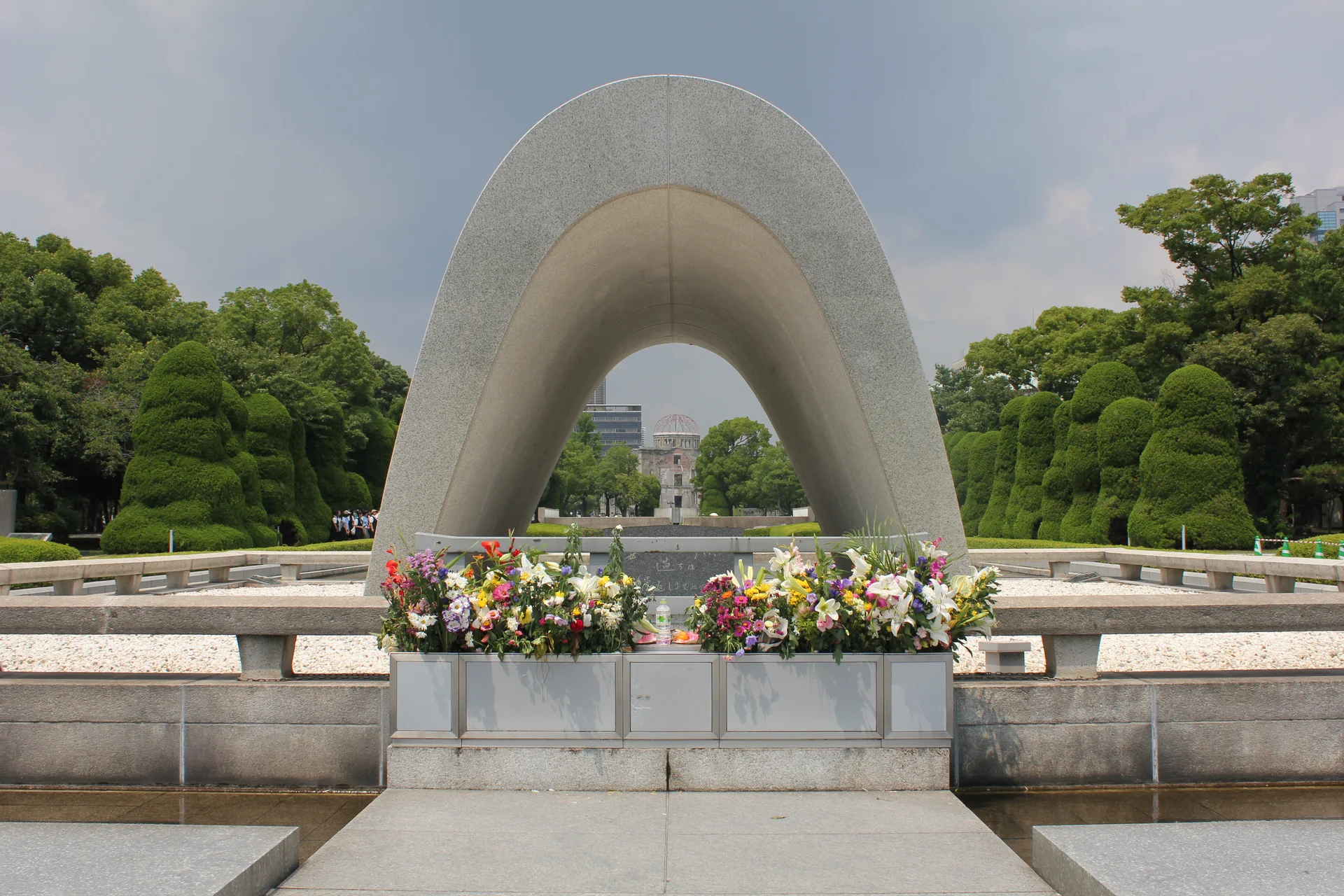
There are also valid reasons to pass on one city. Someone who has already seen Hiroshima's memorial sites and Miyajima may want to use scarce time in Kyushu. Someone with only seven to ten days, no Kyushu continuation and an itinerary still short of Kyoto time may skip Fukuoka. A traveller who values food and late city evenings particularly highly may choose Fukuoka earlier than this first-trip default. Make that preference explicit rather than pretending the two cities offer interchangeable activities. The first-trip Fukuoka test helps when Hiroshima is not yet fixed.
Give the spare night a specific assignment
For two western nights on a first trip, Hiroshima normally has the clearer pair of distinct days. For the third, identify the actual gain: Miyajima after dark, Mount Misen, unhurried memorial time, a Fukuoka evening, a Kyushu departure or a sensible Fukuoka flight. A night with two useful functions can be a better allocation than another night based only on habit. A night that creates an unnecessary detour is usually weaker than protecting time in the cities already planned.
Before booking a final stop, put the flight terminal, bus or train departure, room location and luggage plan on the same calendar line. The Hiroshima airport bus currently has a published fare and travel-time range, while Fukuoka's short subway leg requires the Domestic-versus-International distinction. For a westbound trip ending in Fukuoka, compare Fukuoka-area stays after the flight and following transport are fixed.