
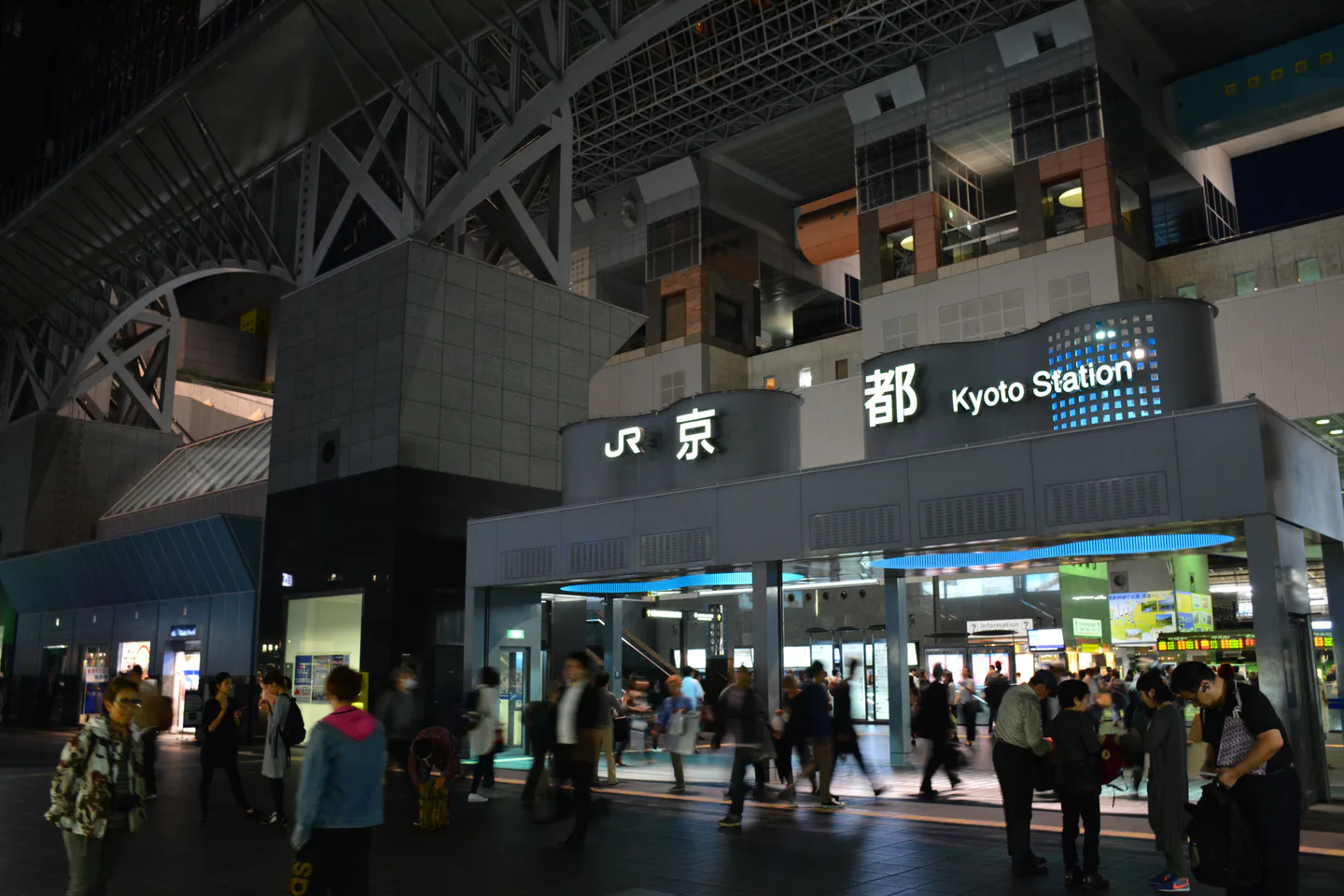
Kyoto Station, Shijo-Kawaramachi and Higashiyama each make a different part of the day easy. The station protects arrival, departure and JR mornings. Kawaramachi puts the room near dinners, Pontocho, Nishiki and a walk toward Gion. Higashiyama can give you quiet eastern lanes before day visitors arrive, but the exact hillside approach may complicate luggage. If those extremes pull equally, Shijo-Karasuma deserves its own comparison: it has subway access back to Kyoto Station and sits within the central commercial area.
A first visit often mixes all of these places. The hotel therefore should be chosen by repeated journeys, not by drawing a circle around the greatest number of sights. Mark your first two full mornings, the two evenings most likely to finish late, and the departure you will make with bags. One awkward suitcase transfer can matter more than several easy daypack rides. Kyoto’s transport guidance encourages rail and subway combinations because road congestion can turn an apparently direct bus into the least predictable way across town.
The part of the day your room can actually save
| Trip pattern | Area to price first | What the room removes | Reason to reconsider |
|---|---|---|---|
| Two nights, late arrival or early onward rail | Kyoto Station | The luggage-bearing transport edges | Both evenings are centred on eastern Kyoto |
| Several dinners around Gion, Pontocho and downtown | Shijo-Kawaramachi | A tired return journey after eating | Repeated JR mornings or a hard early departure |
| Two dawn starts near Kiyomizu or Yasaka | Higashiyama | An early transfer into eastern Kyoto | Steep final approach with large bags |
| Rail mornings and central evenings are balanced | Shijo-Karasuma | Some transfer friction in both directions | Either the station or Gion clearly dominates |
A map distance alone misses this pattern. The last part of a trip after dinner happens when people are tired; the first movement of a sightseeing day may be early enough that a direct rail start matters. The departure day has a suitcase, not merely a daypack. Even a ten-minute station-to-hotel transfer can be an unwelcome extra after a long Shinkansen ride with children, a stroller or a parent who walks slowly. When none of these hard movements repeats, a balanced central room can be more useful than the address nearest one landmark.
Kyoto Station does its best work with bags and JR plans
Kyoto Station is the sensible default for a short stay arriving or leaving by Shinkansen. The local accommodation guide highlights the station area’s lockers and baggage storage. The rail network also creates clean starts for Fushimi Inari, Tofuku-ji and Arashiyama, while Nara is a natural full-day journey from the broader station side. The value is not that every Kyoto sight lies beside the platform. It is that the journey’s most fragile edges stay simple.
A station hotel can absorb a late arrival without making the party solve another unfamiliar transfer with luggage. It also keeps checkout and an onward intercity train close together. If several full days begin by JR, that advantage repeats. For a two-night visit with an early departure, protecting arrival and exit may be a stronger gain than sleeping in the middle of the sightseeing map. A traveller who wants a Kyoto Station versus Gion comparison can use that narrower question after settling the length of the trip.
The station does not solve every day. If dinner ends around Gion or Pontocho on three consecutive nights, a station room imposes three late returns. Transport may be available, but the extra journey is paid when the group has already spent the day walking. Nor is a platform-to-lobby path automatically accessible because a hotel advertises “Kyoto Station”: the complex is large, exits differ and the useful lift route can be longer than the line on a booking map. Check the property’s exact entrance.
Kyoto’s city guidance also challenges the idea that a station base means sightseeing entirely by bus. A JR or subway segment can get you near an attraction, followed by a manageable walk or shorter bus link. This is especially useful when road traffic is heavy. If a proposed station hotel only works because of one supposedly fast direct bus to every attraction, examine the rail alternatives before paying a premium.
A traveller whose last night is controlled by a holiday Shinkansen should compare the room itself with the Hotel Granvia Kyoto final-night case. If the main goal is reaching several Kansai day trips from one room, the Osaka versus Kyoto rail-hotel comparison tests whether this station advantage is worth locating the whole stay in Kyoto.
Kawaramachi earns the room when the evening repeats
Shijo-Kawaramachi works as a hotel area when downtown is the endpoint of several days. Nishiki Market, central shopping and restaurants sit nearby; Pontocho and Gion are reachable on foot across the Kamo River. Kyoto’s guidance gives a roughly 13-minute walk from the Shijo-Kawaramachi intersection to Yasaka Shrine and cautions that buses on Shijo-dori can be unexpectedly slow. A hotel here changes the end of the evening from another route-planning task into a walk back to the room.
That is a specific strength, not a claim that Kawaramachi is universally “central.” Kyoto-kawaramachi is a Hankyu station. It is not on the Kyoto City Subway Karasuma Line that connects Shijo and Kyoto stations. A room near the Hankyu end of Shijo buys stronger Gion access; a room farther west near Shijo-Karasuma buys a more direct subway relationship with the main station. Two hotels both marketed as “downtown Kyoto” can therefore behave quite differently on departure day.
Choose the Kawaramachi side if the trip’s nights repeatedly end around food and eastern downtown. One Fushimi Inari morning or one Nara excursion need not overturn three easier evenings. Reverse the choice when two or more mornings begin with JR and checkout also involves an early train. A hotel in the middle of the map that you only pass through on transit is not automatically better than one at a repeated starting or finishing point.
The district distinction becomes sharper when a parent has mobility limits. The Kyoto Station versus Shijo-Kawaramachi guide for older parents follows the lift, taxi and room implications beyond the rail map. For a general first visit, the Kyoto one-, two- and three-day route builder can reveal whether the predicted late downtown returns will actually happen.
Shijo-Karasuma is a real fourth candidate
Shijo-Karasuma should not be folded into Kawaramachi for every decision. Shijo Station sits on the Kyoto City Subway Karasuma Line, the same north-south line as Kyoto Station. Hankyu Karasuma connects the commercial corridor running toward Kawaramachi. The location lacks the immediate Gion edge of a room farther east, and it lacks the main station’s direct JR access. Its strength is that neither the central evenings nor the rail departure becomes particularly awkward.
Imagine four nights with one Fushimi Inari morning, one Arashiyama outing, two downtown dinners and no very early train out. No single district owns the itinerary. A Shijo-Karasuma room can provide one stable base without paying for a view or a postcode you use only once. Price it against both the station and Kawaramachi, then inspect the actual walk to Shijo subway and the hotel entrance. A low advertised rate several blocks from the intended stop may lose the advantage.
The compromise stops being attractive when one edge becomes dominant. If every evening belongs to Gion and Pontocho, Kawaramachi shortens more tired returns. If the visit begins late and ends with an early Shinkansen, station access outweighs the central balance. The point of considering Shijo-Karasuma is to avoid forcing a mixed trip into a false station-versus-Gion contest.
Higashiyama should buy more than a photograph
Higashiyama can give an eastern-Kyoto stay a different shape. Near Gion, Yasaka or the lanes toward Kiyomizu-dera, the hotel can put you on the streets before large daytime groups arrive and after shops close. A ryokan dinner or quiet evening may be part of the accommodation itself. Those are concrete reasons to pay for the area. One single dawn photograph, followed by days spent elsewhere, is a thin reason for three nights of difficult check-in and checkout.
The district name covers very different approaches. A property near Gion-Shijo or a usable Higashiyama subway stop may involve a fairly straightforward rail-and-walk connection. A machiya up a narrow Kiyomizu-side lane can require a slope and a longer final approach. Two large cases in rain change the experience of that final stretch. Before booking, trace the last 500 metres from the station or taxi drop-off rather than treating “walkable to Kiyomizu” as sufficient information.
Kyoto’s access guidance for Gion and Kiyomizu emphasizes rail, subway and walking alternatives to the obvious city bus. A Higashiyama hotel should be evaluated by its actual nearest useful stop, not the number of buses shown by a map app under normal traffic. If the trip deliberately includes two quiet eastern mornings and slow evenings, the extra transfer on arrival may be a good purchase. If the room is merely somewhere to sleep after full days elsewhere, a central or station base usually makes those days easier.
Atmosphere is not identical to accessibility. A family of four may gain more from a room with four usable beds, floor space for bags and a workable bath-and-toilet layout in the second-choice district than from a tighter room on the prettiest lane. For an older traveller, compare the lift route, slope, surfaces and taxi drop-off. Conversely, a station hotel may also require a long walk inside the complex. The practical entrance matters more than a few minutes in the headline transit estimate.
A timed Kiyomizu-dera night-viewing plan gives an especially clear reason to stay east if the evening itself is the aim. A separate Higashiyama autumn walking route can show whether two dawn starts are realistic. If only one of those days survives the itinerary, a more transport-friendly room may be wiser.
Buses are useful; relying on one bus is fragile
Kyoto buses still connect many places, but cherry-blossom season, autumn foliage and commuting periods can bring crowding and road delays. The city encourages visitors to use baggage storage or delivery rather than board crowded buses with large cases. For a hotel comparison, that means a room “one direct bus away” may be less resilient than one with a short subway ride and a clear walk. The rail alternative is often the useful part of a location, even if the route has a transfer.
A spring or autumn itinerary should also allow the travel pattern to change on a busy day. If a bus queue is long, can you approach the area by train? If a rainy morning makes walking less appealing, is there a second useful route? Peak-season hotel value comes partly from these options, not solely from being a few hundred metres closer to a famous temple. The Kyoto autumn timing guide helps identify which mornings might actually merit an eastern start.
For a westbound day, the Arashiyama station and walking guide can turn a broad hotel-to-Arashiyama estimate into the rail stop you need. During foliage peaks, the Kyoto crowd-avoidance rail corridors offer a way to test whether a hotel depends too heavily on one crowded bus.
Nara, Fushimi Inari and Arashiyama affect the answer differently
A single day trip should not select the hotel for a whole week. Fushimi Inari is straightforward by JR from Kyoto Station, so an early shrine start adds weight to that base. Yet one Fushimi morning may be outweighed by three evenings that finish in Kawaramachi. Nara makes station or Shijo-Karasuma more attractive when departure is early, luggage is involved or a reserved activity demands a prompt arrival. If it is the only rail-heavy day, downtown can still be the better overall fit.
Arashiyama also gives Kyoto Station a direct JR option. Central Kyoto has other rail combinations, however, so count how often the party travels west. A single Arashiyama morning is weaker evidence than several westbound outings or an onward rail departure. If you are still deciding between a Kyoto and Osaka base for the wider Kansai trip, settle that first with the Kyoto-versus-Osaka comparison. The wrong city base is not repaired by a more carefully chosen Kyoto station exit.
Nara deserves its own time calculation: the Nara day trip from Kyoto or Osaka compares departure city, while the Nara day-trip versus overnight decision tests whether returning to the Kyoto hotel is even the right plan. If Nara takes one ordinary daytime visit, it should carry less weight in the hotel choice than several Kyoto evenings.
Luggage forwarding can change the ranking
Kyoto Station’s lockers and baggage facilities make it especially useful on arrival and departure days. But that value can be removed in part by forwarding the main suitcase to Osaka, Tokyo or the next hotel and travelling with one smaller bag. An atmospheric Higashiyama ryokan may then become much easier to justify. The luggage-forwarding guide explains the handoff choices; check what the receiving hotel accepts and keep essentials in the bag you carry.
Forwarding does not erase stairs, slopes or a complicated taxi drop-off. It only removes the largest object from that journey. The rest of the choice should still be made from the mornings and evenings you plan to use. Do not pay four nights of station-area premium solely to solve a one-time checkout if there is a sensible bag solution; equally, do not assume a machiya up a steep lane has become effortless because the large case went ahead.
Length of stay changes what pays back
For two nights, the arrival and departure occupy a large share of the trip. Kyoto Station is a sound default, unless both evenings are deliberately in eastern downtown or the accommodation is itself a ryokan experience. At three nights, two full days and two evenings allow Kawaramachi or Shijo-Karasuma to gain repeated value. A Nara day plus an early Shinkansen may still keep the station ahead. Two Gion evenings with ordinary rail starts may tip the calculation downtown.
Four or five nights give Higashiyama more chance to repay the harder arrival: several early eastern walks and unhurried evenings can become part of the stay. The longer visit does not automatically call for a second hotel. A Station-to-Kawaramachi split often just adds packing, baggage storage and check-in to a city that can be crossed without moving rooms. A split becomes clearer when the second property has a different job, such as one Higashiyama or Arashiyama ryokan night with dinner and bath, or a final station night before an unusually early train.
When the visit lasts only a day, the Fushimi Inari versus Arashiyama one-day decision matters more than refining a Kyoto hotel district you may not use. At three full autumn days, the seasonal Kyoto route can reveal whether the eastern, western or northern mornings repeat enough to alter the base. The extra article planning should serve the room decision, not expand the itinerary beyond the available time.
In a peak spring or autumn week, test the price as well as the route. A sold-out central district does not make any remaining high rate sensible. The Kyoto sold-out hotel alternatives may reveal a better rail-connected base for a specific visit. Cancellation flexibility is useful when the only available room is far from the railway or its promised bus is exposed to congestion. Keep the seasonal itinerary and the hotel booking in the same decision rather than solving them separately.
Four itineraries, four different beds
A late arrival from Tokyo, a Nara day and an early departure for Hiroshima give Kyoto Station three distinct jobs. Even an enjoyable Gion dinner is unlikely to outweigh all three. Four nights without day trips, built around restaurants and Gion every evening, are different: Kawaramachi lets the hotel join the nightly pattern. One or two transfers to the Shinkansen are a smaller burden than four late returns from downtown.
For three photography-focused nights with two eastern-Kyoto dawn walks, Higashiyama makes those hours practical if the exact property has a manageable luggage route. The neighbourhood itself is then the product. A four-night first trip with one Fushimi morning, one Arashiyama day and two central evenings has no dominant edge. Price Shijo-Karasuma first, then compare the real room and walk against the station and Kawaramachi alternatives. None of these examples says a brand or hotel rating can overrule the trip’s shape.
The same map can lead to a different answer if the group includes young children. A station-area room with a direct return from a Nara or Fushimi day may let a family end the outing without another city transfer, and breakfast before an early train is easier to organize nearby. Yet a larger central room with four proper sleeping places can outweigh the station advantage. Compare the actual room inventory and lift route, not a generic “family-friendly area” label. A narrow Higashiyama lane may be manageable with an overnight bag and tiring with a stroller plus two suitcases.
A couple planning a special ryokan night faces another distinct choice. The meal, bath and evening walk can justify Higashiyama even when the rest of the trip uses trains. In that case, carry a small bag for the ryokan and decide where the main suitcase goes before checkout. This is different from moving hotels simply to sample a second district. The move should purchase hours inside the accommodation and neighbourhood that a daytime visit cannot supply. If the ryokan package is not part of the plan, the practical central base may serve the same sightseeing route with less work.
Finally, inspect the return journey after each evening, not only the morning trip toward each attraction. A sightseeing map often makes a station departure look simple while ignoring the late walk back from dinner. A Kawaramachi hotel may win three such evenings; a station hotel may win three early rail starts. When those counts tie, Shijo-Karasuma gives a useful tiebreaker, provided the room and the actual subway entrance fit your party. This small exercise makes the accommodation choice robust to one changed restaurant or rainy day.
Choose the base by the journeys it deletes
Station hotels are strongest when rail and luggage define the stay; Kawaramachi when the evenings repeat downtown; Higashiyama when eastern dawns or a ryokan evening will genuinely be used; Shijo-Karasuma when the trip mixes those needs. Recount the first two mornings, two evenings and baggage-bearing checkout after selecting a promising room. If one crowded bus, rainy slope or late dinner makes the address unattractive, the apparent map advantage was probably too narrow.
Compare Kyoto Station rooms, Shijo-Kawaramachi stays and Higashiyama stays against the actual route, room layout and entrance rather than a district label alone.