
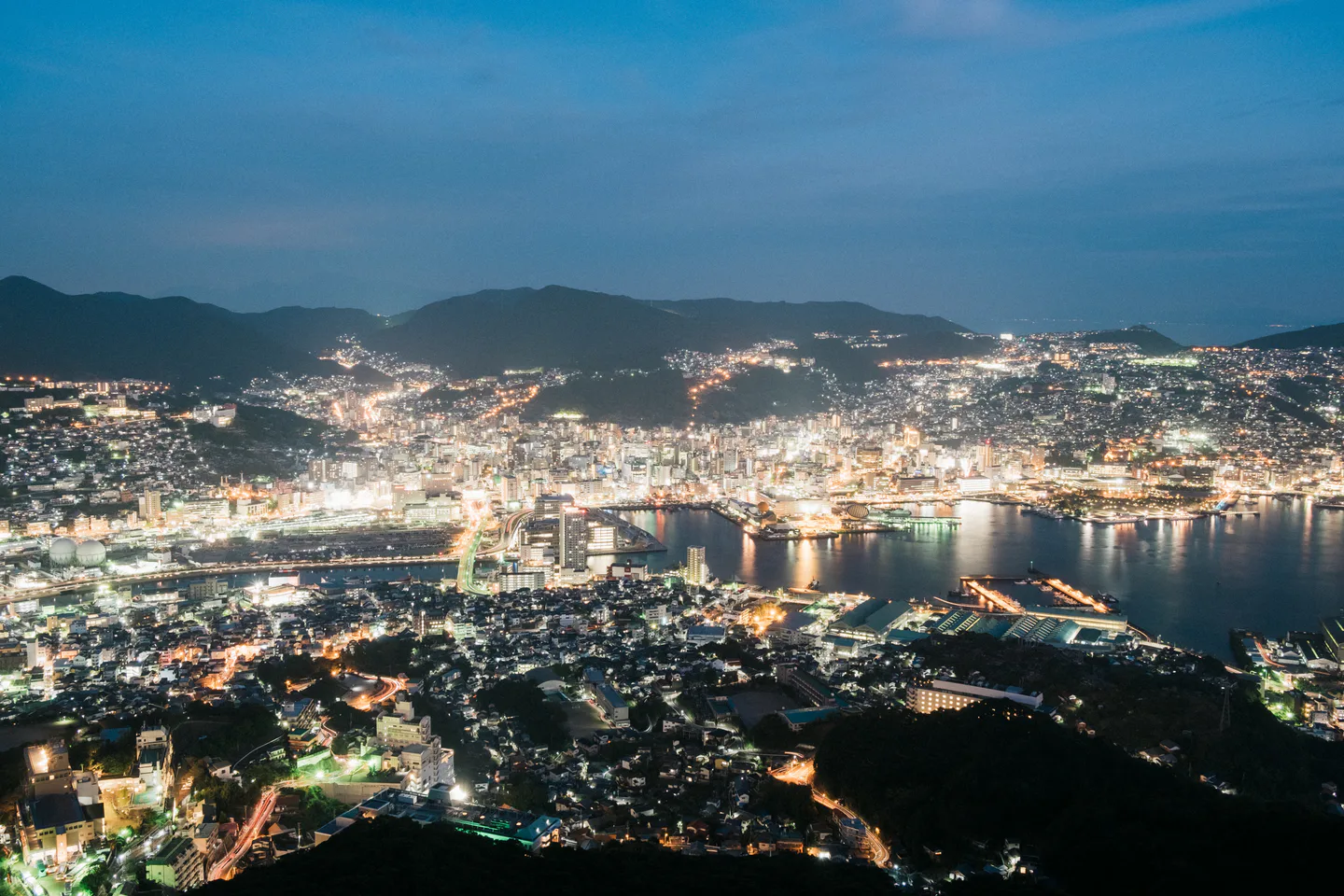
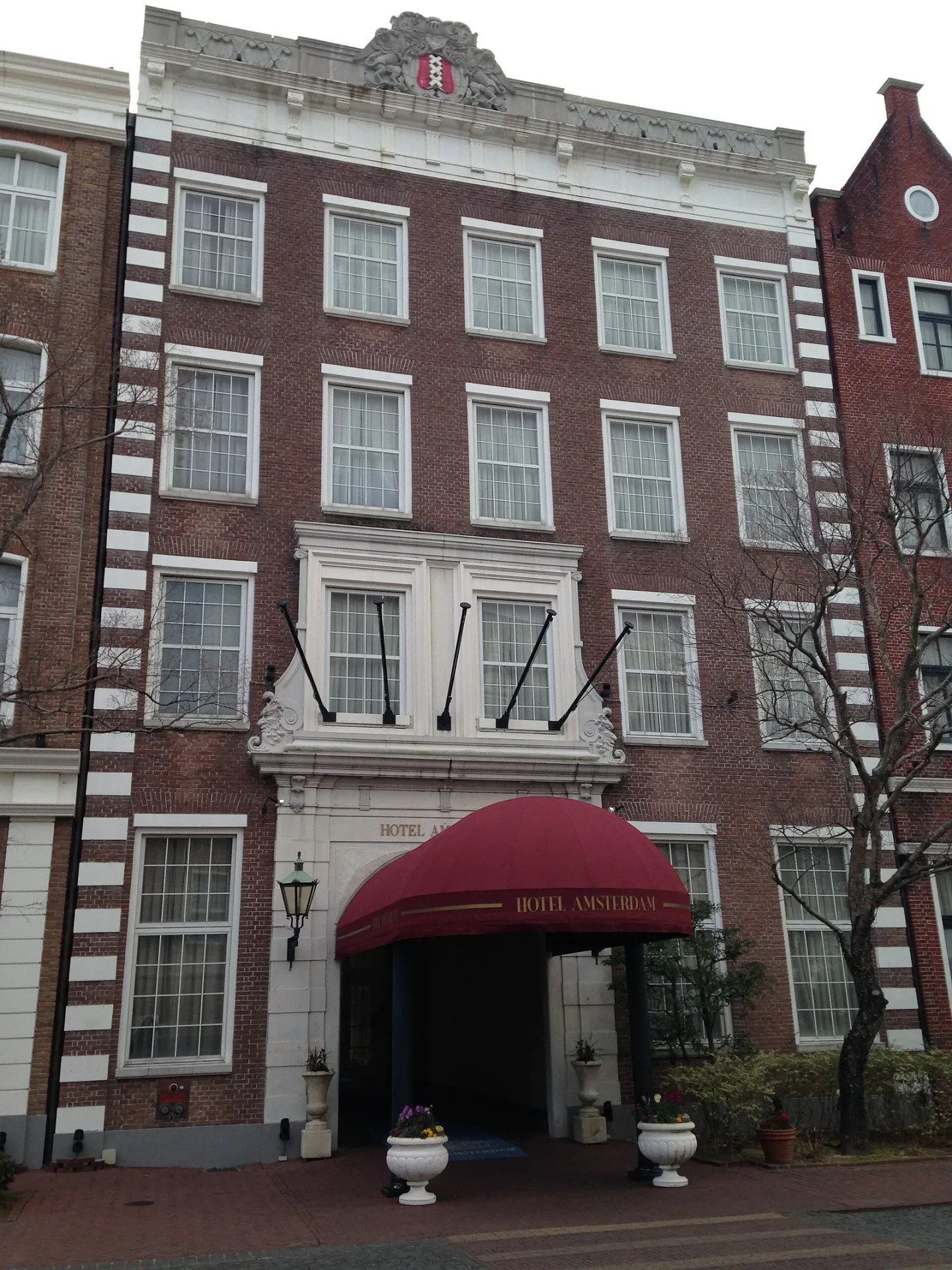
The Nagasaki Station area, Huis Ten Bosch and Unzen are three different overnight propositions, separated by substantial travel. A city hotel keeps museums, tram routes, meals and onward rail within reach. A park hotel is valuable if it buys the evening after day visitors begin leaving or places you on a northbound train the next morning. Unzen gives a ryokan dinner, baths and a possible mountain morning, but requires an earlier arrival and a plan for the last leg to Nita Pass. For a first visit with only one or two nights, Nagasaki City is the default until one of the other nights can do specific work.
The distances are large enough that changing beds should be deliberate. Huis Ten Bosch gives around 90 minutes by Seaside Liner from Nagasaki Station plus a walk from its station to the entrance. Unzen Onsen is a mountain journey rather than another Nagasaki neighbourhood. Its Nita Pass viewpoint requires a separate climb from the onsen town, often by car or arranged taxi. The two-day Nagasaki city route is a useful way to see whether the city itself already fills the available time before adding a remote hotel.
Which night actually earns a hotel move?
| Travel shape | Room to consider | What the room must deliver |
|---|---|---|
| First Nagasaki visit; one or two nights; rail and bags | Nagasaki City | Flexible museum and food days, simple arrival and next train |
| A park evening that ends after the easy city return | Huis Ten Bosch | More after-dark time and no watch-the-clock exit |
| Park day followed by Hakata or a suitable airport departure | Huis Ten Bosch | Evening time plus forward route progress |
| Ryokan dinner, bathing and a planned peninsula or mountain morning | Unzen Onsen | Enough daylight to arrive and a weather-aware next leg |
| Unzen added only for Nita Pass with no onward transport | Nagasaki City until transport is solved | A mountain postcode alone cannot carry you to the viewpoint |
| Several large bags, a stroller or uncertain arrival | Nagasaki City | Fewer hand-offs and more recovery choices |
A second hotel should usually remove two real costs. Huis Ten Bosch can protect an illumination or fireworks evening and put tomorrow’s Hakata train on the correct side of Nagasaki. Unzen can make a full ryokan night possible and position you for a mountain or Shimabara Peninsula morning. When the room does only one small job, keep the city booking and visit with a day bag. The packing, checkout, suitcase transfer, room access and second check-in are part of the price even if the room rate looks appealing.
Nagasaki City gives delays somewhere to go
A late arrival on the Kamome, a rainy museum day and a Mount Inasa viewpoint plan that depends on visibility are easier to absorb from Nagasaki City. Peace Park, the Atomic Bomb Museum and the harbour-side historical districts do not need the same weather. Two city nights let a first-time visitor make those choices without dragging luggage across the prefecture between them. The Nagasaki two-day itinerary can show whether that full city day is already spoken for.
The city is also the better reset point when the onward plan may change. Missed transport to the park leaves a usable evening; rain can move an outdoor view to another time; food and shopping do not depend on a ryokan meal slot. A remote room can be more memorable when its specific facilities are the purpose of the trip, but it has fewer alternatives once you arrive late. A Nagasaki hotel can therefore be a positive itinerary choice, not simply the absence of a resort booking.
Near the station is especially useful with an early onward departure or several cases. The JR Kyushu Hotel Nagasaki room-and-location guide looks at a particular station property rather than assuming every room has the same layout. Station access is only one part of the decision: compare the actual room type, whether luggage can be stored and how much of your city sightseeing starts on another tram or bus.
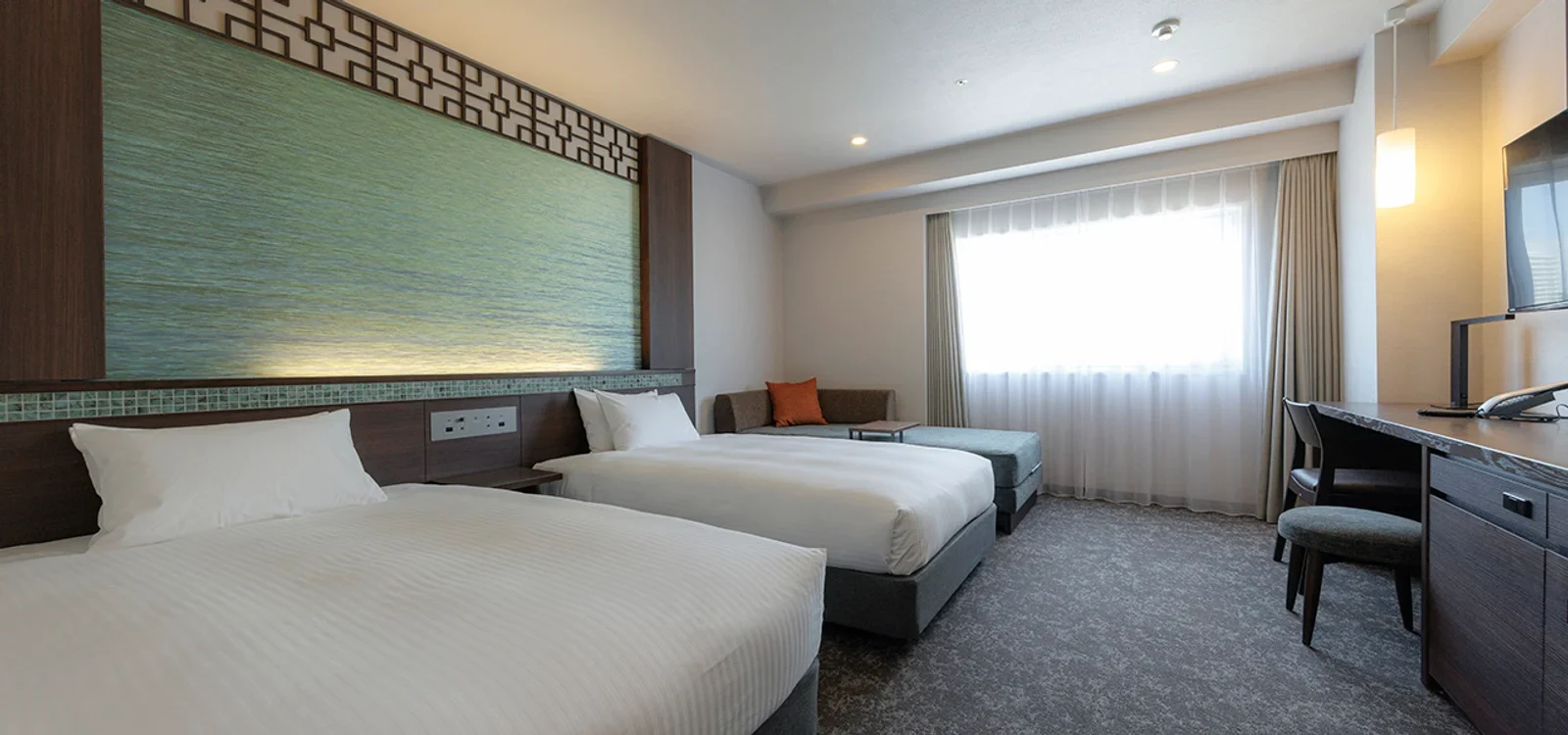
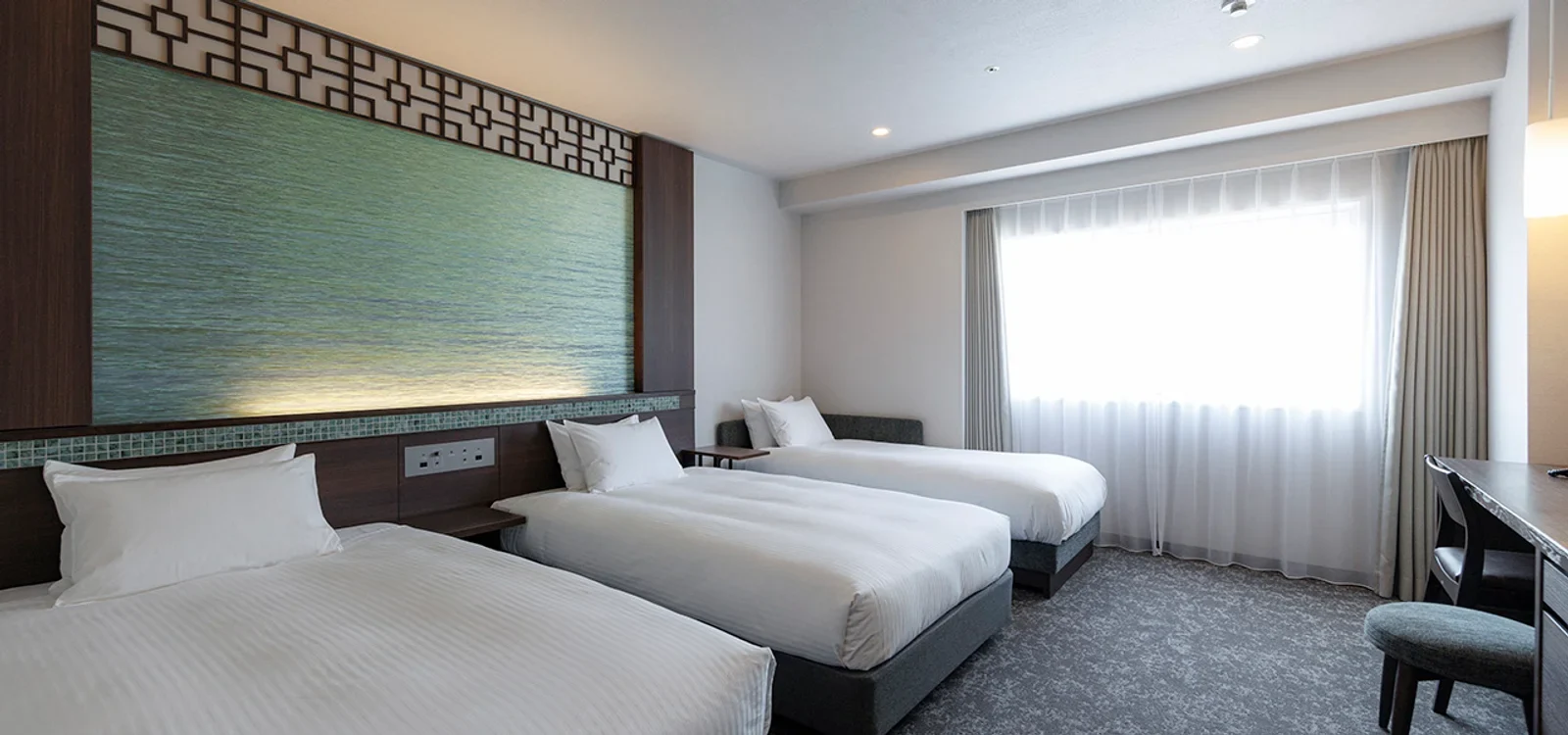
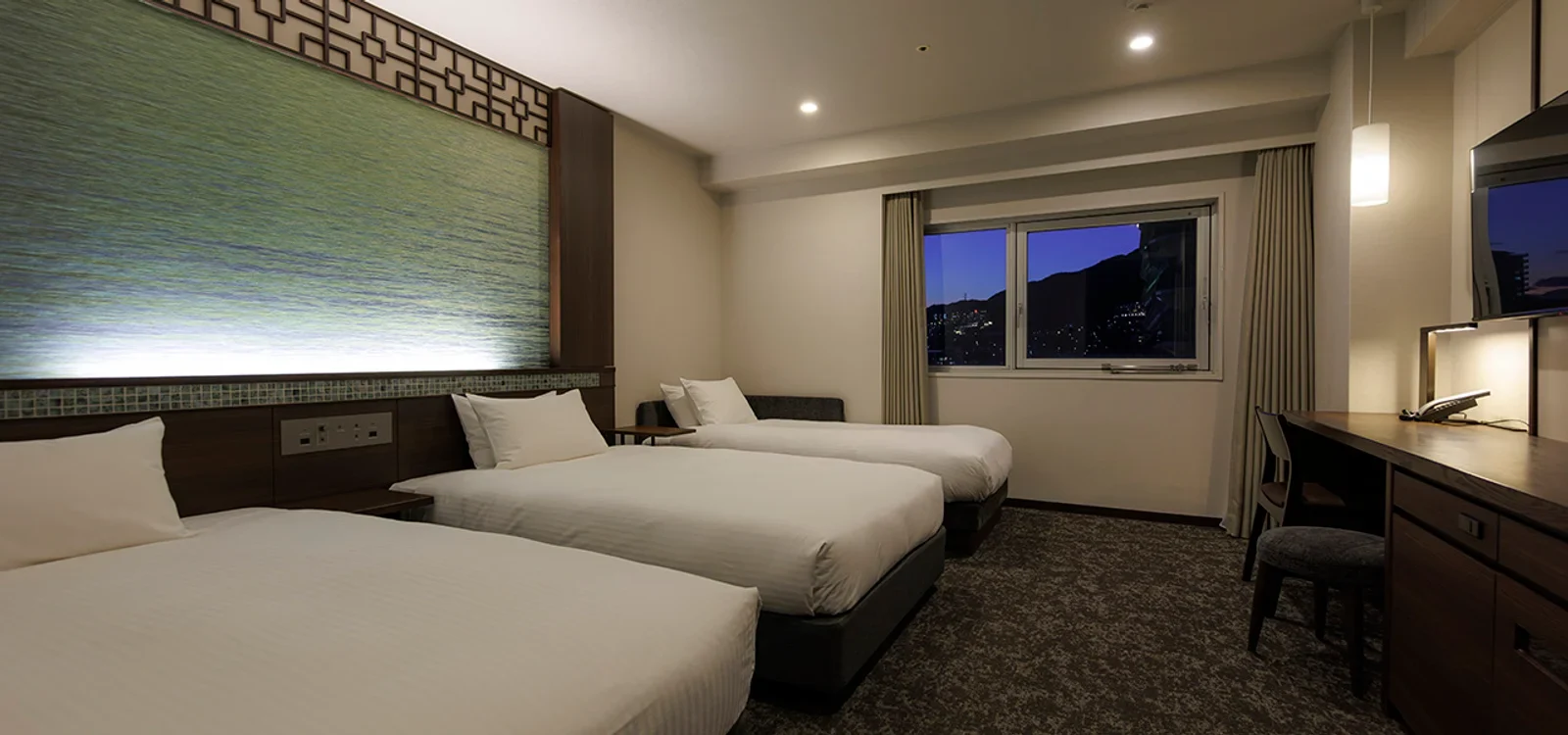
The three JR Kyushu Hotel Nagasaki photographs show variations of a twin room, not three different hotels or a promise of a harbour view. They make room layout easier to inspect before booking. If you are splitting a city and park stay, keep the bulky case at a suitable hotel only when its storage terms and your return route allow it. Otherwise, luggage forwarding between Japanese hotels may reduce the number of heavy hand-offs.
A Huis Ten Bosch day trip costs a return railway journey
The park’s train directions currently put Nagasaki Station to Huis Ten Bosch Station at approximately one hour and 30 minutes by Seaside Liner, followed by roughly five minutes to the entrance. Returning to the same city room can therefore mean about three hours of train riding for the day, before station waiting and travel inside the resort. That figure is significant, but it does not automatically make a second hotel worthwhile. If you intend to leave after a daytime visit and enjoy a city dinner, the day trip can still be simpler than moving bags.
The park hotel gains value when your chosen date offers an evening programme you will actually stay for: illumination, fireworks, seasonal entertainment or a long dinner. The Huis Ten Bosch fireworks exit guide makes the late-return question concrete. Without a hotel, you must leave enough time to walk to the station and catch a workable return train. A park room changes that evening from a timetable exercise into time on site.
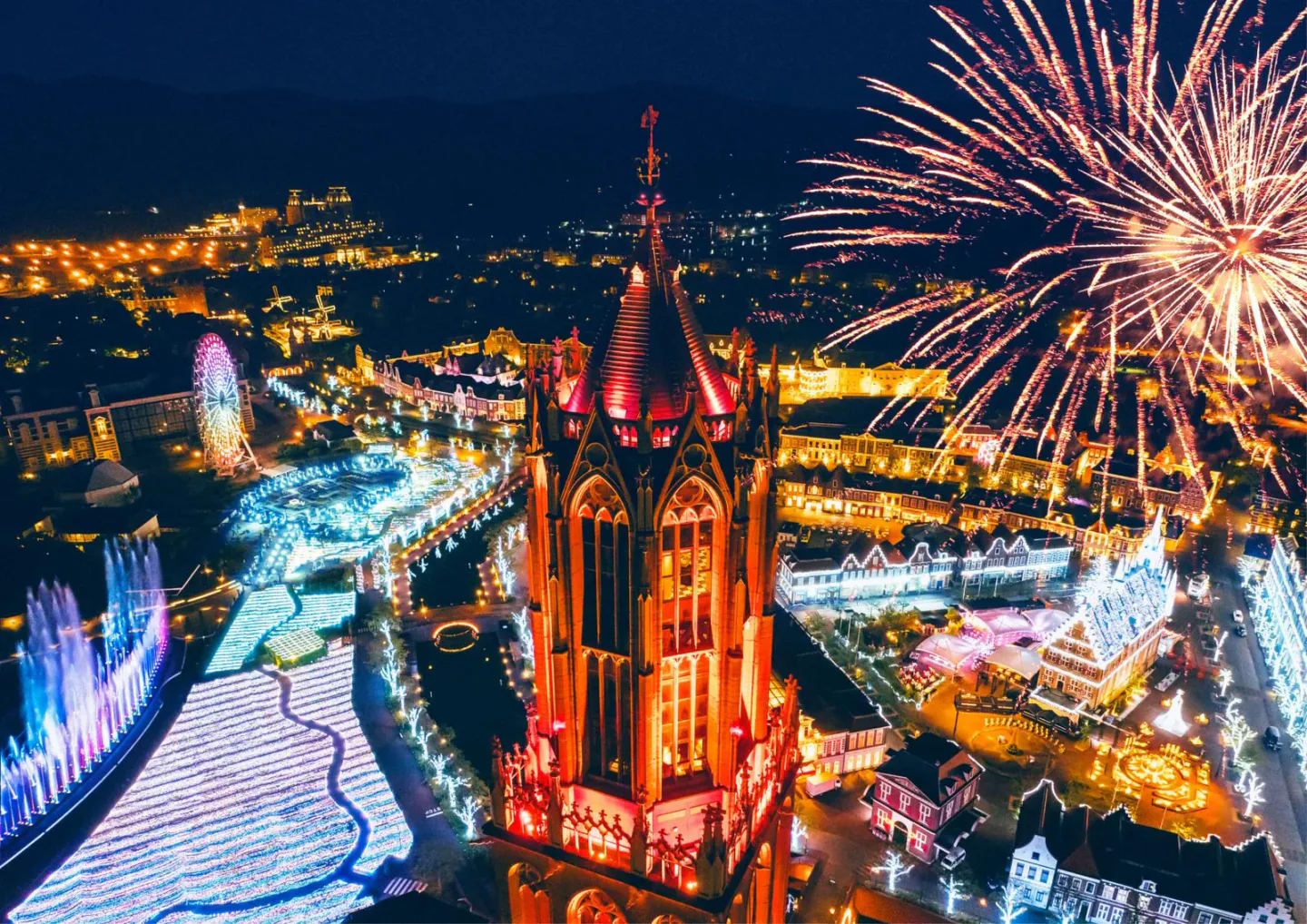
Fireworks are date-specific; a photograph of a lit park does not mean every booking includes a display. Likewise, weather can change the value of outdoor shows and rides. If the room price is justified entirely by one event, compare the ticket date, show conditions and cancellation rules. A family may still value the hotel for a mid-day rest and short after-dark return, while a traveller who wants only a daytime ride circuit may be better served by the same Nagasaki bed.
A park-adjacent booking also needs the ticket rules checked by name. Some hotel and day-two combinations can make an extra admission purchase unnecessary; others do not. The Huis Ten Bosch hotel-and-two-day-ticket guide separates that question from accommodation quality. Do not assume a generic “park hotel” label settles either admission or luggage service.
Northbound travel makes the park night more useful
The park lists a direct limited express between Huis Ten Bosch and Hakata at about one hour and 45 minutes. That gives a clean three-stage route: finish Nagasaki sightseeing, spend the next afternoon and evening at the park, then leave for Hakata without going back to Nagasaki City. The hotel removes both the late southbound return and the next morning’s reversal. If tomorrow instead holds another full Nagasaki city day, the same move has little route value.
This matters on a short Kyushu itinerary where each city change occupies part of a day. The five-or-seven-day Kyushu route can show whether the park lies naturally between stops. Do not draw a straight line through the map and then assume every train runs frequently at your chosen hour; connect the actual park exit, hotel checkout and Hakata departure. A later city arrival may be acceptable if the park evening is a major goal, but it should be planned.
Nagasaki Airport creates a second possible onward edge. Huis Ten Bosch lists a regular airport bus at roughly 70 minutes and a high-speed boat at about 50 minutes on operating dates. The boat uses the Marine Terminal, while the bus uses a different park-side stop. Hotel Europe and designated Hotel Amsterdam rooms may have a complimentary airport bus, but the resort says advance online reservation is required and services may not run without bookings. Verify the booked room’s eligibility and the chosen flight’s timing before counting that transfer as a benefit.
The park hotels have different doors and bag rules
The resort names Hotel Europe, Hotel Amsterdam, Hotel Den Haag, Forest Villa and Hotel Rotterdam in its accommodation access information. They are not interchangeable once you arrive with luggage. The in-park luggage storage point and shuttle serve particular routes; some arrivals go by West Gate, bus stop or Marine Terminal. The resort describes a luggage handoff for eligible hotel guests, with reception from park opening until 19:00 and delivery normally taking two to three hours, with morning deposits delivered by 15:00. That is useful, but not the same as immediate room access or a guarantee for every hotel category.
Check where your particular hotel expects a train passenger to enter, whether a park passport is needed on arrival, and how the bag returns after checkout. The resort’s page gives special conditions for boat departures and individual hotels. A room near a gate may shorten a tired child’s exit; another room may be quieter but require a shuttle. The exact hotel map matters more than an “inside the resort” search filter.
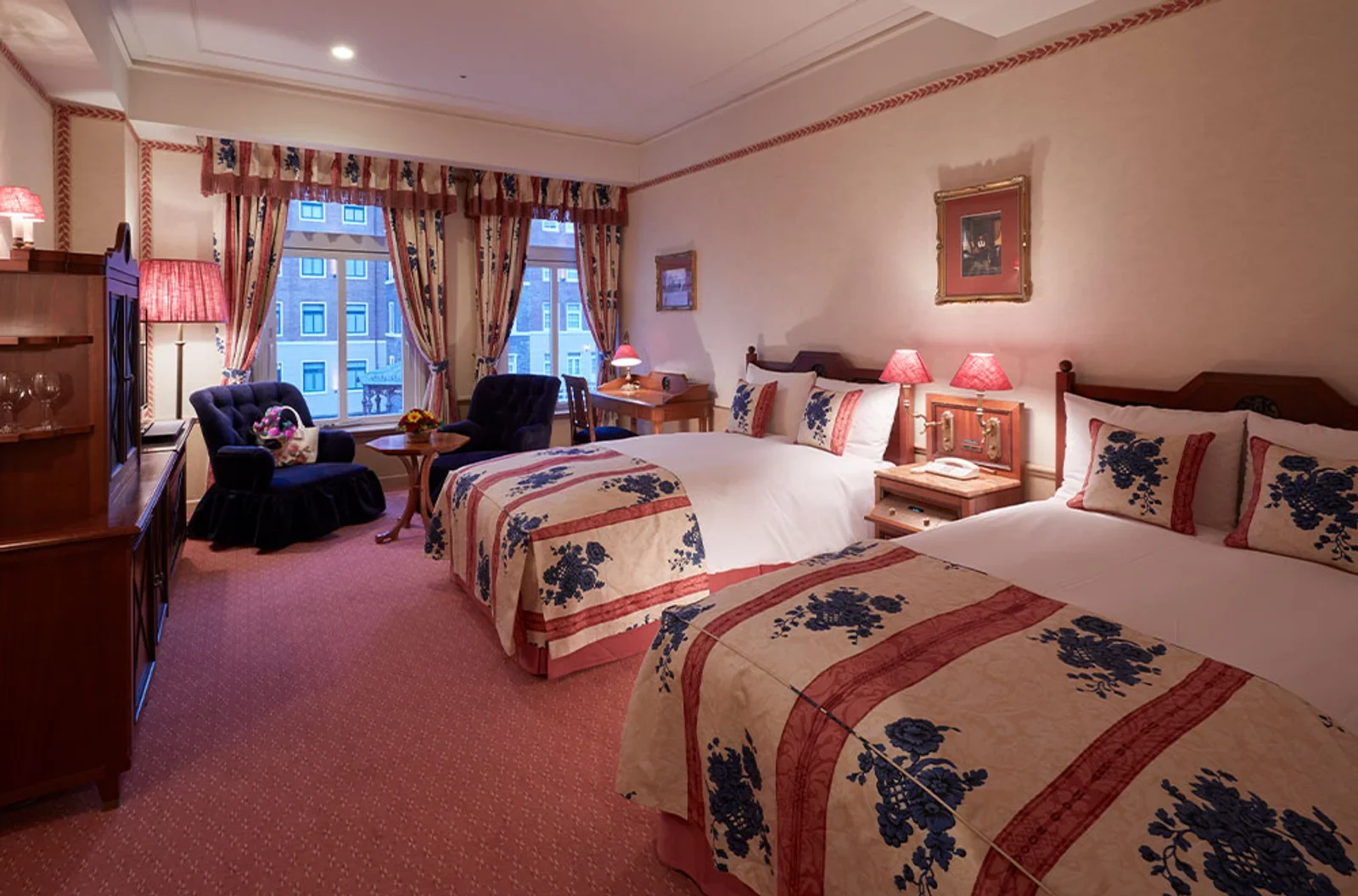
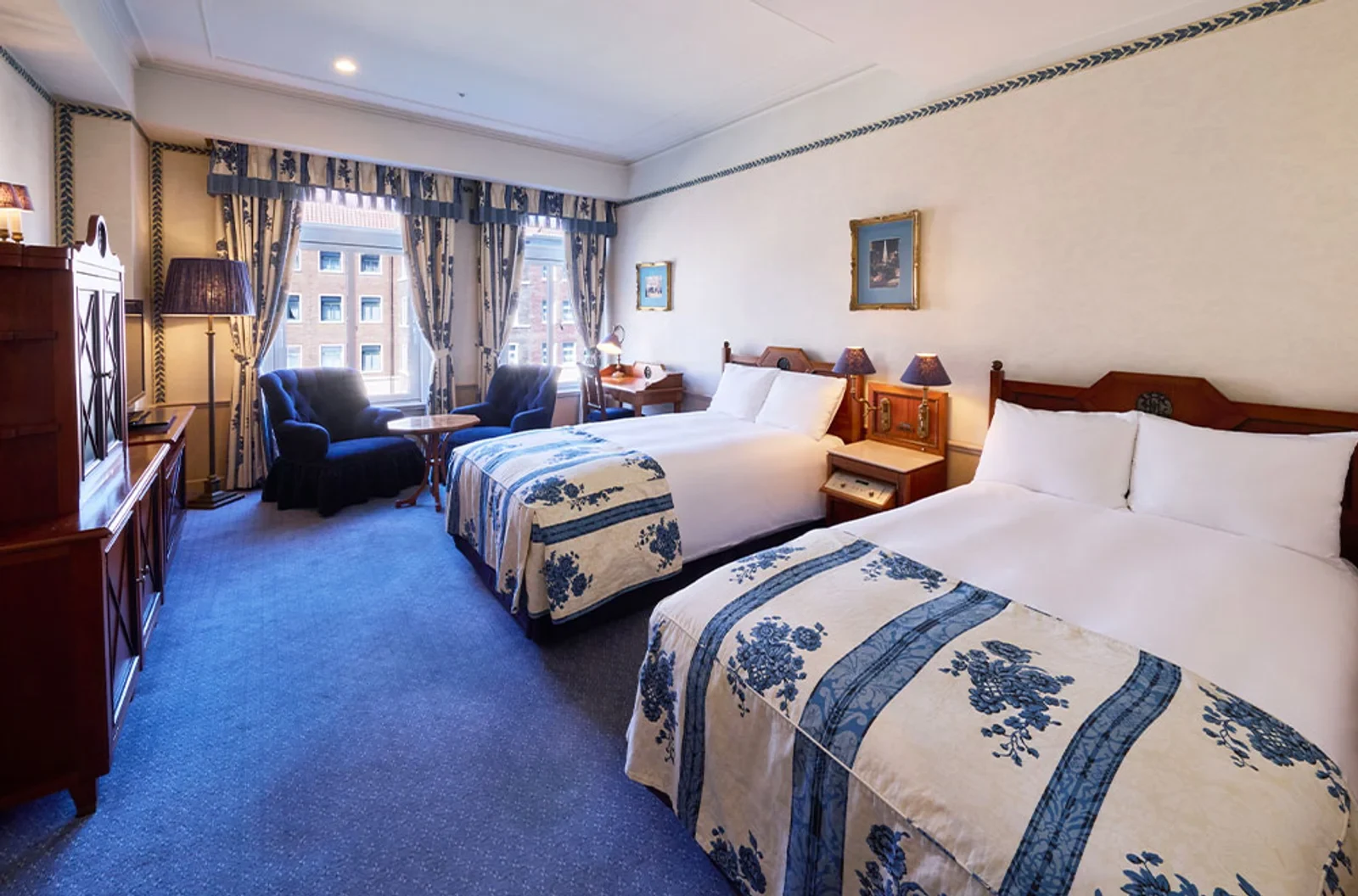
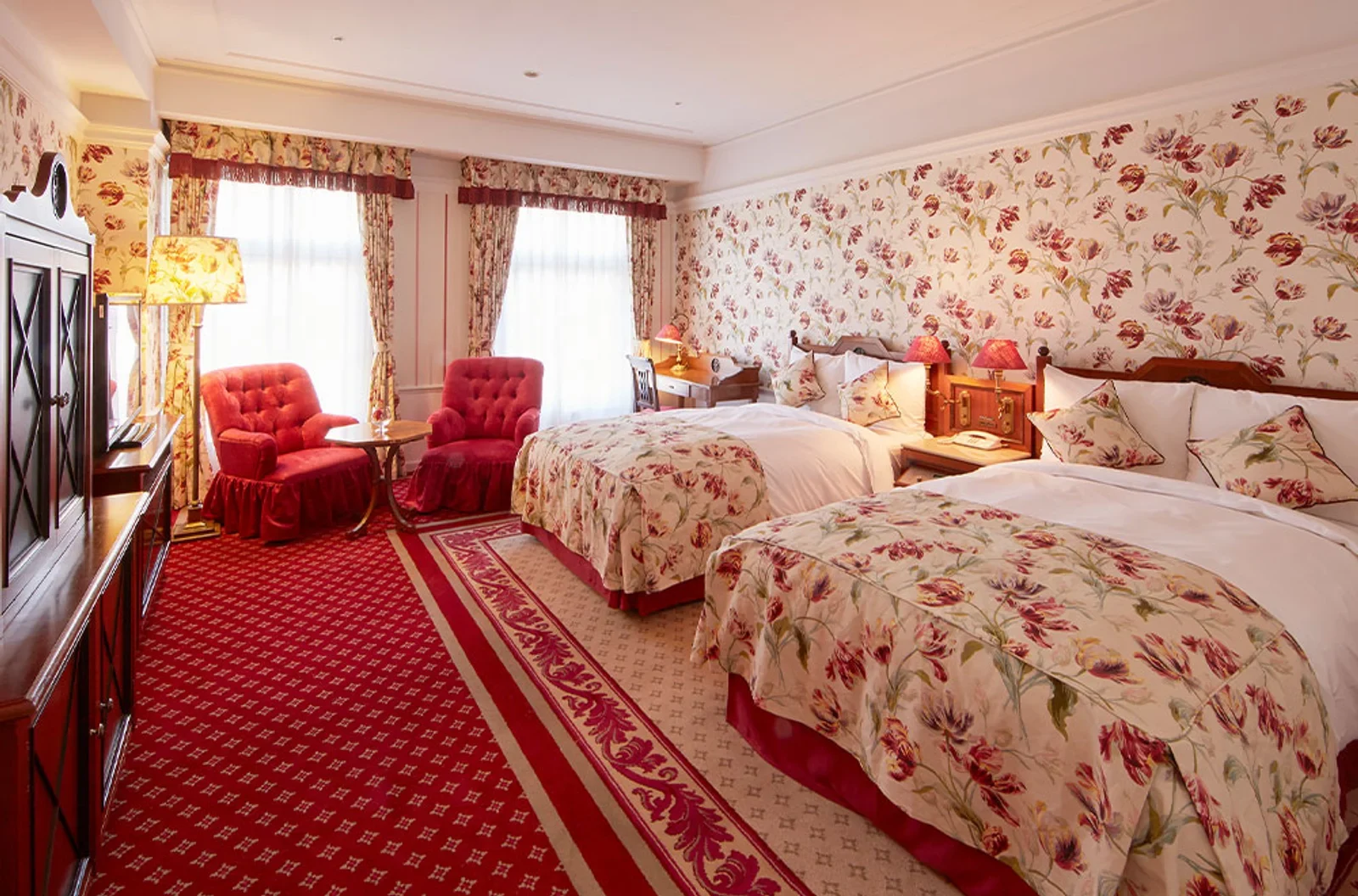
The Hotel Europe images show three photographed twin-room interiors with different fabric schemes. None should be read as a universal room size or view. Select the room category shown in the booking, then compare its meal, transfer and admission terms. The room is most valuable when you intend to enjoy the park after dark or use the northbound or airport exit the next day; a decorative photograph cannot compensate for a route that returns to Nagasaki unnecessarily.
Unzen needs daylight, dinner time and a mountain transfer
An Unzen Onsen night is a different purchase from a park night. You are paying for an onsen town, a ryokan meal, repeated bathing and the chance to wake closer to Nita Pass or the Shimabara Peninsula. Reaching the property by mid-afternoon normally gives those things time to happen. A late arrival can turn the dinner into a deadline and leave little of the mountain setting before sleep. The autumn onsen ryokan guide can help distinguish an in-room bath from a shared one if that is the reason for moving.
Sleeping in Unzen does not automatically solve Nita Pass. The sightseeing pass is about fifteen minutes by car from the onsen town, and current local guidance says the former shared taxi is suspended. A no-car visitor needs a private taxi, confirmed hotel arrangement or another workable transfer, including a return. The Nita Pass access and ropeway guide explains why the last climb, not the long-distance arrival, can determine whether the stay works.
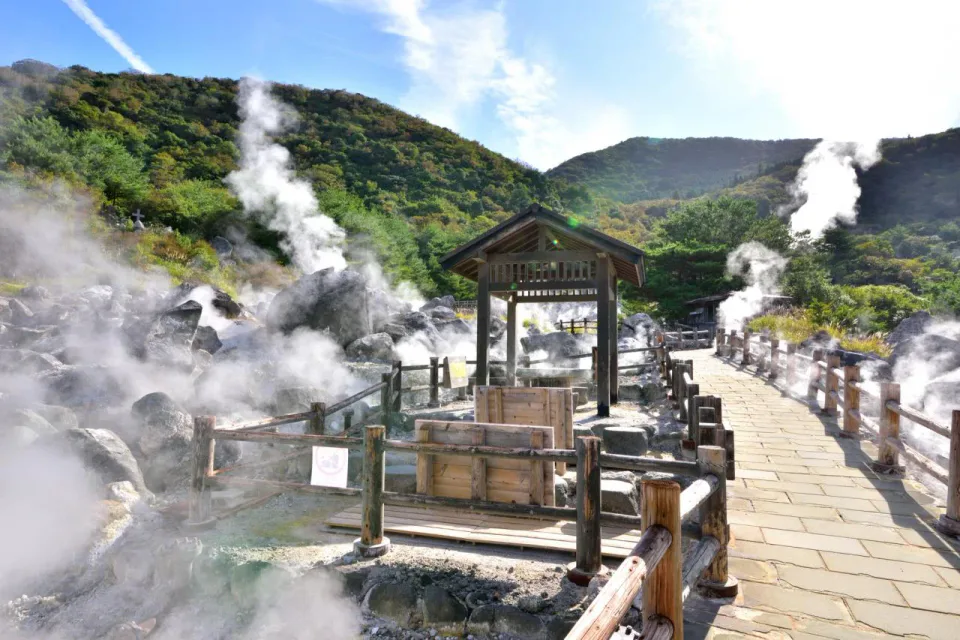
Unzen Jigoku can still give the town a useful afternoon even if the mountain is clouded. The steam and paths are near the onsen area; the high Nita Pass viewpoint has a separate weather and transport risk. A ryokan remains a good purchase when dinner and baths justify it independently. If the only reason to pay for the room is one clear summit view, consider a more flexible city base or a rate whose cancellation terms fit the forecast.
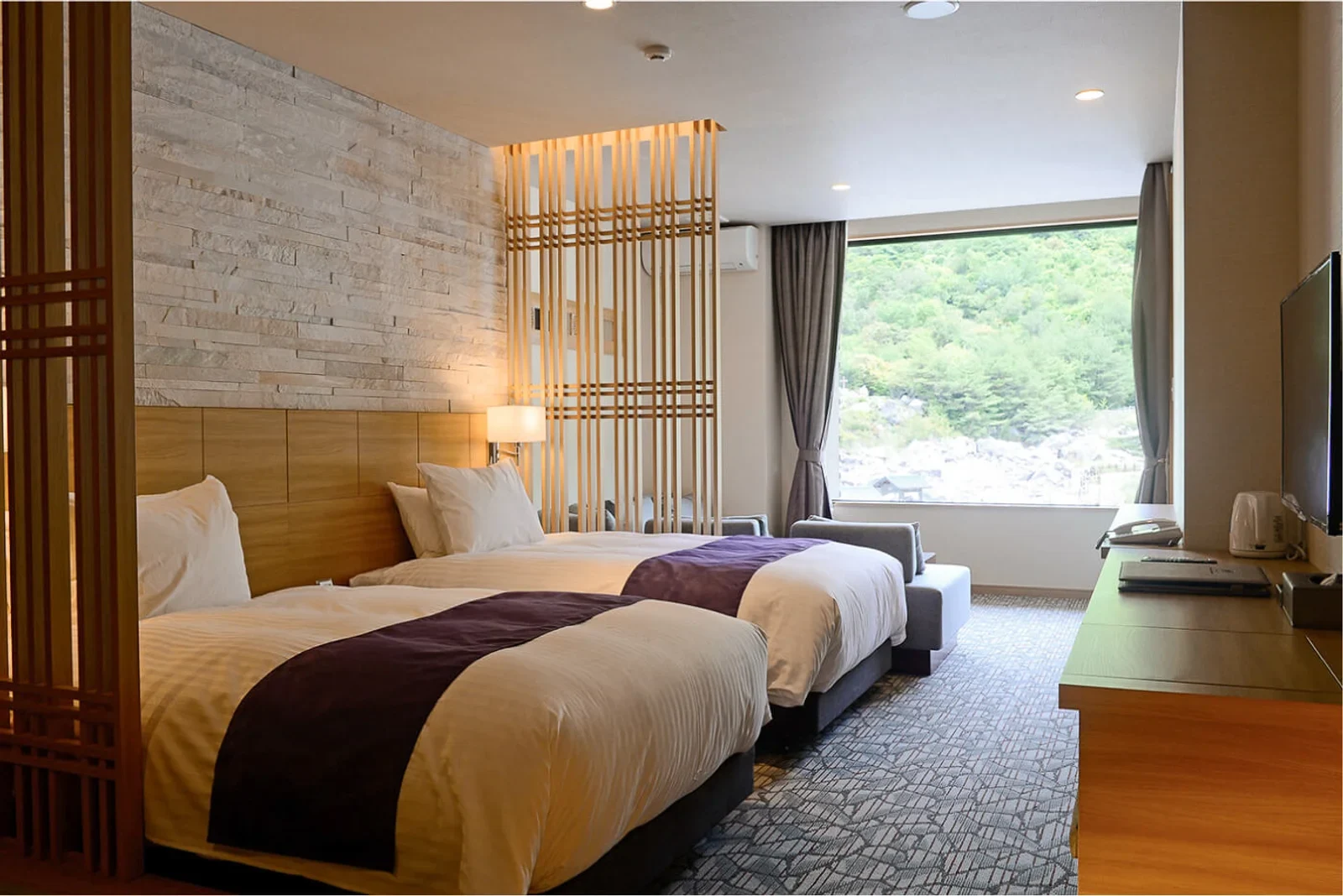
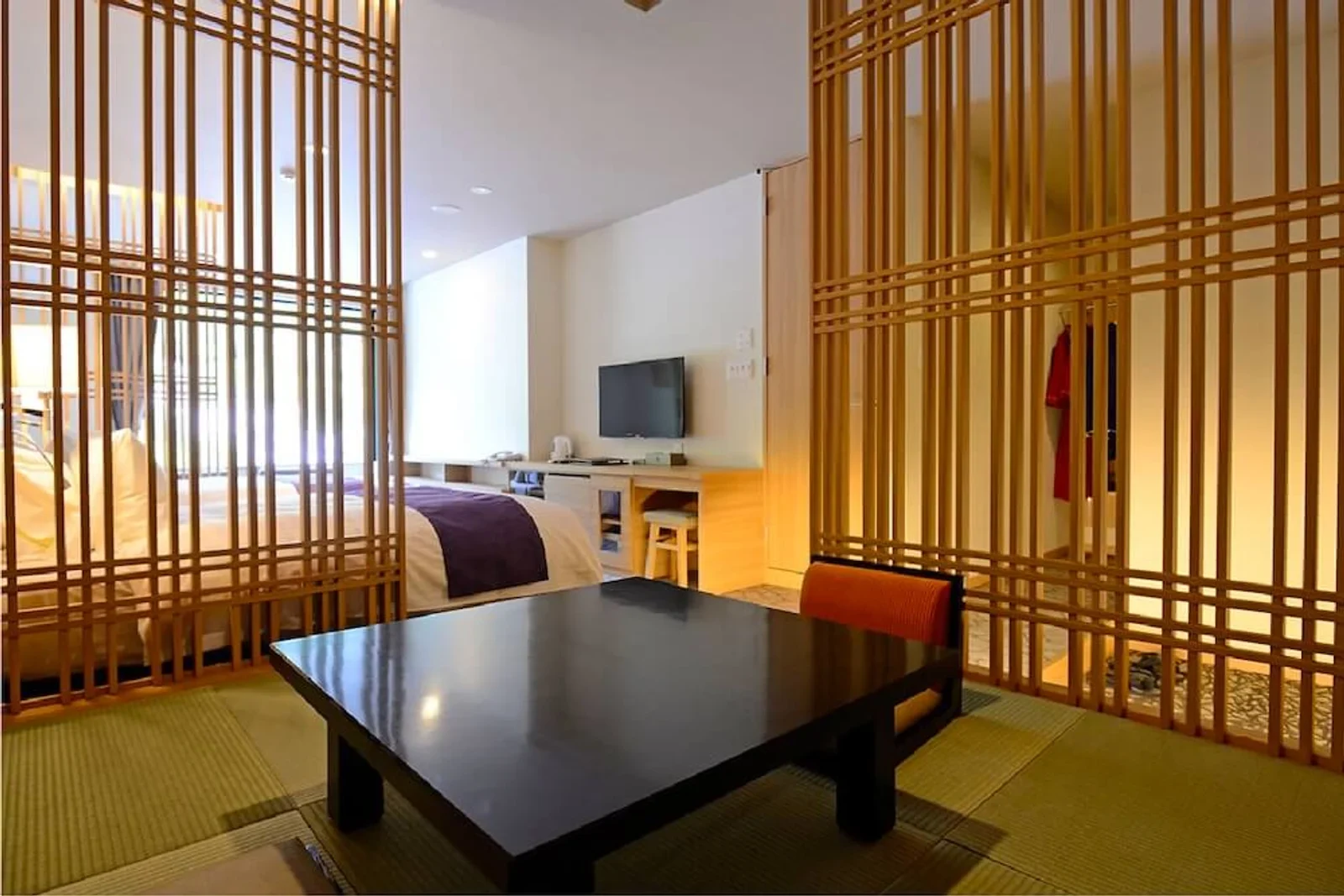
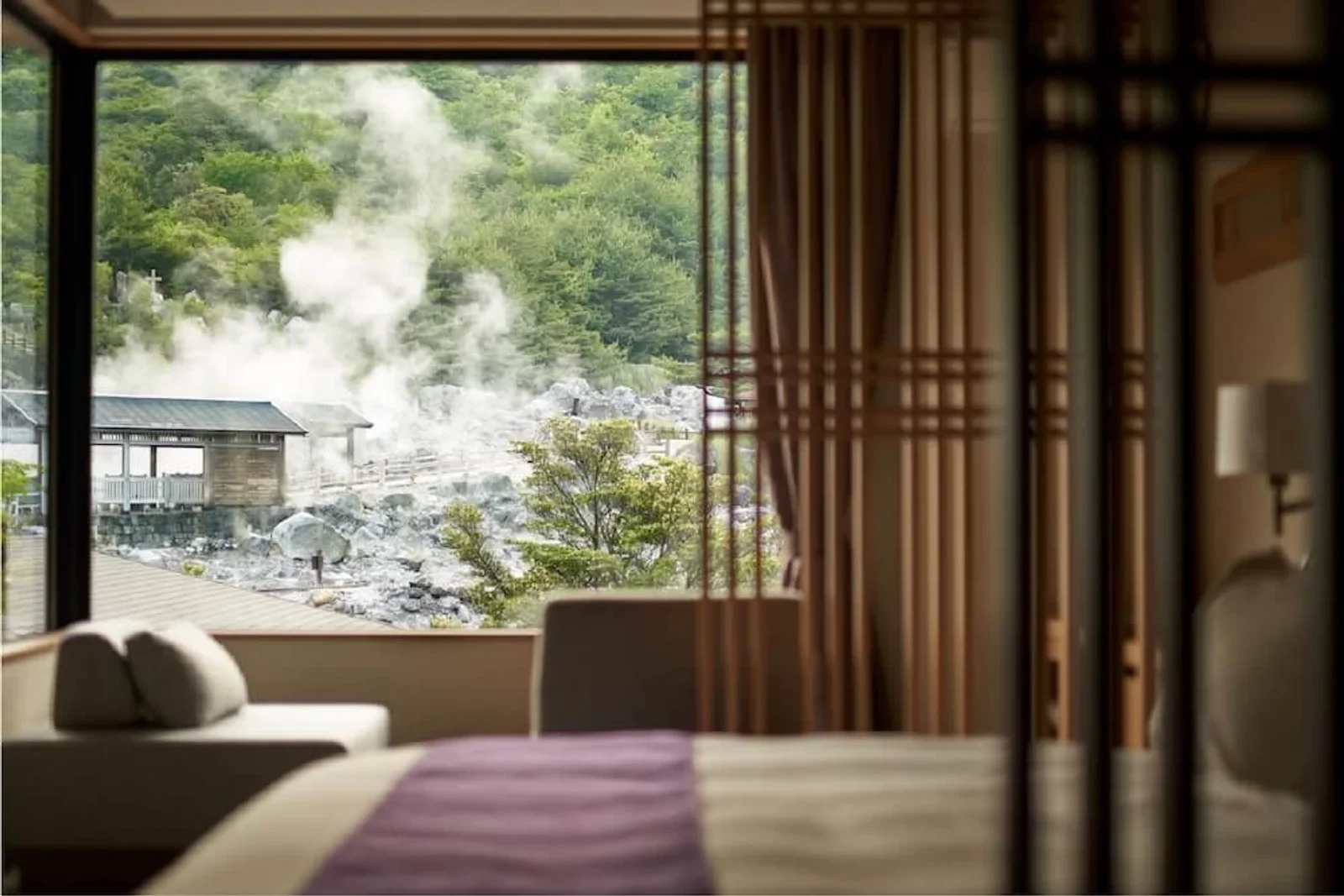
The Unzen Kyushu Hotel photos show why a specific property can be the purpose of the night: they depict the room, a separated sitting space and a window over steaming ground. They do not establish that every bookable room has the same terrace or bath. Confirm whether the selected room has a private onsen, how bathing access works, and the dinner arrival cutoff. The first-onsen planning guide can help determine whether room privacy is worth paying for.
Nita Pass is vulnerable to a single bad morning
The Unzen Ropeway operates through the year subject to weather, with shorter winter closing hours. Its published schedule shifts after 31 October, so a November mountain morning cannot borrow an October afternoon window. Wind and visibility can also remove the view or stop the cars. The operator publishes live conditions, while the Kyushu autumn timing map helps decide whether a lower-altitude day would be more rewarding.
The one-night weather risk is asymmetric. Clear conditions can make an Unzen ryokan followed by Nita Pass a strong route. Fog can erase the summit reason for moving while leaving the meal and onsen intact. A driver can adjust the mountain timing more easily than a no-car traveller dependent on a hired vehicle. Decide before booking whether the town stay itself survives the loss of the ropeway. If it does, the mountain becomes a bonus rather than the only test of value.
Route direction can make Unzen useful beyond the viewpoint. The Shimabara Peninsula connects toward Shimabara Port and ferry routes, so an overnight may place you along a genuine onward journey. Public buses and ferries have lower frequency than city rail, however. The Kyushu-by-train-bus-or-car route should be read with the actual departure day in mind. An elegant line on a map is not enough if the bus leaves before breakfast or a missed connection consumes the day.
How one and two nights change the answer
With only one night in western Kyushu, Nagasaki City usually protects the most possibilities. A single Huis Ten Bosch night makes sense if the park and its evening are the principal attraction, or if the hotel itself is the desired resort stay. A single Unzen night makes sense when the onsen meal and baths are the core experience and the transport is fixed. A traveller who is merely interested in all three places should not attempt to sleep in all three; there is no useful one-night version of that idea.
A traveller beginning in Fukuoka can compare that one night with the Nagasaki day-trip-or-overnight route from Fukuoka. If the city sights already require a night, an added park or mountain room is a separate choice rather than a replacement for Nagasaki. The Northern Kyushu rail-pass comparison addresses fares, but a pass does not remove the time cost of returning south after the park.
With two nights, two Nagasaki City nights remain a clean first-trip pattern. City plus Huis Ten Bosch improves when the second day finishes late at the park and the third day moves to Hakata or a suitable flight. City plus Unzen improves when the ryokan can be reached early enough to use it and the next morning has a mountain or peninsula plan. The split weakens if Day 3 immediately returns to the same Nagasaki sights or if the ryokan is squeezed between a late arrival and a dawn exit.
Three nights do not force a third hotel. A city–park–onsen sequence has three checkouts in a short trip and can consume the benefit of each room. Add the third move only when the route genuinely changes direction and each night carries a different purpose. The western Kyushu itinerary comparison helps decide whether another regional stop deserves that time instead.
Bags, mobility and rain expose weak splits
A family with a stroller and two cases pays at every handoff: hotel desk, platform, train, park luggage counter, shuttle, another lobby. Count those handoffs rather than comparing only rail minutes. Older travellers need to check the precise entrance, lift or stairs at both city and mountain hotels. Nagasaki itself has hills, and Unzen adds a further mountain segment. A short map distance can still be an unsuitable luggage walk.
Rain is a useful test of the booking. Nagasaki City retains museums, food and transport choices. Huis Ten Bosch still has restaurants and some covered or indoor time, but the outdoor spectacle that justified the premium may shrink. Unzen retains baths and a ryokan meal even when Nita Pass is clouded, provided those were actually part of the purpose. If a hotel is useful only when one outdoor event performs perfectly, choose a flexible rate or reconsider the move.
This logic applies beyond Kyushu: a room should protect a scarce part of the trip or remove a hard transfer. The Kiso Valley base comparison faces similar last-bus and luggage questions, while the Hokkaido rural-base comparison shows how a station hotel can beat a scenic but awkward address. Those examples are useful for testing the decision, not substitutes for Nagasaki’s actual timetables.
If the park room is a major part of the purchase, a property-specific case such as the Hotel Okura JR Huis Ten Bosch room-and-ticket plan shows why admission and the next morning matter. Its dated event terms should not be copied into an ordinary booking. For Unzen in foliage season, the Kyushu mountain transport comparison adds the road and transfer question that a resort-style hotel listing can hide.
Book the place that changes the next day
Start with Nagasaki City for a transport-sensitive first visit. Shift one night to Huis Ten Bosch when the evening programme matters and the next day continues north or meets a suitable airport connection. Shift one night to Unzen when the ryokan is a real goal and the mountain or peninsula departure is planned, including the final Nita Pass transport. Keep the same city room if the alternative hotel would only add a novelty checkout. These are route decisions; a hotel star rating alone cannot answer them.
After settling the route, compare Nagasaki Station hotels, Huis Ten Bosch rooms or Unzen Onsen stays. Match the selected room and meal plan to the transfer it is meant to solve.
Related route reading
Other base and route choices: Nagasaki 2-Day Itinerary, Huis Ten Bosch Fireworks Guide, Unzen Nita Pass Guide, Kyushu 5–7 Day Itinerary, Japan Luggage Forwarding Guide.
Other base and route choices: Where to Stay in Aomori: Aomori City, Hachinohe, Hirosaki, Aomoriya or Oirase?, Where to Stay for USJ Halloween 2026: Universal City, Umeda or Namba, Before You Buy a 2-Day Huis Ten Bosch Ticket, Check Your Hotel—Day Two May Already Be Included, Where to Stay for Kochi Yosakoi: Station, Obiyamachi or Saenbacho, Where to Stay for Kyoto Summer Events: Station, Kawaramachi, Otsu or Kibune.
Other base and route choices: Where to Stay for Kishiwada Danjiri: Kishiwada, Rinku or Namba, Happo vs Echoland: Where Should You Stay in Hakuba for Skiing?, Where to Stay in Kyoto: Kyoto Station, Kawaramachi or Higashiyama?, Where to Stay in Osaka: Start With Your Last Stop, Then Choose Namba, Umeda, USJ or Shin-Osaka, JR Kyushu Hotel Nagasaki — Nagasaki Station, Kunchi and room choices.
Other base and route choices: Shinjuku vs Shibuya: Where Should You Stay in Tokyo?, Where to Stay in Kiso Valley: Tsumago, Kiso-Fukushima or Narai, Where to Stay for Tokushima Awa Odori: Tokushima, Naruto or Takamatsu, Where to Stay in Furano: Furano Station, Nakafurano, Asahikawa or Sapporo?, Furano Zone vs Kitanomine: Where Should Skiers Stay?.
Route and transfer details: Huis Ten Bosch trains, airport links, hotel arrival and baggage arrangements, Nita Pass access, Unzen Ropeway conditions and Unzen town transport information.