
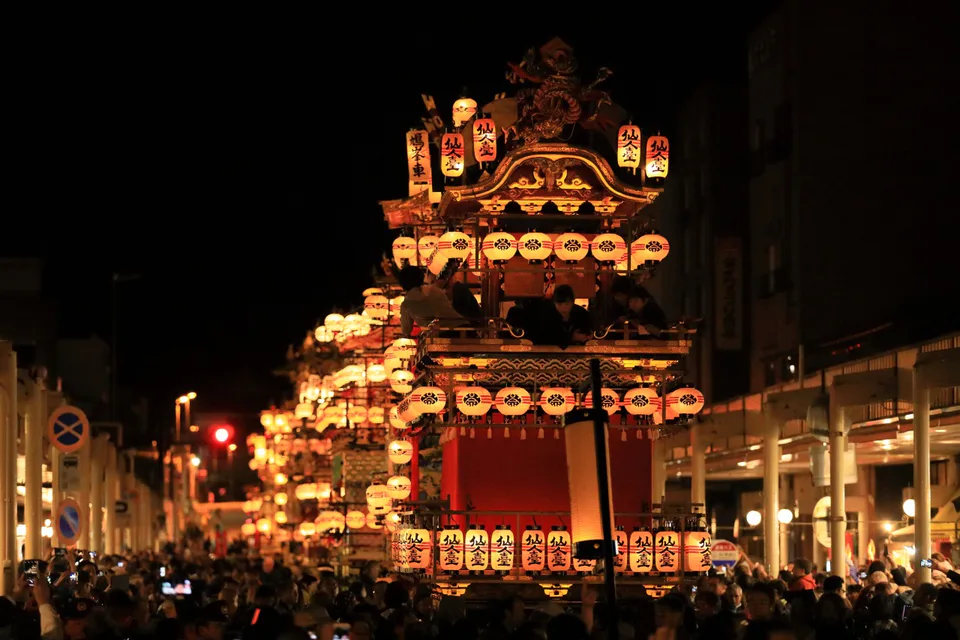
The 2026 Hachiman Festival filled Takayama on Friday 9 and Saturday 10 October. Both days offered the decorated floats, puppet performances and procession, but only Friday had the lantern-lit evening parade. That difference determined whether a one-day visit was enough: a Saturday visitor could see the craft in daylight and leave before dinner, while anyone who came chiefly for the lanterns needed Friday night in town. The published timetable gives a useful record for planning a future edition, although its clock times should not be copied into another year.
How the two festival days differed in 2026
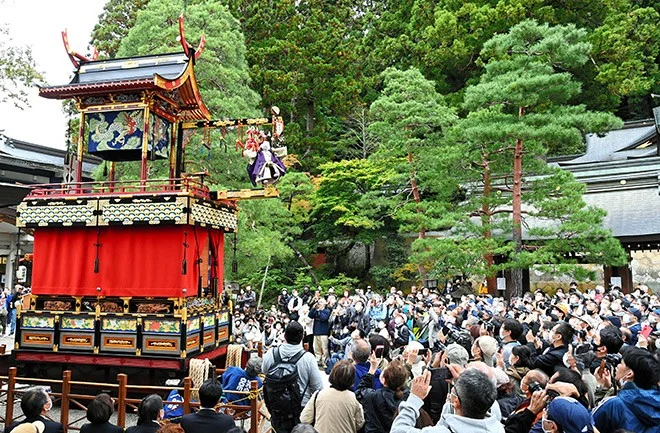
The autumn celebration belongs to Sakurayama Hachimangu and returns on 9–10 October each year. In 2026, those dates fell on a Friday and Saturday. Float displays ran 09:00–17:00 on Friday and 09:00–16:00 on Saturday. Karakuri puppet offerings were scheduled for noon and 14:00 on Friday, then 11:00 and 13:00 on Saturday, each lasting roughly 50 minutes. The procession occupied part of each afternoon, with additional morning and afternoon periods on Saturday. Friday alone had the yoimatsuri, scheduled 18:00–21:30. The sequence is more useful than a single “festival day” label because it shows what a late arrival or early departure would miss.
If the question is whether this deserves a room in town, the Takayama day trip or overnight guide compares a same-day return with an overnight from Nagoya. The Friday evening programme strongly favoured the overnight option, while a selected Saturday daytime performance made a day trip more plausible.
Friday evening was the scarce part of the programme
Lanterns change the appearance of the carved floats after dusk, and crews move them slowly through the streets. The night procession is not a second showing of the daytime puppet offering: it is a separate street event that took place on 9 October only. In 2026 the published window began at 18:00 and continued until around 21:30, subject to conditions on the day. An afternoon train arrival could still leave time for it, but that schedule would give little space for the daytime float display, a meal and finding a viewing position. A fuller Friday visit made more sense for someone who wanted both the craft details and the illuminated movement.
The practical cost of Friday was a later finish amid dense pedestrian traffic. A same-night connection to Nagoya, Toyama or Kanazawa would have made the final hour a transport problem instead of festival time. An overnight room within walking distance gave the evening a workable end point. Rain could cancel individual outdoor events without moving them to Saturday, so the lantern plan was never guaranteed simply by holding a Friday ticket or reservation. The Takayama festival hotel comparison sets station convenience beside an old-town return.
The date for the festival did not also guarantee peak foliage in old Takayama. The Takayama autumn foliage guide separates early mountain colour from later colour around the streets and Hida Folk Village. Treat the celebration and the leaves as two distinct reasons for choosing a date.
The Enako River lights did not run on festival Friday
The separate Enako River autumn illumination ran from 1 October to 30 November 2026, usually 17:30–21:00, along the river between Chidori Bridge and Sakyo Bridge. Its calendar excluded 9 October. A visitor using a broad “October evenings in Takayama” list could therefore have walked away from the lantern floats toward a river display that was switched off that particular night. The two evening programmes were alternatives in the 2026 calendar, not a combined Friday circuit.
A second night changed the choice. The Saturday festival activities ended in the afternoon, and the river lighting could then supply a quieter evening walk if it was operating normally. A one-night Friday-to-Saturday stay instead had a coherent order: Friday lantern parade, Saturday daytime floats, puppets or procession, then onward travel. There was no need to force a second attraction into the first evening.
The sequence for a Friday arrival and Saturday departure was especially straightforward: see the illuminated floats after dusk, sleep in Takayama, then use Saturday morning for a puppet offering or the daytime displays. An extra Saturday night could allow the river illumination once the festival had wound down. Visitors with only one night did not need to sacrifice the lanterns for a separate riverside walk that was unavailable on Friday. The dates, rather than the physical distance between sights, decided what could be paired. For a longer stay with luggage, the Tokyu Stay Hida Takayama room guide adds room and laundry detail to the location decision.
Saturday favoured an early arrival and a daylight departure
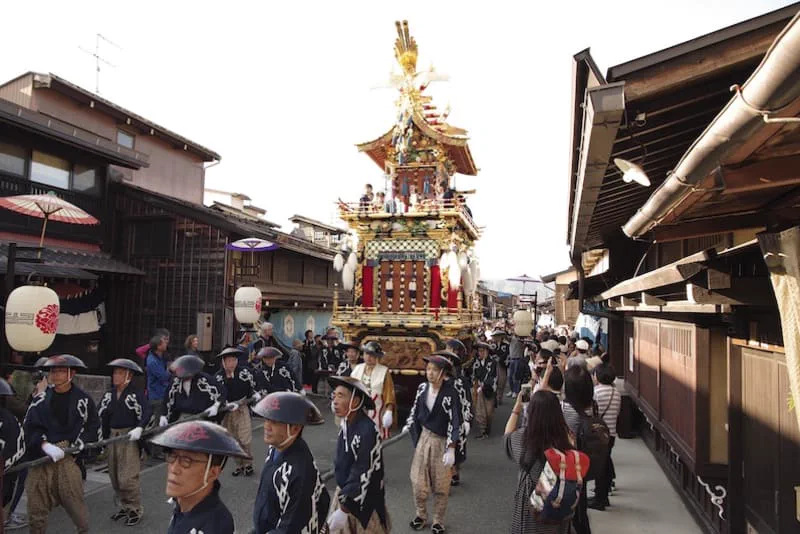
Saturday still held substantial festival time. Its float display was listed until 16:00; the two puppet offerings began at 11:00 and 13:00; and the procession had morning and afternoon windows, about 08:30–12:00 and 13:30–16:00. A morning arrival could therefore be built around one puppet performance and a considered look at the floats rather than a hurried circuit before the last train. The missing element was the Friday night parade. That is a real loss for a lantern-focused visitor, but it does not make the second day an empty fallback.
For a traveller sleeping in Nagoya or Kanazawa, Saturday could avoid the price and scarcity of a festival-night room. The return journey still needed a realistic buffer: the historic streets became crowded, performances occupied fixed windows and the route back to the station took longer than a normal stroll. Someone arriving from farther away should decide which single programme matters most, then leave room for lunch and street movement. A Saturday day trip aimed at every event would be fragile even with a published timetable. If a mountain day is next, the Kamikochi autumn access guide shows why that bus day needs its own timetable.
A Shirakawa-go detour needed its own bus reservation and luggage plan. The Shirakawa-go bus and luggage guide covers those limits; the festival itself was best left as a substantial Takayama block rather than squeezed between bus departures.
Why the floats reward time on foot
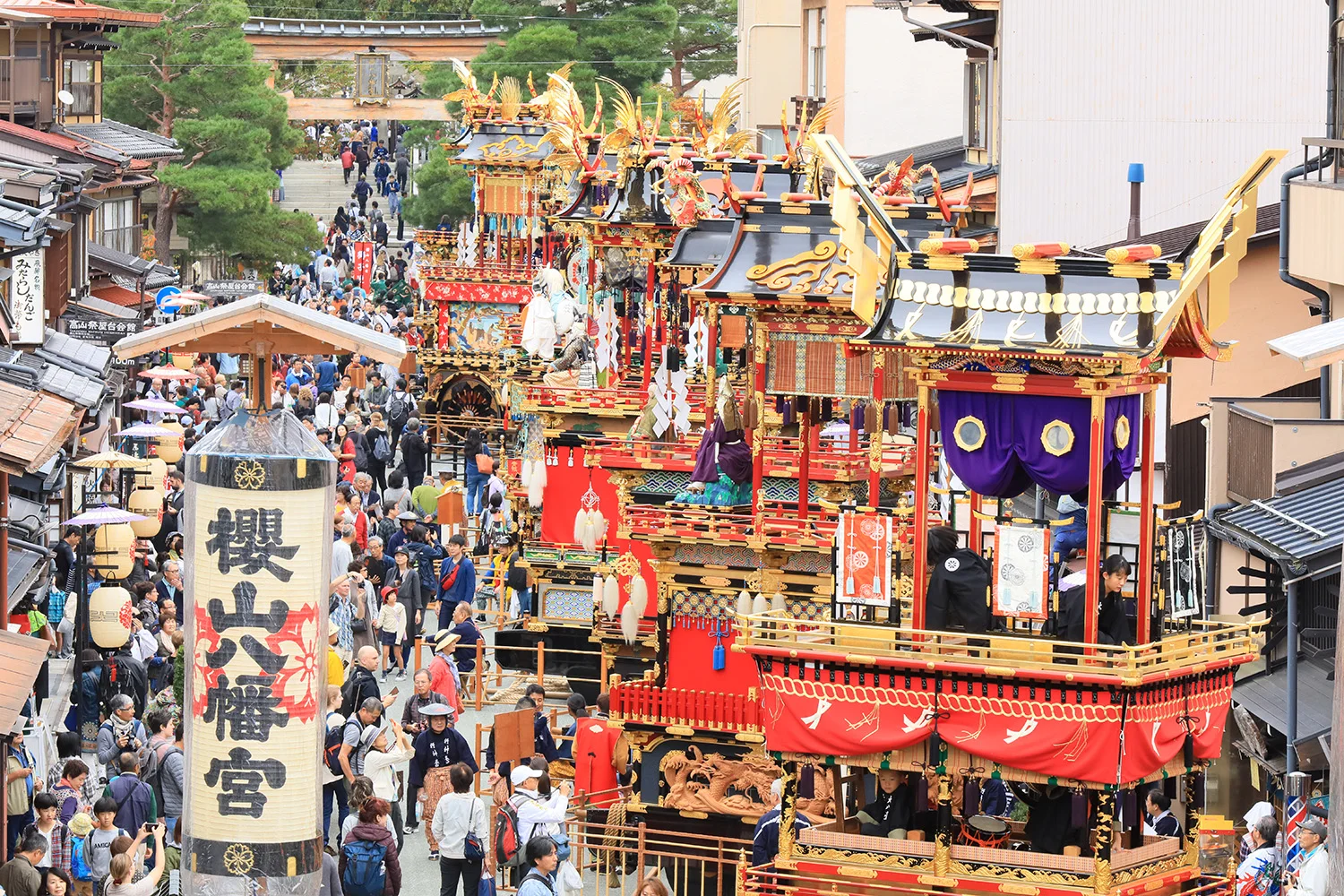
Eleven floats belong to the autumn festival collection associated with Sakurayama Hachimangu. Their layered wood carving, lacquer, metalwork, woven ornament and moving puppets are easier to study during a daylight display than during the evening procession. The crews also use a wheel mechanism known as modoshi-guruma to negotiate turns in the narrow streets. The 2026 visitor information listed ten floats for display because one was under repair; the collection still comprises eleven. Counting every historic float as present on every festival day would have misrepresented what visitors could actually see.
Outside festival dates, the Takayama Festival Floats Exhibition Hall next to the shrine displays four autumn floats at a time and changes them through the year. It is a strong way to see construction up close, especially when a trip cannot be moved to October. It cannot recreate the procession, street music or coordination of crews around corners. If the festival itself is the reason for the trip, the hall works as an addition or weather fallback rather than an interchangeable replacement. For a later trip whose aim is leaves rather than floats, see the late-October autumn colour guide before moving the festival stay to a different date.
The Central Japan autumn colour route helps place Takayama between higher mountain destinations and lower cities. Early October colour is governed by elevation, so a festival stop should not dictate the foliage date for Kanazawa, Kamikochi or every other part of the route.
The 2026 timetable, in usable order
Friday began with float display from 09:00. The first puppet offering was scheduled at noon, the procession around 13:20–15:30 and the second puppet offering at 14:00, so a visitor could not assume every item happened neatly one after another. Float display ended at 17:00; the lantern procession was listed 18:00–21:30. Saturday display ran 09:00–16:00, puppet offerings at 11:00 and 13:00, with procession periods in the morning and afternoon. Each puppet performance was estimated at about 50 minutes. Weather or operating decisions could alter that order, and future festival editions need their own schedule.
This record also explains a sensible priority order for a future visit. Secure the correct date and a Takayama bed first if the night parade is central, then decide which daytime programme deserves a fixed viewing position. A festival map matters because the floats, puppets and moving procession do not all occupy a single stage. Leave the open parts of the day for walking, food and the old town rather than filling them with long bus transfers. When a new annual timetable appears, adjust the detail while keeping the core choice between night and daylight. The best month for Japan autumn leaves is a useful separate calendar for travellers who also want seasonal scenery.
The Takayama, Shirakawa-go and Kanazawa itinerary provides a no-car framework if the festival anchors a longer trip. Put the Takayama night in the calendar first, then reserve intercity buses around it.
Where an overnight stay changed the day
Central streets were under vehicle restrictions during the festival. A room that could be reached on foot after the 21:30 scheduled end reduced dependence on a taxi or a shuttle reaching a particular curb. Around Sakurayama Hachimangu and the old town, that favoured a short walk after the lanterns; close to Takayama Station, it favoured arriving with luggage and departing by train or bus next morning. Neither location wins for every visitor. The better one depends on whether the difficult leg is the late walk or the next day’s departure.
A station-area hotel is easier when a suitcase, an early Shirakawa-go bus or a rail connection drives the plan. An old-town room cuts the return after dark but can involve cobbled or crowded streets with luggage. Festival dates also concentrate hotel demand, so a cheap distant property may add a long walk just when central roads are closed to vehicles. Before accepting a distant room, check the actual pedestrian route and departure point rather than treating the taxi estimate from a normal day as a festival-day promise.
A wider five-day Chubu itinerary can justify an overnight even when the festival occupies only one day. Check the order of Toyama, Tateyama, Kamikochi and Matsumoto before adding a hotel night solely because it appears cheaper than a central festival room.
Driving required a parking plan outside the restricted streets
Vehicle access into parts of central Takayama was closed for the festival. The 2026 visitor plan named permanent car parks outside the restricted area and a temporary Takumigaoka lot. A free shuttle linked Takumigaoka with Takayama Civic Cultural Hall at roughly 20–30-minute intervals, with frequency dependent on traffic. Additional temporary lots could open when ordinary parking filled. Those arrangements made driving possible, but they did not place the car beside the floats or guarantee a quick exit. For a day visitor who could arrive by train or highway bus, walking from the station avoided the parking return altogether.
A driver also had to plan the end of the visit, not merely its start. A moving procession and road controls could separate a viewing spot from the lot more than the map suggested. The evening parade made that issue sharper because departure would be after dark and amid concentrated crowds. Anyone combining Takayama with Shirakawa-go or another stop had to protect the onward transport leg first; trying to squeeze an extra village visit between fixed festival periods risked losing both. If the drive is part of a larger western loop, compare a Hokuriku five- or seven-day route before making the festival day a high-speed transfer.
What rain could change
Outdoor activities could be altered or cancelled for weather, and cancelled items were not carried over to another day. That mattered most for the Friday lantern procession, which had no scheduled Saturday equivalent. A two-day stay gave more chances to see some floats and puppets, but it did not create a second night parade. Sensible plans therefore separated the date-specific wish from the broader Takayama visit: shrine district, old streets, food and the Floats Exhibition Hall could still occupy the trip if one street programme was lost. The Kamikochi day-trip access can occupy another clear-weather day rather than competing with a fixed festival window.
The Japan festival comparison illustrates why a fixed-time outdoor parade should not be the sole value of a destination stay. The festivals differ, but the weather planning problem is familiar.
The choice that survives beyond 2026
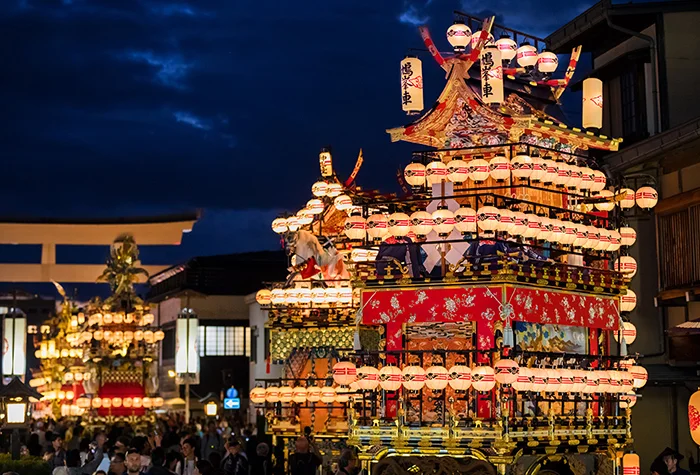
The 2026 calendar made the decision unusually clear. Friday offered the lantern procession in addition to daylight viewing and suited a Takayama overnight. Saturday offered daytime floats, puppet performances and processions with an easier same-day departure. Both options required a walkable route through a busy, partly vehicle-restricted centre. For a future year, 9 October remains the night-festival date in the recurring pattern, but confirm that year’s operating times and weather status before fixing an hour-by-hour plan.
The Enako River exception was equally specific to the 2026 published illumination calendar: its lights were off on festival Friday. A Saturday evening or another autumn date could work for the river walk, while Friday evening belonged to the lantern floats. That small separation prevented an unnecessary detour and left the main festival activity enough time. A different autumn event with a similar lodging choice appears in the Sawara autumn festival stay-or-return guide.
For an autumn route beyond Takayama, the Central Japan foliage and transport guide links this city stop with mountain and city foliage windows. Extra nights make sense when the bus and rail order supports them, not simply because the festival is famous.
When October 9 is the night that matters, compare Takayama rooms within a practical walk of the festival streets.