
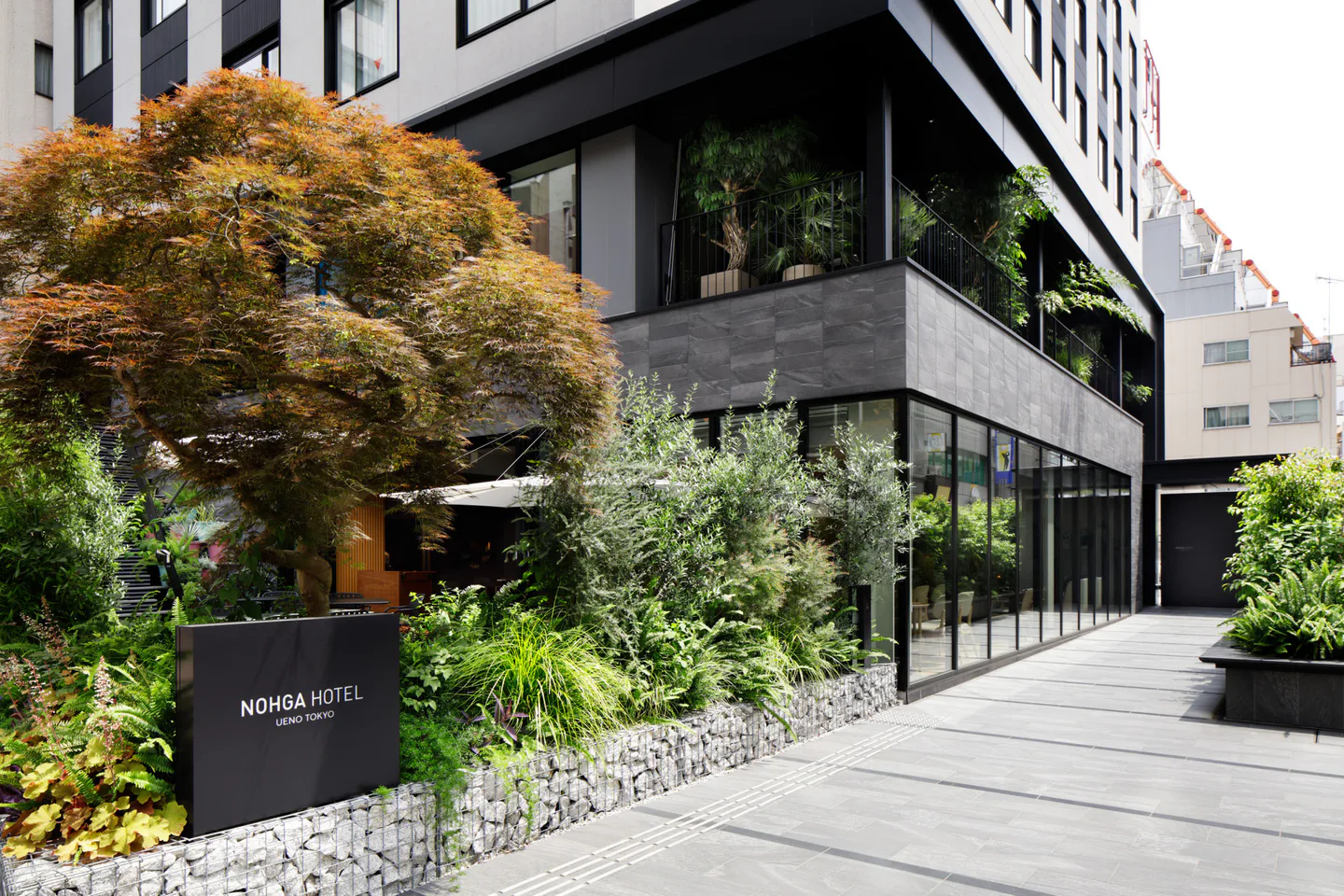
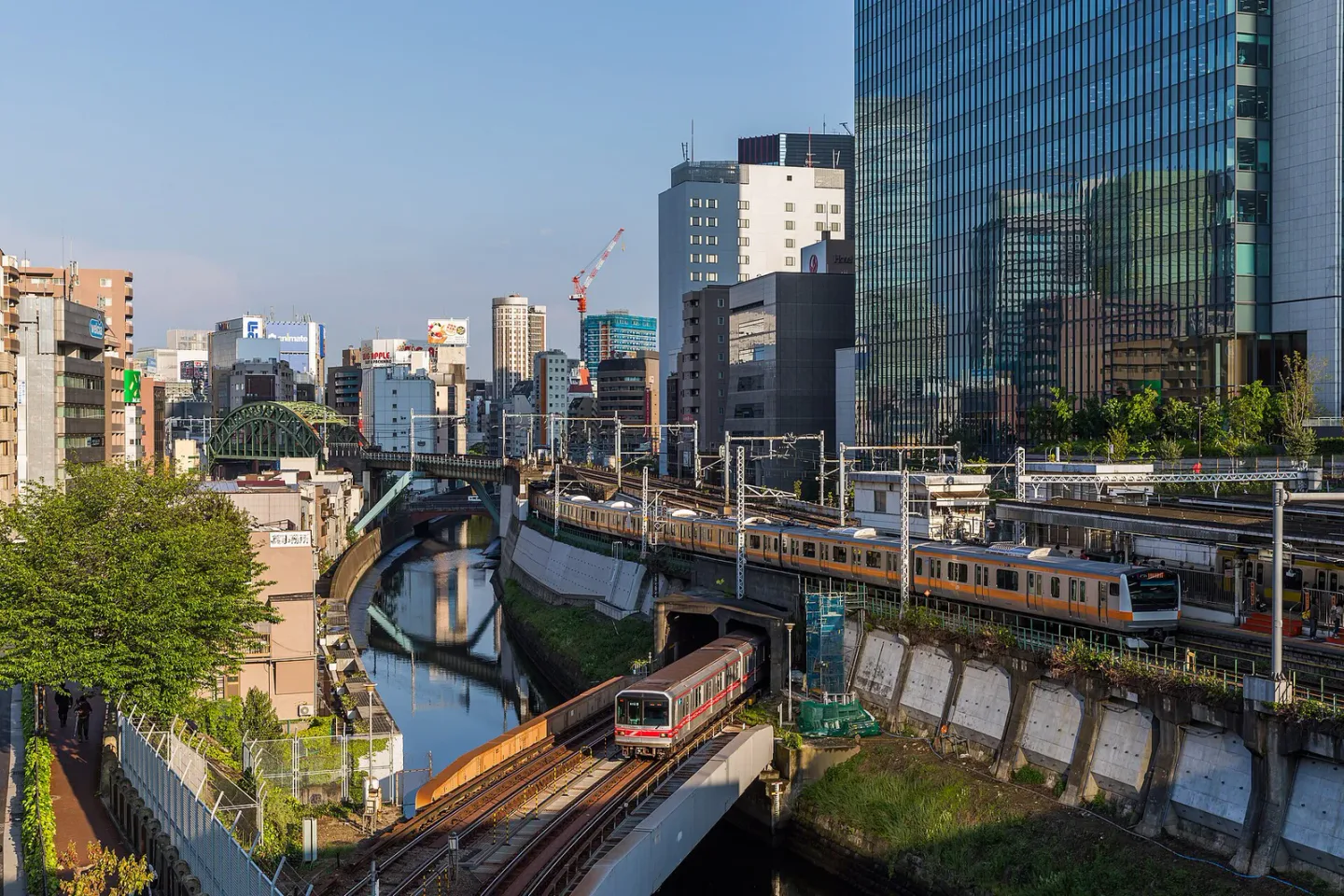
The arrival walk is the question that usually brings people to NOHGA Hotel Ueno Tokyo. The answer depends on which Ueno station you reach: the hotel gives three minutes from Tokyo Metro, five from JR and seven from Keisei Ueno. A Narita passenger on the Skyliner should plan for the seven-minute surface route, then judge the hotel by the days after arrival as well. Its position can be useful for repeated east Tokyo plans; it is less compelling if most nights end on the western side of the city. See Ueno versus Shinjuku.
For two people staying three to five nights with large cases, compare the 24–26 m² Twin with the entry Double before deciding the hotel is affordable. A room that forces both cases into the walking space can erode the benefit of an easy station arrival. Solo travellers with a carry-on face a different room decision. The table below separates those situations rather than assigning one recommendation to everyone.
↔ Scroll table left or right
Trip pattern | Room or location choice | Reason |
Narita arrival, three to five nights mostly in eastern Tokyo | Keep NOHGA on the shortlist | The Keisei walk happens once; Ueno can help on several later days |
Two guests carrying full-size cases | Compare the 24–26 m² Twin | The 18 m² entry room may leave too little circulation space |
One-night airport transit | Compare the entire arrival and departure chain | Neighborhood and laundry advantages have little time to earn their cost |
Late evenings in Shibuya or Shinjuku | Price a western Tokyo base as well | The long return is repeated on multiple nights |
A much larger room is essential | Compare the 36 m² Deluxe Twin with competitors | The higher room rate changes the hotel value calculation |
Three stations share the Ueno name
The walking times begin at different platforms and exits. Match the figure to the train in your itinerary:
Tokyo Metro Ueno, Ginza or Hibiya Line: about three minutes from Exit 3; luggage users can take the lift between exits 2 and 3.
JR Ueno: about five minutes by the Iriya Gate/Panda Bridge or Central Gate approach.
Keisei Ueno: about seven minutes from the Front Exit after the Skyliner.
Keisei Ueno is the relevant terminus for a Skyliner arrival from Narita. Its seven-minute walk may still be easier than carrying two cases through another rail interchange to get a shorter final walk elsewhere. That comparison changes with the weather, mobility and the number of bags. A short published walk is useful only after you have chosen the train that actually brings you there. See Narita or Haneda transfer chain.
The Metro directions offer a specific lift option: between exits 2 and 3 on the Showa-dori side. The staircase at Exit 3 may look simpler on a map but is a poor assumption with heavy cases. For JR, the hotel describes routes through the Iriya Gate/Panda Bridge side and the Central Gate, both using escalators near the pedestrian bridge. Iriya Gate/Panda Bridge Exit is not the same label as Iriya Exit. Decide the station approach before you arrive with luggage. See Tokyo station hotel access.
None of the published minutes includes getting off the train, reaching the correct station exit or waiting for a lift. Use the last manageable hand-off as the measure: a surface walk with rolling cases, a change of trains, or a taxi loading stop. The smallest number alone can point to the wrong journey.
The four-night geography matters more than one airport journey
Narita is a strong argument for arriving through Keisei Ueno, but you use the airport route once. If the next four evenings are in Shibuya, Shinjuku, Harajuku and Kichijoji, the return to Ueno repeats. Compare that pattern with the journey to a western Tokyo hotel before accepting a longer return every night for one easy airport arrival. See where to stay in Tokyo.
The useful question is how many later days naturally pass through Ueno or nearby eastern districts. Likely examples include:
Ueno Park and its museums make the neighborhood useful beyond arrival day.
Asakusa and Kappabashi are eastern Tokyo outings that fit the base.
Akihabara can be a short rail stop rather than a cross-city journey.
Tokyo Station and Marunouchi are plausible days from Ueno.
Rainy-day or evening plans on the eastern side can end closer to the room.
If at least half the planned days use those districts, a Keisei arrival can lead into a sensible multi-night base. If the airport is the only reason for Ueno, compare the west-side alternative and its airport transfer as a whole. The stay length matters: a single transit night does not gain the same benefit from neighborhood access or laundry. See Mitsui Garden Ueno location.
Room area changes the luggage calculation
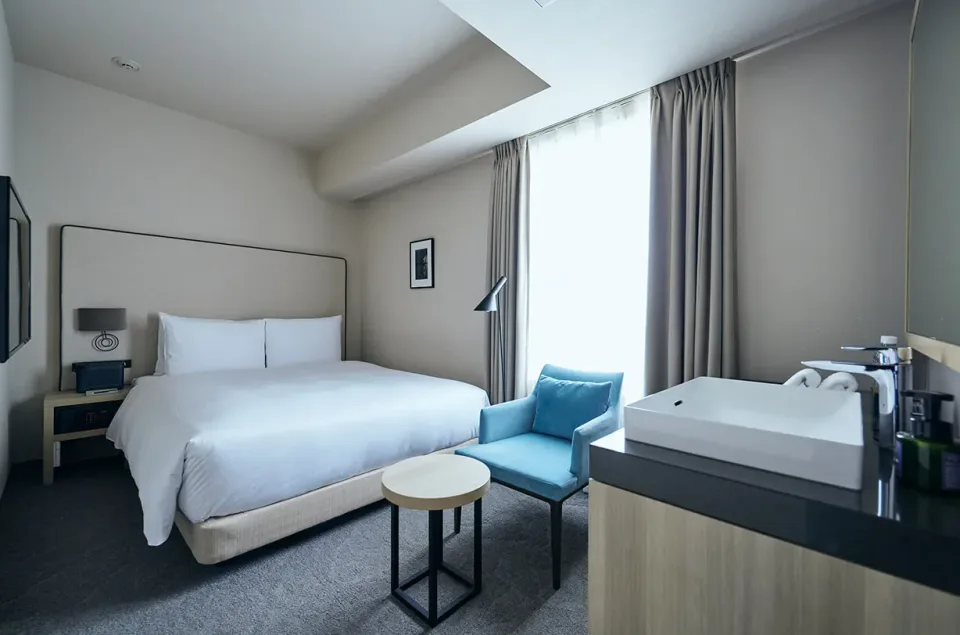
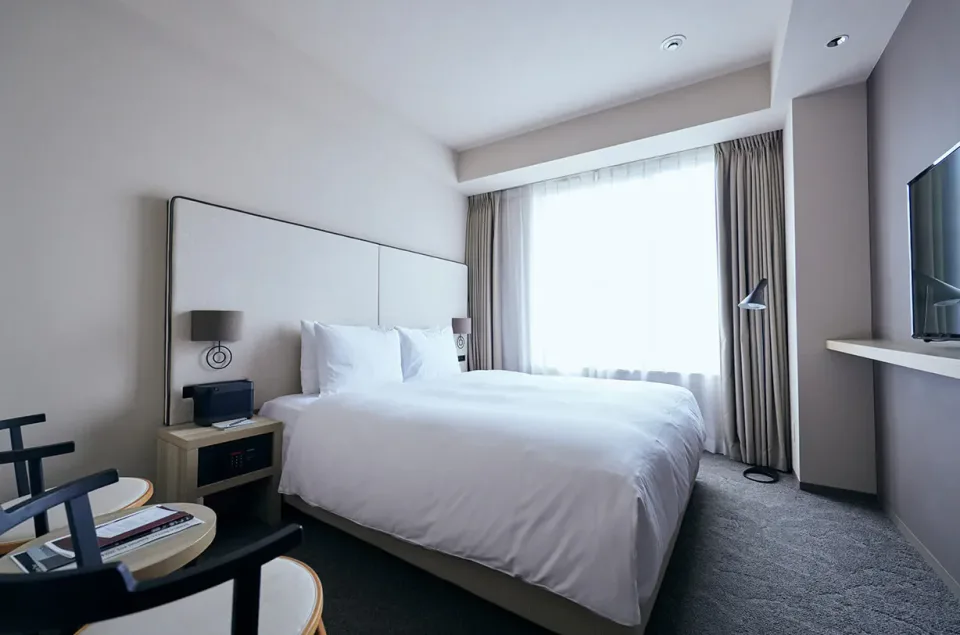
There is a meaningful spread between the 18 m² Double and 36 m² Deluxe Twin. Compare the actual room name and layout rather than treating every NOHGA listing as the same product:
↔ Scroll table left or right
Category | Floor area | Useful for | What to check |
Double | 18 m² | Solo guest or brief light-bag stay | Two large cases may occupy much of the usable floor |
Superior Double | 20 m² | One bed with a modest space gain | Only 2 m² above the Double |
Deluxe Double | 23 m² | Couple seeking more space without twin beds | Compare its date-specific price with the Twins |
Corner Double / Deluxe King | 26 m² | More room with one bed; Deluxe King permits an extra bed | A third guest adds luggage without increasing floor space |
Twin, shower only | 24 m² | Separate beds without a bathtub | The shower-only bathroom differs from other Twins |
Twin | 24–26 m² | Two cases over several nights; can take an extra bed | Check the exact assigned layout and occupancy |
Deluxe Twin | 36 m² | A material space upgrade or three-person stay | Compare similar-size rooms at other Ueno hotels |
The 64 m² NOHGA Suite adds a kitchenette and living area. It is a separate premium product, so it should not set expectations for the ordinary two-person rooms. The 26 m² Deluxe King can accept an extra bed, while the Twin category can also reach three guests with an added bed; occupancy does not create extra floor area for luggage. See Tokyo family room choices.
Floor size helps identify a likely constraint but cannot prove that two 28-inch suitcases lie open in the particular room assigned. The hotel shows sizes, beds and room photographs, not a suitcase-clearance measurement. If daily access to both cases matters, ask about the exact category or choose enough spare floor area to avoid relying on a perfect arrangement. See large-luggage Tokyo hotels. See Mitsui Garden versus NOHGA.
When a larger room changes the hotel comparison
An attractive entry rate can conceal two separate premiums. First comes the choice of Ueno for Narita and the eastern districts; then comes the upgrade needed to fit the travellers and bags. Once the price rises into Twin or Deluxe Twin territory, compare other Ueno and Tokyo hotels at that same date and occupancy. The arrival route is only one part of the value. See Hotel Groove Shinjuku comparison. See NOHGA versus Hotel Groove.
A sensible booking sequence keeps those costs visible:
Test the neighborhood against the full itinerary, including where evenings finish.
Map the actual arrival station and assess the Keisei seven-minute stretch with your bags.
Price the lowest room category that can plausibly hold your group and luggage; for two large cases, begin with the Twin tier.
At that room price, compare another Tokyo hotel on the same dates before committing.
A cheap 18 m² Double is a useful price point for someone travelling light. It is a poor anchor for a couple who already knows they need two open cases for four nights. Start the comparison with the smallest room that can plausibly support the stay, then test the entire hotel against alternatives.
Laundry can make a small suitcase possible
The guest laundry is available around the clock. A wash costs ¥400; the tumble dryer is ¥100 per 30 minutes, and the washer adds detergent automatically. The laundry area also has an iron, microwave and ice machine. The fitness room is open to adults aged 18 and above around the clock, with restricted-hour conditions. These details matter more on a longer stay than on a single airport transit night.
A wash midway through a four- or five-night visit can reduce what you pack and keep the room from becoming a clothing store. That saves suitcase space only if you actually pack fewer clothes; bringing the same wardrobe gives the machine much less value. It also creates a timing dependency: a machine may be in use, and drying can take more than one paid interval. Leave room in the evening schedule rather than assuming laundry is instant. For a one-night stay, paying more for this amenity rarely changes the trip. See Japan luggage forwarding.
The practical value comes from how often you expect to use the machine, not its presence in a facilities list. If you are forwarding a large case to your next hotel, or packing only a carry-on, the laundry may influence the room choice in different ways.
Breakfast starts at 07:00; check the closing time on your date
Bistro NOHGA currently advertises breakfast from 07:00. The hotel’s restaurant listing shows a 10:00 finish, while its dedicated Bistro page describes service until 10:30 with last order at 10:00. The safe planning point is that the final admission or order is at 10:00; check the chosen date if you intend to arrive near closing.
A traveller leaving around 06:30 cannot use a 07:00 breakfast before departure. On a day that begins after 08:00, the meal fits more naturally. Review the room-only and breakfast-inclusive prices for your dates, and compare them only after checking the first planned train. Restaurant schedules can change on individual dates.
A Fuji excursion is a good example: the train reservation may set an earlier departure than the hotel meal permits. The Fuji Excursion booking guide helps place that train before breakfast is added to the rate. If the meal will be missed, its apparent package discount is irrelevant. See Fuji Excursion tickets.
When the Keisei surface walk is too much
Seven minutes outdoors is a different task with reduced mobility, a stroller plus several bags, heavy cases or poor weather. The hotel’s route is specific, but the published time assumes a workable walk. A party that would need a taxi for the last segment should count the loading and short ride rather than treating the walk as free. See Tokyo hotels for older parents. See Remm Akihabara versus NOHGA.
If the final Keisei stretch is acceptable, it may avoid an additional train change. If even a short taxi hop is awkward, look for a hotel connected more directly to the arrival mode. This is a party-specific choice, not a judgment about everyone’s walking speed. A late arrival can also make clarity of the station exit more valuable than a headline walking minute.
The bags may not need to remain with you on the next leg. For a Kawaguchiko or Hakone stay after Tokyo, compare forwarding and short-term storage before buying a bigger NOHGA room solely to hold luggage for a later destination. The luggage-forwarding guides explain the delivery-day and hand-off questions that must be settled first. See Kawaguchiko and Hakone baggage hand-off.
How three actual stays differ
Four east Tokyo nights after Narita
A couple arriving by Skyliner and spending time around Ueno, Asakusa, Akihabara and Tokyo Station can use this hotel repeatedly. Accept the seven-minute Keisei walk if both can roll their luggage over it; then price the 24–26 m² Twin against the Double categories. The room choice is separate from the neighborhood choice. See Tokyo attractions by area.
Four nights with late western Tokyo plans
The same airport arrival does less to justify Ueno when dinners and nightlife end in Shibuya or Shinjuku. Compare an area nearer those evenings, including its airport arrival route and same-date room size. Repeated late returns may cost more effort than the first day saves. See Tokyo Station versus Shinjuku.
Two nights alone with a carry-on
The 18 m² Double is more reasonable for one traveller without full-size bags. There is less need to pay for the Twin’s extra circulation space, and the Ueno station access can still serve east-side plans. For a one-night Narita stop, compare the total transit chain first; the hotel’s laundry and neighborhood qualities will see little use. See Akihabara station hotel. See Akihabara station rooms.
A hotel for repeated Ueno days
NOHGA makes most sense when the location continues to serve the trip after the Skyliner journey. Choose the route that corresponds to your actual arrival station: approximately seven minutes from Keisei, five from JR, or three from Tokyo Metro. With two large cases over several nights, start room pricing at the Twin tier rather than assuming the entry Double will function well.
If most days lie west of Tokyo Station, the Keisei walk is uncomfortable for the group, or the room upgrade approaches a better located hotel’s price, reopen the base decision. Compare door-to-door travel and a workable room on the same date. A Narita-friendly arrival alone is not enough to decide four or five nights. See Tokyo hotel base guide.
Compare NOHGA Ueno rooms and available dates
Routes and nearby decisions
Ueno vs Shinjuku · Japan Luggage Forwarding · Kawaguchiko & Hakone Luggage · Fuji Excursion Booking Guide
Hotel details to use while booking
NOHGA Ueno hotel · Rooms, laundry and gym · Ueno station route map · Bistro breakfast service. Check room rates and restaurant service for your dates.
Seven site scores for a Ueno station base
Dimension | Site score | Reason for this luggage-sensitive stay |
|---|---|---|
Location | Metro Ueno is the shortest approach, while a Skyliner arrival at Keisei Ueno still leaves a longer luggage walk. | |
Room | The 18–36 m² range offers real upgrades, but the smaller categories need a case-layout check before booking. | |
Cleanliness | The current aggregated guest cleanliness category is about 9.5/10. | |
Service | The aggregated staff category is about 9.5/10. | |
Facilities | Laundry, a gym and a lobby gallery support a longer city stay without resort-style extras. | |
Food | Bistro NOHGA serves breakfast from 07:00 and continues with later meals; judge inclusion against the first train. | |
Value | The premium is easier to defend when room space and bistro time matter, not merely for a Narita transfer with heavy cases. | |
Overall | A quiet Ueno base whose best approach depends on the train used and the bags being carried. |
Scores are out of ten for a guest choosing between the Metro, JR and Keisei approaches with luggage. Cleanliness and Service follow aggregated guest categories; the other dimensions apply the published room, restaurant and facility details to that route.
Related guides: Hotel Emion Sapporo vs Keio Prelia Hotel Sapporo: Which Works Better with Snow and Large Luggage? · NOHGA HOTEL UENO TOKYO vs HOTEL GROOVE SHINJUKU: Which Base Saves More Friction? · Tokyo Attractions Map: Which Areas Actually Belong on the Same Day? · Tokyo Station vs Shinjuku: Which Base Fits Your Japan Itinerary? · Toy Story Hotel vs Grand Nikko Tokyo Bay Maihama: Which Is Better for Families? · Tokyo Disney Room-Only vs Vacation Package: Which Opens First? · Tokyo Disney hotel categories compared · Early Morning Things to Do in Tokyo: What Actually Works Before 10 a.m. · Tokyo to Kyoto or Osaka Same-Day Luggage Delivery: Is It Worth ¥13,200? · Tokyo Solo Hotels: Don’t Start With the Smallest Room