
The last hotel night in Tokyo is often booked as though it were another sightseeing night. A Narita flight changes the calculation. The room has to accommodate the bags already packed for home, the route to the airport has to work at the actual departure hour, and a late final afternoon may depend on where those bags can wait after checkout. remm Akihabara and NOHGA HOTEL UENO TOKYO serve different versions of that last day. remm attaches the stay to Akihabara Station, while NOHGA puts a larger range of room types near Ueno's airport rail options. Choose by the flight and the room category first; the neighbourhood name alone will not settle it.
JapanLayer hotel assessment by dimension
↔ Scroll table left or right
| Hotel | Access | Space | Comfort | Cleanliness | Neighbourhood | Service | Value |
|---|---|---|---|---|---|---|---|
| remm Akihabara | 9.7/10 | Insufficient evidence | Insufficient evidence | 8.9/10 | Insufficient evidence | 9.2/10 | Insufficient evidence |
| NOHGA HOTEL UENO TOKYO | 9.5/10 | Insufficient evidence | Insufficient evidence | 9.0/10 | Insufficient evidence | 9.0/10 | Insufficient evidence |
The last-night booking test
↔ Scroll table left or right
| Decision | remm Akihabara | NOHGA Ueno |
|---|---|---|
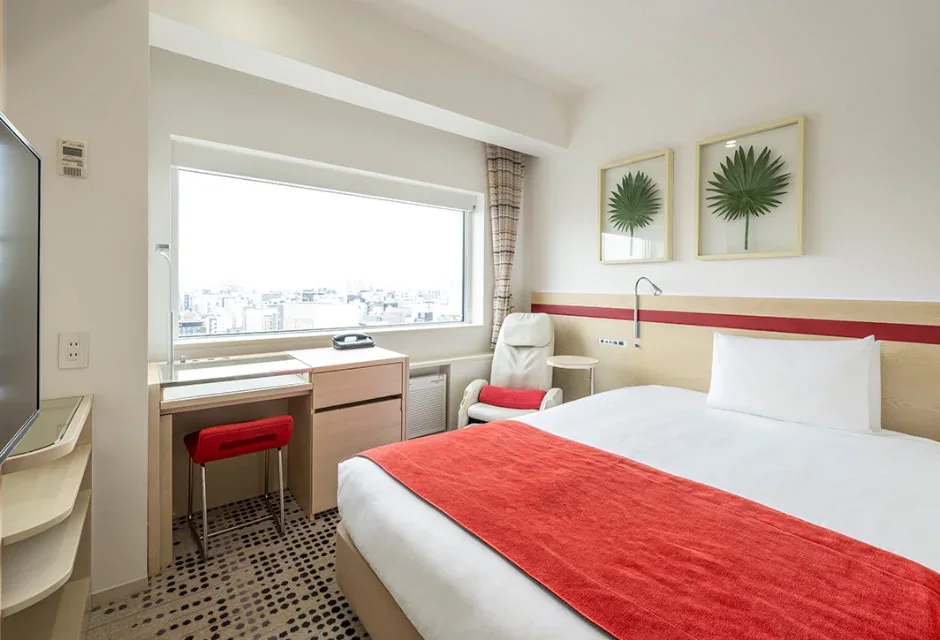
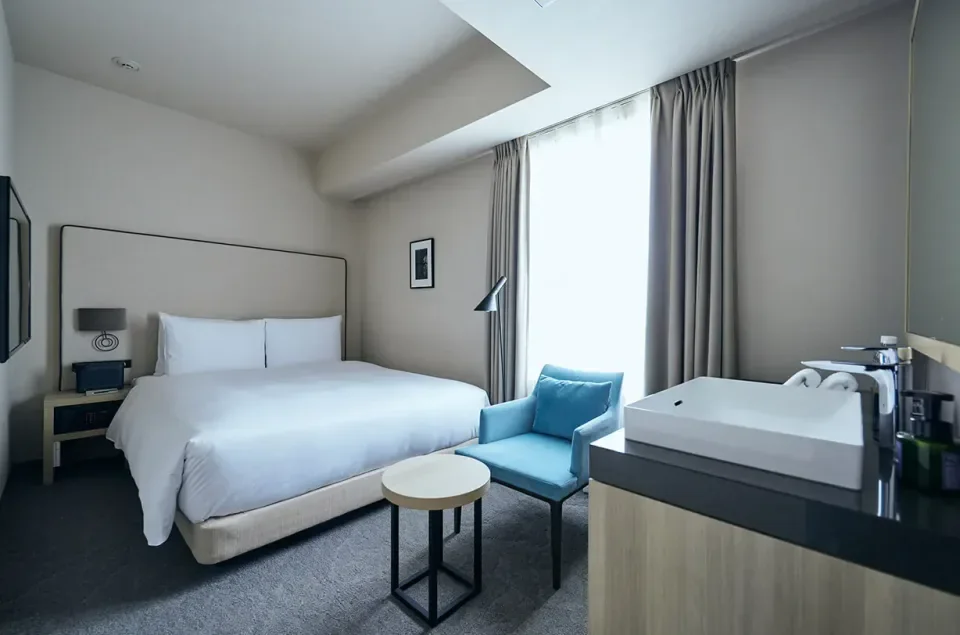
| Entry room example | 14.3 m² semi-double, 140 cm bed, shower only | 18 m² Queen, 160 cm bed |
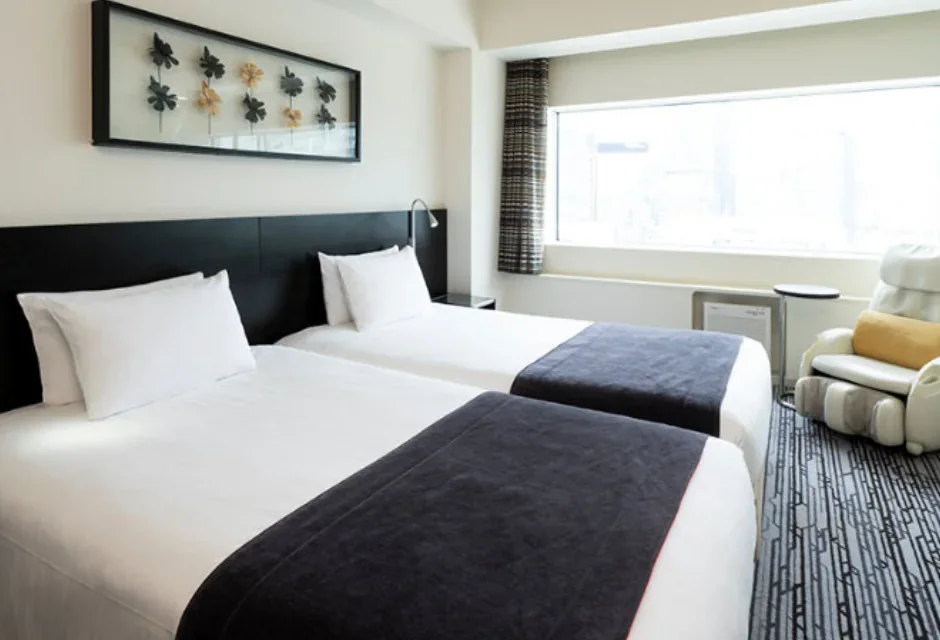
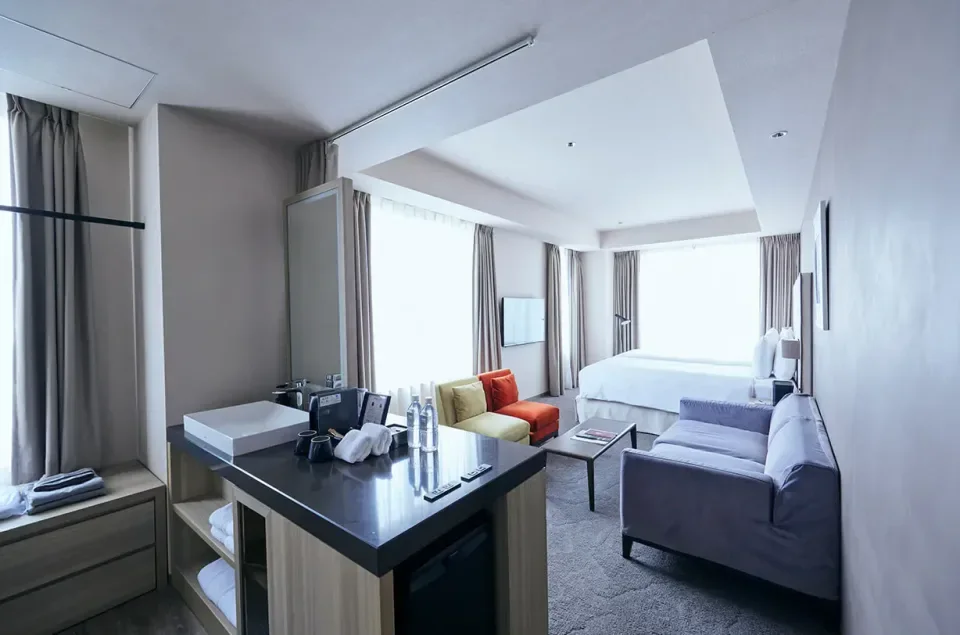
| Twin option | Check the named twin and bag space | 24 m² shower-only Twin or 24–26 m² Twin |
| Narita rail plan | JR transfer toward Nippori or Ueno before Keisei | Walk to Keisei Ueno, then board the selected service |
| Final-day risk | Returning for bags before an airport transfer | Assuming Tokyo Metro Ueno exit is the Skyliner entrance |
Swipe to compare the hotels
The airport route starts outside the room
For a Narita departure, NOHGA's Ueno address has a practical advantage if you intend to take a Keisei service from Keisei Ueno. The hotel describes a walk from Tokyo Metro Ueno; that is not the same as saying the Skyliner platform is at its door. You still need to move luggage through streets and station entrances, and the route from the hotel to Keisei Ueno should be checked on a map with the actual exit you plan to use. The NOHGA Ueno Narita and luggage route guide handles that final walk in more detail. If you are comparing another Ueno property, the Mitsui Garden Hotel Ueno Skyliner walk gives a useful second reference point.
remm's convenience is different: it is linked to the JR Akihabara Central Exit, the Tsukuba Express A1 exit and Hibiya Line Exit 5. That makes the hotel easy to find after a Tokyo day, particularly if you are already using JR. Reaching the Skyliner generally means first taking a train toward Nippori or Ueno, then changing platforms with luggage. The extra train is manageable with one small suitcase and plenty of time. It can be a nuisance for two large cases, a stroller and a flight that requires an early airport arrival. The Narita and Haneda airport transfer comparison helps establish which airport railway actually matches your terminal and budget before you decide that either hotel has the better route.
Do not substitute a generic airport travel time for a morning plan. Work backward from the airline's check-in deadline, then add the walk from the room to the station, time to buy or retrieve a ticket, an allowance for lifts and platforms, and the journey to the correct Narita terminal. The first train that looks plausible on a search result may not leave enough margin. Keisei publishes a timetable with separate weekday and weekend columns; the first departures from Keisei Ueno can be checked against the flight, rather than assumed. A later flight gives you more room to trade NOHGA's Ueno position for remm's station-linked Akihabara stay. If the flight is very early, the Narita airport hotel versus Tokyo guide may reveal that neither city hotel is the least stressful final night.
What each room does with packed suitcases
The cheapest room at remm is a compact one. Its semi-double is listed at 14.3 square metres with a 140-centimetre bed and a shower booth without a bathtub. That can be a rational last-night purchase for one traveller arriving late, leaving early and opening only a small overnight bag. It is a poor room to choose by price alone if two travellers need to repack two checked cases. Even when a hotel photo shows an uncluttered floor, the visible space may disappear once the cases are open. A twin quotation should be compared separately rather than treating remm's entry room as representative of the whole property. The Mets Premier Akihabara versus remm room decision examines how much additional room space can be worth over several nights; the last-night calculation is usually narrower.
NOHGA begins with an 18-square-metre Queen room for two. Its 20-square-metre King, 23-square-metre Superior King, 24-square-metre shower-only Twin and 24–26-square-metre Twin create a more useful ladder for luggage-heavy travellers. The Twin categories have two 105-centimetre beds; the standard Twin range can accept a third person with an extra bed at an additional charge, but that does not mean the usual two-person rate includes one. A couple needing floor space might find the King or Superior King more useful than buying a Twin merely because it appears in a search filter. A pair wanting separate beds should check whether the particular Twin has a shower only or the bathroom arrangement they prefer. The NOHGA versus Mitsui Garden Ueno comparison offers another room and location comparison for the same district.
The difference matters more on a final night than the nominal room area suggests. Travellers often have one suitcase with clean clothes and another with purchases to consolidate. Spread the cases on the floor in your mental room plan. You need a path to the bathroom, access to both beds, and somewhere to put hand luggage without blocking the door. If the trip is five or six nights and repacking has happened gradually, a compact room might be adequate. If a family has accumulated shopping and needs to weigh or reorganise bags, pay for a category whose floor plan can actually take the work. The Tokyo five-to-seven-night hotel guide is useful if this is not merely the final night but the base for most of the trip.
Bags on the final afternoon require a separate plan
A late Narita flight can leave many hours between checkout and the time you want to board the train. That is a different question from whether the hotel accepts a parcel before arrival. remm lists a parcel delivery service with a charge; confirm the direction, packaging and deadline of any shipment rather than reading that listing as an unlimited storage promise. NOHGA's accommodation terms address baggage received for a guest before check-in, but they do not by themselves establish how long a checked-out guest can leave cases. Ask the relevant hotel about your exact arrival or departure date, number of bags and collection time. The Tokyo luggage storage guide covers station alternatives if a hotel cannot hold them for the hours you need.
If you will sightsee after checkout, map the day without your luggage before choosing a hotel. Ueno Park, the National Museum area and Ameyoko can make a Ueno last day. Akihabara can make sense for a final electronics or hobby stop, especially if purchases will go directly into a suitcase collected from remm. It is less efficient to leave cases in Akihabara, spend the afternoon near Ueno and return to Akihabara only to retrace the route to Keisei Ueno. On the other hand, storing at a station locker can turn a morning hotel change into needless work. Compare the number of separate station visits, not only the apparent straight-line distance. The Tokyo first and last day itinerary can help place the final attraction near the airport route.
Forwarding a suitcase to a later hotel is useful during a multi-city trip, but Narita departure day is an unforgiving place for vague promises about same-day delivery. Domestic luggage forwarding normally operates on delivery windows and acceptance cutoffs; confirm the service, destination and date before you let the case leave your possession. The Japan luggage forwarding guide explains the paperwork and timing. If Tokyo follows Kyoto or Osaka, the Tokyo–Kyoto–Osaka same-day luggage discussion shows why a phrase such as “same day” needs route-specific scrutiny. For the flight itself, travelling with the bag may be simpler than creating a separate airport handoff you have not verified.
A four-step last-night comparison
First, put the flight time and terminal in the booking notes. A mid-afternoon departure can support a leisurely breakfast and a direct move to Keisei Ueno. A morning departure often makes breakfast irrelevant and gives more weight to the shortest reliable route to the train. NOHGA lists a three-night accommodation plan, but a final one-night stay will not qualify for a three-night discount. remm's fast station access has more value when the night is short and the visitor returns from a distant district. The Ueno versus Shinjuku base for Narita broadens the location decision if the airport is a major factor for the whole visit.
Second, compare named rooms at the same occupancy. A remm semi-double and a NOHGA Twin do not test equivalent sleeping arrangements. If your budget is fixed, price the remm room that fits both people and both bags against NOHGA's Queen or King. If you need two beds, price the two actual Twin categories and note any difference in bathroom setup. Check breakfast, taxes and cancellation rules in the final checkout screen. A rate with a modest nightly difference may become material over five nights but not over one. If the prices are close for a single night, the amount of luggage and airport transfer often settle the choice more clearly than a small room-rate gap.
Third, count the lift and escalator decisions, not just stops. A traveller with a rolling case who can walk at a normal pace may have no objection to the JR change from Akihabara. A parent handling a stroller and multiple bags has a different transfer cost. Before booking remm on the assumption that its station linkage solves Narita access, trace the complete chain: hotel entrance, JR platform, transfer station, Keisei platform, airport terminal. Before booking NOHGA for the Skyliner, trace the hotel-to-Keisei Ueno street walk. The two properties solve different parts of the route. The MIMARU Ueno East versus Shinjuku West family comparison is relevant if you need a full family apartment instead of either two-person room.
Fourth, decide where you will spend the final evening. Akihabara suits a late return after shopping in that district, and remm keeps the final walk short. NOHGA's Ueno location makes a different evening possible, with the next day's Keisei route closer. An itinerary that repeatedly ends in eastern Tokyo may favour Ueno for more than the last night. A west-Tokyo itinerary can make either eastern base feel like a detour; the Shinjuku and Shibuya hotel comparison may be the better starting point. Avoid moving hotels just for a small airport advantage if the move consumes a useful afternoon. The Tokyo split-stay hotel guide identifies when a second check-in actually pays back the effort.
Where the booking can go wrong
One risk is reserving the cheaper double without checking its bed width and shower arrangement. At remm, the semi-double's 140-centimetre bed and 14.3-square-metre floor area are concrete constraints for two adults with large cases. At NOHGA, a larger room may solve the bag problem, but a shower-only Twin is still a shower-only Twin. A hotel name does not replace a room plan. Another risk is treating a third-party map's “Ueno Station” pin as the Keisei entrance; Ueno includes several railway systems and exits. Save the actual airport train boarding point offline, along with the hotel's address, before the final night.
The larger risk is buying a non-refundable room while the flight or sightseeing plan is unsettled. If your final day may move from Narita to Haneda, the location value changes. If a travel companion might leave on a separate flight, you may need to store bags or book different transport. Compare cancellable quotations until the departure details are stable. Do not assume a breakfast-included rate is a saving if you have to leave before service begins. Ask whether your selected rate includes breakfast and check the service time for the booked date; NOHGA's bistro is also a restaurant whose hours can vary, while remm's breakfast arrangement should be checked in its current room plan. The Tokyo Station versus Shinjuku base guide gives another airport-route perspective if neither eastern hotel fits the complete trip.
NOHGA is the stronger choice when you want a 20–26-square-metre named room, plan to use Keisei from Ueno and can handle the hotel-to-station walk. remm makes sense when the night is short, your bags fit the booked category and the JR-linked Akihabara arrival saves work during the city part of the trip. If luggage size is the deciding factor, measure it against the selected room rather than paying for a neighbourhood. If flight timing is the deciding factor, write the actual station departure beside both hotel quotes. The last-night reservation should solve the bag, bed and airport route together.
Updated 4 October 2026. Check room category, baggage handling and rail schedule for the actual dates.